There is something glorious about a crisp October day. The crunch of leaves, the astonishing colors, the bite of a cold breeze. Something is changing, as old as time. Resting in order to be reborn again. Renewal is coming. But, for now, the dropping of leaves. The advancing cold of winter. A time to rest.
Enjoy this Mary Oliver poem on this last day of October.
“In one of John Muir Laws’s books, I read something profound that changed the way my brain thinks. “As you draw the bird,” he writes, “try to feel the life within it.” So now I look at the bird before me and imagine how it senses the world, how it feels breathing cold air, how it feels to have its feathers ruffling in the wind, how it feels to always have an eye out for possible food and possible predators. The bird sees me and is a nanosecond from flying off, but it stays. Why? By imagining the life within, the bird I am drawing is alive, no longer a shape and its parts, but a thinking, sentient being, always on the brink of doing something. By feeling the life within, I am always conscious that all creatures have personalities, and so do trees and clouds and streams. To feel the life within, I now imagine myself as the bird that is looking at me. I imagine its wariness, the many ways it has almost died in its short life. I worry over its comfort and safety, and whether I will see my little companion the next day, the next year. To feel the life within is to also feel grief in the goneness of a single creature or an entire species. Imagination is where compassion grows. Let us join with children to imagine and wonder, to use curiosity as the guide to miracles in plain sight. Let us enter with them into wild wonder so that we become guardians together of all that is living and all that must be saved.”
From Orion Magazine, “The Life Within”.
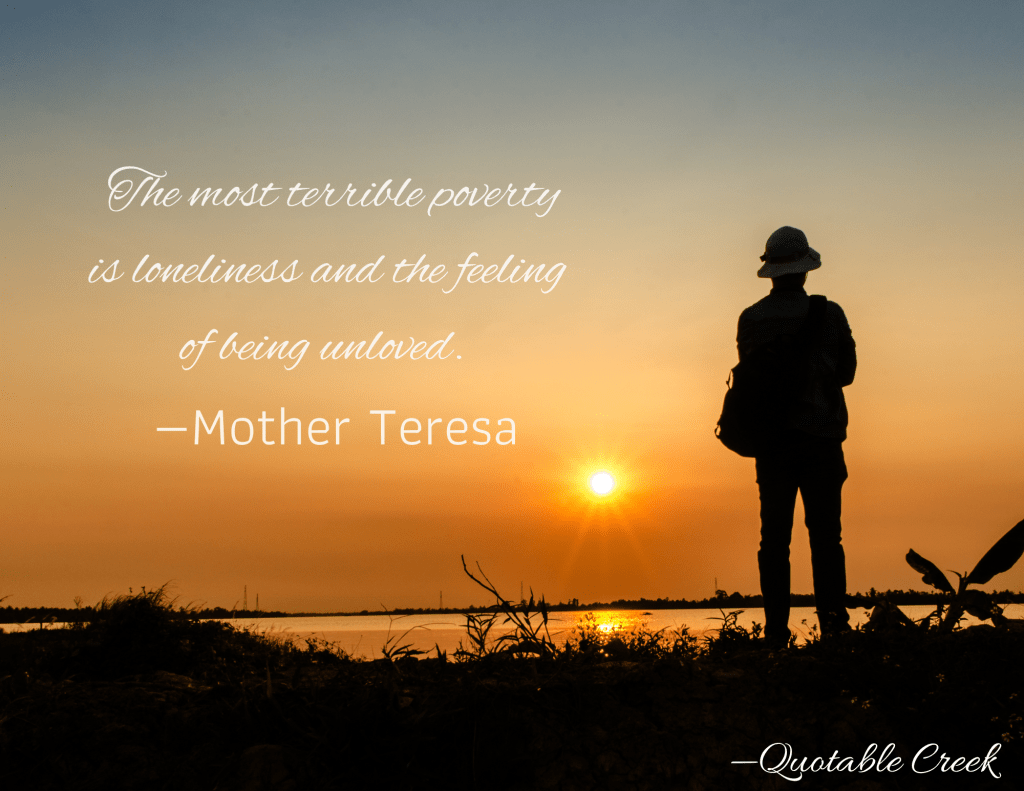
I wonder if we can look at each other that way, as something vaster, as thinking sentient beings with worlds of experience, some harsh. Would that help us to treat each other better? In her book, Dead Man Walking, Sister Helen Prejean describes just this sort of thing as she works with a death row inmate, a man who admittedly committed a heinous act, seeing not just the man but also, though covered with tattoos and bathed in bravado, the little wounded child within. That empathy allowed her to see past the crimes to the human and to feel compassion for him.
Perhaps today we can look with new eyes to see each other as a composite of good and bad, but each fully human and fully deserving of respect and compassion. To paraphrase Amy Tan above, when we consider the person, can we try to picture the life within, the challenges and struggles, hopes and triumphs? Can we become, together, ‘guardians of all that is living and must be saved’ in a place where ‘compassion grows’?
I learned a new word recently, or perhaps, more accurately, a new application of a word I had thought of as a verb.
Glimmer.
It’s the opposite of a trigger. A trigger may set off negative reactions or memories in your brain and cause you stress, but a glimmer is a moment in time that brings you joy, happiness, peace, or gratitude. A glimpse of something deep and profound perhaps, an opening of the curtain or peek behind the veil.
For me, glimmers include the crunch of autumn leaves, toddler laughs, cloudy days, pausing and noticing the intricacies of city planning. The list goes on and on, but the important thing is we can train ourselves to look for glimmers, not to let them pass unnoticed.
And they will be everywhere. Reminding you that you are part of something bigger and mysterious.
I’ve been watching Lessons in Chemistry, based on a wonderful book. One part stood out for me last night. A dog character, Six Thirty, remembers why his person, Calvin, said he loves running. Calvin said even when it is hard or you don’t think you can go on anymore, you just keep putting one foot in front of the other.
“One foot. One foot. And then sure enough, you’ll be home.”.
Isn’t that profound? In this life, we keep putting one foot in front of the other, until we’re home.
Slow and steady wins the race. We get discouraged and stop, or chase after another enticing goal, or turn back. But, if we stay true, we will make progress. One foot, one foot.
Remember the tortoise and the hare? They had a rematch recently:
Sometimes turning off the news is the best form of mental health protection.
But then we remember. In times of darkness, there are always those working to light a path, helping, fighting for the common good, making progress.
And maybe we, too, can help.
Maybe not in large, brokering peace kind of ways. But in small ways that, combined together with the small ways of many, many others, may help to right a wrong or turn a tide.
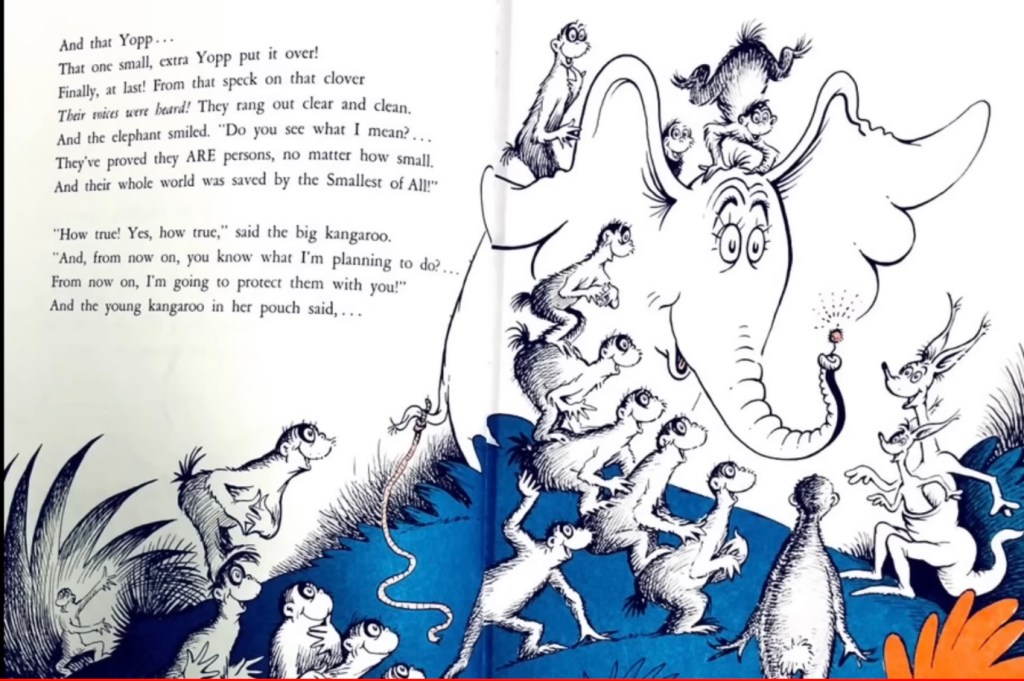
I think of Horton Hears a Who by Dr. Seuss, everyone shouting and banging on pots to be heard, but it is the final Yopp of a child that turns the tide, saving their world.
Hindsight often can give context and meaning to our struggles, perhaps no more than when we realize that our lowest times have helped someone else hold on. Some comfort, that.
And maybe, even when we don’t have the benefit of that hindsight, we can believe there is purpose and meaning in our difficulties even if we never do know it. Isn’t that the foundation of faith, that things will work together for good in a big picture way if not perhaps in the personal way? And isn’t that what can give us courage and strength to do our best, to hold on, and to persevere?
As Rainer Maria Rilke said:
Among lonely people there is not a single one who can be sure that in his suffering he might not yet console someone else and that the gestures of his most personal helplessness, like so many cues and signals, might not serve as signs guiding the way in the realm of the unfathomable.
The Poet’s Guide to Life: The Wisdom of Rilke by Rainer Maria Rilke.
The world is a complicated, interconnected place, and we are all in it together.
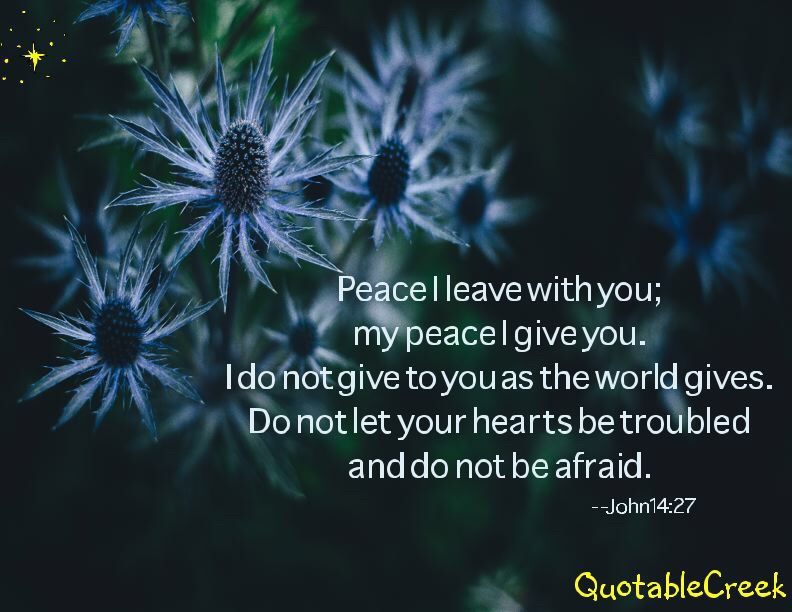
We tend to think of peace as the absence of violence as quiet is the absence of noise, but is it more? Perhaps peace is active. It exists in the kind word offered, the refusal to meet hate with hate, the comfort of following higher principles, the strength of the outstretched hand. It is so easy to lose, to slip into mirroring the hate and violence we see around us, to sit silent in front of a bully, to trade barbs, to slide down. Peace is active. We maintain it in our hearts and mind. We breathe deeply to draw us back to that peaceful place. We remember truth, honor, decency, compassion. We breathe in all that is good, we exhale the bad.
Author Shauna Niequist talks about the anxiety we are all experiencing now and suggests breath prayer:
“Christians have been practicing breath prayer since at least the sixth century & there are lots of ways to do it. One way that’s been helping me lately: choose one word to pray as you inhale–what you’re asking God to bring into your life/body/spirit/world, and one word to exhale–what you’re asking God to carry for you, so that you can release it as you breathe out.
Inhale healing/exhale fear.
Inhale peace/exhale anxiety.
Inhale hope/exhale despair.
Inhale hope/exhale chaos.”
As you move forward into your day, remember to take deep breaths, center yourself, and carry on.


 QuotableCreek.com