Lessons from an iguana.
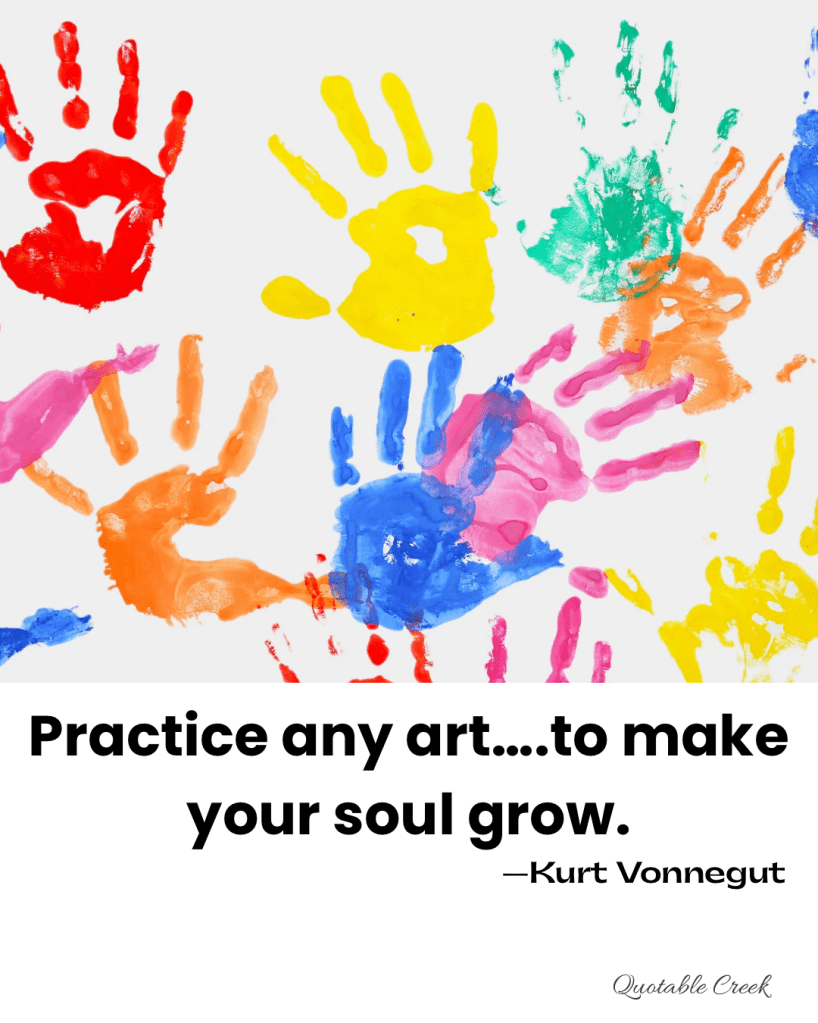
In 2006 a high school English teacher asked students to write to a famous author and ask for advice. Kurt Vonnegut was the only one to respond – and his response is magnificent:

“Dear Xavier High School, and Ms. Lockwood, and Messrs Perin, McFeely, Batten, Maurer and Congiusta:


I thank you for your friendly letters. You sure know how to cheer up a really old geezer (84) in his sunset years. I don’t make public appearances any more because I now resemble nothing so much as an iguana.


What I had to say to you, moreover, would not take long, to wit: Practice any art, music, singing, dancing, acting, drawing, painting, sculpting, poetry, fiction, essays, reportage, no matter how well or badly, not to get money and fame, but to experience becoming, to find out what’s inside you, to make your soul grow.


Seriously! I mean starting right now, do art and do it for the rest of your lives. Draw a funny or nice picture of Ms. Lockwood, and give it to her. Dance home after school, and sing in the shower and on and on. Make a face in your mashed potatoes. Pretend you’re Count Dracula.


Here’s an assignment for tonight, and I hope Ms. Lockwood will flunk you if you don’t do it: Write a six line poem, about anything, but rhymed. No fair tennis without a net. Make it as good as you possibly can. But don’t tell anybody what you’re doing. Don’t show it or recite it to anybody, not even your girlfriend or parents or whatever, or Ms. Lockwood. OK?


Tear it up into teeny-weeny pieces, and discard them into widely separated trash receptacals. You will find that you have already been gloriously rewarded for your poem. You have experienced becoming, learned a lot more about what’s inside you, and you have made your soul grow.
God bless you all!” ~Kurt Vonnegut

There is something soul-stretching about entering the zone, that timelessness we find in creating art. Writing, drawing, dancing, singing. All of it. Lose yourself in creating and find yourself a bit different on the other end.

Guarding your heart.

In this world of instant ‘news’ and polarized camps, it is difficult to siphon off the untrue, inflammatory, and malicious from the true, helpful, and conciliatory. 

This is particularly true when we learn that one of the goals of social media is to monetize our attention. In the stunning must-see documentary, The Social Dilemma on Netflix, creators of popular social media sites like Facebook and Pinterest discuss how they have monetized their apps to drive profit. The apps are free to use. What is for sale is…you. Your attention. Your time. Your behavior. 

What you click on, how long you look at it, and how you react is all measured. Complex algorithms calculate what data to show you based on what you are most likely to click. If you click on articles on empathy, you’ll be shown more stories on empathy. And if you click on dark or divisive articles, you will get more of same. Meanwhile, each of those clicks is a pay out from those seeking to put their messages into your head. The algorithms aren’t based on whether the content is good for you to view; they are based on what you are most likely to click. It is not hard to see how someone can become radicalized if they follow one of the darker holes further and further down.

So what to do? First, maybe affirm a universal truth. We want to make our decisions based on reality, not lies. We want to conform our understanding to facts, not alter the facts to fit our understanding. It’s as if there is a map to our destination. When we realize we are off course to a place we want to be, we change course, we don’t rewrite the map.

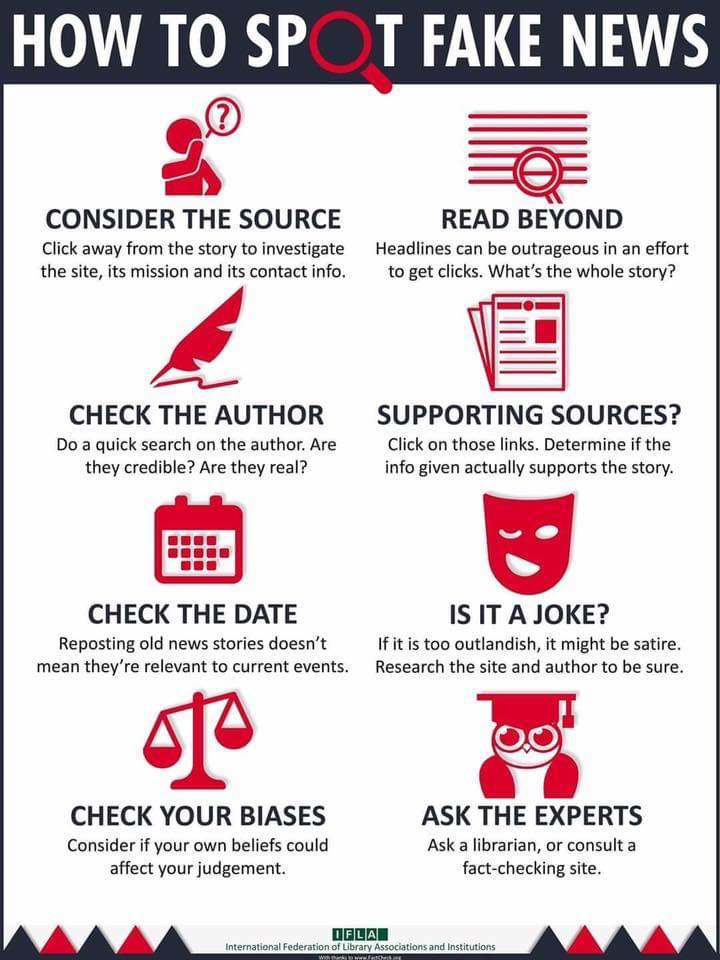
Second, consider your sources. Are they reputable? Rather than feeding the narrative you may want to hear, do they present the issues fairly and with minimal bias? If you are constantly being fed information that doesn’t square with what you see and hear happening around you, change up your sources.

Finally, read broadly. Don’t rely on a single person or news source. With respect to social media, seek out reliable sources directly and go to their sites to read the articles rather than clicking on a tempting link. We can be better informed than ever before, but we need to be intentional about it rather than passively wait for ‘news’ articles to pop up on your Facebook feed.

Social media is a powerful tool, but, like any tool, it can be a force for both good and bad. We need to be wary consumers and protect ourselves from being manipulated solely by advertisers trying to make a dime without regard to whether what they are showing us is true or decent. We need to guard our hearts, not to shelter ourselves from bad news or hurt in the world, but to keep ourselves from falling victim to fraud and deceit and unwittingly perpetuating false narratives ourselves.

Have you fallen for fake news lately? What steps have you taken to make sure you are reading and passing on reliable information? 

I recently clicked on an article purporting to be a response from someone who had been silent on a current political issue. I fell for the ‘Check the Date’ problem above. The article was from about four years ago. That person was still being silent on the current issue, so I didn’t get any new information, but that duplicitous advertiser made some money off my click. 

How about you?

Listening to hear.

Communication can be tough, particularly after a long silence. Finding inroads, healing thaws, rediscovering common ground takes effort.

Sometimes it’s nice to have a game plan before going into what might be an emotionally-charged conversation.

Consider this one:

So often we get lost in who’s right, who’s wrong. But is that really the point? Harsh words are often spoken in just such a competition to be right. Often the words cause more harm than the original conflict. Is right/wrong really the best way? Especially when the objective is to try to get a friendship back on track.

Being gentle, vulnerable, attentive is true strength. Moving through the world with a genuine sense of curiosity rather than an avowed sense of your own rightness can open the door to a better appreciation of someone else’s point of view and a greater chance of improving, rather than destroying, the remnants of a relationship you hope to save.

What is your woods?

We don’t let just anyone see us vulnerable, hear our secret stories, watch us struggle. To most of the world, we carry a bit of a shield between them and our tender parts. But there are some few we trust to see the real person behind the mask. We must love those people very much to be so naked and exposed.

Because we need to lay those masks down sometimes, don’t we? We can’t live a life of posture. And so we seek out places where and people with whom we can relax and let down our hair, unafraid of judgment, unconcerned with being deemed eccentric.  Perhaps to be part of nature, to rest among creation until we lose sight of where we stop and others begin.

In this poem, Mary Oliver takes us into her sacred space–the woods.

She must love us very much.

How I Go To the Woods 

by Mary Oliver  

Ordinarily, I go to the woods alone, with not a single friend, for they are all smilers and talkers and therefore unsuitable. 

I don’t really want to be witnessed talking to the catbirds or hugging the old black oak tree. I have my way or praying, as you no doubt have yours.  

Besides, when I am alone I can become invisible. I can sit on the top of a dune as motionless as an uprise of weeds, until the foxes run by unconcerned. I can hear the almost unhearable sound of the roses singing. 

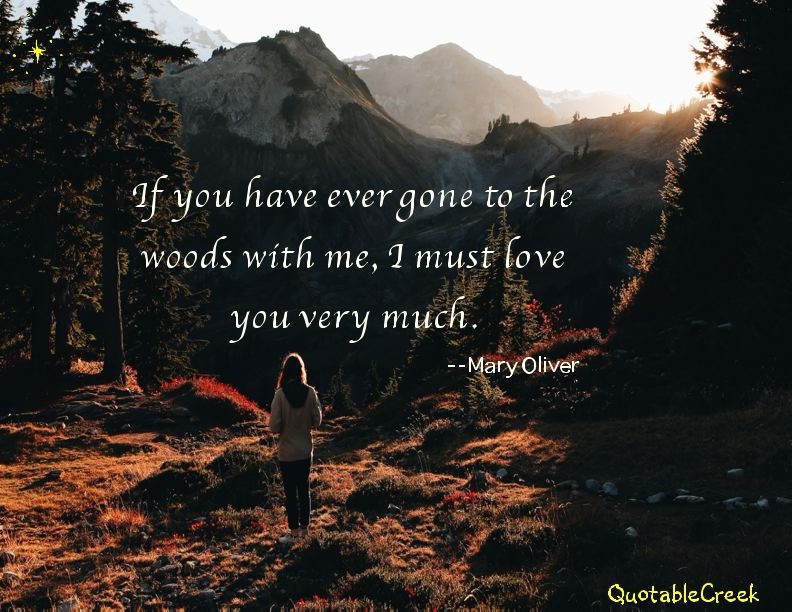
If you have ever gone to the woods with me, I must love you very much. 

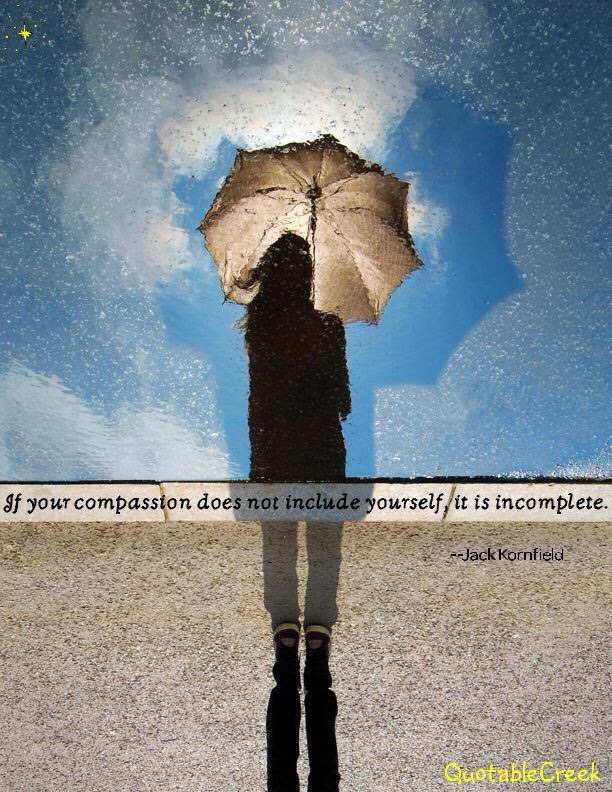
Be compassionate with yourself.

If one of your friends were struggling with the problems you are facing right now, what words would you offer in support? Would you call them names, berate them, remind them of all the other times they messed up just like this and how, honestly, can they ever expect to get anything right, ever?

Probably not. Right? But often this is the way we talk to ourselves. We replay all our other mistakes in our minds, call ourselves stupid, sink into our shells scared to face the world.

But why do we do this? If the words we would offer our friend are what we think would help, why are we so reticent to speak kind encouraging words to ourselves? Maybe today is a good day to try a different approach.

Be a kind friend to yourself. Offer yourself words of support and encouragement. Focus on all the many times you got things right. Tell yourself the truth: you are precious and beloved.

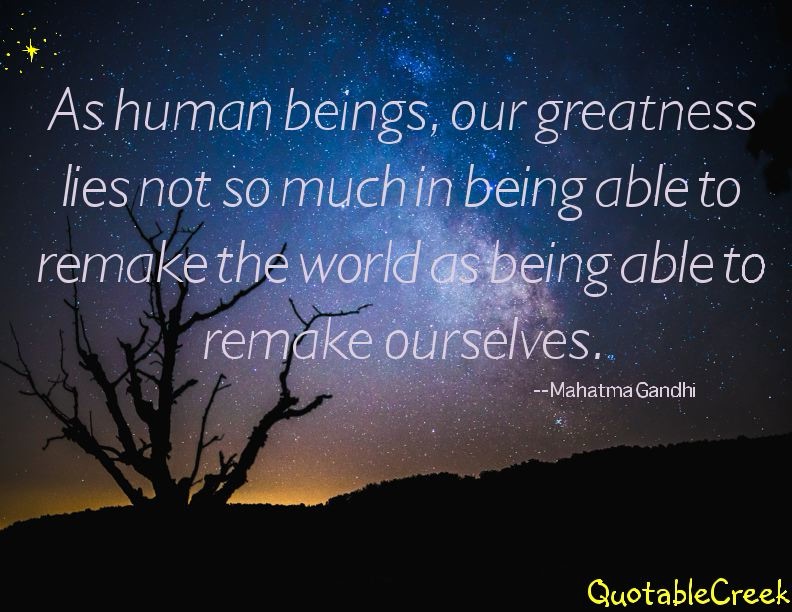
Keep pushing forward.

In a difficult and challenging place and time, we are called to continue the fight for what is right and good, true and just, honorable and compassionate. We push forward– listening more, caring more, giving more. We can drown out the din and listen to our hearts which strive for peace and harmony, communion, reconciliation. We must hold fast to our principles and to hope as our anchor, especially now.

How are we?

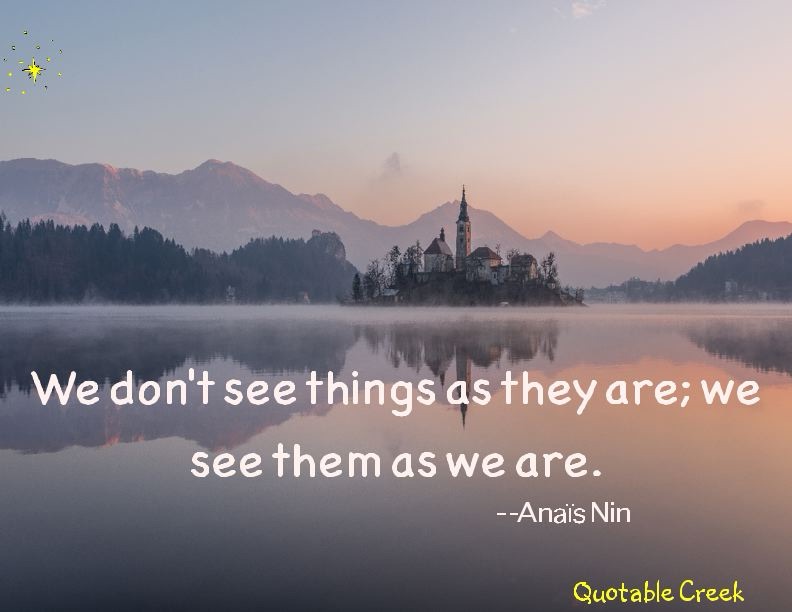
A guy cuts you off in traffic. How do you see him? Is he an inconsiderate lout caring little for the aggravation he causes you or a distracted hapless soul, perhaps late for an emergency? How we see this situation, or any situation, can have a profound effect on our lives.

In this thoughtful essay, Elizabeth Gilbert considers the power of perception. She recounts a time when her father and his siblings were reminiscing about their late mother and how she used to take a sip from any glass of milk she poured for them. They agreed on the fact, that she took a sip, but wildly disagreed on their perception of that fact:

At one point, they found themselves sitting around the old kitchen table, eating sandwiches and talking about the past. My uncle, the baby of the family, looked at the refrigerator and said, “I can still see Mom standing there, pouring me a glass of milk. Do you remember that sweet thing she always used to do whenever she got us a glass of milk? Remember how she’d take a tiny sip first, to make sure it wasn’t spoiled? Always looking out for us.”

My father, the analytical engineer of the family, raised his eyebrows. “No,” he said. “You are so wrong. Mom wasn’t sipping our milk to test it for freshness. She was sipping our milk because she always overfilled the glass. She had no sense of spatial relations. It used to drive me crazy.”

My brilliantly sardonic aunt looked at her two brothers like they were the biggest idiots she’d ever seen.

“You’re both wrong,” she said. “Mom was stealing our damn milk.”

So, what have we learned about my grandmother from this story? Was she a devoted caregiver, an incompetent dunderhead or someone who would steal the milk out of the mouths of her children? (Or maybe just an exceptionally thirsty woman.) The world will never know the truth.

But does the truth really matter?

I don’t think so.

Wow! What a remarkable difference in what each brings to the encounter. Now imagine yourself in each of those mindsets: hostile, critical, or grateful. Which would lead to the happier life?

We don’t have control over facts, but we sure have a tremendous amount of control over how we perceive those facts. We owe it to ourselves to try to see the facts in the most favorable light even if that means consciously going over all the possible interpretations of something and actively selecting the best one to pick.