When we lose our way or feel overwhelmed, we can return to nature and be renewed. Hear the birds singing their spring song. Watch them collect twigs and bits for their nests. See the long grass ripple in a gentle wind like ocean waves. Breathe in the sweet earthy fragrance of the morning. Feel small and surrounded by an amazing, complicated system that has been pulsating with life for millions of years. That awe is good for us:
“It has long been established that a healthy diet and lots of sleep and exercise bolster the body’s defenses against physical and mental illnesses. But the new study, whose findings were just published in the journal Emotion, is one of the first to look at the role of positive emotions in that arsenal.
“That awe, wonder, and beauty promote healthier levels of cytokines suggests that the things we do to experience these emotions—a walk in nature, losing oneself in music, beholding art—has a direct influence upon health and life expectancy,” says UC Berkeley psychologist Dacher Keltner, a coauthor of the study.”
Breathe in the day, full of life and possibility. Breathe out the stress, the worry, the defeat. In. Out. In. Out. In.
I’m a huge Ted Lasso fan. When an episode ends, I actually groan. This week was a powerful demonstration of how important words are, how the things we say can impact a person for years (for good or bad), and how important genuine, heart-felt communication is to heal old wounds.
Tough guy Roy Kent was hurt by the blunt criticism of his skills written in an article by reporter Trent Crimm from Roy’s first game when Roy was just 17. Roy still carries the article around in his wallet decades later.
Do you have any words like that that you’re still metaphorically carrying around years later? Perhaps we remember a mentor’s encouragement that sparked our interest or passion in a chosen career. Perhaps, sadly, we still struggle under the weight of words by someone who condemned us at our worst, saw as as inadequate or a failure. someone who felt we would never measure up.
Words have heft to weigh us down or sustain us. We need to remember that when we choose ours.
My daughter recently organized her library, not by any of the more common methods of organizing books—genre, audience, age, author last name, — but by color of the cover. I must say, this startled me. It upset my Dewey-decimal apple cart. But look how lovely it is!
I have always focused on organization, both as a lawyer and, now, as an author. It is so vital to figure out your system for how something is to be done. How to organize the information in the most compelling way. Generally, for instance, an appellate brief is organized chronologically, but often that isn’t the most persuasive way. Some testimony needs to be highlighted, some evidence footnoted. And so on. The organization of the brief is a hidden layer adding content. The same is true for stories, sometimes jumbling the timeline or telling things from multiple points of view adds layers and juxtapositions you simply couldn’t get in any other way.
Or, for that matter, consider organizing socks. As a little girl I tried out organizing my socks from white to black with all the colors in the middle in a lovely spectrum (she is my daughter!) but then realized that wasn’t as efficient as organizing them for their intended use—play, school, dress, etc. I’ve had similar questions in my closet. What goes with what? How should things be ordered? Currently my blouses and tops are organized from sleeveless to long-sleeved. But color would certainly be fun, or seasons, or play to formal. The possibilities are endless. But this brings me somewhat round about to my point.
Everything is organized, and we need to pay attention to how.
Consider a grocery store with the popular items at eye level and the tempting items at check out. Or the casino, windowless and clockless to encourage extended gambling. Or a library? What goes in fiction/non-fiction? Is that line ever blurry? Or the church: how would you organize a church? Where should the focus be? How, or do, you make it welcoming? Or a city? Is there a right and wrong side of the tracks? Why?
These kind of questions keep us sharp and open, more able to see when systems aren’t working or when the organization of a thing is manipulating us. And taking things and jumbling up the order, like sorting books by color rather than content, let’s us see with fresh eyes and catch new and interesting juxtapositions, and challenge the very systems we use for categorizing what’s in or out.
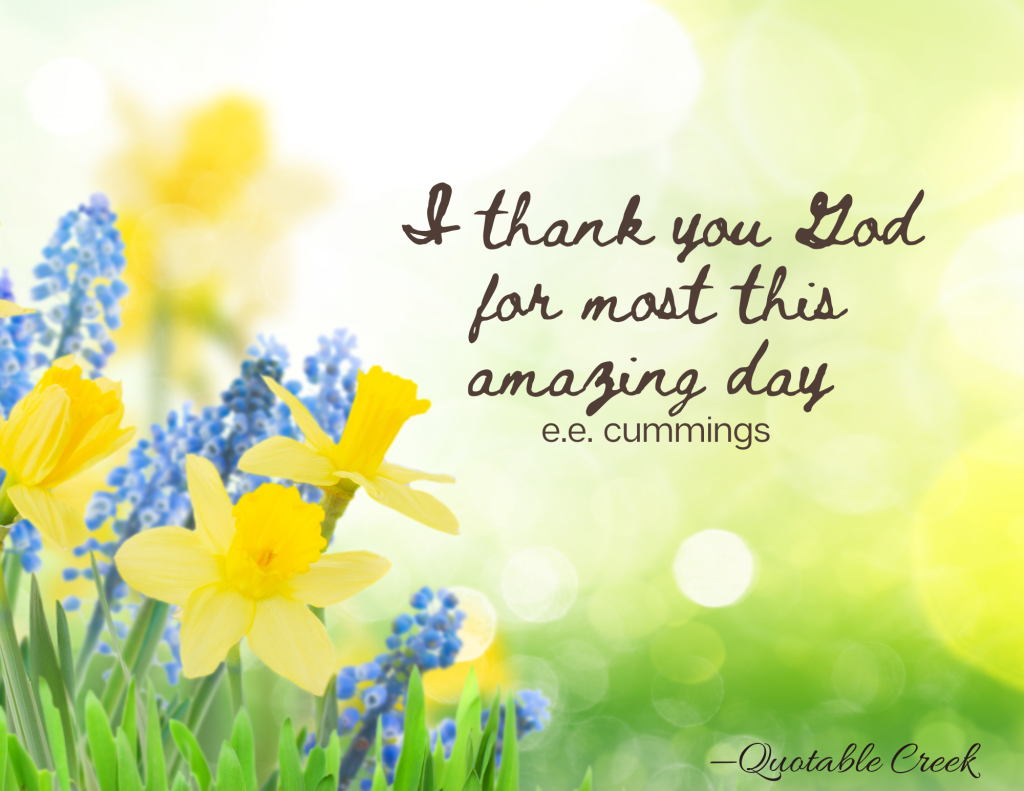
There are some poems that reach so deep, they become part of us that we can call up by heart. This is one for me, ‘I thank you God for most this amazing day’ is a phrase never far from my mind. Something about the inverted syntax seems to sum up that overwhelm, spilling over feeling of joy at creation, at being here in it, at the amazing miracle of it all.
Enjoy the whole poem. It’s spectacular.
i thank You God for most this amazing day:for the leaping greenly spirits of trees and a blue true dream of sky;and for everything which is natural which is infinite which is yes
(i who have died am alive again today and this is the sun’s birthday;this is the birth day of life and of love and wings;and of the gay great happening illimitably earth)
how should tasting touching hearing seeing breathing any—lifted from the no of all nothing—human merely being doubt unimaginable You?
(now the ears of my ears awake and now the eyes of my eyes are opened)
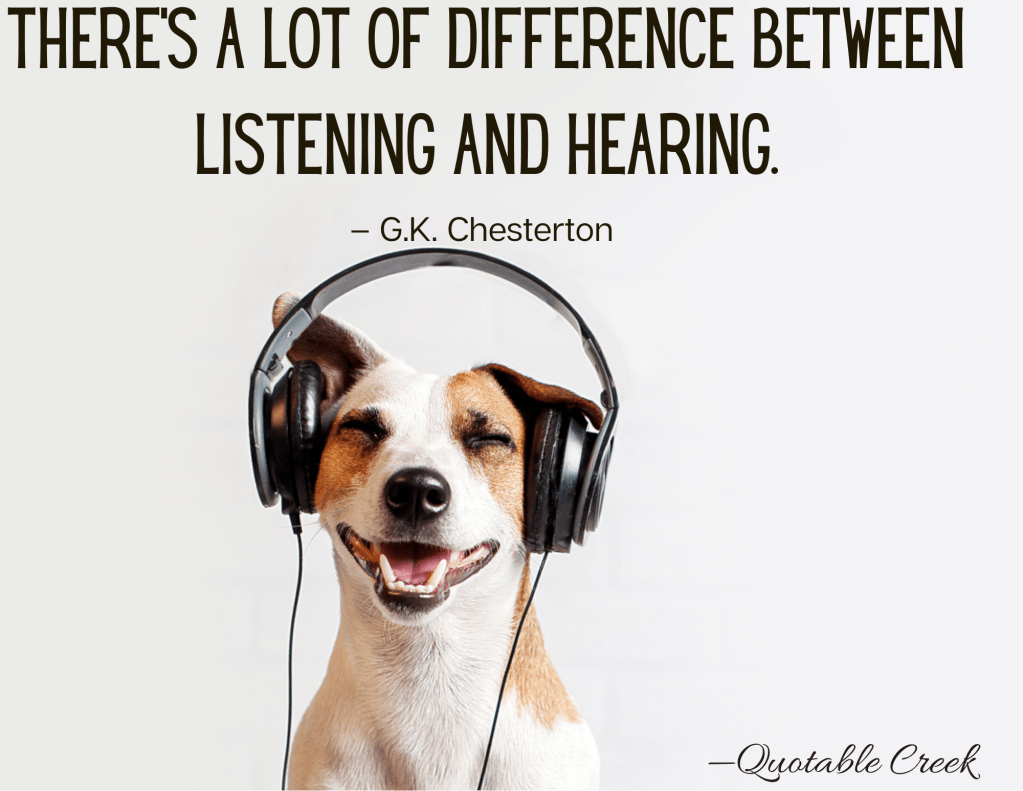
These days there is a lot of noise—everyone has a soapbox—but I wonder how much is really heard. This article explores the problem of autobiographical listening, listening with the hope of injecting a story about yourself into the mix. There are levels to this. The matcher, who always has a similar vacation or achievement to switch the conversation to. The topper who has an even better vacation or achievement to turn the conversation to. And the outright conversation narcissist where really all parts of the conversation somehow turn on him.
But if our goal is connection, we really need to learn how to better listen:
“Listen with curiosity. Speak with honesty. Act with integrity. The greatest problem with communication is we don’t listen to understand. We listen to reply. When we listen with curiosity, we don’t listen with the intent to reply. We listen for what’s behind the words.”
Roy T. Bennett, The Light in the Heart
Practice listening to understand. Avoid autobiographical listening:
“When we fail to listen from the other person’s perspective, we are listening through our own lens and tend to pass more judgments compared to simply listening,” Reigstad added. “There are four types of autobiographical listening ― evaluate, probe, advise and interpret. These responses tend to have us asking questions based on our experiences, offering advice to fix the problem and so on. It’s important to resist the urge and allow the other person to speak.”
Today, I want to lift up the caregivers. Whether for an aging parent, ailing spouse, struggling child, or young grandchildren, or all or some of these together. It takes a good person to care and do their best to help.
Rosalyn Carter made this insight:
There are only four kinds of people in the world: Those who have been caregivers. Those who are currently caregivers. Those who will be caregivers. And those who will need a caregiver.
We are all interconnected. We all will experience a time when we need help and times when we can offer help. It is a blessing to care about others and to let others care for us. Caring is at the heart of every good thing done in the world.
So, to the caregivers: may God bless you. Your work is making a better world.
Have you ever wished you could erase someone or something from your mind? That you could go back to that time when you hadn’t messed up or been hurt? We long for that before, don’t we? We hold on to the anger or regret because we miss that before so much, that innocent time before something wounded us or before we wounded someone else.
But holding that emotion grounds us in the past and our wounds don’t heal, but fester. It happened. We can’t erase it or take it back. We need to acknowledge that bad stuff happens, sometimes stuff we do ourselves, and move on, forgiving ourselves and others, into the future we have in front of us now rather than longing for the future we had in front of us before.
This, right here, right now, is what your life is. The future in front of you is built on all the things that have happened to you and things you have done up to this point, even the bad things.
Step into that future, let go of the past, and be the best you you can be.
The potential for a loving relationship is in one embrace. The potential for peace is in forgiveness. The potential for harmony is in stillness. The potential for quality conversation is in listening.
Consider the opportunities you have to make your world and the world a better kinder place with the actions you sow today.
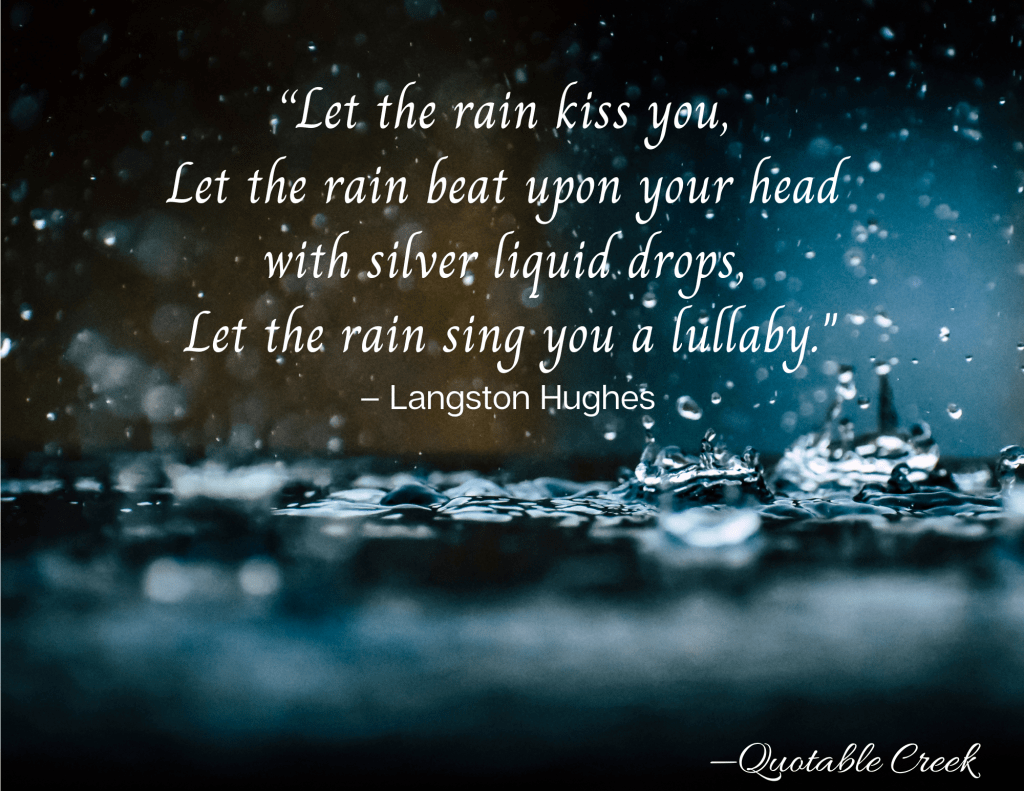
It’s raining here. Again. My drought tolerant landscape must be wondering what’s up. But I am safe, warm, and grateful. Today is a good day for comfort and the things that warm us. Enjoy this poem.
For many of us, our childhoods were pretty structured or were spent pleasing others to the point where we don’t completely know what we enjoy or what brings us pleasure. One of the joys of adulthood is laying down other’s expectations and pressures and discovering who we are deep down.
Emily says it well,
Finding yourself
is not really how it works. You aren’t a ten-dollar bill in last winter’s coat pocket.
You are also not lost. Your true self is right there, buried under cultural conditioning, other people’s opinions, and inaccurate conclusions you drew as a kid that became your beliefs about who you are. “Finding yourself” is actually returning to yourself. An unlearning, an excavation, a remembering who you were before the world got its hands on you.
Emily McDowell
Take a minute and think about what you loved as a child before ‘the world got its hands on you’. Is there a way to return to that joy in some way today?





 QuotableCreek.com