Many trees these days looks dead. And yet spring will come. Bulbs planted long ago under frigid ground are even now pushing out sprouts working their way to the surface. Spring will come.
Believing in spring is a bit like an act of faith. Things look bleak and dead, yet we hope for new life and regeneration. Renewal. what was broken can be mended. What was lost can be found. Those who have given up can find hope.
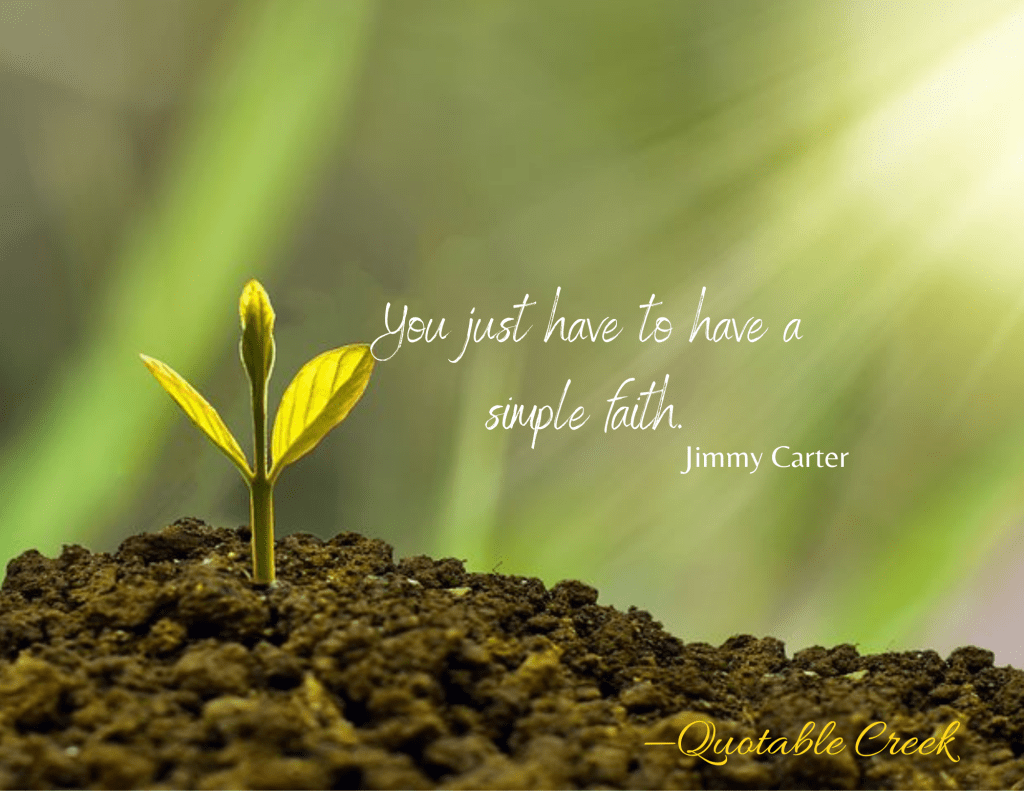
As we hear news that former President Carter is receiving hospice care, I pray his faith sustains and comforts him and his family, and that they find peace. In his words:
God is not my personal valet. God does not build a protective fence around my life, keep me from trouble, fulfill my personal desires, or guarantee my success. However, through prayer God offers me comfort, reassurance, satisfaction, courage, hope, and peace.”
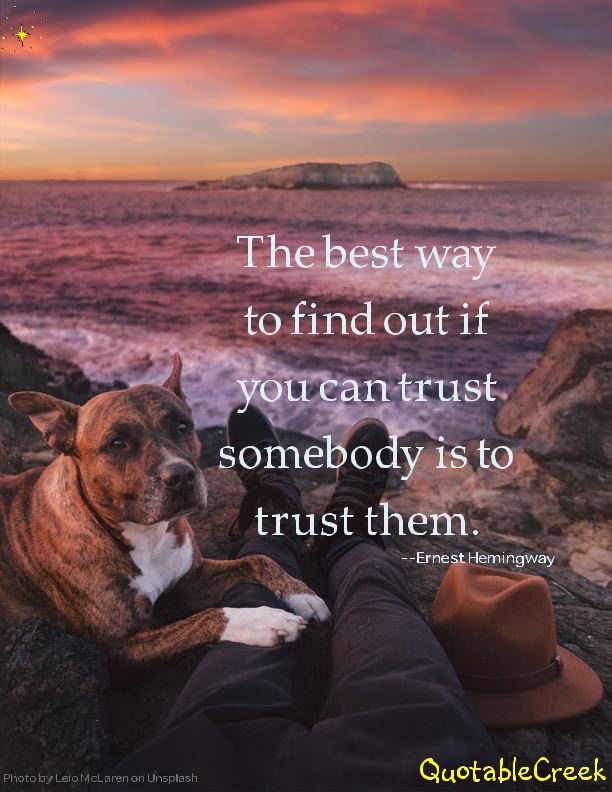
How often do we give others the benefit of the doubt? Do we assume the innocent explanation or conclude the worst? Are we patient, or do we pounce at the very first mistake someone makes in trying to get their thoughts out? Do we search for the best in others, or do we protect ourselves in advance about the damage we fear may be inevitable by opening our hearts to trusting someone again?
Wouldn’t it be lovely to live in a world where everyone gave everyone else the benefit of the doubt? Where perceived offenses weren’t allowed to fester and grow? Where there was trust?
Consider this beautiful poem on friendship by Dinah Maria Craik. Isn’t this how we would like to make each other feel?
Friendship
by Dinah Maria Craik
Oh, the comfort —
the inexpressible comfort of feeling safe with a person —
having neither to weigh thoughts nor measure words,
but pouring them all right out,
just as they are,
chaff and grain together;
certain that a faithful hand will take and sift them,
keep what is worth keeping,
and then with the breath of kindness blow the rest away.
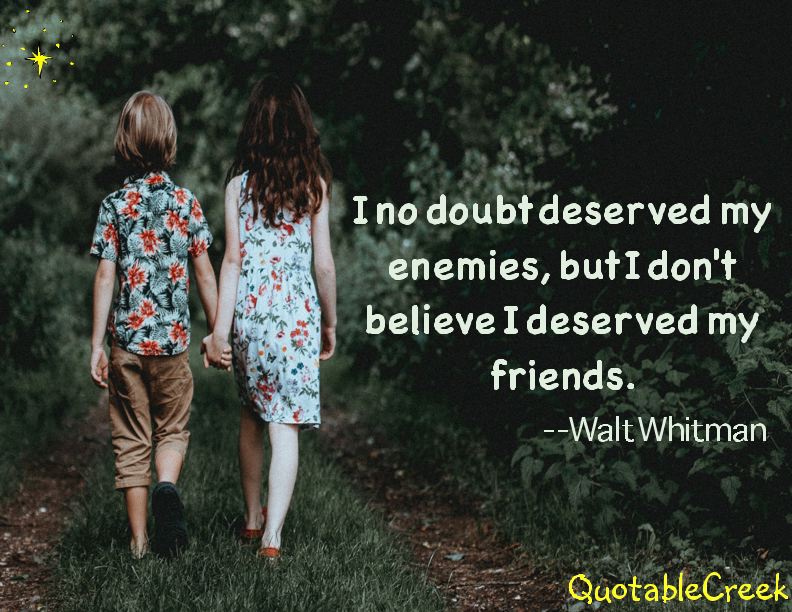
I’ve been blessed with good friends, some friendships going back decades. What a gift it is to travel this life in the company of people who know you, warts and all, and love you. And what a sacred thing it is to be someone’s friend, trusted with their stories, their heartaches, their joys. Friendship is the glue that holds this whole crazy thing called life together.
Writer Anaïs Nin opined that “Each friend represents a world in us, a world possibly not born until they arrive, and it is only by this meeting that a new world is born.” As Nin conveys, friendship can elicit joy, companionship, and growth—enriching our entire experience of the world.
And, as it turns out, friendship is good for what ails us:
Strong friendships are a critical aspect of most people’s emotional well-being. Research indicates that close friendships are associated with greater happiness, self-esteem, and sense of purpose. These bonds are even associated with physical outcomes, such as lower blood pressure and a longer lifespan.
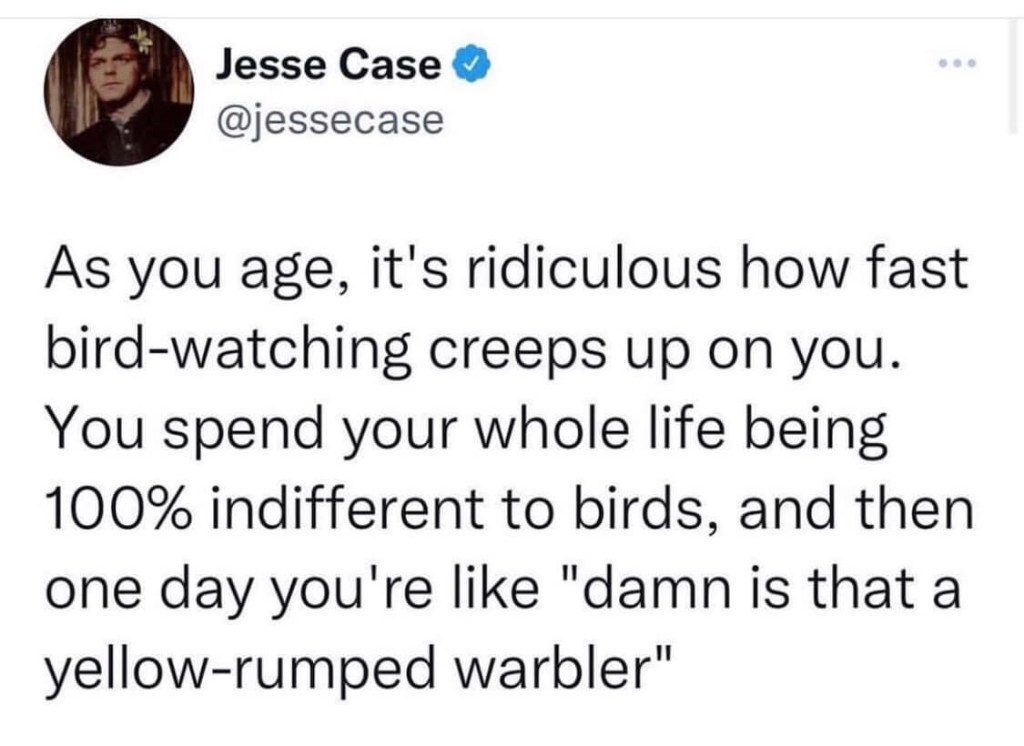
Some of my friends and I are noticing our interests shift these days. This tweet sums up the phenomenon perfectly.
And it’s not just birds, but the weather, the garden, the laugh of a child. The little moments bear a new luster. And of course it makes sense. As our lives are rushing by in our younger years, the little things can get lost. We always will have the time to stop and look, to smell the roses, we reason, so we put it off. But as we feel our time here becoming more finite, our attention hones. We pause. We marvel. We are constantly astonished.
As it turns out, this experience isn’t so much a reflection of our age as it is our perception of time. When we feel time vast, spreading out before us, our focal point is on the future, but when we feel a possible end to our time here, our attention draws close and we appreciate the little things. So even someone young facing death will have this urge to stop and soak in the little things.
In his book, Being Mortal; Medicine and What Matters in the End, Atul Gawande summarizes research on this experience:
“…how we seek to spend our time may depend on how much time we perceive ourselves to have. When you are young and healthy, you believe you will live forever. You do not worry about losing any of your capabilities. People tell you “the world is your oyster,” “the sky is the limit,” and so on. And you are willing to delay gratification—to invest years, for example, in gaining skills and resources for a brighter future, you seek to plug into bigger streams of knowledge and information. You widen your networks of friends and connections, instead of hanging out with your mother. When horizons are measured in decades, which might as well be infinity to human beings, you most desire all that stuff at the top of Maslow’s pyramid- achievement, creativity, and other attributes of ‘self-actualization,” but as your horizons contract—when you see the future ahead of you as finite and uncertain—your focus shifts to the here and now, to everyday pleasures and the people closest to you.”
Being Mortal: Medicine and What Matters in the End, by Atul Gawande
But our ‘knowledge’ of the time we have is far from certain. Sometimes our belief we will always have another day keeps us from appreciating the days we have. Practices like mindfulness and meditation, reading poetry, help ground us in the present so we can capture those moments, but it’s difficult to keep our own mortality enough in our consciousness to really grasp the preciousness of each moment.
In the play, Our Town, by Thornton Wilder, the lead character Emily, a young woman who loses her life early in childbirth, is given the opportunity to revisit one day in her life, and she sees it all with new eyes:
Emily: Oh, Mama, look at me one minute as though you really saw me. Mama, fourteen years have gone by. I’m dead. You’re a grandmother, Mama! Wally’s dead, too. His appendix burst on a camping trip to North Conway. We felt just terrible about it – don’t you remember? But, just for a moment now we’re all together. Mama, just for a moment we’re happy. Let’s really look at one another!…I can’t. I can’t go on.It goes so fast. We don’t have time to look at one another. I didn’t realize. So all that was going on and we never noticed. Take me back — up the hill — to my grave. But first: Wait! One more look. Good-bye , Good-bye world. Good-bye, Grover’s Corners….Mama and Papa. Good-bye to clocks ticking….and Mama’s sunflowers. And food and coffee. And new ironed dresses and hot baths….and sleeping and waking up. Oh, earth, you are too wonderful for anybody to realize you. Do any human beings ever realize life while they live it–every, every minute? Stage Manager: No. (pause) The saints and poets, maybe they do some. Emily: I’m ready to go back.”
Our Town, by Thornton Wilder
Today is that day, a day for us to realize life while we’re living it, every, every minute as much and as best as we can.
Rob Kenney has a YouTube channel Dad, How Do I? where he teaches his nearly 3 million viewers how to do stuff. He got the idea for his channel wondering about the kids growing up without dads and wanting to help fill that space for them, teaching them how to tie their tie, do their taxes, check their oil, plant a tree, and so on. He tells them he’s proud of them.
What a sweet idea. And resource! But, more importantly, how wonderful it is to see someone consciously being a positive role model, using his know-how to help others, and trying to fill a void.
The truth is we all have the potential to be role models. Whether it’s how we behave under pressure, handle a crowded line, or talk with someone who disagrees, our actions matter. People will see us and think about whether they want to follow our example. We have a responsibility to be a good one.
We each decide if we are to be the hero of the story our lives are writing. We each will hear calls to adventure and must decide whether we will rise to the occasion. We each struggle with challenges and learn, or not, from the experience. What will your story be? How will you meet the challenges you encounter?
In this short film, Matthew Winkler outlines Joseph Campbell’s Hero Journey, a path we all must take.
In a week of mass shootings and other discouraging news, we need a dose of Mr. Rogers, a man who believed passionately in the value of children, just as they are, and dedicated his life to teaching them to manage and express their feelings. What a hero he was.
In this clip from 1969, he makes his case. His lessons are as important today as they were then. Take a listen.
The Parable of the Good Samaritan is well known. In short, a man lies helpless and injured in the road. Religious leaders rush past offering no assistance, while a Samaritan stops and offers the wounded man succor and solace.
What makes one person stop to help while others rush by? Is it the belief that helping is the right way to show up in the world? A religious mandate even? Or is there more to it?
In a famous study at Princeton, researchers evaluated a group of seminarians, specifically discussing the Parable of the Good Samaritan, and then sending them to a task, indeed to lecture on the very parable, where they would necessarily walk right past someone needing help. Even with the parable fresh on their minds, the future pastors for the most part walked right by. Presumably these were nice people who intended to spend a lifetime in service. And yet, they walked right by. They acted in a way incongruent with their professed beliefs.
A surprising result to say the least. But the conclusion from the experiment was that the biggest influencer in whether they stopped to help was not their religious beliefs or their innate kindness, but their perception of time. The more of a hurry they were in, the less likely they were to help.
So how does this inform our choices?
A general kind intent to help is not enough. We are all the Princeton Divinity Students rushing to our next important task and potentially neglecting the plight of others right in our path. We must slow down the clock and really see the people around us. And we need to be ok with the idea that our plans and schedules might be disrupted. Surely stopping to help someone in need will change your day, will inconvenience you, and cause you to spend time and perhaps money in an unplanned way.
But the help you might be able to offer someone in need could be invaluable.
We are bombarded daily with stories of fraud, cheating, self-interest, and dishonesty. People talking over each other, shoving, hostile. Everything is so charged and hot. Sometimes it feels like the people who stoop to these tactics might win the race and that we should do it, too. Otherwise, the ‘bad’ side will triumph. And yet.
Honesty matters. Integrity matters. Truth matters. Fairness and justice matter. On the foundations of these qualities, trust is built.
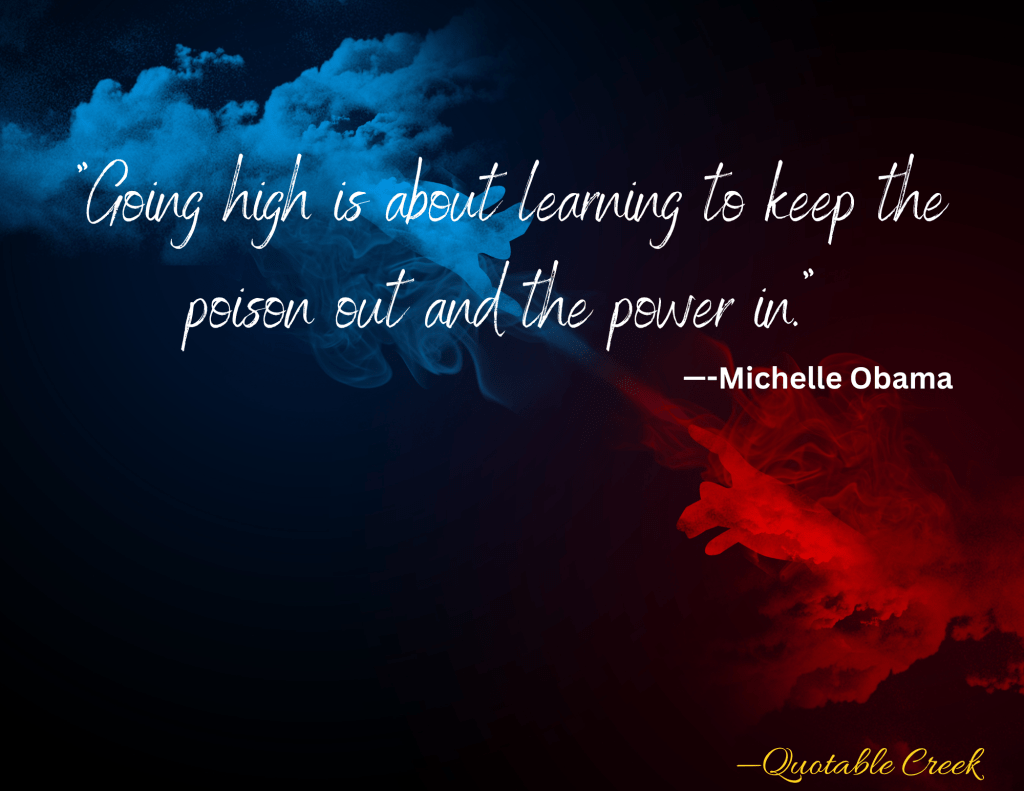
Explaining her ‘go high’ comment, Michelle Obama says,
My answer is yes. We need to keep trying to go high. Operating with integrity matters. It will matter forever. It is a tool.
At the same time, though, I want to be clear: Going high is something you do rather than merely feel. It’s not some call to be complacent and wait around for change, or to sit on the sidelines as others struggle. It is not about accepting the conditions of oppression or letting cruelty and power go unchallenged. The notion of going high shouldn’t raise any questions about whether we are obligated to fight for more fairness, decency, and justice in this world; rather, it’s about how we fight, how we go about trying to solve the problems we encounter, and how we sustain ourselves long enough to be effective rather than burn out. There are some who see this as an unfair and ineffective compromise, an extension of respectability politics, in which we conform to rather than challenge the rules in order to get by. Why, people rightly wonder, do we need to try to be so reasonable all the time?
I can see how some think that reason leaves no room for rage. I understand the perception that going high means that you somehow remove yourself and remain unbothered by all that might otherwise gall and provoke you.
But it’s not that at all.
When I first said those words…, I was neither removed nor unbothered. In fact, I was pretty agitated….
But where was my actual power? I knew it didn’t reside in my hurt and rage, at least as they existed in raw forms. My power lay in whatever I could manage to do with that hurt and rage, where I could take it. It hinged on whether or not I could elevate those feelings into something that would become harder for others to write off, which was a clear message, a call to action, and a result I was willing to work for.
That’s what going high is for me. It’s about taking an abstract and usually upsetting feeling and working to convert it into some sort of actionable plan, to move through the raw stuff and in the direction of a larger solution.
I want to be clear that this is a process, and not always a quick one. It can take time and patience. It’s okay to sit and stew for a while, to live inside the agitation caused by injustice or fear or grief, or to express your pain. It’s okay to grant yourself the space you need to recover or heal. For me, going high usually involves taking a pause before I react. It is a form of self-control, a line laid between our best and worst impulses. Going high is about resisting the temptation to participate in shallow fury and corrosive contempt and instead figuring out how to respond with a clear voice to whatever is shallow and corrosive around you. It’s what happens when you take a reaction and mature it into a response.
Because here’s the thing: Emotions are not plans. They don’t solve problems or right any wrongs. You can feel them—you will feel them, inevitably—but be careful about letting them guide you. Rage can be a dirty windshield. Hurt is like a broken steering wheel. Disappointment will only ride, sulking and unhelpful, in the back seat. If you don’t do something constructive with them, they’ll take you straight into a ditch.
My power has always hinged on my ability to keep myself out of the ditch.
One good thing to come out of despair is the ability, once you are past it, to help someone in the middle of it realize that things will get better, that this, too, will pass. It’s as if we are all climbing our way out of a pit and reaching up to grab the hand of someone who has already made it out. Being able to reach your hand down to someone still in the pit is a blessing from something awful you may have gone through.
Along these lines, was the It Gets Better movement started several years ago, with prominent people from the LGBTQ community sharing their stories to help others who were struggling and feeling desperate.
Perhaps your last few years have been filled with grief. Certainly for many the pandemic has been a season of loss—of community, of norms, of freedoms, and, for many, of loved ones.
As you go forward, remember that we are each other’s support. We are each other’s comfort and hope. Reach out to each other.
For a very powerful rendition of R.E.M.’s, Everybody Hurts, listen to this rendition by priest, Father Ray Kelly. I stumbled onto this video several years ago, and it recently popped up again. I need to store it in a safe place to rewatch as needed. For me at least, it touches the soul and gives me solace.

 QuotableCreek.com