Something vaster.

Author Amy Tan shares this remarkable insight:

“In one of John Muir Laws’s books, I read something profound that changed the way my brain thinks. “As you draw the bird,” he writes, “try to feel the life within it.” So now I look at the bird before me and imagine how it senses the world, how it feels breathing cold air, how it feels to have its feathers ruffling in the wind, how it feels to always have an eye out for possible food and possible predators. The bird sees me and is a nanosecond from flying off, but it stays. Why? By imagining the life within, the bird I am drawing is alive, no longer a shape and its parts, but a thinking, sentient being, always on the brink of doing something. By feeling the life within, I am always conscious that all creatures have personalities, and so do trees and clouds and streams. To feel the life within, I now imagine myself as the bird that is looking at me. I imagine its wariness, the many ways it has almost died in its short life. I worry over its comfort and safety, and whether I will see my little companion the next day, the next year. To feel the life within is to also feel grief in the goneness of a single creature or an entire species. Imagination is where compassion grows. Let us join with children to imagine and wonder, to use curiosity as the guide to miracles in plain sight. Let us enter with them into wild wonder so that we become guardians together of all that is living and all that must be saved.”

From Orion Magazine, “The Life Within”.

I wonder if we can look at each other that way, as something vaster, as thinking sentient beings with worlds of experience, some harsh. Would that help us to treat each other better? In her book, Dead Man Walking, Sister Helen Prejean describes just this sort of thing as she works with a death row inmate, a man who admittedly committed a heinous act, seeing not just the man but also, though covered with tattoos and bathed in bravado, the little wounded child within. That empathy allowed her to see past the crimes to the human and to feel compassion for him.

Perhaps today we can look with new eyes to see each other as a composite of good and bad, but each fully human and fully deserving of respect and compassion. To paraphrase Amy Tan above, when we consider the person, can we try to picture the life within, the challenges and struggles, hopes and triumphs? Can we become, together, ‘guardians of all that is living and must be saved’ in a place where ‘compassion grows’?
Whispers to your heart.

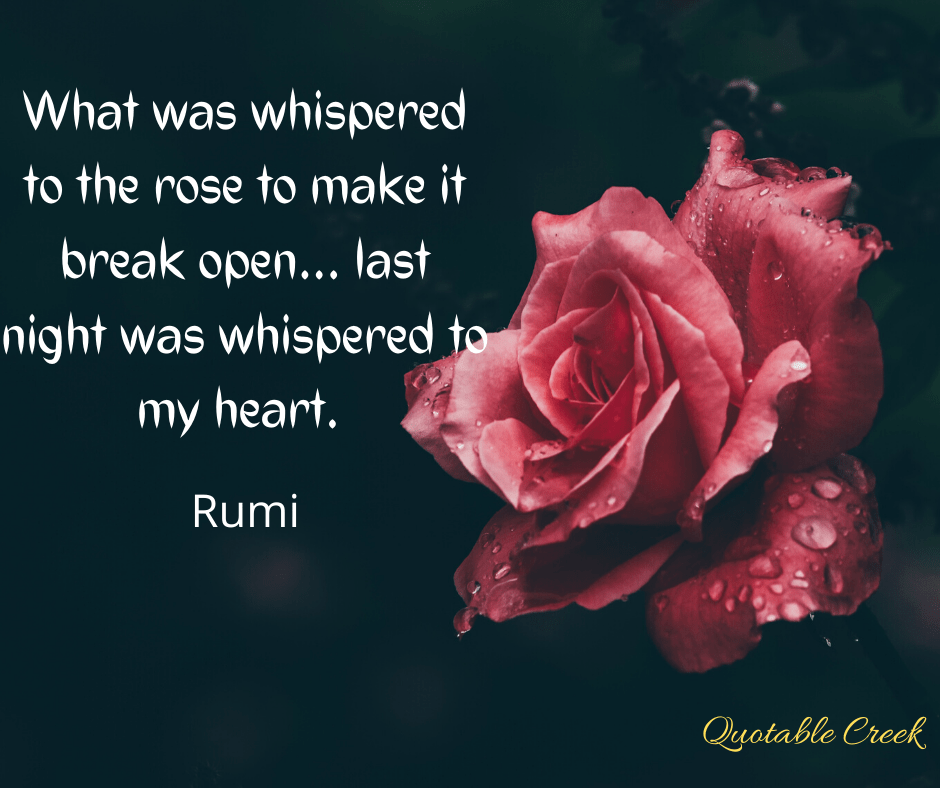
Sometimes we clench our jaws and build up our walls so that no one will hurt us or challenge us. We try to protect ourselves this way, but instead we become isolated. The people we’ve locked out feel threatening to us, so we make our guard stronger and more impenetrable. And we grow more isolated and afraid.

Brené Brown describes vulnerability as  “uncertainty, risk, and emotional exposure.” It’s that unstable feeling we get when we step out of our comfort zone or do something that forces us to loosen control. But our strength is in our vulnerability, and when we open to pain, we also open to joy and connection. It is our authentic selves that hunger for connection, not the masks and shows we put on. Brenè Brown continues this way:

“I wasn’t taught how to deal with uncertainty or how to manage emotional risk. I spent a lot of years trying to outrun or outsmart vulnerability by making things certain and definite, black and white, good and bad. My inability to lean into the discomfort of vulnerability limited the fullness of those important experiences that are wrought with uncertainty: Love, belonging, trust, joy, and creativity to name a few. Learning how to be vulnerable has been a street fight for me, but it’s been worth it.”

The world isn’t black and white. It is nuanced and a zillion shades of gray. As are people, including you. As we open to our own authentic selves, and risk sharing that self with others, we open more fully to life, to experience, and to genuine connection with others.

For more, here is her original TED talk on vulnerability, a talk that has resonated with millions over the years.

Little band of heroes

Photo by Catalin Pateo on Unsplash

All we face now can feel overwhelming. It’s as if everywhere you turn, there is another challenge and another threat. And yet, even if the midst of all that is wrong, there are opportunities to shine the light, to be a voice for good, and to support others. Yes, it looks bleak now, but we are still here to do some good:

“Yes, it looks bleak. But you are still alive now. You are alive with all the others, in this present moment. And because the truth is speaking in the work, it unlocks the heart. And there’s such a feeling and experience of adventure. It’s like a trumpet call to a great adventure. In all great adventures there comes a time when the little band of heroes feels totally outnumbered and bleak, like Frodo in Lord of the Rings or Pilgrim in Pilgrim’s Progress. You learn to say ‘It looks bleak. Big deal, it looks bleak.’”
— Joanna Macy

Attitude is Everything

Sometimes everything comes down to how we see a situation. Will we get irritated by something or consider it an opportunity to build community? Often children with their winsome ways and guilelessness cause us to adapt. Take a moment to watch this life-affirming story about a man who took an unusual approach to a child riding a bike in his driveway. What a beautiful neighborhood they are creating together!

Making a way out of no way.

John Lewis was an American hero. His whole life was a testament to fighting the good fight and trying to make the world a better, more egalitarian place even in the most dire of circumstances. Today, he is laid to rest, but he left us words, every one ringing with truth, to give us light and help us find our way without him:

“While my time here has now come to an end, I want you to know that in the last days and hours of my life you inspired me. You filled me with hope about the next chapter of the great American story when you used your power to make a difference in our society. Millions of people motivated simply by human compassion laid down the burdens of division. Around the country and the world you set aside race, class, age, language and nationality to demand respect for human dignity.

“That is why I had to visit Black Lives Matter Plaza in Washington, though I was admitted to the hospital the following day. I just had to see and feel it for myself that, after many years of silent witness, the truth is still marching on.

“Emmett Till was my George Floyd. He was my Rayshard Brooks, Sandra Bland and Breonna Taylor. He was 14 when he was killed, and I was only 15 years old at the time. I will never ever forget the moment when it became so clear that he could easily have been me. In those days, fear constrained us like an imaginary prison, and troubling thoughts of potential brutality committed for no understandable reason were the bars.

“Though I was surrounded by two loving parents, plenty of brothers, sisters and cousins, their love could not protect me from the unholy oppression waiting just outside that family circle. Unchecked, unrestrained violence and government-sanctioned terror had the power to turn a simple stroll to the store for some Skittles or an innocent morning jog down a lonesome country road into a nightmare. If we are to survive as one unified nation, we must discover what so readily takes root in our hearts that could rob Mother Emanuel Church in South Carolina of her brightest and best, shoot unwitting concertgoers in Las Vegas and choke to death the hopes and dreams of a gifted violinist like Elijah McClain.

“Like so many young people today, I was searching for a way out, or some might say a way in, and then I heard the voice of Dr. Martin Luther King Jr. on an old radio. He was talking about the philosophy and discipline of nonviolence. He said we are all complicit when we tolerate injustice. He said it is not enough to say it will get better by and by. He said each of us has a moral obligation to stand up, speak up and speak out. When you see something that is not right, you must say something. You must do something. Democracy is not a state. It is an act, and each generation must do its part to help build what we called the Beloved Community, a nation and world society at peace with itself.

“Ordinary people with extraordinary vision can redeem the soul of America by getting in what I call good trouble, necessary trouble. Voting and participating in the democratic process are key. The vote is the most powerful nonviolent change agent you have in a democratic society. You must use it because it is not guaranteed. You can lose it.

“You must also study and learn the lessons of history because humanity has been involved in this soul-wrenching, existential struggle for a very long time. People on every continent have stood in your shoes, though decades and centuries before you. The truth does not change, and that is why the answers worked out long ago can help you find solutions to the challenges of our time. Continue to build union between movements stretching across the globe because we must put away our willingness to profit from the exploitation of others.

“Though I may not be here with you, I urge you to answer the highest calling of your heart and stand up for what you truly believe. In my life I have done all I can to demonstrate that the way of peace, the way of love and nonviolence is the more excellent way. Now it is your turn to let freedom ring.

“When historians pick up their pens to write the story of the 21st century, let them say that it was your generation who laid down the heavy burdens of hate at last and that peace finally triumphed over violence, aggression and war. So I say to you, walk with the wind, brothers and sisters, and let the spirit of peace and the power of everlasting love be your guide.”

May his words hold true in our hearts, and let us live up to the example he set. Let us go forward in the spirit of peace with everlasting love as our guide. Let this be our solemn vow. Now is the time.

Shelter in the storm.

Of all the compliments you could receive, perhaps the best is that you feel like shelter. That, in all the storms and chaos that swirl around us, talking to you feels like safety. Not in the sense of being a yes man or echo chamber, or even in the sense of being able to do anything to stop the storm, but in the sense of home.

“I find it shelter when I speak to you,” says Emily Dickinson. What might we do and say to make someone feel that way? Shelter implies that the storm is still swirling, the elements are still fierce, but talking to you is a respite from that and an entry into something welcoming and safe. A place where you are known, and heard, and cared for. A place of comfort.

Certainly there are plenty of people making themselves someone’s storm. Wouldn’t it be wonderful to be someone’s shelter instead?

What can you do in this increasingly chaotic and exhausting world for someone to find it shelter when they talk with you?

In the end, only kindness matters.

Most of us will not be inventing a vaccine to end this pandemic or donating millions to the research. Most of us will not be heroes in the saving the day sense.

And yet each of us has incredible power to choose how we want to meet each day when life is so stressful. Whether we want to retreat into a cocoon focused only on our own wants and needs or use this as an opportunity to reach out to others. Whether we want to add to someone’s anxiety or be their shelter in the storm. Whether we want to be comforted or to comfort.

And the impetus for any acts of kindness comes from the deep recognition of how important those acts of kindness have been to you when you have despaired. The kind gesture, the comfort of a friend simply abiding with you as you travel a dark path, the reminder that you are precious when you’ve forgotten and can see only your mistakes. These have been your lifeblood. And you can offer that gift to others, particularly now. Take a moment to enjoy this profound poem by Naomi Shihab Nye.

Kindness matters.

Kindness

Naomi Shihab Nye – 1952-

Before you know what kindness really is
you must lose things,
feel the future dissolve in a moment
like salt in a weakened broth.
What you held in your hand,
what you counted and carefully saved,
all this must go so you know
how desolate the landscape can be
between the regions of kindness.
How you ride and ride
thinking the bus will never stop,
the passengers eating maize and chicken
will stare out the window forever.

Before you learn the tender gravity of kindness
you must travel where the Indian in a white poncho
lies dead by the side of the road.
You must see how this could be you,
how he too was someone
who journeyed through the night with plans
and the simple breath that kept him alive.

Before you know kindness as the deepest thing inside,
you must know sorrow as the other deepest thing.
You must wake up with sorrow.
You must speak to it till your voice
catches the thread of all sorrows
and you see the size of the cloth.
Then it is only kindness that makes sense anymore,
only kindness that ties your shoes
and sends you out into the day to gaze at bread,
only kindness that raises its head
from the crowd of the world to say
It is I you have been looking for,
and then goes with you everywhere
like a shadow or a friend.

Even this.

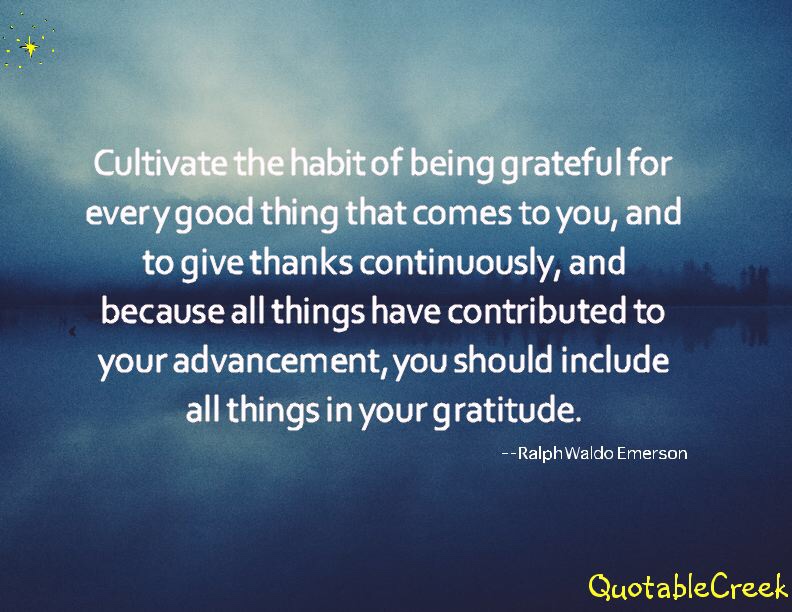
It’s easy to be grateful for the good things. But … everything? What about the fear, anxiety, separation, loneliness? What about the loss and persecution? What about the things that challenge our life and morality and soul? What of these?

Yes. All. Even these things that most pain us or make us worry. It is in these times we draw on something deeper than ourselves and grow. These are the times that cause us to reach out to others and embrace community. These are the depths we can survive and use that survival to offer hope to others.

Gratitude forces a perspective shift. From despair to hope. From loss to possibility. From chaos to peace.

Even now, even this, even here. Be grateful.

Brave and afraid at the same time

In this interview, Brené Brown discusses the complexity of emotions we are experiencing as a result of the pandemic and social isolation. Her words bring comfort and solace to all of us, but particularly those of us raised to believe that only positive emotions should be felt or expressed.

These are tough times. And it’s particularly difficult because this is not an emergency you have to gear up for and get through; it’s a slow burn. As she says:

“Normally, in order to get through a crisis, you know, our bodies are built to respond with a lot of adrenaline, a lot of energy, a lot of super coping surge. And then the waters recede or the fires are out or, you know, the crisis ends and we slog our way through kind of cleanup and trying to find our new normal. But we are not going to be able to depend on the adrenaline surge for this, because it’s going to out- it’s going to outpace us. And I think we are hitting that moment where we are weary in our bones. We are physically tired. We, you know, anxiety, uncertainty take a lot out of us physically. I think, you know, we’re on Zoom calls. I don’t know what happened. Like, I work a lot to begin with, but I feel like I’m on Zoom calls from 6:00 in the morning until midnight. You know, and then we’ve got toddlers crawling up our backs and partners trying to, you know, tell us to be quiet. They’re also are being called. And we’re tired. And I’ll tell you, the other thing that’s exhausting; that we are not acknowledging – again as a collective – is grief.”

And the grief is perhaps more extensive than any we’ve felt before. It’s grieving a loss of everything that was normal to us. Brown explains, “Well, I think it’s a very difficult position we’re in right now because I think we are both grieving the loss of normal and grieving the ordinary moments that make the touchstones for our lives. We’re grieving the loss of those at the very same time we’re having to find and settle into a new normal. And those two things are very difficult to do. At the same time, not mutually exclusive, but as close as it gets without being mutually exclusive. So there’s grief, I think. Grief is the loss of normal.”

And it is ok to experience that grief and mourn those losses. We are vulnerable, and there is no shame in acknowledging that:

“To be alive is to be vulnerable, to be in this pandemic, is to be vulnerable every second of every minute of every day. And the thing about vulnerability is it is difficult, but it’s not weakness. It’s the foundation and the birthplace of courage. There is no courage without risk, uncertainty and exposure. And so, you know, I’ve asked 10000 people that this question, starting with special forces military: give me an example of courage in your life that did not require uncertainty, risk and emotional exposure. And in probably 15 thousand people at this point, not one person has been able to give me an example of courage that did not require vulnerability. So we need to dispel that mess and we need to acknowledge we are in a lot of vulnerability right now. That means we can be our best, bravest selves or we can be our worst selves, and I think the thing about choosing to be our most courageous selves is having to understand this is another method to style that most of us know we’re taught growing up that we’re either brave or afraid, that the truth is we can be brave and afraid at the exact same time. Most of us are in these moments today.”

We can be brave and afraid at the exact same time. We can be strong in our vulnerability. And, even though we are living a new normal, we can choose how we show up there.

A lullaby for these times.

Picture a fussy baby, afraid to fall asleep, but then comforted in his mother’s arms by her lilting lullaby, her breath soft against his face, her song sweet to his ears.

Who among us can’t, at times, relate to that child? The future seems particularly uncertain. Worry disrupts sleep. Anxiety weakens our resolve.

There is something about a lullaby, though, the soft tones, the repetitive melody, the gentleness of the presentation, that can help soothe and relax, comfort and reassure us. The sweet song can reach into our long past baby consciousness and help us rest.

Take a minute to enjoy this beautiful rendition of Billy Joel’s Goodnight, My Angel, by Social Dissonance with soloist Ryan Nagelmann. May it help you find peace.