Taking responsibility.
buck

President Truman kept a plaque on his desk with the phrase ‘The buck stops here,” meaning it was his job to make decisions and to accept responsibility for those decisions. President Jimmy Carter pulled that plaque out of storage to keep the reminder in front of him as well.

But what does it mean? A quick Wikipedia search comes up with two possible etymologies:

The expression is said to have originated from poker, in which a marker or counter (such as a knife with a buckhorn handle during the American Frontier era) was used to indicate the person whose turn it was to deal. If the player did not wish to deal he could pass the responsibility by passing the “buck”, as the counter came to be called, to the next player.

Another less common but arguably less fanciful attribution is to the French expression bouc émissaire, meaning “scapegoat”, whereby passing the bouc is equivalent to passing the blame or onus.[3] The terms bouc émissaire and scapegoat both originate from an Old Testament (Lev. 16:6–10) reference to an animal that was ritually made to carry the burden of sins, after which the “buck” was sent or “passed”into the wilderness to expiate them.

So, either a refusal to take responsibility and kick the can down the road, or an intentional decision to blame someone else for your own actions. In either event, passing the buck is a refusal to take responsibility and act on it.

It can be difficult to discern what is our responsibility. One could argue we have a responsibility to fix harm we’ve caused, to prevent harm within our power to prevent, and to accept blame and credit when due. But these aren’t bright lines, and often decisions are complex and complicated by the actions and responsibilities of other players. That’s where the Serenity Prayer comes in:


For those things within your control, have the courage to change what you can and to do your part.

You alone are you.

unique

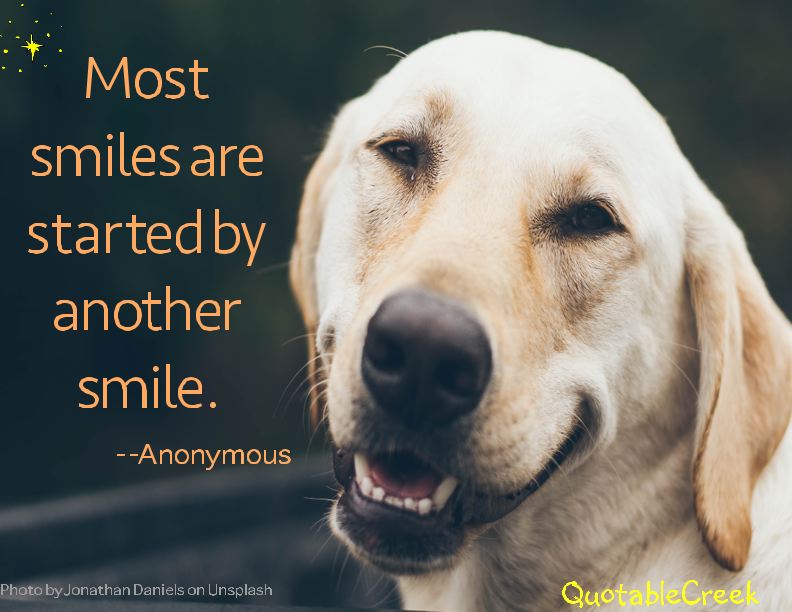
You alone are you. Of all the humans now and from the beginning of time and out into the future, billions upon billions of people, there is only one you. That’s quite staggering. And then when you factor in the other unique things about you–your family, your home and work, your life experience, your thoughts and feelings, even if scientists were to make an exact clone of you, it wouldn’t be you. You are special.

In this delightful video, preschool students take time to greet each other in a unique way.


What a lovely reminder that each of us is special.

Deep breaths.

tail

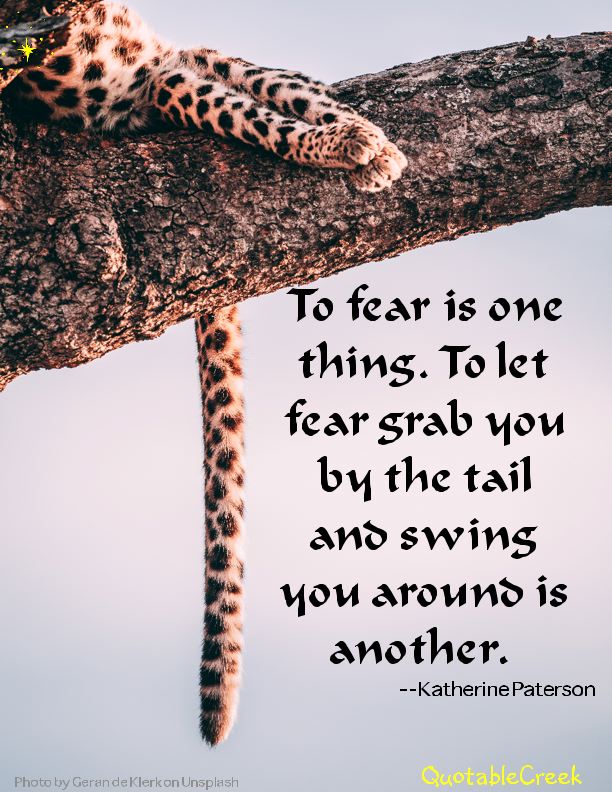
Carrot or stick? Both can be powerful motivators. These days advertisers and politicians prey on our fears–of the future, of each other, of failure. Crowds can be whipped into frenzies when their fears are stoked.

But where do we go with that fear? Our hearts are racing our bodies primed for flight, but where is there to go when the enemy may not really exist?

One of the most powerful antidotes to fear is rationality. Walk yourself through the foundational underpinnings of what you’re afraid of. Is this true? Will this worst case scenario happen? Is the conclusion supported by the facts? Is someone taking advantage of biases and stereotypes?

And breathe. Not quick and short breaths getting you ready to fight, but slow considered breaths preparing you for wisdom.

Expect the Unexpected.

pencil

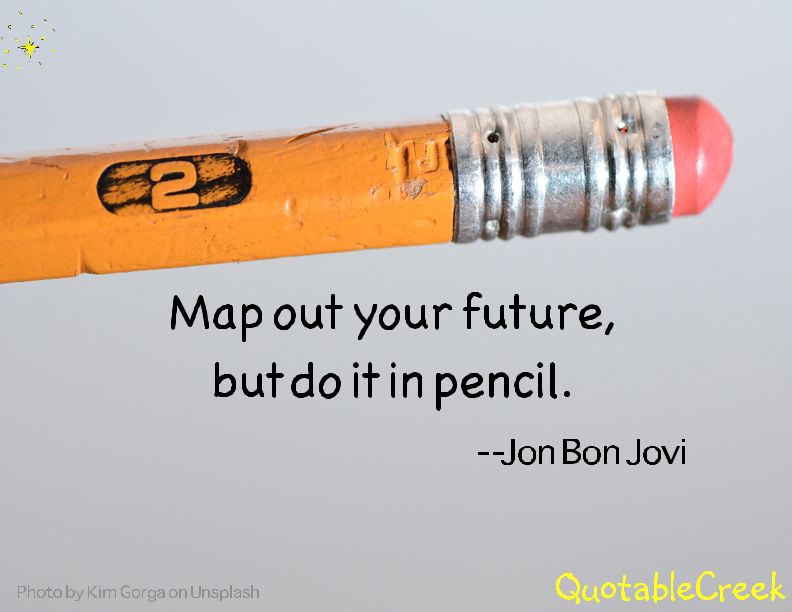
The world is changing and unpredictable. It’s hard to know how to plan for our futures.

What will tomorrow bring?

One thing is sure, ten years from now, things will not be like they are today. Rather than consternate over it, maybe it’s easier to learn how to be adaptable.

Loving thy neighbor.

worldpeace

When you have the power, or are on top, or when everything is going your way, it’s only natural to want to strut. You don’t want to think about a time when you might be powerless, on the bottom, or have the world against you.

That’s a downer, isn’t it?

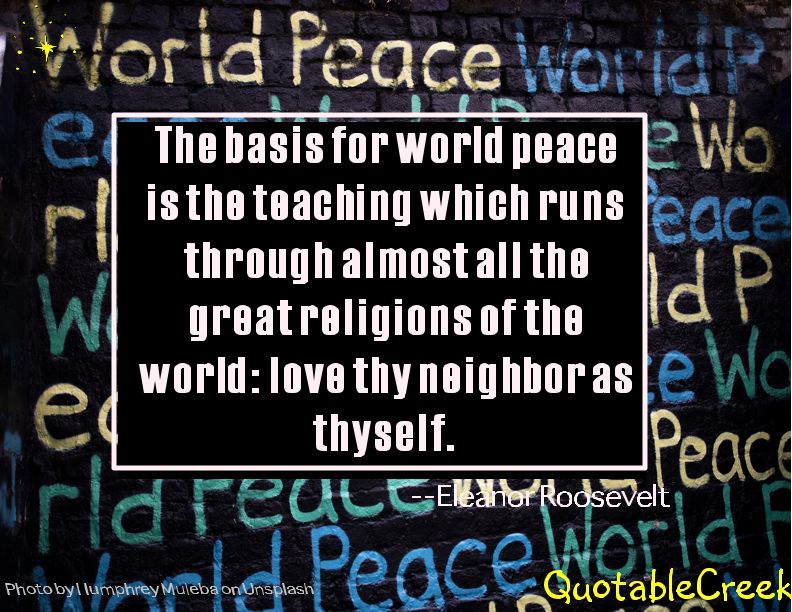
But that’s exactly where religion urges us to go, to think about the world from other perspectives, to consider what life is like for people without your privilege, to have empathy with the unfortunate. Because, after all, if you were in their shoes, wouldn’t you hope they would look out for you?

I shall not pass this way again.

passthroughlife

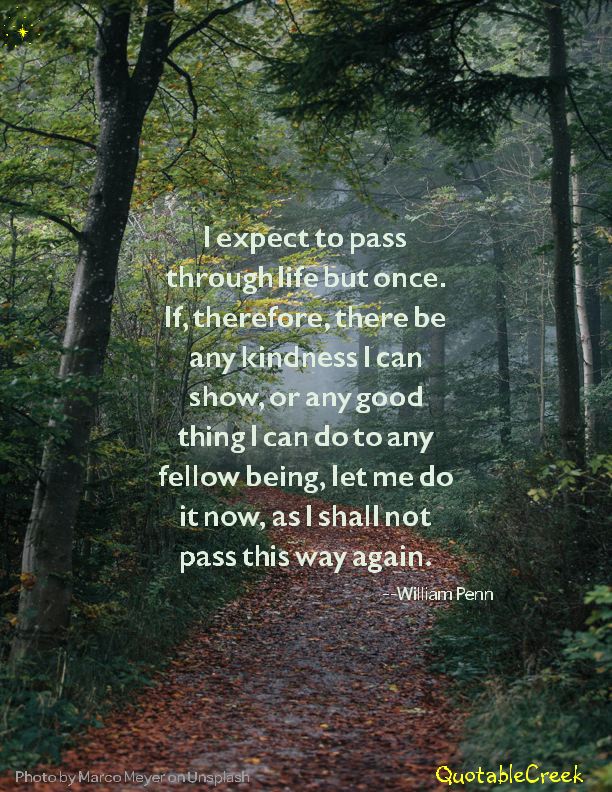
There is an elephant in the room. We don’t talk about it, we try not to think about it, we pretend it doesn’t exist. That elephant is the fact that we are all on a one way journey through this life. Our time is limited. None of us knows in advance when our end of the journey will come, but that end will come.

When we pull ourselves out of denial and gaze directly at this elephant, we can realize something important: our opportunities should be seized now. That good we can do? Don’t put it off. That kind word? Say it. That gift or remembrance? Give it now.

We will not have this place and time and opportunity to make a difference again.

Moving past the past.

past

We cannot fix our pasts. That’s a hard truth to accept, so we spend a lot of time railing against what happened, wishing it had been different, ruminating over the details. But the past cannot be cured– We made that mistake, we had those parents, we encountered that trial, we suffered that loss. Whatever it is. It happened. It’s true. And now it’s part of our past, a part of us.

We cannot make changes to the past. Pretending it never happened may only serve to bury the hurt just to have it pop up unexpectedly later when something triggers a memory. Glossing it over or telling ourselves we’re fine, may cause wounds to fester.

There are many things, though, that we can do with our unpleasant past that can help. We can grieve the relationships we wish had been better. We can offer ourselves the nurturing we may have craved. We can learn from the mistakes we made. We can look for ways to reach out to and support others going through similar hardships. We can look for the positives that came from the bad situation. We can give ourselves permission to heal. We can forgive.

And we can focus on the present, where we have the ability to act.

Stand convicted of positive thinking.

positive thinking

How will we use our words?

William Zinsser notes:

“Writers can write to affirm and to celebrate, or they can write to debunk and to destroy; the choice is ours.”

But we all have that choice, don’t we? Not just the artists and writers. We all are choosing what we say, how we respond, where we focus our emphasis. We each can choose to lift others up by focusing on the positive.

Mistakes are to learn from.

mistakes

Mistakes are inevitable. As you practice a piano piece, you’ll hit some clunkers. Go on. As you learn to walk, you’ll stumble. Keep walking. As you reach out in kindness, you may be rebuffed. Keep being kind.

Consider this fascinating account of some of Thomas Edison’s unknown mistakes:

“One of the things that makes Edison stand out as an innovator was he was very good at reducing the risk of innovation—he’s not an inventor that depends on just one thing,” DeGraaf says. “He knows that if one idea or one product doesn’t do well he has others…that can make up for it.”

Chances are you haven’t heard of Edison’s botched ideas, several of which are highlighted here, because the Ohio native refused to dwell on them. DeGraaf says, “Edison’s not a guy that looks back. Even for his biggest failures he didn’t spend a lot of time wringing his hands and saying ‘Oh my God, we spent a fortune on that.’ He said, ‘we had fun spending it.’”
Read more: https://www.smithsonianmag.com/innovation/7-epic-fails-brought-to-you-by-the-genius-mind-of-thomas-edison-180947786/#I8co0DAKgoFZTybb.99

Keep stretching. Keep innovating. Keep reaching out. One attempt may not work, but you have thousands, maybe millions, in you.