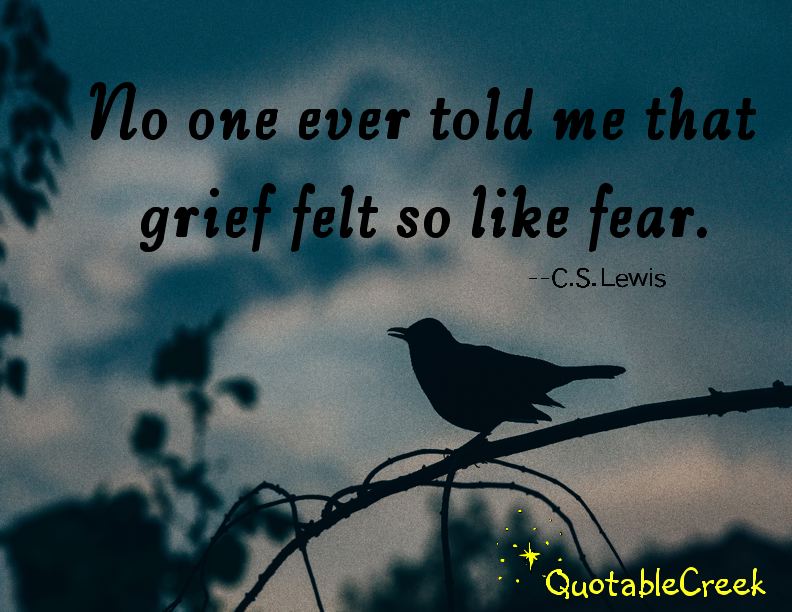
A time to grieve.

grief


This hurts. A physical, mind-numbing ache for what has been lost, not just the lives, though that is staggering, but also for the world we hoped for. A tragedy reminds us that the world is not peaceful yet, that there is so much work to be done, so much hurt to soothe, so many wounds to bind. Some turn to anger and lash out because this grief is heavy and painful. It is hard to bear. We are afraid. But even in the midst of our fear and our anger and all of our grief, there is beauty. The sun rises again. The birds sing. There is hope for a new, better day, yet still. Yet, still.

Redemption Song

by Kevin Young

Finally fall.
At last the mist,
heat’s haze, we woke
these past weeks with

has lifted. We find
ourselves chill, a briskness
we hug ourselves in.
Frost greying the ground.

Grief might be easy
if there wasn’t still
such beauty — would be far
simpler if the silver

maple didn’t thrust
it’s leaves into flame,
trusting that spring
will find it again.

All this might be easier if
there wasn’t a song
still lifting us above it,
if wind didn’t trouble

my mind like water.
I half expect to see you
fill the autumn air
like breath —

At night I sleep
on clenched fists.
Days I’m like the child
who on the playground

falls, crying
not so much from pain
as surprise.
I’m tired of tide

taking you away,
then back again —
what’s worse, the forgetting
or the thing

you can’t forget.
Neither yet —
last summer’s
choir of crickets

grown quiet.
SaveSave

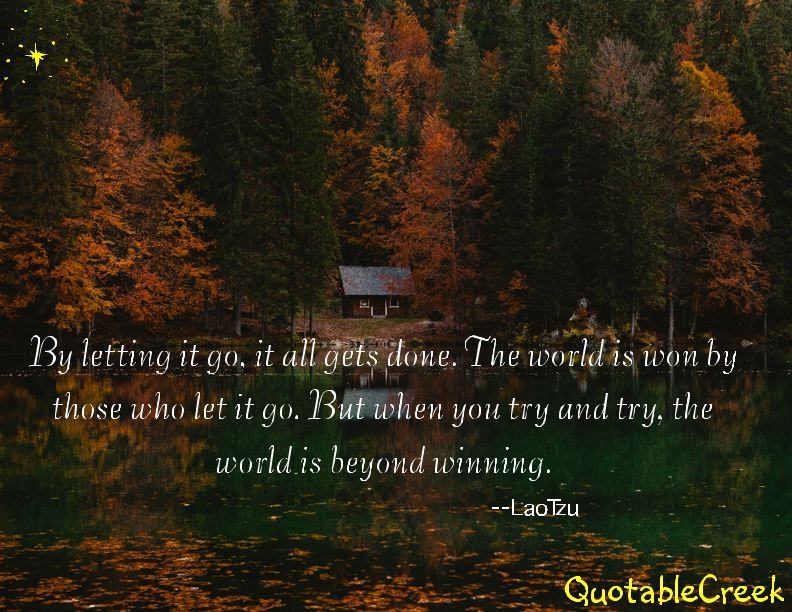
Let it go.


letgo

Do we try too hard to control the results? To cling to our preferred outcomes? To our own sense of how things should be? In this thoughtful list (Click on link for discussion of each item), Dana Saviuc shares her suggestion of fifteen things we need to let go of in order to be happy:

1. Give up your need to always be right.

2. Give up your need for control. 

3. Give up on blame. 

4. Give up your self-defeating self-talk.

5. Give up your limiting beliefs about what you can or cannot do, about what is possible or impossible.

6. Give up complaining. 

7. Give up the luxury of criticism. 

8. Give up your need to impress others. 

9. Give up your resistance to change. 

10. Give up labels. 

11. Give up on your fears. 

12. Give up your excuses. 

13. Give up the past. 

14. Give up attachment. 

15. Give up living your life to other people’s expectations.

Lots of giving up, but so much more to be gained by the change in focus!

How are we?

weare.jpg

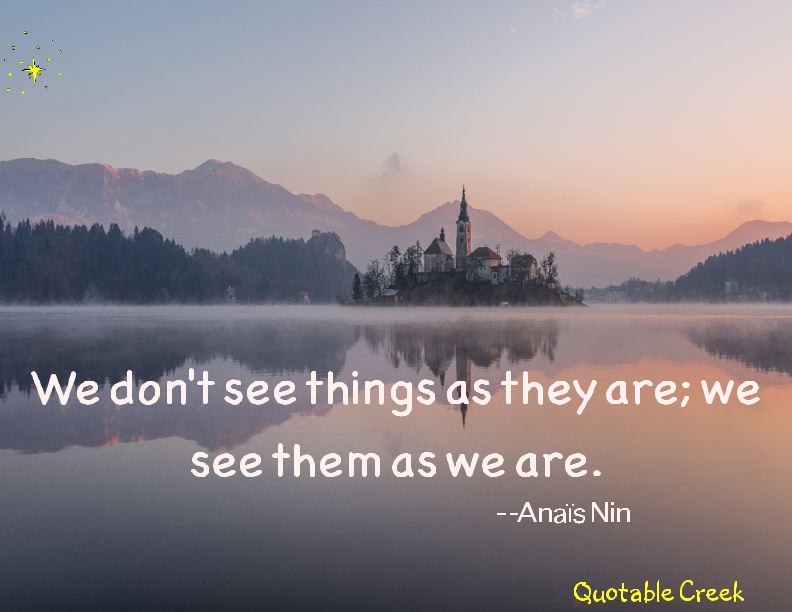
A guy cuts you off in traffic. How do you see him? Is he an inconsiderate lout caring little for the aggravation he causes you or a distracted hapless soul, perhaps late for an emergency? How we see this situation, or any situation, can have a profound effect on our lives.

In this thoughtful essay, Elizabeth Gilbert considers the power of perception. She recounts a time when her father and his siblings were reminiscing about their late mother and how she used to take a sip from any glass of milk she poured for them. They agreed on the fact, that she took a sip, but wildly disagreed on their perception of that fact:

At one point, they found themselves sitting around the old kitchen table, eating sandwiches and talking about the past. My uncle, the baby of the family, looked at the refrigerator and said, “I can still see Mom standing there, pouring me a glass of milk. Do you remember that sweet thing she always used to do whenever she got us a glass of milk? Remember how she’d take a tiny sip first, to make sure it wasn’t spoiled? Always looking out for us.”

My father, the analytical engineer of the family, raised his eyebrows. “No,” he said. “You are so wrong. Mom wasn’t sipping our milk to test it for freshness. She was sipping our milk because she always overfilled the glass. She had no sense of spatial relations. It used to drive me crazy.”

My brilliantly sardonic aunt looked at her two brothers like they were the biggest idiots she’d ever seen.

“You’re both wrong,” she said. “Mom was stealing our damn milk.”

So, what have we learned about my grandmother from this story? Was she a devoted caregiver, an incompetent dunderhead or someone who would steal the milk out of the mouths of her children? (Or maybe just an exceptionally thirsty woman.) The world will never know the truth.

But does the truth really matter?

I don’t think so.

Wow! What a remarkable difference in what each brings to the encounter. Now imagine yourself in each of those mindsets: hostile, critical, or grateful. Which would lead to the happier life?

We don’t have control over facts, but we sure have a tremendous amount of control over how we perceive those facts. We owe it to ourselves to try to see the facts in the most favorable light even if that means consciously going over all the possible interpretations of something and actively selecting the best one to pick.


SaveSave

Paint your soul.

ownnature


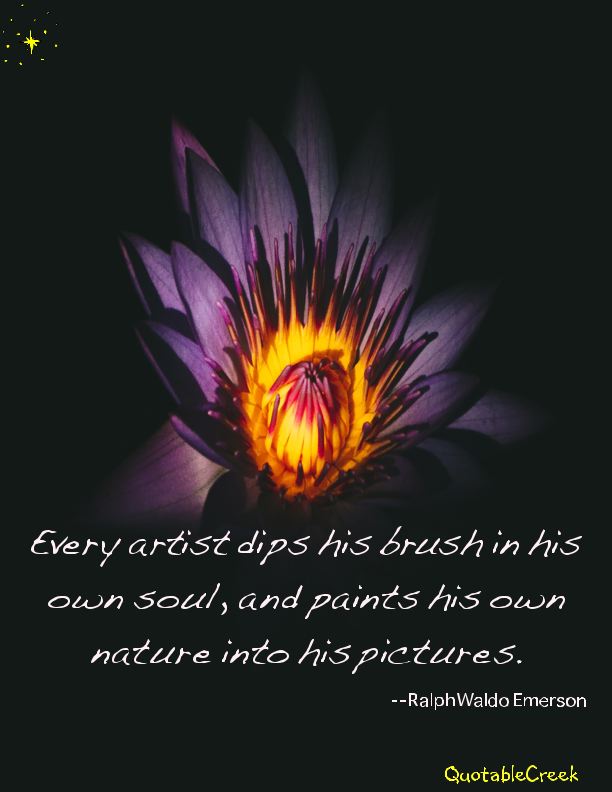
We wear our souls on our sleeves really, especially those of us who are artists. The created work sings of hope or despair, love or hate, trust or deceit. Much of what we believe about life is reflected in our created worlds.

But each of us is an artist, really. Consider the created worlds each of us makes with our online presence. Do we share stories of hope and unity or of despair and dissension? Do we seek to unify or to tear apart? Do we spread the beautiful or the ugly? What are we putting out there into the world with our words and actions?

When we share with the world, are we sharing the best of ourselves?


SaveSave

Here’s to good friends.

friends

What a blessing good friends are in our lives! To laugh and cry with, to play and work with, to share the ups and downs of life. Our friends lift us up and delight us and make the world a much happier place for their being in it and for their loving us.

Cheers to good friends!

Reach out and touch someone.

touchparts

Loneliness is an epidemic. Despite our superficial connections with social media, many of us feel a lack of connection with others. In fact, seeing people laughing and having a wonderful time on social media can make our own loneliness worse.

We miss simple touch. We miss that sense of kinship from a shared connection. We miss being part of a tight group like we felt when we were in school or were in a loving nuclear family.

The way out of this loneliness is both simple and terribly hard–reach out to others. (They are probably lonely, too.)

Be brave.

bravepour

There are so many ways to be brave. Doing something that needs to be done even though you’re scared. And not doing something everyone else is doing when it feels wrong. Standing up for yourself or others. Speaking out against injustice when it would be so much easier to stay quiet. Facing a tough diagnosis with hope and patience. Being there for someone when they are hurting. Each of these experiences is the right thing to do in a less than wonderful situation.

What is your idea of being brave?

Sending love and encouragement to anyone going through a less than wonderful time right now.

Are we too good at goodbyes?


goodbye

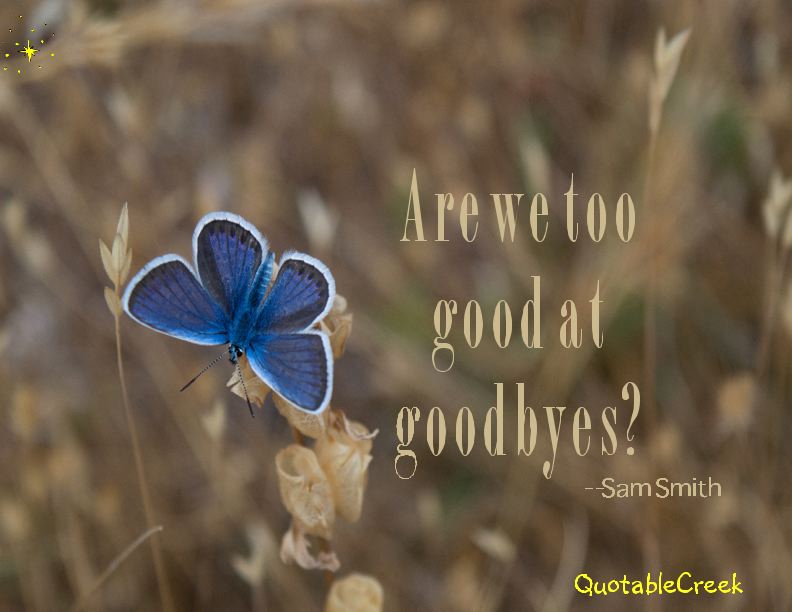
Has it become too easy to slam the door on someone else? Forget about them, move on, find someone new, start over, or, worse, never let anyone close to us again? If it is too easy, what has been lost?

Our relationships are bound to be imperfect because they are made up of imperfect people coming at the world in different ways with different lived experiences. (Even our relationship with ourself is imperfect because each of us is flawed.) But while these differences do provide a potential for friction, they also provide a potential for growth and empathy. We can step back and try to see the world from someone else’s point of view; our perspective becomes broader and more true. We become more thoughtful. We can practice forgiveness, as we would hope to be forgiven if we made a mistake. We can open ourselves up to trust again.

Goodbye, particularly with the people you love and trust and who help you blossom into who you were meant to be, needs to be hard. Very hard. We will become smaller people if we shut ourselves off if a relationship falters. We will become hard if we insist on perfection from ourselves or others.  We will not blossom, but will wither, if we refuse to forgive.

To understand just how sad it is when goodbyes become too easy, listen to this tear-jerker by Sam Smith:

Too Good at Goodbyes

by Sam Smith

You must think that I’m stupid
You must think that I’m a fool
You must think that I’m new to this
But I have seen this all before

I’m never gonna let you close to me
Even though you mean the most to me
‘Cause every time I open up, it hurts
So I’m never gonna get too close to you
Even when I mean the most to you
In case you go and leave me in the dirt

And every time you hurt me, the less that I cry
And every time you leave me, the quicker these tears dry
And every time you walk out, the less I love you
Baby, we don’t stand a chance, it’s sad but it’s true

I’m way too good at goodbyes
(I’m way too good at goodbyes)
I’m way too good at goodbyes
(I’m way too good at goodbyes)

I know you’re thinkin’ I’m heartless
I know you’re thinkin’ I’m cold
I’m just protectin’ my innocence
I’m just protectin’ my soul

I’m never gonna let you close to me
Even though you mean the most to me
‘Cause every time I open up, it hurts
So I’m never gonna get too close to you
Even when I mean the most to you
In case you go and leave me in the dirt

And every time you hurt me, the less that I cry
And every time you leave me, the quicker these tears dry
And every time you walk out, the less I love you
Baby, we don’t stand a chance, it’s sad but it’s true

I’m way too good at goodbyes
(I’m way too good at goodbyes)
I’m way too good at goodbyes
(I’m way too good at goodbyes)


So, maybe, it’s time to get better at fighting through the rough stuff in order to get to better, deeper, truer relationships. It’s time to be bad at goodbyes.

SaveSaveSaveSaveSaveSave

What (or who) is your woods?

tothewoods

We don’t let just anyone see us vulnerable, hear our secret stories, watch us struggle. To most of the world, we carry a bit of a shield between them and our tender parts. But there are some few we trust to see the real person behind the mask. We must love those people very much to be so naked and exposed.

Because we need to lay those masks down sometimes, don’t we? We can’t live a life of posture. And so we seek out places where and people with whom we can relax and let down our hair, unafraid of judgment, unconcerned with being deemed eccentric.  Perhaps to be part of nature, to rest among creation until we lose sight of where we stop and others begin.

In this poem, Mary Oliver takes us into her sacred space–the woods.

She must love us very much.


How I Go To the Woods

by Mary Oliver  

Ordinarily, I go to the woods alone, with not a single friend, for they are all smilers and talkers and therefore unsuitable.

I don’t really want to be witnessed talking to the catbirds or hugging the old black oak tree. I have my way or praying, as you no doubt have yours.  

Besides, when I am alone I can become invisible. I can sit on the top of a dune as motionless as an uprise of weeds, until the foxes run by unconcerned. I can hear the almost unhearable sound of the roses singing.

If you have ever gone to the woods with me, I must love you very much.