Everyday heroes choosing to do the right thing.
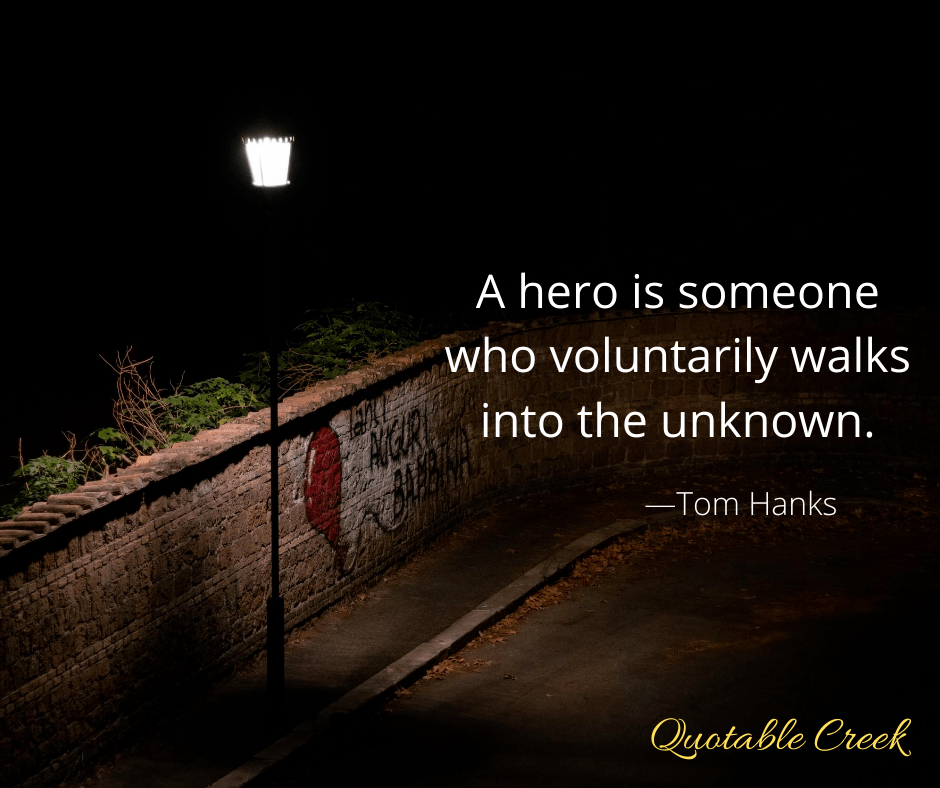
Whom we claim as our heroes is telling. Today, in these troubled, divided times, who is acting heroically? We don’t know how our or this story will end, but we do know the values we hold to be worth fighting for: honesty, self-sacrifice, honor, integrity, the common good. As we enter the day, let us hold true to our values to meet life’s challenges in hope that those everyday interactions spread ripples of good.

Enjoy these words from Heather Cox Richardson in honor of MLK, Jr. Day:

You hear sometimes, now that we know the sordid details of the lives of some of our leading figures, that America has no heroes left.

When I was writing a book about the Wounded Knee Massacre, where heroism was pretty thin on the ground, I gave that a lot of thought. And I came to believe that heroism is neither being perfect, nor doing something spectacular. In fact, it’s just the opposite: it’s regular, flawed human beings choosing to put others before themselves, even at great cost, even if no one will ever know, even as they realize the walls might be closing in around them.

It means sitting down the night before D-Day and writing a letter praising the troops and taking all the blame for the next day’s failure upon yourself in case things went wrong, as General Dwight D. Eisenhower did.

It means writing in your diary that you “still believe that people are really good at heart,” even while you are hiding in an attic from the men who are soon going to kill you, as Anne Frank did.

It means signing your name to the bottom of the Declaration of Independence in bold script, even though you know you are signing your own death warrant should the British capture you, as John Hancock did.

It means defending your people’s right to practice a religion you don’t share, even though you know you are becoming a dangerously visible target, as Sitting Bull did.

Sometimes it just means sitting down, even when you are told to stand up, as Rosa Parks did.

None of those people woke up one morning and said to themselves that they were about to do something heroic. It’s just that when they had to, they did what was right.

On April 3, 1968, the night before the Reverend Doctor Martin Luther King Jr. was assassinated by a white supremacist, he gave a speech in support of sanitation workers in Memphis, Tennessee. Since 1966, King had tried to broaden the civil rights movement for racial equality into a larger movement for economic justice. He joined the sanitation workers in Memphis, who were on strike after years of bad pay and such dangerous conditions that two men had been crushed to death in garbage compactors.

After his friend Ralph Abernathy introduced him to the crowd, King had something to say about heroes: “As I listened to Ralph Abernathy and his eloquent and generous introduction and then thought about myself, I wondered who he was talking about.”

Dr. King told the audience that if God had let him choose any era in which to live, he would have chosen the one in which he had landed. “Now, that’s a strange statement to make,” King went on, “because the world is all messed up. The nation is sick. Trouble is in the land; confusion all around…. But I know, somehow, that only when it is dark enough, can you see the stars.” Dr. King said that he felt blessed to live in an era when people had finally woken up and were working together for freedom and economic justice.

He knew he was in danger as he worked for a racially and economically just America. “I don’t know what will happen now. We’ve got some difficult days ahead. But it doesn’t matter…because I’ve been to the mountaintop…. Like anybody, I would like to live a long life…. But I’m not concerned about that now. I just want to do God’s will. And He’s allowed me to go up to the mountain. And I’ve looked over. And I’ve seen the promised land. I may not get there with you. But I want you to know tonight, that we, as a people, will get to the promised land!”

People are wrong to say that we have no heroes left.

Just as they have always been, they are all around us, choosing to do the right thing, no matter what.

Wishing us all a day of peace for Martin Luther King Jr. Day 2026.
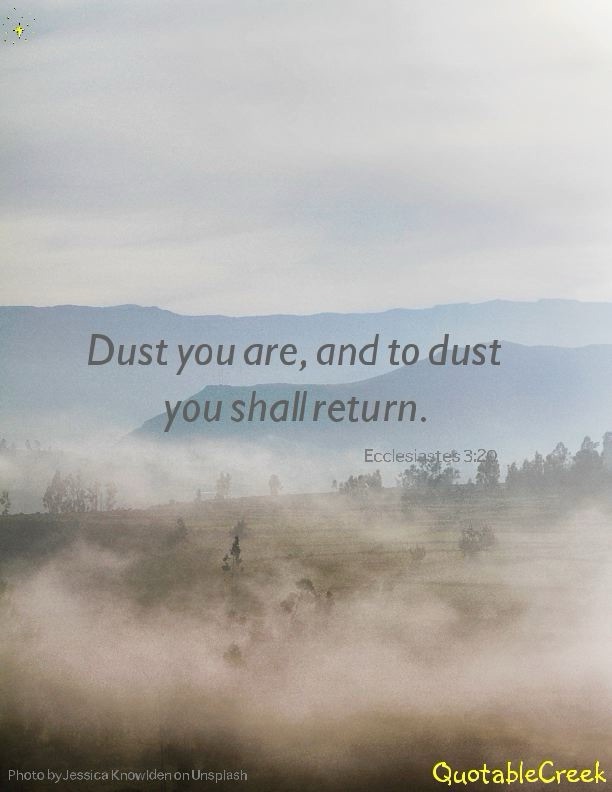
Dancing dust.

Hello Mortal,

I regret to inform you that your time here in this place and time is limited.

So, now is your time, however much you might prefer a different one. You matter. The gifts you bring matter. The relationships you tend need you.

This is it.

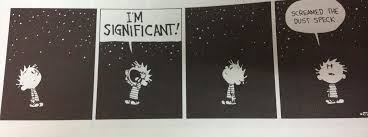
Consider young Calvin:

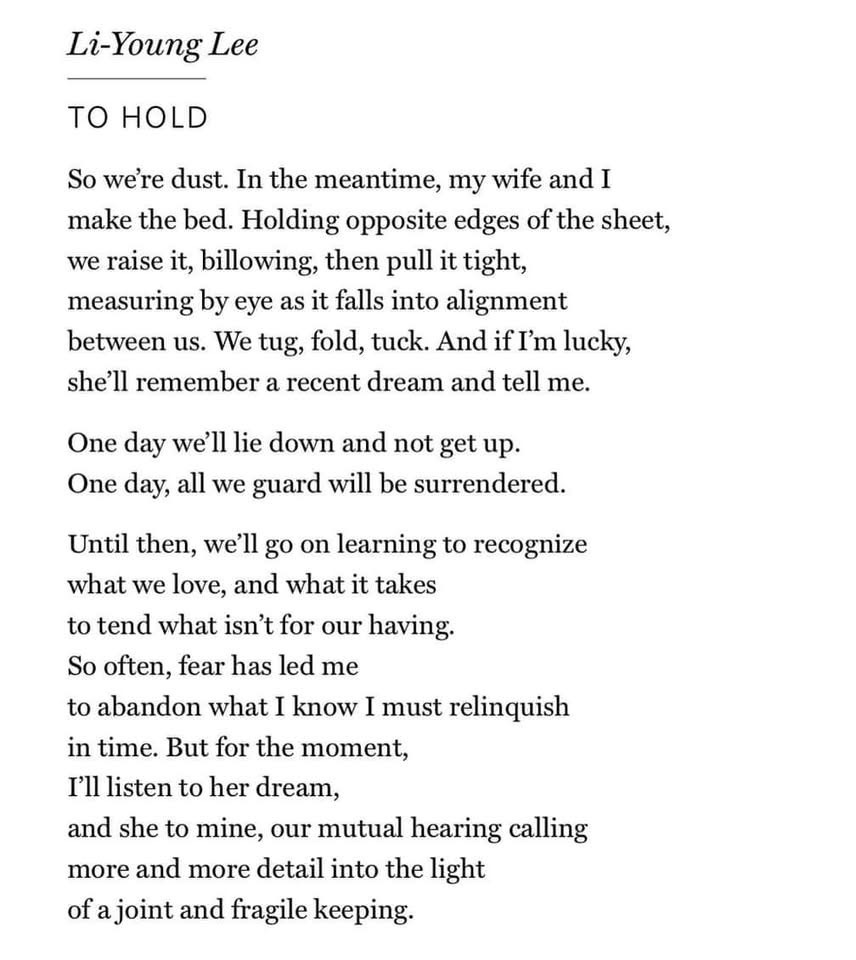
Or, better yet, consider this poem:

We are in a joint and fragile keeping, ephemeral, and impermanent. But, now, now, it is ours for the tending, the keeping, the loving. Grasp it.

A work-out routine for character.

In her book Almost Everything, Anne Lamott describes her struggle with hate:

Hate weighed me down and muddled my thinking.  It isolated me and caused my shoulders to hunch, the opposite of sticking together and lifting our hands and eyes to the sky.  The hunch changes our posture, because our shoulders slump, and it changes our vision, as we scowl and paw the ground.  So as a radical act we give up the hate and the hunch the best we can.  We square our shoulders and lift our gaze….

Hating the way I was feeling helped me give up Camel cigarettes thirty-two years ago, and then alcohol.  It is good to surrender things that poison us and our world.  Am I free of such toxicity now?  Well about forty percent, and that is a pretty good deal.  I’ll take it.”

She now considers the circumstances and people pushing her to hate as helpful weight-training equipment to build muscles in her soul, ‘Nautilus equipment for your character.’

That’s a helpful perspective shift, isn’t it?

Hang on to you hat. Hang on to your hope.

Enjoy these profound words from E.B. White:

30 March 1973


Dear Mr. Nadeau:

As long as there is one upright man, as long as there is one compassionate woman, the contagion may spread and the scene is not desolate. Hope is the thing that is left to us, in a bad time. I shall get up Sunday morning and wind the clock, as a contribution to order and steadfastness.

Sailors have an expression about the weather: they say, the weather is a great bluffer. I guess the same is true of our human society–things can look dark, then a break shows in the clouds, and all is changed, sometimes rather suddenly.

It is quite obvious that the human race has made a queer mess of life on this planet. But as a people we probably harbor seeds of goodness that have lain for a long time waiting to sprout when the conditions are right. Man’s curiosity, his relentlessness, his inventiveness, his ingenuity have led him into deep trouble. We can only hope that these same traits will enable him to claw his way out.

Hang on to your hat. Hang on to your hope. And wind the clock, for tomorrow is another day.

Sincerely,
E. B. White

One day at a time.

In times of great change, it is challenging to predict the future. So much is in flux. And yet, forward we must go.

In harrowing times, focus on each day, each moment, each breath. And breathe deeply. Rely on the things you know to be true and unchanging. Make the best decisions you can with what you have to work with.

Sean Penn had an interesting way to describe navigating these times, paying attention to the difficulties around you and how you can help, while also making sure to savor and appreciate the beauty of life so you don’t become lost in the morass:

[Penn points to one eye] I wake up every day with this eye clear about the threat to the environment, the anguish people are going through, attempts to figure out how I can be of any value-added. [Penn points to his other eye] And this one is driving me from the time I wake up, and all I see is that this is still a magic trick of a beautiful cosmos and I am gonna [expletive] enjoy it every day – and I do.

Remember you have made it through everything that has come your way so far.

Clear eyes. Full hearts.

You’ve got this.

Finding your power.

In a captivating interview, Jane Goodall offers some final thoughts, filmed to be aired only after her death, with the last bit spoken directly to the camera with no one overhearing. Apparently, this is part of a series on Netflix called Famous Last Words.

It’s a sobering thought, thinking about what is the final thing you want to say to the world, to loved ones, to friends. Because they’re your last chance, these types of words hold special import.

As is unsurprising, Goodall’s final words focused, not on herself, but on others, inspiring everyone to make a difference and not give up in what she called these ‘dark’ times’.

Here are Jane’s final words:

In the place where I am now, I look back over my life. I look back at the world I’ve left behind. What message do I want to leave? I want to make sure that you all understand that each and every one of you has a role to play. You may not know it, you may not find it, but your life matters, and you are here for a reason.

And I just hope that reason will become apparent as you live through your life. I want you to know that, whether or not you find that role that you’re supposed to play, your life does matter, and that every single day you live, you make a difference in the world. And you get to choose the difference that you make.

I want you to understand that we are part of the natural world. And even today, when the planet is dark, there still is hope. Don’t lose hope. If you lose hope, you become apathetic and do nothing. And if you want to save what is still beautiful in this world – if you want to save the planet for the future generations, your grandchildren, their grandchildren – then think about the actions you take each day.

Because, multiplied a million, a billion times, even small actions will make for great change. I want to – I just hope that you understand that this life on Planet Earth isn’t the end. I believe, and now I know, that there is life beyond death. That consciousness survives.

I can’t tell you, from where I am, secrets that are not mine to share. I can’t tell you what you will find when you leave Planet Earth. But I want you to know that your life on Planet Earth will make some difference in the kind of life you find after you die.

Above all, I want you to think about the fact that we are part – when we’re on Planet Earth – we are part of Mother Nature. We depend on Mother Nature for clean air, for water, for food, for clothing, for everything. And as we destroy one ecosystem after another, as we create worse climate change, worse loss of diversity, we have to do everything in our power to make the world a better place for the children alive today, and for those that will follow.

You have it in your power to make a difference. Don’t give up. There is a future for you. Do your best while you’re still on this beautiful Planet Earth that I look down upon from where I am now.

God bless you all.

As they did while she was alive, her words inspire us to do as much as we can with what we have, to look out for others, and to cherish and care for creation. let her words be a blessing and beacon to all of us now.

Are you keeping up with the Joneses?

Do you find yourself comparing your life with that of your friends or co-workers? Science says that Facebook and other social media can actually make people feel sad rather than connected because it seems like your friends are having a better time than you are. Often that comparison is misleading.

But always that comparison is beside the point. There will always be someone smarter, richer, more accomplished, happier, etc. than you; just like you will be all those things for someone else.

The challenge is to be happy with what you are and have. At times like these, it is comforting to read Saint Teresa of Calcutta’s words:

People are often unreasonable, irrational, and self-centered.  Forgive them anyway.

            If you are kind, people may accuse you of selfish, ulterior motives.  Be kind anyway.

            If you are successful, you will win some unfaithful friends and some genuine enemies. Succeed anyway.

           If you are honest and sincere people may deceive you.  Be honest and sincere anyway.

            What you spend years creating, others could destroy overnight.  Create anyway.

            If you find serenity and happiness, some may be jealous.  Be happy anyway.

  The good you do today, will often be forgotten.  Do good anyway.

 Give the best you have, and it will never be enough.  Give your best anyway.

         In the final analysis, it is between you and God.  It was never between you and them anyway.

Don’t worry about the Joneses. Instead, keep your heart grateful and your actions focussed on making a positive difference in this world.

Peace sprouts.

What can we do to help? The problems seem great, and we seem so small.

Consider these words from Pope Leo XIV:

“Do not be afraid. Be sprouts of peace where the seed of hatred and resentment is growing; be weavers of unity where polarization and enmity prevail; be the voice of those who have no voice to ask for justice and dignity; be light and salt where the flame of faith and the taste for life are fading.” — Pope Leo XIV

Every giant tree starts as a tiny sprout. Be sprouts of peace.

We have more control and are stronger than we think. What we do makes a difference. Let’s make it a good difference!

Entering into wild wonder.

Author Amy Tan shares this remarkable insight: 

“In one of John Muir Laws’s books, I read something profound that changed the way my brain thinks. “As you draw the bird,” he writes, “try to feel the life within it.” So now I look at the bird before me and imagine how it senses the world, how it feels breathing cold air, how it feels to have its feathers ruffling in the wind, how it feels to always have an eye out for possible food and possible predators. The bird sees me and is a nanosecond from flying off, but it stays. Why? By imagining the life within, the bird I am drawing is alive, no longer a shape and its parts, but a thinking, sentient being, always on the brink of doing something. By feeling the life within, I am always conscious that all creatures have personalities, and so do trees and clouds and streams. To feel the life within, I now imagine myself as the bird that is looking at me. I imagine its wariness, the many ways it has almost died in its short life. I worry over its comfort and safety, and whether I will see my little companion the next day, the next year. To feel the life within is to also feel grief in the goneness of a single creature or an entire species. Imagination is where compassion grows. Let us join with children to imagine and wonder, to use curiosity as the guide to miracles in plain sight. Let us enter with them into wild wonder so that we become guardians together of all that is living and all that must be saved.”From Orion Magazine, “The Life Within”.

I wonder if we can look at each other that way, as something vaster, as thinking sentient beings with worlds of experience, some harsh. Would that help us to treat each other better? In her book, Dead Man Walking, Sister Helen Prejean describes just this sort of thing as she works with a death row inmate, a man who admittedly committed a heinous act, seeing not just the man but also, though covered with tattoos and bathed in bravado, the little wounded child within. That empathy allowed her to see past the crimes to the human and to feel compassion for him.

Perhaps today we can look with new eyes to see each other as a composite of good and bad, but each fully human and fully deserving of respect and compassion. To paraphrase Amy Tan above, when we consider the person, can we try to picture the life within, the challenges and struggles, hopes and triumphs? Can we become, together, ‘guardians of all that is living and must be saved’ in a place where ‘compassion grows’?