A persistent hope.

What is hope, really, but a persistent insistence that things can be better, that there is more to it, that the final answers are yet to be revealed. Emily Dickinson describes hope as 

“Hope” is the thing with feathers –

That perches in the soul –

And sings the tune without the words –

And never stops – at all –

And sweetest – in the Gale – is heard –

And sore must be the storm –

That could abash the little Bird

That kept so many warm –

I’ve heard it in the chillest land –

And on the strangest Sea –

Yet – never – in Extremity,

It asked a crumb – of me.”

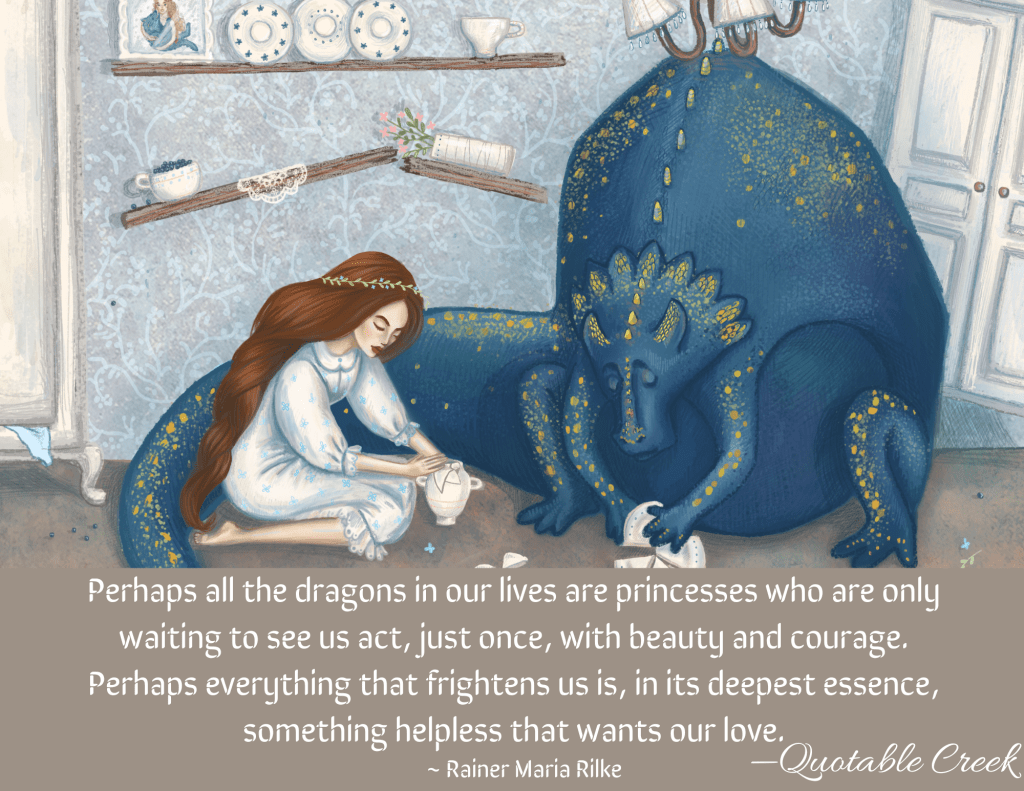
And this feels right. Hope sits there perched, singing, warming our souls and keeping us fed. A wordless song because we may not even have the ability to put our emotions into words or know what it is we hope for. And this is a positive, persistent hope, but somewhat passive, waiting. 

And yet, we know, too, that hope gets its fingernails dirty because while hope sits on the periphery expectant, it can also be in the fray fighting for a better world. That kind of hope is captured by Matthew @CrowsFault:

“People speak of hope as if it is this delicate ephemeral thing made of whispers and spider’s webs. It’s not. Hope has dirt on her face, blood on her knuckles, the grit of cobblestones in her hair, and just spat out a tooth as she rises for another go.”

And this, too, seems true. Hope keeps our souls fed but also prompts our entering the arena, helping us to do the hard work to make a better world for all.

Love in this place.

It’s okay to be heartbroken for more than one group of people at the same time. When it comes to showing compassion, we don’t have to pick sides. Sometimes, often really, maybe even always, there is hurt and anguish everywhere, and we can mourn the lot of it. 

Beware people who tell you not to be concerned for this group or that group and the hurt they feel. 

Beware those who try to dehumanize others. 

Beware those who lump you in as the ‘enemy’ for working to assure people are treated humanely.

Beware people who draw lines between us and them. 

Beware those who try to limit you to a label or single identity. 

Our hearts are big enough to embrace it all. What we must save is love.

The light that is you.

All things break.

Including us.

Nothing lasts.

Including us.

And yet most of us internalize myths that we are meant to live pain-free lives and that there is always more time. How much more could we accomplish if we embrace the reality instead?

We’re breakable. But our vulnerability is our strength. And when we mend from something painful, we are likely to have tools and skills and sensitivities that may help us and make us more empathic going forward. Breaking and mending is part of growth. Part of change. Part of evolving. To be scared of breaking is to be scared of living.

Time’s short. Now is the time to reach out, apologize, help…whatever it is you’re waiting for a different day to do. There is no promised day. Things don’t just happen. Time doesn’t heal all wounds. We help heal the broken world, and our own broken selves, by continuing to love even in the darkness.

A lullaby for these times.

Picture a fussy baby, afraid to fall asleep, but then comforted in his mother’s arms by her lilting lullaby, her breath soft against his face, her song sweet to his ears.

Who among us can’t, at times, relate to that child? The future seems particularly uncertain. Worry disrupts sleep. Anxiety weakens our resolve. 

There is something about a lullaby, though, the soft tones, the repetitive melody, the gentleness of the presentation, that can help soothe and relax, comfort and reassure us. The sweet song can reach into our long past baby consciousness and help us rest. 

Take a minute to enjoy this beautiful rendition of Billy Joel’s Goodnight, My Angel, by Social Dissonance with soloist Ryan Nagelmann. May it help you find peace. 

Binding up wounds.

So much of our suffering is invisible. Loneliness, sorrow, depression, not fitting in. We can bind up our own cuts and scrapes, but how do we bind up those kind of wounds?

There is an old parable about heaven and hell. In both, people are forced to eat with spoons that are too long to feed themselves. In hell, they are starving. In heaven, they feed each other.

When it comes to these invisible hurts, we are healed by kindness, one to another. We don’t know when we are being kind that it may help someone, but it certainly can’t hurt. And it may be just the long-spooned nourishment that someone else needs.

To inspire acts of kindness today, watch this video of a poor baby elephant stuck in a muddy hole. The gratitude its mother shows its rescuers will melt your heart.

Little band of heroes.

All we face now can feel overwhelming. It’s as if everywhere you turn, there is another challenge and another threat. And yet, even if the midst of all that is wrong, there are opportunities to shine the light, to be a voice for good, and to support others. Yes, it looks bleak now, but we are still here to do some good:

“Yes, it looks bleak. But you are still alive now. You are alive with all the others, in this present moment. And because the truth is speaking in the work, it unlocks the heart. And there’s such a feeling and experience of adventure. It’s like a trumpet call to a great adventure. In all great adventures there comes a time when the little band of heroes feels totally outnumbered and bleak, like Frodo in Lord of the Rings or Pilgrim in Pilgrim’s Progress. You learn to say ‘It looks bleak. Big deal, it looks bleak.’”
— Joanna Macy

Misery won’t touch you gentle.

Oh, child. How I wish for you to have a life without misery and heartache, a world without disillusionment and betrayal, a childhood unmarred by neglect or abuse, a journey without conflict. But, alas, that will not be. We do not live in a utopian world, but here in this world, and you will  know sorrow and pain and, as much as I would love to shield and protect you from it, I cannot. There will be dark days, my love.

But you are brighter than the darkness, and, even in your misery, you will find a way to shine. And when you are at your lowest point, I will be there beside you knowing that you will rise again and that this pain will make you more compassionate and humble, more honest and fierce, more determined to make this world a more perfect place, because you, my beautiful child, are not meant to be kept down in the darkness, but to shine.

What questions are we asking ourselves?

What questions do we frame for ourselves at the end of the day? What are the questions that have caused us to soul-search and perhaps take a new path? What questions have forced you to look at something a different way?

Sometimes the questions are more important than the answers. There are some that resonate so deeply with us, we may spend a lifetime trying to answer them. In her piece about the beauty of these profound questions, Karen Horneffer-Ginter identifies some that have been meaningful to her:

When used properly, questions have the potential to connect us to the world of another. A heartfelt “How are you?” or “How was your day?” can become the bridge that keeps us in relationship to the lives of those we love. Sometimes, too, questions create a bridge within ourselves, allowing us to hear what’s going on at a deeper level. We know when we’ve encountered a question that has this potential because it stays with us — maybe for the day, maybe for our whole lives. It taps us on the shoulder to wake us up, or it wiggles its way in more deeply, opening us up to seeing things in a new way.

I still recall first encountering Judith Duerk’s chorus of questions about how my life might have been different if there had been a sacred circle to step into. Mary Oliver asking me about my plans for this one wild and precious life, Oriah Mountain Dreamer wanting to know what I ache for and if I dare to dream of meeting my heart’s longing, and Angeles Arrien reminding me of the questions asked in some indigenous cultures: When did you stop singing? When did you stop dancing? I think of my friend Ming, asking me at lunch one day if I thought writing was my fullest and truest expression. All these questions have remained close companions across the years.

The questions that have been consuming my thoughts and are my close companions these days are What does it mean to be welcoming? How does welcome look? How does it change the mix if it is accepted? What are the stumbling blocks to be truly welcoming? Where does fear creep in to inhibit welcome? How will my life be different because I have welcomed another into it? How will it disrupt my comfort zone, and how will I get my ego out of the way to be more accepting?

What are the questions in your heart, questions that are your close companions? And just the framing of those questions can be significant, as she suggests above. Consider the difference between ‘What do I have to do today?’ and ‘What do I get to do today?’ That simple shift helps us move from feeling burdened to being grateful for all the opportunities presented by the day.

What are the questions that have been your close companions? What do you get to do today to help answer them?

Who is my neighbor?

Sometimes I feel everything in life comes down to the question, ‘Who is my neighbor?’ 

We are always asking, ‘This one, too?’ And the answer is always, ‘Yes’.

The felon, the refugee, the homeless person, the enemy, the one who hurt you, the one you disagree with, the one who makes your life hard? Yes, always yes. 

Love your neighbor. This one, too.

Edges called Perhaps.

How many angels can dance on the head of a pin? Is there any way we could ever truly know?

There are so many issues for which we may never have answers, true answers, like who’s ‘right’ and who’s ‘wrong’, and yet we cling to our answers as if our lives depend on it. And we cling to our questions, from our points of view, without realizing there are so many other questions that have equal or even more merit.

Consider Mary Oliver’s poem, Angels:

Is it possible that we aren’t even asking the right questions? Is there room for Perhaps in our edges?