Adulting isn’t for the faint of heart. Responsibilities, worries, concerns for the future can weigh us down and make us nostalgic for the carefree days of youth. But, perhaps, there’s a remedy.
When was the last time you started something new? An art, language, trip, habit? Maybe followed a lifelong dream. Perhaps it is scary to become a ballerina at 60+ years old, but doesn’t it sound delightful? Or perhaps learn how to refinish cast-off furniture. Or speak a different language.
These are the ones I’m thinking of, what would you try? As we age, being a beginner is harder. We worry about embarrassment, or struggle with not knowing everything already. Or perhaps we think if we try something like this, we have to be a professional and don’t give ourselves permission to be bad at it. We’ve forgotten the joy in just immersing ourselves in something new.
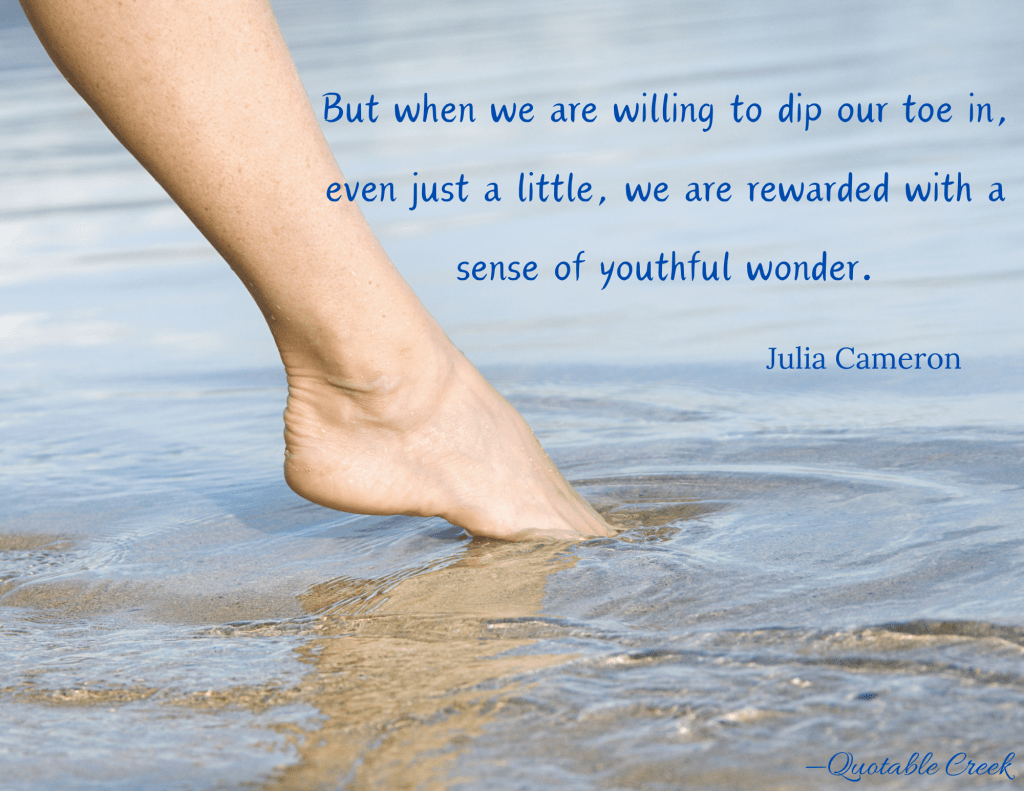
Julia Cameron says:
Often, when we say it is ‘too late’ for us to begin something, what we are really saying is that we aren’t willing to be a beginner. But when we are willing to dip our toe in, even just a little. We are rewarded with a sense of youthful wonder. Never give in, never give in, never, never, never, never.
There is always something new and exciting around the corner just waiting to experience.
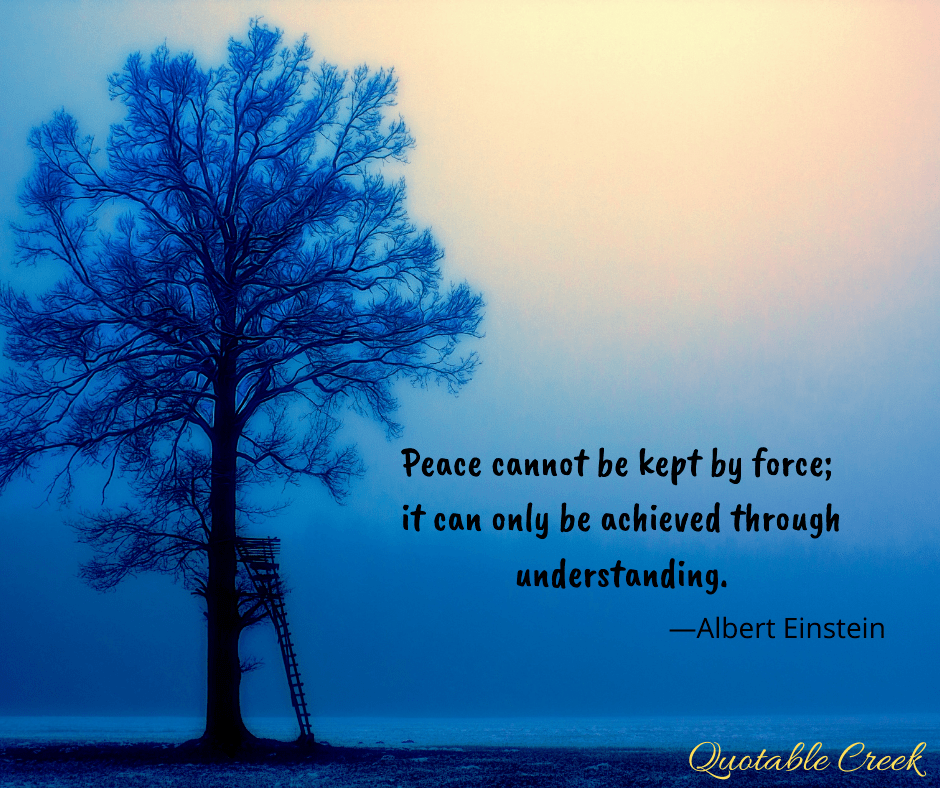
What does it take to prevent a country fracturing from disagreements and divisions? Perhaps it is the same thing that keeps any relationship from severing. First, a deep desire for reconciliation. A laying down of arms. A recognition that the whole is greater than the sum of its parts, and that there is value and growth in working things out. Next, perhaps would be a deep humility, a recognition that one side doesn’t have all the answers while the other is ignorant and foolish, but an understanding that both sides have stories to tell and an eagerness to be heard. And finally, perhaps would come respect. Each side coming together voluntarily, knowing their future strength is in union rather than destruction.
Sometimes you can lift out of a moment and say to yourself, ‘This is a wonderful moment. I am so content.’ Everything has a new luster. And sometimes a song might come to mind.
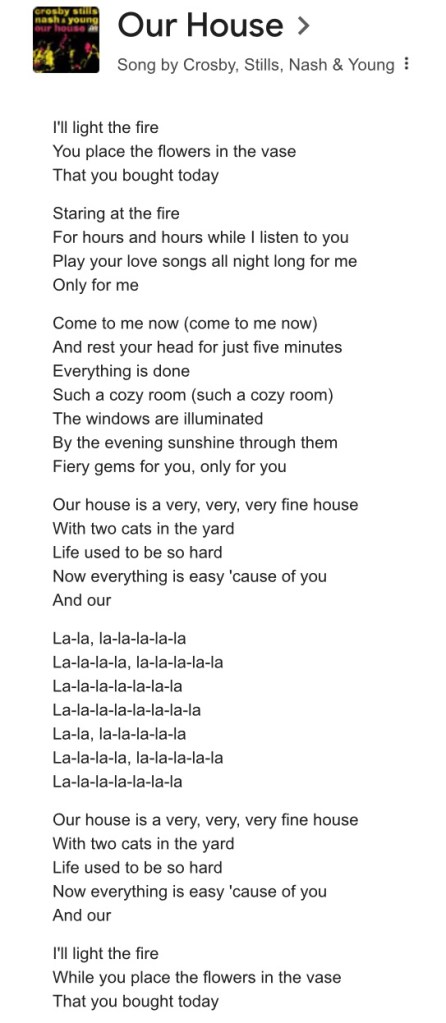
In my case, I was sitting with my husband, watching our two cats (pictured) and thinking about how homey everything felt. It brought to mind the CSNY song, ‘Our House’.
Here are the lyrics:
And, while we were sitting so inclined, my husband did a Google search about the song and learned that Graham Nash and Joni Mitchell had been shopping after dining at Art’s Deli, bought a vase, came back to her two cats, and lit the fire on a drizzly day. Nash sat at her piano and wrote this song in an hour. He must have been feeling what we felt. Content. Full.
How lovely he memorialized it for all of us to share.
Sy Montgomery’s delightful book, How To Be a Good Creature, is a ‘Memoir in Thirteen Animals‘. What an interesting way to organize a memoir, focusing on the impact various animals have made on her life and what they have taught her about co-existing as fellow creatures on this planet! It is a profound, yet simple, book.
If you were to write a memoir of your life through that lens, who would the animals be that impacted your life in meaningful and enriching ways? What life lessons did you learn? How were your limits expanded from sharing space with that fellow creature?
For inspiration, consider Montgomery’s words:
All the animals I’ve known–from the first bug I must have spied as an infant, to the moon bears I met in Southeast Asia, to the spotted hens I got to know in Kenya–have been good creatures. Each individual is a marvel and perfect in his or her own way. Just being with any animal is edifying, for each has a knowing that surpasses human understanding. A spider can taste the world with her feet. Birds can see colors we can’t begin to describe. A cricket can sing with his legs and listen with his knees. A dog can hear sounds above the level of human hearing, and can tell if you’re upset even before you’re aware of it yourself. Knowing someone who belongs to another species can enlarge your soul in surprising ways.
I often wish I could go back in time and tell my young, anxious self that my dreams weren’t in vain and my sorrows weren’t permanent. I can’t do that, but I can do something better. I can tell you that teachers are all around to help you: with four legs or two or eight or even none, some with internal skeletons, some without. All you have to do is recognize them as teachers and be ready to hear their truths.
Today, consider the wonder of creation around you and thank your teachers of the non-human persuasion.
There is an elephant in the room. We don’t talk about it, we try not to think about it, we pretend it doesn’t exist. That elephant is the fact that we are all on a one way journey through this life. Our time is limited. None of us knows in advance when our end of the journey will come, but that end will come.
When we pull ourselves out of denial and gaze directly at this elephant, we can realize something important: our opportunities should be seized now. That good we can do? Don’t put it off. That kind word? Say it. That gift or remembrance? Give it now.
We will not have this place and time and opportunity to make a difference again.
We wish for peace but quarrel with our neighbor. We tremble from talk of war but allow ourselves to respond to others with hate, sarcasm, anger, and animosity. We expect leaders to be the adults in the room, but mock and deride them mercilessly. Peace, it seems, is something for other people out there to do and strive for because we are angry and fed up and impatient, and peace isn’t in our everyday lexicon at the moment.
But we can fight for peace, by controlling ourselves, treating each other respectfully, and speaking out against injustice. Take a minute to watch this beautiful video.
Let there be peace on earth And let it begin with me Let there be peace on earth The peace that was meant to be With God as our father Brothers all are we Let me walk with my brother In perfect harmony
Let peace begin with me Let this be the moment now With every step I take Let this be my solemn vow To take each moment And live each moment To take each moment And live each moment To take each moment And live each moment In peace eternally Let there be peace on earth Let there be peace on earth Let there be peace on earth And let it begin With me (me) With me
Consider the story of The Tenth Goose told by Richard R. Powell in his book Wabi Sabi for Writers:
Nine Canada geese lift off a clear mountain lake; droplets from their wings cast lines of rings behind them on the glassy surface as they rise. Light gray feathers reflect amber light from the early morning sun, a clean glow off each curved body. You watch their broad wings grip air, watch nine bodies rise and fall in rhythm against the dark forest behind them. Each bird’s neck kinks in counter-time to its wing beats so that all nine heads remain level and each set of eyes gazes steadily out at the cool dawn, bright mystery of sight amid the shiny black head feathers. Closer now, you make out the expressionless curve of their beaks, see one goose’s thin moist tongue as she honks; hear the whistle of air across wing feathers as they pass over your head. Then you notice that there is a tenth goose far back, low to the water, working hard to catch up, honking softly, as if each wing beat hurts. This goose loses a feather as she passes close over you and you watch the feather spiral and glide to the ground. You pick it up and it looks perfect, each barbule lying neatly against its neighbor, the tiny whorl of fluff near the calamus soft to the touch. Then you see that the shaft is not perfect; it is cracked open from the middle to the tip.
You keep that feather, tuck it under the strap around your car’s sun visor, look at it every day you drive to work and remember the tenth goose. Remember your own efforts to keep up. And somehow, that tenth goose gives you courage. You wonder if she will find enough food or if winter will separate her from the rest, separate her from life. She speaks to you in a dream one night. In the distracted moments of the day she speaks to you, in the elevator or while you wait in traffic. Then one night she is there in your dream again, as silent as her feather in your car. She tips her head at you and that beak, with its lumpy prominence like a Roman nose, bobs up and down and you realize she is giving you permission to speak. In the dream you speak and she turns her head to hear you and you tell her your fear of dying and your hopes while living and she comes and rattles her beak between your fingers.
There is beauty and strength in the broken places, a beauty that continues on even when everything is a struggle, that faces setbacks with determination. Sometimes we are one of the nine geese, sure and strong, in sync, but sometimes we are the tenth goose struggling to keep up. And there is beauty in that, too:
It is a kind of beauty on the edge of defeat, a beauty tenacious and brave, and it is the beauty left behind when the warm, honking goose is gone. And not just flown away–but dead and gone. That feather remains as a testament to the beauty in living; and even when the feather dries and cracks and is eventually eaten by insects or the drab extension of time, it will live on in the imaginations of those who hear the story of the tenth goose.
Remember the Story of the Tenth Goose and take heart.
None of us knows what the future holds. But we do know the values we hold dear—honesty, integrity, love, compassion, empathy, respect, tolerance. As we raise our children, we instill these values. As adults, we model these values whether we win or lose, succeed or fail, sink or swim. Watching us, they learn, and, as they go forward into their futures, they will bring these values to their own decisions. If each of us does this, we will leave the world a better brighter place for our having been here.
Joy is a fascinating emotion. It often springs up in us at surprising times. There is something of a wellspring vibe to it, as if it bubbles up in us with little bearing to our circumstance in life or particular experience. As C. S. Lewis notes,
“I call it Joy. ‘Animal-Land’ was not imaginative. But certain other experiences were… The first is itself the memory of a memory. As I stood beside a flowering currant bush on a summer day there suddenly arose in me without warning, and as if from a depth not of years but of centuries, the memory of that earlier morning at the Old House when my brother had brought his toy garden into the nursery. It is difficult to find words strong enough for the sensation which came over me; Milton’s ‘enormous bliss’ of Eden (giving the full, ancient meaning to ‘enormous’) comes somewhere near it. It was a sensation, of course, of desire; but desire for what?…Before I knew what I desired, the desire itself was gone, the whole glimpse… withdrawn, the world turned commonplace again, or only stirred by a longing for the longing that had just ceased… In a sense the central story of my life is about nothing else… The quality common to the three experiences… is that of an unsatisfied desire which is itself more desirable than any other satisfaction. I call it Joy, which is here a technical term and must be sharply distinguished both from Happiness and Pleasure. Joy (in my sense) has indeed one characteristic, and one only, in common with them; the fact that anyone who has experienced it will want it again… I doubt whether anyone who has tasted it would ever, if both were in his power, exchange it for all the pleasures in the world. But then Joy is never in our power and Pleasure often is.” The Shape of My Early Life
Joy is distinct from pleasure and happiness. It is an abundance, a bliss, an immeasurable gratitude for the privilege of being. It isn’t meant to be ignored, but embraced, relished, cherished. Not as a byproduct of some other experience, but in itself.
As Mary Oliver says,
“If you suddenly and unexpectedly feel joy,
don’t hesitate.
Give in to it.
There are plenty of lives and whole towns destroyed or about to be.
We are not wise, and not very often kind.
And much can never be redeemed.
Still life has some possibility left.
Perhaps this is its way of fighting back,
that sometimes something happened better than all the riches or power in the world.
It could be anything, but very likely you notice it in the instant when love begins.
Anyway, that’s often the case.
Anyway, whatever it is,
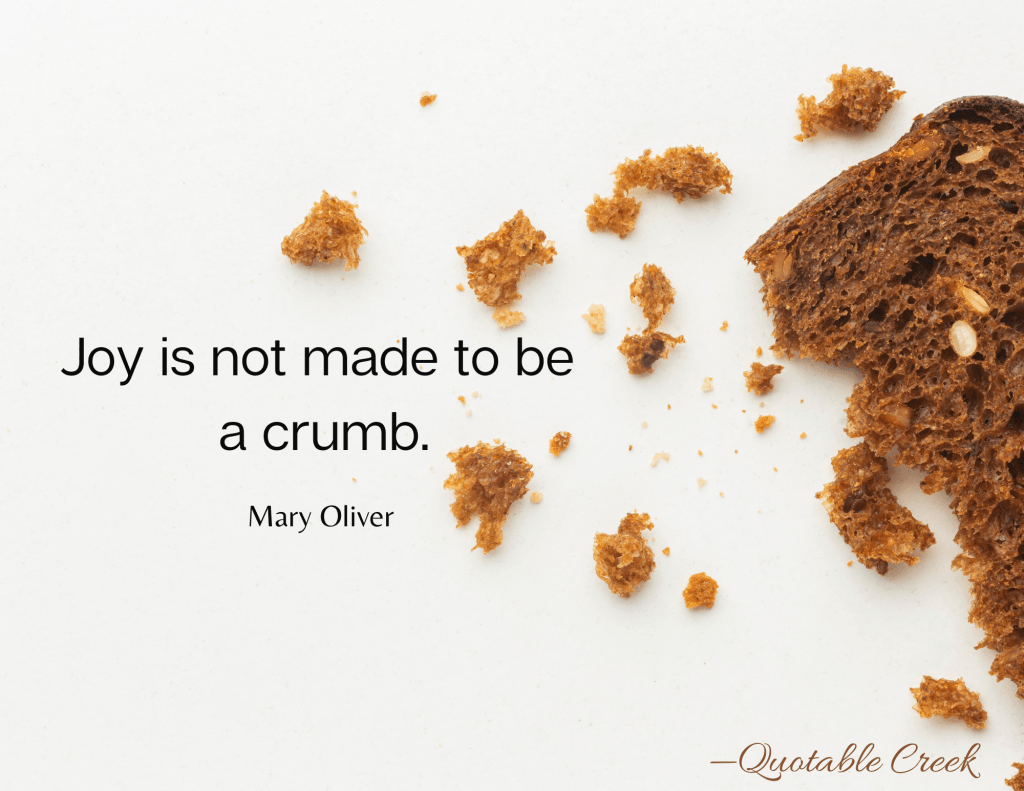
don’t be afraid of its plenty. Joy is not made to be a crumb.
Swan, Poems and Prose Poems
If you should be lucky enough to feel joy bubbling up, savor it. Don’t hesitate.


 QuotableCreek.com