Doing things for the joy of doing them

When we were kids, we didn’t worry too much about whether we were the best at coloring or pretend or sports. We did things because they were fun and filled us with joy. Later, somehow, we became worried about whether we should continue when we were never going to be competitive in it. We worried about how we looked, whether we would be mocked. Perhaps our parents decided lessons were a waste because we weren’t the stand out they had hoped we would be. The fun of it got lost and gave way to the competition in it.

That’s a shame. Author Kurt Vonnegut had an epiphany about this that changed his life:

When I was 15, I spent a month working on an archeological dig. I was talking to one of the archeologists one day during our lunch break and he asked those kinds of ‘getting to know you’ questions you ask young people: Do you play sports? What’s your favorite subject? And I told him, no I don’t play any sports. I do theater, I’m in choir, I play the violin and piano, I used to take art classes.

“And he went wow. That’s amazing! And I said, ‘Oh no, but I’m not any good at any of them.’

“And he said something then that I will never forget and which absolutely blew my mind because no one had ever said anything like it to me before: ‘I don’t think being good at things is the point of doing them. I think you’ve got all these wonderful experiences with different skills, and that all teaches you things and makes you an interesting person, no matter how well you do them.’

“And that honestly changed my life. Because I went from a failure, someone who hadn’t been talented enough at anything to excel, to someone who did things because I enjoyed them. I had been raised in such an achievement-oriented environment, so inundated with the myth of Talent, that I thought it was only worth doing things if you could ‘win’ at them.

That’s such a liberating mind shift. Doing things for the joy of them! Not the achievement in them. Not the value to your college application. Not the resume value or the competition.

The joy! Imagine that.

We are made for welcome

When we are being welcoming, the focus is outward not inward. We look to what would make the other person comfortable, not what would make us comfortable. We don’t invite vegetarians, and then serve meat. Or teetotalers and serve alcohol. We get out of our own perspective and walk in the guest’s shoes to consider what would make them comfortable.

Aesop illustrated this premise with the Tale of the Fox and the Stork:

A fox invites a stork to eat with him and provides soup in a bowl, which the fox can lap up easily; however, the stork cannot drink it with its beak. The stork then invites the fox to a meal, which is served in a narrow-necked vessel. It is easy for the stork to access but impossible for the fox. The moral drawn is that the trickster must expect trickery in return and that the golden rule of conduct is for one to do to others what one would wish for oneself.

https://en.wikipedia.org/wiki/The_Fox_and_the_Stork

The same is true, presumably, when welcoming people to the Lord’s table. What would make others comfortable? How can you reach more people? What about the way you do things might be off putting? How can you step out of your own perspective to consider what would make others in the community feel welcomed and comfortable? Our job isn’t to be a bar to spreading the word but a conduit.

Desmond Tutu talks about the importance of a broad welcome:

We are made for goodness. We are made for love. We are made for friendliness. We are made for togetherness. We are made for all of the beautiful things that you and I know. We are made to tell the world that there are no outsiders. All are welcome: black, white, red, yellow, rich, poor, educated, not educated, male, female, gay, straight, all, all, all. We all belong to this family, this human family, God’s family.

Mistake police

In this world of constant scrutiny and omnipresent recordings, mistakes seem to have moved from a necessary part of learning to an instant cause for condemnation.

We can all think back to learning to walk and talk or play a sport where the mistakes were a part of learning. Fear of falling down would keep everyone from walking. In order to learn how to make a basket, lots of shots will bounce off the rim and backboard.

When we moved on to raising children, focusing on the mistakes could cripple a child emotionally. Instead, we celebrated the steps forward, the successes. Noted the progress. We don’t expect a toddler to write a dissertation. We celebrate the milestones as they come.

I wonder if that approach would help move our troubled world forward. Celebrating the progress. Looking for the successes. Embracing the common ground. Letting everyone feel that they can continue to learn from their mistakes, that that is part of being human. A world with a little bit of breathing room. We all will mess up. We can show each other grace when we do.

The invisible essential.

Not long ago, the world shut down, and most people were asked to sequester and stay home while essential workers reported, still, for duty. It was a strange time, involving so many swiftly moving facts to assimilate and assess forward progress.

But that question of ‘essential’ is an interesting one. Some of the jobs labeled ‘essential’ or not were surprising choices.

How does one determine what is ‘essential’? What of the artist? With so many schools cutting art and music programs as non-essential, I wonder what the world would look like filled just with grammarians and mathematicians. Surely, art, though it puts no food on the table and sets no broken bones, is essential to the human spirit.

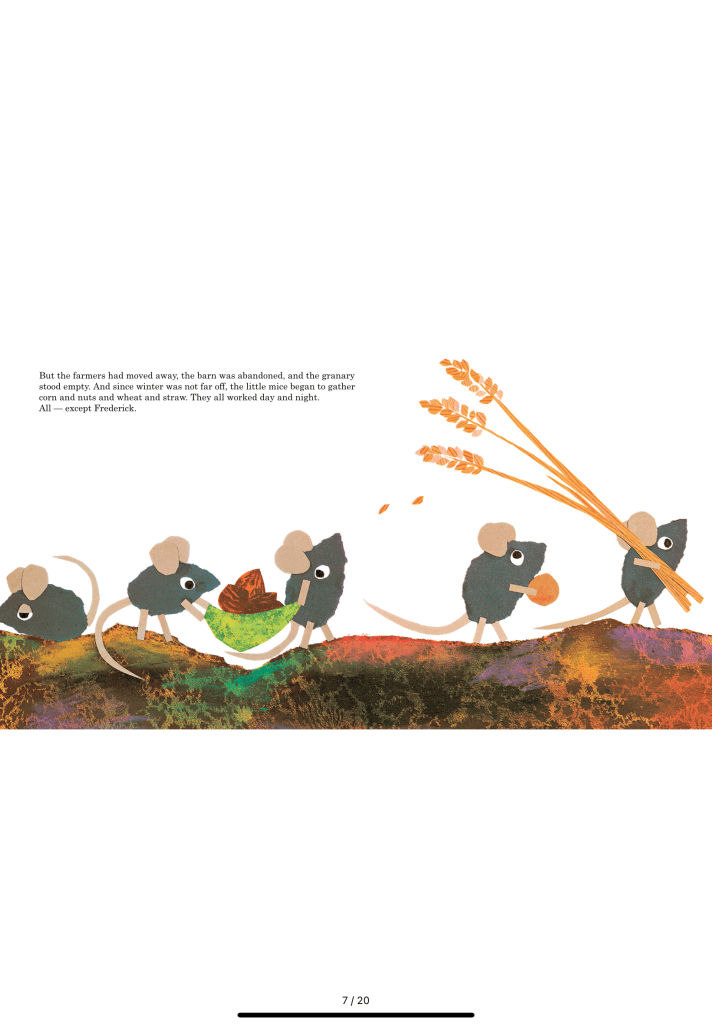
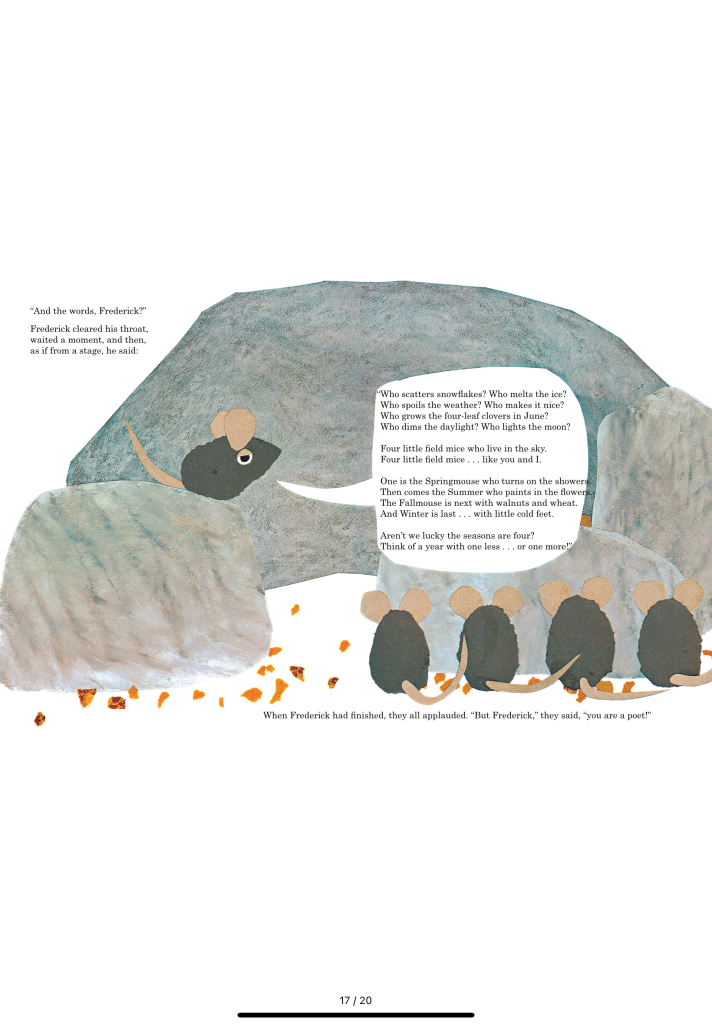
Such is the theme of Frederick by Leo Lionni. While four mice toil to set up stores of grain for winter, one mouse collects color, and sounds, and words.

And when winter came, and the mice were cold and hungry, Frederick’s words sustained them.

So lift a glass in praise to the artists, the writers, the musicians. Those who lift us up and sustain us and offer us beauty for our souls.

Strong in the broken places

Life can be tough. Even the most charmed of lives has loss and heartbreak, disillusionment and despair. Everyone hurts. But buried deep under the hurt and pain is the little waif you used to be, full of hope and promise, enthusiasm and excitement.

As Irish poet and philosopher John O’Donohue notes:

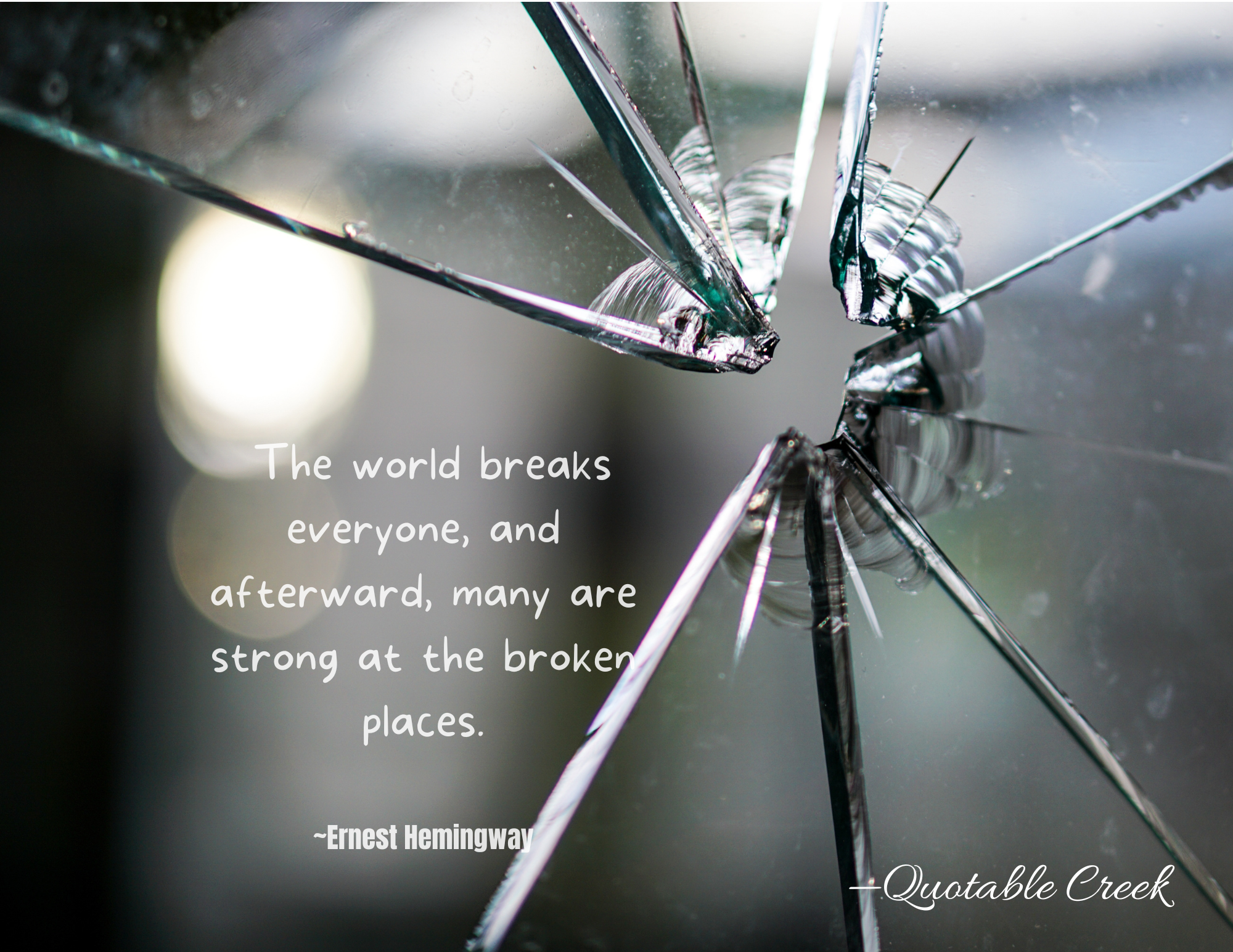
Your identity is not equivalent to your biography. There is a place in you where you have never been wounded, where there is still a sureness in you, where there’s a seamlessness in you, and where there is confidence and tranquility in you.

The intention of prayer and spirituality and love is now again to visit that inner kind of sanctuary.

Deep in there, behind the daily worries, aches and pains, hurts and disgruntlements, is your soul. Prayer, staying still and letting your mind clear in meditation, will take you there, again and again, a way to connect with both your own individuality and your place in the awesome collective of it all.

Being the Hero of Your Own Life

When we think about our own personal heroes, can we see a pattern? How did they rise to the challenges presented in their day?

How are we rising to the occasions and the challenges presented in our time? Right now. Are there injustices we can speak up against? Are there places where our voices will make a difference? What are the rights and wrongs happening right now today?

I am about one-fourth of the way through Charles Dickens’s, David Copperfield. It’s astonishingly good, as are most of his books. And, like others, it calls out some of the injustices of his day—child labor, poorhouses, domestic violence, emotional cruelty, sexism, bullying and so on. With his wide audience and engaging stories, he had tremendous power and is credited for being the impetus for many social justice reforms.

However, he had his own blind spots.

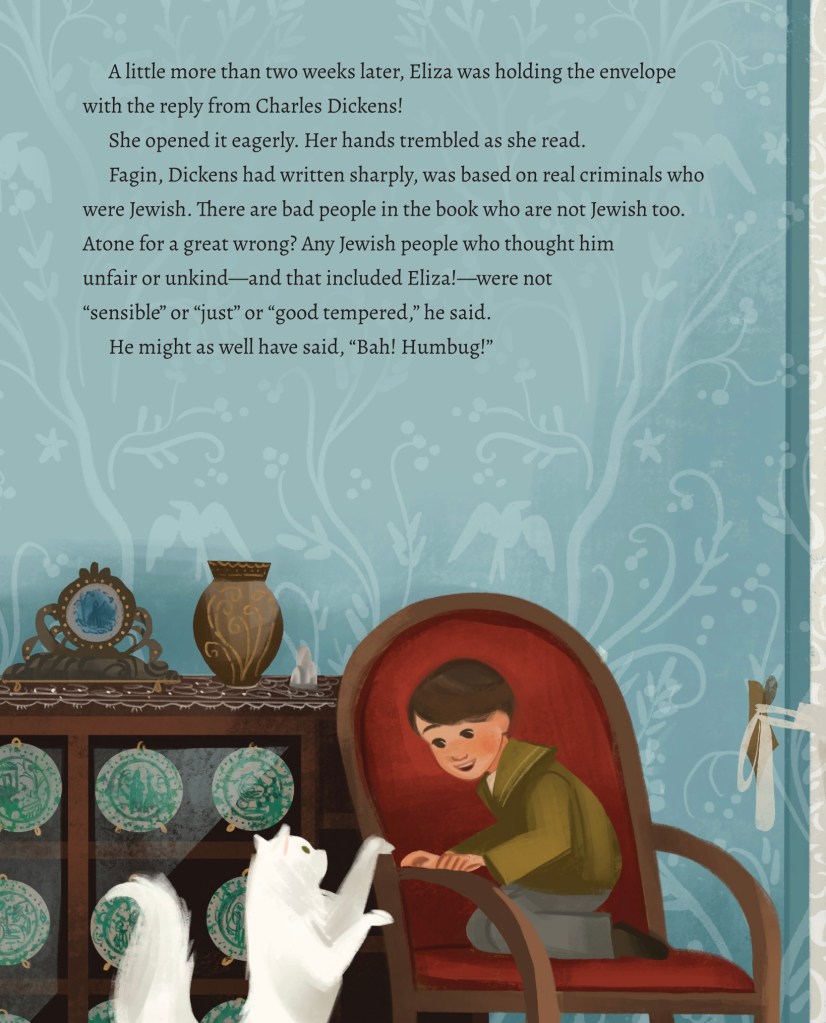
One reader, Eliza Davis, wrote to him, accusing him of portraying her people, those of Jewish ancestry, in stereotypical and negative ways. She cited Fagin, from Oliver Twist, a cruel and selfish man teaching young street urchins to steal. Eliza begged him to show more complexity in his Jewish characters.

Dickens was unimpressed.

Dear Mr. Dickens, By Nancy Churnin

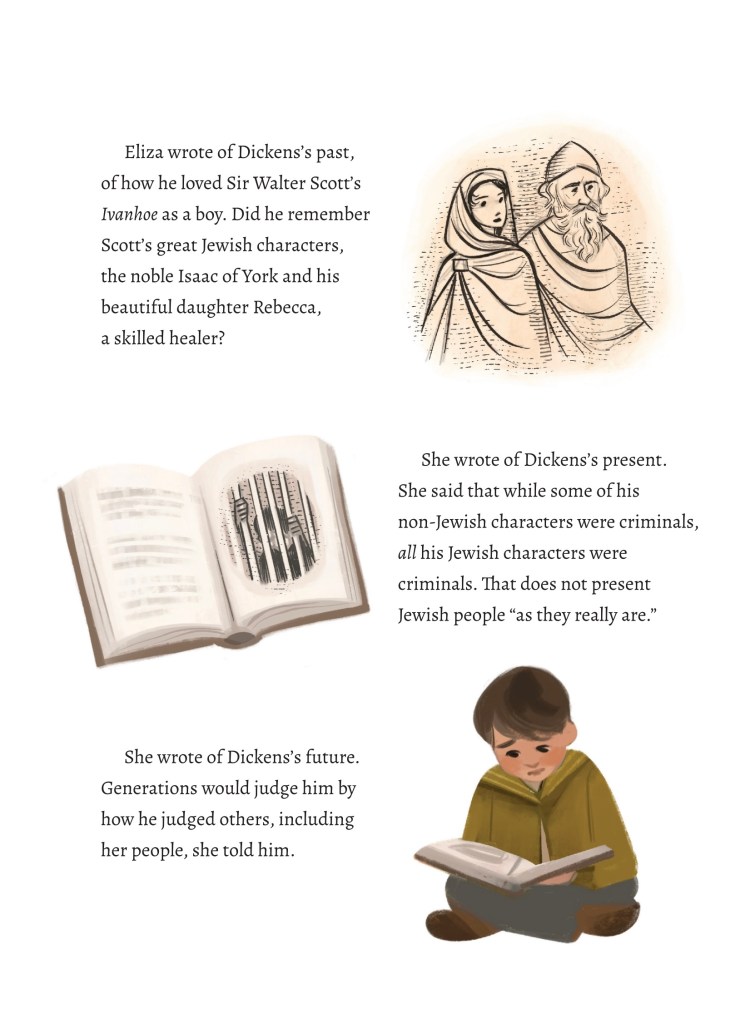
However, taking a page from Dickens’ own, Christmas Carol and the transformation of Ebenezer Scrooge, Eliza wrote him again:

Dear Mr. Dickens, by Nancy Churnin

And this time, Dickens was moved. And changed. From then on, his Jewish characters were complex and kind, and the exchange between Eliza and Dickens is credited for having a part in reducing anti-Semitic views and laws of the day.

Eliza had the same tools at hand as Dickens himself: pen, paper, and a keen sense of justice. While she lacked his fame, she made up for it by essentially teaming with him to bring about change.

What are the injustices of our day? It can be challenging to see them, sometimes, because we’ve been so steeped in things the way they are, that they seem normal. But if we pretend we are explaining our world to an alien, for instance, we might be hard-pressed to answer some of their questions. It is in those places, those places we know to be wrong, that we can strive to be the heroes of our own lives.

A sit-with-you kind of friend.

Not every problem can be solved. Not every complaint wants a ‘solution’. Sometimes the heart just craves company, someone to walk beside in trying times.

As Henri Nouwen says,

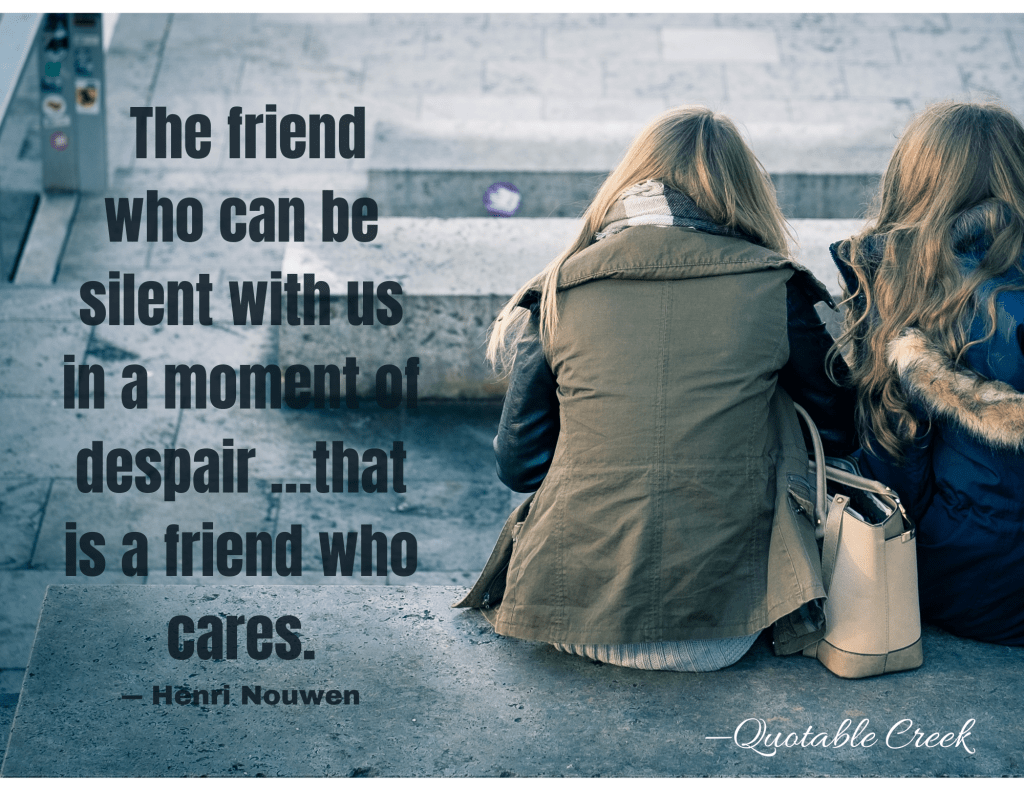
When we honestly ask ourselves which person in our lives means the most to us, we often find that it is those who, instead of giving advice, solutions, or cures, have chosen rather to share our pain and touch our wounds with a warm and tender hand. The friend who can be silent with us in a moment of despair or confusion, who can stay with us in an hour of grief and bereavement, who can tolerate not knowing, not curing, not healing and face with us the reality of our powerlessness, that is a friend who cares.”

― Henri Nouwen, Out of Solitude: Three Meditations on the Christian Life

An open house for emotions

This has been a week of extreme emotions for me. When I try to think of a metaphor for that, it’s tough because the emotions varied so much. Weather, maybe? Tornados to still winds, gentle rains to pounding storms, beating sun to numbing cold.

And then I remembered this poem by Rumi. I am not my emotions, though they might overwhelm me. Consider the emotions as visitors, and myself a guest house where a crowd of sorrows may enter and take up some space for a while before they pack their bags and move along.

The Guest House

by Jelalludin Rumi


This being human is a guest house.
Every morning a new arrival.
A joy, depression, a meanness,
some momentary awareness comes
as an unexpected visitor.
Welcome and entertain them all!
Even if they’re a crowd of sorrows,
who violently sweep your house
empty of its furniture,
still, treat each guest honorably.
He may be clearing you out
for some new delight.
The dark thought, the shame, the malice,
meet them at the door laughing,
and invite them in.
Be grateful for whoever comes,
because each has been sent
as a guide from beyond.

Facing fear

I’ve got something on the horizon that scares me. It’s unavoidable, so the only way out is through. But sometimes to keep from spinning out of control, I find a song that grounds me in the moment. Feet firm, breath in and out, listening to the music and reengaging with the beat of life. For me, right now, this song comforts me. I hope it brings you comfort, too.

Word clutter

I’m not a fan of clutter. I’m also quite challenged to part with stuff. It’s a problem. Like some people avoid carbs or sugar, I avoid ‘collecting’ because I know, given my propensities, it will lead to clutter. But there are many things that are clutter-free that I love to collect. Among these are words. Words are just so delightful— the sound and smack of them, their history, their aptness for a particular purpose.

One of my favorite bits of writing advice is to collect words that might fit for the time and place of your story.

In The Writer’s Portable Mentor, Priscilla Long writes:

The writers of deep and beautiful works spend real time gathering words. They learn the names of weeds, and tools, and types of roof. They make lists of color words (ruby, scarlet, cranberry, brick). They savor not only the meanings, but also the musicality of words. They are hunting neither big words nor pompous words nor Latinate words but mainly words they like. They are not “improving their vocabulary” or studying for the SAT or the GRE. They are not trying to be fancy or decorative. This is a different kind of thing.

She suggests keeping a journal of these words and going on quests to capture more:

HANDS ON: MAKE YOUR OWN LEXICON
Buy a small bound and sewn blank book, with fine paper. This is your Lexicon.
Put in words you like, words that strike your fancy, words you want to own. I suggest giving each word half a page. Put in the word _ lickspittle – and draw a horizontal line dividing the page in half. This way you can put in a word and look it up later. (Under lickspittle write: a contemptible, fawning person; a flatterer or toady.) You will end up with two words per page.
This is not a typical vocabulary list full of horrible Latinate words you don’t know and don’t want to know.
The rule is, put in only the good words, the juicy words, the hot words. From time to time, savor this book. Look up words you’ve put in (something from your reading) and haven’t looked up yet. Be sure to investigate the root. Put in familiar words along with new words. Play with sounds right in your Lexicon: kitchen matches; cord/weird/word/ fired/turd.
From time to time read a big dictionary hunting for a new good word, any word that strikes your fancy: galoot.
On some pages make word lists. Fiddle parts – peg box, button, side rib, bridge. Words for blue – cobalt, woad, sapphire, smalt. Words from an art exhibition you especially loved – bone, tin plate; cotton, cord, silk ribbon, silver, galloon; coconuts, shells, ostrich eggs (from
Moscow Treasures).
Put down things you don’t know the names of. Do you know the parts of a window? (Muntin? Sash?) Do you know the parts of a rocking chair? Draw or describe the thing in your Lexicon and then set about looking (in a book on house repairs or on furniture) for splat or spindle or stile. Do not order your list in any way.

She goes on to discuss making a word trap to fit the piece you are working on, the musicality and derivation of words, the vowel scale, and all sorts of other intriguing ways to add nuance, accuracy, and lilt to your piece. Hers is one of my favorite craft books, of which I have dozens. (See above about my hoarding propensities.)

But this intro brings me to my joy for the day. I discovered someone on Twitter who shares this love of words, who posted a word for the day. It’s blutherbung, an appropriate word for me these days as it turns out.

And then I looked at her feed and found another

Lickspittle, blutherbung, biophony. Aren’t these just wonderful? who do you suppose thought these up, studying human nature or the natural world and coming up with just the word to describe that particular confluence of traits? And now I’ve subscribed to her feed to get these delightful tidbits each day.

As you can probably guess, another thing I collect is quotations. I have a little book to jot them as I’m reading an article or book. I periodically look through this little book and write my thoughts about them. Which is what brought me here to writing Quotable Creek.

Another thing I ‘collect’ is gratitudes. I write the things I’m thankful for in a gratitude journal, to keep them and remember those moments. My next thing I’m thinking of to collect is book impressions. I read quite a bit, but get blutherbunged and forget about them. Perhaps keeping a little thought about each will bring them back to me. It’s another thing I found on Twitter. Probably when I was reading from the word lady’s thread.