Moving the chains.

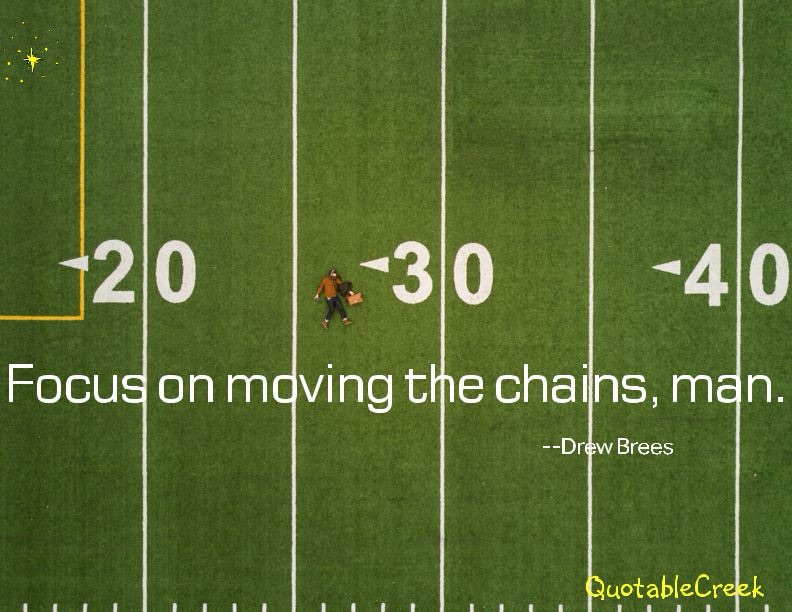
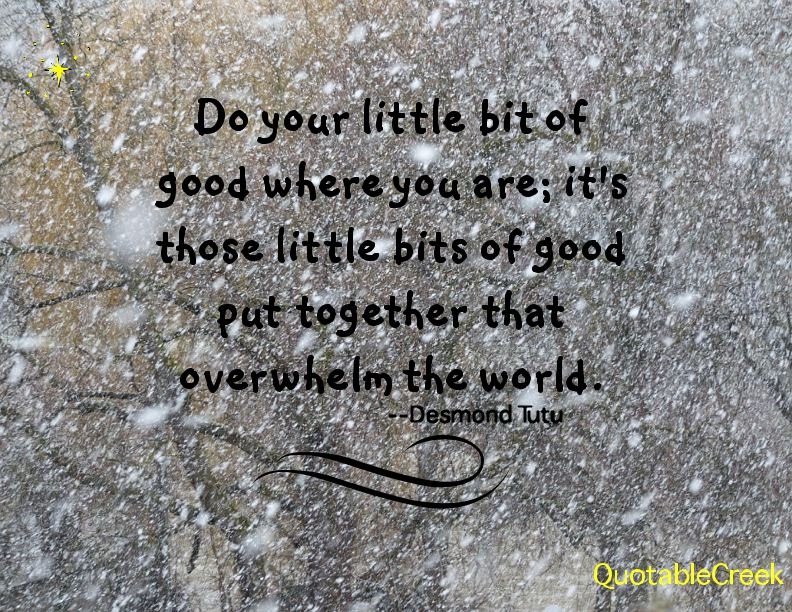
Any great achievement depends on small steps forward. Progress. Getting up again and again. Pushing through challenges. Ever forward.

If you are confronting a large, overwhelming project, break it up into small manageable pieces, and then tackle those. One at a time.

You’ve got this.

Binding invisible wounds.

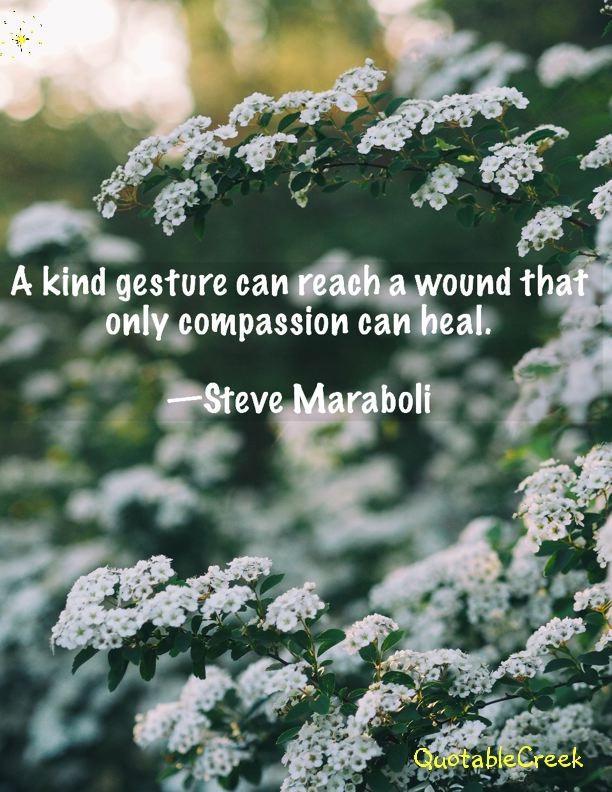
So much of our suffering is invisible. Loneliness, sorrow, depression, not fitting in. We can bind up our own cuts and scrapes, but how do we bind up those kind of wounds?

There is an old parable about heaven and hell. In both, people are forced to eat with spoons that are too long to feed themselves. In hell, they are starving. In heaven, they feed each other.

When it comes to these invisible hurts, we are healed by kindness, one to another. We don’t know when we are being kind that it may help someone, but it certainly can’t hurt. And it may be just the long-spooned nourishment that someone else needs.

To inspire acts of kindness today, watch this video of a poor baby elephant stuck in a muddy hole. The gratitude its mother shows its rescuers will melt your heart.

Help others, help ourselves.

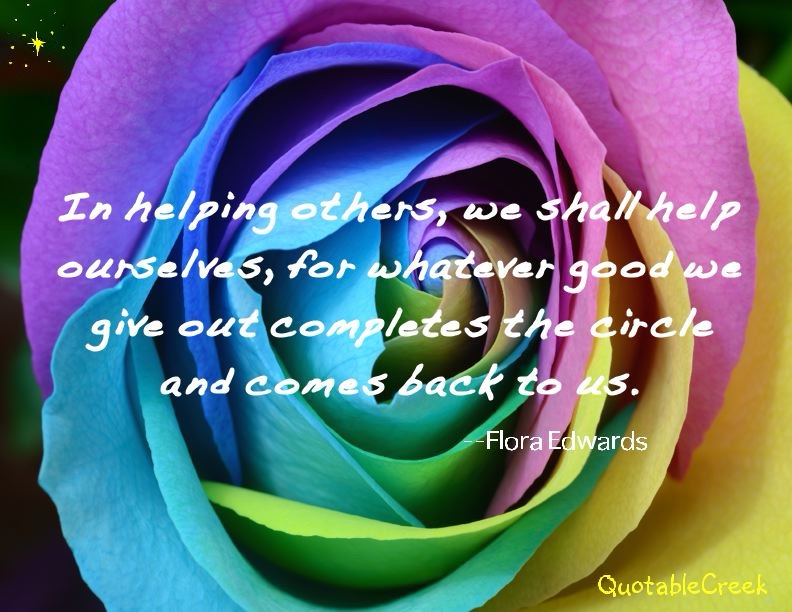
Sometimes we help; sometimes we need help. Sometimes we teach; sometimes we are the student.  Sometimes we follow; sometimes we lead. But the truly profound thing in each of these examples is that we are always on both sides of the continuum at the same time. The teacher learns as much from her students as she teaches. The leader who best leads remembers what it is like to be led. And when we help others, it makes us more empathic, more generous, more loving and expands our own humanity. We realize we are one. We are a community that best thrives when all work to help each other.

Take a moment.

Got a minute?

The rush of holidays and year end can be powerful. So much to do. We can’t stop bustling. Something might get dropped.

We don’t have time to see the look of wonder on a child’s face, or hear the kitten-soft whisper of snow beginning to fall, or breathe in the musky scent from a neighbor’s chimney. We don’t have time to drop to our knees with gratitude for being in this place and time, with these people to love, and these hands to serve, and these eyes to soak in the beauty around us. There is so much to do we simply don’t have time to pause and pay attention to the blessing of it all.

Or do we?

Patience, Grasshopper.

What is worth fighting for? Sometimes a battle is won in a courageous show of strength and derring do. A fireman runs into a burning building to save a child. A passerby stops to help victims of an accident. A pilot steers a damaged plane to safety.

But sometimes the battle requires showing up time after time with love, kindness, and patience. Not giving up on someone. Having faith that love will win. Believing that relationships can be salvaged.

That takes courage, too.

Go naked.

We wear many masks and fluff ourselves up with many props, but how’s that working for us? Nikki Giovanni notices:

A lot of people refuse to do things because they don’t want to go naked, don’t want to go without a guarantee. But that’s what’s got to happen. You go naked until you die.

What guarantees do we have in this life anyway? To health, to wealth, to job security, to happiness? Not so much. There really aren’t any guarantees to anything we do, and we delude ourselves to think otherwise. When we ‘go naked’ we engage from a place of authenticity, without the masks and props. We, our actual selves, enter into this thing called life.

J.K. Rowling notes:

It is impossible to live without failing at something, unless you live so cautiously that you might as well not have lived at all– in which case, you fail by default.

This is it, our one shot, our one life, and we owe it to ourselves to go into it as ourselves and with gusto.

Judging a day by its weather.

Dick Van Dyke is a national treasure, still singing and dancing his way through life at nearly 100. He reminds us that there are dark times, but behind the clouds the sun still shines. We show up. We do our best. And we realize that not everything is within our control.

He says,

We should never judge a day by its weather. It means you never know what’s going to happen,’ I said. ‘You do your best, then take your chances. Everything else is beyond our control.

Enjoy this lovely interaction between Van Dyke and Chris Martin, a balm for any troubled soul.

Tending roses.

‘If you look the right way, you can see that the whole world is a garden,’ muse the characters in Frances Hodgson Burnett’s The Secret Garden. And, perhaps, on a more intimate level, so our mind is too a garden.

We cultivate our thoughts, enrich them with information, learn, grow, stretch. But weeds can overrun any garden, and we can find our minds overcome with anxiety, negative thinking, and endless catastrophic thinking.

But Burnett notes:

Much more surprising things can happen to any one who, when a disagreeable or discouraged thought comes into his mind, just has the sense to remember in time and push it out by putting in an agreeable determinedly courageous one. Two things cannot be in one place.

When we find ourselves overcome with negative thoughts, we can imagine our mind a garden. Something we can lovingly tend, plucking weeds, nourishing blooms, replacing gloom with gratitude, planting seeds of possibility and promise.

While there are many things in this world we cannot control, we still can control our thoughts and find a way to focus on ones that keep our mental garden thriving.

Miracles.

Do you like to read the end of a novel first? Maybe especially when it’s a particularly stressful novel, and you want to make sure your favorite characters come out ok? It’s comforting, isn’t it? To know how the story ends, that no matter how deep the characters are in trouble, they will find a way out. And then you can read the book without being so nervous.

In this world, though, we don’t get to peek at the end of the book. We soldier on hoping and working toward better tomorrows. And we don’t know what will happen to our favorite people. Or even ourselves, for that matter.

But we do know, when we look back at the story of our own life, or at the greater story of the world, that great things have often come out of very trying times. Great art, certainly. But more than that, great advancement–inventions, cures, technology. Maybe even peace.

As we go through these challenging times, let us keep our hopes on the possibility that tomorrow will be a better day, even if that tomorrow is still a ways away.