Melting pot or mosaic?


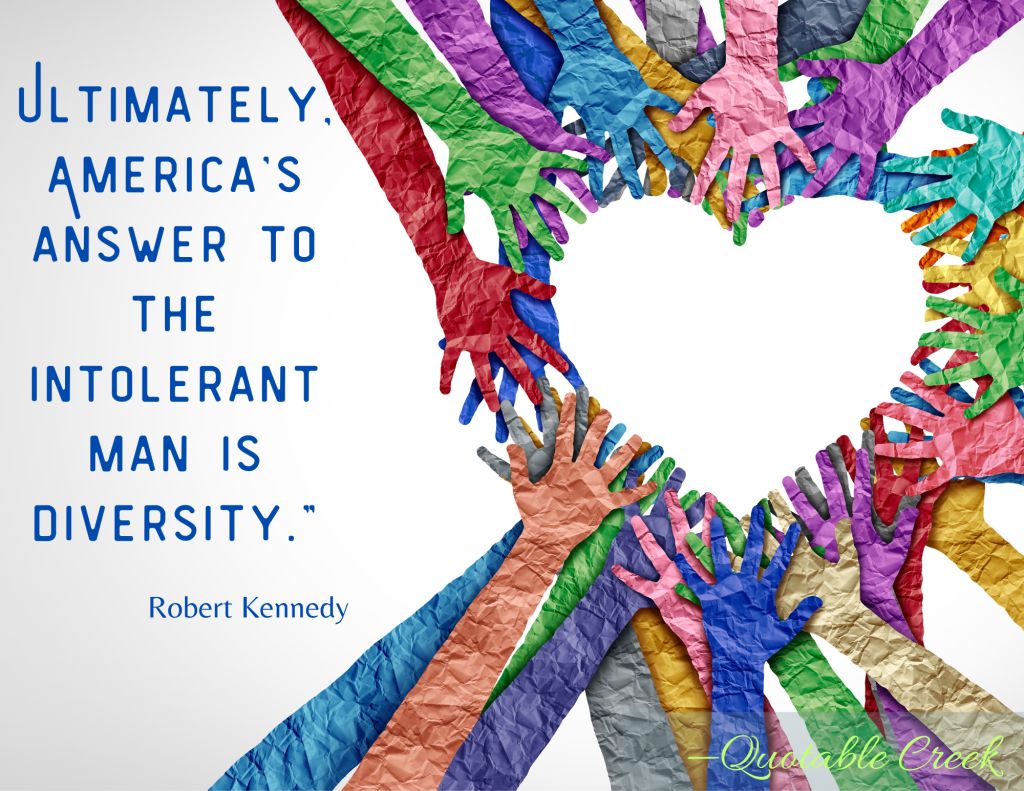
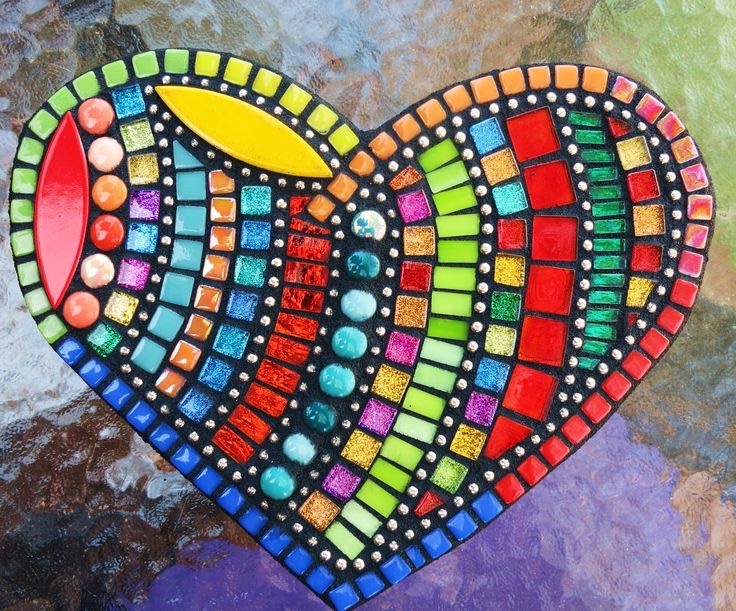
When I was a girl, text books used the term ‘melting pot’ to describe America as if everyone were thrown into one big pot and all the differences were boiled out, with America becoming just one big homogenous pot of glop. But better metaphors have popped up in the years since. Such as a salad bowl:

We don’t need a melting pot in this country, folks. We need a salad bowl. In a salad bowl, you put in the different things. You want the vegetables – the lettuce, the cucumbers, the onions, the green peppers – to maintain their identity. You appreciate differences.Jane Elliot

But perhaps my favorite is Jimmy Carter’s:

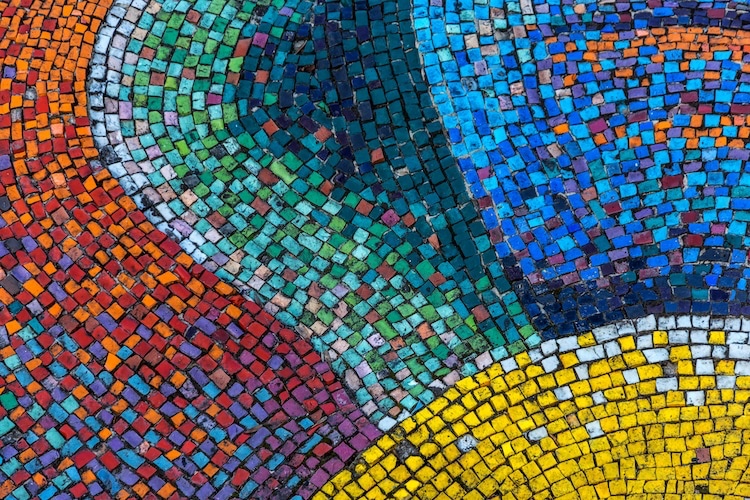
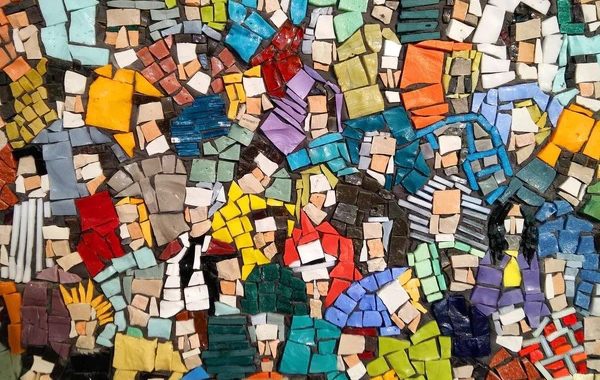
We become not a melting pot but a beautiful mosaic. Different people, different beliefs, different yearnings, different hopes, different dreams.Jimmy Carter

I love the idea of a mosaic to define America—beauty in all the bits and pieces, each a small distinct individual unit but also a necessary part of a larger picture. 

No matter how you describe it, America at its best, living up to its ideals, is stronger because of its diversity, the unique perspectives, the mix of voices, backgrounds, cultures, and traditions.

But soft!

Are there any more beautiful words in English literature than these: “But soft! What light through yonder window breaks?”

These are Romeo’s words when he gazes at Juliet above on the balcony, but what if we were to bring these words into our everyday encounters?

But soft! Listen to the hush here, the rapt attention, all of his focus on her, just her. What if we were to whisper these words to ourselves before we talk with someone? But soft! The world fades, the focus sharpens, all of our attention is on that person. But soft! reminds us not just to be calm and attentive, but also to be gentle and reverent. Wouldn’t any conversation shift if it were preceded by such a lovely call to silence? Wouldn’t But soft! be a perfect pairing of words to bring back into common usage?

“What light through yonder window breaks?” Again, what if we were to look at each other this way? As light, as beings capable of making the world a brighter place. Even those with much of darkness about them have an inner light, a spark of good. What if we were to ignore the dark and focus on the light in each other? What a compliment it is to be called a light! Wouldn’t someone noticing our light make each of us want to shine ever more brightly? And wouldn’t that, accordingly, make the world an ever brighter place?

Look around. Someone wants your attention.

But soft!

What light through yonder window breaks?

Thankful for teachers.

We are each born helpless. How we got from there to where we are now depended on the generosity of many people. Among those are our teachers, those people who devoted their time to making sure we understood the world around us and how to negotiate the ups and downs of the road ahead. Those teachers who went beyond the lesson plan to help us learn not just facts, but how to think and analyze, how to care and feel, and how to reach out to others deserve our unending gratitude.

Full of wonder.

How lovely it is to stand still in the enormity of your questions. To realize that what you know is minuscule in relation to all there is to know. To let your curious mind take you on a journey of discovery. How liberating it is to lay down the facade of expertise and acknowledge that, in this world, we are all students.

Everyday saints.

Sometimes I think saints must have been extraordinary people, somehow different from the rest of us lugs, vested, perhaps, with some superior spiritual gifts or insights.

But then I realize, as did Vonnegut below, nope, just people like us, doing their best.

Whether we are ever canonized or not, this is our ‘job,’ isn’t it? To ‘behave decently in an indecent society’.

And then comes the hard part, to trust that your behaving decently will make a difference, whether you ever know about it or not.

Just keep making those ripples.

I’m ready.

I’m listening, world. What do you have to teach me? Where should my attention be, to understand and, finally, get it, the great purpose and plan of it all?

Annie Dillard, in Teaching a Stone to Talk writes:

At a certain point, you say to the woods, to the sea, to the mountains, the world, Now I am ready. Now I will stop and be wholly attentive. You empty yourself and wait, listening. After a time you hear it: there is nothing there. There is nothing but those things only, those created objects, discrete, growing or holding, or swaying, being rained on or raining, held, flooding or ebbing, standing, or spread. You feel the world’s word as a tension, a hum, a single chorused note everywhere the same. This is it: this hum is the silence. Nature does utter a peep – just this one. The birds and insects, the meadows and swamps and rivers and stones and mountains and clouds: they all do it; they all don’t do it. There is a vibrancy to the silence, a suppression, as if someone were gagging the world. But you wait, you give your life’s length to listening, and nothing happens. The ice rolls up, the ice rolls back, and still that single note obtains. The tension, or lack of it, is intolerable. The silence is not actually suppression: instead, it is all there is.

And later:

The silence is all there is. It is the alpha and the omega. It is God’s brooding over the face of the waters; it is the blended note of ten thousand things, the whine of wings. You take a step in the right direction to pray into this silence, and even to address the prayer to ‘World.’ Distinctions blur. Quit your tents. Pray without ceasing.

Perhaps the aha moment isn’t in understanding as much as in being, a part within a vast whole, caught up in the mystery and the magnitude.

Why is beauty?

Have you ever wondered why everything is so beautiful? Have you stood rapt in the brilliant colors of a sunset, or listening to birdsong in the morning, or watching the way a caterpillar humps along with all its little feet working together? Perhaps there are logical, book smart reasons, like flowers are beautiful to attract bees, or animals are beautiful to attract mates or to warn predators they’re toxic, or some such thing, but don’t those answers beg the question really? Why is beauty? Could the answer be that it is to inspire awe in us? And our job is to notice.

A master violinist can play Bach on a precious instrument, and most people will just walk by:

We are living in a place filled with beauty if we only stop to notice. For inspiration, consider Mary Oliver’s poem, The Summer Day:

The Summer Day

Who made the world?
Who made the swan, and the black bear?
Who made the grasshopper?
This grasshopper, I mean-
the one who has flung herself out of the grass,
the one who is eating sugar out of my hand,
who is moving her jaws back and forth instead of up and down-
who is gazing around with her enormous and complicated eyes.
Now she lifts her pale forearms and thoroughly washes her face.
Now she snaps her wings open, and floats away.
I don't know exactly what a prayer is.
I do know how to pay attention, how to fall down
into the grass, how to kneel down in the grass,
how to be idle and blessed, how to stroll through the fields,
which is what I have been doing all day.
Tell me, what else should I have done?
Doesn't everything die at last, and too soon?
Tell me, what is it you plan to do
with your one wild and precious life?

What a gift we have been given to have the chance to notice the beauty all around us today!

A better peace.

What does it take to prevent a country fracturing from disagreements and divisions? Perhaps it is the same thing that keeps any relationship from severing. First, a deep desire for reconciliation. A laying down of arms. A recognition that the whole is greater than the sum of its parts, and that there is value and growth in working things out. Next, perhaps would be a deep humility, a recognition that one side doesn’t have all the answers while the other is ignorant and foolish, but an understanding that both sides have stories to tell and an eagerness to be heard. And finally, perhaps would come respect. Each side coming together voluntarily, knowing their future strength is in union rather than destruction. 

Everything is easy ‘cause of you.

Sometimes you can lift out of a moment and say to yourself, ‘This is a wonderful moment. I am so content.’ Everything has a new luster. And sometimes a song might come to mind.

In my case, I was sitting with my husband, watching our two cats (pictured) and thinking about how homey everything felt. It brought to mind the CSNY song, ‘Our House’.

Here are the lyrics:

And, while we were sitting so inclined, my husband did a Google search about the song and learned that Graham Nash and Joni Mitchell had been shopping after dining at Art’s Deli, bought a vase, came back to her two cats, and lit the fire on a drizzly day. Nash sat at her piano and wrote this song in an hour. He must have been feeling what we felt. Content. Full.

How lovely he memorialized it for all of us to share.

The singing leaf and your busy heart.

Let heaven and nature sing.

There is a thrum, a life force, a joy at the core of it all, and sometimes we need to tune in to it and listen.

As Mary Oliver wrote:

What can I say that I have not said before?

So I’ll say it again.

The leaf has a song in it.

Stone is the face of patience.

Inside the river there is an unfinishable story and you are somewhere in it

And it will never end until all ends.

Take your busy heart to the art museum and the chamber of commerce

But take it also to the forest.

The song you heard singing in the leaf when you were a child

Is singing still.

I am of years lived, so far, seventy-four,

And the leaf is singing still.

Where will you take your busy heart today? Can you hear the leaf singing?