Sorry. Not sorry?

Some apologies make things worse. They don’t feel like apologies at all. They feel, instead, like just more hurt. Other apologies acknowledge the wound and help it heal. What makes the difference?

In When Sorry Isn’t Enough: Making Things Right with Those You Love, Gary Chapman (of Five Love Languages fame) and Jennifer Thomas suggest that a true apology must have six characteristics:

Expressing regret–It’s important for an apology to be for something you did or said.  The more specific, the more it acknowledges the harm caused, the better. “I’m sorry you’re so sensitive,” doesn’t really feel like an apology because it is just restating some perceived flaw in the victim and isn’t focussing on anything you did wrong. Even if the harm was wholly unintended, when your actions cause another person pain, an apology is warranted. It goes to the very essence of the apology: I did not mean to hurt you.

Accepting responsibility— Yes, the pressures of the world can sometimes lead us to get wound up and stressed and to hurt other people, but that does not make it the world’s fault. We control ourselves. We are responsible if we act badly. Blaming the boss, the dog, the economy, the other drivers is deflecting. Apologies for the state of the world or all its ills will not feel like a real apology to the person you lashed out at. Apologizing for losing your temper or not considering the effects of your actions will.

Making restitution–“How can I make it right?” are powerful words. It shows an acknowledgement that what you did caused someone else harm. Maybe you can’t make it right. Maybe you can never make it right. But listening to the victim explain the damage is a powerful step forward in the process. Listening here is key–no justifying your actions, no quarreling with the facts, no defenses, just listening to the other person share their perspective. If there is something you can do to make things better, do that thing.

Genuinely repenting–If you are truly sorry, and have listened deeply to the pain you’ve caused, you will not want to cause that person pain again. You will stop causing the damage. You will want to change. Maybe you will need to write down the steps you want to take to prevent causing further harm. Maybe you will slip up and need to start again. But the most important thing is that you will try to not do this again. Otherwise, are you really sorry?

Requesting Forgiveness–“Can you forgive me?” are powerful words. They show you care about the relationship. They show you understand you did things wrong. They show you are not in control of the relationship.

Everyone messes up. Not everyone takes responsibility for messing up. When we do take responsibility for the harm we’ve caused, it may strengthen our relationships and help them grow stronger. Trust can reenter, fostering healing.

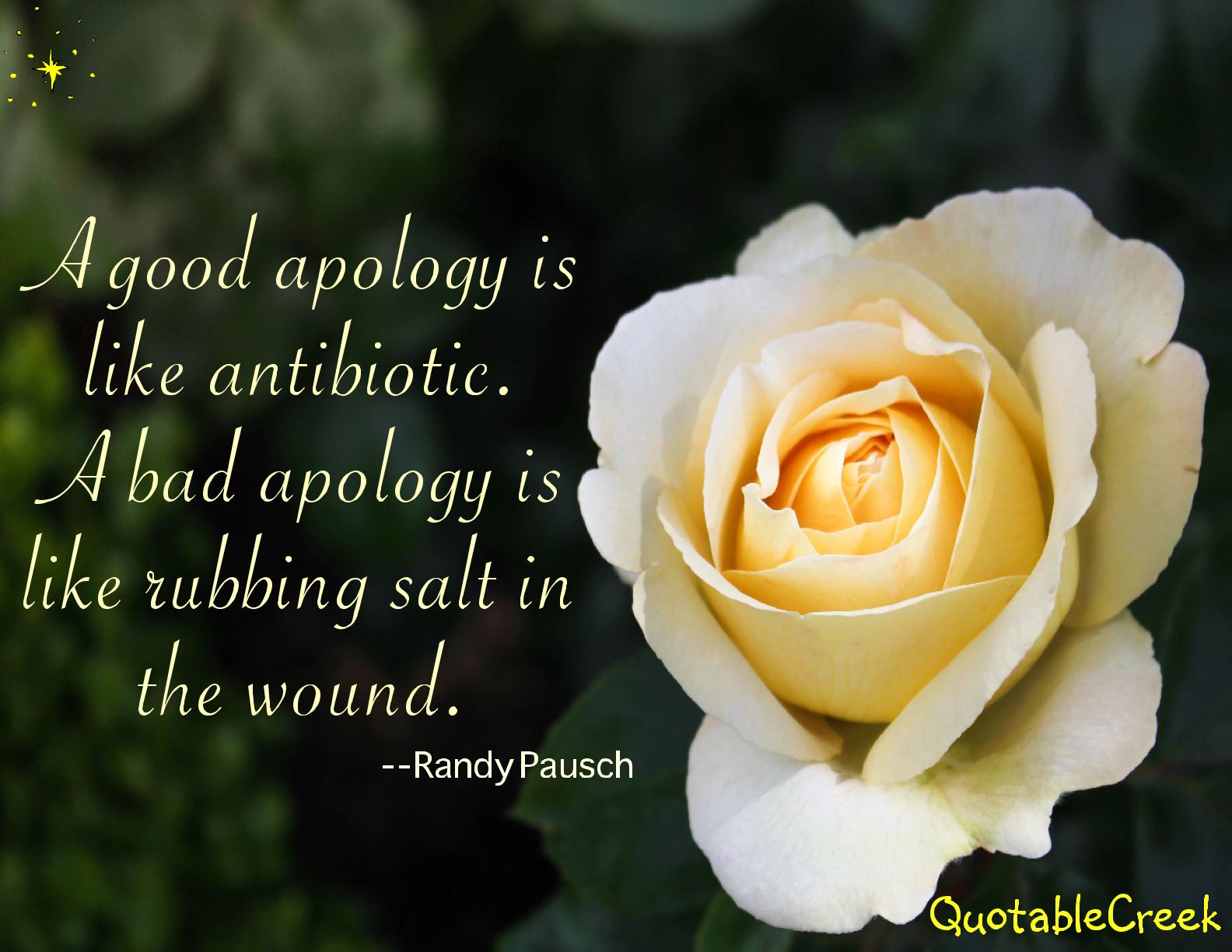
Randy Pausch, the author of the quote above, gave a powerful Last Lecture before he died young of pancreatic cancer. His timeless words can teach us all a lesson about life and living.

An apology to heal the hurt.

“I’m sorry, but…” Some apologies make things better, and some just don’t. In fact, they might make things worse by blaming the person you hurt or showing that there is just no true awareness of what went wrong. 

Generally, the apologies that have an excuse fall in the latter category. A good apology makes you feel seen and heard, that someone has looked at things from your point of view and understood the negative impact they have made. A good apology requires us to stand in the shoes of the person we’ve wronged and feel what they are feeling. Not what we would feel if we were in their shoes, but what they’re feeling. 

Then, when we feel the harm we’ve caused, it should change us, make us not want to cause that harm again to that person or others, and make us want to make amends. It shouldn’t leave us where we were. If it does, if we repeat the same hurtful words or behavior, perhaps we haven’t yet done the work that goes into reconciliation. 

Back into the other person’s shoes we go until we understand and grow. This is how progress is made, how relationships heal and grow stronger, how trust is restored. And, because we humans are very fallible creatures, it’s not a one and done thing, but a continuing process. Evaluating the effect we are having on people, making sure we are treading softly, taking responsibility and making amends when we don’t. Perhaps two steps forward, one step back, but staying in relationship, rebuilding trust, and moving forward together.

A heartfelt apology can lead to reconciliation.

goodapology


Some apologies make things worse. They don’t feel like apologies at all. They feel, instead, like just more hurt. Other apologies acknowledge the wound and help it heal. What makes the difference?

In When Sorry Isn’t Enough: Making Things Right with Those You Love, Gary Chapman (of Five Love Languages fame) and Jennifer Thomas suggest that a true apology must have six characteristics:

Expressing regret–It’s important for an apology to be for something you did or said.  The more specific, the more it acknowledges the harm caused, the better. “I’m sorry you’re so sensitive,” doesn’t really feel like an apology because it is just restating some perceived flaw in the victim and isn’t focussing on anything you did wrong. Even if the harm was wholly unintended, when your actions cause another person pain, an apology is warranted. It goes to the very essence of the apology: I did not mean to hurt you.

Accepting responsibility— Yes, the pressures of the world can sometimes lead us to get wound up and stressed and to hurt other people, but that does not make it the world’s fault. We control ourselves. We are responsible if we act badly. Blaming the boss, the dog, the economy, the other drivers is deflecting. Apologies for the state of the world or all its ills will not feel like a real apology to the person you lashed out at. Apologizing for losing your temper or not considering the effects of your actions will.

Making restitution–“How can I make it right?” are powerful words. It shows an acknowledgement that what you did caused someone else harm. Maybe you can’t make it right. Maybe you can never make it right. But listening to the victim explain the damage is a powerful step forward in the process. Listening here is key–no justifying your actions, no quarreling with the facts, no defenses, just listening to the other person share their perspective. If there is something you can do to make things better, do that thing.

Genuinely repenting–If you are truly sorry, and have listened deeply to the pain you’ve caused, you will not want to cause that person pain again. You will stop causing the damage. You will want to change. Maybe you will need to write down the steps you want to take to prevent causing further harm. Maybe you will slip up and need to start again. But the most important thing is that you will try to not do this again. Otherwise, are you really sorry?

Requesting Forgiveness–“Can you forgive me?” are powerful words. They show you care about the relationship. They show you understand you did things wrong. They show you are not in control of the relationship.

Everyone messes up. Not everyone takes responsibility for messing up. When we do take responsibility for the harm we’ve caused, it may strengthen our relationships and help them grow stronger. Trust can reenter, fostering healing.

Randy Pausch, the author of the quote above, gave a powerful Last Lecture before he died young of pancreatic cancer. His timeless words can teach us all a lesson about life and living.


Sorry. Not sorry?

goodapology

Some apologies make things worse. They don’t feel like apologies at all. They feel, instead, like just more hurt. Other apologies acknowledge the wound and help it heal. What makes the difference?

In When Sorry Isn’t Enough: Making Things Right with Those You Love, Gary Chapman (of Five Love Languages fame) and Jennifer Thomas suggest that a true apology must have six characteristics:

Expressing regret–It’s important for an apology to be for something you did or said.  The more specific, the more it acknowledges the harm caused, the better. “I’m sorry you’re so sensitive,” doesn’t really feel like an apology because it is just restating some perceived flaw in the victim and isn’t focussing on anything you did wrong. Even if the harm was wholly unintended, when your actions cause another person pain, an apology is warranted. It goes to the very essence of the apology: I did not mean to hurt you.

Accepting responsibility— Yes, the pressures of the world can sometimes lead us to get wound up and stressed and to hurt other people, but that does not make it the world’s fault. We control ourselves. We are responsible if we act badly. Blaming the boss, the dog, the economy, the other drivers is deflecting. Apologies for the state of the world or all its ills will not feel like a real apology to the person you lashed out at. Apologizing for losing your temper or not considering the effects of your actions will.

Making restitution–“How can I make it right?” are powerful words. It shows an acknowledgement that what you did caused someone else harm. Maybe you can’t make it right. Maybe you can never make it right. But listening to the victim explain the damage is a powerful step forward in the process. Listening here is key–no justifying your actions, no quarreling with the facts, no defenses, just listening to the other person share their perspective. If there is something you can do to make things better, do that thing.

Genuinely repenting–If you are truly sorry, and have listened deeply to the pain you’ve caused, you will not want to cause that person pain again. You will stop causing the damage. You will want to change. Maybe you will need to write down the steps you want to take to prevent causing further harm. Maybe you will slip up and need to start again. But the most important thing is that you will try to not do this again. Otherwise, are you really sorry?

Requesting Forgiveness–“Can you forgive me?” are powerful words. They show you care about the relationship. They show you understand you did things wrong. They show you are not in control of the relationship.

Everyone messes up. Not everyone takes responsibility for messing up. When we do take responsibility for the harm we’ve caused, it may strengthen our relationships and help them grow stronger. Trust can reenter, fostering healing.

Randy Pausch, the author of the quote above, gave a powerful Last Lecture before he died young of pancreatic cancer. His timeless words can teach us all a lesson about life and living.