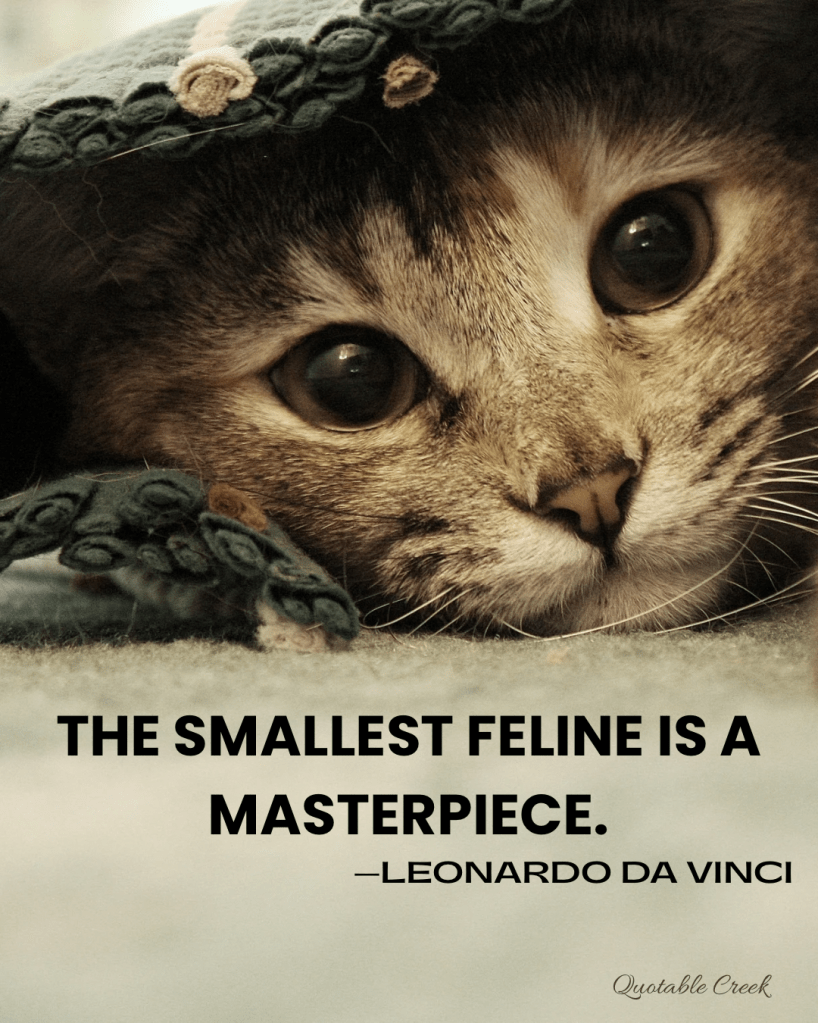
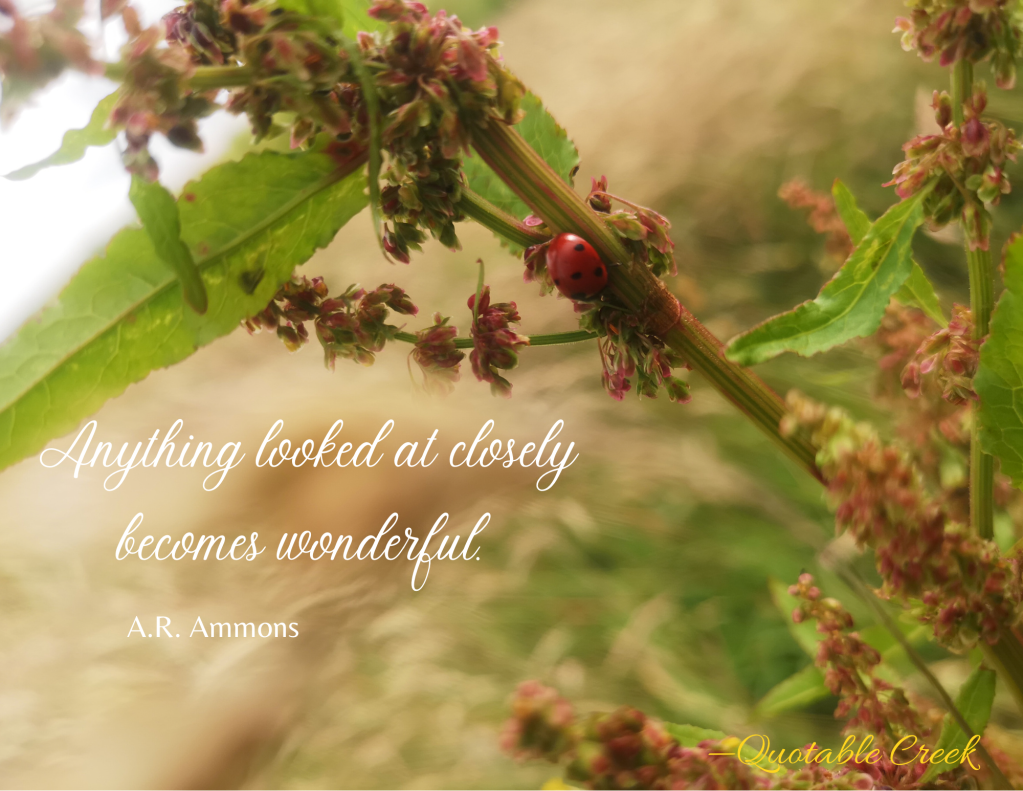
There is something about close attention, to anything really, that leads to awe. Take a cat, for example, and really study it. The whiskers, the sprinkle of freckles where the whiskers emerge, the expressions, the ear tufts, the velvet nose, and so on.
Before long, you’ll understand why they were (and are) revered. And while you’re taking in the details, you might stumble onto awe.
Jason Silva, an ‘awe pioneer’ says,
We fit the universe through our brains and it come out as nothing less than poetry. We have a responsibility to awe.
Is your life all ups, no downs? Do you ever feel a need to make it look like it is? Maybe to pretend the rough stuff doesn’t exist or put on a big smile to cover a broken heart? Do you ever feel like there must be something wrong with your faith if your life is going badly?
Truth is, bad things happen. To the best, most faithful of people. Life’s struggles can feel overwhelming. You can get to the point where you simply cannot see how someone could think and feel the way they do. You can lose hope.
At times like these you need to breathe deep and get yourself to a quiet place. And it sure would do no harm, and maybe a whole lot of good, to read a poem like this:
The Peace of Wild Things
by Wendell Barry
When despair for the world grows in me
and I wake in the night at the least sound
in fear of what my life and my children’s lives may be,
I go and lie down where the wood drake
rests in his beauty on the water, and the great heron feeds.
I come into the peace of wild things who do not tax their lives with forethought of grief.
I come into the presence of still water.
And I feel above me the day-blind stars waiting with their light.
For a time I rest in the grace of the world, and am free.
And the good news is, you can read this poem, and your soul will calm without even being in that place where the wood drake rests in his beauty on the water. The words of a good poem are like magic. They can heal you and still the churning waters of your soul. And they can help you remember the ‘day-blind stars waiting with their light’, because, yes, we cannot see the stars in the daytime, but they are there. Shining.
May you rest in the grace of the world and find peace.
Apparently, chaos is on the agenda. With breakneck speed, legal norms are being tossed aside, and guardrails appear missing. It’s hard not to be overwhelmed with concerns about our future.
What to do?
When we lose our way or feel overwhelmed, we can return to nature and be renewed. Hear the birds singing. Feel the cool breeze. See the long grass ripple in a gentle wind like ocean waves. Breathe in the sweet earthy fragrance of the morning. Feel small and surrounded by an amazing, complicated system that has been pulsating with life for millions of years. That awe is good for us:
It has long been established that a healthy diet and lots of sleep and exercise bolster the body’s defenses against physical and mental illnesses. But the new study, whose findings were recently published in the journal Emotion, is one of the first to look at the role of positive emotions in that arsenal.
That awe, wonder, and beauty promote healthier levels of cytokines suggests that the things we do to experience these emotions—a walk in nature, losing oneself in music, beholding art—has a direct influence upon health and life expectancy,” says UC Berkeley psychologist Dacher Keltner, a coauthor of the study.
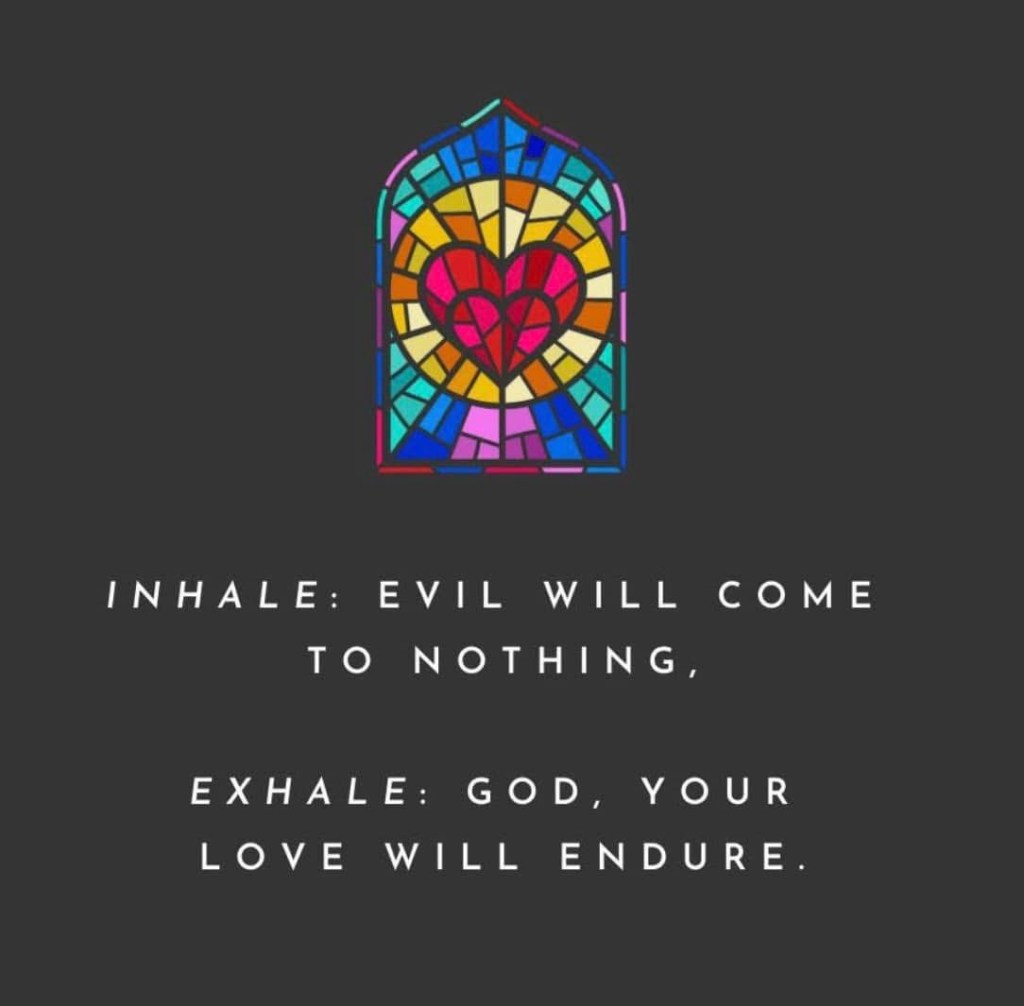
Breathe in the day, full of life and possibility. Breathe out the stress, the worry, the defeat.
In.
Out.
In.
Out.
In.
And for a more guided practice consider adding these words to your breath, suggested by my former pastor John Foster:
How lovely it is to stand still in the enormity of your questions. To realize that what you know is minuscule in relation to all there is to know. To let your curious mind take you on a journey of discovery. How liberating it is to lay down the facade of expertise and acknowledge that, in this world, we are all students.
I’m listening, world. What do you have to teach me? Where should my attention be, to understand and, finally, get it, the great purpose and plan of it all?
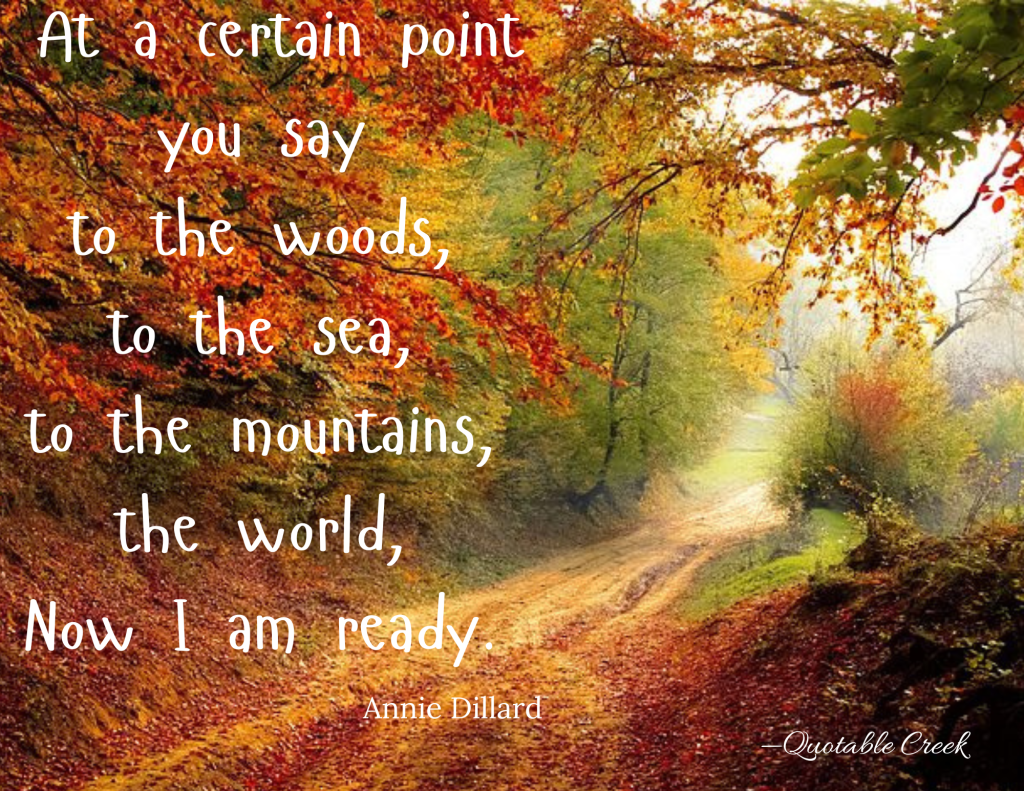
Annie Dillard, in Teaching a Stone to Talk writes:
At a certain point, you say to the woods, to the sea, to the mountains, the world, Now I am ready. Now I will stop and be wholly attentive. You empty yourself and wait, listening. After a time you hear it: there is nothing there. There is nothing but those things only, those created objects, discrete, growing or holding, or swaying, being rained on or raining, held, flooding or ebbing, standing, or spread. You feel the world’s word as a tension, a hum, a single chorused note everywhere the same. This is it: this hum is the silence. Nature does utter a peep – just this one. The birds and insects, the meadows and swamps and rivers and stones and mountains and clouds: they all do it; they all don’t do it. There is a vibrancy to the silence, a suppression, as if someone were gagging the world. But you wait, you give your life’s length to listening, and nothing happens. The ice rolls up, the ice rolls back, and still that single note obtains. The tension, or lack of it, is intolerable. The silence is not actually suppression: instead, it is all there is.
And later:
The silence is all there is. It is the alpha and the omega. It is God’s brooding over the face of the waters; it is the blended note of ten thousand things, the whine of wings. You take a step in the right direction to pray into this silence, and even to address the prayer to ‘World.’ Distinctions blur. Quit your tents. Pray without ceasing.
Perhaps the aha moment isn’t in understanding as much as in being, a part within a vast whole, caught up in the mystery and the magnitude.
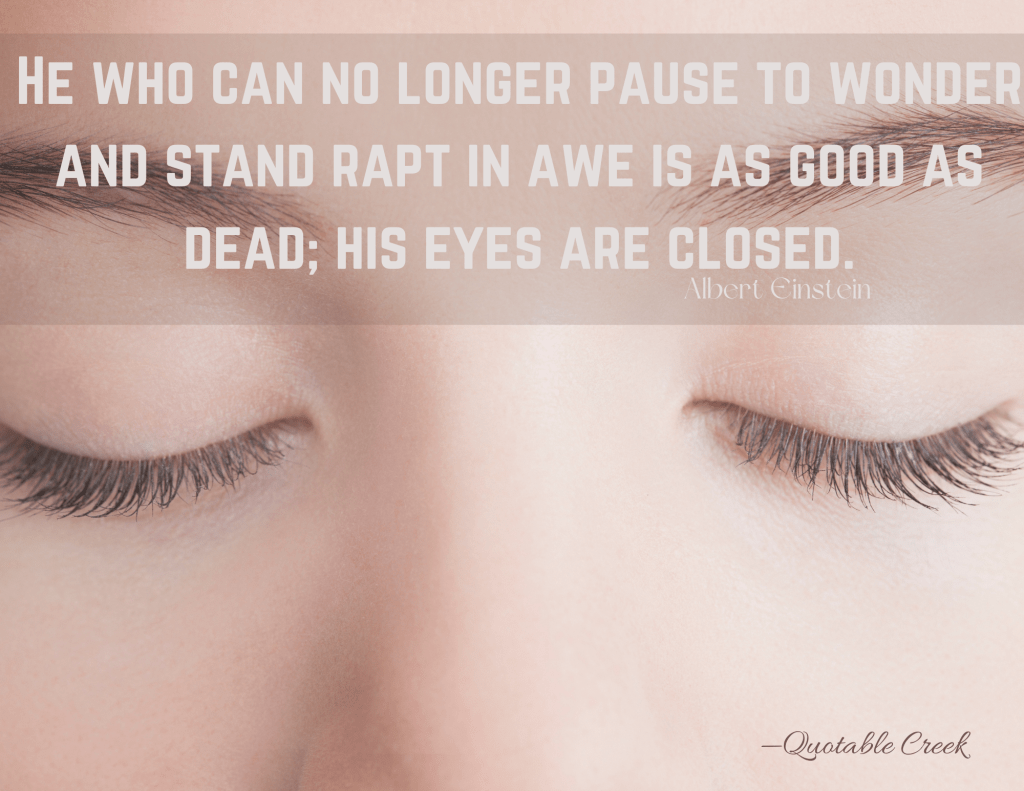
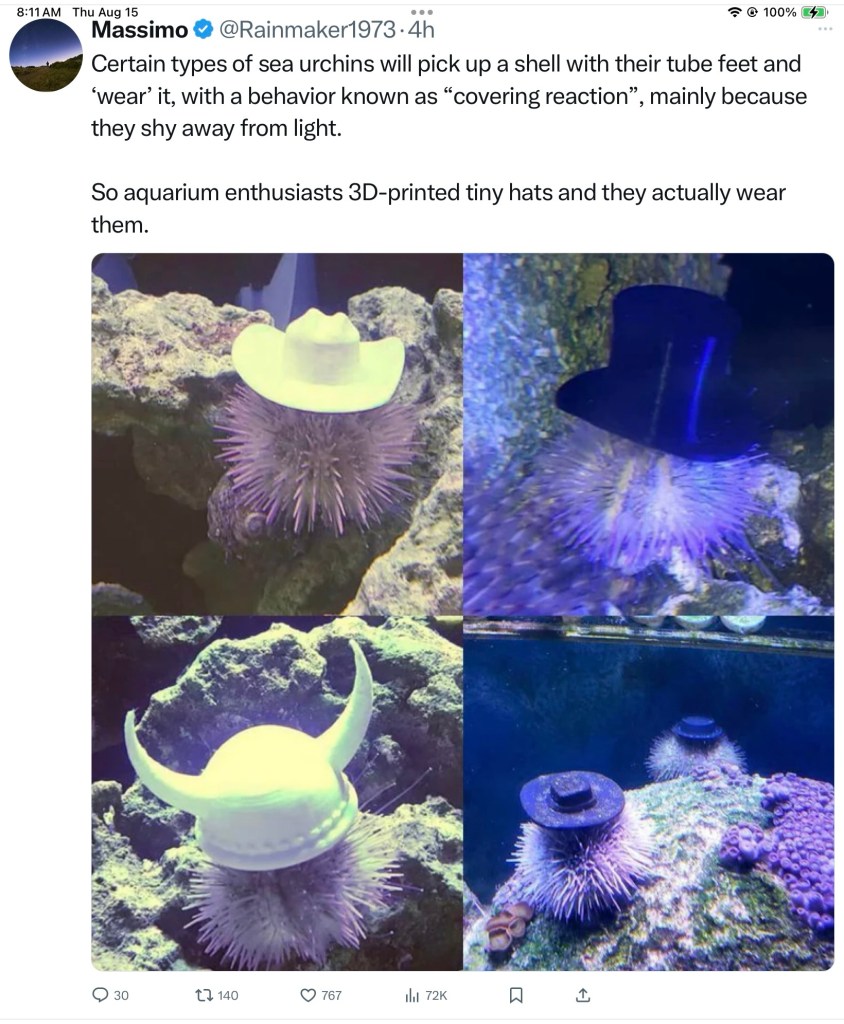
It doesn’t matter how old we get. There is always something that captures our attention and imagination, and, maybe even, holds us rapt in awe. Often it’s in nature, but sometimes it’s in human inventiveness. Or, maybe, a combination of the two.
This is something that captured my attention recently and held my fascination. First in amusement, then in wonder, and, finally, awe.
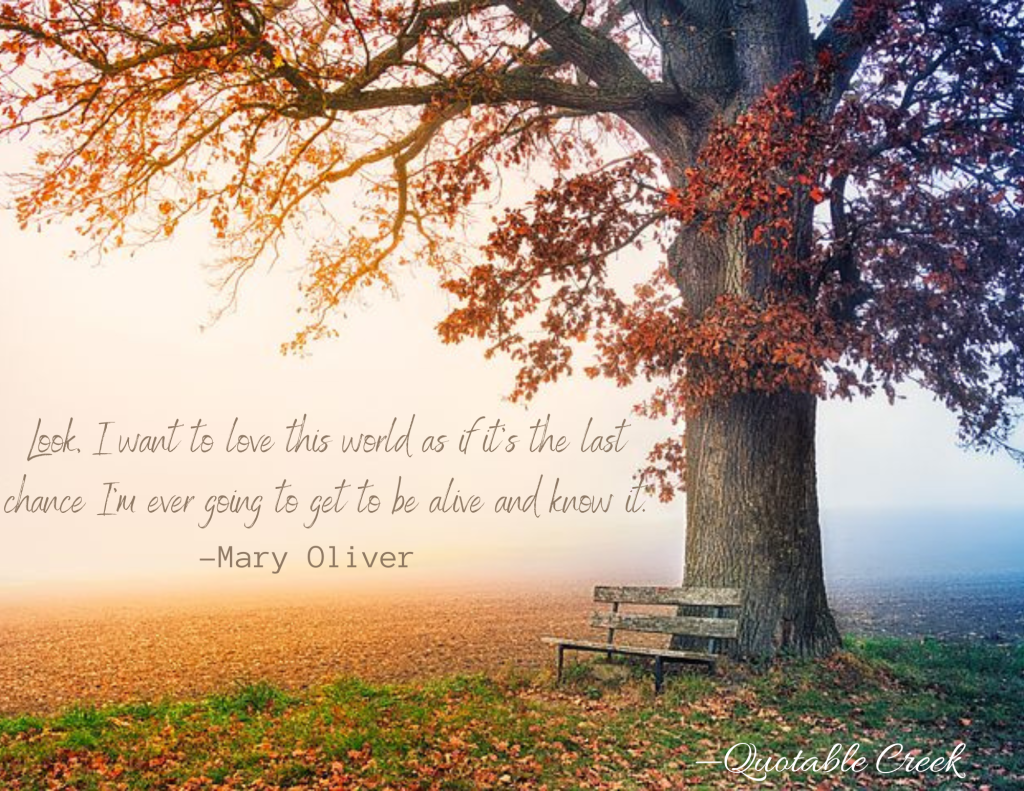
Now is our time to be alive. It will not come again. This is our last chance to savor nature and all of its wonder, to spend time with loved ones, to do good, to spread joy. This is it. This is our opportunity.
In the movie, Michael, an angel comes to Earth to influence the course of events. He, apparently, smells of cookies. But there is a scene, after ‘battle’ (he’s that kind of angel), when he is savoring the day. He is soaking it in, just enjoying being corporeal, waltzing with the breeze.
If only we could hold on to that wonder, awe, and appreciation, live in the moment, truly appreciate all we’ve been given here. What a fine world that would be.
Joy is a fascinating emotion. It often springs up in us at surprising times. There is something of a wellspring vibe to it, as if it bubbles up in us with little bearing to our circumstance in life or particular experience. As C. S. Lewis notes,
“I call it Joy. ‘Animal-Land’ was not imaginative. But certain other experiences were… The first is itself the memory of a memory. As I stood beside a flowering currant bush on a summer day there suddenly arose in me without warning, and as if from a depth not of years but of centuries, the memory of that earlier morning at the Old House when my brother had brought his toy garden into the nursery. It is difficult or find words strong enough for the sensation which came over me; Milton’s ‘enormous bliss’ of Eden (giving the full, ancient meaning to ‘enormous’) comes somewhere near it. It was a sensation, of course, of desire; but desire for what?…Before I knew what I desired, the desire itself was gone, the whole glimpse… withdrawn, the world turned commonplace again, or only stirred by a longing for the longing that had just ceased… In a sense the central story of my life is about nothing else… The quality common to the three experiences… is that of an unsatisfied desire which is itself more desirable than any other satisfaction. I call it Joy, which is here a technical term and must be sharply distinguished both from Happiness and Pleasure. Joy (in my sense) has indeed one characteristic, and one only, in common with them; the fact that anyone who has experienced it will want it again… I doubt whether anyone who has tasted it would ever, if both were in his power, exchange it for all the pleasures in the world. But then Joy is never in our power and Pleasure often is.”
The Shape of My Early Life
Joy is distinct from pleasure and happiness. It is an abundance, a bliss, an immeasurable gratitude for the privilege of being. It isn’t meant to be ignored, but embraced, relished, cherished. Not as a byproduct of some other experience, but in itself.
As Mary Oliver says,
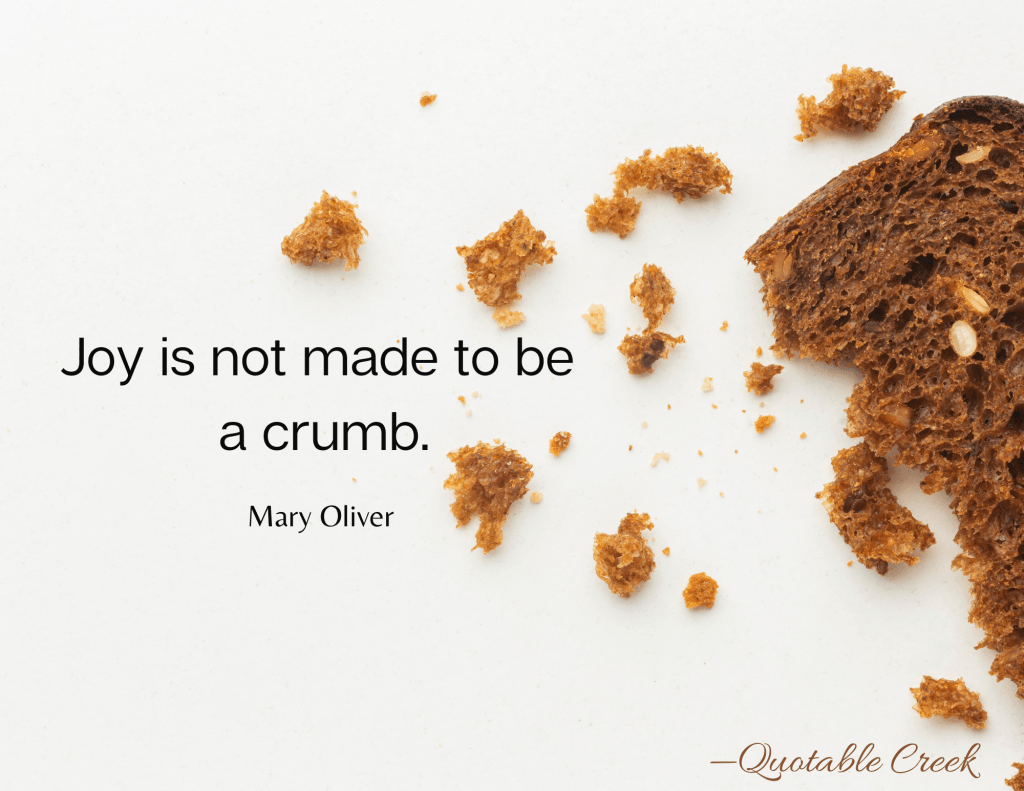
“If you suddenly and unexpectedly feel joy, don’t hesitate. Give in to it. There are plenty of lives and whole towns destroyed or about to be. We are not wise, and not very often kind. And much can never be redeemed. Still life has some possibility left. Perhaps this is its way of fighting back, that sometimes something happened better than all the riches or power in the world. It could be anything, but very likely you notice it in the instant when love begins. Anyway, that’s often the case. Anyway, whatever it is, don’t be afraid of its plenty. Joy is not made to be a crumb. (Don’t Hesitate)”
Swan, Poems and Prose Poems
If you should be lucky enough to feel joy bubbling up, savor it.
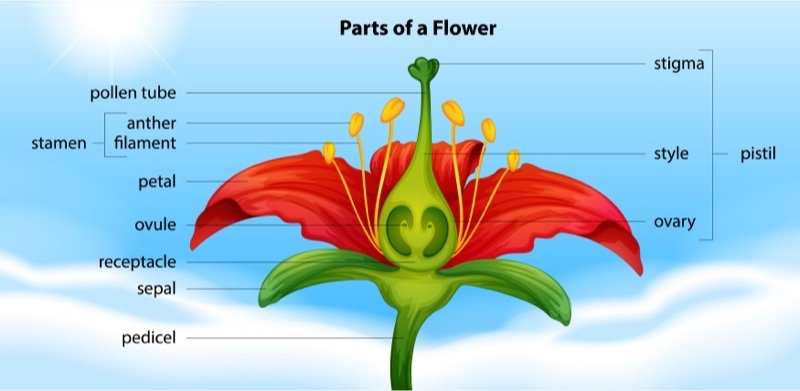
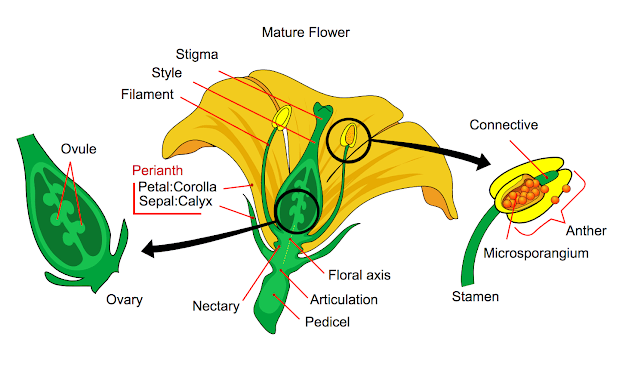
One of the lessons from my elementary school days that still stands out in memory was flower dissection day. I was astonished with the intricacy in a flower. Where before I saw just a flower, now I saw intricate systems for reproduction, male and female organs, color and smell to attract pollinators, a whole interconnection of systems. And this was just what I could see with my naked eye. Later I would discover the microscopic diversity and complexity of plant life. But then as a little 8 year old girl, I was gobsmacked with the complexity of it all.
Isn’t it all miraculous?
These days I need to stop and remember to let my much older self still stand in awe of the complexities of life. The interconnectedness of creation in all its abundance, from the dung beetle pushing its treasured clomp up a hill backwards with its hind feet, to the elements swirling together in a once in a generation storm.
Standing in awe requires both decentering ourselves and paying attention, absorbing both the tiniest details and the grand ones, and realizing our small place in the midst of it all. And even we humans are an amazing complexity of systems and organisms functioning together to keep us alive, made up of around 30 trillion human cells, and 39 trillion non-human microbial cells living on and in us. Our own body is essentially made up of many separate ecosystems. It is staggering.
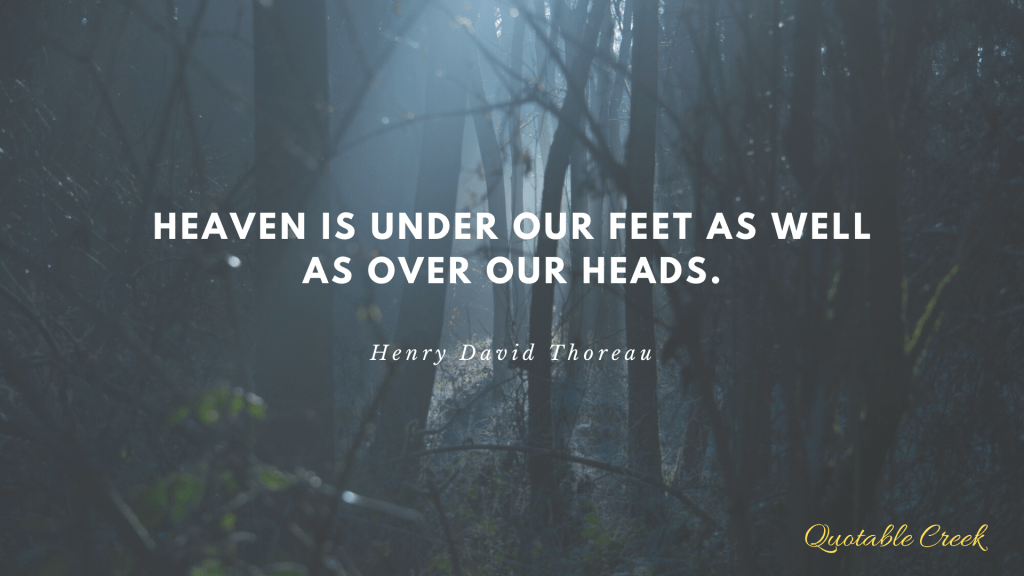
What do you think heaven looks like? Certainly, if we can see there, it is a place of great beauty and marvelous complexity where we marvel at God’s creation. If we can hear there, music that stirs the soul must be the score. And so on through our senses
But what if we are not corporeal in heaven and don’t have senses per se? What then? Perhaps it is a place of harmony, of communion, with everyone different but united in common purpose.
These are good things, yes? Appreciating beauty in God’s creation, enjoying music that stirs the soul, being so present in our bodies that we marvel at its systems? And, of course, communion, harmony, peace? These are good things.
Perhaps, today, we can take time to bring a bit of heaven to earth. Pause to admire the beauty around us, savor, marvel, be astonished. And then with our senses full and renewed, have courage to bring peace and harmony to our day.



 QuotableCreek.com