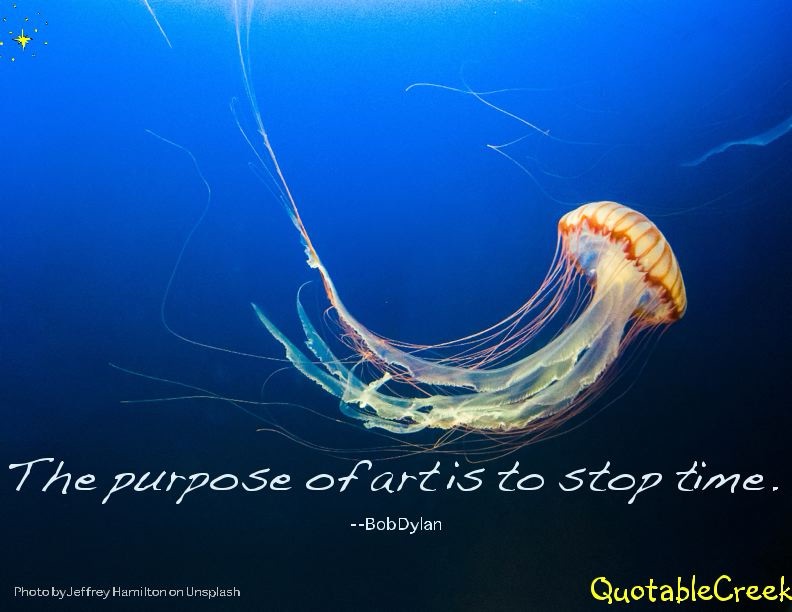
Hit pause.

We are caught in the steady, persistent, ruthless flow of time. And yet there are moments when we can step out of time to pause, focus, and gain perspective. The arts do that. As you admire a piece of art, whether photograph, painting, novel, poem, film, dance and so on, we are grounded in detail. We can observe intricacy. We pause in the captured emotion and can rest there awhile. We are transported.

When the cares of the world become too great, we can pause and admire the detail in a jelly fish, the sweetness in bird song, or read soothing words such as these by Wendell Barry:

The Peace of Wild Things

When despair for the world grows in me

and I wake in the night at the least sound

in fear of what my life and my children’s lives may be,

I go and lie down where the wood drake

rests in his beauty on the water, and the great heron feeds.

I come into the peace of wild things

who do not tax their lives with forethought

of grief. I come into the presence of still water.

And I feel above me the day-blind stars

waiting with their light. For a time

I rest in the grace of the world, and am free.

Take a moment to pause on something beautiful.
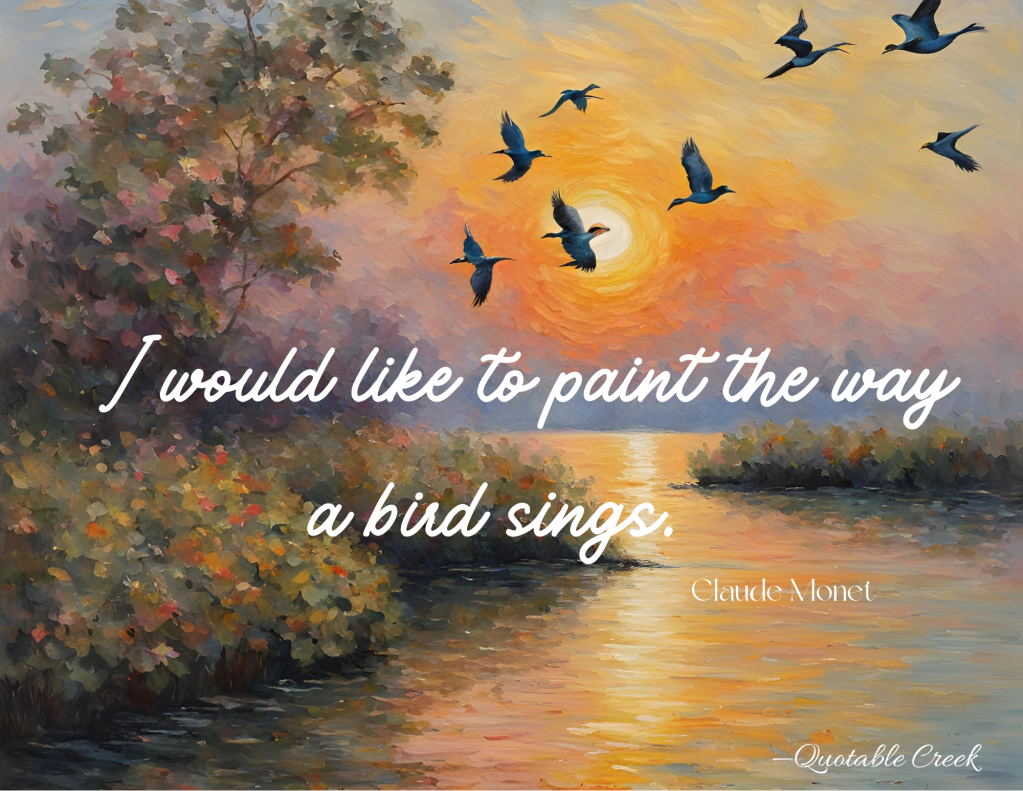
What gorgeous thing.

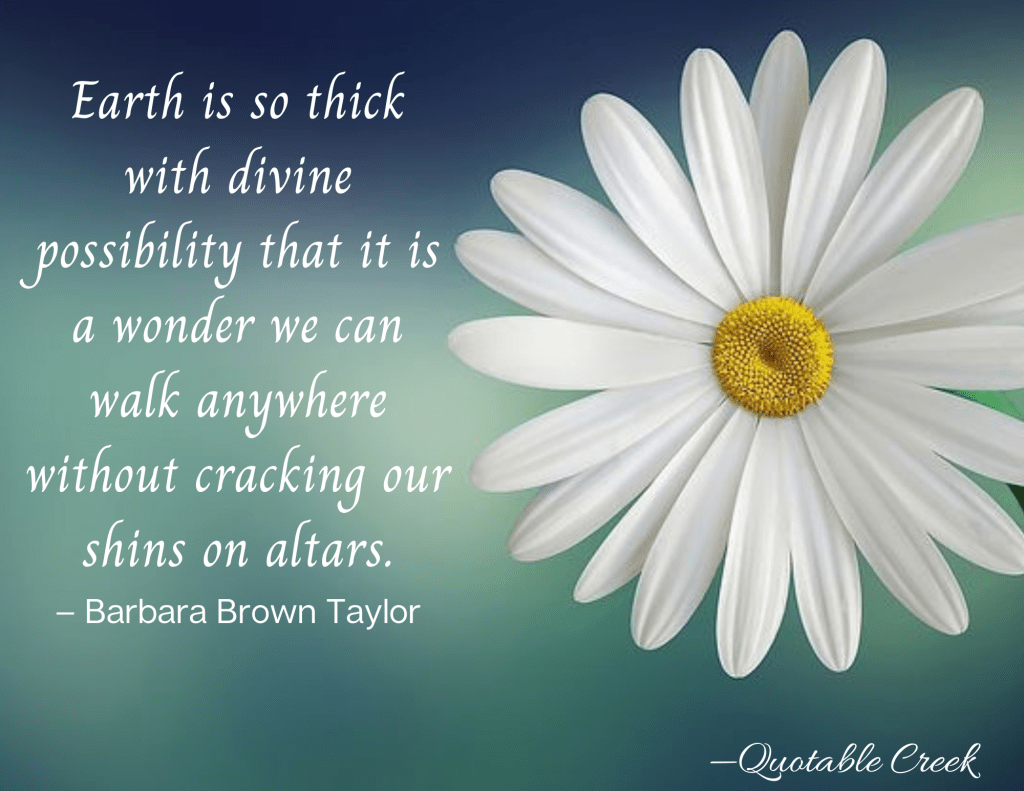
I confess there are times I leave the conversation. Not bodily, but heart, mind, and soul. I drift. Such a time happened the other night. I was having dinner with a group of long-time friends. We were outside in one’s lovely yard which overlooks a golf course and the hills beyond. My wandering off, metaphorically speaking, began with a flock of ducks flying overhead across the darkening sky. And then birds broke into song all about us, flitting from bush to bush. It was such a joyful moment. And although I tried to call my friends’ attention to the ducks and birds, it maybe was just a singular moment for me, astonished by the joy in it all. A moment to savor.

Mary Oliver often captures such moments.

Consider her poem, What Gorgeous Thing about the ineffable joy in bird song:

I do not know what gorgeous thing
the bluebird keeps saying,
his voice easing out of his throat,
beak, body into the pink air
of the early morning. I like it
whatever it is. Sometimes
it seems the only thing in the world
that is without dark thoughts.
Sometimes it seems the only thing
in the world that is without
questions that can’t and probably
never will be answered, the
only thing that is entirely content
with the pink, then clear white
morning and, gratefully, says so.

There is a wordless something in nature that communicates both nothing and everything, and sometimes we just need to drink it all in. (And then get back to the conversation before you’re missed.)

The extraordinary in my cup of coffee.

Sometimes we see the extraordinary in the ordinary. This poem perfectly captures the blessing in such a day:

Lord, here I am.

How strange it is,

That some days feel like hurricanes

And others like glassy seas

And others like nothing much at all,

Today is a cosmic shrug.

My day planner says, 

Rather conveniently,

That I will not need you,

Cry for you, reach for you.

Ordinarily, I might not think of you at all.

Except, if you don’t mind,

Let me notice you.

Show up in the small necessities

And everyday graces.

God, be bread.

Be water.

Be laundry.

Be the coffee cup in my hands

And the reason to calm down in traffic.

Be the gentler tone in my insistence today

That people pick up after themselves for once.

When I catch my own reflection

Or feel my own self-loathing

Fluttering in my stomach.

Calm my mind,

Lift my spirit,

Make this dumb, ordinary day

My prayer of thanks.

Be the reason I feel loved.The Lives We Actually Have, by Kate Bowler and Jessica Richie

The formula of gratitude

What is the formula for a happy life? What are the variables? How do things like gratitude and expectations factor in?

In his essay, The Structure of Gratitude, David Brooks says:

I’m sometimes grumpier when I stay at a nice hotel. I have certain expectations about the service that’s going to be provided. I get impatient if I have to crawl around looking for a power outlet, if the shower controls are unfathomable, if the place considers itself too fancy to put a coffee machine in each room. I’m sometimes happier at a budget motel, where my expectations are lower, and where a functioning iron is a bonus and the waffle maker in the breakfast area is a treat.

Included in, The Way of Gratitude, Readings for a Joyful Life.

He concludes that “Gratitude happens when some kindness exceeds expectations, when it is undeserved.” So, maybe as a formula it would look like “If kindness>expectations= gratitude.” So are our expectations the linchpin variable. To be happy and grateful, we should keep our expectations low? Or is there more to it?

He notes that there are some people who are ‘dispositionally’ grateful:

These people may have big ambitions, but they have preserved small anticipations. As most people get on in life and earn more status, they often get used to more respect and nicer treatment. But people with dispositional gratitude take nothing for granted. They take a beginner’s thrill at a word of praise, at another’s good performance or at each sunny day. These people are present-minded and hyper-responsive. This kind of dispositional gratitude is worth dissecting because it induces a mentality that stands in counterbalance to the mainstream threads of our culture. We live in a capitalist meritocracy. This meritocracy encourages people to be self-sufficient–masters of their own fate. But people with dispositional gratitude are hyperaware of their continual dependence on others. They treasure the way they have been fashioned by parents, friends and ancestors who were in some ways their superiors. They’re glad the ideal of individual autonomy is an illusion.

Included in, The Way of Gratitude, Readings for a Joyful Life

What a powerful way to look at things. In a very real sense, people with dispositional gratitude are able to see behind the veil into a truer, richer reality, full of wonder and generosity beyond anything any one of us deserves or merits. They are witnesses to the abundance we all share but few notice. Any one of us is capable of dropping our expectations and stepping into a magical world full of abundance if only we have the eyes to see.

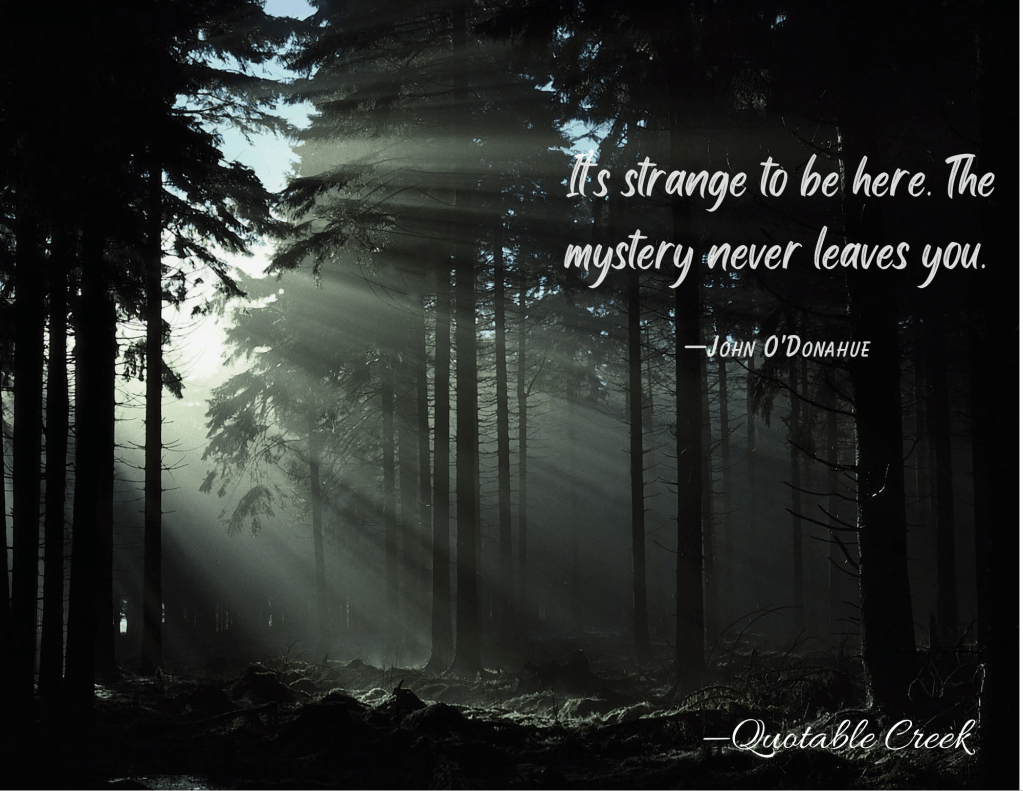
The mystery never leaves you.

What an amazing world this is, every bit of it connected to something else, and all together. Under every footstep we take are millions of organisms working out their life journeys. As is true in every breath we take, bite we eat, even into our own interior microscopic landscapes. The whole world is simply thrumming with life force, of which we are a part. We can spend a lifetime studying how it all fits together, and would still probably fall short of understanding the full complexity.

Irish philosopher and poet, John O’Donohue puts it this way

Well, I think it makes a huge difference, when you wake in the morning and come out of your house, whether you believe you’re walking into dead geographical location, which is used to get to a destination, or whether you’re emerging out into a landscape that is just as much if not more alive as you, but in a totally different form, and if you go towards it with an open heart and a real, watchful reverence, that you will be absolutely amazed at what it will reveal to you.

https://onbeing.org/programs/john-odonohue-the-inner-landscape-of-beauty/

Perhaps if we realized the enormity of life force we are wandering amongst, we would walk more softly, breathe more deeply, and open our eyes wide in surprise and delight at the beauty of it all.

I’m spring

As I age, I have a new appreciation for those poets like Dylan Thomas raging against mortality. I do not want to go gentle into that good night. I like it here.

Here is a new variation on that theme I enjoyed:

Sorrow Is Not My Name
BY ROSS GAY

—after Gwendolyn Brooks

No matter the pull toward brink. No
matter the florid, deep sleep awaits.
There is a time for everything. Look,
just this morning a vulture
nodded his red, grizzled head at me,
and I looked at him, admiring
the sickle of his beak.
Then the wind kicked up, and,
after arranging that good suit of feathers
he up and took off.
Just like that. And to boot,
there are, on this planet alone, something like two million naturally occurring sweet things,
some with names so generous as to kick
the steel from my knees: agave, persimmon,
stick ball, the purple okra I bought for two bucks
at the market. Think of that. The long night,
the skeleton in the mirror, the man behind me
on the bus taking notes, yeah, yeah.
But look; my niece is running through a field
calling my name. My neighbor sings like an angel
and at the end of my block is a basketball court.
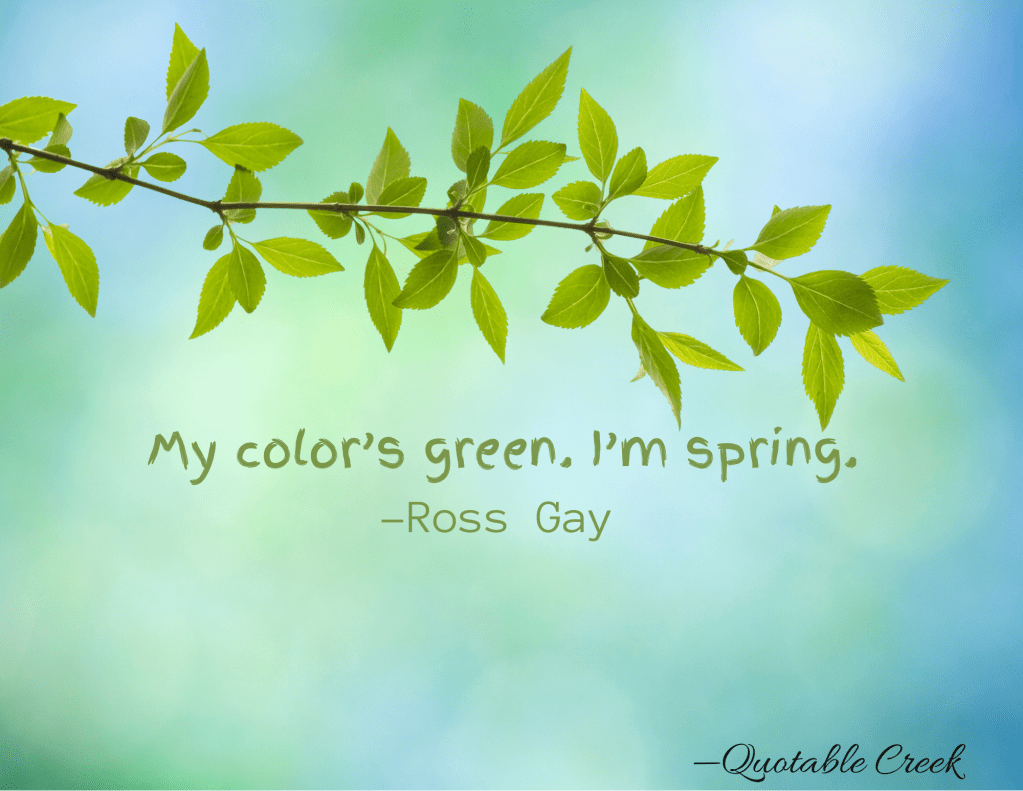
I remember. My color’s green. I’m spring.

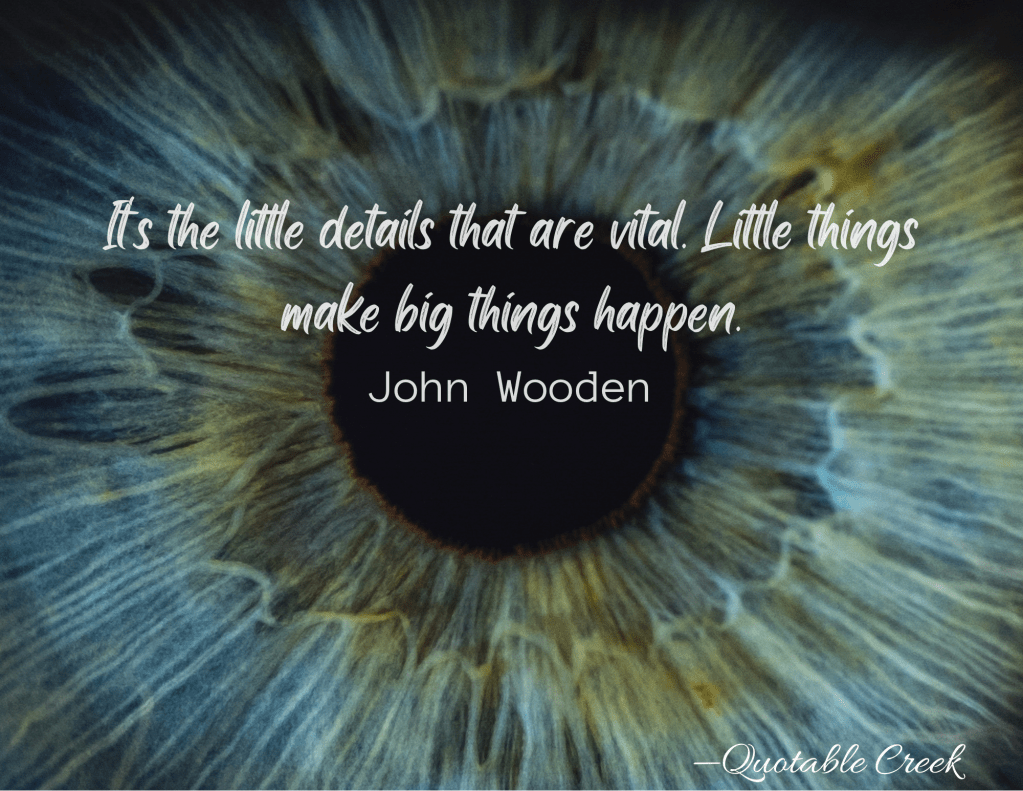
It’s the details.

Sometimes things can be startling.

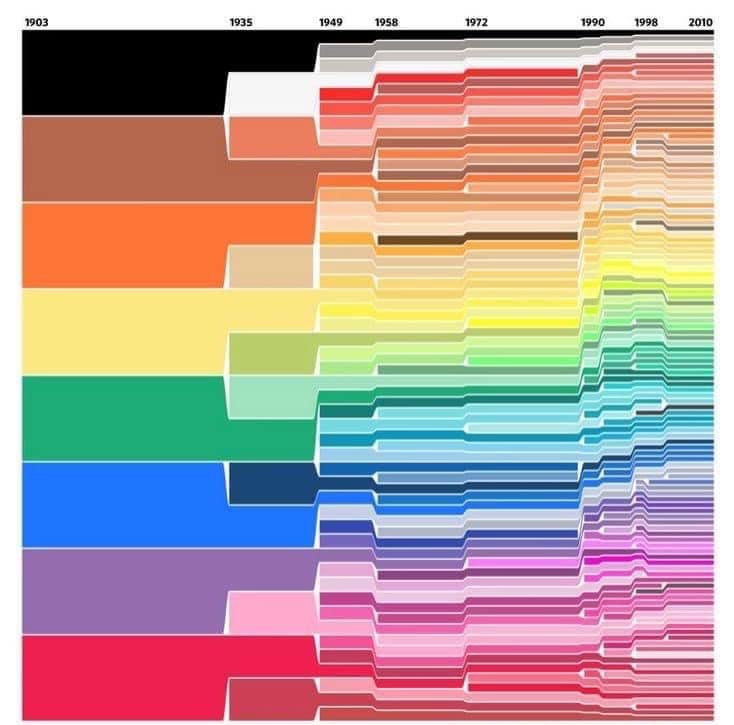
Look, for example, at the evolution of the color choices in the crayon:

Or in ice cream:

We are definitely not living in a plain vanilla, white bobby socks, only primary color world. We are living in a vibrant, color-and-detail everywhere world. Some days it feels wondrous to just soak it all in and enjoy the variety.

Mary Oliver says it best.

Instructions for Living a Life

Pay attention.

Be astonished.

Tell about it.

Book magic

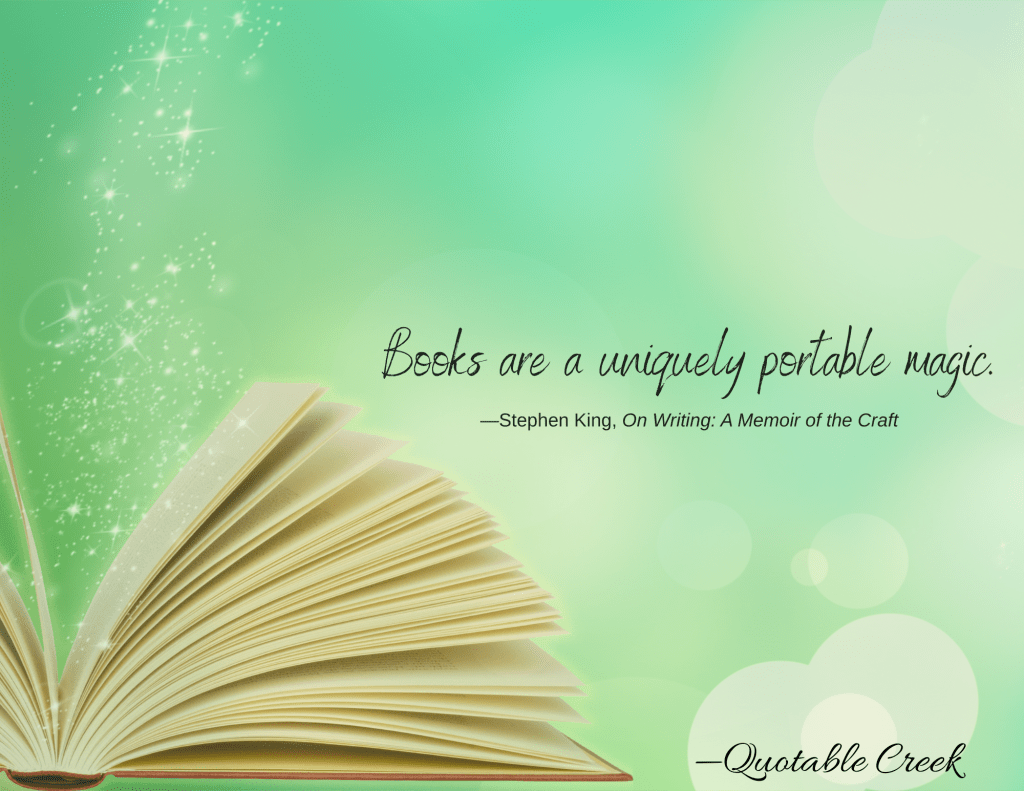
There is a certain alchemy in writing a book. Where do ideas come from? How do they knit together to form a story? What elevates words to resonate with a reader’s inner self? An author may seem like a bit of a magician conjuring elements, or perhaps a conductor taming orchestral components together to make music.

But reading can be even more magical. Words written by a stranger maybe years ago can resonate deeply and touch your soul. Fictional characters can be more real to you than the people you see every day. You can curl up on your couch with a book and be completely transported into another place and time in a way that feels so astonishingly real that when you put down the book, you temporarily lose your bearings. And sometimes you can read something that travels through time and space to speak directly to your troubled heart and give you peace.

W.B. Yeats put it this way:

Where My Books Go

All the words that I gather,
And all the words that I write,
Must spread out their wings untiring,
And never rest in their flight,
Till they come where your sad, sad
heart is,
And sing to you in the night,
Beyond where the waters are moving,
Storm darkened or starry bright.

Our last chance to be alive.

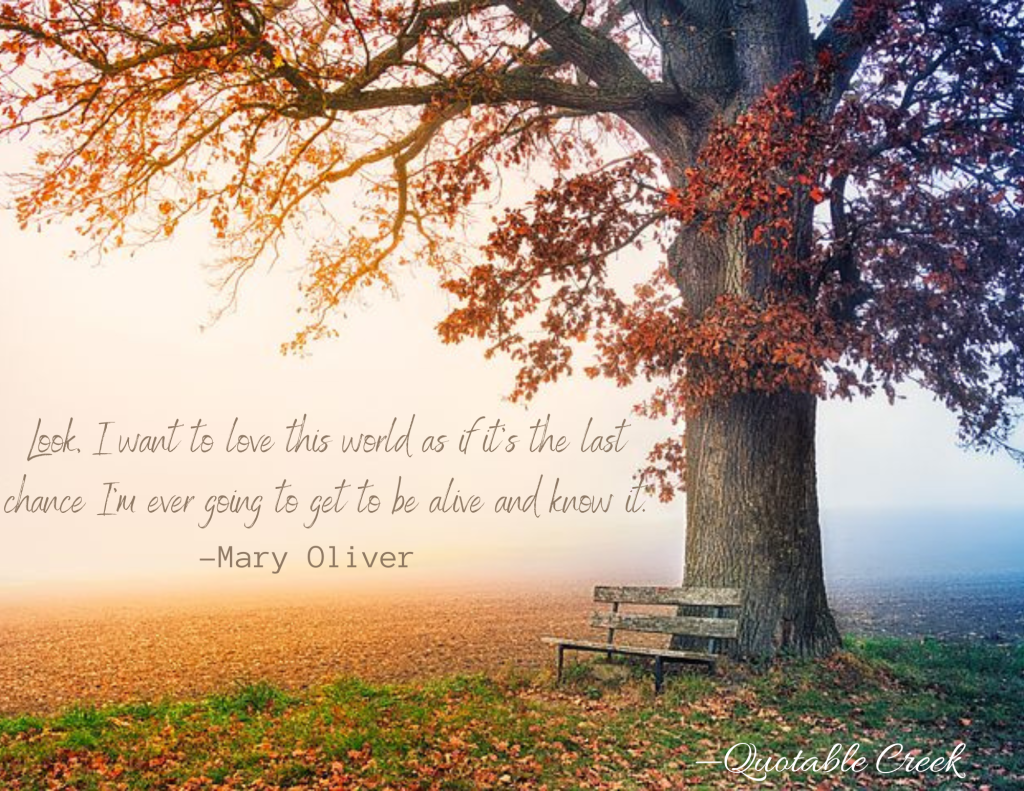
Now is our time to be alive. It will not come again. This is our last chance to savor nature and all of its wonder, to spend time with loved ones, to do good, to spread joy. This is it. This is our opportunity.

In the movie, Michael, an angel comes to Earth to influence the course of events. He, apparently, smells of cookies. But there is a scene, after ‘battle’ (he’s that kind of angel), when he is savoring the day. He is soaking it in, just enjoying being corporeal, waltzing with the breeze.

If only we could hold on to that wonder, awe, and appreciation, live in the moment, truly appreciate all we’ve been given here. What a fine world that would be.

Somewhere a black bear

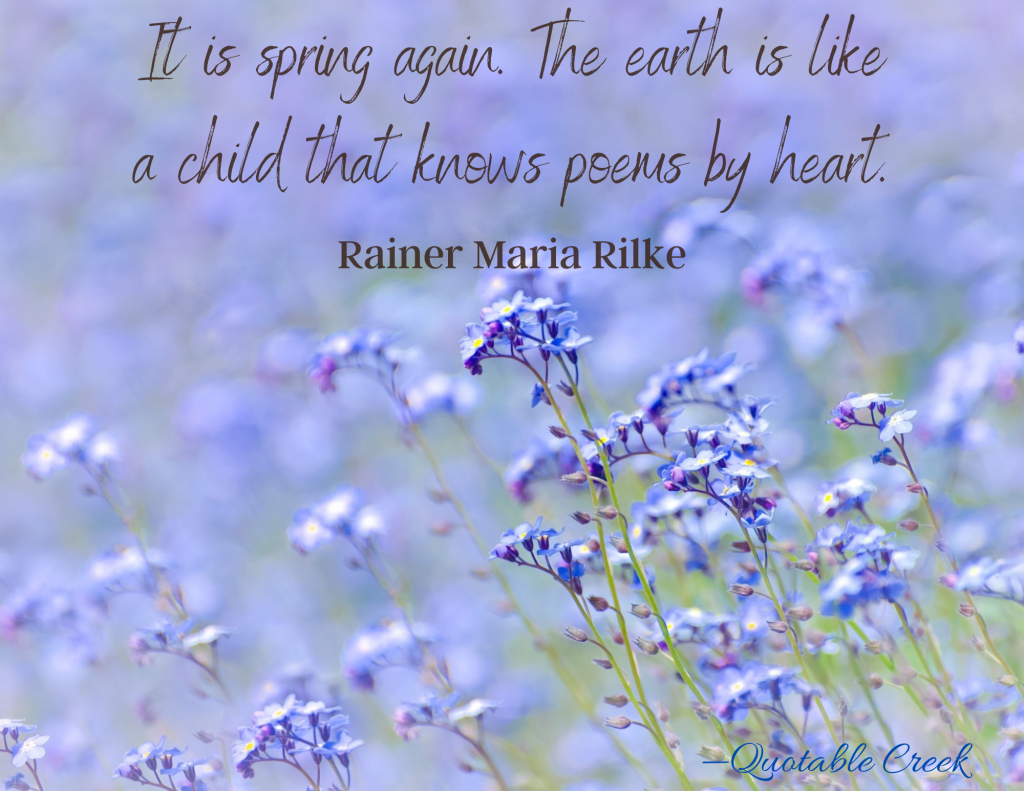
Spring is my favorite season. The birdsong, the colors, the blooms, jasmine-filled breezes. All of it. Yes, please.

We have yet more rain here in Cali, but even so, the birds are singing their hearts out. And the buds are forming, and the bulbs are up. And the hills are so beautifully green. And somewhere close, the bears are stirring.

Enjoy this spring poem by Mary Oliver.

SPRING

Somewhere

a black bear

has just risen from sleep

and is staring

down the mountain.

All night

in the brisk and shallow restlessness

of early spring

I think of her,

her four black fists

flicking the gravel,

her tongue

like a red fire

touching the grass,

the cold water.

There is only one question:

how to love this world.

I think of her

rising

like a black and leafy ledge

to sharpen her claws against

the silence

of the trees.

Whatever else

my life is

with its poems

and its music

and its glass cities,

it is also this dazzling darkness

coming

down the mountain,

breathing and tasting;

all day I think of her—

her white teeth,

her wordlessness,

her perfect love.

Mary Oliver, House of Light

Spring is also all of this —the wild, the fecundity, the passion, the thirst, and the quenching of thirst. The one question: how to love this world. Life’s yes. This, please.