Never forget you are surrounded by miracles. Like, for instance, birds.
Amy Tan writes:
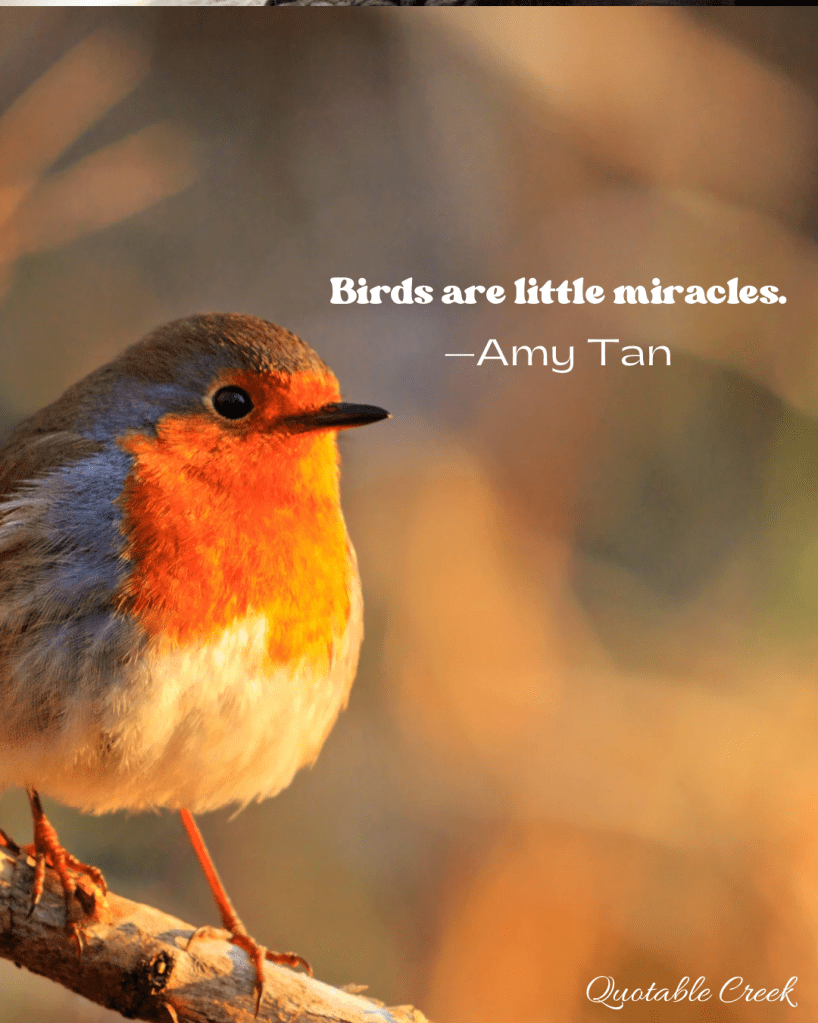
No waiting for doom. Try waiting for a bird to come to your backyard instead. Any bird. They are all little miracles. They fly. They sing. Some migrate thousands of miles. And they are the descendants of dinosaurs.
This Purple Finch is a rare bird in my yard. I used to see one every few years and now I have four, two males and two females. Seeing them makes any day a lucky day.
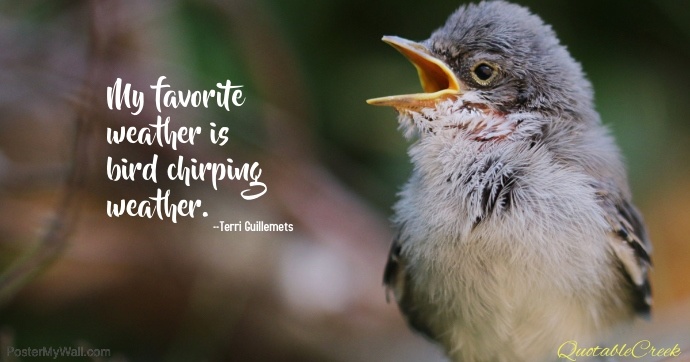
Those twitters and peeps, that honking or quacking overhead, evidence of miracles around you.
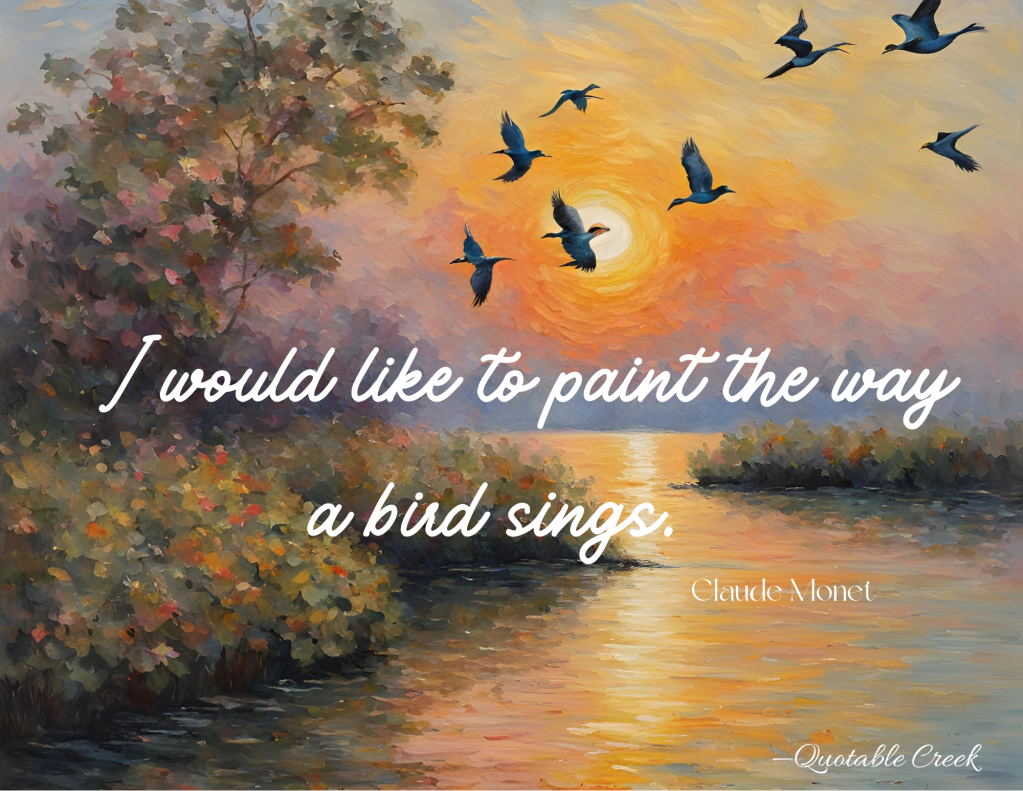
I am a huge fan of birdsong. It is so joyful. Listening to a little bird, so unassuming, singing with all it has to welcome the day reminds us of what it is like to be alive—vibrant and grateful, blessed with a day ahead to sing our song however that might manifest itself in each individual life. Open. Ready. Eager even.
And yet life can bring us low. Consider Shakespeare’s 29th Sonnet below. He certainly gets what it is like to feel outcast and alone, bemoaning our fate, jealous of others’ future and friends, their talents and possibilities, when we feel we have none.
And yet,
There is, or maybe was, someone who brightened our spirits. Someone who loved us and, like the simple lark singing its joyful song, that love can change an outlook in a blink. And next to that love, all the treasure of kings is paltry.
For a perfect, tear-jerking read of this Sonnet, take a listen to Judi Dench in the clip below. and take a minute, sometime today, to listen to a bird singing its heart out and remember those you love and those who love you.
When, in disgrace with fortune and men’s eyes,
I all alone beweep my outcast state,
And trouble deaf heaven with my bootless cries,
And look upon myself and curse my fate,
Wishing me like to one more rich in hope,
Featured like him, like him with friends possessed,
I confess there are times I leave the conversation. Not bodily, but heart, mind, and soul. I drift. Such a time happened the other night. I was having dinner with a group of long-time friends. We were outside in one’s lovely yard which overlooks a golf course and the hills beyond. My wandering off, metaphorically speaking, began with a flock of ducks flying overhead across the darkening sky. And then birds broke into song all about us, flitting from bush to bush. It was such a joyful moment. And although I tried to call my friends’ attention to the ducks and birds, it maybe was just a singular moment for me, astonished by the joy in it all. A moment to savor.
Mary Oliver often captures such moments.
Consider her poem, What Gorgeous Thing about the ineffable joy in bird song:
I do not know what gorgeous thing the bluebird keeps saying, his voice easing out of his throat, beak, body into the pink air of the early morning. I like it whatever it is. Sometimes it seems the only thing in the world that is without dark thoughts. Sometimes it seems the only thing in the world that is without questions that can’t and probably never will be answered, the only thing that is entirely content with the pink, then clear white morning and, gratefully, says so.
There is a wordless something in nature that communicates both nothing and everything, and sometimes we just need to drink it all in. (And then get back to the conversation before you’re missed.)
In this now third year of pandemic, we have learned something important. We must temper our expectations and hopes with the realization that nothing is a sure bet. To expect the unexpected. To prepare for the unforeseeable. And, perhaps most importantly, to find delight wherever and whenever we can. And to store it up.
One of my absolute delights this year has been an early morning bird walk at Descanso Gardens with ‘real’ birders. What a joy it is to see these people in their element, knowing each call, able to spot and identify each bird, speaking with enthusiasm about the birds’ characteristics and habits. These birders are so kind, pointing and explaining, pointing and explaining. So much fascinating detail!
I’m a newbie to this bird watching thing, but I love it. It’s like a giant Where’s Waldo everywhere around you, all at once. I don’t yet have the eye or the ear to be a great spotter, and probably never will, but I have a secret weapon. I discovered Merlin. It’s an app that records the sounds around you, and tells you what birds are there. What a wonder!
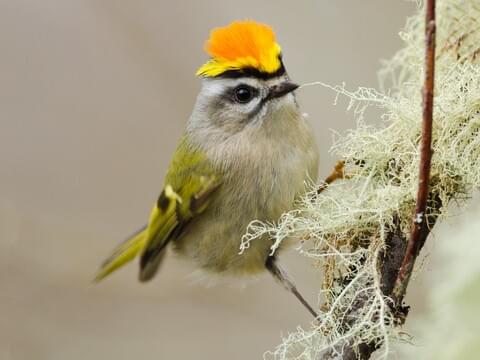
I turned it on while we were walking and discovered that there was a Golden Crowned Kinglet nearby. I didn’t see or hear it, at least not to know what I was seeing/hearing, but a leader was soon calling it out and pointing. Magic. (Just look at the cute little guy!)
Just since I’ve been typing this post, I’ve had my iPhone on the window sill while my cat, Marie, looks out over her domain, and Merlin has picked up 7 birds: Anna’s Hummingbird, Common finch, Lesser finch, Song Sparrow, Cassin’s Kingbird, California Scrub-Jay, and the Bushtit! This feels magical, like I’ve opened a doorway into another world and am tiptoeing in.
I hope this new year opens a magical doorway for you, perhaps something unexpected and new, that brings you delight.
Consider the birds. They have so much to teach us. They sing; they fly; they soar. When the storm is over, they come out and sing, fly, and soar again. They vary dramatically from the tiny hummingbird to the great bald eagle, but they have so much in common. And, when we are quiet, they remind us to look up, to look to the future and the possibility that lies there. It turns out considering the birds is good for our well-being, keeping depression at bay.
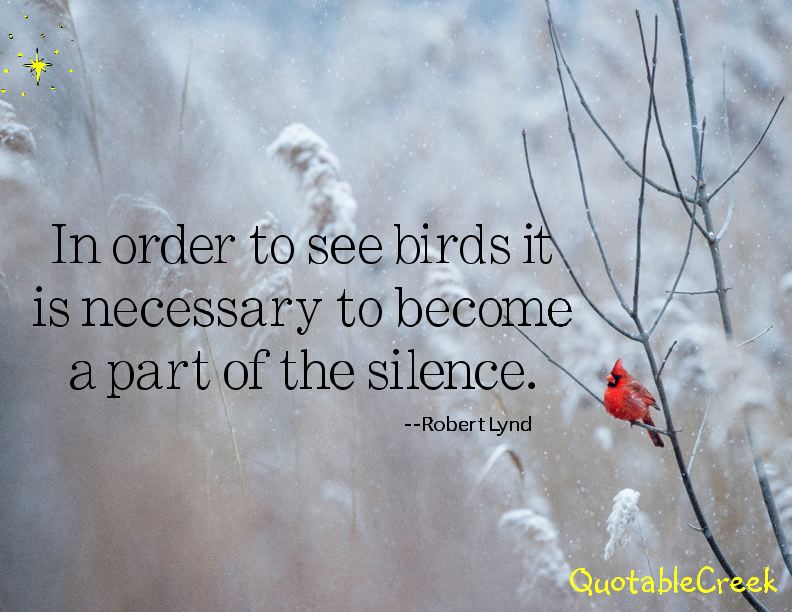
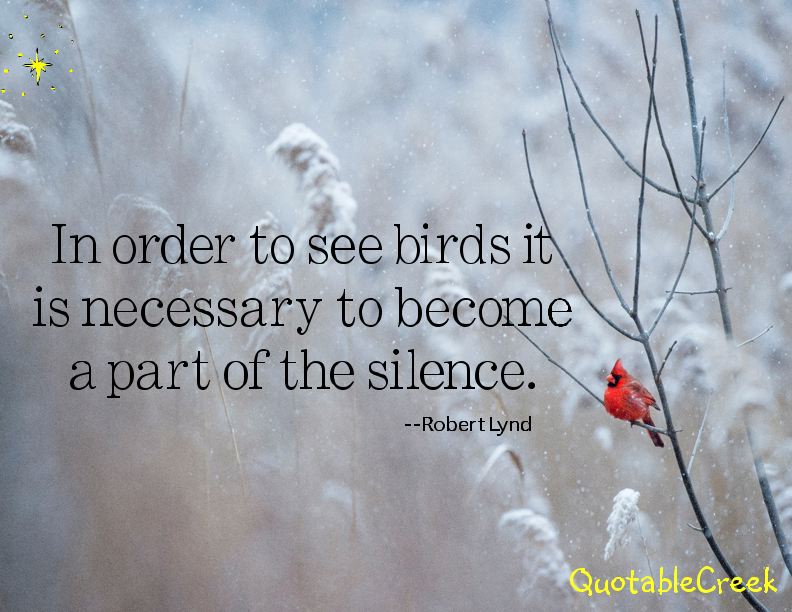
Be still and notice the birds. Do you see the vulture with its huge wings soaring above you? Do you hear the hawk shriek? Do you see the crows tuck in their wings and dive to open them again and rise only after you gasp, worried?
Watch the little sparrows bathe in a puddle, delighting in the way the water splashes around them. Listen to them sing.
There is something so uplifting about spring. Everything is busting into life with a combination of ferocity and hopefulness. We’ve been here before– the starting anew, the rebirth, the refusal to surrender to winter. And yet each time is the first time.
Consider the birds. They have so much to teach us. They sing; they fly; they soar. When the storm is over, they come out and sing, fly, and soar again. They vary dramatically from the tiny hummingbird to the great bald eagle, but they have so much in common. And, when we are quiet, they remind us to look up, to look to the future and the possibility that lies there. It turns out considering the birds is good for our well-being, keeping depression at bay.
Be still and notice the birds. Do you see the vulture with its huge wings soaring above you? Do you hear the hawk shriek? Do you see the crows tuck in their wings and dive to open them again and rise only after you gasp, worried?
Watch them bathe in a puddle, delighting in the way the water splashes around them. Listen to them sing.


 QuotableCreek.com