We can’t choose everything in life, but we can choose what kind of person we want to be.
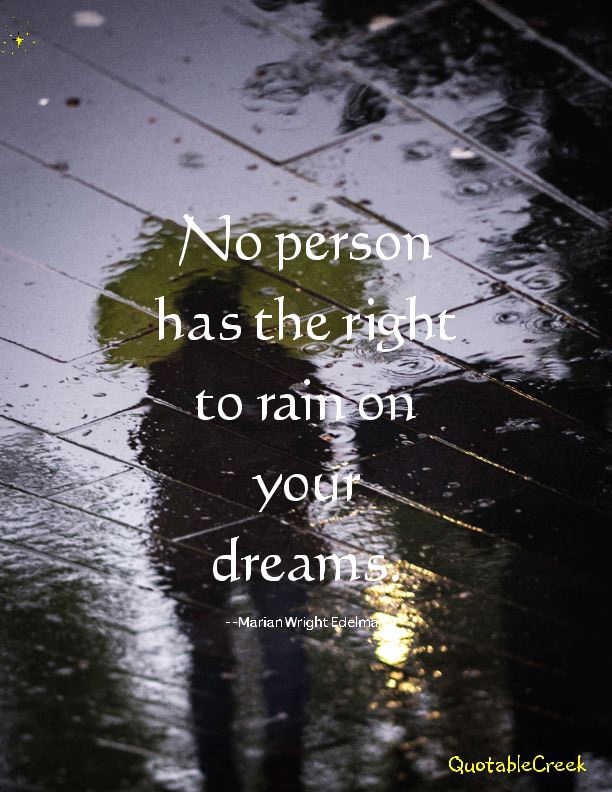
As we deal with storms across the country and unprecedented blizzard watches here in Southern California, consider the importance of rain. Rain can be like encouragement, bringing nourishment and rebirth to dry parched land. It can promote an abundance of life and energy.
But, in excess, rain can cause flooding and landslides. It can sweep people away into rushing water and leave the landscape devastated.
Our words have the same power. We can be supportive and encouraging, fostering life and vitality in those we engage with. Or we can be harsh and critical, pessimistic and judgmental. Our words can both heal and wound. Our choice.
We can choose to be encouraging and supportive, rather than bleak and pessimistic.
We can avoid being the person who rains on someone else’s parade.
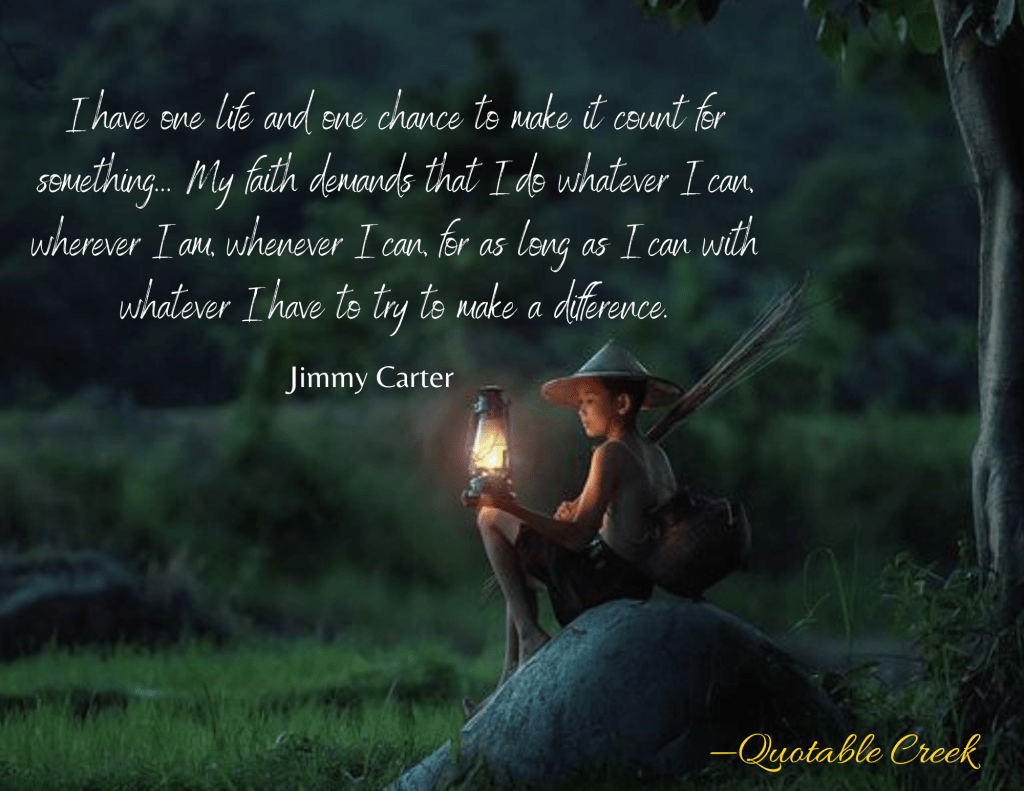
With the news this week that former President Jimmy Carter has entered home hospice care, many people have been sharing stories about his accomplishments in office—his efforts for peace, his push for environmental stewardship, and his efforts toward energy independence, among others.
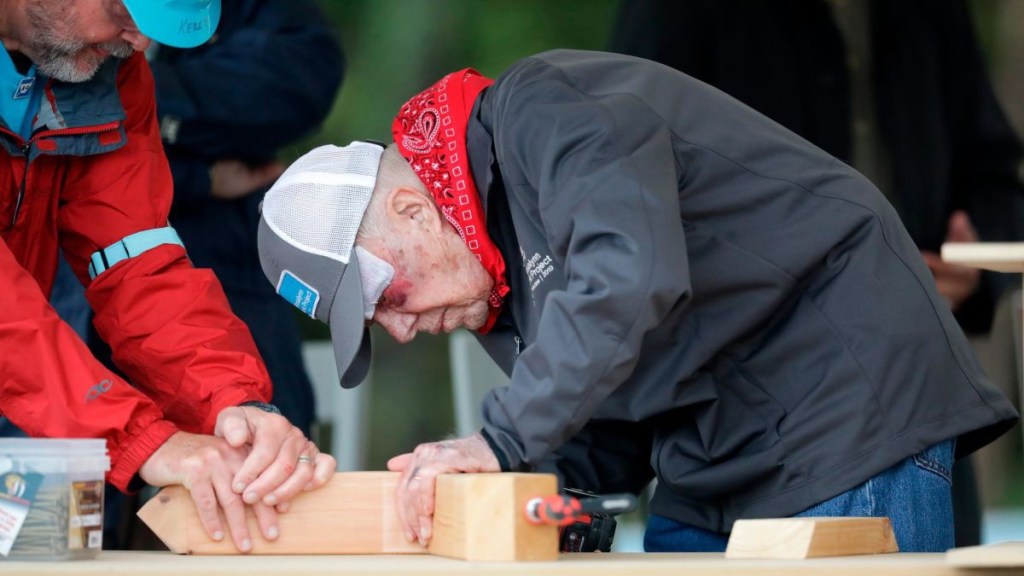
But his most striking accomplishments perhaps are what he has done since he lost his re-election bid. Rather than retreat to Georgia and exit the public arena, he began building houses for the poor, and working for democracy—a principle he firmly believed in—around the world, and standing up for women’s rights, even when that stand conflicted with his religion, and working to eradicate disease and so on. He has never stopped showing up to make a difference.
In a world that has grown more cynical and jaded since his entry into the public spotlight, he continues to show us what it means to walk the walk, quietly, humbly, and without fanfare. Here, surely, is a good and faithful servant of God.
What do we regret most as we contemplate the end of our time here? Maybe the lesson from that regret can inform our present. In an outstanding commencement speech, George Saunders reflects on his own failures and encourages the graduating students to look for opportunities to be kind. He reflects on a memory haunting him from his childhood:
In seventh grade, this new kid joined our class. In the interest of confidentiality, her Convocation Speech name will be “ELLEN.” ELLEN was small, shy. She wore these blue cat’s-eye glasses that, at the time, only old ladies wore. When nervous, which was pretty much always, she had a habit of taking a strand of hair into her mouth and chewing on it.
So she came to our school and our neighborhood, and was mostly ignored, occasionally teased (“Your hair taste good?” — that sort of thing). I could see this hurt her. I still remember the way she’d look after such an insult: eyes cast down, a little gut-kicked, as if, having just been reminded of her place in things, she was trying, as much as possible, to disappear. After awhile she’d drift away, hair-strand still in her mouth. At home, I imagined, after school, her mother would say, you know: “How was your day, sweetie?” and she’d say, “Oh, fine.” And her mother would say, “Making any friends?” and she’d go, “Sure, lots.”
Sometimes I’d see her hanging around alone in her front yard, as if afraid to leave it.
And then — they moved. That was it. No tragedy, no big final hazing.
One day she was there, next day she wasn’t.
End of story.
Now, why do I regret that? Why, forty-two years later, am I still thinking about it? Relative to most of the other kids, I was actually pretty nice to her. I never said an unkind word to her. In fact, I sometimes even (mildly) defended her.
But still. It bothers me.
So here’s something I know to be true, although it’s a little corny, and I don’t quite know what to do with it:
What I regret most in my life are failures of kindness.
Those moments when another human being was there, in front of me, suffering, and I responded . . . sensibly. Reservedly. Mildly.
We all have so many opportunities to make a difference, just by simply being kind, offering a smile, reaching out in friendship. And, when we reflect on the kindnesses that have made the difference to each of us in our own lives, we realize those little shows of kindness are what matter.
Saunders continues to remind each of us that our inner selves, our souls, shine as brightly as ever, and, even as we strive for success, to keep checking in with that inner place, and to believe it exists and greet the world from there:
Do all the other things, the ambitious things — travel, get rich, get famous, innovate, lead, fall in love, make and lose fortunes, swim naked in wild jungle rivers (after first having it tested for monkey poop) – but as you do, to the extent that you can, err in the direction of kindness. Do those things that incline you toward the big questions, and avoid the things that would reduce you and make you trivial. That luminous part of you that exists beyond personality — your soul, if you will — is as bright and shining as any that has ever been. Bright as Shakespeare’s, bright as Gandhi’s, bright as Mother Teresa’s. Clear away everything that keeps you separate from this secret luminous place. Believe it exists, come to know it better, nurture it, share its fruits tirelessly.
When you are confronted with a choice, err in the direction of kindness.
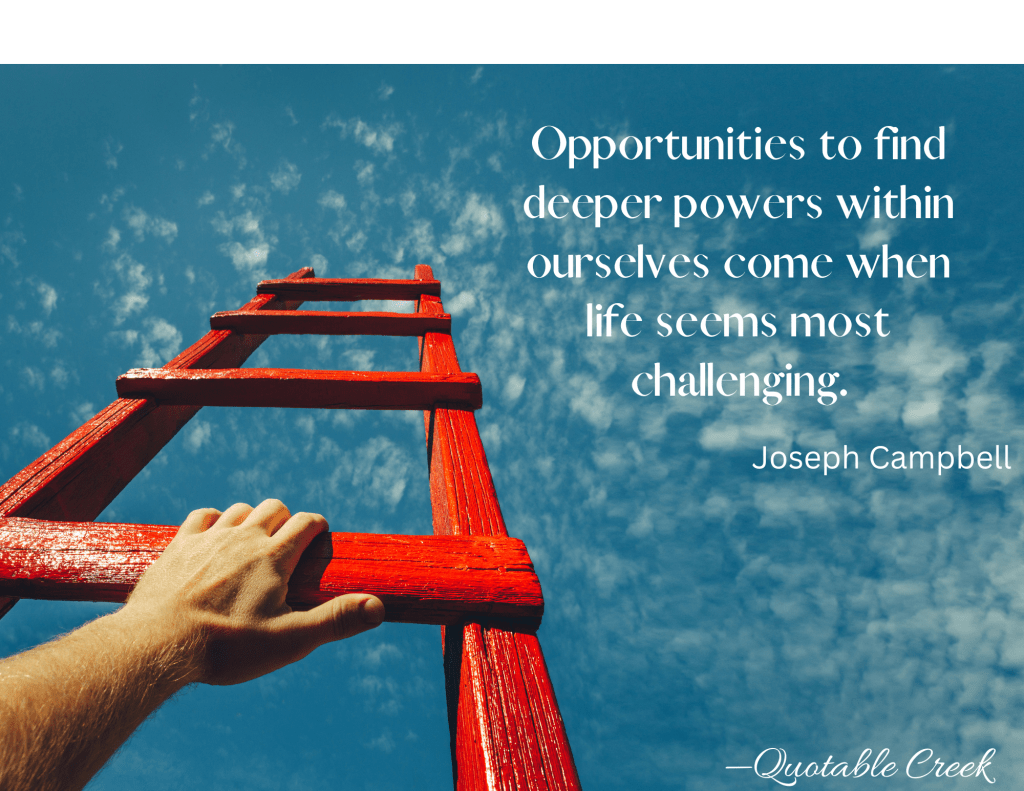
We each decide if we are to be the hero of the story our lives are writing. We each will hear calls to adventure and must decide whether we will rise to the occasion. We each struggle with challenges and learn, or not, from the experience. What will your story be? How will you meet the challenges you encounter?
In this short film, Matthew Winkler outlines Joseph Campbell’s Hero Journey, a path we all must take.
The Parable of the Good Samaritan is well known. In short, a man lies helpless and injured in the road. Religious leaders rush past offering no assistance, while a Samaritan stops and offers the wounded man succor and solace.
What makes one person stop to help while others rush by? Is it the belief that helping is the right way to show up in the world? A religious mandate even? Or is there more to it?
In a famous study at Princeton, researchers evaluated a group of seminarians, specifically discussing the Parable of the Good Samaritan, and then sending them to a task, indeed to lecture on the very parable, where they would necessarily walk right past someone needing help. Even with the parable fresh on their minds, the future pastors for the most part walked right by. Presumably these were nice people who intended to spend a lifetime in service. And yet, they walked right by. They acted in a way incongruent with their professed beliefs.
A surprising result to say the least. But the conclusion from the experiment was that the biggest influencer in whether they stopped to help was not their religious beliefs or their innate kindness, but their perception of time. The more of a hurry they were in, the less likely they were to help.
So how does this inform our choices?
A general kind intent to help is not enough. We are all the Princeton Divinity Students rushing to our next important task and potentially neglecting the plight of others right in our path. We must slow down the clock and really see the people around us. And we need to be ok with the idea that our plans and schedules might be disrupted. Surely stopping to help someone in need will change your day, will inconvenience you, and cause you to spend time and perhaps money in an unplanned way.
But the help you might be able to offer someone in need could be invaluable.
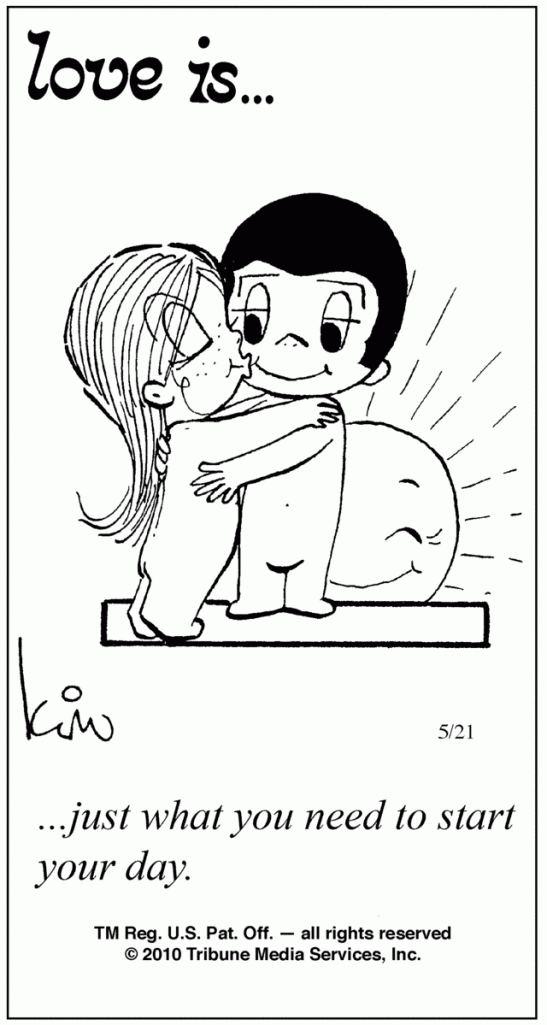
While I’m on my nostalgia streak, I’m remembering this comic strip from the 70’s by Kim Casali. I loved these although they perhaps don’t all stand the test of time, the ‘she’ of the partnership always doing the household chores, and picking up after the ‘he’.
Although, to be honest, I do do chores out of love for my family, picking recipes I think they will enjoy, trying to keep a peaceful organized home, cleaning up the little hand smudges on the walls knowing these moments will not last. These acts of service are one of the love languages identified by Gary Chapman in his book, The 5 Love Languages, the others being words of affirmation, gifts, physical touch, and quality time.
Chapman argues that sometimes people in relationship, any relationship not only romantic, get in trouble if they are speaking in a love language their loved one doesn’t hear. For me, my expressions of love are weighted heavily toward acts of service, but knowing that everyone is not on the same wave length in how they receive expressions of love reminds me to use them all, and to listen for them all from the people I love.
Perhaps, as with the ‘Happiness is… ‘ thought exercise from yesterday, today it would be wonderful to stop and consider how you are showing love to the people you care about, and how they are showing it to you, even if it’s not one of the love languages you are good at hearing.
For inspiration and a chuckle, consider this cat mom’s birthday gift for her kitty:
As we age, time feels like it is moving faster. This makes sense considering the math, perhaps. One year to a 100 year old is just one percent of their life, but to a two year old, it’s 50% more. But scientists are saying there is another reason having to do with the diversity of experiences.
“Our brain encodes new experiences, but not familiar ones, into memory, and our retrospective judgment of time is based on how many new memories we create over a certain period. In other words, the more new memories we build on a weekend getaway, the longer that trip will seem in hindsight.”
And this squares with why we felt that there was more time when we were younger when everything was new, and when our days were filled with varied experiences.
So perhaps there is a way to slow down time: fill it up, stretch your experiences, try new things, explore, savor, forswear the ordinary.
In this increasingly polarized world, how do we come together to solve the very real challenges we are facing? If conversations with those who disagree lead to broken relationships rather than common ground, how will we work together?
In this insightful article, Kern Beare offers some insights:
Prioritize the relationship over being right. Research shows that our fight/flee/freeze survival drive is often triggered when someone challenges our deeply held beliefs. Research also shows that when that happens, we lose a host of cognitive capacities that are at the heart of being human, including empathy, moral reasoning and even intuition. Bereft of these capacities, the conversation — and sometimes the relationship itself — typically comes to an unsatisfying and even ugly end.
It doesn’t have to be this way. Evidence abounds that differences in values, attitudes, and beliefs become far less significant when a deeper basis of relationship is formed — especially when it’s rooted in our common humanity. [It’s important to] learn strategies for building such relationships, in turn strengthening the critical capacities you need for creative engagement.
See beyond your story. Most of us have the (often unconscious) assumption that our “story” — the particular set of life experiences from which we derive our sense of self — is the totality of who we are. This merging of “self” and “story” explains one of the most surprising findings of neurobiology: threats to our story-self — to our values, attitudes and beliefs — activate the same parts of our brain as threats to our physical self, triggering our fight, flee, or freeze reactions. When this happens, simmering disagreements can quickly become combustible.
At the same time, we’re learning that our identity encompasses far more than our story. Studies show that a more expanded sense of self emerges when we “switch off” our story-self, unleashing a host of positive emotions and attributes. These include joy, compassion, gratitude, flexibility, creativity and receptivity to new ideas — all of which counteract our survival drive instinct. [Learning] more about this “expanded self” [can help us] to access its capacities.
Transform resistance into response. Resistance is our early-warning system that our survival drive is beginning to kick into gear. When we’re in resistance, our attention narrows, our heart rate increases, and our stress levels rise — all signals of an emerging fight, flee, or freeze reaction. The neuropsychology of resistance [helps inform] why transforming our resistance into response strengthens our cognitive capacities, and how the brain has evolved to actually help us undergo this transformative process.
Preface to the book: Difficult Conversations: The Art and Science of Working Together by Kern Beare
Perhaps these strategies can change the thermostat in our conversations and help us reach a place where we can work together to solve the problems ahead.
One of the side-benefits or hardship is cultivating resilience. Learning new things and new ways of doing old things helps sharpen the saw. It also helps us stay engaged and young. In this excellent article, Kerry Hannon argues that learning something new is a key factor in building the resilience we need to weather setbacks and navigate life’s volatility, particularly now.
When you’re in the process of learning, your viewpoint changes, and you spot connections that you never noticed before. “Resilience is about being adaptable in a variety of different circumstances,” said Dorie Clark, who teaches executive education at Duke University’s Fuqua School of Business and is the author of “Reinventing You.” It is a combination of being able to pick yourself up when there are setbacks, but also it is about having the kind of cross-training necessary to be flexible in an uncertain world where we don’t know what is around the corner,” Ms. Clark said.
New York Times, “To Build Emotional Strength, Expand Your Brain,” by Kerry Hannon
Staying curious, intentionally putting yourself in places and situations where you are a beginner, and following passion all contribute to building resilience with a byproduct of satisfaction.
Those who routinely and consciously engage in learning become more confident about their ability to figure things out once a crisis hits, according to Beverly Jones, an executive career coach and author of “Think Like an Entrepreneur, Act Like A CEO.” “Each time they hit a bump, they spend less time lamenting and quickly turn to determining what they must learn in order to climb out of the hole,” she said. Moreover, learners develop a more optimistic mind-set, which helps them jump into action, according to Ms. Jones. “In part, this is because each time you become aware of learning something new it feels like a victory,” Ms. Jones said. “You maintain the positivity that is a key to resilience.”
So, as we continue to adapt to a new normal, now is a good time to seek out new things to learn and new passions to pursue. More than ever, university courses and classes are being offered online, often for free. What is something new for you to pursue? Stay curious; keep your mind young; and follow your passions.
John Lewis was an American hero. His whole life was a testament to fighting the good fight and trying to make the world a better, more egalitarian place even in the most dire of circumstances. Today, he is laid to rest, but he left us words, every one ringing with truth, to give us light and help us find our way without him:
“While my time here has now come to an end, I want you to know that in the last days and hours of my life you inspired me. You filled me with hope about the next chapter of the great American story when you used your power to make a difference in our society. Millions of people motivated simply by human compassion laid down the burdens of division. Around the country and the world you set aside race, class, age, language and nationality to demand respect for human dignity.
“That is why I had to visit Black Lives Matter Plaza in Washington, though I was admitted to the hospital the following day. I just had to see and feel it for myself that, after many years of silent witness, the truth is still marching on.
“Emmett Till was my George Floyd. He was my Rayshard Brooks, Sandra Bland and Breonna Taylor. He was 14 when he was killed, and I was only 15 years old at the time. I will never ever forget the moment when it became so clear that he could easily have been me. In those days, fear constrained us like an imaginary prison, and troubling thoughts of potential brutality committed for no understandable reason were the bars.
“Though I was surrounded by two loving parents, plenty of brothers, sisters and cousins, their love could not protect me from the unholy oppression waiting just outside that family circle. Unchecked, unrestrained violence and government-sanctioned terror had the power to turn a simple stroll to the store for some Skittles or an innocent morning jog down a lonesome country road into a nightmare. If we are to survive as one unified nation, we must discover what so readily takes root in our hearts that could rob Mother Emanuel Church in South Carolina of her brightest and best, shoot unwitting concertgoers in Las Vegas and choke to death the hopes and dreams of a gifted violinist like Elijah McClain.
“Like so many young people today, I was searching for a way out, or some might say a way in, and then I heard the voice of Dr. Martin Luther King Jr. on an old radio. He was talking about the philosophy and discipline of nonviolence. He said we are all complicit when we tolerate injustice. He said it is not enough to say it will get better by and by. He said each of us has a moral obligation to stand up, speak up and speak out. When you see something that is not right, you must say something. You must do something. Democracy is not a state. It is an act, and each generation must do its part to help build what we called the Beloved Community, a nation and world society at peace with itself.
“Ordinary people with extraordinary vision can redeem the soul of America by getting in what I call good trouble, necessary trouble. Voting and participating in the democratic process are key. The vote is the most powerful nonviolent change agent you have in a democratic society. You must use it because it is not guaranteed. You can lose it.
“You must also study and learn the lessons of history because humanity has been involved in this soul-wrenching, existential struggle for a very long time. People on every continent have stood in your shoes, though decades and centuries before you. The truth does not change, and that is why the answers worked out long ago can help you find solutions to the challenges of our time. Continue to build union between movements stretching across the globe because we must put away our willingness to profit from the exploitation of others.
“Though I may not be here with you, I urge you to answer the highest calling of your heart and stand up for what you truly believe. In my life I have done all I can to demonstrate that the way of peace, the way of love and nonviolence is the more excellent way. Now it is your turn to let freedom ring.
“When historians pick up their pens to write the story of the 21st century, let them say that it was your generation who laid down the heavy burdens of hate at last and that peace finally triumphed over violence, aggression and war. So I say to you, walk with the wind, brothers and sisters, and let the spirit of peace and the power of everlasting love be your guide.”
May his words hold true in our hearts, and let us live up to the example he set. Let us go forward in the spirit of peace with everlasting love as our guide. Let this be our solemn vow. Now is the time.





 QuotableCreek.com