Today, in the United States, we vote. We celebrate a country that allows its citizens input into this remarkable experiment of a government of the people, by the people, and for the people.
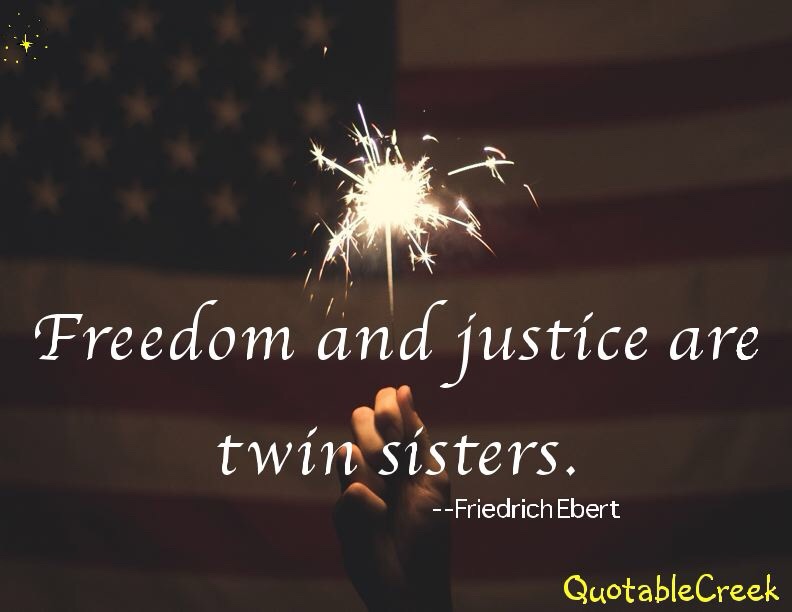
We honor this country and its principles of equality, freedom, and justice for all. Our understanding of those concepts has evolved over time, and taken some steps back, but today let us be grateful for how far we’ve come and consider the steps that we each might take today and every day to make this country move closer to the ideals for which it stands. It is both a privilege and a responsibility to vote.
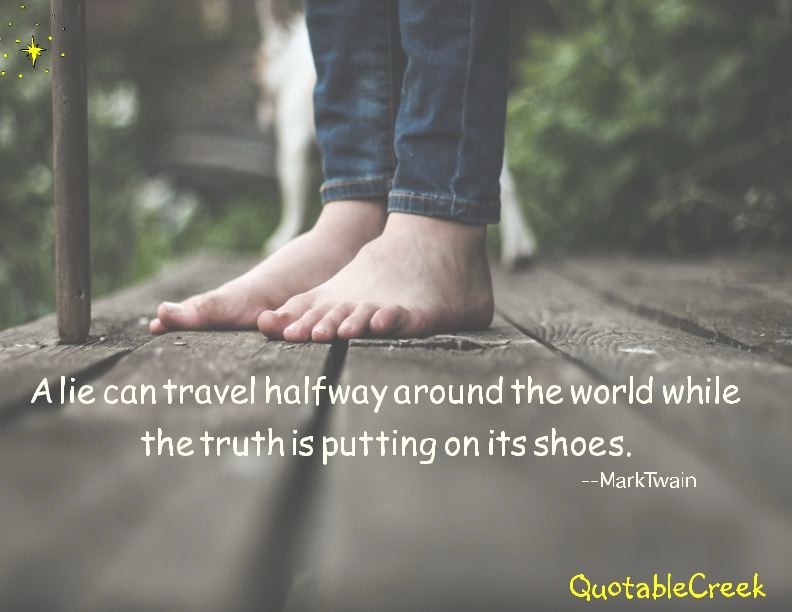
We are in the midst of a slander epidemic. In today’s world, someone can publish fake news, and it can go viral, spreading around the world in an instant. People eagerly like and share derogatory information about people they don’t care for or political candidates they oppose. Companies can crumble based on the public’s wrath over a false bit of news. People’s lives can be ruined.
And what of the effect on all of us? It is to the point where we can’t trust much of anything we read unless we do our own diligence with fact checking and research.
What happened to the truth? What happened to accountability?
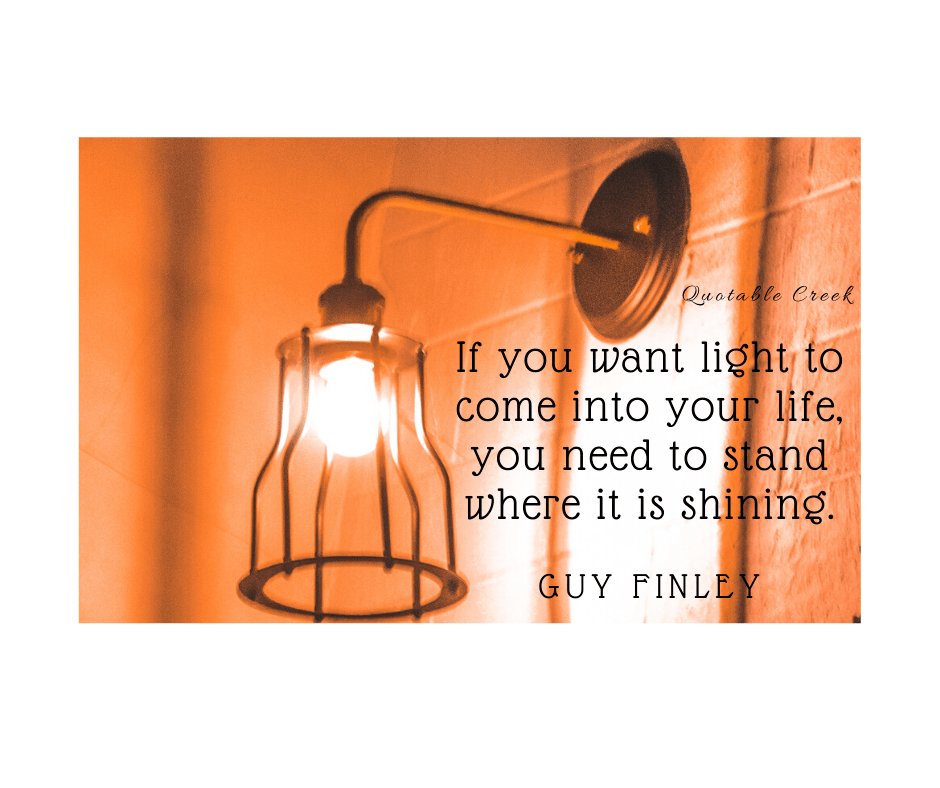
As with most things, the buck stops with each of us. We can’t control the world, but we can choose whether we want to further lies. Take your time before you believe what you hear. Do your research. And let your words and actions shine with the light of truth.
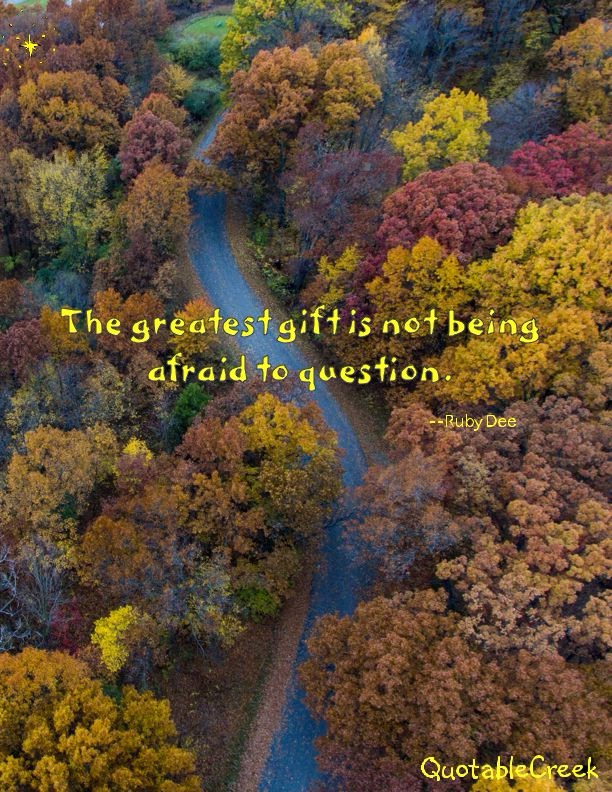
What questions do we frame for ourselves at the end of the day? What are the questions that have caused us to soul-search and perhaps take a new path? What questions have forced you to look at something a different way?
Sometimes the questions are more important than the answers. There are some that resonate so deeply with us, we may spend a lifetime trying to answer them. In her piece about the beauty of these profound questions, Karen Horneffer-Ginter identifies some that have been meaningful to her:
When used properly, questions have the potential to connect us to the world of another. A heartfelt “How are you?” or “How was your day?” can become the bridge that keeps us in relationship to the lives of those we love. Sometimes, too, questions create a bridge within ourselves, allowing us to hear what’s going on at a deeper level. We know when we’ve encountered a question that has this potential because it stays with us — maybe for the day, maybe for our whole lives. It taps us on the shoulder to wake us up, or it wiggles its way in more deeply, opening us up to seeing things in a new way.
I still recall first encountering Judith Duerk’s chorus of questions about how my life might have been different if there had been a sacred circle to step into. Mary Oliver asking me about my plans for this one wild and precious life, Oriah Mountain Dreamer wanting to know what I ache for and if I dare to dream of meeting my heart’s longing, and Angeles Arrien reminding me of the questions asked in some indigenous cultures: When did you stop singing? When did you stop dancing? I think of my friend Ming, asking me at lunch one day if I thought writing was my fullest and truest expression. All these questions have remained close companions across the years.
The questions that have been consuming my thoughts and are my close companions these days are What does it mean to be welcoming? How does welcome look? How does it change the mix if it is accepted? What are the stumbling blocks to be truly welcoming? Where does fear creep in to inhibit welcome? How will my life be different because I have welcomed another into it? How will it disrupt my comfort zone, and how will I get my ego out of the way to be more accepting?
What are the questions in your heart, questions that are your close companions? And just the framing of those questions can be significant, as she suggests above. Consider the difference between ‘What do I have to do today?’ and ‘What do I get to do today?’ That simple shift helps us move from feeling burdened to being grateful for all the opportunities presented by the day.
What are the questions that have been your close companions? What do you get to do today to help answer them?
Sometimes, when we feel down, we need to evaluate the input coming into our lives. Are we steeped in negativity? Maybe not just news, but the vitriol that follows it in the comments? The political back and forth can get ugly and pull us down. And then we can think about the friends we surround ourselves with. Are they upbeat, trying to make things better, or always complaining?
And, while we don’t want to retreat from fighting the good fight or the friends who are going through a rough patch, it’s so easy for people to tear things down, to find the flaws, to make a conflict, and, when we are around that kind of energy constantly, we can feel beaten down.
But, there is good news to be had, and there are positive people and opportunities to be found. Sometimes we need to focus our attention there, if only for a break from the storm.
Who made the world?
Who made the swan, and the black bear?
Who made the grasshopper?
This grasshopper, I mean-
the one who has flung herself out of the grass,
the one who is eating sugar out of my hand,
who is moving her jaws back and forth instead of up and down-
who is gazing around with her enormous and complicated eyes.
Now she lifts her pale forearms and thoroughly washes her face.
Now she snaps her wings open, and floats away.
I don't know exactly what a prayer is.
I do know how to pay attention, how to fall down
into the grass, how to kneel down in the grass,
how to be idle and blessed, how to stroll through the fields,
which is what I have been doing all day.
Tell me, what else should I have done?
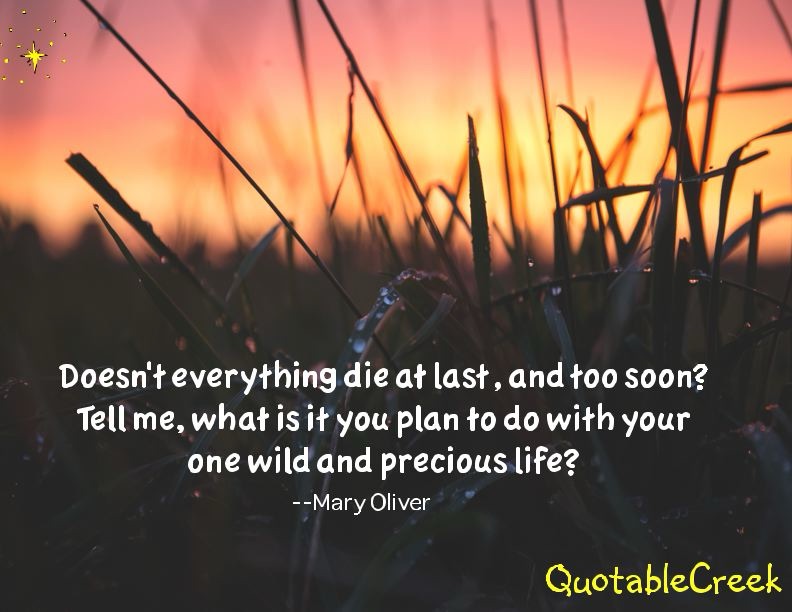
Doesn't everything die at last, and too soon?
Tell me, what is it you plan to do
with your one wild and precious life?
What does it mean to pray? What exactly is a prayer? Is it reciting certain words in unison at a church on Sundays, or is it also something infinitely more?
Is it noticing the creator in the delicate creation? Is it paying attention? Is it being grateful? Is it flinging yourself down on the grass to contemplate not just the meaning of life, but the meaning of your life?
Yes, life is short, over far too soon. But, while we are here, there is opportunity. To pray, to notice, to attend, to use our lives to make a difference.
What is it you plan to do with your one wild and precious life?
Sometimes I feel everything in life comes down to the question, ‘Who is my neighbor?’
We are always asking, ‘This one, too?’ And the answer is always, ‘Yes’.
The felon, the refugee, the homeless person, the enemy, the one who hurt you, the one you disagree with, the one who makes your life hard? Yes, always yes.
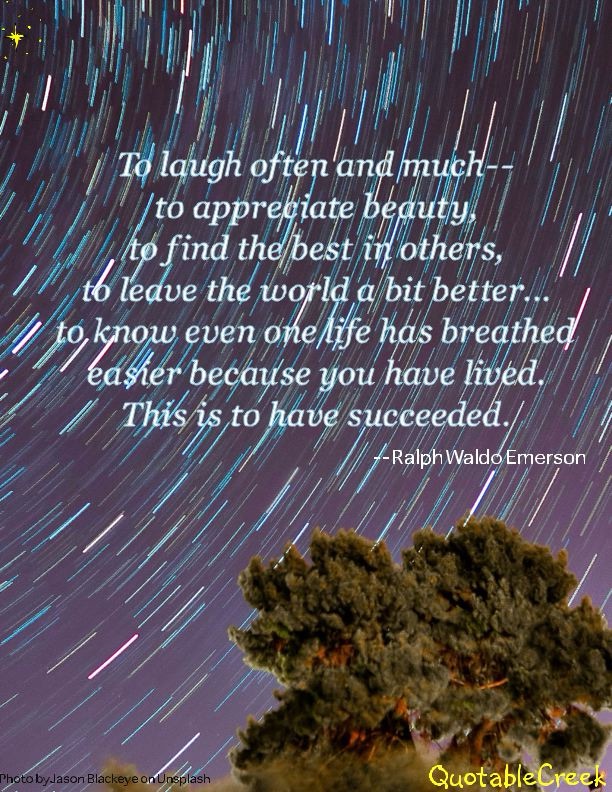
We all want to succeed, but what is the metric for measuring whether we’ve been successful? There are so many. Money, status, power, bucket lists, fame, travel… but what of the little things? Are you successful if you have enough money to buy a small country but no one to love or trust? Is it success if you are famous but lonely? If you have power but wield it to cause pain and misfortune to others, how can that be considered success? If you’ve traveled the world but not been truly present anywhere, does that count?
Perhaps true success at this thing called life is as simple as Emerson’s thoughts above. To leave the world a bit better, to ease the burdens of others, to look for and bring out the best in others, to do no harm. These all matter, maybe not in measurable concrete ways, but in ways we can all feel and appreciate if not count. More important, these are all things we each can do. We have the ability to be successful beyond our wildest imaginings.
And don’t forget to laugh often and much. Finding the joy and not letting it slip right past you undetected is important, too.
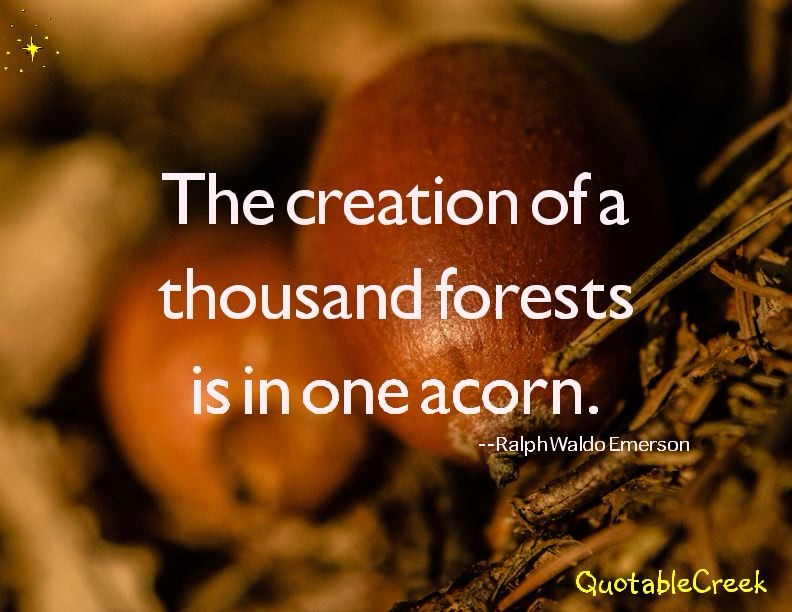
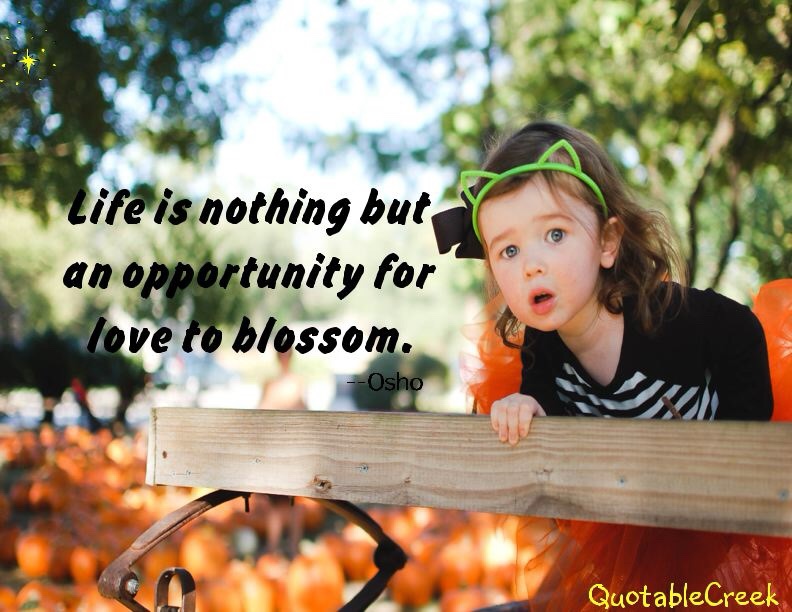
The potential for a loving relationship is in one embrace. The potential for peace is in forgiveness. The potential for harmony is in stillness. The potential for quality conversation is in listening.
Consider the opportunities you have to make your world and the world in general a better kinder place with the actions you sow today.
If you look for thorns, you’ll see thorns. If you look for love, you’ll see it all around you. And if you look for opportunities to make a difference, to shower people with love, and to take a stand for all that is good and right in the world, those opportunities will be there.
Adulting isn’t for the faint of heart. Responsibilities, worries, concerns for the future can weigh us down and make us nostalgic for the carefree days of youth. But, perhaps, there’s a remedy.
When was the last time you started something new? An art, language, trip, habit? Maybe followed a lifelong dream. Perhaps it is scary to become a ballerina at 60+ years old, but doesn’t it sound delightful? Or perhaps learn how to refinish cast-off furniture. Or speak a different language.
These are the ones I’m thinking of, what would you try? As we age, being a beginner is harder. We worry about embarrassment, or struggle with not knowing everything already. Or perhaps we think if we try something like this, we have to be a professional and don’t give ourselves permission to be bad at it. We’ve forgotten the joy in just immersing ourselves in something new.
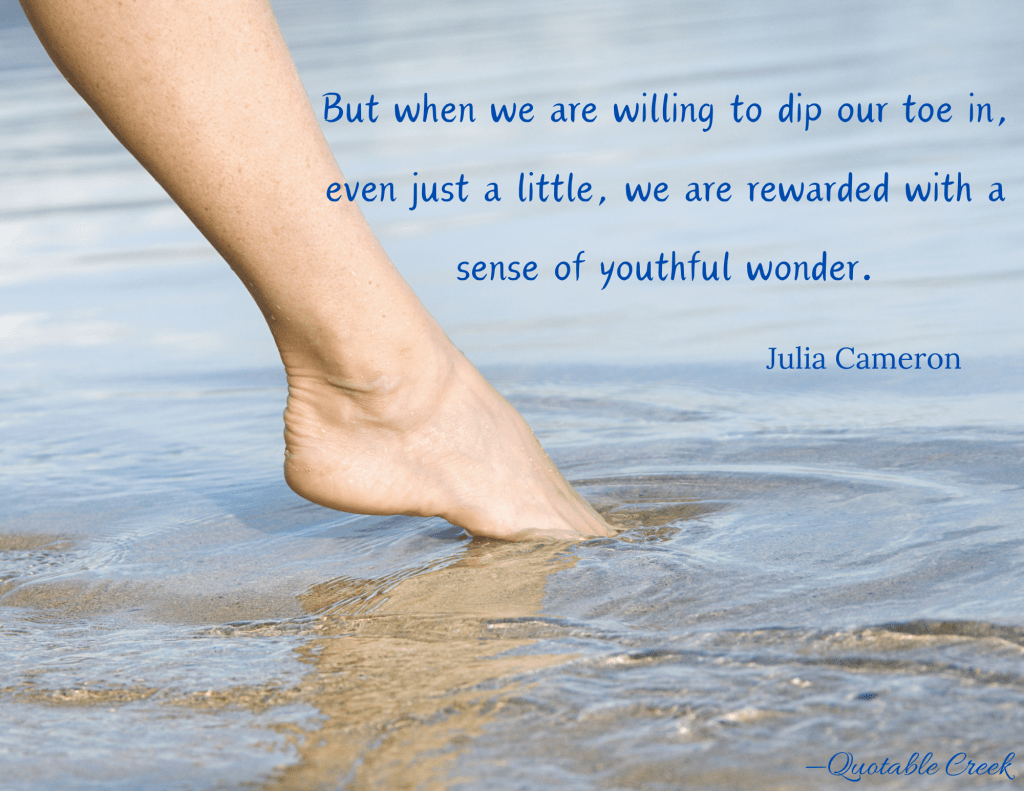
Julia Cameron says:
Often, when we say it is ‘too late’ for us to begin something, what we are really saying is that we aren’t willing to be a beginner. But when we are willing to dip our toe in, even just a little. We are rewarded with a sense of youthful wonder. Never give in, never give in, never, never, never, never.
There is always something new and exciting around the corner just waiting to experience.
 QuotableCreek.com