Brave and afraid at the same time

In this interview, Brené Brown discusses the complexity of emotions we are experiencing as a result of the pandemic and social isolation. Her words bring comfort and solace to all of us, but particularly those of us raised to believe that only positive emotions should be felt or expressed.

These are tough times. And it’s particularly difficult because this is not an emergency you have to gear up for and get through; it’s a slow burn. As she says:

“Normally, in order to get through a crisis, you know, our bodies are built to respond with a lot of adrenaline, a lot of energy, a lot of super coping surge. And then the waters recede or the fires are out or, you know, the crisis ends and we slog our way through kind of cleanup and trying to find our new normal. But we are not going to be able to depend on the adrenaline surge for this, because it’s going to out- it’s going to outpace us. And I think we are hitting that moment where we are weary in our bones. We are physically tired. We, you know, anxiety, uncertainty take a lot out of us physically. I think, you know, we’re on Zoom calls. I don’t know what happened. Like, I work a lot to begin with, but I feel like I’m on Zoom calls from 6:00 in the morning until midnight. You know, and then we’ve got toddlers crawling up our backs and partners trying to, you know, tell us to be quiet. They’re also are being called. And we’re tired. And I’ll tell you, the other thing that’s exhausting; that we are not acknowledging – again as a collective – is grief.”

And the grief is perhaps more extensive than any we’ve felt before. It’s grieving a loss of everything that was normal to us. Brown explains, “Well, I think it’s a very difficult position we’re in right now because I think we are both grieving the loss of normal and grieving the ordinary moments that make the touchstones for our lives. We’re grieving the loss of those at the very same time we’re having to find and settle into a new normal. And those two things are very difficult to do. At the same time, not mutually exclusive, but as close as it gets without being mutually exclusive. So there’s grief, I think. Grief is the loss of normal.”

And it is ok to experience that grief and mourn those losses. We are vulnerable, and there is no shame in acknowledging that:

“To be alive is to be vulnerable, to be in this pandemic, is to be vulnerable every second of every minute of every day. And the thing about vulnerability is it is difficult, but it’s not weakness. It’s the foundation and the birthplace of courage. There is no courage without risk, uncertainty and exposure. And so, you know, I’ve asked 10000 people that this question, starting with special forces military: give me an example of courage in your life that did not require uncertainty, risk and emotional exposure. And in probably 15 thousand people at this point, not one person has been able to give me an example of courage that did not require vulnerability. So we need to dispel that mess and we need to acknowledge we are in a lot of vulnerability right now. That means we can be our best, bravest selves or we can be our worst selves, and I think the thing about choosing to be our most courageous selves is having to understand this is another method to style that most of us know we’re taught growing up that we’re either brave or afraid, that the truth is we can be brave and afraid at the exact same time. Most of us are in these moments today.”

We can be brave and afraid at the exact same time. We can be strong in our vulnerability. And, even though we are living a new normal, we can choose how we show up there.

Doing good now.

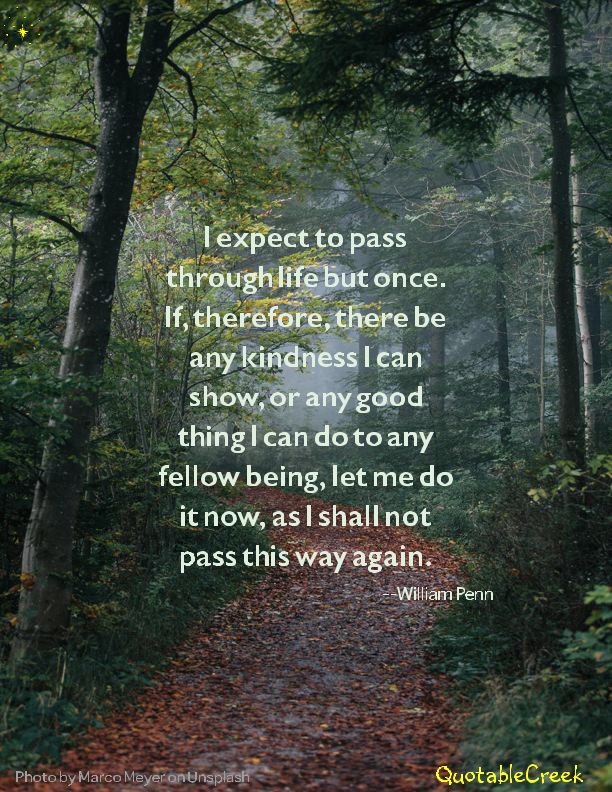
There is an elephant in the room. We don’t talk about it, we try not to think about it, we pretend it doesn’t exist. That elephant is the fact that we are all on a one way journey through this life. Our time is limited. None of us knows in advance when our end of the journey will come, but that end will come.

When we pull ourselves out of denial and gaze directly at this elephant, we can realize something important: our opportunities should be seized now. That good we can do? Don’t put it off. That kind word? Say it. That gift or remembrance? Give it now.

We will not have this place and time and opportunity to make a difference again.

Comfort in, grief out.

Many are on the front lines of this pandemic, either working in health care or in essential jobs to keep the world moving, while others of us are on the sidelines waiting. We worry about ourselves, but also about our friends and family members on the front lines. Will they be safe? What are the right words to encourage them and let them know we love them?

In this interesting article, health care worker Dorothy E. Novick suggests Ring Theory as a way to modulate our expressions of concern. It works like this:

“I came across an article about “Ring Theory,” written by Susan Silk and Barry Goldman. In this construct, we imagine a person who is suffering, like Margi, sitting in a small circle surrounded by concentric rings. Her dearest relatives sit in the circle closest to her. Best friends sit in the next larger circle. More friends and colleagues occupy the next one. And so on.

“According to Ring Theory, a person in any given circle should send love and compassion inward, to those in smaller circles, and process personal grief outward, to those in larger circles. To Margi and her mother, I should have said, “I love you, and I’ll do everything I can to support you.” And only when talking to others should I have said, “Her suffering feels impossible to bear.

“Comfort in, grief out.

“Ring Theory works for supporting health-care providers during the trauma of covid-19. We are grappling with a complex duality of mission plus terror. We are proud of what we can contribute and passionate about our patients’ well-being. But we are frightened — for our safety, for our patients, for the spouses and children we might expose.”

When we speak with people working in positions of danger, practicing Ring Theory makes good sense. Our comfort, praise, and admiration gives those heroes strength and helps them continue. Our hysteria or forwarding doomsday articles simply doesn’t. In all of this, we should strive to do no harm and let our words offer comfort.

Novick relates a message she received that helped give her comfort, a message that gives us a good example for how we can show up for people in dangerous positions right now:

The message read, “I am holding you in my heart being on the front lines of these difficult times. The professional skill, kindness, support and tenacity you give your patients and your medical community I am sure is a comfort in this darkness. Sending much love, appreciation and admiration.

“My heart rate slowed and my skin warmed over as I read the message. Then I pulled my mask over my face and opened the door to the next patient room.”

That, right there, is the power of the right words at the right time. We each have that power to do good right now.

https://www.washingtonpost.com/opinions/2020/04/17/how-not-say-wrong-thing-health-care-workers/

Small things with great love.

We are each called to new challenges today. To make a difference, to protect the community, to keep our hope alive. Over the last few weeks, we have seen stories of both tremendous generosity and simple acts of kindness. And of compassion and resolve from leaders such as this from Queen Elizabeth.

‘We will overcome it’: Queen Elizabeth invokes WWII spirit amid coronavirus outbreak

As we move forward, Queen Elizabeth’s challenge to act in a way which will make us proud years from now rings true. How we respond to these times defines us. Consider the acts of this little boy working to secure PPE for his local hospital.

What can we do now to help?

Reaching out

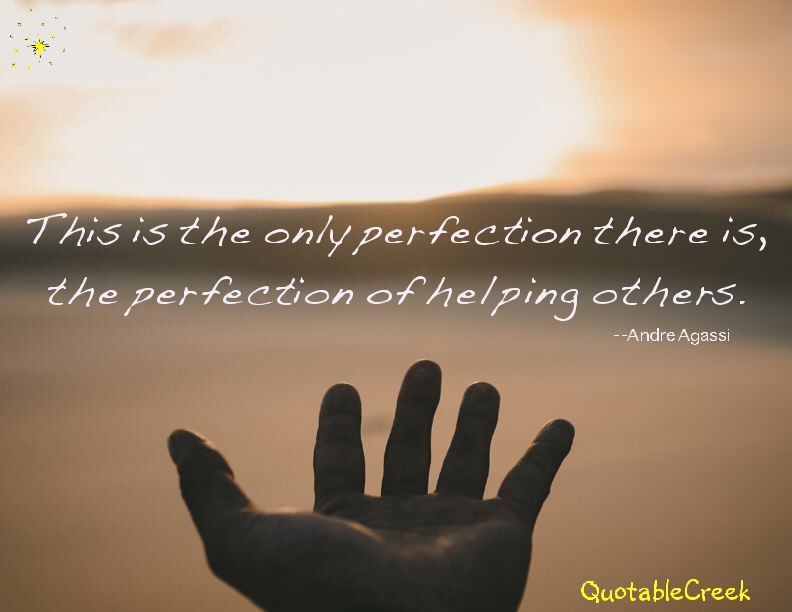
What are we here for anyway? What’s the point? Some people joke, ‘Life is hard, and then you die’, and there’s some truth to that. We are finite. We struggle. But there is purpose to life, and it lies in what we do for others. Andre Agassi says,

“Remember this. Hold on to this. This is the only perfection there is, the perfection of helping others. This is the only thing we can do that has any lasting value or meaning. This is why we’re here.”

Others joke ‘The one who dies with the most toys wins,’ but those things we do purely for ourselves are vanity. Instead, when we use our gifs and talents to reach out and help others, we’ve upped the good in the world. We’ve made a difference.

Though isolated, each of us has the ability to reach out. Phone calls, cards, texts, care packages. Others need to hear from you. They need to know someone cares. And you need to know you care about others. If you have extra, you can share. If you are going to the store, you can pick up something for someone who can’t go out. So many ways to help. And in the helping, we help ourselves as well.

Sowing peace.

Let St. Francis of Assisi’s timeless prayer soothe your soul today:

Lord, make me an instrument of your peace.
Where there is hatred, let me bring love.
Where there is offense, let me bring pardon.
Where there is discord, let me bring union.
Where there is error, let me bring truth.
Where there is doubt, let me bring faith.
Where there is despair, let me bring hope.
Where there is darkness, let me bring your light.
Where there is sadness, let me bring joy.
O Master, let me not seek as much
to be consoled as to console,
to be understood as to understand,
to be loved as to love,
for it is in giving that one receives,
it is in self-forgetting that one finds,
it is in pardoning that one is pardoned,
it is in dying that one is raised to eternal life

And, for a special soul-reviving treat, listen to Sarah McLachlan as she sings these precious words. Maybe listen a few times.

Savor the little things.

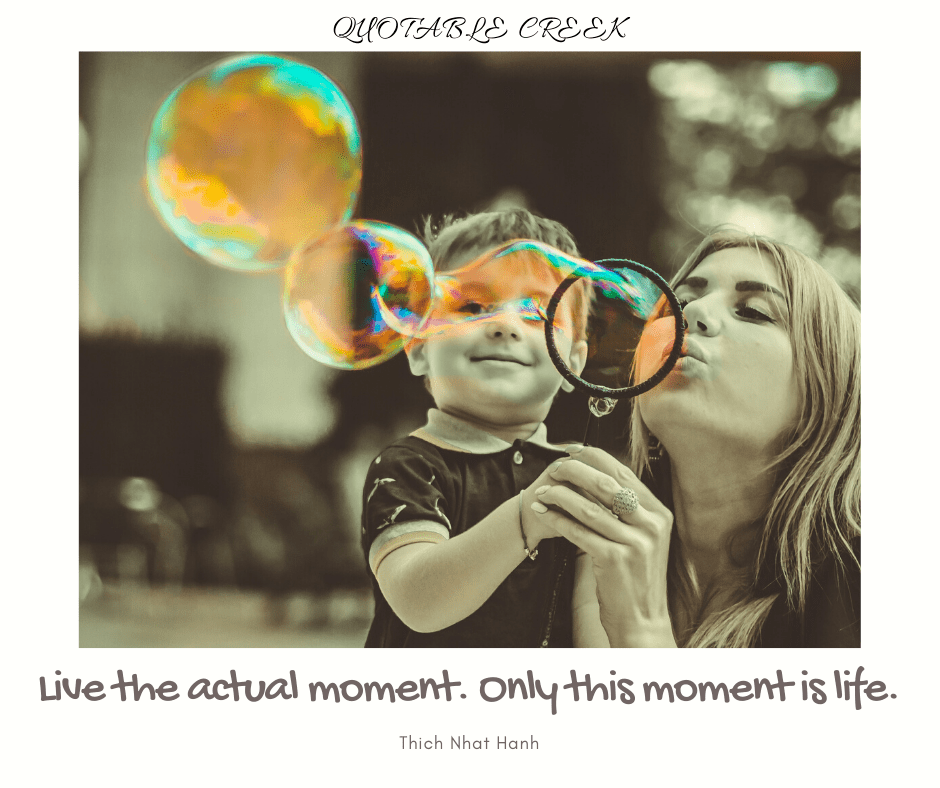
For better or worse, we have pushed a collective pause button. Our world just got narrower on the outside. Perhaps this is the time to broaden it on the inside. Enjoy the moments. Reach out to people to check in and tell them you care. Savor the little things. Pause and reflect.