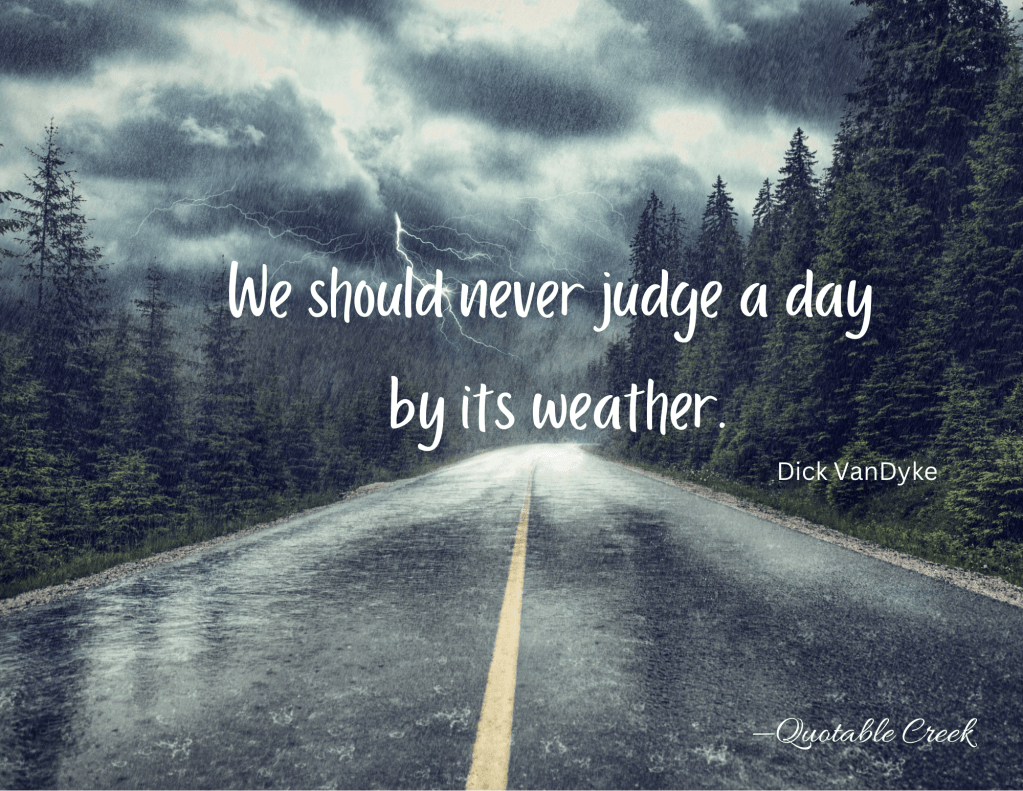
Dick Van Dyke is a national treasure, still singing and dancing his way through life at nearly 100. He reminds us that there are dark times, but behind the clouds the sun still shines. We show up. We do our best. And we realize that not everything is within our control.
He says,
We should never judge a day by its weather. It means you never know what’s going to happen,’ I said. ‘You do your best, then take your chances. Everything else is beyond our control.
Enjoy this lovely interaction between Van Dyke and Chris Martin, a balm for any troubled soul.
Isn’t that the bottom line of Christmas? Strip away all the decorations and gifts and songs and celebrations, and what remains is: love wins. It’s about love. God loves us, and we are to love each other. And even in a world divided by hate, blind to oneness, driven by greed, love will win. Because that’s the point of Christmas.
The days before Christmas can be frantic. We sometimes find our tempers short, our tongues loose, and our wits frayed. We think of Christmas as something in the future, speeding toward us, that we need to hurry around and prepare for so that we can enjoy His coming. But a birthday, like Christmas, is a celebration of something that has already happened. And, in the case of Christmas, it is a celebration of a whole new world order that is here. We are His now, not just at Christmas. We need to shine with His love now and everyday. Particularly when the world is harried. We need to reflect the joy and peace that comes with knowing that love conquers all.
How do we read the news and not get overwhelmed or angry, disconnected or depressed? How do we keep showing up with compassion and grace in a world where there is so much hate? How do we keep ourselves on the right path through the midst of it all? How do we continue to show up from a place of compassion, forgiveness, and grace? how do we keep our hearts from growing hard?
In this thoughtful letter, Rabbi Yael Levy shares his insights on how to pray with the news:
The 17th of the Hebrew month Tammuz initiates a three-week period of mourning that leads to Tisha b’Av, which is the day that marks the destruction of the Temples in Jerusalem in 586 BCE and 70 CE.
Tradition teaches that the Temple was destroyed because hatred became the operating principle in the community. The scorn, contempt and disdain that characterized daily interactions caused the Divine Presence to flee and leave the Temple vulnerable to attack.
These next three weeks ask us to reflect on the hatred that we allow to take root in our hearts. The wisdom of the tradition acknowledges that hatred can sometimes feel energizing and “so right,” but allowing it to fill our bodies and guide our actions leads to destruction.
Many years ago I was taught the practice of praying with the news. I have shared it over the years and always find myself returning to it during this season.
In this practice, each time we read or listen to a news report that enrages us, we turn our attention to those harmed by what is happening and pray for their healing and well-being. Doing so encourages us to acknowledge feelings of anger, grief and despair, and at the same time it turns our attention toward connection and compassion. Praying with the news can help us learn to bear witness to devastation and mayhem, while keeping our hearts soft, our minds calm, and our actions clear.
I am struggling mightily with this practice these days in the wake of continued violence and oppression in this country and throughout the world. Hatred can sometimes feel like such a welcome harbor. Not only does it feel so right, it can also act as a shield, creating the illusion that I don’t have to acknowledge the grief and heartbreak I am experiencing.
I need practices to help quiet the rage and fear, to loosen the constriction of hatred and to help me be with overwhelming grief. I need practices to help me return to compassion, love, joy and possibility. I find praying with the news both painful and helpful. It keeps me connected, allows sorrow, and grounds me in care and love.Weekly reading from the Awakin.org newsletter.
Do you have any disagreeable people in your life? People you avoid, maybe?
What if they are the ones who need love the most?
Most teachers will tell you that the child who acts out is the one most in need of love and attention. but those kids have learned to ask for it in all the wrong ways. And those children grow up, sometimes into disagreeable adults who still ask for love and attention in all the wrong ways. Maybe they have been disappointed so many times, they’ve learned to strike first, to reject you before you reject them.
Do you know anyone like that?
It’s no particular challenge to love the people who love us. But the ones who rile us, who ruffle our feathers, who are caustic and rude? That takes some serious patience and humility. But, perhaps, that is a place you are desperately needed.
We all hurt right now. Our whole world grieves the loss of what once was. The present turmoil and divisiveness weigh us down. Each of us is struggling.
But what of the children? How are they doing? How will they remember this time?
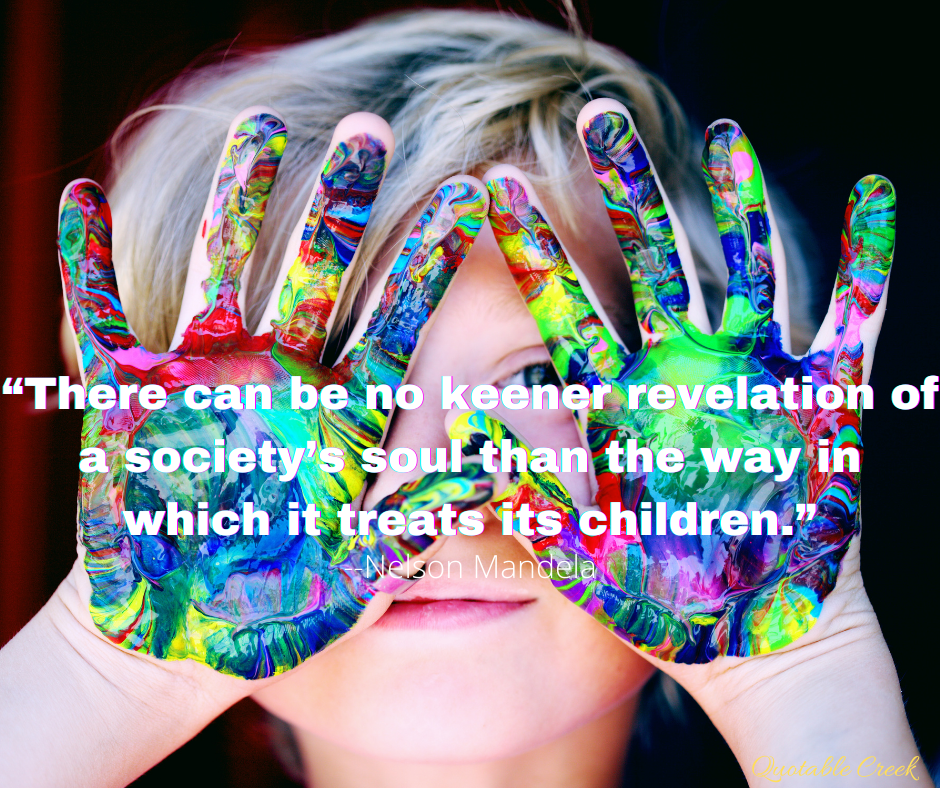
They look to us to keep them safe, to care for them, to put their needs first. They don’t understand the greater turmoil. They see, keenly, what is right in front of them. What is that?
While we may not have a ton of control over world events, we do have control over how we treat the littlest among us. Consider the profound effect your words and actions have on children just starting to be introduced to the world. Temper your anger, your frustration, your dismay. There is no harm in having a full range of emotions, and teaching children that they, too, will be subject to sadness and disappointment, frustration and anger, bewilderment and helplessness as they age. But never let them forget that you love them and are with them and that you will stay in their corners come what may.
It’s okay to be heartbroken for more than one group of people at the same time. When it comes to showing compassion, we don’t have to pick sides. Sometimes, often really, maybe even always, there is hurt and anguish everywhere, and we can mourn the lot of it.
Beware people who tell you not to be concerned for this group or that group and the hurt they feel.
Beware those who try to dehumanize others.
Beware those who lump you in as the ‘enemy’ for working to assure people are treated humanely.
Beware people who draw lines between us and them.
Beware those who try to limit you to a label or single identity.
Our hearts are big enough to embrace it all. What we must save is love.
And yet most of us internalize myths that we are meant to live pain-free lives and that there is always more time. How much more could we accomplish if we embrace the reality instead?
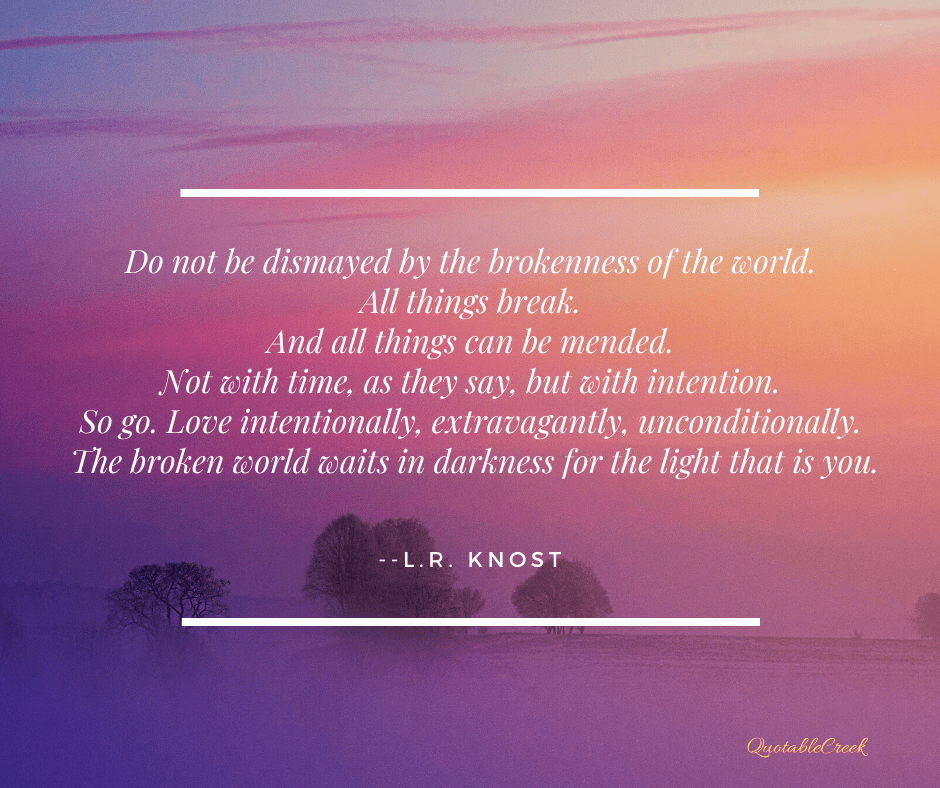
We’re breakable. But our vulnerability is our strength. And when we mend from something painful, we are likely to have tools and skills and sensitivities that may help us and make us more empathic going forward. Breaking and mending is part of growth. Part of change. Part of evolving. To be scared of breaking is to be scared of living.
Time’s short. Now is the time to reach out, apologize, help…whatever it is you’re waiting for a different day to do. There is no promised day. Things don’t just happen. Time doesn’t heal all wounds. We help heal the broken world, and our own broken selves, by continuing to love even in the darkness.
So much of our suffering is invisible. Loneliness, sorrow, depression, not fitting in. We can bind up our own cuts and scrapes, but how do we bind up those kind of wounds?
There is an old parable about heaven and hell. In both, people are forced to eat with spoons that are too long to feed themselves. In hell, they are starving. In heaven, they feed each other.
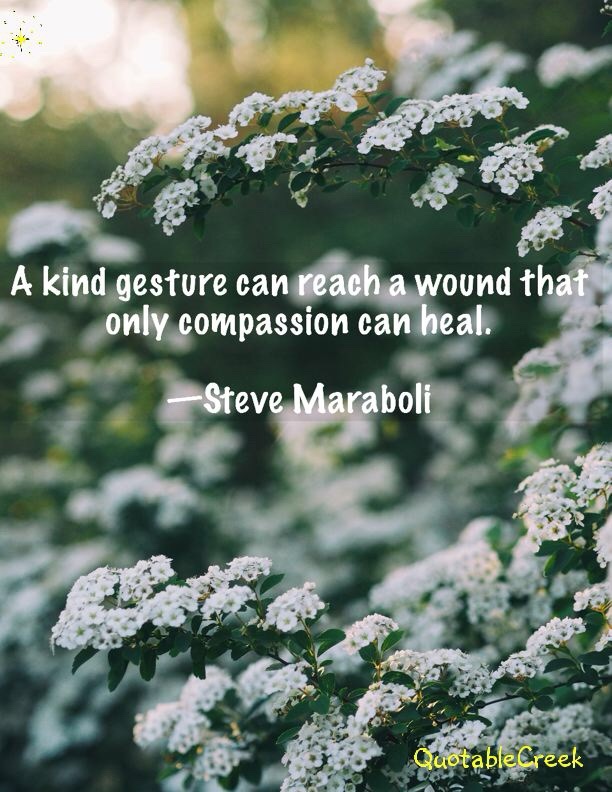
When it comes to these invisible hurts, we are healed by kindness, one to another. We don’t know when we are being kind that it may help someone, but it certainly can’t hurt. And it may be just the long-spooned nourishment that someone else needs.
To inspire acts of kindness today, watch this video of a poor baby elephant stuck in a muddy hole. The gratitude its mother shows its rescuers will melt your heart.
Today, in the United States, we vote. We celebrate a country that allows its citizens input into this remarkable experiment of a government of the people, by the people, and for the people.
We honor this country and its principles of equality, freedom, and justice for all. Our understanding of those concepts has evolved over time, and taken some steps back, but today let us be grateful for how far we’ve come and consider the steps that we each might take today and every day to make this country move closer to the ideals for which it stands. It is both a privilege and a responsibility to vote.




 QuotableCreek.com