Our greatest strength.
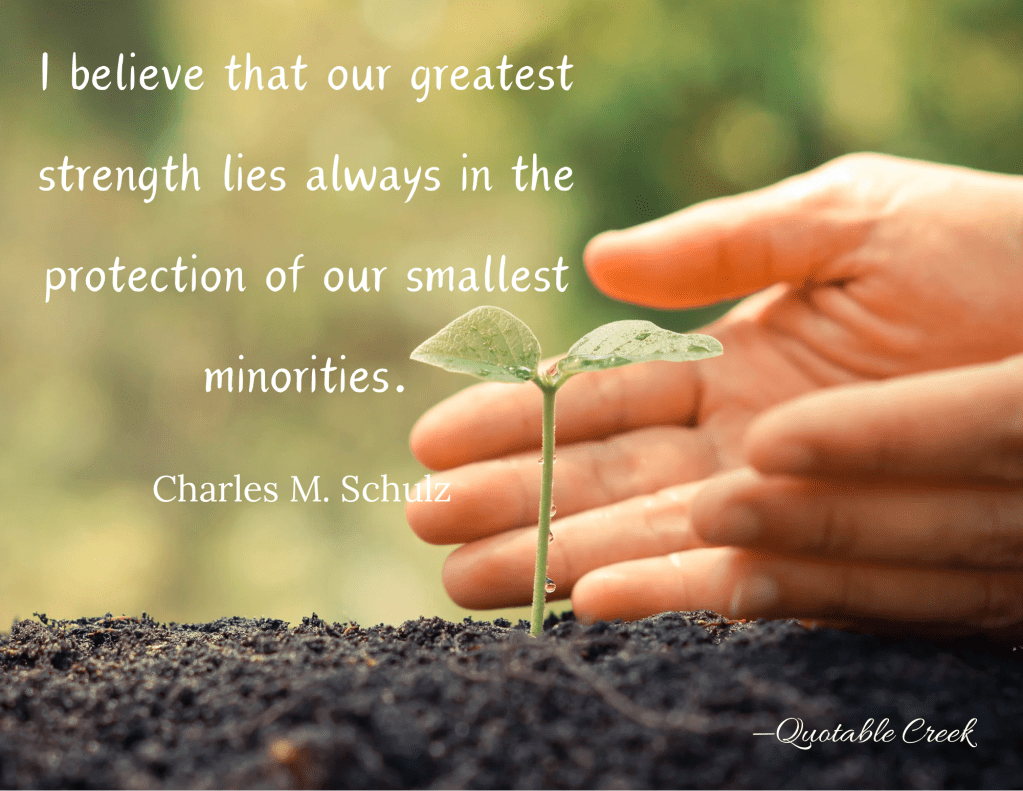
Imagine writing to one of your literary heroes and getting a serious letter back. Over 50 years ago, then fifth grader Joel Lipton wrote to Charles Schulz, the creator of the comic strip Peanuts, to ask him what made a good citizen.

And Schulz wrote back:
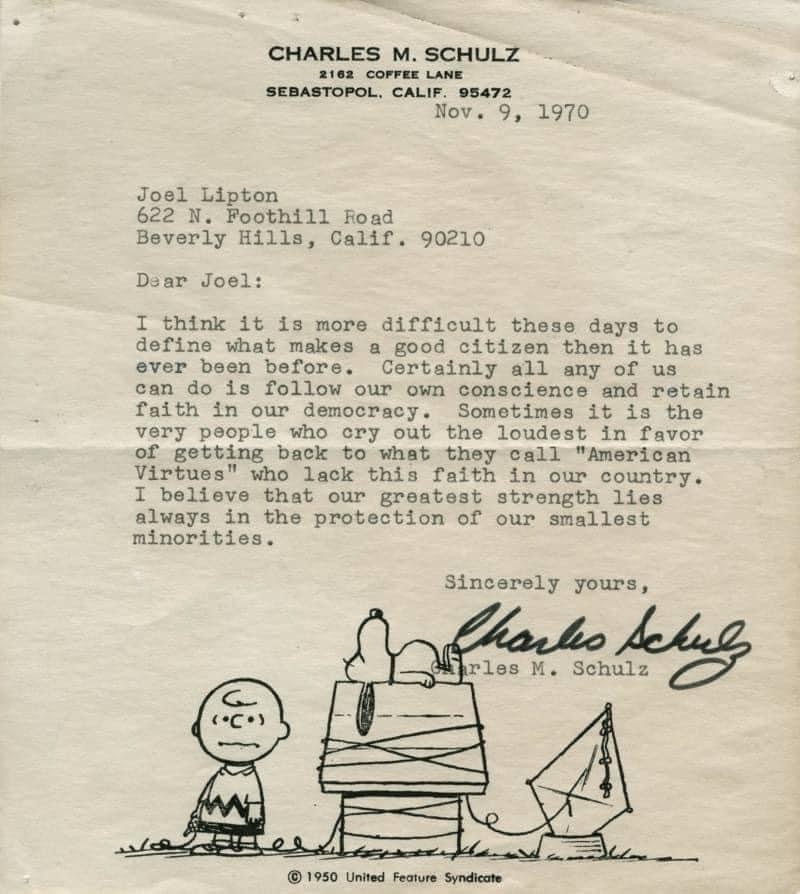
In 1970, students in a fifth-grade class at Hawthorne School in Beverly Hills were assigned to write a letter to someone they admired, asking them “What makes a good citizen?”

Joel Lipton, 10 years old at the time, wrote to Peanuts cartoonist Charles Schulz.

Fast-forward to this past February, when Lipton and his wife were cleaning out their closet. “And she pulled out a box and started going through some photos,” Lipton says today. “And between some old photos was this letter. I said, ‘Oh, wow, there’s the Charles Schulz letter!’”

Lipton remembers getting a response from the famed cartoonist, typed on official stationery from his Sebastopol studio, and hanging it on his bedroom wall with thumbtacks. But he was amazed when he re-read Schulz’s letter almost 50 years later, and realized how prescient it was.

https://www.kqed.org/arts/13852729/charles-schulzs-letter-about-democracy-discovered-50-years-later

Schulz’s words are no less powerful today as we come together to vote for our future in America, a country defined not by homogeneity of race or religion, but by common principles. Principles of equal justice under the law, of democracy, and of a government of the people, by the people, and for the people.
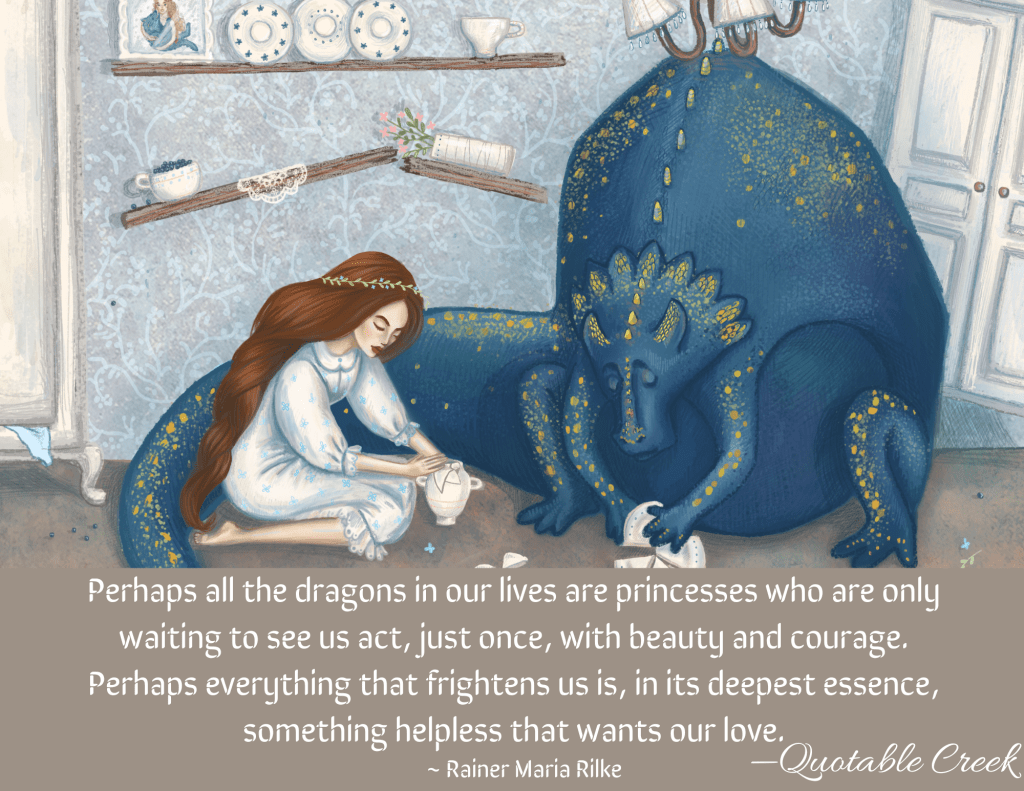
What questions are we asking ourselves?

What questions do we frame for ourselves at the end of the day? What are the questions that have caused us to soul-search and perhaps take a new path? What questions have forced you to look at something a different way?

Sometimes the questions are more important than the answers. There are some that resonate so deeply with us, we may spend a lifetime trying to answer them. In her piece about the beauty of these profound questions, Karen Horneffer-Ginter identifies some that have been meaningful to her:

When used properly, questions have the potential to connect us to the world of another. A heartfelt “How are you?” or “How was your day?” can become the bridge that keeps us in relationship to the lives of those we love. Sometimes, too, questions create a bridge within ourselves, allowing us to hear what’s going on at a deeper level. We know when we’ve encountered a question that has this potential because it stays with us — maybe for the day, maybe for our whole lives. It taps us on the shoulder to wake us up, or it wiggles its way in more deeply, opening us up to seeing things in a new way.

I still recall first encountering Judith Duerk’s chorus of questions about how my life might have been different if there had been a sacred circle to step into. Mary Oliver asking me about my plans for this one wild and precious life, Oriah Mountain Dreamer wanting to know what I ache for and if I dare to dream of meeting my heart’s longing, and Angeles Arrien reminding me of the questions asked in some indigenous cultures: When did you stop singing? When did you stop dancing? I think of my friend Ming, asking me at lunch one day if I thought writing was my fullest and truest expression. All these questions have remained close companions across the years.

The questions that have been consuming my thoughts and are my close companions these days are What does it mean to be welcoming? How does welcome look? How does it change the mix if it is accepted? What are the stumbling blocks to be truly welcoming? Where does fear creep in to inhibit welcome? How will my life be different because I have welcomed another into it? How will it disrupt my comfort zone, and how will I get my ego out of the way to be more accepting?

What are the questions in your heart, questions that are your close companions? And just the framing of those questions can be significant, as she suggests above. Consider the difference between ‘What do I have to do today?’ and ‘What do I get to do today?’ That simple shift helps us move from feeling burdened to being grateful for all the opportunities presented by the day.

What are the questions that have been your close companions? What do you get to do today to help answer them?

Who is my neighbor?

Sometimes I feel everything in life comes down to the question, ‘Who is my neighbor?’ 

We are always asking, ‘This one, too?’ And the answer is always, ‘Yes’.

The felon, the refugee, the homeless person, the enemy, the one who hurt you, the one you disagree with, the one who makes your life hard? Yes, always yes. 

Love your neighbor. This one, too.

Leaving the world a bit better.

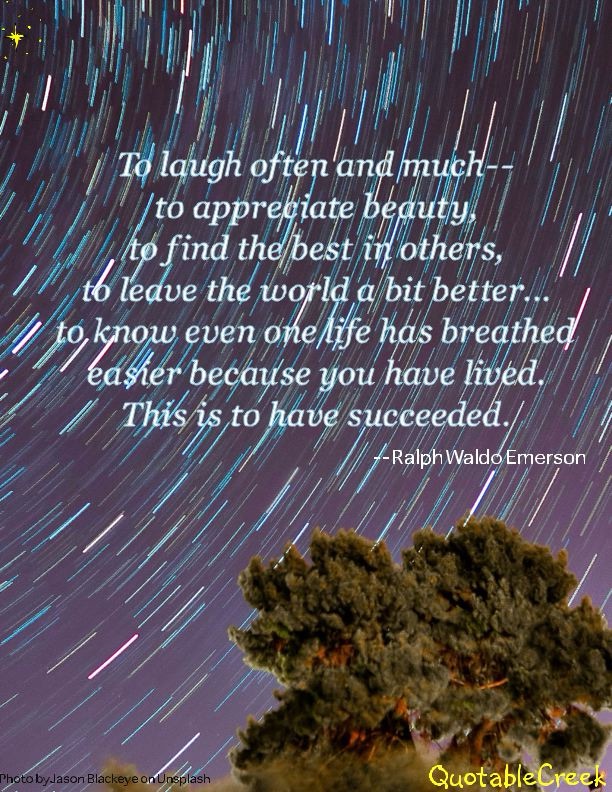
We all want to succeed, but what is the metric for measuring whether we’ve been successful? There are so many. Money, status, power, bucket lists, fame, travel… but what of the little things? Are you successful if you have enough money to buy a small country but no one to love or trust? Is it success if you are famous but lonely? If you have power but wield it to cause pain and misfortune to others, how can that be considered success? If you’ve traveled the world but not been truly present anywhere, does that count?

Perhaps true success at this thing called life is as simple as Emerson’s thoughts above. To leave the world a bit better, to ease the burdens of others, to look for and bring out the best in others, to do no harm. These all matter, maybe not in measurable concrete ways, but in ways we can all feel and appreciate if not count. More important, these are all things we each can do. We have the ability to be successful beyond our wildest imaginings.

And don’t forget to laugh often and much. Finding the joy and not letting it slip right past you undetected is important, too.

Sowing the right kind of seeds.

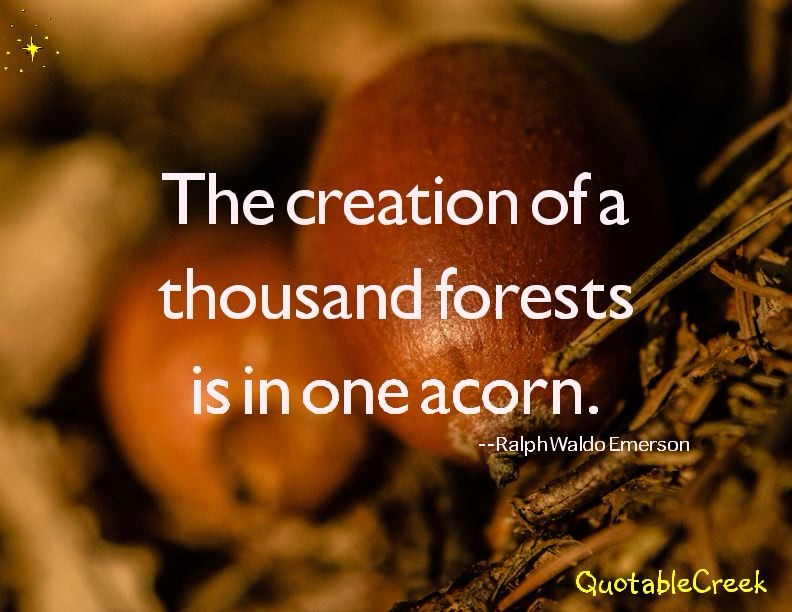
The potential for a loving relationship is in one embrace. The potential for peace is in forgiveness. The potential for harmony is in stillness. The potential for quality conversation is in listening.

Consider the opportunities you have to make your world and the world in general a better kinder place with the actions you sow today.

Singing you into singing.

We start so little and helpless, not knowing much of anything, but responding to love, comfort, care, concern. As we grow, there have been people who have brought joy to our lives, people who have helped us step out and grow.

For these people, we offer thanks.

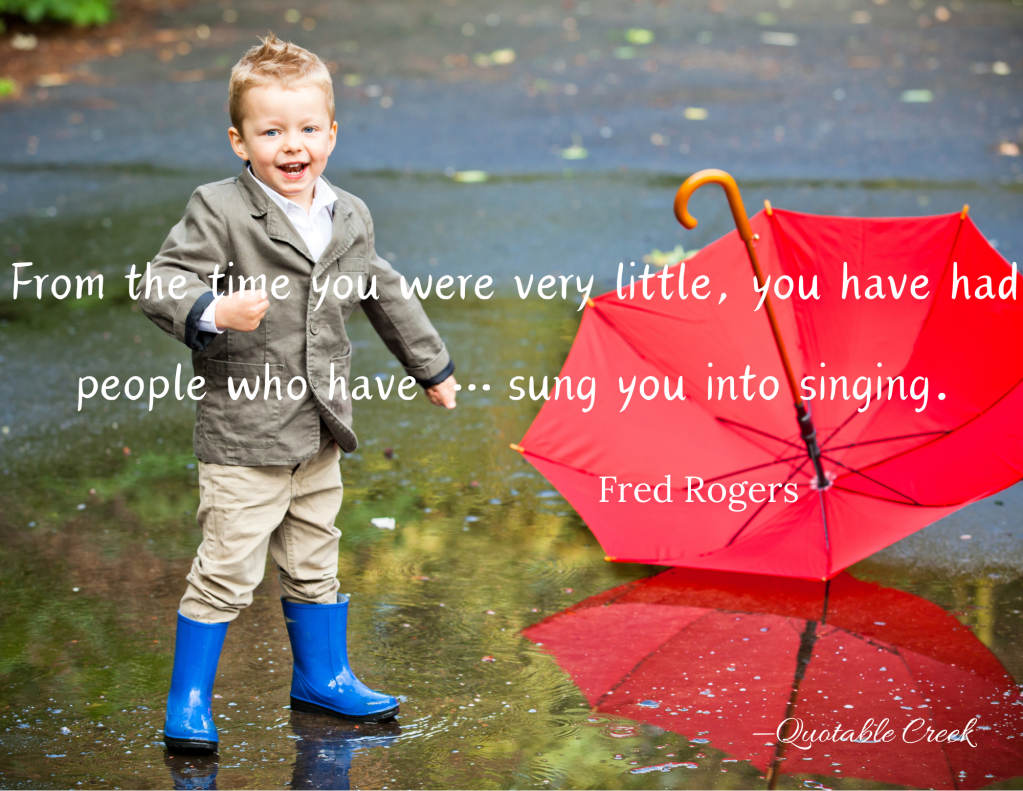
As Mr. Rogers explained:

From the time you were very little, you’ve had people who have smiled you into smiling, people who have talked you into talking, sung you into singing, loved you into loving. So, on this extra special day, let’s take some time to think of those extra special people.

And we have them now, don’t we? Those people who smile us into smiling and love us into loving?

And, even better maybe, we can be those people.

Crocodile tears.

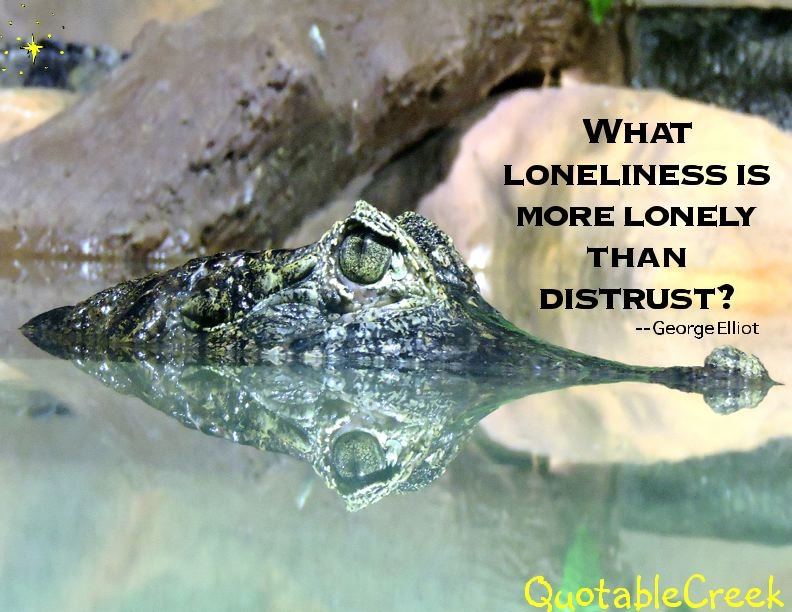
Crocodile tears. Derived from an ancient anecdote that crocodiles shed tears for the creature they are eating; the phrase has come to refer to a hypocritical display of false emotion. Insincerity. Sometimes worse– a show of emotion to lull someone in to sharing their story or revealing their vulnerabilities only to use that information against them. Dante reserved his 8th circle of Hell (out of 9, with 9 being worst) for the fraudulent–the hucksters, the corrupt politicians, the panderers and seducers, the false teachers, the perjurers and liars.

Why are they so bad? Perhaps it is because trust is so sacred, a bridge to community, a link between people that keeps us all from chucking it and living like recluses behind a bush. But also, perhaps it is because we do not come with built in BS meters. We are born trusting; we have to learn cynicism. And the way we learn that is to be let down, over and over, by the insincere. And when that harm makes us close off and guard, we become less than what we really are.

So the solution, it seems, is to fight back, not with insincerity of our own, but with authenticity and vulnerability come what may, to keep putting it out there every day, in every circumstance with truth and love and a whole heart. To be sincere. Authenticity and sincerity will help heal those damaged by crocodile tears, and they definitely won’t land us in one of Dante’s circles.

Advice to your younger self.

What can you tell us? With all of your experiences to date, what have you learned that you can pass on to help others? How would you advise your younger self?

For many of us, that advice would be: don’t be afraid. In this delightful video, elders counsel their juniors with some gems on how to negotiate this crazy world.

Avoiding the drift.

Otters sleep holding hands. In the open water, it would be so easy for them to drift away from each other in the ebb and flow of the tides. They also use kelp to wrap around themselves, but there is something about the image of sleeping otters holding hands to stay connected that is utterly endearing.

Sea_otters_holding_hands.jpg.638x0_q80_crop-smart.jpg

We, too, bounce around in rough seas, and it is easy to drift away from those we love. Distractions, distance, inattentiveness add up until you are apart, in the storm separately, rather than braving it together.

Today, work to avoid the drift away from those you love.

Being shelter.

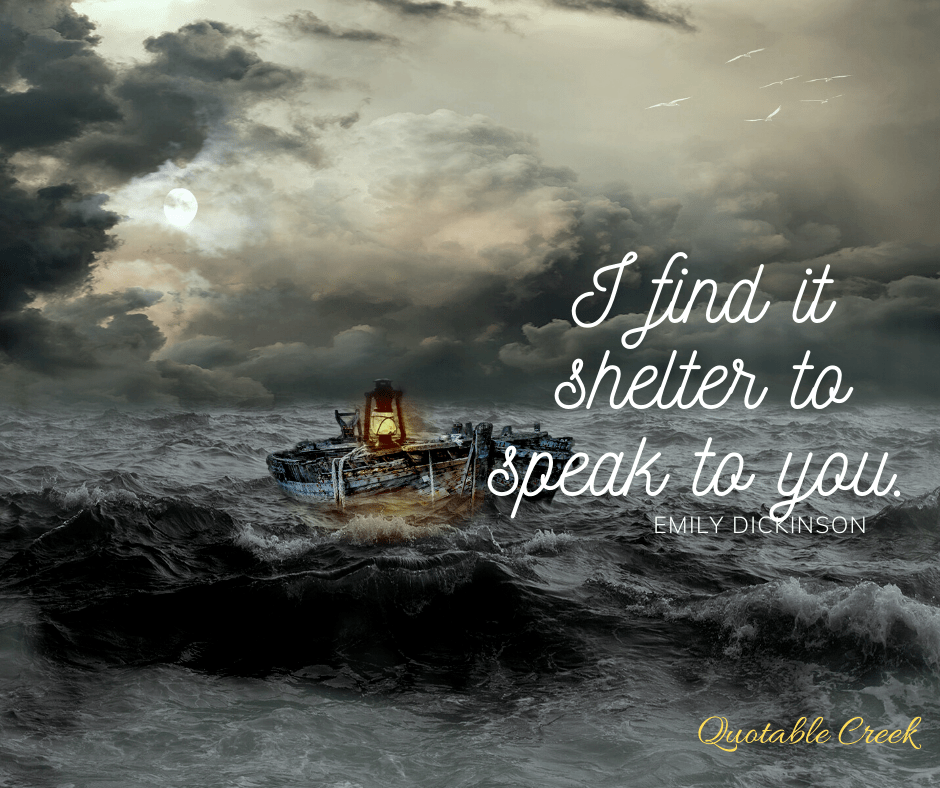
Of all the compliments you could receive, perhaps the best is that you feel like shelter. That, in all the storms and chaos that swirl around us, talking to you feels like safety. Not in the sense of being a yes man or echo chamber, or even in the sense of being able to do anything to stop the storm, but in the sense of home. 

“I find it shelter when I speak to you,” says Emily Dickinson. What might we do and say to make someone feel that way? Shelter implies that the storm is still swirling, the elements are still fierce, but talking to you is a respite from that and an entry into something welcoming and safe. A place where you are known, and heard, and cared for. A place of comfort. 

Certainly there are plenty of people making themselves someone’s storm. Wouldn’t it be wonderful to be someone’s shelter instead?

What can you do in this increasingly chaotic and exhausting world for someone to find it shelter when they talk with you?