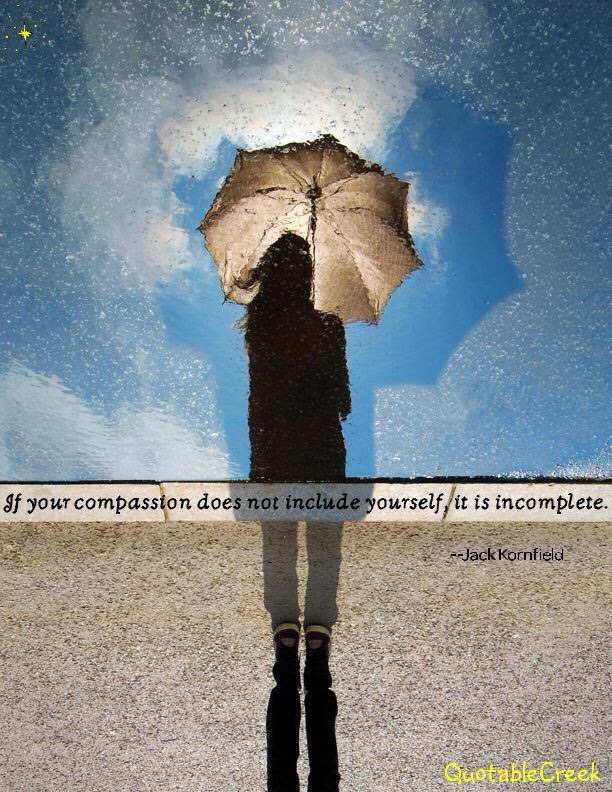
If one of your friends were struggling with the problems you are facing right now, what words would you offer in support? Would you call them names, berate them, remind them of all the other times they messed up just like this and how, honestly, can they ever expect to get anything right, ever?
Probably not. Right? But often this is the way we talk to ourselves. We replay all our other mistakes in our minds, call ourselves stupid, sink into our shells scared to face the world.
But why do we do this? If the words we would offer our friend are what we think would help, why are we so reticent to speak kind encouraging words to ourselves? Maybe today is a good day to try a different approach.
Be a kind friend to yourself. Offer yourself words of support and encouragement. Focus on all the many times you got things right. Tell yourself the truth: you are precious and beloved.
Bless the comforters, those who reach out and see others hurting and grief stricken, and offer them solace. Who sit with those going through difficult times, and give of their presence. Who offer kind, comforting words.
We sometimes think those who are good at comforting don’t know loss of their own, but the opposite is probably true.
As said by Rainer Maria Rilke:
Do not assume that he who seeks to comfort you now lives untroubled among the simple and quiet words that sometimes do you good. His life may also have much sadness and difficulty, that remains far beyond yours. Were it otherwise, he would never have been able to find such words.
Perhaps the only good to come of great loss is the ability to recognize it in others and offer them comfort and companionship.
How do we read the news and not get overwhelmed or angry, disconnected or depressed? How do we keep showing up with compassion and grace in a world where there is so much hate? How do we keep ourselves on the right path through the midst of it all? How do we continue to show up from a place of compassion, forgiveness, and grace? how do we keep our hearts from growing hard?
In this thoughtful letter, Rabbi Yael Levy shares his insights on how to pray with the news:
The 17th of the Hebrew month Tammuz initiates a three-week period of mourning that leads to Tisha b’Av, which is the day that marks the destruction of the Temples in Jerusalem in 586 BCE and 70 CE.
Tradition teaches that the Temple was destroyed because hatred became the operating principle in the community. The scorn, contempt and disdain that characterized daily interactions caused the Divine Presence to flee and leave the Temple vulnerable to attack.
These next three weeks ask us to reflect on the hatred that we allow to take root in our hearts. The wisdom of the tradition acknowledges that hatred can sometimes feel energizing and “so right,” but allowing it to fill our bodies and guide our actions leads to destruction.
Many years ago I was taught the practice of praying with the news. I have shared it over the years and always find myself returning to it during this season.
In this practice, each time we read or listen to a news report that enrages us, we turn our attention to those harmed by what is happening and pray for their healing and well-being. Doing so encourages us to acknowledge feelings of anger, grief and despair, and at the same time it turns our attention toward connection and compassion. Praying with the news can help us learn to bear witness to devastation and mayhem, while keeping our hearts soft, our minds calm, and our actions clear.
I am struggling mightily with this practice these days in the wake of continued violence and oppression in this country and throughout the world. Hatred can sometimes feel like such a welcome harbor. Not only does it feel so right, it can also act as a shield, creating the illusion that I don’t have to acknowledge the grief and heartbreak I am experiencing.
I need practices to help quiet the rage and fear, to loosen the constriction of hatred and to help me be with overwhelming grief. I need practices to help me return to compassion, love, joy and possibility. I find praying with the news both painful and helpful. It keeps me connected, allows sorrow, and grounds me in care and love.Weekly reading from the Awakin.org newsletter.
So much of our suffering is invisible. Loneliness, sorrow, depression, not fitting in. We can bind up our own cuts and scrapes, but how do we bind up those kind of wounds?
There is an old parable about heaven and hell. In both, people are forced to eat with spoons that are too long to feed themselves. In hell, they are starving. In heaven, they feed each other.
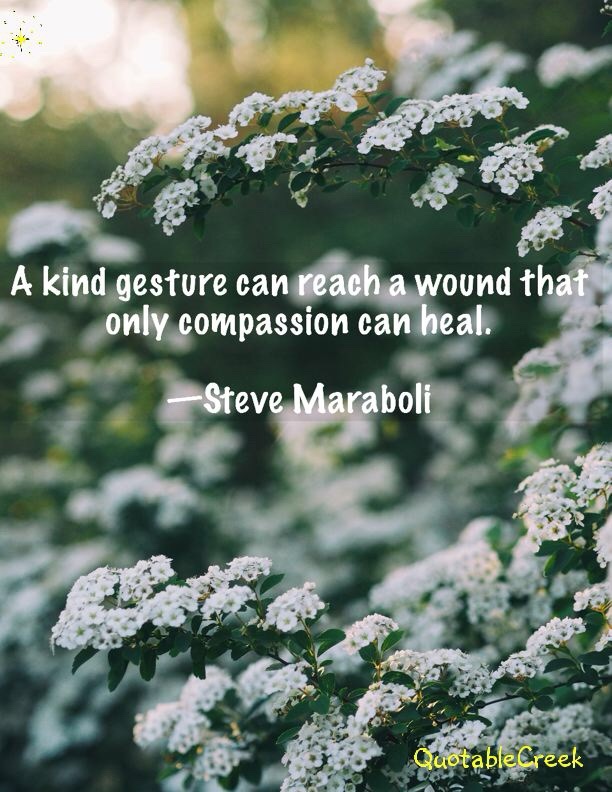
When it comes to these invisible hurts, we are healed by kindness, one to another. We don’t know when we are being kind that it may help someone, but it certainly can’t hurt. And it may be just the long-spooned nourishment that someone else needs.
To inspire acts of kindness today, watch this video of a poor baby elephant stuck in a muddy hole. The gratitude its mother shows its rescuers will melt your heart.
We all want to succeed, but what is the metric for measuring whether we’ve been successful? There are so many. Money, status, power, bucket lists, fame, travel… but what of the little things? Are you successful if you have enough money to buy a small country but no one to love or trust? Is it success if you are famous but lonely? If you have power but wield it to cause pain and misfortune to others, how can that be considered success? If you’ve traveled the world but not been truly present anywhere, does that count?
Perhaps true success at this thing called life is as simple as Emerson’s thoughts above. To leave the world a bit better, to ease the burdens of others, to look for and bring out the best in others, to do no harm. These all matter, maybe not in measurable concrete ways, but in ways we can all feel and appreciate if not count. More important, these are all things we each can do. We have the ability to be successful beyond our wildest imaginings.
And don’t forget to laugh often and much. Finding the joy and not letting it slip right past you undetected is important, too.
Of all the compliments you could receive, perhaps the best is that you feel like shelter. That, in all the storms and chaos that swirl around us, talking to you feels like safety. Not in the sense of being a yes man or echo chamber, or even in the sense of being able to do anything to stop the storm, but in the sense of home.
“I find it shelter when I speak to you,” says Emily Dickinson. What might we do and say to make someone feel that way? Shelter implies that the storm is still swirling, the elements are still fierce, but talking to you is a respite from that and an entry into something welcoming and safe. A place where you are known, and heard, and cared for. A place of comfort.
Certainly there are plenty of people making themselves someone’s storm. Wouldn’t it be wonderful to be someone’s shelter instead?
What can you do in this increasingly chaotic and exhausting world for someone to find it shelter when they talk with you?
Last week at the DNC, we glimpsed Gus, the son of vice-presidential candidate Tim Walz, in an unguarded, moment, filled with pride and love, crying, and saying, ‘That’s my dad!’ For me and millions of others, that raw, unfiltered emotion choked us up. It was a beautiful moment, such a clear window into a pure love.
But for many others, trained perhaps to hide their own emotions and toughen up as they age, that moment led to mockery and cruel responses.
What accounts for such wildly different responses?
Perhaps the difference lies in how we view vulnerability, which in turn, colors how we trust others. Do we feel like we must mask our emotions and vulnerabilities? Do we feel like we must project only a polished and tough persona?
Brené Brown says,
Vulnerability is not winning or losing; it’s having the courage to show up and be seen when we have no control over the outcome. Vulnerability is not weakness; it’s our greatest measure of courage.
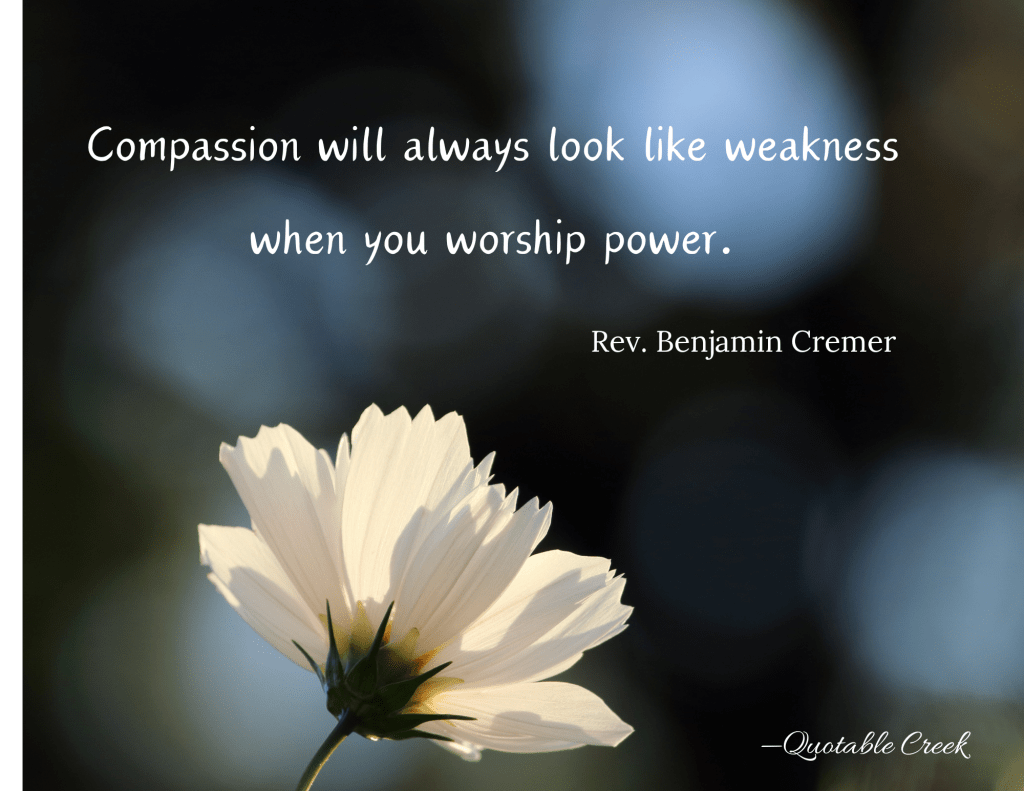
Do we really believe the bully is the strong one? Perhaps the strong one is the one brave enough to be honest and true.
How broad is your focus? On your own needs and wants, or broader? It seems that a broad focus, on others as much or more than ourselves increases empathy and happiness.
As Daniel Goleman said:
Self-absorption in all its forms kills empathy, let alone compassion. When we focus on ourselves, our world contracts as our problems and preoccupations loom large. But when we focus on others, our world expands. Our own problems drift to the periphery of the mind and so seem smaller, and we increase our capacity for connection – or compassionate action.
Does this seem true as you think about the people in your life?
The other thing that happens when you turn your concern to others is the whole world opens up. There is so much to learn, to do, to care about. So many places to put your time and efforts. So many people to love and help.
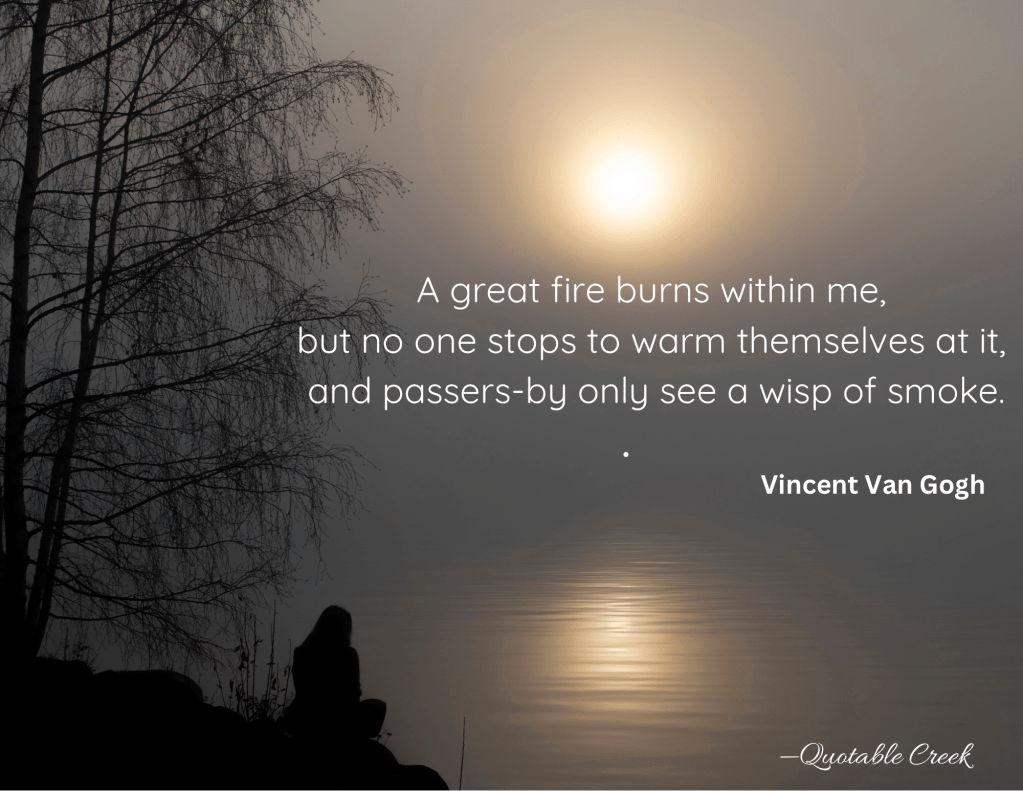
In the midst of technological connectedness, loneliness is ever present. That need for close human connection isn’t satisfied by clicks and emojis or political jousting. It requires a deeper sharing of oneself. And how frustrating to have stories to tell but no one to share them with.
Imagine what good you can do simply by being that person who can listen to another’s stories. To ease their loneliness.
Emily Dickinson captured this well:
If I can stop one heart from breaking,
I shall not live in vain;
If I can ease one life the aching,
Or cool one pain,
Or help one lonely person
Into happiness again
I shall not live in vain.
Who do you know that might have stories to tell if only there was someone to listen?
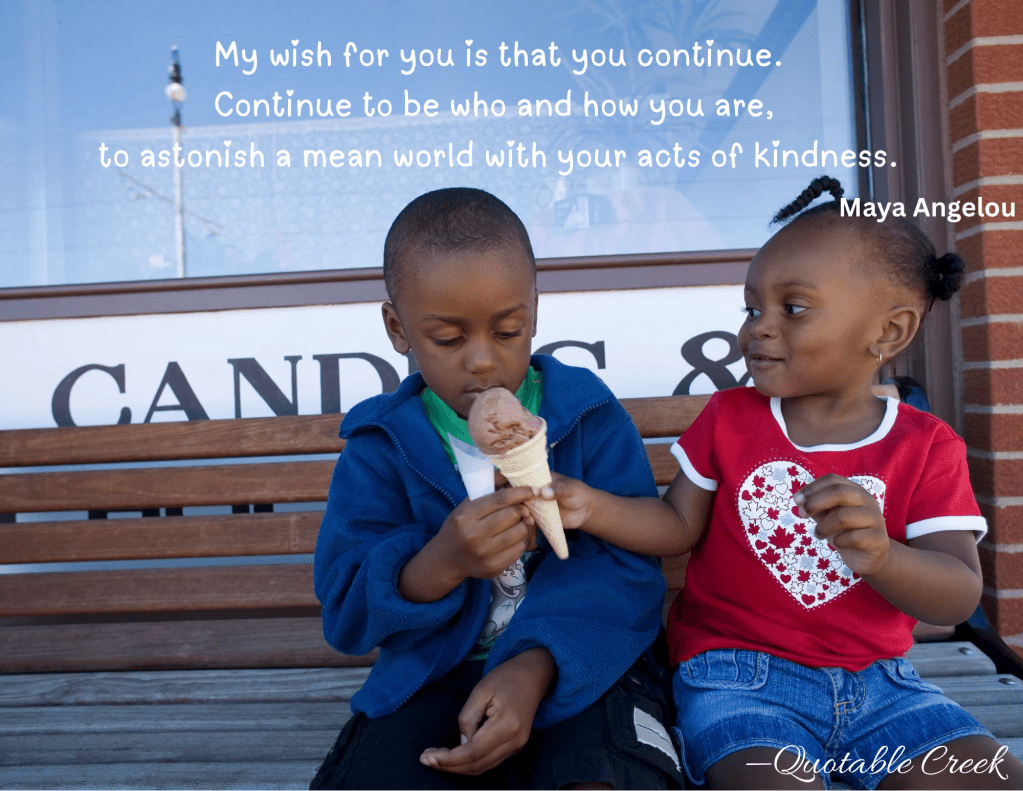
Astonishing a mean world is quite the life goal. Flipping the script. Not buying in to the smallness, pettiness, and cruelty you see around you.
Imagine the ripple effects of such kindness.
Perhaps you’ve heard the story of the man and the starfish. In sum, a man is walking along the beach at low tide finding starfish that have landed too far above the water line to survive. He dislodges them and throws them back into the ocean. A bystander is astonished and scolds him, saying that he will never be able to make a difference as there are miles and miles of beach with hundreds of stranded starfish. The man responds, tossing another back into the ocean, “Made a difference to that one,” he remarks.
Making a difference doesn’t have to be a grand gesture. It can be quite small, perhaps only affecting the person in front of you right now. Perhaps the difference is choosing an unexpected response to cruelty. Perhaps the response is to not lose hope.
Hang in there. The starfish are right in front of you on your path if you choose to see them.





 QuotableCreek.com