The incredible power of community.

Blue Blueberries Food Fact Facebook Post

In 1943, President Roosevelt had several competing problems to solve; his answer: Victory Gardens. Author Elisa Carbone (Diana’s White House Garden) describes the amazing bit of history this way:

The World War II Victory Garden plan grew out of necessity. There was not enough steel and tin to make both fighter planes and tin cans for vegetables. There were not enough train cars to carry soldiers to the ports and to send food around the country. And with Japan controlling the islands where most of the world’s rubber plants grew, there was not enough rubber for tires for trucks to carry food from the farms to the cities.

The Roosevelts’ plan was a resounding success. In every city and town, vacant land was turned to food production. City parks, suburban and urban yards, vacant lots, and even apartment rooftops were used to grow fruits and vegetables. An estimated 20 million gardens were planted in the  U.S., producing between 9 and 10 million tons of food, over 40 percent of all the produce eaten in the United Sates. Community centers offered classes in canning, and the harvest was put away to feed the country during the winter as well.

This bit of history is remarkable in so many ways. Success depended on wide-spread buy-in from the total population based on their shared concern for and desire to support the troops and win the war. The solution wasn’t based on borrowing or over-spending but directly resulted from an honest appraisal of scarcity. People stepped up, across all divides. The solution stemmed from a deep recognition of the interrelatedness of things. People welcomed the opportunity to help. Each of those facts is powerful alone, but together, it marks a remarkable time in history.

What could we do today with buy-in like that among an entire populace? Can we even imagine anymore what it would feel like to be part of a country where everyone was looking for a way to help a global problem by making changes and contributions at a local level? In 1943, the impetus for the action was a desire to feed the troops and help win the war. What will we care enough about to pull together now?
Choose kindness.

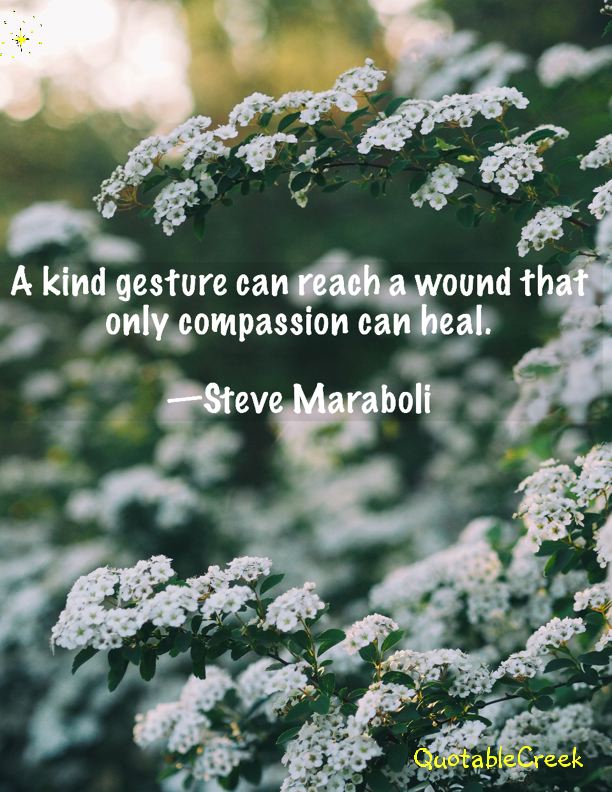
kindgesture

So much of our suffering is invisible. Loneliness, sorrow, depression, not fitting in. We can bind up our own cuts and scrapes, but how do we bind up those kind of wounds?

There is an old parable about heaven and hell. In both, people are forced to eat with spoons that are too long to feed themselves. In hell, they are starving. In heaven, they feed each other.

When it comes to these invisible hurts, we are healed by kindness, one to another. We don’t know when we are being kind that it may help someone, but it certainly can’t hurt. And it may be just the long-spooned nourishment that someone else needs.

To inspire acts of kindness today, watch this video of a poor baby elephant stuck in a muddy hole. The gratitude its mother shows its rescuers will melt your heart.


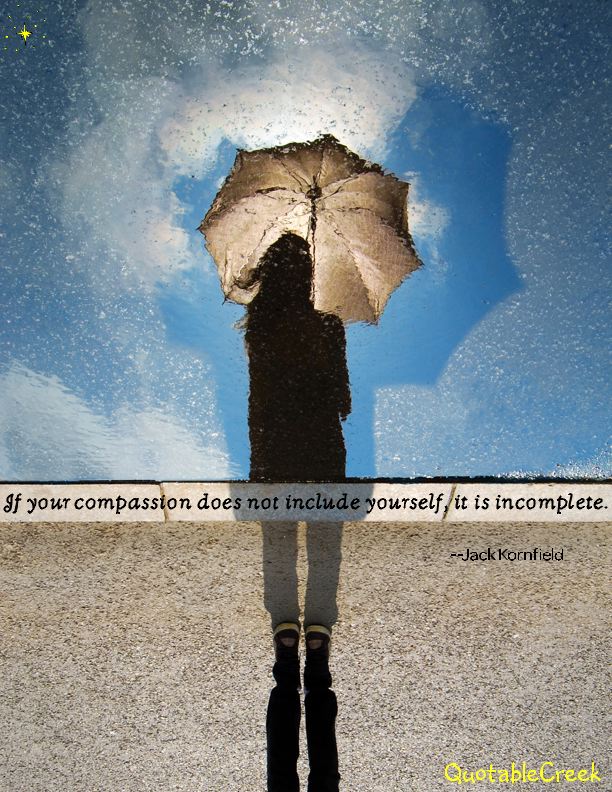
Give yourself a break.

yourself

If one of your friends were struggling with the problems you are facing right now, what words would you offer in support? Would you call them names, berate them, remind them of all the other times they messed up just like this and how, honestly, can they ever expect to get anything right, ever?

Probably not. Right? But often this is the way we talk to ourselves. We replay all our other mistakes in our minds, call ourselves stupid, sink into our shells scared to face the world.

But why do we do this? If the words we would offer our friend are what we think would help, why are we so reticent to speak kind encouraging words to ourselves? Maybe today is a good day to try a different approach.

Be a kind friend to yourself. Offer yourself words of support and encouragement. Focus on all the many times you got things right. Tell yourself the truth: you are precious and beloved.


SaveSave

SaveSave

Reach out.

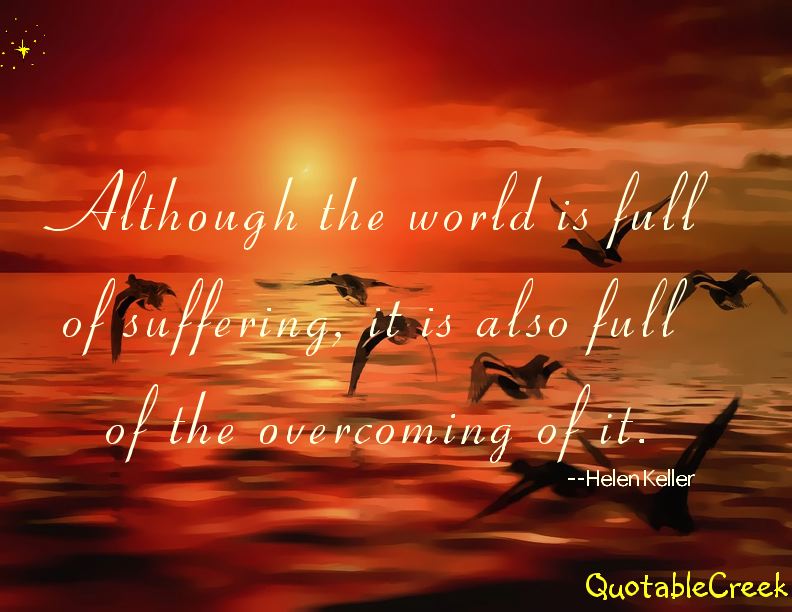
suffering

Sometimes, we are humbled and cowed by the destructive ability of our environment. Everything we’ve built up can be destroyed in an instant by earthquake, a flood, a tornado, and we are left to build again. But into these disasters, something remarkable always shows up. The human spirit. People help each other, arriving with supplies or rescue, opening their homes and wallets. There is a buoyancy to these acts of human compassion that helps others feel protected and lifted up even when they are at their lowest point. And what a gift it is to be able to help someone feel like they are not alone.

ABCs of the heart.

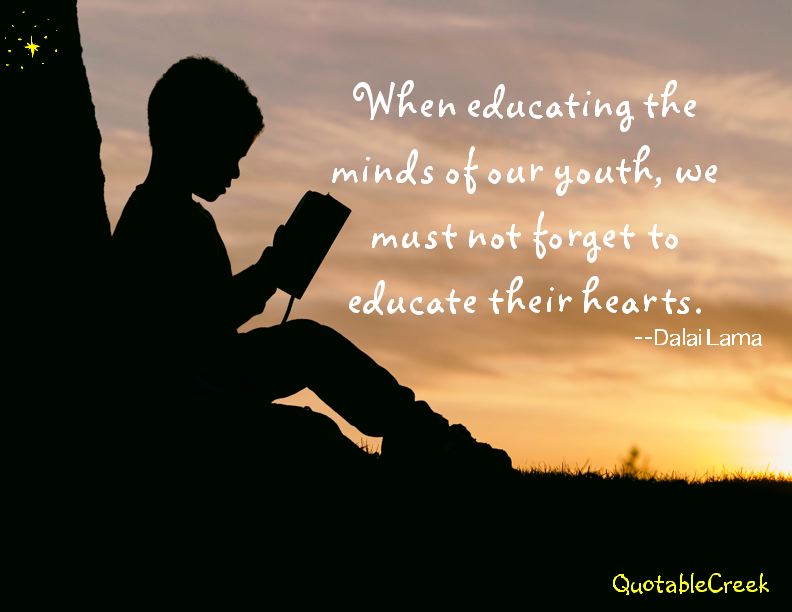
abcheart

Reading level, standardized test scores, college prep–more, better, faster. Repeat.

But what of the heart? There is so much to teach a child about the heart:

  • How it breaks when someone you love doesn’t love you back
  • How it thrills to find a kindred spirit
  • How it is comforted when someone simply sits with you and shares space
  • How it hurts when we don’t treat each other with compassion and kindness
  • How it longs to connect
  • How it knows what the brain often forgets–that we are all family

There is no standardized test for kindness, no flash cards for compassion, no prize for finding the lonely person and keeping them company. But these, too, are where a well-rounded education lies. On these lessons, too, depends our future.

Err on the side of love.

errlove

We tend to judge others by their actions and ourselves by our intentions. What that looks like in practice is forgiving ourselves for a lot of things–selfishness, neglect, mistakes–that we don’t forgive anyone else for when the same harm is done to us.

But what if we flipped that and gave other people the benefit of the doubt and show them the same understanding we give ourselves? What if their statements that seem hurtful are merely ill thought out? What if  what feels like neglect is really just busyness with something else? What if everyone is intending to do their best, but falls short over and over?

Just like we do.

Instead of anger, hurt, and frustration, our relationships would be peppered with compassion and understanding and the ability to grow and blossom.

Lead your children well.

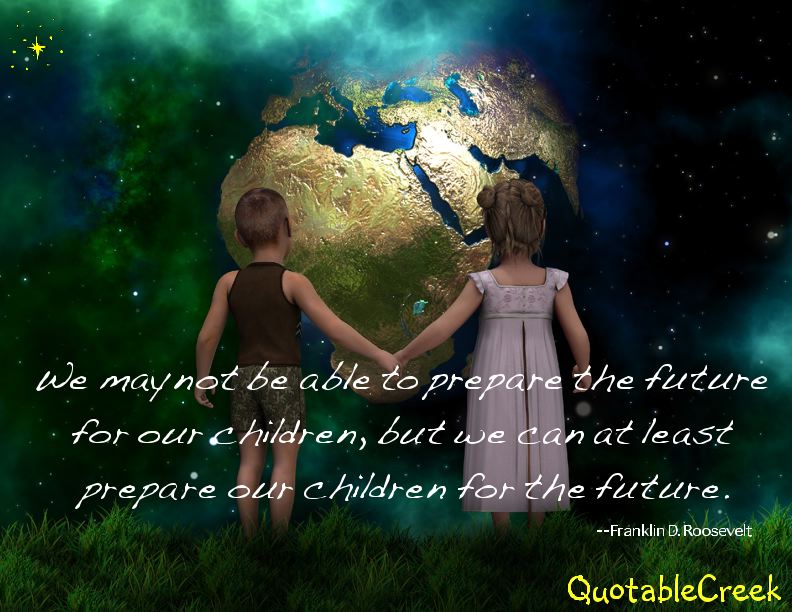
children

None of us knows what the future holds. But we do know the values we hold dear–honesty, integrity, love, compassion, empathy, respect, tolerance. As we raise our children, we instill these values. As adults, we model these values whether we win or lose, succeed or fail, sink or swim.  Watching us, they learn, and, as they go forward into their futures, they will bring these values to their own decisions. If each of us does this, we will leave the world a better brighter place for our having been here.