Mind the gap.

How lovely things would be if the way we picture ourselves doing something in our heads is the way it plays out in real life. The beautiful prose, perfect plotting, and subtle characterization all laying themselves down on the page when pen is lifted rather than being cruelly translated into the awkward phrasing, cliched plots, and stilted characters plaguing a first draft. If perfect leaps, spins, and arabesques just happen rather than the more likely falls on the bum. If we were already perfect rather than striving. If there were no gap between where we are and where we would like to be.

With all the armchair quarterbacks and critics out there on virtually every issue, you’d almost think effort and expertise don’t count for anything. And yet, mastery is always the result of effort. Full stop. Every master painter, skater, dancer, author, was once a novice. In fact, that journey from novice to master is the important thing, and those hacks on the sidelines are missing the point. As Theodore Roosevelt said:

It is not the critic who counts; not the man who points out how the strong man stumbles, or where the doer of deeds could have done them better. The credit belongs to the man who is actually in the arena, whose face is marred by dust and sweat and blood; who strives valiantly; who errs, who comes short again and again, because there is no effort without error and shortcoming; but who does actually strive to do the deeds; who knows great enthusiasms, the great devotions; who spends himself in a worthy cause; who at the best knows in the end the triumph of high achievement, and who at the worst, if he fails, at least fails while daring greatly, so that his place shall never be with those cold and timid souls who neither know victory nor defeat.

So this gap, between where we want to be and where we are, is where we focus our efforts and attention. Not on the critic, because everyone stumbles. But we press on. For to be great at anything takes practice and effort, and our attempt is awkward and halting, ungainly and bumbling at first. But it gets better. And those sitting on the sidelines, afraid or busy criticizing others, aren’t moving forward unless they, too, mind the gap and try.

Putting the wind underneath your wings.

Do you have a dream? Maybe to meet someone special, learn a language, write a book, learn an instrument, play a sport, travel? What is that dream?

Now, more importantly, what work are you doing to realize that dream? There are a plenty of people who dream of being musicians who never practice their instrument, or people who dream of being published who never write, or people who dream of traveling but never save up. Why is that?

One reason is it is fun to dream that you have God-given natural talent that will be discovered by the world someday like Lana Turner sitting at the counter sipping a Coke at the Top Hat Cafe. And, while those kinds of stories may happen occasionally, the much more common story is that someone who achieved their dream worked for it, and worked hard. Michael Jordan didn’t make his high school basketball team. Frank Sinatra spent hours holding his breath to improve his phrasing. Vincent van Gogh’s early work was, well, not that great.

And plenty of people who have become successful want to perpetuate the notion that they were just born that way. It was natural talent not hard work. It was their own efforts, not a result of having many people in their corner, helping them move forward. And sometimes it seems this way, doesn’t it? We see the Olympic performance, but not the struggle that led there. We read the best-selling novel from the overnight success, but don’t see all the drafts in the desk drawer. And something in us wants to believe that those people, those success stories, are different from us. They were just born different. But that’s not the truth.

Success isn’t like winning a lottery; it’s like running a marathon. Hard, grueling, and long-term. Some people achieve their dreams because they pursue them. They don’t just dream, although the dream–something that ignites your passions–is the first step. The dream isn’t all they needed though.

But the dream gave them curiosity to explore it from every angle. And that curiosity gave them energy to practice. And that practice brought improvement. That improvement was encouraging. And that encouragement helped them stay the course. Now sometimes following the dream will result in financial or other success, but that shouldn’t be the yardstick. The yardstick should be if you are doing what you dreamed of doing.

So, yes, dream of all you can be. But then figure out some concrete steps you can take to help you get there.

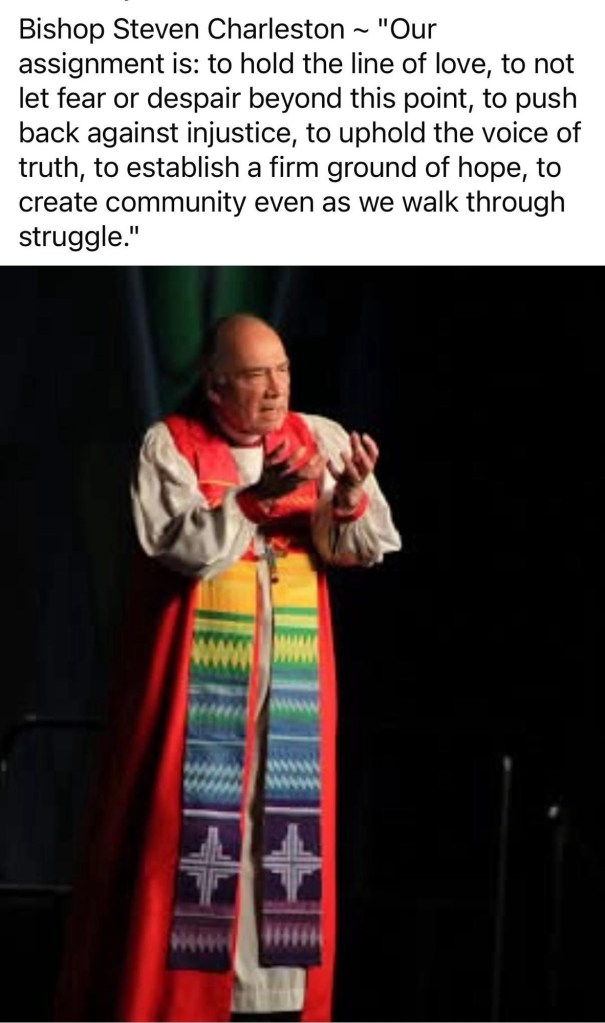
Hold the line of love.

What is our job in these troubled times? During any times, but particularly during times where we are seeing peoples’ rights eroded and trampled, when legal safeguards are flouted, and when authoritarianism is on the rise, our job is to hold the line. Continue to be a place of comfort and succor to the hurting, feed the hungry, grieve with the mourning.

Hold on to your loving and generous spirit.

In the words of Bishop Charleson:

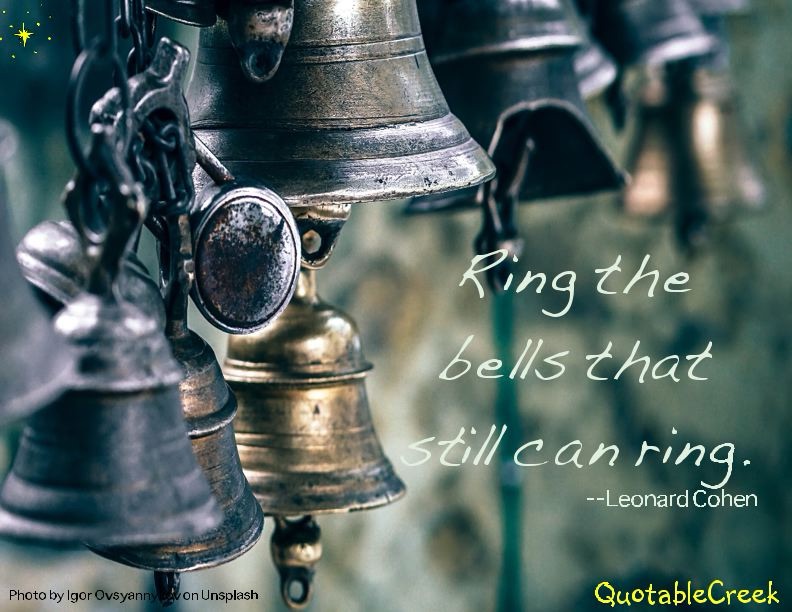
Ring your bell.

Maybe you’re older, or weaker, or not quite as sharp as you used to be. Maybe your energy is fading, or you’ve gotten depressed and overwhelmed. Maybe all your ducks aren’t in a row, and all your bells don’t ring. Maybe you don’t think you can make a difference.

It is in just such times that you must press on. Your gifts are needed. The world doesn’t need you to be perfect; it needs you to show up.

Ring your bell.

How does your religion impact your life?

I wonder about Christians responding to the challenges confronting our world right now. How does worshipping a humble carpenter, a servant, a loving non-violent man, inform our choices now?

He shunned power. He empathized with the suffering of others. He humbled himself even unto death.

I wonder about the choices he made while tempted in the desert before embarking on his ministry:

Then Jesus was led by the Spirit into the wilderness to be tempted by the devil. After fasting forty days and forty nights, he was hungry. The tempter came to him and said, “If you are the Son of God, tell these stones to become bread.”

Jesus answered, “It is written: ‘Man shall not live on bread alone, but on every word that comes from the mouth of God.’”

Then the devil took him to the holy city and had him stand on the highest point of the temple.“If you are the Son of God,” he said, “throw yourself down. For it is written:

“‘He will command his angels concerning you,
    and they will lift you up in their hands,
    so that you will not strike your foot against a stone.’”

Jesus answered him, “It is also written: ‘Do not put the Lord your God to the test.’”

Again, the devil took him to a very high mountain and showed him all the kingdoms of the world and their splendor. “All this I will give you,” he said, “if you will bow down and worship me.”

10 Jesus said to him, “Away from me, Satan! For it is written: ‘Worship the Lord your God, and serve him only.’”

11 Then the devil left him, and angels came and attended him.

Matthew 4:1-11

Would Christians today think he made the right decision to eschew power? A while back, WWJD (What would Jesus do?) was a common question. It’s still worth thinking about now.

We see Jesus saving the lost, healing the sick, speaking truth to power, standing up for the marginalized, refusing to grab power. Isn’t that what he would expect those of us who follow him to do now?

And he would, of course, tell us, as he told so many when he walked this Earth,

Do not be afraid.

Moving past the past.

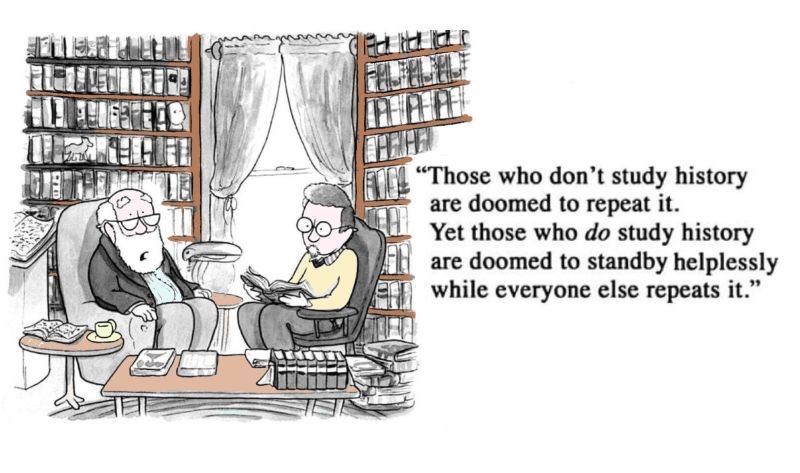
One of the greatest frustrations of life is not being able to change the past, whether it is to remedy that stupid thing you just said or the larger elements of fractures in society leading to war. The only things we can really do with the past are to live with it, learn from it, and figure out how to move forward. For those who study history, seeing ugly patterns reemerge and take shape can be horrifying.

And yet, it is not all gloom and doom. Indeed, we are not helpless:

One of the curses of history is that we cannot go back and change the course leading to disasters, no matter how much we might wish to. The past has its own terrible inevitability. But it is never too late to change the future.”

― Heather Cox Richardson

We can learn from history what it takes to resist. We can remember who the real heroes were in dark times and emulate them. We can draw on community and coalitions to fight for the common good. We can continue to believe that integrity counts, that honesty and fidelity and honor matter, that kindness will always heal, and that love is, not only good, but the answer to any question.

We can fight. With whatever tools we have: words, money, presence, we can take a stand, doing our little bit of good.

As Desmond Tutu said:

Do your little bit of good where you are; it’s those little bits of good put together that overwhelm the world.

It’s time to overwhelm the world.

Practicing courage.

Life is full of hard choices. Particularly when you aren’t the one in danger. Making those tough choices, entering the fray, speaking truth to power, defending the defenseless are vital actions for our collective survival.

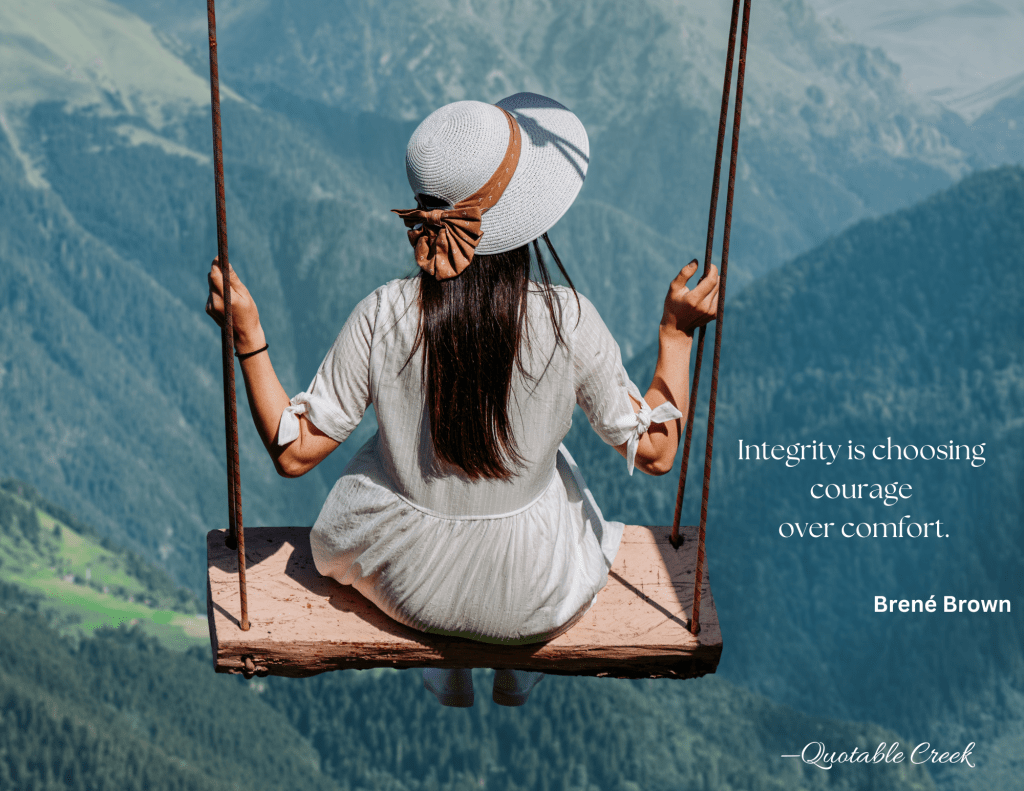
As Brené Brown says, 

Integrity is choosing courage over comfort; it’s choosing what’s right over what’s fun, fast, or easy; and it’s practicing your values, not just professing them

Practicing our values, not just professing them. What are your values? How can you bring that to bear in the choices confronting you today?

Many of us have opinions and desire to help in difficult situations but are afraid to raise our voices. We worry about alienating others or of seeming strident. But if not now, when?

Maybe we can start in small ways and exercise our courage muscles.

Consider these words from Maya Angelou:

“I would encourage us to try our best to develop courage. It’s the most important of all the virtues, because without courage, you can’t practice any other virtue consistently. You can be anything erratically — kind, fair, true, generous, all that. But to be that thing time after time, you need courage.

We need to develop courage, and we need to develop it in small ways first. Because we wouldn’t go and say, ‘I’ll pick up this 100-pound weight’ without knowing our capacity. So we need to say, ‘Oh, I’ll start by picking up a five-pound weight, then a 10-pound weight, then a 25-pound, and sooner or later I’ll be able to pick up a 100-pound weight.’ And I think that’s true with courage.

You develop a little courage, so that if you decide, ‘I will not stay in rooms where women are belittled; I will not stay in company where races, no matter who they are, are belittled; I will not take it; I will not sit around and accept dehumanizing other human beings’ — if you decide to do that in small ways, and you continue to do it — finally you realize you’ve got so much courage. Imagine it — you’ve got so much courage that people want to be around you. They get a feeling that they will be protected in your company.” — Maya Angelou

Look for ways to test your voice and develop your courage muscles today. Perhaps it’s in saying you disagree, perhaps it’s posting something to show solidarity with those going through difficulty, perhaps it’s speaking truth to power. Today, a five pound weight of courage flexing. Soon, you will develop the courage you need for the big battles ahead.

Bearing one another’s burdens.

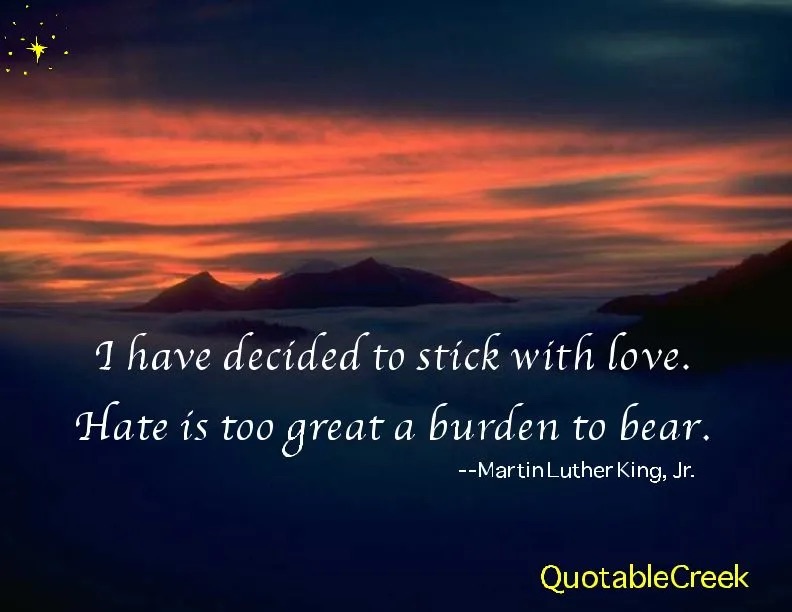
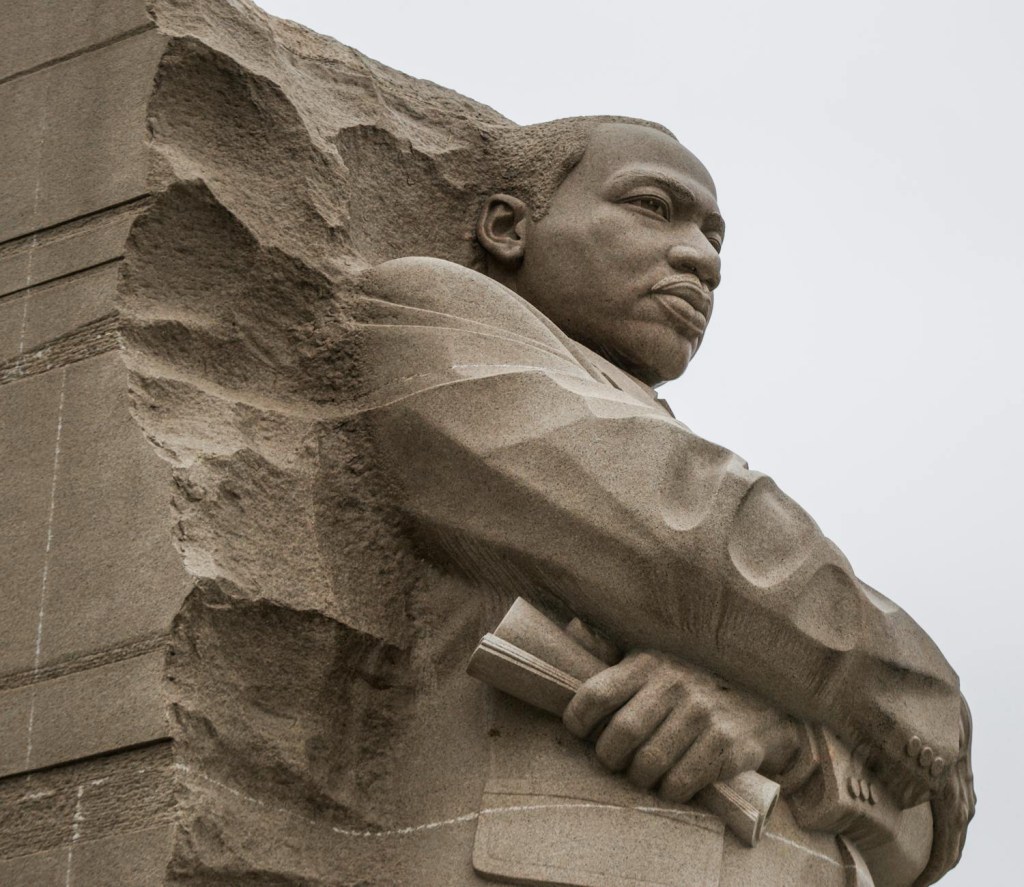
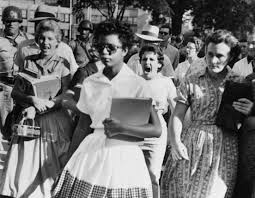
Today is Martin Luther King, Jr. Day. Also Inauguration Day. When we picture King, we picture him as heroic, confident, strong. And these are likely the pictures you may see today.

And, of course, he was these things. Championing civil rights and railing against injustice, able to see inequity in the systems around him and dream of a better way. He was an advocate of love over hate and peaceful protest.

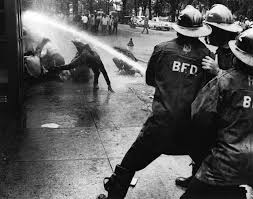
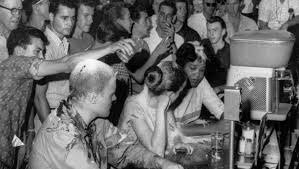
And yet, his life was not a peaceful one. He was killed for the beliefs he professed. And much of the progress he made was met with violence and hate.

Progress is not a straight line, and hate is ever-present. And hate can be powerful and beguiling and intimidating. And hate can creep into the consciousness of a group, or even a nation.

And yet, I will stand with King for love over hate, all these years later, and do what I can to continue his fight for justice and peace.

Because, even in the midst of hateful people and those who seek to divide, justice and truth are on the right side of history.

What kind of difference will you make?

As I write this, Los Angeles is burning. Many have lost their homes, their lives, their livelihoods. Many are displaced. All of us who live here are afraid, as near 100 mile per hour winds buffet our homes and render firefighting difficult if not impossible. All of us are thinking about the possibility of losing the security of home. We are one turn in the wind away from being displaced. We didn’t do anything to deserve this any more than any victim of natural disaster.

And perhaps, like me, we look around at what is happening and see people making choices.

Heroic firefighters and first responders rushing into danger.

Churches opening their doors to accept the displaced.

Grassroots attempts to collect funds and supplies for those hardest hit.

People praying and reaching out to comfort and shelter their neighbors.

And yet, we can’t help but see the others.

A suspected arsonist arrested.

A politician lying to cast blame on his enemies, making light of human suffering.

People mocking those who have lost their homes if they are rich or famous as if the wealthy can’t suffer.

People making things better and people making things worse. Isn’t that always the way? People who help and people who hurt.

And on behalf of people in the middle of this crisis, bags packed, waiting to know if they will have to flee their homes and lose everything, trying to decide what to bring or maybe not even having time for that, I will say how the actions of people out of harm’s way makes a tremendous impact. Calls and emails from people checking in and expressing concern, offers of help and sanctuary, heroic actions on behalf of others, fills us with hope and community in the midst of the darkness. Thank you to those people.

This time it is we who live in Los Angeles suffering, but tomorrow it could be you. No one is immune from the possibility of loss.

The question in all of it always is, what kind of difference will you decide to make with your life, for most assuredly what you do will make a difference. So which is it?

Help or hurt?

For as long as we can.

One of my personal heroes, Jimmy Carter, 100 years old, has passed away, and the world is a bit darker without his light. He has been such a wonderful example of walking the walk. He said:

“My faith demands – this is not optional – my faith demands that I do whatever I can, wherever I can, whenever I can, for as long as I can with whatever I have to try to make a difference.”

What a wonderful way to look at our possible impact. Using what we have, not waiting until we have more or better resources or to be older and wiser, or wishing we were younger and stronger. Right now, with what’s available. 

And wherever we find ourselves, adopting a bloom where you’re planted attitude. Even if we are in our own harsh spot. Considering what can we do here. 

And always looking for opportunities to do good. Not necessarily solving the world’s problems, but doing your own little bit of good. Right here, right now. 

Let’s go. 

Thank you, President Carter, for this reminder. You will be missed.