Do your little bit of good.
What is your little bit of good?
What is that thing that you can do to make….
the lives of those around you a bit better,
your world a bit brighter,
the day a bit merrier?
Do that thing.
What is your little bit of good?
What is that thing that you can do to make….
the lives of those around you a bit better,
your world a bit brighter,
the day a bit merrier?
Do that thing.

One of the greatest frustrations of life is not being able to change the past, whether it is to remedy that stupid thing you just said or the larger elements of fractures in society leading to war. The only things we can really do with the past are to live with it, learn from it, and figure out how to move forward. For those who study history, seeing ugly patterns reemerge and take shape can be horrifying.
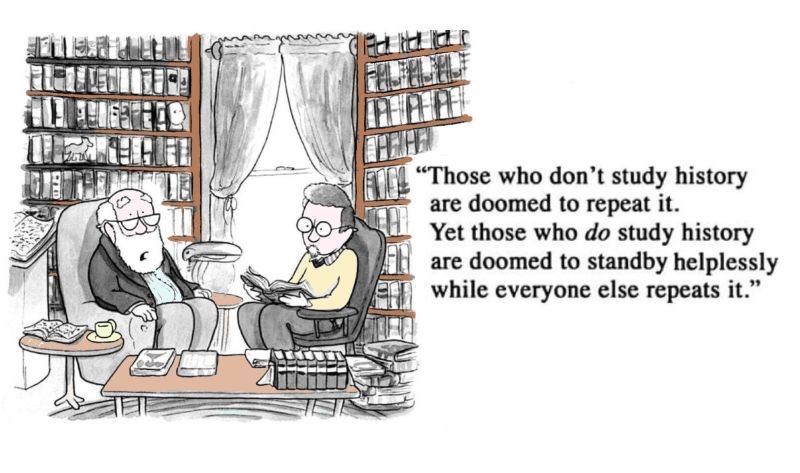
And yet, it is not all gloom and doom. Indeed, we are not helpless:
One of the curses of history is that we cannot go back and change the course leading to disasters, no matter how much we might wish to. The past has its own terrible inevitability. But it is never too late to change the future.”
― Heather Cox Richardson
We can learn from history what it takes to resist. We can remember who the real heroes were in dark times and emulate them. We can draw on community and coalitions to fight for the common good. We can continue to believe that integrity counts, that honesty and fidelity and honor matter, that kindness will always heal, and that love is, not only good, but the answer to any question.
We can fight. With whatever tools we have: words, money, presence, we can take a stand, doing our little bit of good.
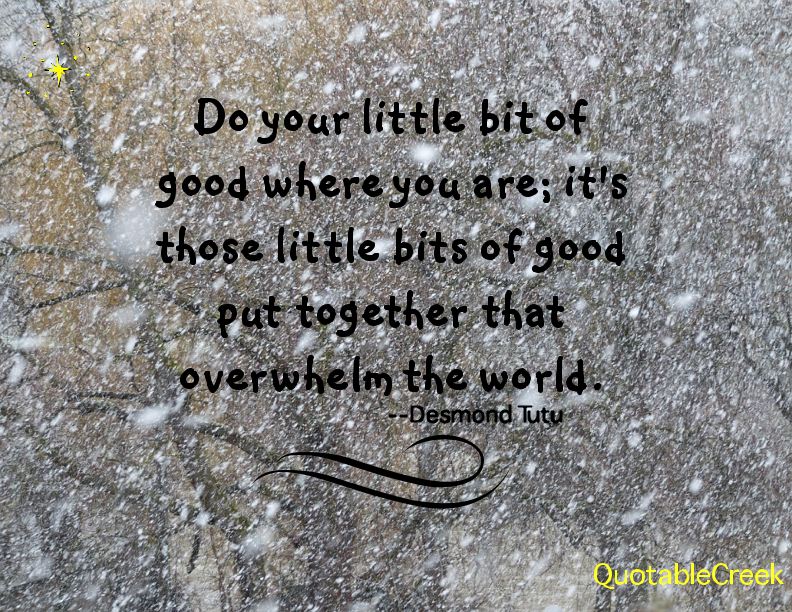
As Desmond Tutu said:
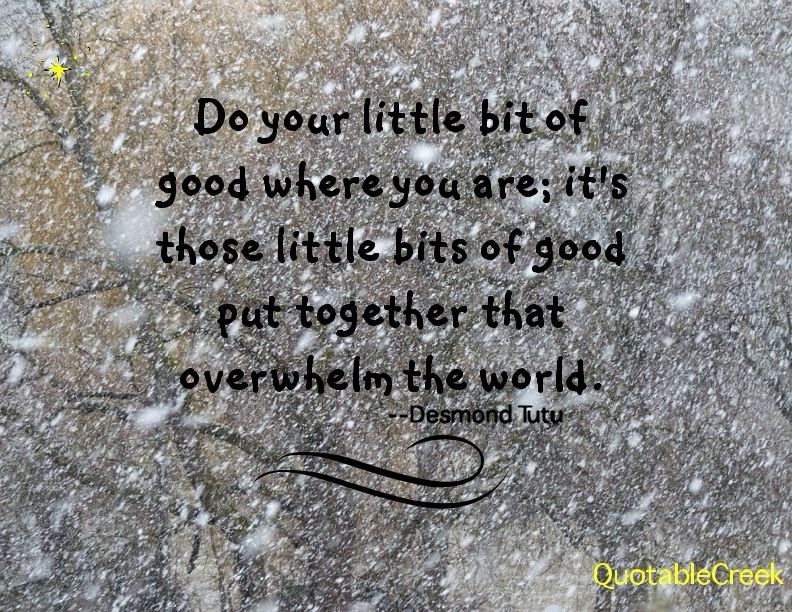
Do your little bit of good where you are; it’s those little bits of good put together that overwhelm the world.
It’s time to overwhelm the world.
What is your little bit of good?
What is that thing that you can do to make….
the lives of those around you a bit better,
your world a bit brighter,
the day a bit merrier?
Do that thing.
A case from my early days as a lawyer still bothers me. It wasn’t even my case, just one in our firm, handled, in my opinion, wrong. Not wrong, perhaps, in the legal sense, but wrong in the great moral cosmic picture of things we know to be true sense. I think of it periodically. In the matter, a little girl wearing a bright red sweater crossed in an intersection against the light and was killed by an oncoming car. On appeal from the substantial wrongful death verdict, my colleague argued that the judgment was too high because this little girl wasn’t particularly special. She wasn’t a violin prodigy, for instance, or a young movie star. She didn’t make any money or show any unique promise to do so. She was just a girl, admittedly beloved by her family, but her death might, in fact, save the parents money, what with no need now to support her or send her to college or buy her a stuffed animal for her birthday.
I thought of this case when I read about a man released from prison this week after decades in jail when the judge concluded there was substantial evidence of his innocence of a murder. Not innocence in general, I suppose, because he admits to selling drugs at the time of the killing. But innocence of murder. What is this man’s life worth? How do you value it? What is the value of the students’ lives struck down recently at a college shooting, or at a celebration, or an elementary school? How do we value these lives lost in an ever-increasingly violent society? What of the lives lost in a devastating earthquake? Do we somehow weigh lives against another, concluding some are more valuable than others? Do we consider the monetary value of each life, as my colleague argued? Have we somehow gotten to a place where the tragic loss of life from violence is normal?
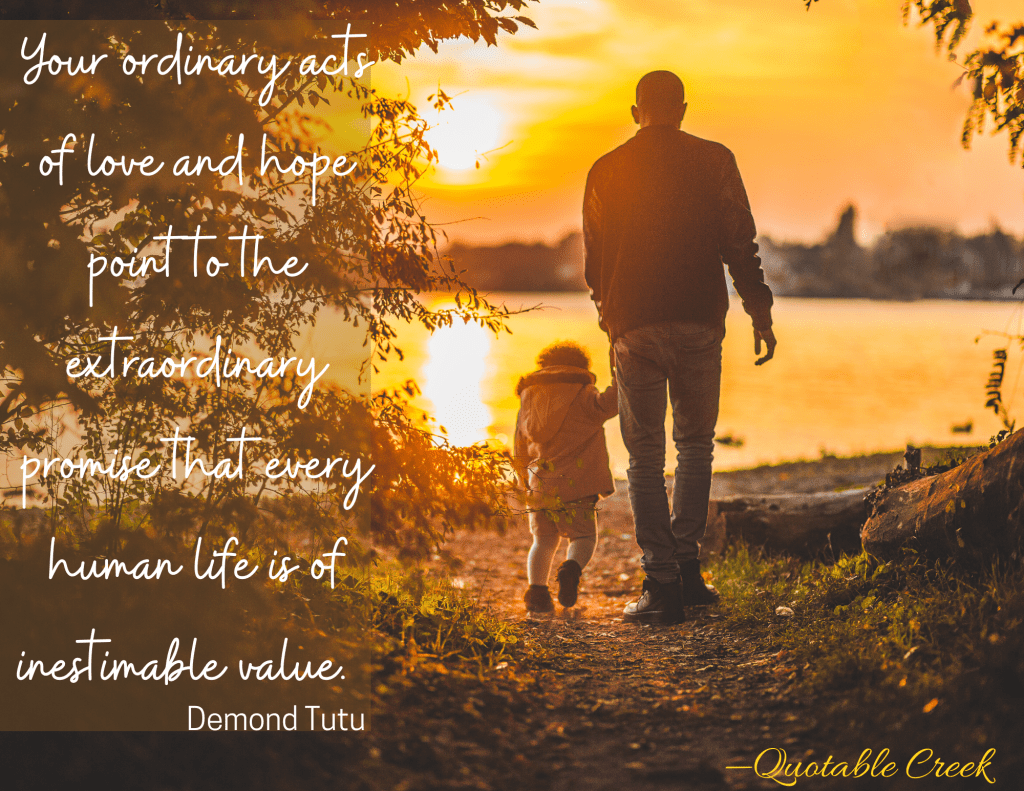
Have we lost something about the ‘inestimable value’ of human life?
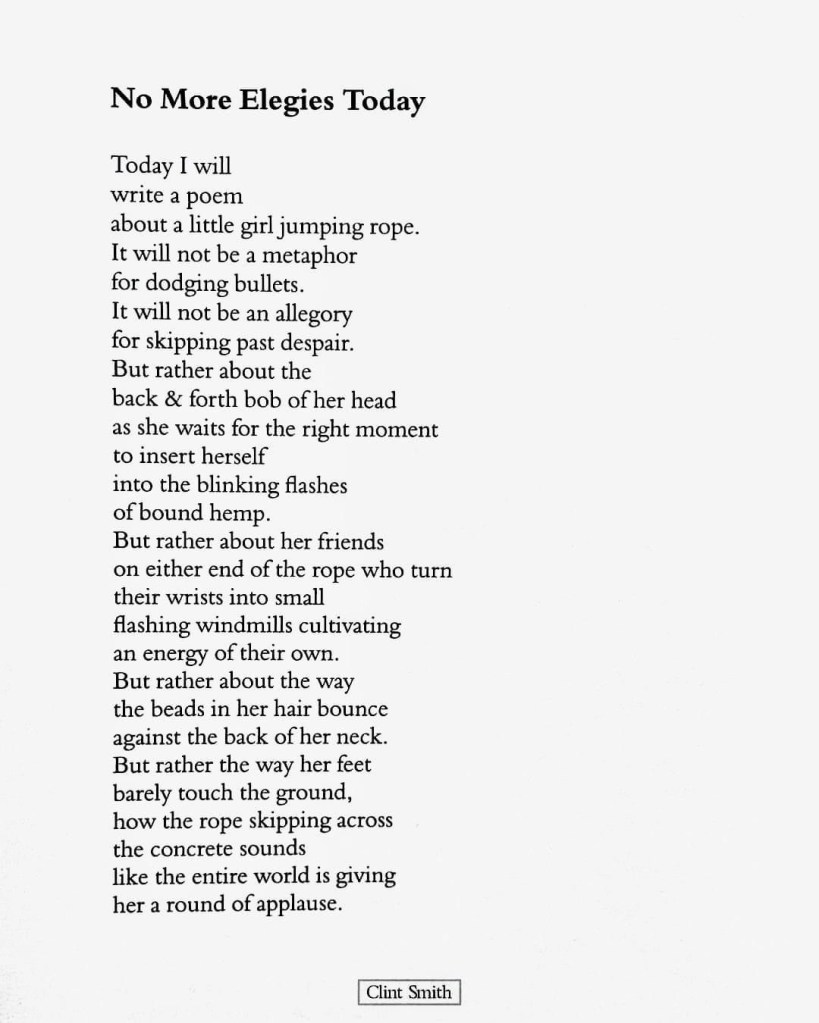
I came across this poem offered up in the face of unceasing violence. It spoke to me in way that got behind my buffers and filters, and approached what is true.
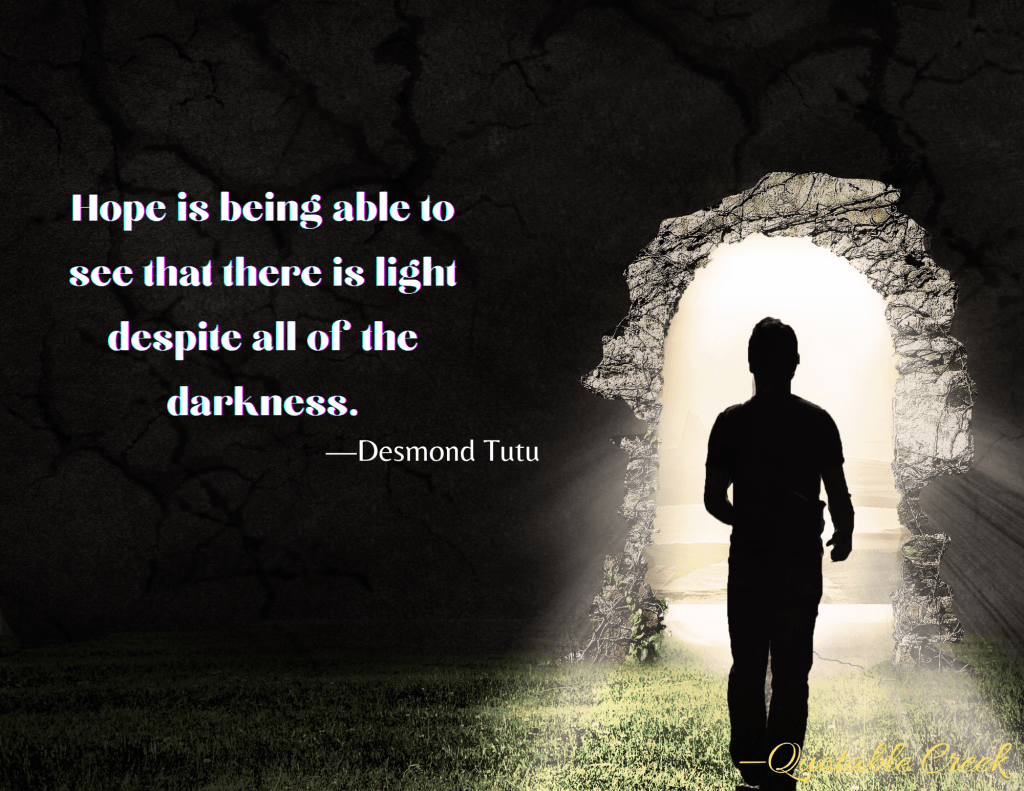
What is hope, really, but a persistent insistence that things can be better, that there is more to it, that the final answers are yet to be revealed. Emily Dickinson describes hope as
“Hope” is the thing with feathers –
That perches in the soul –
And sings the tune without the words –
And never stops – at all –
And sweetest – in the Gale – is heard –
And sore must be the storm –
That could abash the little Bird
That kept so many warm –
I’ve heard it in the chillest land –
And on the strangest Sea –
Yet – never – in Extremity,
It asked a crumb – of me.”
And this feels right. Hope sits there perched, singing, warming our souls and keeping us fed. A wordless song because we may not even have the ability to put our emotions into words or know what it is we hope for. And this is a positive, persistent hope, but somewhat passive, waiting.
And yet, we know, too, that hope gets its fingernails dirty because while hope sits on the periphery expectant, it can also be in the fray fighting for a better world. That kind of hope is captured by Matthew @CrowsFault:
“People speak of hope as if it is this delicate ephemeral thing made of whispers and spider’s webs. It’s not. Hope has dirt on her face, blood on her knuckles, the grit of cobblestones in her hair, and just spat out a tooth as she rises for another go.”
And this, too, seems true. Hope keeps our souls fed but also prompts our entering the arena, helping us to do the hard work to make a better world for all.
Let 2023 be a year of hope, perched and singing to our souls, but also inching us forward to do the hard work, offering our time and talents, to bring about a better today.
What is your little bit of good?
What is that thing that you can do to make….
the lives of those around you a bit better,
your world a bit brighter,
the day a bit merrier?
Do that thing.
 QuotableCreek.com