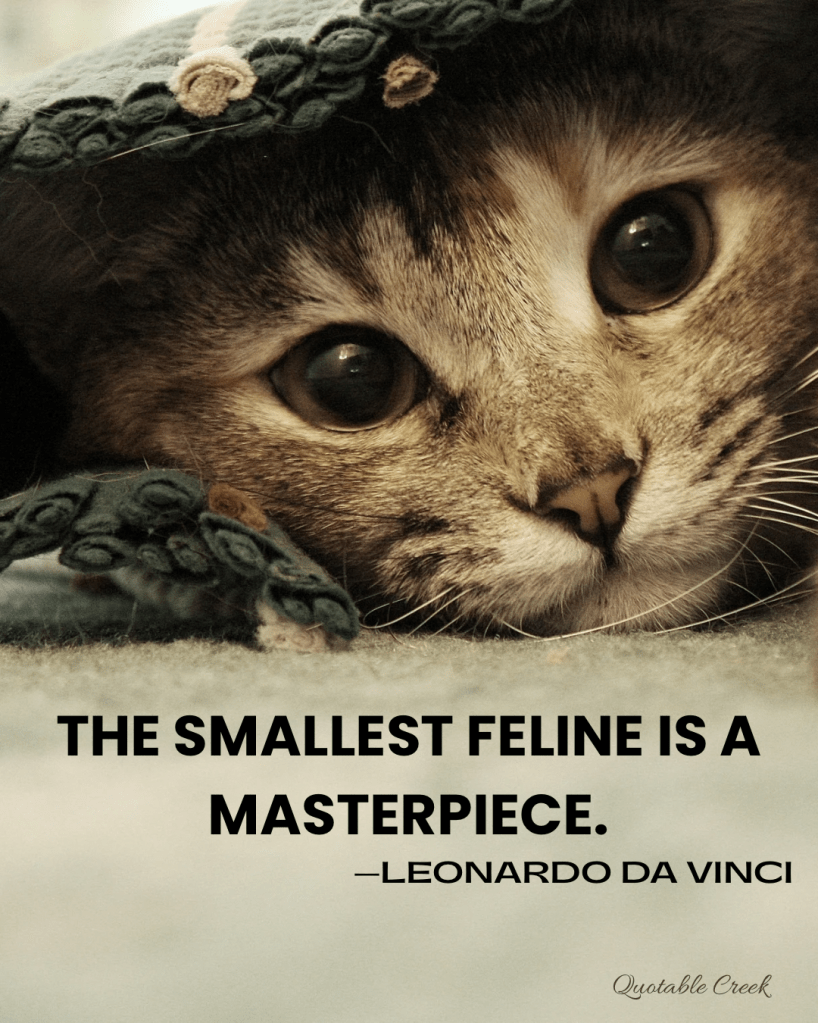
There is something about close attention, to anything really, that leads to awe. Take a cat, for example, and really study it. The whiskers, the sprinkle of freckles where the whiskers emerge, the expressions, the ear tufts, the velvet nose, and so on.
Before long, you’ll understand why they were (and are) revered. And while you’re taking in the details, you might stumble onto awe.
Jason Silva, an ‘awe pioneer’ says,
We fit the universe through our brains and it come out as nothing less than poetry. We have a responsibility to awe.
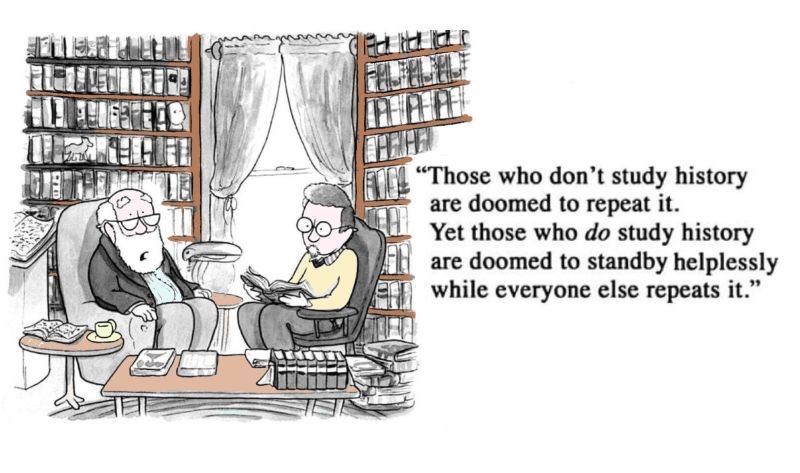
One of the greatest frustrations of life is not being able to change the past, whether it is to remedy that stupid thing you just said or the larger elements of fractures in society leading to war. The only things we can really do with the past are to live with it, learn from it, and figure out how to move forward. For those who study history, seeing ugly patterns reemerge and take shape can be horrifying.
And yet, it is not all gloom and doom. Indeed, we are not helpless:
One of the curses of history is that we cannot go back and change the course leading to disasters, no matter how much we might wish to. The past has its own terrible inevitability. But it is never too late to change the future.”
― Heather Cox Richardson
We can learn from history what it takes to resist. We can remember who the real heroes were in dark times and emulate them. We can draw on community and coalitions to fight for the common good. We can continue to believe that integrity counts, that honesty and fidelity and honor matter, that kindness will always heal, and that love is, not only good, but the answer to any question.
We can fight. With whatever tools we have: words, money, presence, we can take a stand, doing our little bit of good.
As Desmond Tutu said:
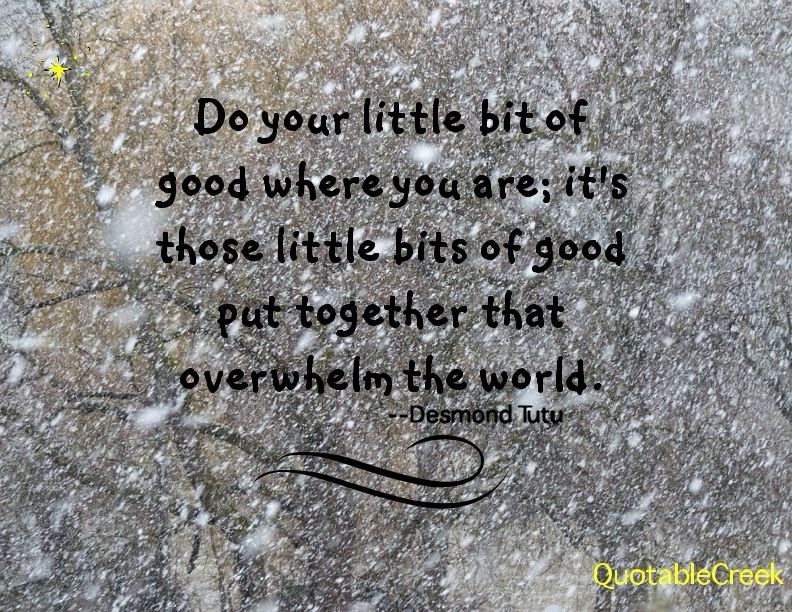
Do your little bit of good where you are; it’s those little bits of good put together that overwhelm the world.
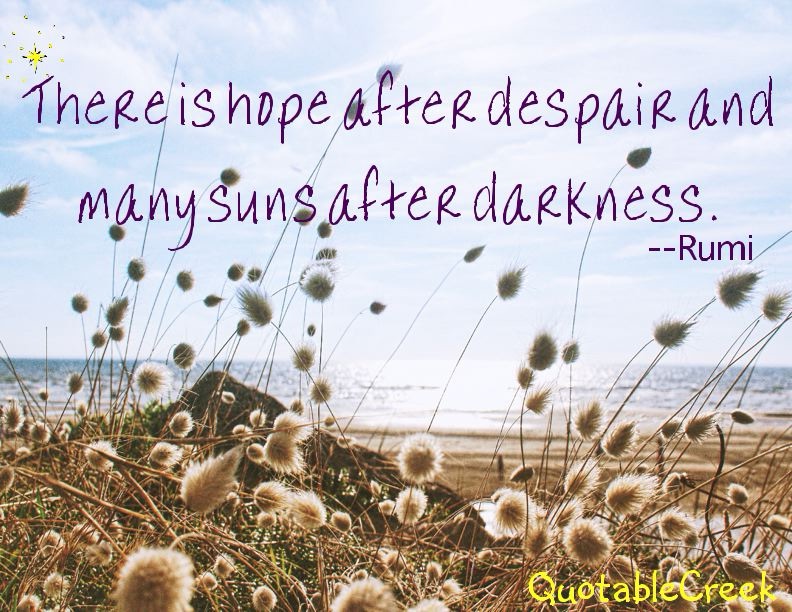
There are things in this life that break us. Usually they involve some sort of loss—of health, of life, of relationship, of stuff. Despair is a crippler. You can’t breathe; you can’t think; you can’t see a way out. The world becomes very small until it feels like you are living in a tiny bubble apart from everything and everyone, floating along fragile in your pain. At times like these, you have to force yourself to hope and to push through. Start with your breath. In and out, in and out, until it is smooth and full, rather than broken with the catch in your throat from the threatening cry. Keep at that, smooth and full, smooth and full, smooth and full until you can open your eyes and start noticing beauty, maybe, at first, in the tiniest of things. A drop of dew on the grass, the feel of breeze on your skin, laughter of a child, the bud of a flower, birds in flight. Keep at it. No one said it would be easy. Keep at it. Smooth and full, smooth and full, smooth and full.
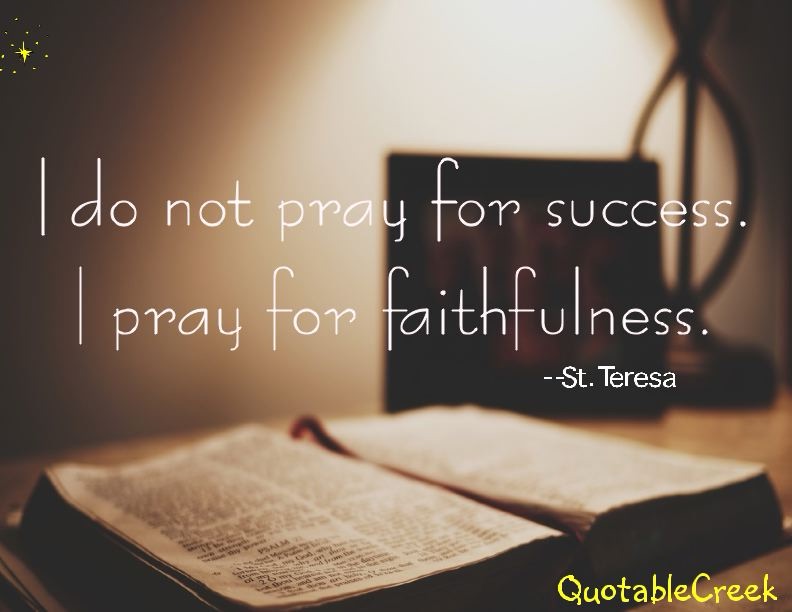
In 2016, Pope Francis sainted Mother Teresa. She was a beloved paragon of a selfless life, ministering to the poor and dying, shining a light on the importance of the little things and the love of family. After her death, her diaries showed her struggles with doubt. Once feeling clearly called to her mission, in the last several decades of her life she felt God’s absence. She said,
Lord, my God, who am I that You should forsake me? The Child of your Love–and now become as the most hated one–the one–You have thrown away as unwanted–unloved. I call, I cling, I want–and there is no One to answer–no One on Whom I can cling–no, No One.–Alone … Where is my Faith–even deep down right in there is nothing, but emptiness & darkness–My God–how painful is this unknown pain–I have no Faith–I dare not utter the words & thoughts that crowd in my heart–& make me suffer untold agony.
So many unanswered questions live within me afraid to uncover them–because of the blasphemy–If there be God –please forgive me–When I try to raise my thoughts to Heaven–there is such convicting emptiness that those very thoughts return like sharp knives & hurt my very soul.–I am told God loves me–and yet the reality of darkness & coldness & emptiness is so great that nothing touches my soul. Did I make a mistake in surrendering blindly to the Call of the Sacred Heart?
And on until her death, she felt God’s absence, rather than his presence. And yet she persisted doing the work to which she had been called, living a life of faith.
Some may call her a hypocrite to have an outward smile of peace and an inner crisis of faith, but isn’t her struggle every one’s struggle? Who among us doesn’t struggle with doubt? Don’t we all rely on faith when our paths grow dark and twisting?
St. Teresa of Calcutta inspires us to hang on during the dark nights of the soul, to continue to walk the walk, to be faithful and steadfast, and to shine light in the dark places. She can aptly be considered the Patron Saint of Doubters.
Sometimes, when we feel down, we need to evaluate the input coming into our lives. Are we steeped in negativity? Maybe not just news, but the vitriol that follows it in the comments? The political back and forth can get ugly and pull us down. And then we can think about the friends we surround ourselves with. Are they upbeat, trying to make things better, or always complaining?
And, while we don’t want to retreat from fighting the good fight or the friends who are going through a rough patch, it’s so easy for people to tear things down, to find the flaws, to make a conflict, and, when we are around that kind of energy constantly, we can feel beaten down.
But, there is good news to be had, and there are positive people and opportunities to be found. Sometimes we need to focus our attention there, if only for a break from the storm.
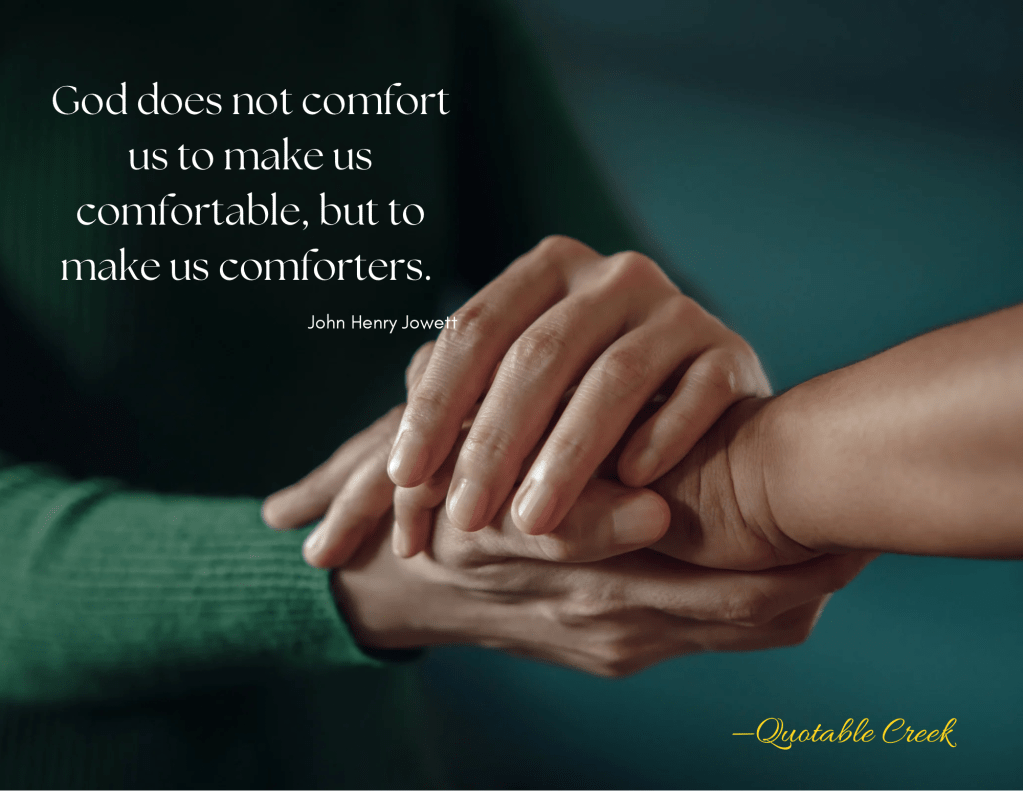
Bless the comforters, those who reach out and see others hurting and grief stricken, and offer them solace. Who sit with those going through difficult times, and give of their presence. Who offer kind, comforting words.
We sometimes think those who are good at comforting don’t know loss of their own, but the opposite is probably true.
As said by Rainer Maria Rilke:
Do not assume that he who seeks to comfort you now lives untroubled among the simple and quiet words that sometimes do you good. His life may also have much sadness and difficulty, that remains far beyond yours. Were it otherwise, he would never have been able to find such words.
Perhaps the only good to come of great loss is the ability to recognize it in others and offer them comfort and companionship.
Life is full of hard choices. Particularly when you aren’t the one in danger. Making those tough choices, entering the fray, speaking truth to power, defending the defenseless are vital actions for our collective survival.
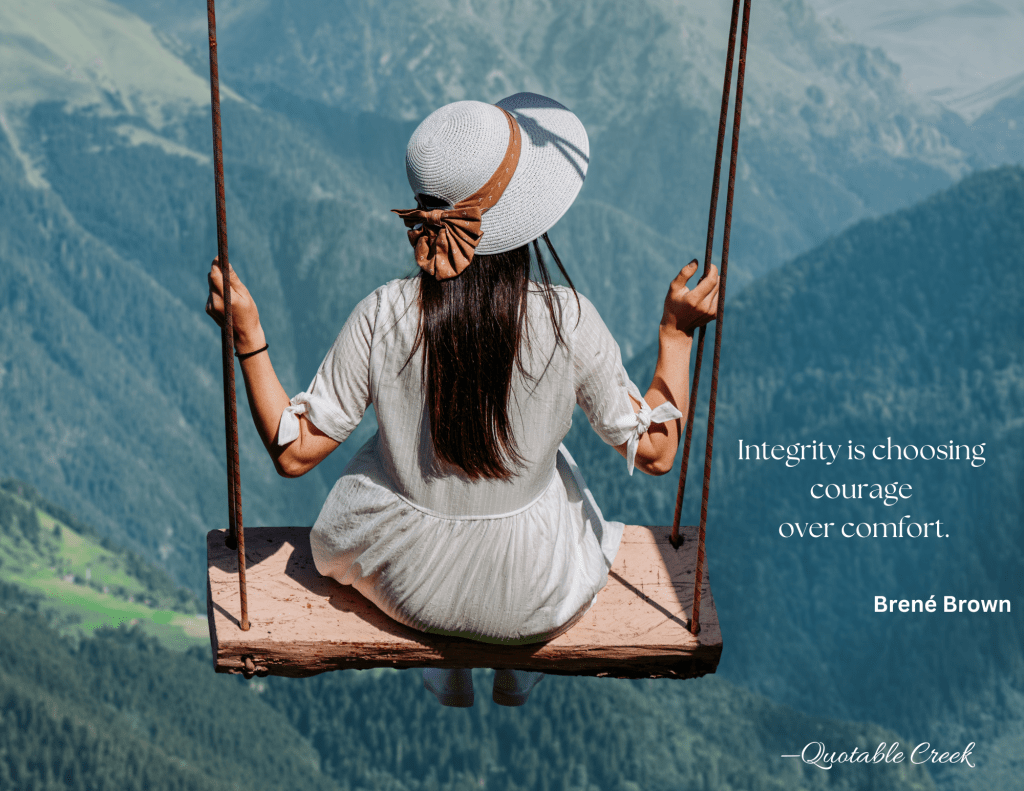
As Brené Brown says,
Integrity is choosing courage over comfort; it’s choosing what’s right over what’s fun, fast, or easy; and it’s practicing your values, not just professing them.
Practicing our values, not just professing them. What are your values? How can you bring that to bear in the choices confronting you today?
Many of us have opinions and desire to help in difficult situations but are afraid to raise our voices. We worry about alienating others or of seeming strident. But if not now, when?
Maybe we can start in small ways and exercise our courage muscles.
Consider these words from Maya Angelou:
“I would encourage us to try our best to develop courage. It’s the most important of all the virtues, because without courage, you can’t practice any other virtue consistently. You can be anything erratically — kind, fair, true, generous, all that. But to be that thing time after time, you need courage.
We need to develop courage, and we need to develop it in small ways first. Because we wouldn’t go and say, ‘I’ll pick up this 100-pound weight’ without knowing our capacity. So we need to say, ‘Oh, I’ll start by picking up a five-pound weight, then a 10-pound weight, then a 25-pound, and sooner or later I’ll be able to pick up a 100-pound weight.’ And I think that’s true with courage.
You develop a little courage, so that if you decide, ‘I will not stay in rooms where women are belittled; I will not stay in company where races, no matter who they are, are belittled; I will not take it; I will not sit around and accept dehumanizing other human beings’ — if you decide to do that in small ways, and you continue to do it — finally you realize you’ve got so much courage. Imagine it — you’ve got so much courage that people want to be around you. They get a feeling that they will be protected in your company.” — Maya Angelou
Look for ways to test your voice and develop your courage muscles today. Perhaps it’s in saying you disagree, perhaps it’s posting something to show solidarity with those going through difficulty, perhaps it’s speaking truth to power. Today, a five pound weight of courage flexing. Soon, you will develop the courage you need for the big battles ahead.
Sometimes things hum along nicely, and you can feel a deep sense of progress in yourself, your relationships, and the world.
Sometimes the opposite is true.
You feel yourself retreating and losing hope. Your relationships fray. Progress in the world is wiped away.
At times like these, we need to hunker down and draw on a well of hope inside in each of us that springs up with the knowledge that we can do better, we deserve better, and we will fight for ourselves and each other to make the world better.
We may not know yet the battleground we will be called to or the terms of engagement.
We do, though, know the weaponry we will fight with.
Love, honesty, integrity, justice, compassion. These tools of the light will vanquish darkness. We can’t forget what is good and right.
Finally, brethren, whatsoever things are true, whatsoever things are honest, whatsoever things are just, whatsoever things are pure, whatsoever things are lovely, whatsoever things are of good report; if there be any virtue, and if there be any praise, think on these things. Philippians 4:8


 QuotableCreek.com