Love is…

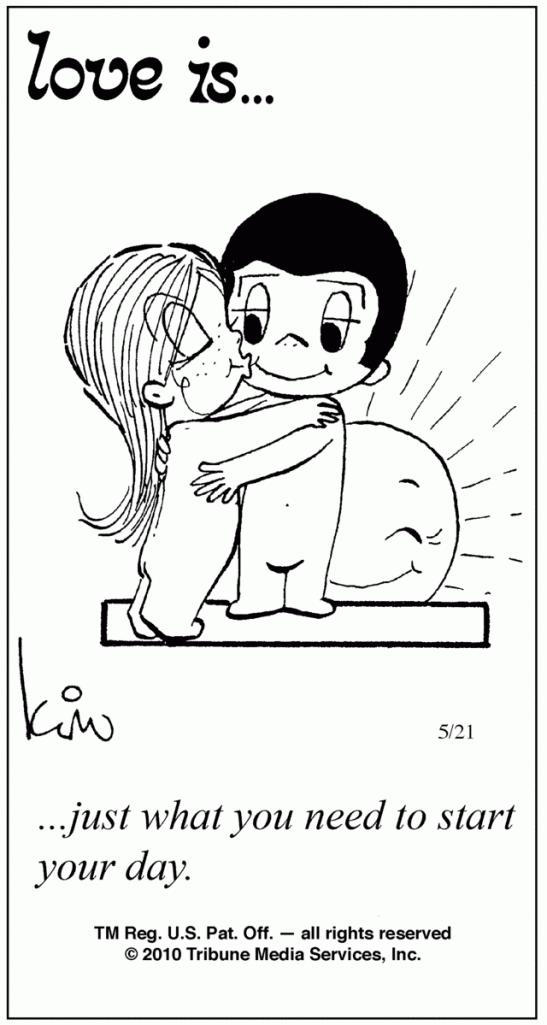
While I’m on my nostalgia streak, I’m remembering this comic strip from the 70’s by Kim Casali. I loved these although they perhaps don’t all stand the test of time, the ‘she’ of the partnership always doing the household chores, and picking up after the ‘he’.

Although, to be honest, I do do chores out of love for my family, picking recipes I think they will enjoy, trying to keep a peaceful organized home, cleaning up the little hand smudges on the walls knowing these moments will not last. These acts of service are one of the love languages identified by Gary Chapman in his book, The 5 Love Languages, the others being words of affirmation, gifts, physical touch, and quality time.

Chapman argues that sometimes people in relationship, any relationship not only romantic, get in trouble if they are speaking in a love language their loved one doesn’t hear. For me, my expressions of love are weighted heavily toward acts of service, but knowing that everyone is not on the same wave length in how they receive expressions of love reminds me to use them all, and to listen for them all from the people I love.

Perhaps, as with the ‘Happiness is… ‘ thought exercise from yesterday, today it would be wonderful to stop and consider how you are showing love to the people you care about, and how they are showing it to you, even if it’s not one of the love languages you are good at hearing.

For inspiration and a chuckle, consider this cat mom’s birthday gift for her kitty:

Now that’s love.

A heartfelt apology can lead to reconciliation.

goodapology


Some apologies make things worse. They don’t feel like apologies at all. They feel, instead, like just more hurt. Other apologies acknowledge the wound and help it heal. What makes the difference?

In When Sorry Isn’t Enough: Making Things Right with Those You Love, Gary Chapman (of Five Love Languages fame) and Jennifer Thomas suggest that a true apology must have six characteristics:

Expressing regret–It’s important for an apology to be for something you did or said.  The more specific, the more it acknowledges the harm caused, the better. “I’m sorry you’re so sensitive,” doesn’t really feel like an apology because it is just restating some perceived flaw in the victim and isn’t focussing on anything you did wrong. Even if the harm was wholly unintended, when your actions cause another person pain, an apology is warranted. It goes to the very essence of the apology: I did not mean to hurt you.

Accepting responsibility— Yes, the pressures of the world can sometimes lead us to get wound up and stressed and to hurt other people, but that does not make it the world’s fault. We control ourselves. We are responsible if we act badly. Blaming the boss, the dog, the economy, the other drivers is deflecting. Apologies for the state of the world or all its ills will not feel like a real apology to the person you lashed out at. Apologizing for losing your temper or not considering the effects of your actions will.

Making restitution–“How can I make it right?” are powerful words. It shows an acknowledgement that what you did caused someone else harm. Maybe you can’t make it right. Maybe you can never make it right. But listening to the victim explain the damage is a powerful step forward in the process. Listening here is key–no justifying your actions, no quarreling with the facts, no defenses, just listening to the other person share their perspective. If there is something you can do to make things better, do that thing.

Genuinely repenting–If you are truly sorry, and have listened deeply to the pain you’ve caused, you will not want to cause that person pain again. You will stop causing the damage. You will want to change. Maybe you will need to write down the steps you want to take to prevent causing further harm. Maybe you will slip up and need to start again. But the most important thing is that you will try to not do this again. Otherwise, are you really sorry?

Requesting Forgiveness–“Can you forgive me?” are powerful words. They show you care about the relationship. They show you understand you did things wrong. They show you are not in control of the relationship.

Everyone messes up. Not everyone takes responsibility for messing up. When we do take responsibility for the harm we’ve caused, it may strengthen our relationships and help them grow stronger. Trust can reenter, fostering healing.

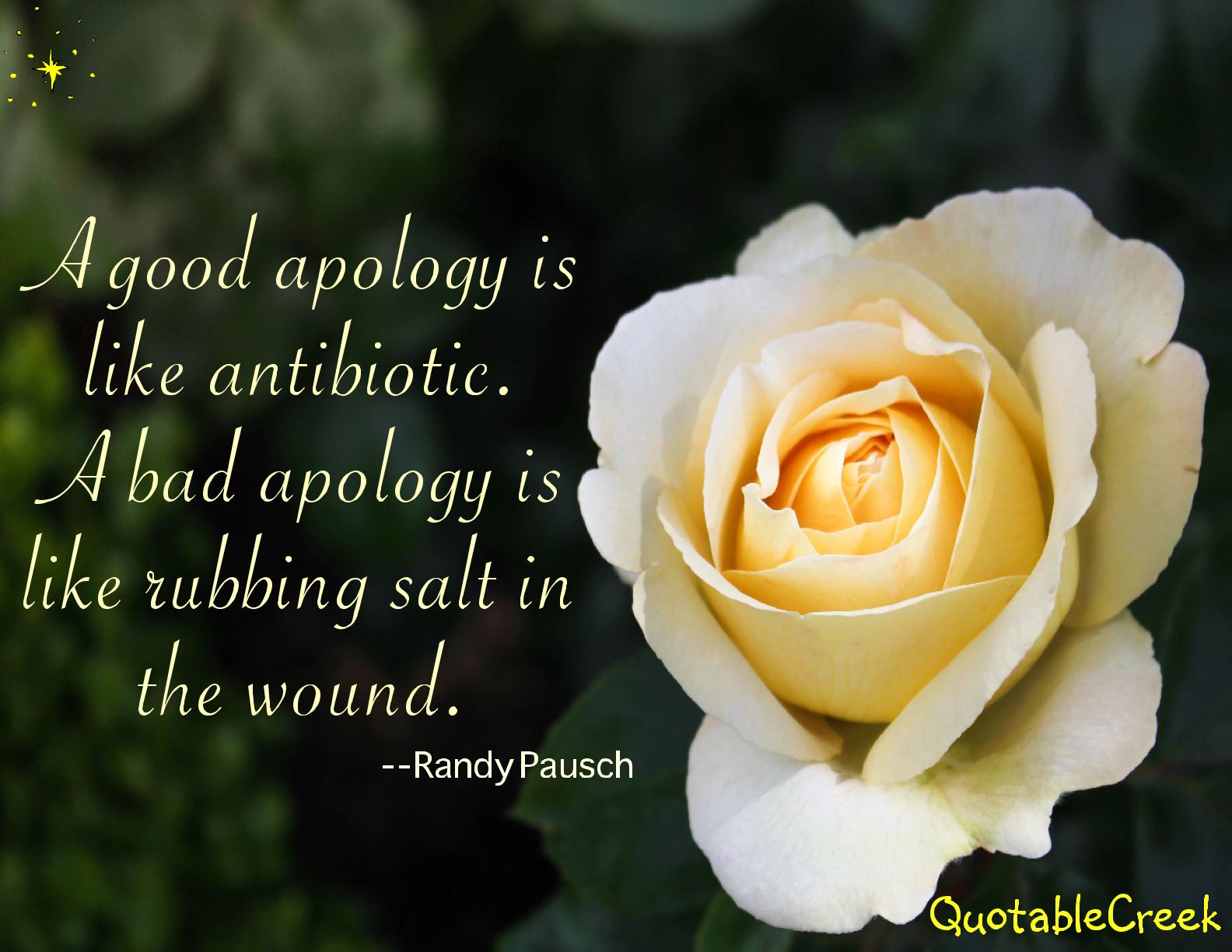
Randy Pausch, the author of the quote above, gave a powerful Last Lecture before he died young of pancreatic cancer. His timeless words can teach us all a lesson about life and living.


Sorry. Not sorry?

goodapology

Some apologies make things worse. They don’t feel like apologies at all. They feel, instead, like just more hurt. Other apologies acknowledge the wound and help it heal. What makes the difference?

In When Sorry Isn’t Enough: Making Things Right with Those You Love, Gary Chapman (of Five Love Languages fame) and Jennifer Thomas suggest that a true apology must have six characteristics:

Expressing regret–It’s important for an apology to be for something you did or said.  The more specific, the more it acknowledges the harm caused, the better. “I’m sorry you’re so sensitive,” doesn’t really feel like an apology because it is just restating some perceived flaw in the victim and isn’t focussing on anything you did wrong. Even if the harm was wholly unintended, when your actions cause another person pain, an apology is warranted. It goes to the very essence of the apology: I did not mean to hurt you.

Accepting responsibility— Yes, the pressures of the world can sometimes lead us to get wound up and stressed and to hurt other people, but that does not make it the world’s fault. We control ourselves. We are responsible if we act badly. Blaming the boss, the dog, the economy, the other drivers is deflecting. Apologies for the state of the world or all its ills will not feel like a real apology to the person you lashed out at. Apologizing for losing your temper or not considering the effects of your actions will.

Making restitution–“How can I make it right?” are powerful words. It shows an acknowledgement that what you did caused someone else harm. Maybe you can’t make it right. Maybe you can never make it right. But listening to the victim explain the damage is a powerful step forward in the process. Listening here is key–no justifying your actions, no quarreling with the facts, no defenses, just listening to the other person share their perspective. If there is something you can do to make things better, do that thing.

Genuinely repenting–If you are truly sorry, and have listened deeply to the pain you’ve caused, you will not want to cause that person pain again. You will stop causing the damage. You will want to change. Maybe you will need to write down the steps you want to take to prevent causing further harm. Maybe you will slip up and need to start again. But the most important thing is that you will try to not do this again. Otherwise, are you really sorry?

Requesting Forgiveness–“Can you forgive me?” are powerful words. They show you care about the relationship. They show you understand you did things wrong. They show you are not in control of the relationship.

Everyone messes up. Not everyone takes responsibility for messing up. When we do take responsibility for the harm we’ve caused, it may strengthen our relationships and help them grow stronger. Trust can reenter, fostering healing.

Randy Pausch, the author of the quote above, gave a powerful Last Lecture before he died young of pancreatic cancer. His timeless words can teach us all a lesson about life and living.