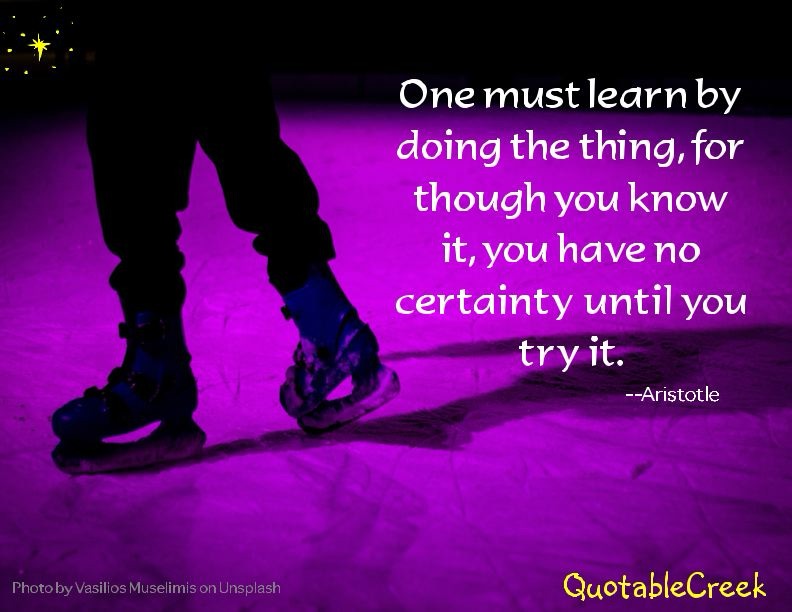
How lovely things would be if the way we picture ourselves doing something in our heads is the way it plays out in real life. The beautiful prose, perfect plotting, and subtle characterization all laying themselves down on the page when pen is lifted rather than being cruelly translated into the awkward phrasing, cliched plots, and stilted characters plaguing a first draft. If perfect leaps, spins, and arabesques just happen rather than the more likely falls on the bum. If we were already perfect rather than striving. If there were no gap between where we are and where we would like to be.
With all the armchair quarterbacks and critics out there on virtually every issue, you’d almost think effort and expertise don’t count for anything. And yet, mastery is always the result of effort. Full stop. Every master painter, skater, dancer, author, was once a novice. In fact, that journey from novice to master is the important thing, and those hacks on the sidelines are missing the point. As Theodore Roosevelt said:
It is not the critic who counts; not the man who points out how the strong man stumbles, or where the doer of deeds could have done them better. The credit belongs to the man who is actually in the arena, whose face is marred by dust and sweat and blood; who strives valiantly; who errs, who comes short again and again, because there is no effort without error and shortcoming; but who does actually strive to do the deeds; who knows great enthusiasms, the great devotions; who spends himself in a worthy cause; who at the best knows in the end the triumph of high achievement, and who at the worst, if he fails, at least fails while daring greatly, so that his place shall never be with those cold and timid souls who neither know victory nor defeat.
So this gap, between where we want to be and where we are, is where we focus our efforts and attention. Not on the critic, because everyone stumbles. But we press on. For to be great at anything takes practice and effort, and our attempt is awkward and halting, ungainly and bumbling at first. But it gets better. And those sitting on the sidelines, afraid or busy criticizing others, aren’t moving forward unless they, too, mind the gap and try.
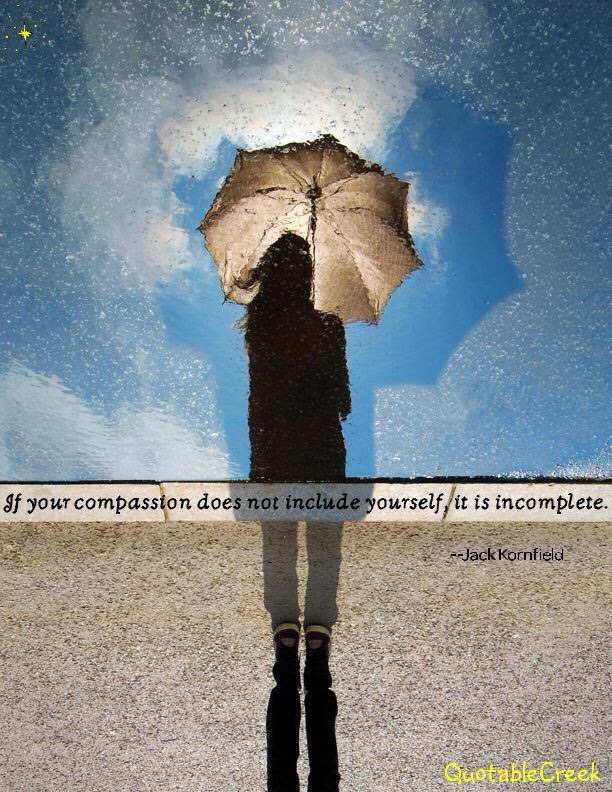
If one of your friends were struggling with the problems you are facing right now, what words would you offer in support? Would you call them names, berate them, remind them of all the other times they messed up just like this and how, honestly, can they ever expect to get anything right, ever?
Probably not. Right? But often this is the way we talk to ourselves. We replay all our other mistakes in our minds, call ourselves stupid, sink into our shells scared to face the world.
But why do we do this? If the words we would offer our friend are what we think would help, why are we so reticent to speak kind encouraging words to ourselves? Maybe today is a good day to try a different approach.
Be a kind friend to yourself. Offer yourself words of support and encouragement. Focus on all the many times you got things right. Tell yourself the truth: you are precious and beloved.
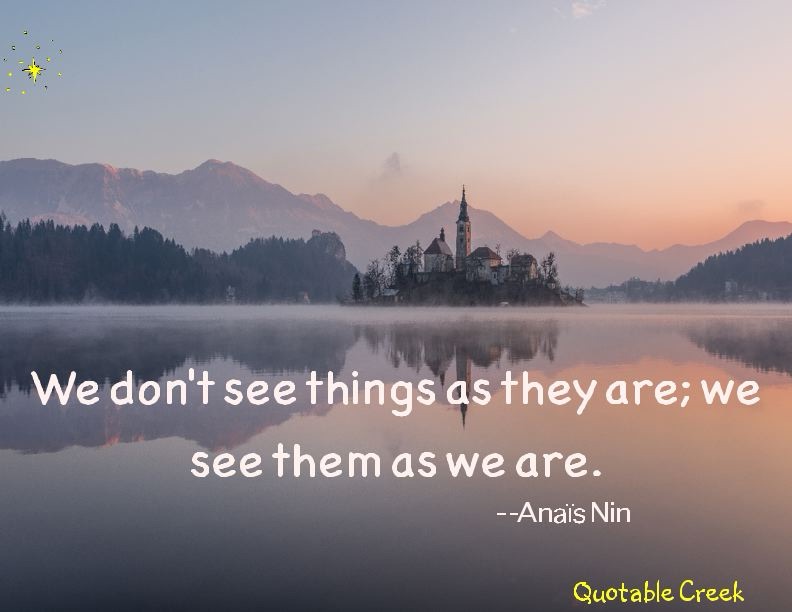
A guy cuts you off in traffic. How do you see him? Is he an inconsiderate lout caring little for the aggravation he causes you or a distracted hapless soul, perhaps late for an emergency? How we see this situation, or any situation, can have a profound effect on our lives.
In this thoughtful essay, Elizabeth Gilbert considers the power of perception. She recounts a time when her father and his siblings were reminiscing about their late mother and how she used to take a sip from any glass of milk she poured for them. They agreed on the fact, that she took a sip, but wildly disagreed on their perception of that fact:
At one point, they found themselves sitting around the old kitchen table, eating sandwiches and talking about the past. My uncle, the baby of the family, looked at the refrigerator and said, “I can still see Mom standing there, pouring me a glass of milk. Do you remember that sweet thing she always used to do whenever she got us a glass of milk? Remember how she’d take a tiny sip first, to make sure it wasn’t spoiled? Always looking out for us.”
My father, the analytical engineer of the family, raised his eyebrows. “No,” he said. “You are so wrong. Mom wasn’t sipping our milk to test it for freshness. She was sipping our milk because she always overfilled the glass. She had no sense of spatial relations. It used to drive me crazy.”
My brilliantly sardonic aunt looked at her two brothers like they were the biggest idiots she’d ever seen.
“You’re both wrong,” she said. “Mom was stealing our damn milk.”
So, what have we learned about my grandmother from this story? Was she a devoted caregiver, an incompetent dunderhead or someone who would steal the milk out of the mouths of her children? (Or maybe just an exceptionally thirsty woman.) The world will never know the truth.
But does the truth really matter?
I don’t think so.
Wow! What a remarkable difference in what each brings to the encounter. Now imagine yourself in each of those mindsets: hostile, critical, or grateful. Which would lead to the happier life?
We don’t have control over facts, but we sure have a tremendous amount of control over how we perceive those facts. We owe it to ourselves to try to see the facts in the most favorable light even if that means consciously going over all the possible interpretations of something and actively selecting the best one to pick.
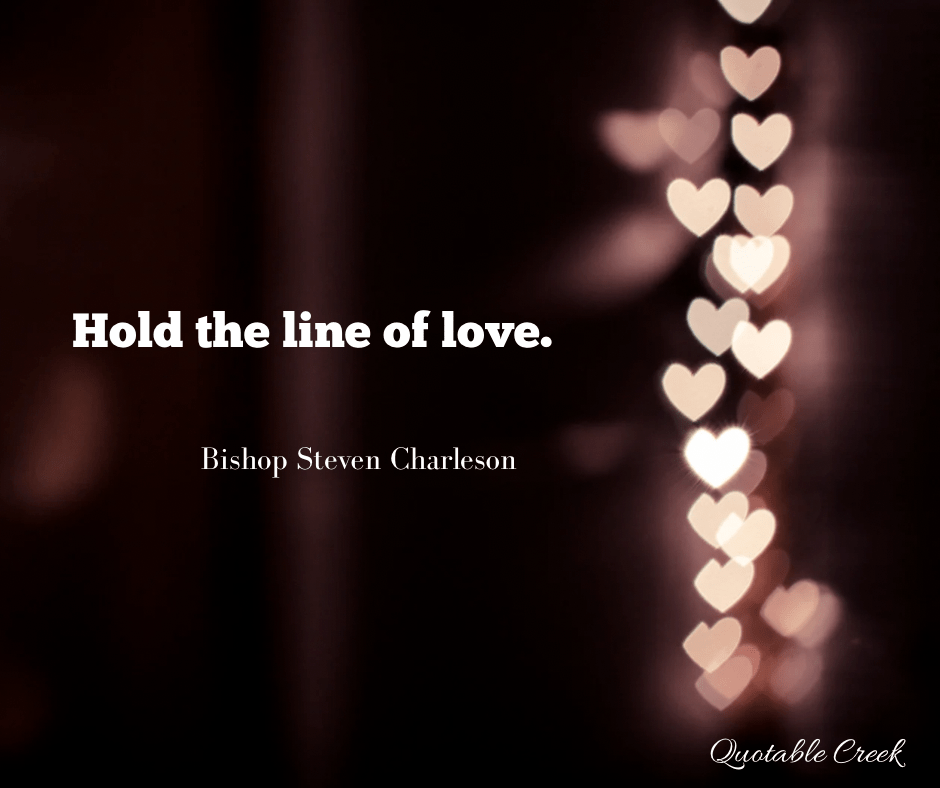
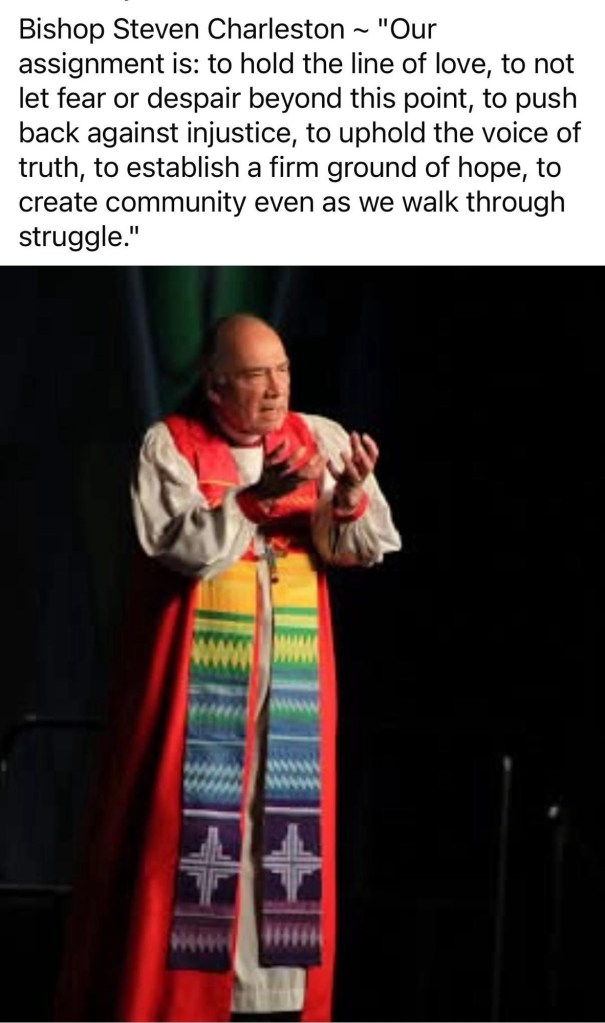
What is our job in these troubled times? During any times, but particularly during times where we are seeing peoples’ rights eroded and trampled, when legal safeguards are flouted, and when authoritarianism is on the rise, our job is to hold the line. Continue to be a place of comfort and succor to the hurting, feed the hungry, grieve with the mourning.
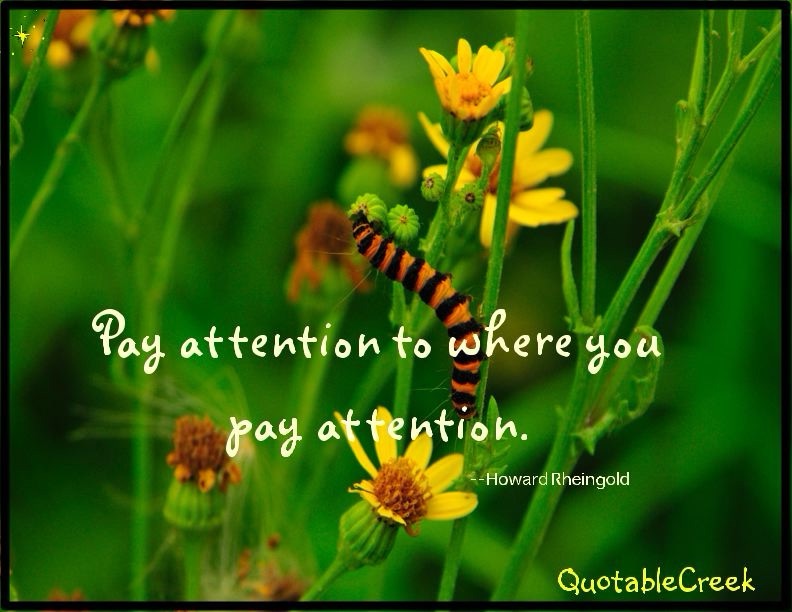
Have you ever wondered why everything is so beautiful? Have you stood rapt in the brilliant colors of a sunset, or listening to birdsong in the morning, or watching the way a caterpillar humps along with all its little feet working together? Perhaps there are logical, book smart reasons, like flowers are beautiful to attract bees, or animals are beautiful to attract mates or to warn predators they’re toxic, or some such thing, but don’t those answers beg the question really? Why is beauty? Could the answer be that it is to inspire awe in us? And our job is to notice.
A master violinist can play Bach on a precious instrument, and most people will just walk by:
We are living in a place filled with beauty if we only stop to notice. For inspiration, consider Mary Oliver’s poem, The Summer Day:
The Summer Day
Who made the world?
Who made the swan, and the black bear?
Who made the grasshopper?
This grasshopper, I mean-
the one who has flung herself out of the grass,
the one who is eating sugar out of my hand,
who is moving her jaws back and forth instead of up and down-
who is gazing around with her enormous and complicated eyes.
Now she lifts her pale forearms and thoroughly washes her face.
Now she snaps her wings open, and floats away.
I don't know exactly what a prayer is.
I do know how to pay attention, how to fall down
into the grass, how to kneel down in the grass,
how to be idle and blessed, how to stroll through the fields,
which is what I have been doing all day.
Tell me, what else should I have done?
Doesn't everything die at last, and too soon?
Tell me, what is it you plan to do
with your one wild and precious life?
What a gift we have been given to have the chance to notice the beauty all around us today!
What do you feel entitled to? Your life, job, spouse, happiness, health, good weather? It’s remarkable how we can feel that we have earned our stations in life and are entitled to all the good things.
Until something happens to take it away.
A diagnosis, job loss, natural disaster, and then we realize we weren’t entitled to any of it after all. It was a gift, and we hadn’t been grateful.
Right now, I’m experiencing a bit of a health crisis that has me worried about my eyes and thinking about all the millions of things I love to see. My family, my garden, my cats, my friends, everything, really. What a miracle it is to see.
Maybe today is a good day to pause and think of all the things you love to see. Or hear. Or experience.
Think of all you have been blessed with and be grateful.
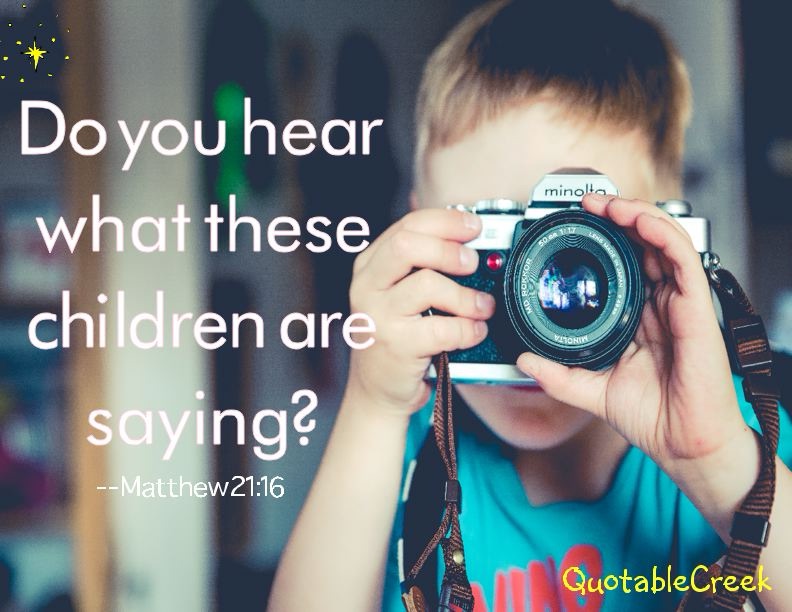
Children have a way of shaking things up. Don’t they? They see things we’ve stopped noticing. They question things we’ve started to take for granted. They cause us to stop and notice. They hold up a giant mirror to us and cause us to do some soul-searching.
That is, if we take the time to listen.
Why is that person asking for money? Why are people starving? Why do some people get treated better? Why do you say one thing in public but do another in private? Is this fair? Does everyone cheat? Does everyone lie? Is there a better way?
They force us to confront the gap between what we say they should do and what we do, or what society does, or what their friends do. Most adults suffer from some degree of cognitive dissonance: the mental discomfort from holding two or more differing beliefs, ideas or values at the same time. We value honesty but cheat on our taxes. We tell them not to bully others but then bully them or laugh as others are bullied. We tell them never to hit someone else while spanking them. We tell them all children are precious but then harbor racial or gender biases.
They notice.
And they point it out.
For those of us listening, this is a time to ask ourselves what we do, in fact, stand for and then work to align our lives with those values, to be internally and externally consistent.
For an unbelievably uplifting video of a diverse group of kids singing their hearts out, please watch this video. It will start your day off with hope and promise and excitement for the future of our nation and world.
Spring has sprung, and nothing beats a morning walk for plugging into springtime energy. Birds twittering, gentle breezes, heady fragrances. And that good vibe can carry you through a mundane day.
Consider this from Mary Oliver
How lovely to think of a morning walk as a gateway into gratitude, and that all of creation is whistling, slapping, stamping, shining, humming, and turning right there with you. In gratitude.
What are your touching, kissing words of gratitude?
In a grieving, struggling world, we pray. Full of humility, we fall to our knees. Gobsmacked by the fragility of life and the interconnectedness of all creation, we lift our eyes to the Lord and join voices around the world to offer thanks, plead for mercy, and reach for hope.
Never before has it been more obvious that we belong to each other and are all in this together.


 QuotableCreek.com