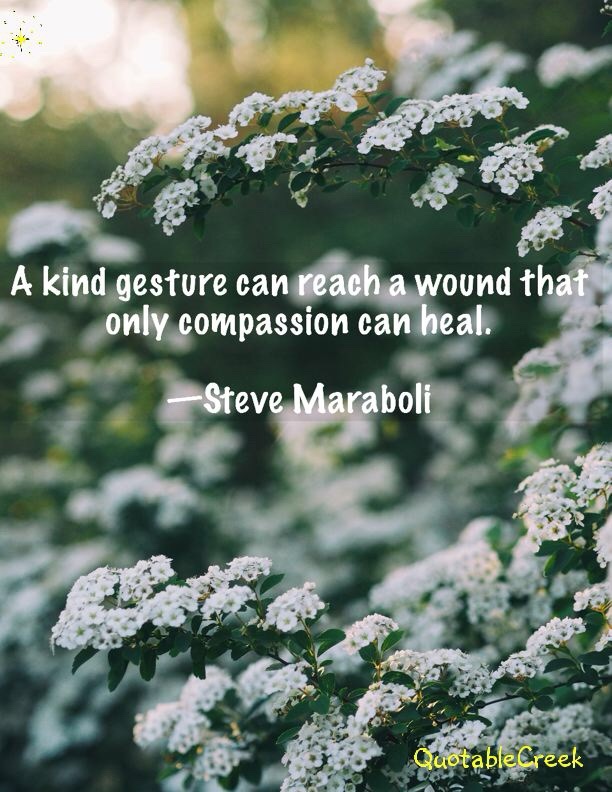
So much of our suffering is invisible. Loneliness, sorrow, depression, not fitting in. We can bind up our own cuts and scrapes, but how do we bind up those kind of wounds?
There is an old parable about heaven and hell. In both, people are forced to eat with spoons that are too long to feed themselves. In hell, they are starving. In heaven, they feed each other.
When it comes to these invisible hurts, we are healed by kindness, one to another. We don’t know when we are being kind that it may help someone, but it certainly can’t hurt. And it may be just the long-spooned nourishment that someone else needs.
To inspire acts of kindness today, watch this video of a poor baby elephant stuck in a muddy hole. The gratitude its mother shows its rescuers will melt your heart.
In this age of technology and instant gratification, sometimes we forget the simple pleasures. Like meandering, and chatting people up, and pausing to soak it all in. Kurt Vonnegut used to like to walk into town for a single envelope when he had something to mail, ignoring his wife’s argument that he could buy more than one envelope at a time.
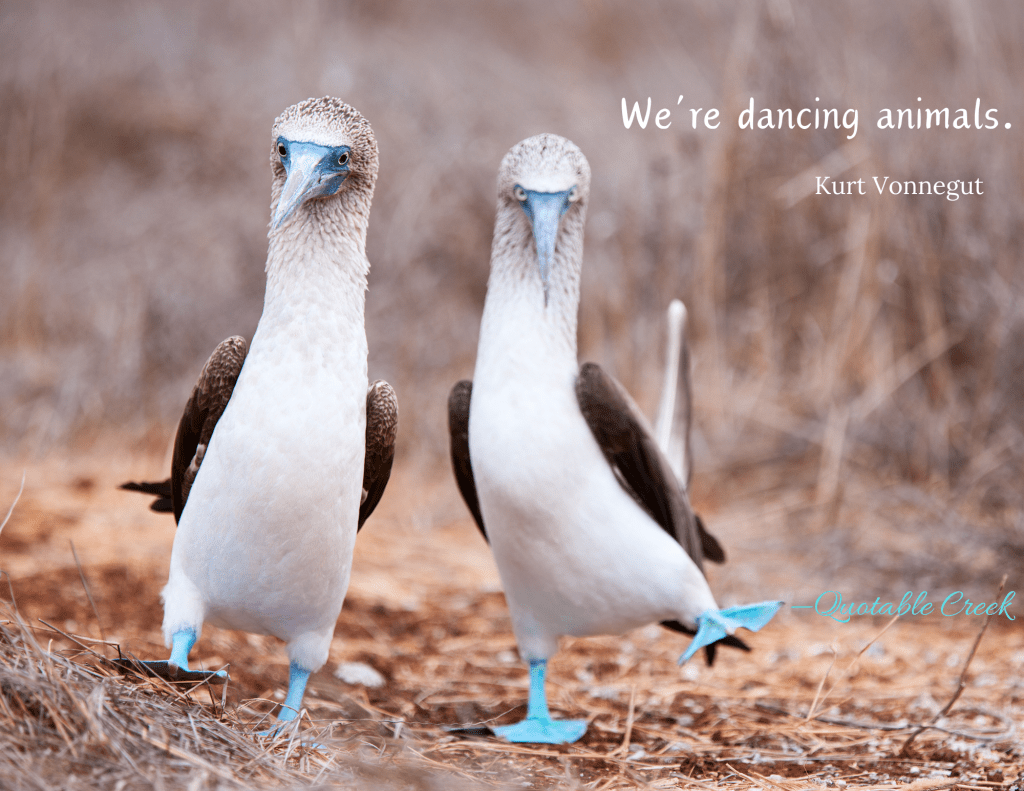
Vonnegut responds, “…And so I pretend not to hear her. And go out to get an envelope because I’m going to have a hell of a good time in the process of buying one envelope. I meet a lot of people. And see some great looking babies. And a fire engine goes by. And I give them the thumbs up. And I’ll ask a woman what kind of dog that is. And, and I don’t know. The moral of the story is – we’re here on Earth to fart around. And, of course, the computers will do us out of that. And what the computer people don’t realize, or they don’t care, is we’re dancing animals. You know, we love to move around. And it’s like we’re not supposed to dance at all anymore.”
Of course, an author depends on immersing themself in the midst of living, noticing details, trying to hold on to it all long enough to capture it in words. But don’t we all benefit from farting around and noticing the little things? Kind of like writing ‘I was here’ in graffiti. We’re here. This is our now.
Oh, child. How I wish for you to have a life without misery and heartache, a world without disillusionment and betrayal, a childhood unmarred by neglect or abuse, a journey without conflict. But, alas, that will not be. We do not live in a utopian world, but here in this world, and you will know sorrow and pain and, as much as I would love to shield and protect you from it, I cannot. There will be dark days, my love.
But you are brighter than the darkness, and, even in your misery, you will find a way to shine. And when you are at your lowest point, I will be there beside you knowing that you will rise again and that this pain will make you more compassionate and humble, more honest and fierce, more determined to make this world a more perfect place, because you, my beautiful child, are not meant to be kept down in the darkness, but to shine.
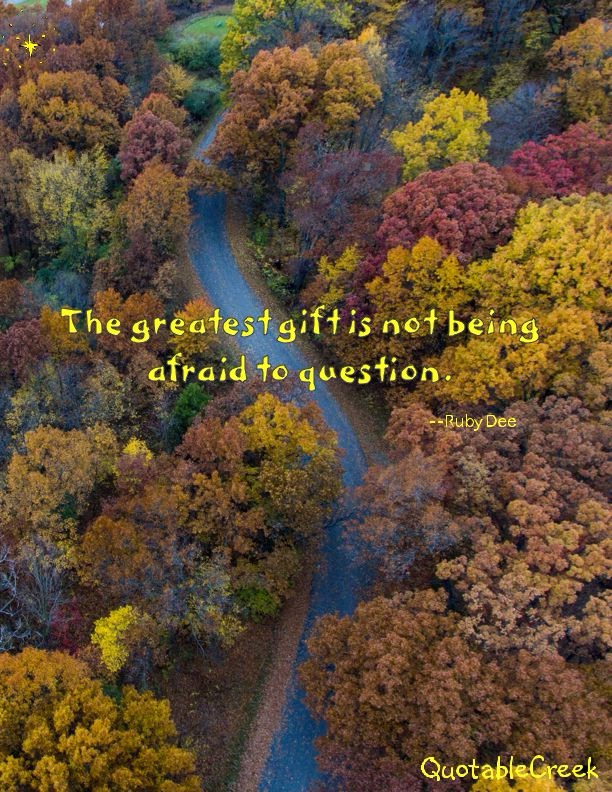
What questions do we frame for ourselves at the end of the day? What are the questions that have caused us to soul-search and perhaps take a new path? What questions have forced you to look at something a different way?
Sometimes the questions are more important than the answers. There are some that resonate so deeply with us, we may spend a lifetime trying to answer them. In her piece about the beauty of these profound questions, Karen Horneffer-Ginter identifies some that have been meaningful to her:
When used properly, questions have the potential to connect us to the world of another. A heartfelt “How are you?” or “How was your day?” can become the bridge that keeps us in relationship to the lives of those we love. Sometimes, too, questions create a bridge within ourselves, allowing us to hear what’s going on at a deeper level. We know when we’ve encountered a question that has this potential because it stays with us — maybe for the day, maybe for our whole lives. It taps us on the shoulder to wake us up, or it wiggles its way in more deeply, opening us up to seeing things in a new way.
I still recall first encountering Judith Duerk’s chorus of questions about how my life might have been different if there had been a sacred circle to step into. Mary Oliver asking me about my plans for this one wild and precious life, Oriah Mountain Dreamer wanting to know what I ache for and if I dare to dream of meeting my heart’s longing, and Angeles Arrien reminding me of the questions asked in some indigenous cultures: When did you stop singing? When did you stop dancing? I think of my friend Ming, asking me at lunch one day if I thought writing was my fullest and truest expression. All these questions have remained close companions across the years.
The questions that have been consuming my thoughts and are my close companions these days are What does it mean to be welcoming? How does welcome look? How does it change the mix if it is accepted? What are the stumbling blocks to be truly welcoming? Where does fear creep in to inhibit welcome? How will my life be different because I have welcomed another into it? How will it disrupt my comfort zone, and how will I get my ego out of the way to be more accepting?
What are the questions in your heart, questions that are your close companions? And just the framing of those questions can be significant, as she suggests above. Consider the difference between ‘What do I have to do today?’ and ‘What do I get to do today?’ That simple shift helps us move from feeling burdened to being grateful for all the opportunities presented by the day.
What are the questions that have been your close companions? What do you get to do today to help answer them?
We start so little and helpless, not knowing much of anything, but responding to love, comfort, care, concern. As we grow, there have been people who have brought joy to our lives, people who have helped us step out and grow.
For these people, we offer thanks.
As Mr. Rogers explained:
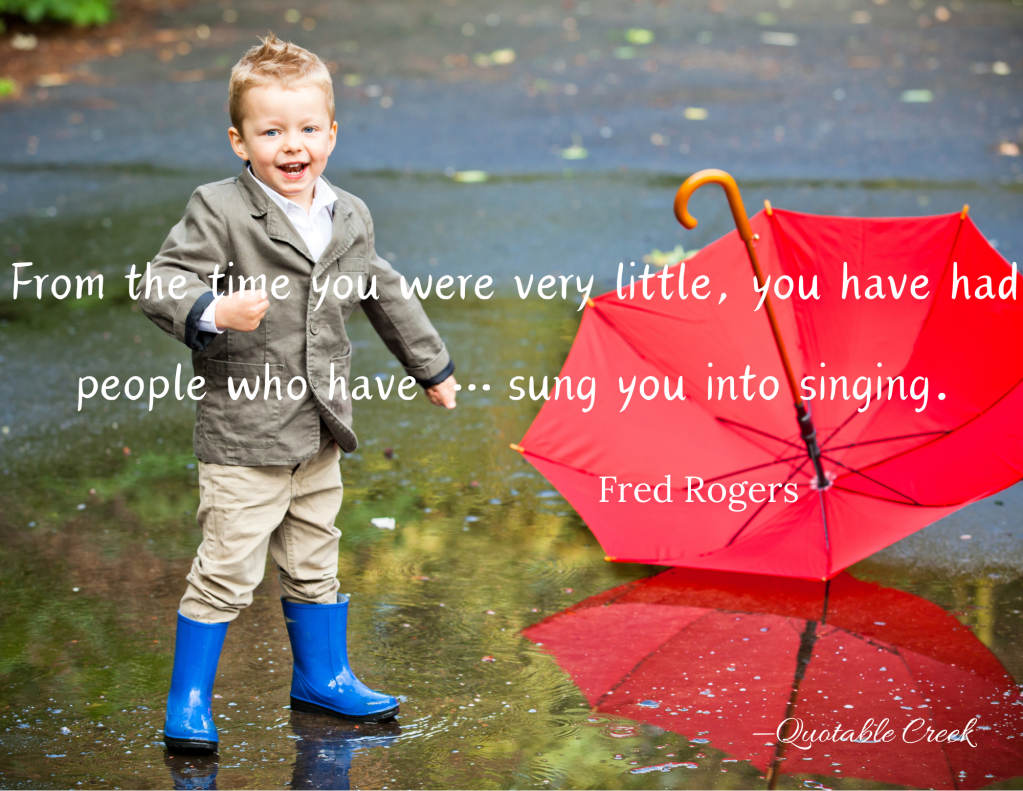
From the time you were very little, you’ve had people who have smiled you into smiling, people who have talked you into talking, sung you into singing, loved you into loving. So, on this extra special day, let’s take some time to think of those extra special people.
And we have them now, don’t we? Those people who smile us into smiling and love us into loving?
I am a huge fan of birdsong. It is so joyful. Listening to a little bird, so unassuming, singing with all it has to welcome the day reminds us of what it is like to be alive—vibrant and grateful, blessed with a day ahead to sing our song however that might manifest itself in each individual life. Open. Ready. Eager even.
And yet life can bring us low. Consider Shakespeare’s 29th Sonnet below. He certainly gets what it is like to feel outcast and alone, bemoaning our fate, jealous of others’ future and friends, their talents and possibilities, when we feel we have none.
And yet,
There is, or maybe was, someone who brightened our spirits. Someone who loved us and, like the simple lark singing its joyful song, that love can change an outlook in a blink. And next to that love, all the treasure of kings is paltry.
For a perfect, tear-jerking read of this Sonnet, take a listen to Judi Dench in the clip below. and take a minute, sometime today, to listen to a bird singing its heart out and remember those you love and those who love you.
When, in disgrace with fortune and men’s eyes,
I all alone beweep my outcast state,
And trouble deaf heaven with my bootless cries,
And look upon myself and curse my fate,
Wishing me like to one more rich in hope,
Featured like him, like him with friends possessed,
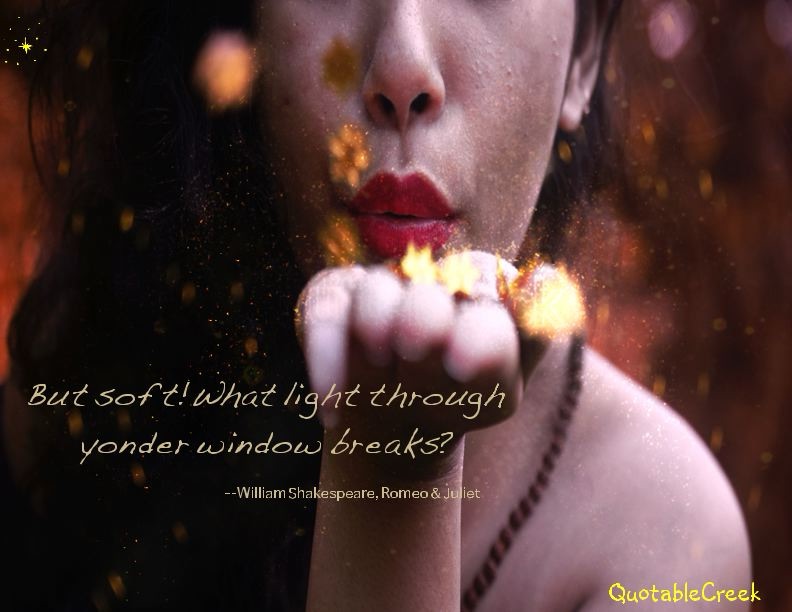
Are there any more beautiful words in English literature than these: “But soft! What light through yonder window breaks?”
These are Romeo’s words when he gazes at Juliet above on the balcony, but what if we were to bring these words into our everyday encounters?
But soft! Listen to the hush here, the rapt attention, all of his focus on her, just her. What if we were to whisper these words to ourselves before we talk with someone? But soft! The world fades, the focus sharpens, all of our attention is on that person. But soft! reminds us not just to be calm and attentive, but also to be gentle and reverent. Wouldn’t any conversation shift if it were preceded by such a lovely call to silence? Wouldn’t But soft! be a perfect pairing of words to bring back into common usage?
“What light through yonder window breaks?” Again, what if we were to look at each other this way? As light, as beings capable of making the world a brighter place. Even those with much of darkness about them have an inner light, a spark of good. What if we were to ignore the dark and focus on the light in each other? What a compliment it is to be called a light! Wouldn’t someone noticing our light make each of us want to shine ever more brightly? And wouldn’t that, accordingly, make the world an ever brighter place?
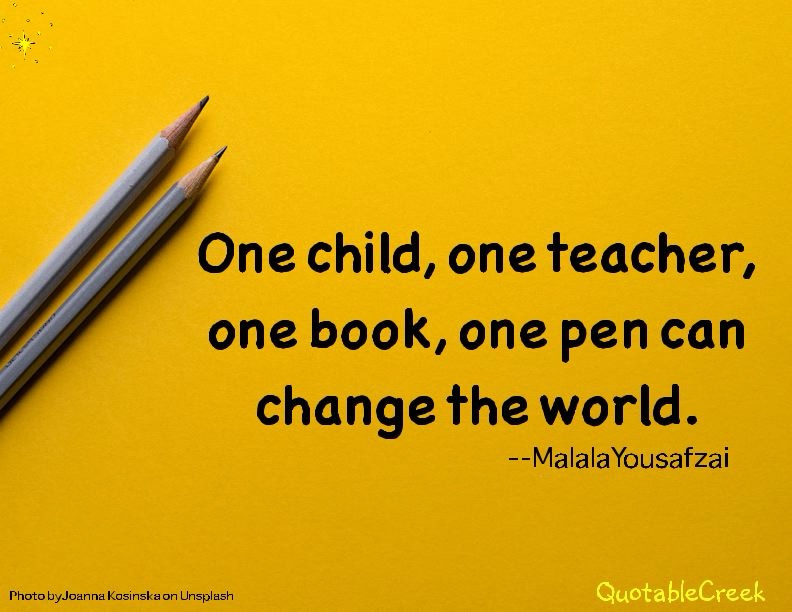
We are each born helpless. How we got from there to where we are now depended on the generosity of many people. Among those are our teachers, those people who devoted their time to making sure we understood the world around us and how to negotiate the ups and downs of the road ahead. Those teachers who went beyond the lesson plan to help us learn not just facts, but how to think and analyze, how to care and feel, and how to reach out to others deserve our unending gratitude.
How lovely it is to stand still in the enormity of your questions. To realize that what you know is minuscule in relation to all there is to know. To let your curious mind take you on a journey of discovery. How liberating it is to lay down the facade of expertise and acknowledge that, in this world, we are all students.



 QuotableCreek.com