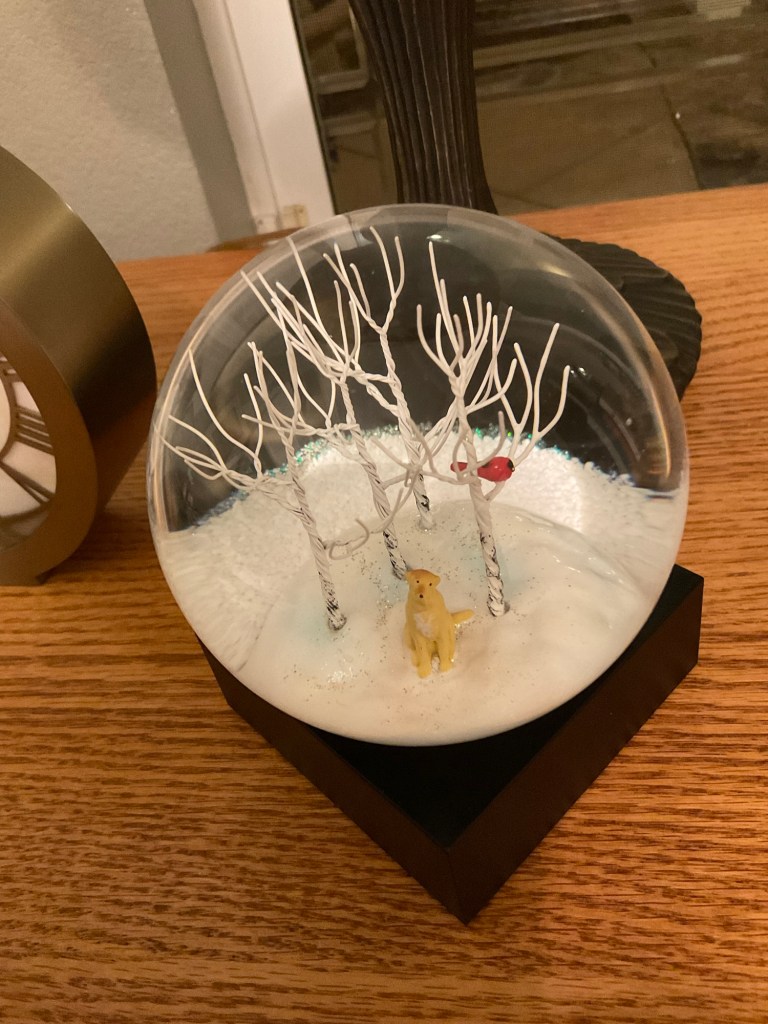
I recently bought a snow globe of a Labrador and a cardinal in the woods.
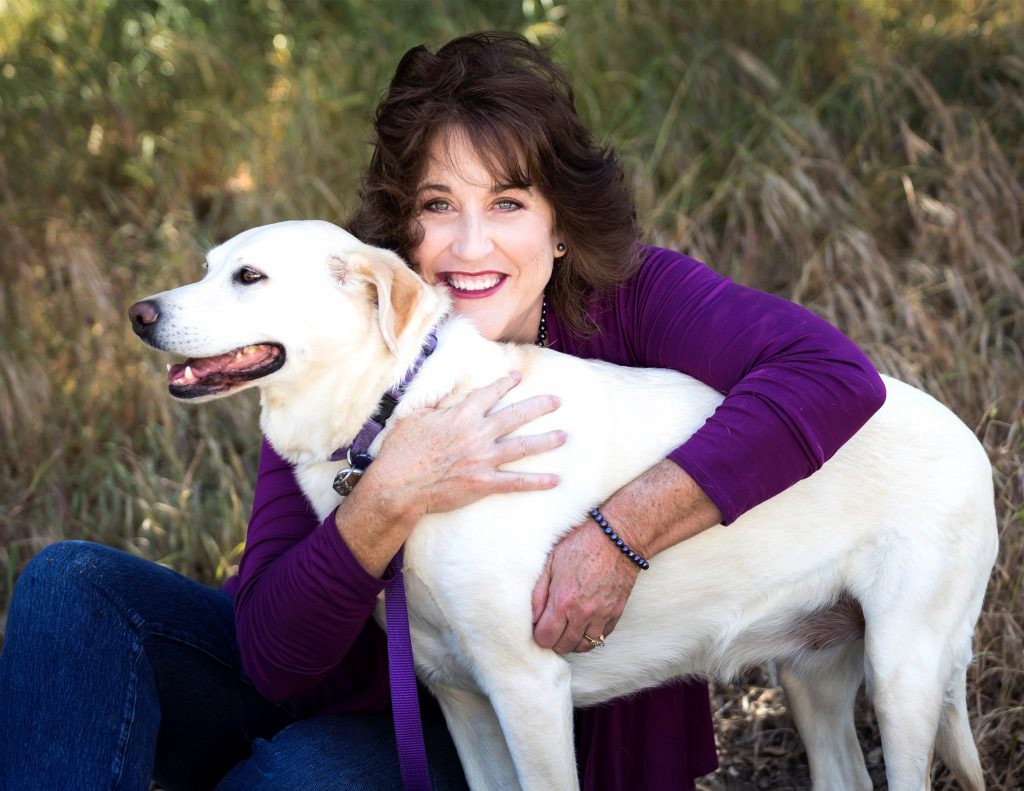
These two remind me of the unconditional love I was lucky enough to receive from my late dog, Honey
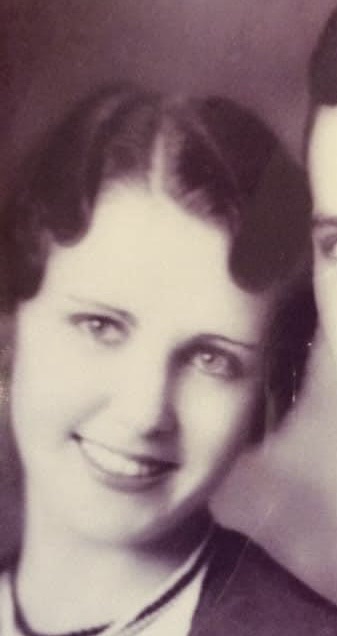
And my late, and very much beloved grandmother.
Honey was my soul animal, always with me, zooming with me into school visits during the pandemic, meeting and loving every neighbor we encountered on our long walks, my constant companion.
My grandmother loved me unconditionally, always eager to hear my stories, encouraging me in my writing, sharing life as two brunette mothers of redheads, growing together in our faith journeys.
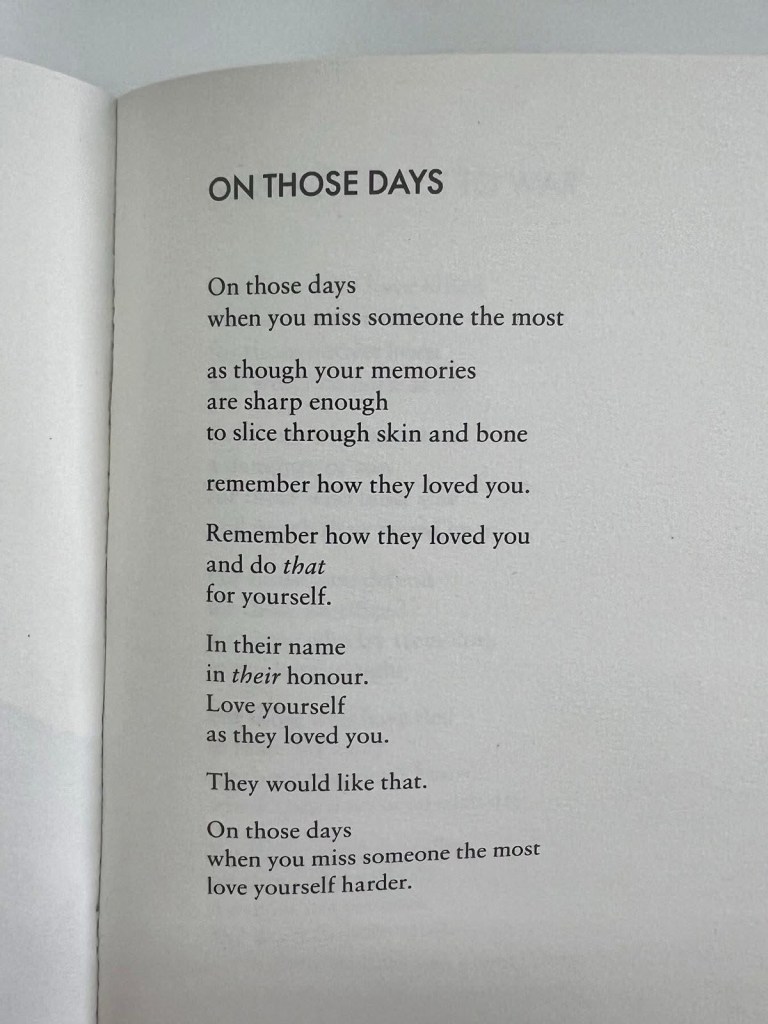
I love having them there with me symbolically on my desk in this little snow globe because, frankly, grief is hard. Losing those precious to us leaves a gaping wound. But when we remember them, we remember the love they gave us, too, and that part feels good. When we carry them with us like that, they are still here.
(here is the root of the root and the bud of the bud
and the sky of the sky of a tree called life;which grows
higher than soul can hope or mind can hide)
and this is the wonder that’s keeping the stars apart
i carry your heart(i carry it in my heart)
And as we go on, past the loss, we carry those who have loved us with us in our hearts, giving us comfort and strength. We carry them with us, and, with that, we carry the unconditional love they gave that still sustains us, even now.
Bless the comforters, those who reach out and see others hurting and grief stricken, and offer them solace. Who sit with those going through difficult times, and give of their presence. Who offer kind, comforting words.
We sometimes think those who are good at comforting don’t know loss of their own, but the opposite is probably true.
As said by Rainer Maria Rilke:
Do not assume that he who seeks to comfort you now lives untroubled among the simple and quiet words that sometimes do you good. His life may also have much sadness and difficulty, that remains far beyond yours. Were it otherwise, he would never have been able to find such words.
Perhaps the only good to come of great loss is the ability to recognize it in others and offer them comfort and companionship.
Christmas is a joyful time, but joyful times often bring complex emotions, particularly of loss for the people and loved ones who aren’t with you at the table. We remember times past when we were all together, when things seemed less complicated, when relationships seemed more solid, and we mourn that loss even as we celebrate.
Love makes us vulnerable as there is the possibility of loss. And loss hurts. That’s the human condition. And to try to avoid the pain of loss by never loving would be a far greater loss really. For to miss loving is to miss the whole joy of living.
Grief happens. When we think of grief as the flip side of love, though, we can offer ourselves some solace.
Consider these words by Donna Ashcroft today, and every day. You are loved.
And yet most of us internalize myths that we are meant to live pain-free lives and that there is always more time. How much more could we accomplish if we embrace the reality instead?
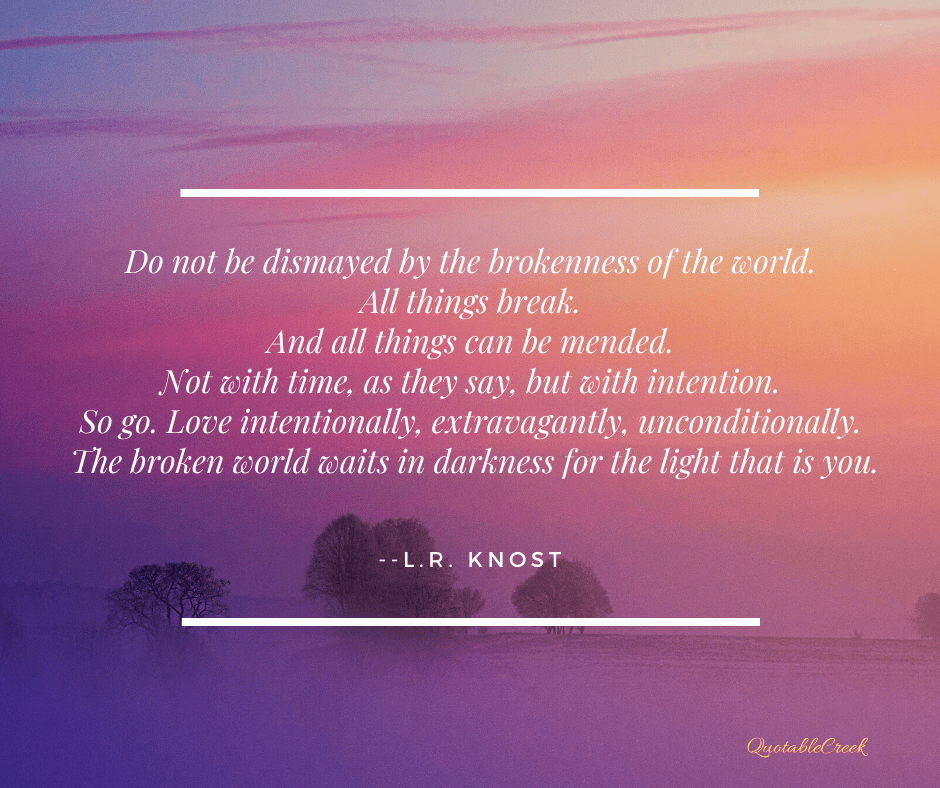
We’re breakable. But our vulnerability is our strength. And when we mend from something painful, we are likely to have tools and skills and sensitivities that may help us and make us more empathic going forward. Breaking and mending is part of growth. Part of change. Part of evolving. To be scared of breaking is to be scared of living.
Time’s short. Now is the time to reach out, apologize, help…whatever it is you’re waiting for a different day to do. There is no promised day. Things don’t just happen. Time doesn’t heal all wounds. We help heal the broken world, and our own broken selves, by continuing to love even in the darkness.
So much of our suffering is invisible. Loneliness, sorrow, depression, not fitting in. We can bind up our own cuts and scrapes, but how do we bind up those kind of wounds?
There is an old parable about heaven and hell. In both, people are forced to eat with spoons that are too long to feed themselves. In hell, they are starving. In heaven, they feed each other.
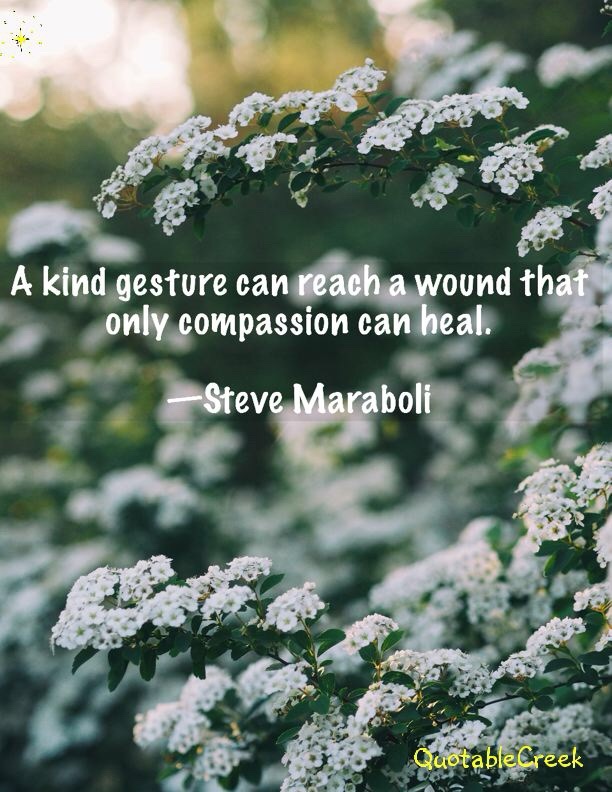
When it comes to these invisible hurts, we are healed by kindness, one to another. We don’t know when we are being kind that it may help someone, but it certainly can’t hurt. And it may be just the long-spooned nourishment that someone else needs.
To inspire acts of kindness today, watch this video of a poor baby elephant stuck in a muddy hole. The gratitude its mother shows its rescuers will melt your heart.
Oh, child. How I wish for you to have a life without misery and heartache, a world without disillusionment and betrayal, a childhood unmarred by neglect or abuse, a journey without conflict. But, alas, that will not be. We do not live in a utopian world, but here in this world, and you will know sorrow and pain and, as much as I would love to shield and protect you from it, I cannot. There will be dark days, my love.
But you are brighter than the darkness, and, even in your misery, you will find a way to shine. And when you are at your lowest point, I will be there beside you knowing that you will rise again and that this pain will make you more compassionate and humble, more honest and fierce, more determined to make this world a more perfect place, because you, my beautiful child, are not meant to be kept down in the darkness, but to shine.
Listening, truly listening, is rare. Most people are just waiting for their turn to reply. Or maybe not even waiting, but interrupting to say what is on their mind. Two people both talking, but neither listening, and no one, consequently, heard. Too often, we want to avoid the discomfort of listening, particularly if someone is hurting, and so we turn the conversation back to something safe, ourselves.
Celeste Headlee recounts a time when she tried to support her grieving friend, but failed:
A good friend of mine lost her dad some years back. I found her sitting alone on a bench outside our workplace, not moving, just staring at the horizon. She was absolutely distraught and I didn’t know what to say to her. It’s so easy to say the wrong thing to someone who is grieving and vulnerable. So, I started talking about how I grew up without a father. I told her that my dad had drowned in a submarine when I was only 9 months old and I’d always mourned his loss, even though I’d never known him. I just wanted her to realize that she wasn’t alone, that I’d been through something similar and could understand how she felt.
But after I related this story, my friend looked at me and snapped, “Okay, Celeste, you win. You never had a dad, and I at least got to spend 30 years with mine. You had it worse. I guess I shouldn’t be so upset that my dad just died.”
I was stunned and mortified. My immediate reaction was to plead my case. “No, no, no,” I said, “that’s not what I’m saying at all. I just meant that I know how you feel.” And she answered, “No, Celeste, you don’t. You have no idea how I feel.”
She walked away and I stood there helplessly, watching her go and feeling like a jerk. I had totally failed my friend. I had wanted to comfort her, and instead, I’d made her feel worse. At that point, I still felt she misunderstood me. I thought she was in a fragile state and had lashed out at me unfairly when I was only trying to help.
But the truth is, she didn’t misunderstand me at all. She understood what was happening perhaps better than I did. When she began to share her raw emotions, I felt uncomfortable. I didn’t know what to say, so I defaulted to a subject with which I was comfortable: myself.
I may have been trying to empathize, at least on a conscious level, but what I really did was draw focus away from her anguish and turn the attention to me. She wanted to talk to me about her father, to tell me about the kind of man he was, so I could fully appreciate the magnitude of her loss. Instead, I asked her to stop for a moment and listen to my story about my dad’s tragic death.
How often do we do this in our conversations? We listen to the story, only to remember a time when we experienced something similar and then quickly switch focus to our story. Do we sit with a person in their grief, their discomfort, their loneliness? Or do we try to change the topic to something more pleasant?
Headlee continues:
From that day forward, I started to notice how often I responded to stories of loss and struggle with stories of my own experiences. My son would tell me about clashing with a kid in Boy Scouts, and I would talk about a girl I fell out with in college. When a co-worker got laid off, I told her about how much I struggled to find a job after I had been laid off years earlier. But when I began to pay a little more attention to how people responded to my attempts to empathize, I realized the effect of sharing my experiences was never as I intended. What all of these people needed was for me to hear them and acknowledge what they were going through. Instead, I forced them to listen to me and acknowledge me.
Sociologist Charles Derber describes this tendency to insert oneself into a conversation as “conversational narcissism.” It’s the desire to take over a conversation, to do most of the talking and to turn the focus of the exchange to yourself. It is often subtle and unconscious. Derber writes that conversational narcissism “is the key manifestation of the dominant attention-getting psychology in America. It occurs in informal conversations among friends, family and co-workers. The profusion of popular literature about listening and the etiquette of managing those who talk constantly about themselves suggests its pervasiveness in everyday life.” Derber describes two kinds of responses in conversations: a shift response and a support response. The first shifts attention back to yourself, and the second supports the other person’s comment. Here is a simple illustration:
Shift Response Mary: I’m so busy right now. Tim: Me too. I’m totally overwhelmed.
Support Response Mary: I’m so busy right now. Tim: Why? What do you have to get done?
Here’s another example:
Shift Response Karen: I need new shoes. Mark: Me too. These things are falling apart.
Support Response Karen: I need new shoes. Mark: Oh yeah? What kind are you thinking about?
Shift responses are a hallmark of conversational narcissism. They help you turn the focus constantly back to yourself. But a support response encourages the other person to continue their story. These days, I try to be more aware of my instinct to share stories and talk about myself. I try to ask questions that encourage the other person to continue. I’ve also made a conscious effort to listen more and talk less.
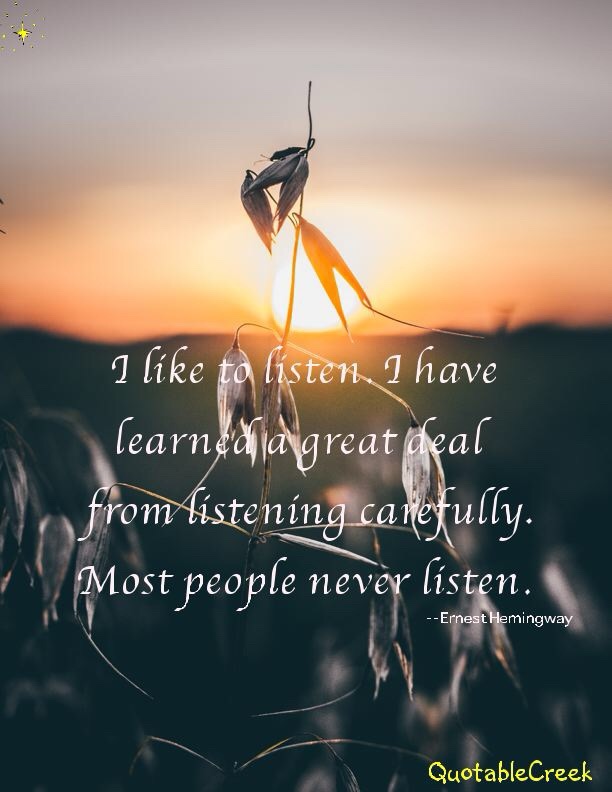
I’ve never learned something I didn’t know from talking. It’s in listening that we grow.
While our leaders model interrupting, our children are watching. What are they learning? If constant interruptions become the norm, how will this effect public discourse and civility? How will we work together without listening to each other’s points of view?
Today, perhaps we can model listening. Allowing people to feel heard is a gift we can freely give.
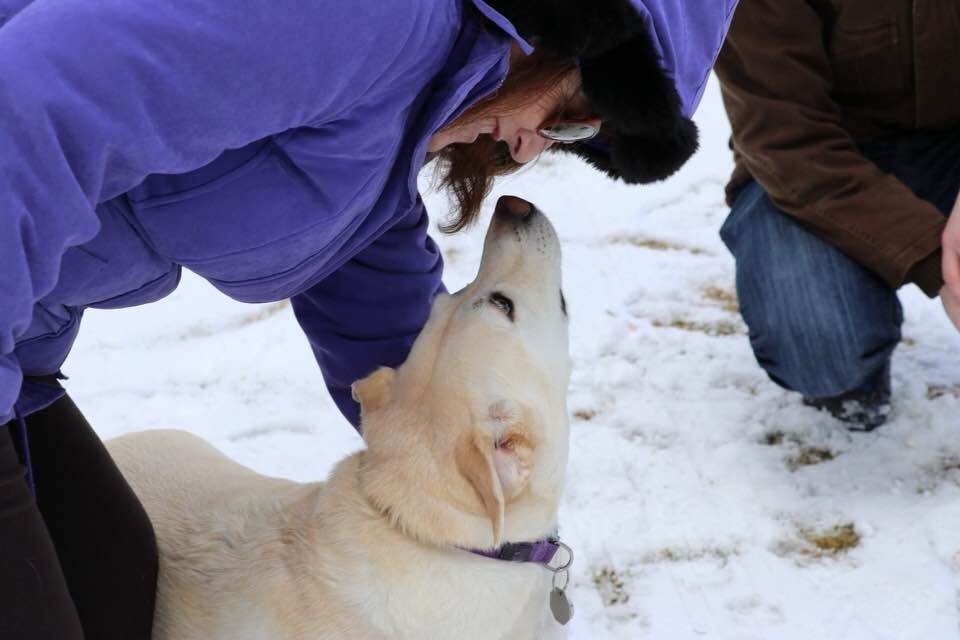
For those of you who know me, you know I recently lost Honey, my beloved dog. Honey was my soul animal, my constant light, my precious girl. I am having trouble accepting that I won’t see her again. The world feels so different without her presence in it. And those eyes. What I would give to look in those eyes again!
Loss is hard. Whether it is of a spouse, a child, a friend, or a pet. We carry a hole with us where that loved one was. But when we sit and consider that relationship and dwell on the things about it for which we are grateful, the loss hurts a bit less.
Smiles replace tears. Warm memories flood our senses. Laughter surprises us. We remember ways we’ve grown or blossomed because of that relationship. Gratitude replaces hurt or anger or grief.
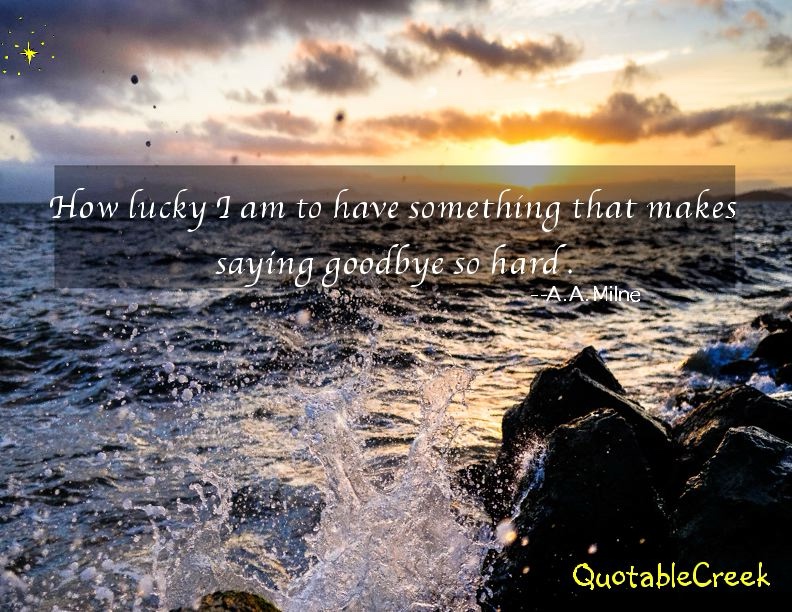
We remember that, yes, we had to say goodbye, but how lucky we were to say hello.
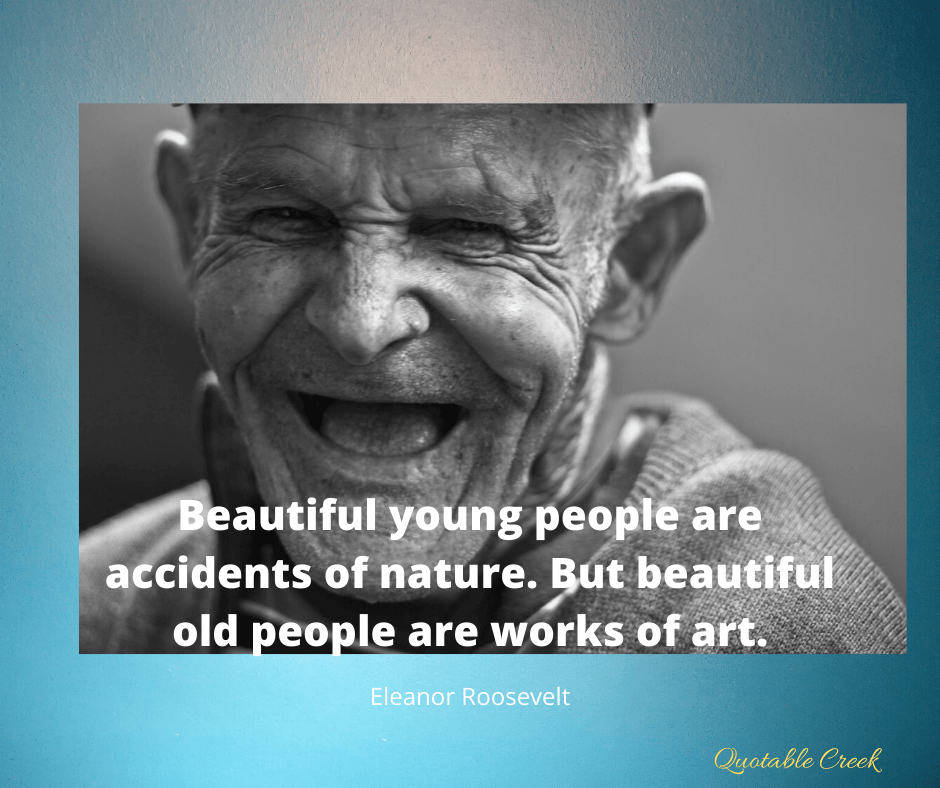
There is a certain tipping point where life becomes weighted with loss. Things shift from everything out ahead to having a full past. In many ways, it is challenging, sad, and frustrating. But in some, it can be liberating.
Consider these words from Anne Lamott:
“So many indignities are involved in aging, and yet so many graces, too. The perfectionism that had run me ragged and has kept me scared and wired my whole life has abated. The idea of perfectionism at 60 is comical when, like me, you’ve worn non-matching black flats out on stage. In my experience, most of us age away from brain and ambition toward heart and soul, and we bathe in relief that things are not worse. When I was younger, I was fixated on looking good and impressing people and being so big in the world. By 60, I didn’t care nearly as much what people thought of me, mostly.”
“I do live in my heart more, which is hard in its own ways, but the blessing is that the yammer in my head is quieter, the endless questioning: What am I supposed to be doing? Is this the right thing? What do you think of that? What does he think of that?”
“A lot of us thought when we were younger that we might want to stretch ourselves into other areas, master new realms. Now, I know better. I’m happy with the little nesty areas that are mine. For some reason, I love my softer, welcoming tummy. I laugh gently more often at darling confused me’s spaced-outed ness, although I’m often glad no one was around to witness my lapses.”
I do ‘feel I live in my heart more’ as she notes. And that grief is keen and biting. Almost as if my mind is at war with itself, one half realizing that death is a natural part of life, inevitable. While the other half refuses to accept the new reality. And yet, ultimately, it is our impermanence that gives our lives luster and meaning. And acceptance, if it should come, may not bring comfort, but peace.
As we age, there is loss. That loss is like a presence that follows us relentlessly like a shadow. No avoiding it. No pretending. We are mortal. The people we love are mortal, perhaps imminently so. This is part of the rules of engagement. And while most of us avoid thinking too much about it, poets like Mary Oliver offer life instructions:
To live in this world, you must be able to do three things:
To love what is mortal
To hold it against your bones knowing your own life depends on it;
And, when the time comes, to let it go, to let it go.
I honestly don’t know which of these three rules is the hardest. Right now, they each seem nearly impossible. But having the courage to follow these instructions feels like the answer.
Her full poem is below.
Look, the trees are turning their own bodies into pillars
of light, are giving off the rich fragrance of cinnamon and fulfillment,
the long tapers of cattails are bursting and floating away over the blue shoulders
of the ponds, and every pond, no matter what its name is, is
nameless now. Every year everything I have ever learned
in my lifetime leads back to this: the fires and the black river of loss whose other side
is salvation, whose meaning none of us will ever know. To live in this world
you must be able to do three things: to love what is mortal; to hold it
against your bones knowing your own life depends on it; and, when the time comes to let it go, to let it go.






 QuotableCreek.com