Method v. Mission.

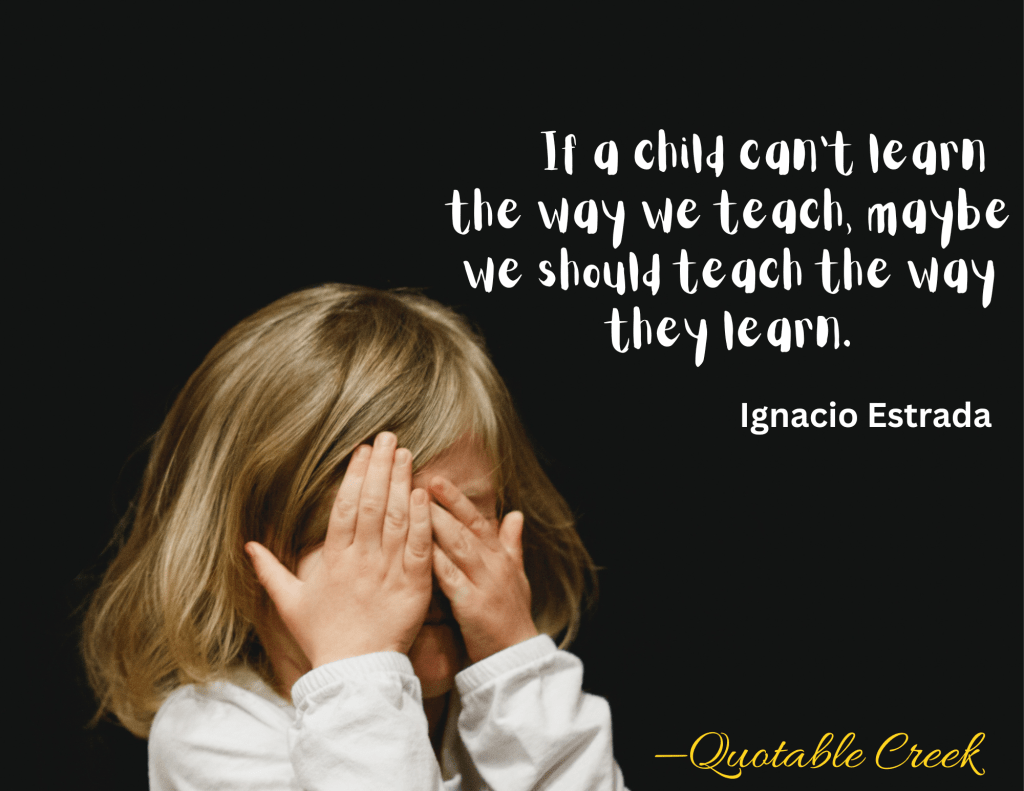
One of the most joyful things about teaching is finding the method that leads to a particular child learning where perhaps they struggled before. Finding the right key for the lock. Teaching, in this way, is one of the most creative and challenging jobs because each child is unique. Not every child can simply sit at a desk and listen to their teacher drone on and somehow absorb and master the material. In fact, a student who would prefer this lecture method is rare.

A vibrant classroom is filled with hands-on, group work, mentoring, art, music, activities, and so on. There are so many ways to teach and pair the right method with the right child. This is why a good teacher will always feel they learn as much as they teach. Of course, implicit in this challenge is having as the goal, helping the child learn. When obedience and regiment replaces learning as the goal, and the teaching method is rigid and unyielding, often students will struggle and fall through the gaps.

Teachers need to always keep their eye on the ball. The bottom line, the mission, is helping children learn.

There are so many areas where the same analysis applies. Where perhaps we fail to keep our eye on the right ball.

My pastor posted the following:

The method v. The mission. There are many ‘This is the way we’ve always done it’ or ‘Technology isn’t our thing’ or ‘Let’s just keep to ourselves’ sentiments behind each failing church. And misplaced beliefs that perhaps there’s just no space for church anymore in today’s world.

And yet.

In both teaching and ministry, there remains the mission. To help children learn. To help God’s people. And these needs in the world are growing, not shrinking.

So then the question becomes, and really always has been, how can we adapt our methods to fulfill our mission?

Giving up control.

We want to support the people we love as they go through difficult times, but how often does that support turn into telling them what to do or criticizing them for what they’ve done? How often does it make our loved one feel smaller or shamed or detached? What message does our trying to control them or the situation send them about our confidence in their abilities to handle the curve balls that life throws at us all?

In this powerful column on the concept of holding space, Heather Plett explains how we can show up for the people we care about without controlling them or the outcome, how our presence can be constructive rather than destructive, how we can offer support in a healthy way. She learned these lessons from Ann, a palliative care nurse who helped her deal with the challenges of her aging mother’s impending death. Here are Heather’s eight take-aways:

  1. Give people permission to trust their own intuition and wisdom. When we were supporting Mom in her final days, we had no experience to rely on, and yet, intuitively, we knew what was needed. We knew how to carry her shrinking body to the washroom, we knew how to sit and sing hymns to her, and we knew how to love her. We even knew when it was time to inject the medication that would help ease her pain. In a very gentle way, Ann let us know that we didn’t need to do things according to some arbitrary health care protocol – we simply needed to trust our intuition and accumulated wisdom from the many years we’d loved Mom.
  2. Give people only as much information as they can handle. Ann gave us some simple instructions and left us with a few handouts, but did not overwhelm us with far more than we could process in our tender time of grief. Too much information would have left us feeling incompetent and unworthy.
  3. Don’t take their power away. When we take decision-making power out of people’s hands, we leave them feeling useless and incompetent. There may be some times when we need to step in and make hard decisions for other people (ie. when they’re dealing with an addiction and an intervention feels like the only thing that will save them), but in almost every other case, people need the autonomy to make their own choices (even our children). Ann knew that we needed to feel empowered in making decisions on our Mom’s behalf, and so she offered support but never tried to direct or control us.
  4. Keep your own ego out of it. This is a big one. We all get caught in that trap now and then – when we begin to believe that someone else’s success is dependent on our intervention, or when we think that their failure reflects poorly on us, or when we’re convinced that whatever emotions they choose to unload on us are about us instead of them. It’s a trap I’ve occasionally found myself slipping into when I teach. I can become more concerned about my own success (Do the students like me? Do their marks reflect on my ability to teach? Etc.) than about the success of my students. But that doesn’t serve anyone – not even me. To truly support their growth, I need to keep my ego out of it and create the space where they have the opportunity to grow and learn.
  5. Make them feel safe enough to fail. When people are learning, growing, or going through grief or transition, they are bound to make some mistakes along the way. When we, as their space holders, withhold judgement and shame, we offer them the opportunity to reach inside themselves to find the courage to take risks and the resilience to keep going even when they fail. When we let them know that failure is simply a part of the journey and not the end of the world, they’ll spend less time beating themselves up for it and more time learning from their mistakes.
  6. Give guidance and help with humility and thoughtfulness. A wise space holder knows when to withhold guidance (ie. when it makes a person feel foolish and inadequate) and when to offer it gently (ie. when a person asks for it or is too lost to know what to ask for). Though Ann did not take our power or autonomy away, she did offer to come and give Mom baths and do some of the more challenging parts of caregiving. This was a relief to us, as we had no practice at it and didn’t want to place Mom in a position that might make her feel shame (ie. having her children see her naked). This is a careful dance that we all must do when we hold space for other people. Recognizing the areas in which they feel most vulnerable and incapable and offering the right kind of help without shaming them takes practice and humility.
  7. Create a container for complex emotions, fear, trauma, etc. When people feel that they are held in a deeper way than they are used to, they feel safe enough to allow complex emotions to surface that might normally remain hidden. Someone who is practiced at holding space knows that this can happen and will be prepared to hold it in a gentle, supportive, and nonjudgmental way. In The Circle Way, we talk about “holding the rim” for people. The circle becomes the space where people feel safe enough to fall apart without fearing that this will leave them permanently broken or that they will be shamed by others in the room. Someone is always there to offer strength and courage. This is not easy work, and it is work that I continue to learn about as I host increasingly more challenging conversations. We cannot do it if we are overly emotional ourselves, if we haven’t done the hard work of looking into our own shadow, or if we don’t trust the people we are holding space for. In Ann’s case, she did this by showing up with tenderness, compassion, and confidence. If she had shown up in a way that didn’t offer us assurance that she could handle difficult situations or that she was afraid of death, we wouldn’t have been able to trust her as we did.
  8. Allow them to make different decisions and to have different experiences than you would. Holding space is about respecting each person’s differences and recognizing that those differences may lead to them making choices that we would not make. Sometimes, for example, they make choices based on cultural norms that we can’t understand from within our own experience. When we hold space, we release control and we honour differences. This showed up, for example, in the way that Ann supported us in making decisions about what to do with Mom’s body after her spirit was no longer housed there. If there had been some ritual that we felt we needed to conduct before releasing her body, we were free to do that in the privacy of Mom’s home.

That #4 is a tough one, yes? We want to be important; we want to save the day; we think we know best. But giving others a safe place to find their own path forward empowers them to meet future challenges with resilience and courage. If they are dependent on us and our ‘wisdom’, they may not trust their own abilities. And, let’s be honest, do we really have all the answers anyway; isn’t life surprising and full of struggles that we don’t anticipate fully? Don’t we all need to develop the resilience and courage to respond to these challenges?

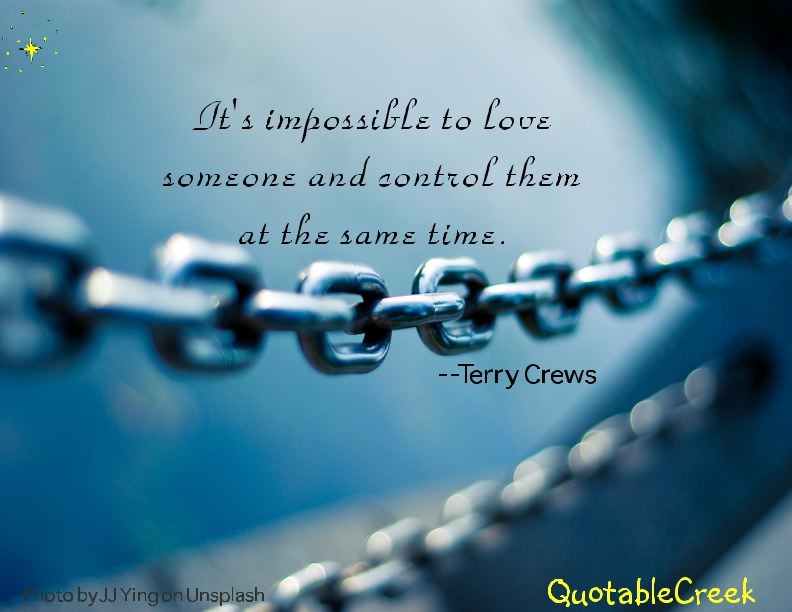
For more on Terry Crews and the background of the powerful quote above, including his conclusion that we can evolve and change and do things better, go here.

What we must save is love.

It’s okay to be heartbroken for more than one group of people at the same time. When it comes to showing compassion, we don’t have to pick sides. Sometimes, often really, maybe even always, there is hurt and anguish everywhere, and we can mourn the lot of it.

Beware people who tell you not to be concerned for this group or that group and the hurt they feel.

Beware those who try to dehumanize others.

Beware those who lump you in as the ‘enemy’ for working to assure people are treated humanely.

Beware people who draw lines between us and them.

Beware those who try to limit you to a label or single identity.

Our hearts are big enough to embrace it all. What we must save is love.

Opportunities

If you look for thorns, you’ll see thorns. If you look for love, you’ll see it all around you. And if you look for opportunities to make a difference, to shower people with love, and to take a stand for all that is good and right in the world, those opportunities will be there.

What opportunities do you see in the day ahead?

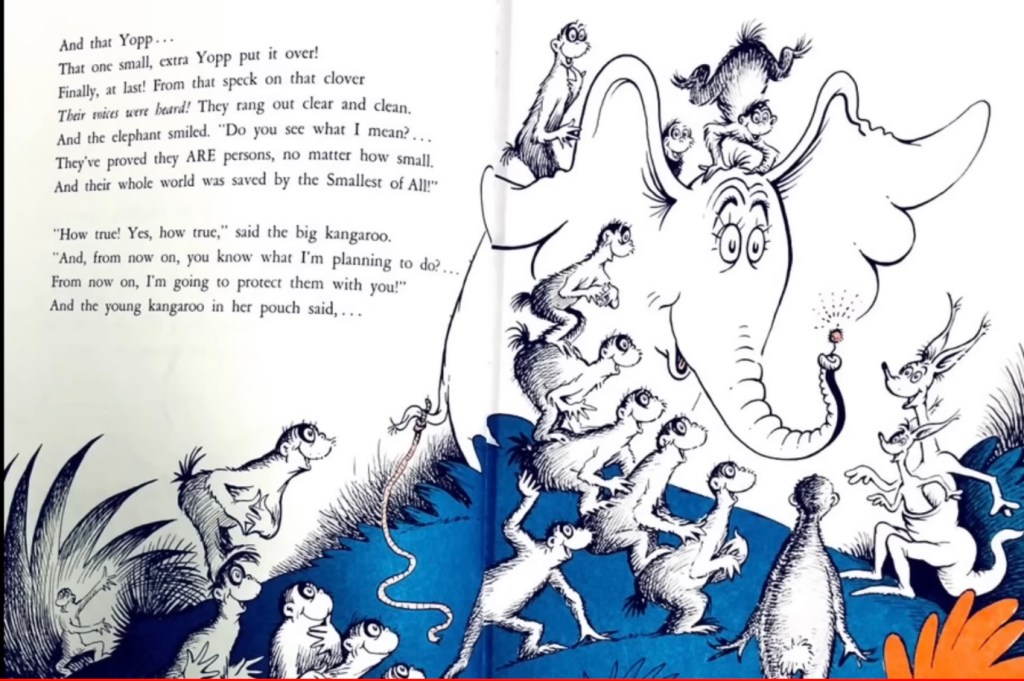
This is my yopp.

Sometimes turning off the news is the best form of mental health protection.

But then we remember. In times of darkness, there are always those working to light a path, helping, fighting for the common good, making progress.

And maybe we, too, can help.

Maybe not in large, brokering peace kind of ways. But in small ways that, combined together with the small ways of many, many others, may help to right a wrong or turn a tide.

I think of Horton Hears a Who by Dr. Seuss, everyone shouting and banging on pots to be heard, but it is the final Yopp of a child that turns the tide, saving their world.

What is your ‘Yopp’?

Only the lonely

Hindsight often can give context and meaning to our struggles, perhaps no more than when we realize that our lowest times have helped someone else hold on. Some comfort, that.

And maybe, even when we don’t have the benefit of that hindsight, we can believe there is purpose and meaning in our difficulties even if we never do know it. Isn’t that the foundation of faith, that things will work together for good in a big picture way if not perhaps in the personal way? And isn’t that what can give us courage and strength to do our best, to hold on, and to persevere?

As Rainer Maria Rilke said:

Among lonely people there is not a single one who can be sure that in his suffering he might not yet console someone else and that the gestures of his most personal helplessness, like so many cues and signals, might not serve as signs guiding the way in the realm of the unfathomable.

The Poet’s Guide to Life: The Wisdom of Rilke by Rainer Maria Rilke.

The world is a complicated, interconnected place, and we are all in it together.

The art of receiving.

Are you good at receiving? Giving often comes naturally, but receiving can be challenging. The mom who wears the pasta necklace and hangs the cotton puff ornament on the tree is sending a powerful message that her child matters, that she loves their thoughtfulness, and that she is honored and grateful to receive their gifts.

The host who immediately opens a guest’s gift of wine and serves it is saying that they value their guests’ choices and are welcoming their contributions to the synergistic experience that is a social gathering.

Henri Nouwen offers this powerful insight:

When someone gives us a watch but we never wear it, that watch is not really received. When someone offers us an idea but we do not respond to it, that idea is not truly received. When someone introduces us to a friend but we ignore him or her, that friend does not feel well received.

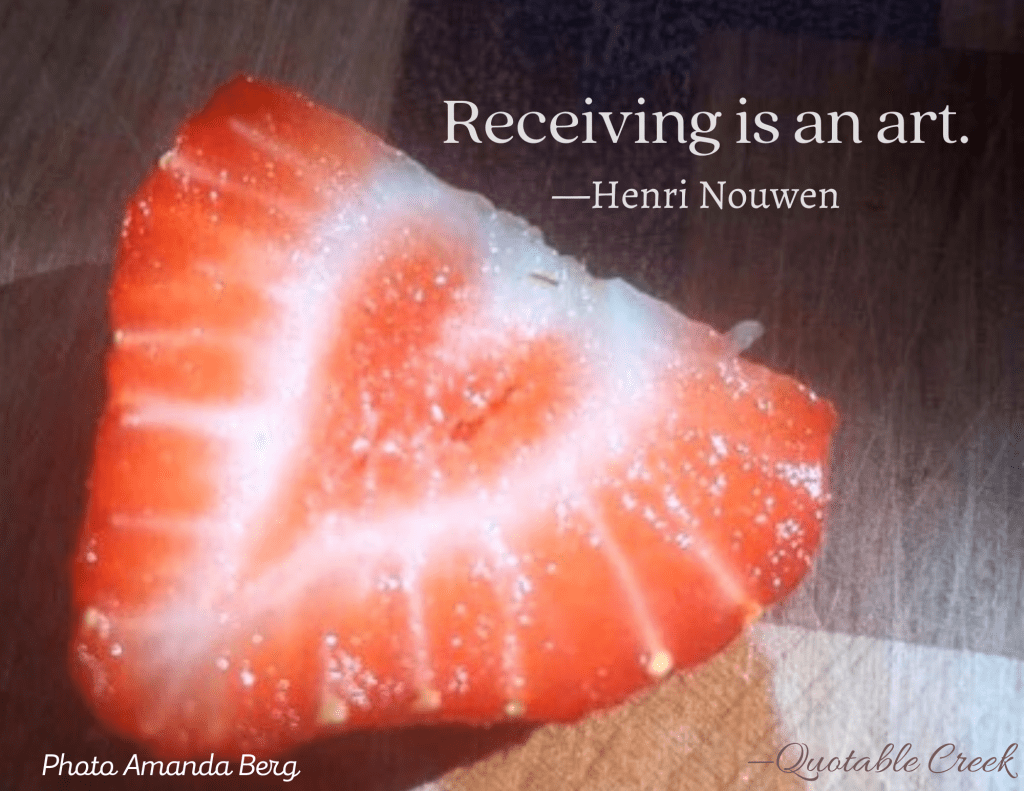
Receiving is an art. It means allowing the other to become part of our lives. It means daring to become dependent on the other. It asks for the inner freedom to say, “Without you I wouldn’t be who I am.” Receiving with the heart is, therefore, a gesture of humility and love. So many people have been deeply hurt because their gifts were not well received. Let us be good receivers.

Henri Nouwen, Bread for the Journey

These words cause us to pause and consider. Are we good receivers? Do we value those gifts and those givers in a way that causes us to open up and expand our walls, and even, perhaps, our sense of self? Can we give up our need to be in control and let our defenses down enough that others around us can share in the very creation of our lives?

We are made for welcome

When we are being welcoming, the focus is outward not inward. We look to what would make the other person comfortable, not what would make us comfortable. We don’t invite vegetarians, and then serve meat. Or teetotalers and serve alcohol. We get out of our own perspective and walk in the guest’s shoes to consider what would make them comfortable.

Aesop illustrated this premise with the Tale of the Fox and the Stork:

A fox invites a stork to eat with him and provides soup in a bowl, which the fox can lap up easily; however, the stork cannot drink it with its beak. The stork then invites the fox to a meal, which is served in a narrow-necked vessel. It is easy for the stork to access but impossible for the fox. The moral drawn is that the trickster must expect trickery in return and that the golden rule of conduct is for one to do to others what one would wish for oneself.

https://en.wikipedia.org/wiki/The_Fox_and_the_Stork

The same is true, presumably, when welcoming people to the Lord’s table. What would make others comfortable? How can you reach more people? What about the way you do things might be off putting? How can you step out of your own perspective to consider what would make others in the community feel welcomed and comfortable? Our job isn’t to be a bar to spreading the word but a conduit.

Desmond Tutu talks about the importance of a broad welcome:

We are made for goodness. We are made for love. We are made for friendliness. We are made for togetherness. We are made for all of the beautiful things that you and I know. We are made to tell the world that there are no outsiders. All are welcome: black, white, red, yellow, rich, poor, educated, not educated, male, female, gay, straight, all, all, all. We all belong to this family, this human family, God’s family.

Mistake police

In this world of constant scrutiny and omnipresent recordings, mistakes seem to have moved from a necessary part of learning to an instant cause for condemnation.

We can all think back to learning to walk and talk or play a sport where the mistakes were a part of learning. Fear of falling down would keep everyone from walking. In order to learn how to make a basket, lots of shots will bounce off the rim and backboard.

When we moved on to raising children, focusing on the mistakes could cripple a child emotionally. Instead, we celebrated the steps forward, the successes. Noted the progress. We don’t expect a toddler to write a dissertation. We celebrate the milestones as they come.

I wonder if that approach would help move our troubled world forward. Celebrating the progress. Looking for the successes. Embracing the common ground. Letting everyone feel that they can continue to learn from their mistakes, that that is part of being human. A world with a little bit of breathing room. We all will mess up. We can show each other grace when we do.

The invisible essential.

Not long ago, the world shut down, and most people were asked to sequester and stay home while essential workers reported, still, for duty. It was a strange time, involving so many swiftly moving facts to assimilate and assess forward progress.

But that question of ‘essential’ is an interesting one. Some of the jobs labeled ‘essential’ or not were surprising choices.

How does one determine what is ‘essential’? What of the artist? With so many schools cutting art and music programs as non-essential, I wonder what the world would look like filled just with grammarians and mathematicians. Surely, art, though it puts no food on the table and sets no broken bones, is essential to the human spirit.

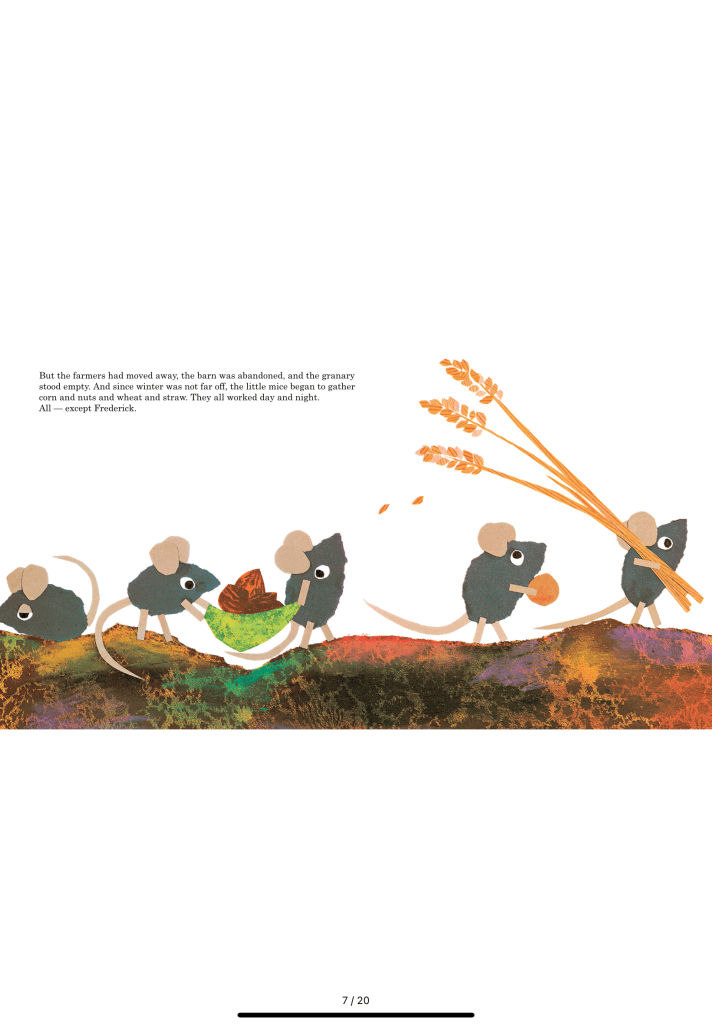
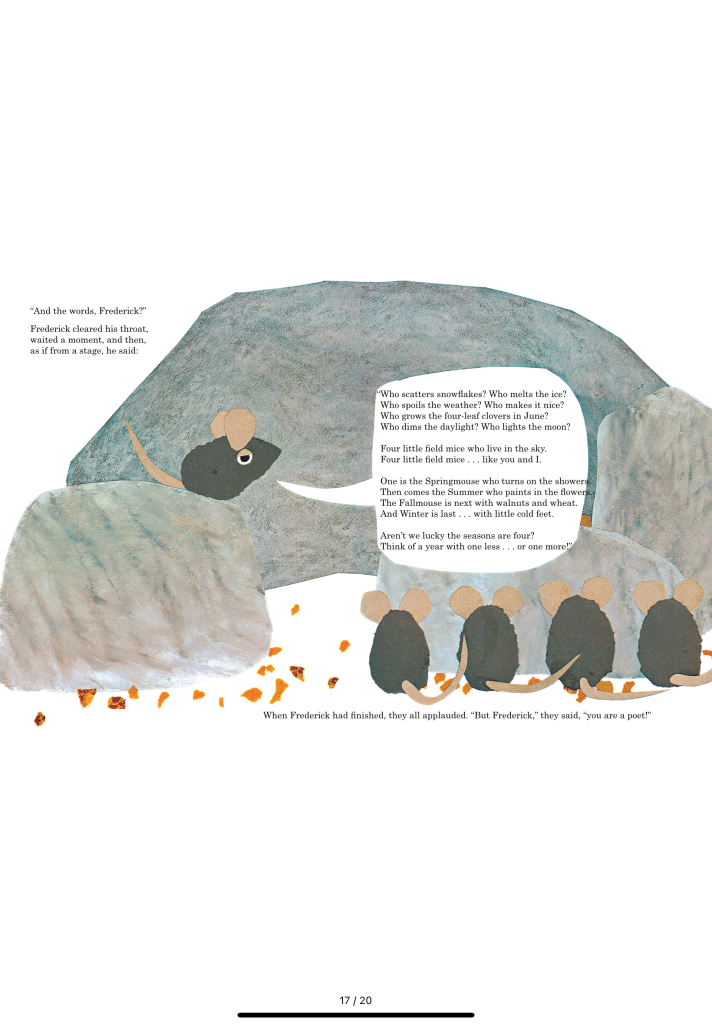
Such is the theme of Frederick by Leo Lionni. While four mice toil to set up stores of grain for winter, one mouse collects color, and sounds, and words.

And when winter came, and the mice were cold and hungry, Frederick’s words sustained them.

So lift a glass in praise to the artists, the writers, the musicians. Those who lift us up and sustain us and offer us beauty for our souls.