
Choosing joy.

Sometimes joy is a matter of perspective. It’s reaching down and being grateful for it all, the mess, the euphoria, the triumphs, and the tragedies. Grateful to be here, to have a voice, to have people to care about, to have a chance to make a difference. Joy in it all is a choice.

In Bread for the Journey, Henri Nouwen unpacks this further:

Joy is what makes life worth living, but for many joy seems hard to find. They complain that their lives are sorrowful and depressing. What then brings the joy we so much desire? Are some people just lucky, while others have run out of luck? Strange as it may sound, we can choose joy. Two people can be part of the same event, but one may choose to live it quite differently from the other. One may choose to trust that what happened, painful as it may be, holds a promise. The other may choose despair and be destroyed by it.  What makes us human is precisely this freedom of choice.

What is the promise behind the circumstances that threaten to steal your joy? Is there something hopeful there? Seeing that promise may just be the key you are looking for.

The art of receiving.

Are you good at receiving? Giving often comes naturally, but receiving can be challenging. The mom who wears the pasta necklace and hangs the cotton puff ornament on the tree is sending a powerful message that her child matters, that she loves their thoughtfulness, and that she is honored and grateful to receive their gifts.

The host who immediately opens a guest’s gift of wine and serves it is saying that they value their guests’ choices and are welcoming their contributions to the synergistic experience that is a social gathering.

Henri Nouwen offers this powerful insight:

When someone gives us a watch but we never wear it, that watch is not really received. When someone offers us an idea but we do not respond to it, that idea is not truly received. When someone introduces us to a friend but we ignore him or her, that friend does not feel well received.

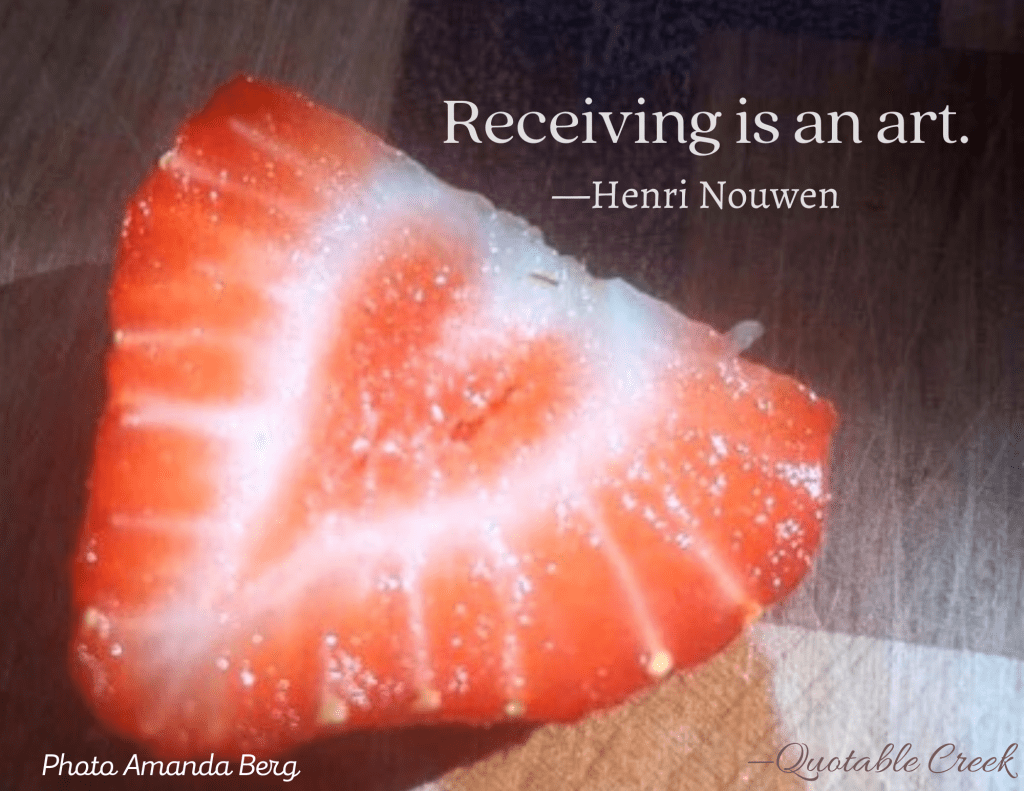
Receiving is an art. It means allowing the other to become part of our lives. It means daring to become dependent on the other. It asks for the inner freedom to say, “Without you I wouldn’t be who I am.” Receiving with the heart is, therefore, a gesture of humility and love. So many people have been deeply hurt because their gifts were not well received. Let us be good receivers.

Henri Nouwen, Bread for the Journey

These words cause us to pause and consider. Are we good receivers? Do we value those gifts and those givers in a way that causes us to open up and expand our walls, and even, perhaps, our sense of self? Can we give up our need to be in control and let our defenses down enough that others around us can share in the very creation of our lives?

Choose joy.

joy

Sometimes joy is a matter of perspective. It’s reaching down and being grateful for it all, the mess, the euphoria, the triumphs, and the tragedies. Grateful to be here, to have a voice, to have people to care about, to have a chance to make a difference. Joy in it all is a choice.

In Bread for the Journey, Henri Nouwen unpacks this further:

Joy is what makes life worth living, but for many joy seems hard to find. They complain that their lives are sorrowful and depressing. What then brings the joy we so much desire? Are some people just lucky, while others have run out of luck? Strange as it may sound, we can choose joy. Two people can be part of the same event, but one may choose to live it quite differently from the other. One may choose to trust that what happened, painful as it may be, holds a promise. The other may choose despair and be destroyed by it.  What makes us human is precisely this freedom of choice.

What is the promise behind the circumstances that threaten to steal your joy? Is there something hopeful there? Seeing that promise may just be the key you are looking for.