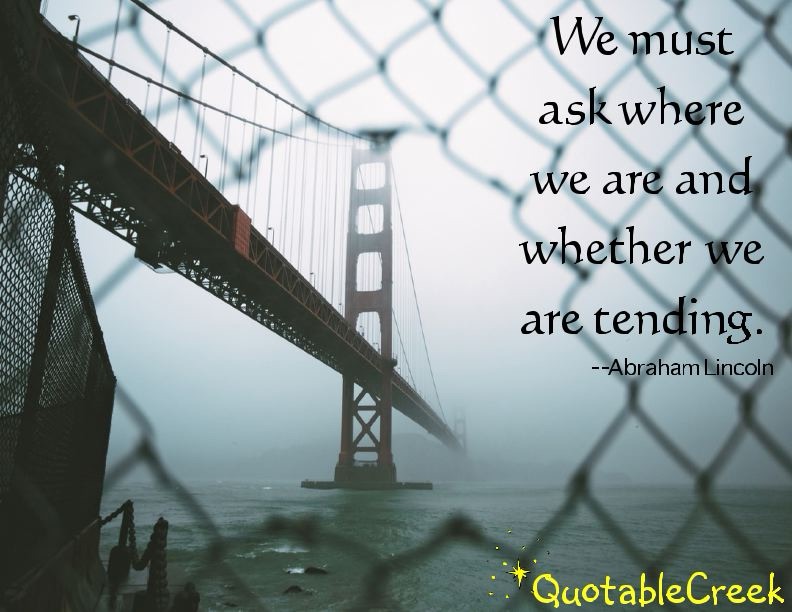
Tending is such a dear word, not much used these days. To tend: ‘to care or look after, to give one’s attention to’. Lincoln reminds us to ask where we are and whether we are tending. Where we are. Are we where we want to be? Are our relationships as tender and loving as we would like? Are we tending? Do we feel someone is tending to that relationship with us? Do we feel tended to?
What are the kind, gentle ways we can tend to our relationships?
When someone tells us they are sad their relationship with us isn’t better, is our first instinct to deflect, blame, ignore, change the subject, shrug, laugh? Or is to pause, breathe deep, and say, ‘Yes, I wish our relationship was closer, too. Where are we? Are we tending? What can we do to better tend our relationship and draw closer rather than shrug and pull away?’
The world is certainly full of shruggers who turn away even from their closest relationships in favor of new friends or less vulnerability. The shruggers, the cynics, the distancers, the superficial. So be it.
But God bless the tenders. That is where the heart is.
This week, Pope Francis passed away, and stories are circulating about some of the changes he made in the church and some of his more compelling speeches. Back in 2017, in a surprise TED talk, Pope Francis put in a request for more tenderness in our lives. He stressed that we are all connected:
First and foremost, I would love it if this meeting could help to remind us that we all need each other, none of us is an island, an autonomous and independent “I,” separated from the other, and we can only build the future by standing together, including everyone. We don’t think about it often, but everything is connected, and we need to restore our connections to a healthy state. Even the harsh judgment I hold in my heart against my brother or my sister, the open wound that was never cured, the offense that was never forgiven, the rancor that is only going to hurt me, are all instances of a fight that I carry within me, a flare deep in my heart that needs to be extinguished before it goes up in flames, leaving only ashes behind.
Many of us, nowadays, seem to believe that a happy future is something impossible to achieve. While such concerns must be taken very seriously, they are not invincible. They can be overcome when we don’t lock our door to the outside world. Happiness can only be discovered as a gift of harmony between the whole and each single component. Even science – and you know it better than I do – points to an understanding of reality as a place where every element connects and interacts with everything else.
The Pope suggested tenderness for bridging the divides that separate us:
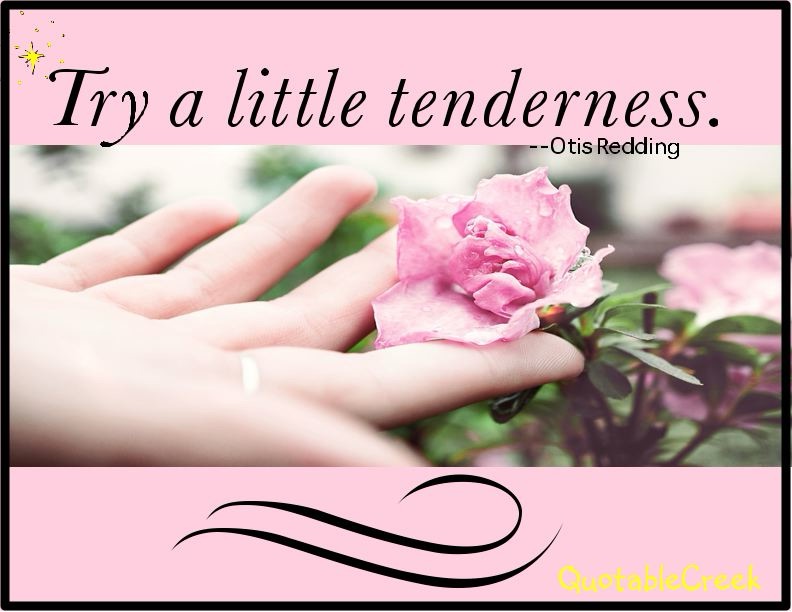
And what is tenderness? It is the love that comes close and becomes real. It is a movement that starts from our heart and reaches the eyes, the ears and the hands. Tenderness means to use our eyes to see the other, our ears to hear the other, to listen to the children, the poor, those who are afraid of the future.To listen also to the silent cry of our common home, of our sick and polluted earth. Tenderness means to use our hands and our heart to comfort the other, to take care of those in need….
Yes, tenderness is the path of choice for the strongest, most courageous men and women. Tenderness is not weakness; it is fortitude. It is the path of solidarity, the path of humility. Please, allow me to say it loud and clear: the more powerful you are, the more your actions will have an impact on people, the more responsible you are to act humbly. If you don’t, your power will ruin you, and you will ruin the other. …
The future of humankind isn’t exclusively in the hands of politicians, of great leaders, of big companies.Yes, they do hold an enormous responsibility. But the future is, most of all, in the hands of those peoplewho recognize the other as a “you” and themselves as part of an “us.” We all need each other. And so, please, think of me as well with tenderness, so that I can fulfill the task I have been given for the good of the other, of each and every one, of all of you, of all of us. Thank you.
As we grieve, Pope Francis, let us heed his words. The future is in our hands. Can we think of and treat each other with tenderness? Do we recognize that we are all part of an “us”?
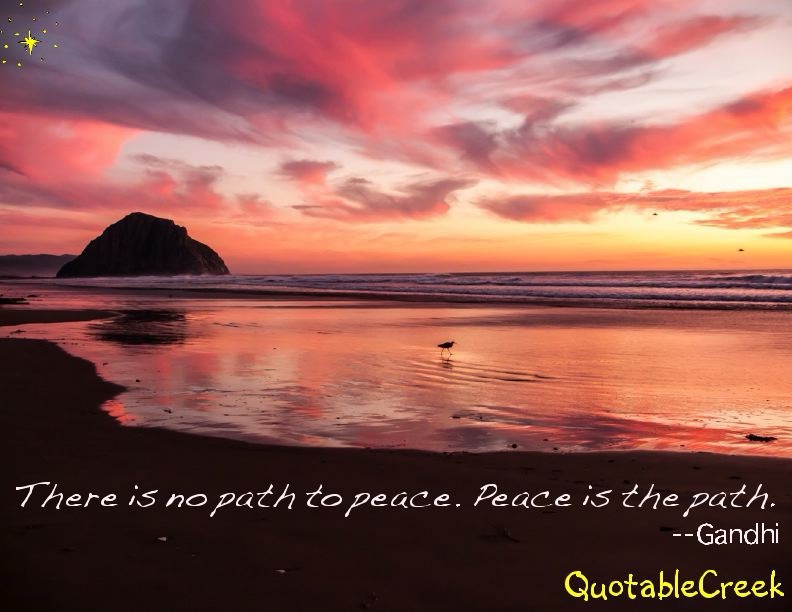
Before his crucifixion, Jesus told his disciples: “Peace I leave with you; my peace I give you. I do not give to you as the world gives. Do not let your hearts be troubled and do not be afraid.” (John 14:27.)
Today, as we prepare to celebrate Easter, remember his words and his sacrifice. For a lovely story and song in the Easter spirit, go here:
Grace is upon us Open your heart It is done
Grace is upon us Open your heart This is love,
The Lord is here This is love
Come to the highest point of the mountain At the earliest possible moment
With appreciation to MovedByLove.com, consider this beautiful parable of a saint:
The story of the Holy Shadow Osho
There once lived a saint so good that the angels came from heaven to see how a man could be so godly. This saint went about his daily life diffusing virtue as the stars diffuse light and the flowers scent, without being aware of it. His day could be summed up by two words — he gave, he forgave — yet these words never passed his lips. They were expressed in his ready smile, his kindness, forbearance, and charity.
The angels said to God, “Lord, grant him the gift of miracles.”
God replied, “Ask what it is that he wishes.”
They said to the saint, “Would you like the touch of your hands to heal the sick?”
“No,” answered the saint. “I would rather God do that.”
“Would you like to convert guilty souls and bring back wandering hearts to the right path?”
“No, that is the angels’ mission. It is not for me to convert.”
“Would you like to become a model of patience, attracting men by the luster of your virtues, and thus glorifying God?”
“No,” replied the saint. “If men should be attracted to me, they would become estranged from God.” “What is it that you desire, then?” asked the angels.
“What can I wish for?” asked the saint smiling. “That God gives me his grace; with that would I not have everything?”
The angels said, “You must ask for a miracle, or one will be forced upon you.”
“Very well,” said the saint. “That I may do a great deal of good without ever knowing it.”
The angels were perplexed. They took counsel and resolved upon the following plan: every time the saint’s shadow fell behind him or to either side, so that he could not see it, it would have the power to cure disease, soothe pain, and comfort sorrow.
When the saint walked along, his shadow, thrown on the ground on either side or behind him, made arid paths green, caused withered plants to bloom, gave clear water to dried-up brooks, fresh color to pale children, and joy to unhappy men and women.
The saint simply went about his daily life diffusing virtue as the stars diffuse light and the flowers scent, without being aware of it. The people, respecting his humility, followed him silently, never speaking to him about his miracles. Soon they even forgot his name, and called him “The Holy Shadow.”
This is the ultimate: one has to become the holy shadow, just a shadow of God. This is the greatest revolution that can happen to a human being: the transfer of the center. You are no longer your own center; God becomes your center. You live like his shadow. You are not powerful, because you don’t have any center to be powerful. You are not virtuous; you don’t have any center to be virtuous. You are not even religious; you don’t have any center to be religious. You are simply not, a tremendous emptiness, with no barriers and blocks, so the divine can flow through you unhindered, uninterpreted, untouched — so the divine can flow through you as he is, not as you would like him to be. He does not pass through your center — there is none. The center is lost.
This is the meaning of this sutra: that finally you have to sacrifice your center so you cannot think in terms of the ego again, you cannot utter “I,” to annihilate yourself utterly, to erase yourself utterly. Nothing belongs to you; on the contrary, you belong to God. You become a holy shadow.
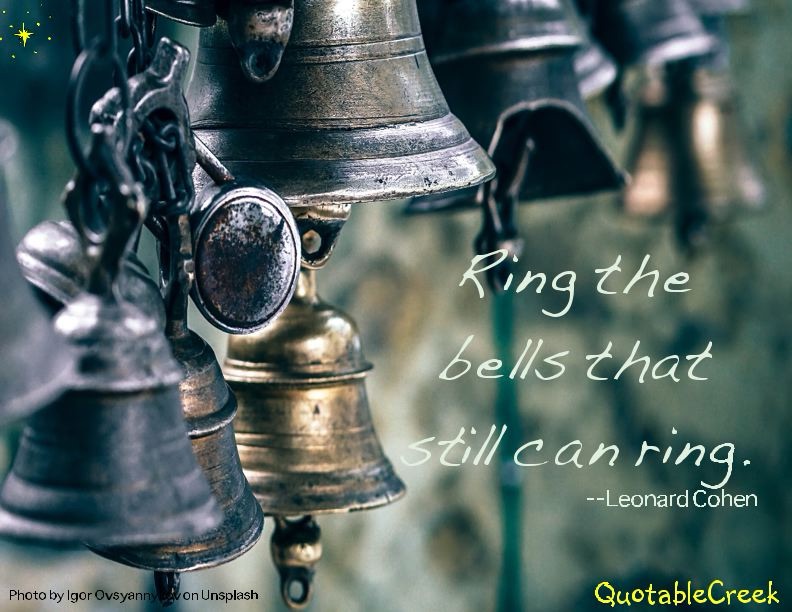
Maybe you’re older, or weaker, or not quite as sharp as you used to be. Maybe your energy is fading, or you’ve gotten depressed and overwhelmed. Maybe all your ducks aren’t in a row, and all your bells don’t ring. Maybe you don’t think you can make a difference.
It is in just such times that you must press on. Your gifts are needed. The world doesn’t need you to be perfect; it needs you to show up.
We are complicated and carry with us all the ages we have been and life experiences we have had. As Sandra Cisneros put it:
What they don’t understand about birthdays and what they never tell you is that when you’re eleven, you’re also ten, and nine, and eight, and seven, and six, and five, and four, and three, and two, and one. And when you wake up on your eleventh birthday you expect to feel eleven, but you don’t.
So at 63, we can still long for a parent’s unconditional love rather than constant harsh judgment or expectation, or quiver in excitement over an upcoming holiday, or find ourselves sleepless over a stupid thing we said yet again. There is no ta-da moment where we wake up and suddenly make only good decisions and wise pronouncements.
It is all a becoming.
And hopefully those experiences we have had at all those prior ages help increase our empathy and understanding of others bumbling along, also becoming. Because what it really is, this thing called life, is putting one foot in front of the other and keeping on, striving.
is so easy to work, work, work, building up our resumés. Noses to the grindstone. Shouldering on. Or for those who aren’t in jobs any longer, filling our days with tasks, scrolling the news. But, when it all comes to a stop, when we are done on this Earth, have we built up what really matters?
Will we leave behind people who loved us, who we loved with everything we had to give while we had the chance to give it? Have we showed our people how much they mean to us? Have we dared to truly love?
Or will we leave too much left unsaid, unfelt, unloved?
Do not lose heart. The challenges you see today are the ones you must face. You are strong enough to do your part, and you will find allies everywhere you look.
Look out over the prow; there are millions of boats of righteous souls on the waters with you. Even though your veneers may shiver from every wave in this stormy roil, I assure you that the long timbers composing your prow and rudder come from a greater forest. That long-grained lumber is known to withstand storms, to hold together, to hold its own, and to advance, regardless.
In any dark time, there is a tendency to veer toward fainting over how much is wrong or unmended in the world. Do not focus on that. There is a tendency, too, to fall into being weakened by dwelling on what is outside your reach, by what cannot yet be. Do not focus there. That is spending the wind without raising the sails.
We are needed, that is all we can know. And though we meet resistance, we more so will meet great souls who will hail us, love us and guide us, and we will know them when they appear. Didn’t you say you were a believer? Didn’t you say you pledged to listen to a voice greater? Didn’t you ask for grace? Don’t you remember that to be in grace means to submit to the voice greater?
Ours is not the task of fixing the entire world all at once, but of stretching out to mend the part of the world that is within our reach. Any small, calm thing that one soul can do to help another soul, to assist some portion of this poor suffering world, will help immensely. It is not given to us to know which acts or by whom, will cause the critical mass to tip toward an enduring good.
You do not need to do everything. Do what you can, where you can, with what you can. Your actions combined with actions from millions of like-minded individuals will make a difference for good.
Sunrise defeats night. The darkness will be driven away. When in the midst of the darkness, it may feel unending, but as day follows night, this, too, shall pass. The beauty of a sunrise is a lovely image to keep in mind when going through a problem. As sunrise defeats night, so hope conquers a problem. In times of great difficulty, we must hold on to hope that things will improve and that we can help.
Jane Goodall speaks to her hope for our future and, specifically, her hope in our youth in this moving speech.
She is right: if we don’t have hope, we give up, we do nothing. She says, “In this world of violence and fear, we must have hope for a better future.” That hope will sustain us and give us strength to solve the problems we face, as surely as day will follow night if we hold on.
In a grieving, struggling world, we pray. Full of humility, we fall to our knees. Gobsmacked by the fragility of life and the interconnectedness of all creation, we lift our eyes to the Lord and join voices around the world to offer thanks, plead for mercy, and reach for hope.
Never before has it been more obvious that we belong to each other and are all in this together.
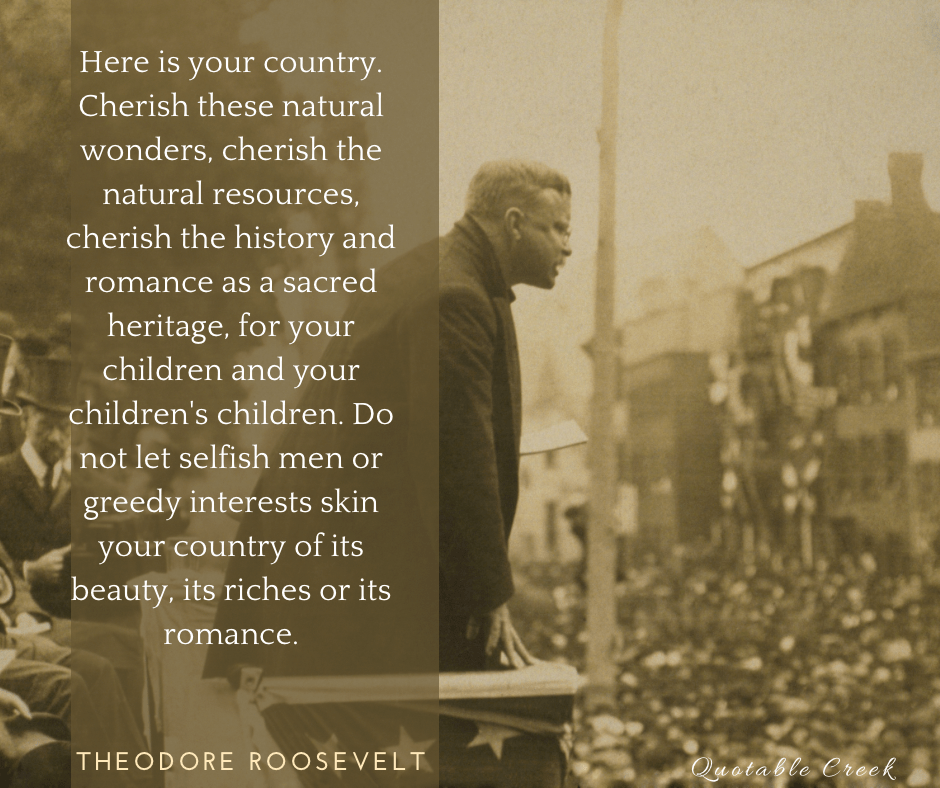
When we think of America, what do we picture? Surely the abundance of natural beauty, much of it, 230 million acres worth, protected by President Roosevelt. National Parks, wildlife refuges, forests, oceans, Great Lakes.
Perhaps we also think of American ideals like freedom in religion and speech, the right to petition the government for redress of grievances, the concept of equal justice under the law, the notion of the American dream that no matter where you come from, you can rise above your circumstances with integrity and hard work. American values.
Perhaps we picture our strength in diversity, of backgrounds, countries of origin, viewpoints, and culture. A heterogeneous mix of people coming together e plutibus unum, out of many, one.
President Roosevelt urged us to cherish our country, its natural wonders and resources, its history and romance, its sacred heritage for our children and children’s children. Let us heed his words. America is a special place and must be protected, valued, and nurtured.

 QuotableCreek.com