Have you ever been lost? Perhaps in a crowd when you look up and realize all the people you know are gone, and, despite the crowd, you are alone. Or maybe driving when nothing is familiar, and you are getting farther and farther from your destination. Or maybe you’ve been lost emotionally, confronted with too many choices and unsure of which way to move forward.
In most of these scenarios, when we are deeply and profoundly lost, we need help. There is someone who knows where you are and where you are trying to be and can help point out the way for you. Or someone who can make an announcement over the PA that they are holding on to a lost child. Or someone who can help you walk through your choices and make the best decision.
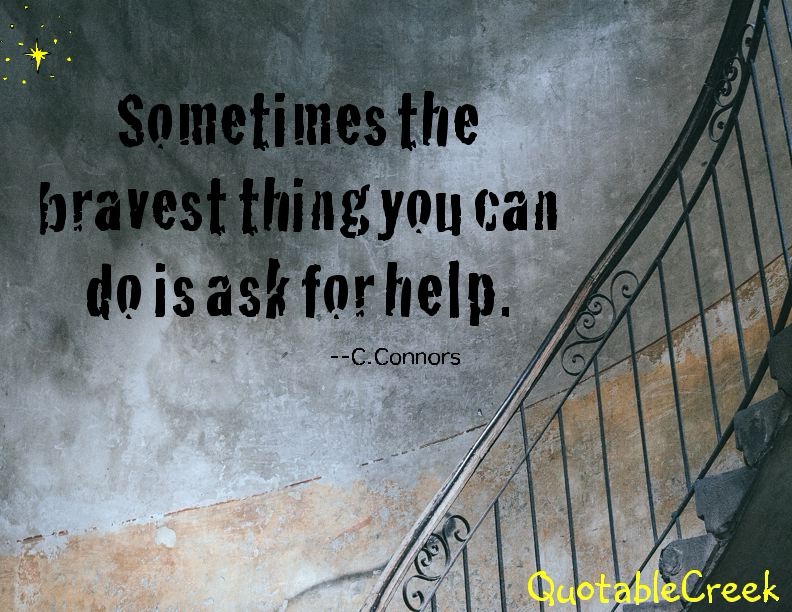
There are times when asking for help is our best option. And despite all our tendencies to want to solve the problem ourselves or keep the problem hidden from the world or to tough it out, seeking help is a brave and rewarding choice.
If you are feeling lost, do not be afraid to ask for help. And for a heart-warming video that demonstrates how rewarding it is both to be found and to help someone who is lost, go here to see a baby bird stuck in a PVC pipe and separated from its parents get reunited through the help of a young man who finds the experience one of the most meaningful he has ever lived.
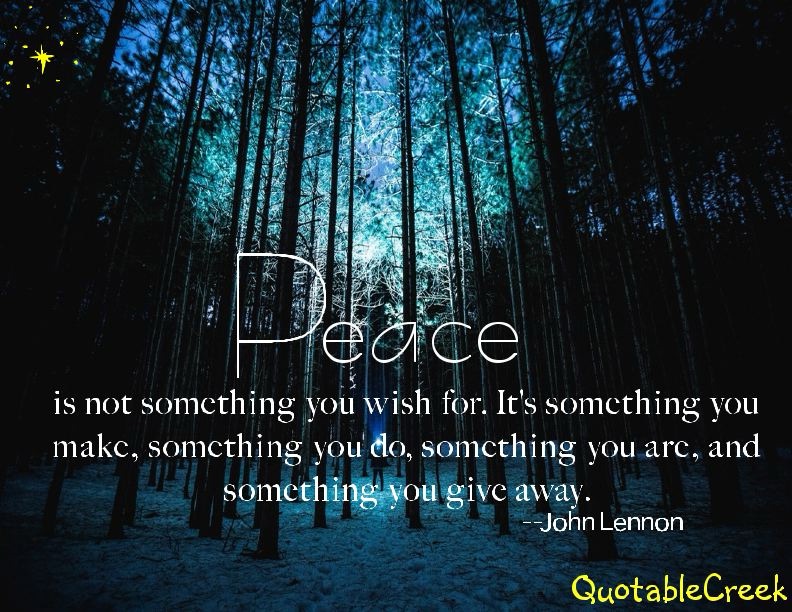
We wish for peace but quarrel with our neighbor. We tremble from talk of war but allow ourselves to respond to others with hate, sarcasm, anger, and animosity. We expect leaders to be the adults in the room, but mock and deride them mercilessly. Peace, it seems, is something for other people out there to do and strive for because we are angry and fed up and impatient, and peace isn’t in our everyday lexicon at the moment.
But we can fight for peace, by controlling ourselves, treating each other respectfully, and speaking out against injustice. Take a minute to watch this beautiful video.
Let there be peace on earth And let it begin with me Let there be peace on earth The peace that was meant to be With God as our father Brothers all are we Let me walk with my brother In perfect harmony
Let peace begin with me Let this be the moment now With every step I take Let this be my solemn vow To take each moment And live each moment To take each moment And live each moment To take each moment And live each moment In peace eternally Let there be peace on earth Let there be peace on earth Let there be peace on earth And let it begin With me (me) With me
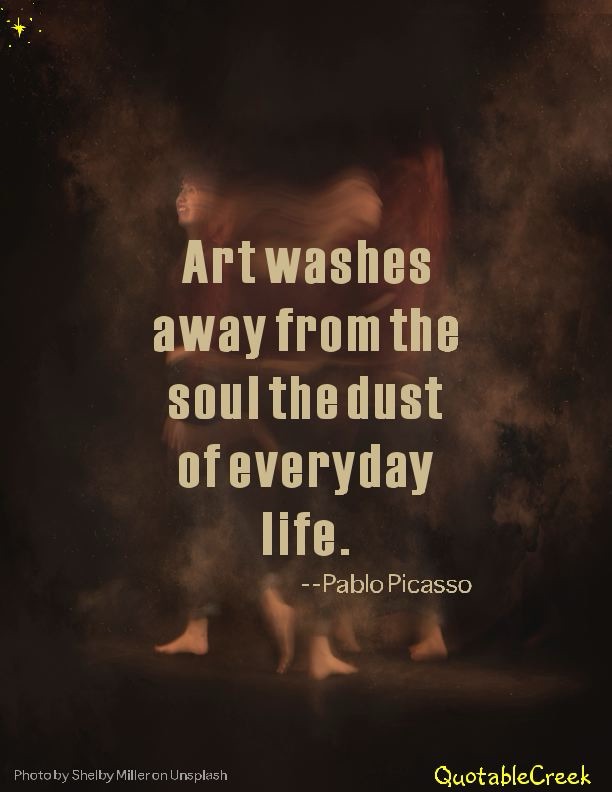
It is so easy to get discouraged when living a creative life. Your words are criticized; your paintings don’t sell. “They” don’t believe you have any promise. Sometimes the struggle to be commercially successful in a creative field can be so daunting that you abandon the art. But then you remember that art isn’t about “them” or “success” or “critical acclaim” at all. It’s about bringing your truths into the light, being creative, pushing yourself, being you.
Nowhere is this better illustrated than in the case of Henri Rousseau, a forty year old toll collector who wanted to paint. His work was derided, and yet he continued. He found joy in the painting. Not until the end of his life did anyone take his work seriously. As summarized by Maria Popova:
Long before history came to celebrate him as one of the greatest artists of his era, long before he was honored by major retrospectives by such iconic institutions as the MoMA and the Tate Museum, long before Sylvia Plath began weaving homages to him into her poetry, he spent a lifetime being not merely dismissed but ridiculed. And yet Rousseau — who was born into poverty, began working alongside his plumber father as a young boy, still worked as a toll collector by the age of forty, and was entirely self-taught in painting — withstood the unending barrage of harsh criticism with which his art was met during his entire life, and continued to paint from a deep place of creative conviction, with an irrepressible impulse to make art anyway…. [Rousseau’s life is] an emboldening real-life story, and a stunningly illustrated one, of remarkable resilience and optimism in the face of public criticism, of cultivating a center so solid and a creative vision so unflinching that no outside attack can demolish it and obstruct its transmutation into greatness.
The message from Rousseau’s life speaks to all of us: he was a success all along. He persevered with a remarkable resilience to produce work that spoke to him and pursued a passion that made him happy. That, the pursuit of great art, rather than the financial success was what gave his journey depth and meaning and lifted up his soul.
Toni Morrison had a gift for complexity and nuance in her writing. Multi-dimensional characters and lots of gray area rule the day in her work.
I found it interesting to hear this perspective from her:
I just think goodness is more interesting. Evil is constant. You can think of different ways to murder people, but you can do that at age five. But you have to be an adult to consciously, deliberately be good — and that’s complicated.
It’s an age-old question whether people are inherently good, whether altruism is learned or instinctive, whether selflessness develops naturally.
But there definitely is an intentionality to doing good, choosing kindness, forgiving, welcoming, holding your tongue. And as we grow older and cast off our childish ways, we learn the wisdom of restraint and forbearance.
And we learn the power of good because often we are on the receiving end of it and know how much it matters.
And then when it’s our turn, we want to pass it on.
What are the things you love, the things you hate, the things that keep you up at night? What are your favorite smells, sounds, tastes, sights, things to touch? How are you inhabiting that body you’ve been given and finding joy?
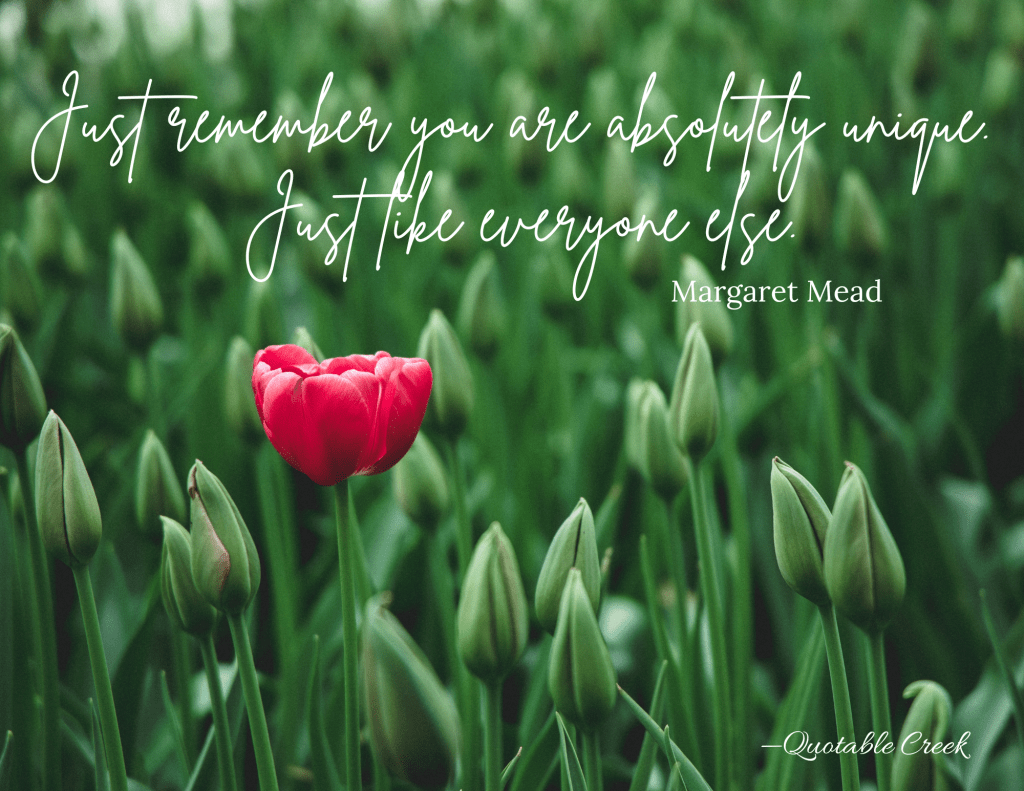
Whatever your combination of answers to these questions is, it is uniquely your own. It is what makes you, you.
For each of us, that answer will be different, but all part of the same global struggle for individualism. Here is George Bernard Shaw’s answer to some of these questions:
So long as I remain alive and well, I shall continue to feel strongly about prose style, to love the surface of the earth, and to take a pleasure in solid objects and scraps of useless information.
None of us knows what the future holds. But we do know the values we hold dear—honesty, integrity, love, compassion, empathy, respect, tolerance. As we raise our children, we instill these values. As adults, we model these values whether we win or lose, succeed or fail, sink or swim. Watching us, they learn, and, as they go forward into their futures, they will bring these values to their own decisions. If each of us does this, we will leave the world a better brighter place for our having been here.
How broad is your focus? On your own needs and wants, or broader? It seems that a broad focus, on others as much or more than ourselves increases empathy and happiness.
As Daniel Goleman said:
Self-absorption in all its forms kills empathy, let alone compassion. When we focus on ourselves, our world contracts as our problems and preoccupations loom large. But when we focus on others, our world expands. Our own problems drift to the periphery of the mind and so seem smaller, and we increase our capacity for connection – or compassionate action.
Does this seem true as you think about the people in your life?
The other thing that happens when you turn your concern to others is the whole world opens up. There is so much to learn, to do, to care about. So many places to put your time and efforts. So many people to love and help.
Sometimes life is hard. Really hard. Relationships falter. Obstacles seem insurmountable. And just getting to the next day feels overwhelming. At times like these, we have to remember that it is OK to struggle.
We don’t have to be perfect. We do not need to have all the answers. Sometimes all we have are questions. But that is often a good place to start. And then we begin again, one foot in front of the other, perhaps not seeing the whole path ahead, but just enough to know where to put each foot.
“Just because something is difficult doesn’t mean it’s impossible. Uncomfortable? Yes. Exhausting and overwhelming and painfully hard? Yes. But not impossible. And it won’t necessarily feel this difficult and debilitating forever. You’ve made it through similar hard things before. You’ve survived every single bad day and every obstacle the universe has ever thrown at you. You’ve survived all the things you felt convinced would break you. Every single one. And this is evidence that you can make it through this too.
“You don’t have to figure everything out today. You don’t have to solve your whole life tonight. And you don’t have to tackle everything at once. You just have to show up and try. You just have to focus on the most immediate thing in front of you. And you have to trust that you’ll figure out the rest along the way. It’s okay to struggle. It’s okay to feel overwhelmed. And its okay to make mistakes. You’re still learning how to navigate this new path. It’s going to take time, and you’re allowed to give yourself that time. You don’t have to be perfect. You don’t have to get all A’s or be the best version of yourself or outperform everyone else. All you have to do is show up and try. It’s always been enough before. It will be enough this time too.”
— Daniell Koepke
Here’s to you finding the light to take that next step, and then the next and the next, until your path leads you out of this present darkness. It is OK to struggle.
Every morning, I wake up and play games. My favorite these days is Connections, a collection of 16 words that you need to group in four groups of four based on a shared connection. Here’s the solution from one last week:
Now, looking at the solution, it’s easy to see the connections. Not so, though, when the words are all scrambled and the connections are unclear. Words may have more than one meaning or be multiple parts of speech. Often the answers are homonyms or are missing a letter. It can be challenging to find the connections among the words.
So, too, with the connections among people. There are some obvious superficial connections perhaps— gender, political affiliation, nationality, religion, age. But what of those deeper, hidden ones? How do we find those to help us feel more like a community?
I thought about this when reading an article about how an introvert, Jay Krasnow, made friends. He had struggled to find true connections at work functions or forced social gatherings, but when he dug deeper, to consider the things he was passionate about and find others who shared those passions, he found the connection he was looking for. He explains:
My failure at connecting wasn’t due to a lack of trying. I spent my 20′s and 30′s collecting and studying books on how to network, forge friendships and build character.
Yet, my principal achievement from reading these books was that I became adept at identifying when other people had read these same books. Meanwhile, my networking skills didn’t significantly improve. Even worse, I felt that by reading books with titles like “How to Talk to Anyone,” I was turning myself into a robot that spewed out inauthentic lines to people who I genuinely wanted to know.
There had to be a better way to build relationships.
For Jay, he decided to start a book club, not one reading the same book, but one where you came and told people about the book you were currently reading. It took off, people came. And those relationships centered on a shared passion spilled over into other friendships:
Connecting with other people through books seemed natural, but I didn’t know if anyone would come. I was prepared to read my book quietly if no one else showed up. Fortunately, both my friends came, and we were joined by one other person we didn’t know.
After the first event, more people started coming, and I started making new friends almost immediately.
The group’s membership grew exponentially. It wasn’t long before I was inviting my new friends to dinners and other events. Because we had established we shared a similar passion, it was easy to branch out from there and find other things to do and talk about.
I wonder if this is what the world needs right now— connections based on a shared love or passion. So much of identity seems tied into a shared hatred or shared anger over something. It seems like that just leads to more loneliness and separation.
One of my personal heroes, Jimmy Carter, almost 100 years old, is trying to hang on to vote in this election. He has been such a wonderful example of walking the walk. He says:
“My faith demands – this is not optional – my faith demands that I do whatever I can, wherever I can, whenever I can, for as long as I can with whatever I have to try to make a difference.”
What a wonderful way to look at our possible impact. Using what we have, not waiting until we have more or better resources or to be older and wiser, or wishing we were younger and stronger. Right now with what’s available.
And wherever we find ourselves, adopting a bloom where you’re planted attitude. Even if we are in our own harsh spot. Considering what can we do here.
And always looking for opportunities to do good. Not necessarily solving the world’s problems, but doing your own little bit of good. Right here, right now.