Looking closely.

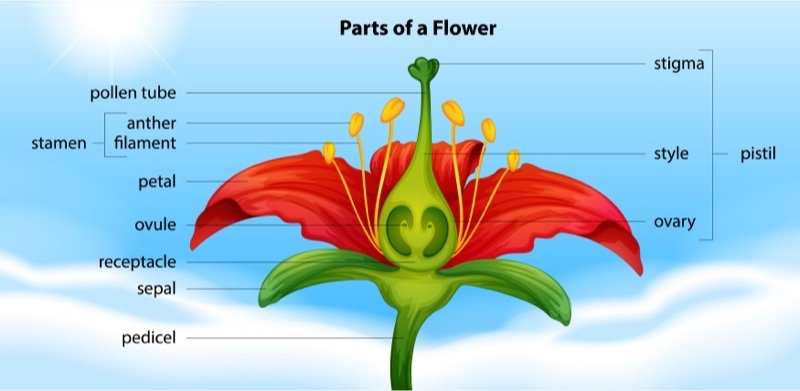
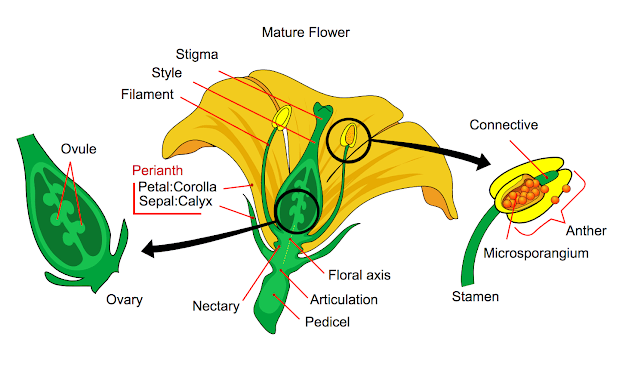
One of the lessons from my elementary school days that still stands out in memory was flower dissection day. I was astonished with the intricacy in a flower. Where before I saw just a flower, now I saw intricate systems for reproduction, male and female organs, color and smell to attract pollinators, a whole interconnection of systems. And this was just what I could see with my naked eye. Later I would discover the microscopic diversity and complexity of plant life. But then as a little 8 year old girl, I was gobsmacked with the complexity of it all.

Isn’t it all miraculous?

These days I need to stop and remember to let my much older self still stand in awe of the complexities of life. The interconnectedness of creation in all its abundance, from the dung beetle pushing its treasured clomp up a hill backwards with its hind feet, to the elements swirling together in a once in a generation storm.

Standing in awe requires both decentering ourselves and paying attention, absorbing both the tiniest details and the grand ones, and realizing our small place in the midst of it all. And even we humans are an amazing complexity of systems and organisms functioning together to keep us alive, made up of around 30 trillion human cells, and 39 trillion non-human microbial cells living on and in us. Our own body is essentially made up of many separate ecosystems. It is staggering.

I love being gobsmacked.

Faith is not a contest.

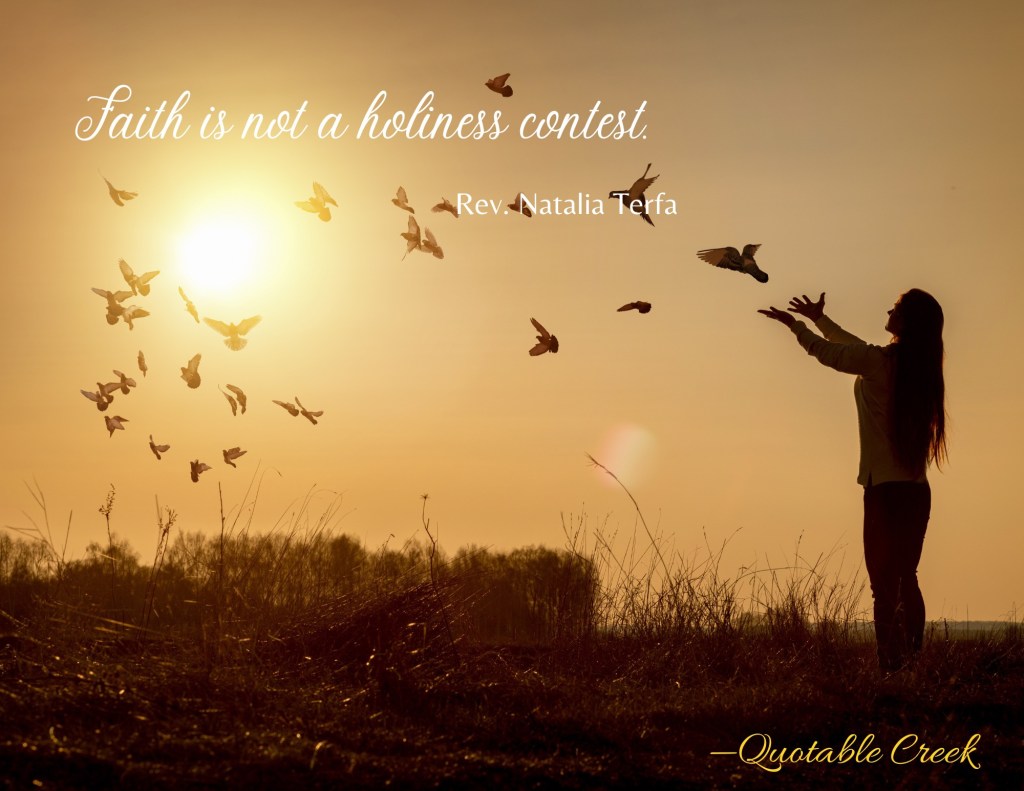
Faith is not a contest. It’s not praying louder or more eloquently for all to see. It’s not giving or fasting for show.

It’s an internal, deeply personal thing between you and God. It’s a dark of the night hope, and a bright green day joy. It the bulb pushing its way stubbornly through the soil with the promise of spring. It’s holding on to the values you know to be right even in the face of temptation, or expedience, or doubt.

Lent is a time for us to dig deep into our souls, to reconnect with God and each other, to remind ourselves of who and whose we are, and then live out that truth.

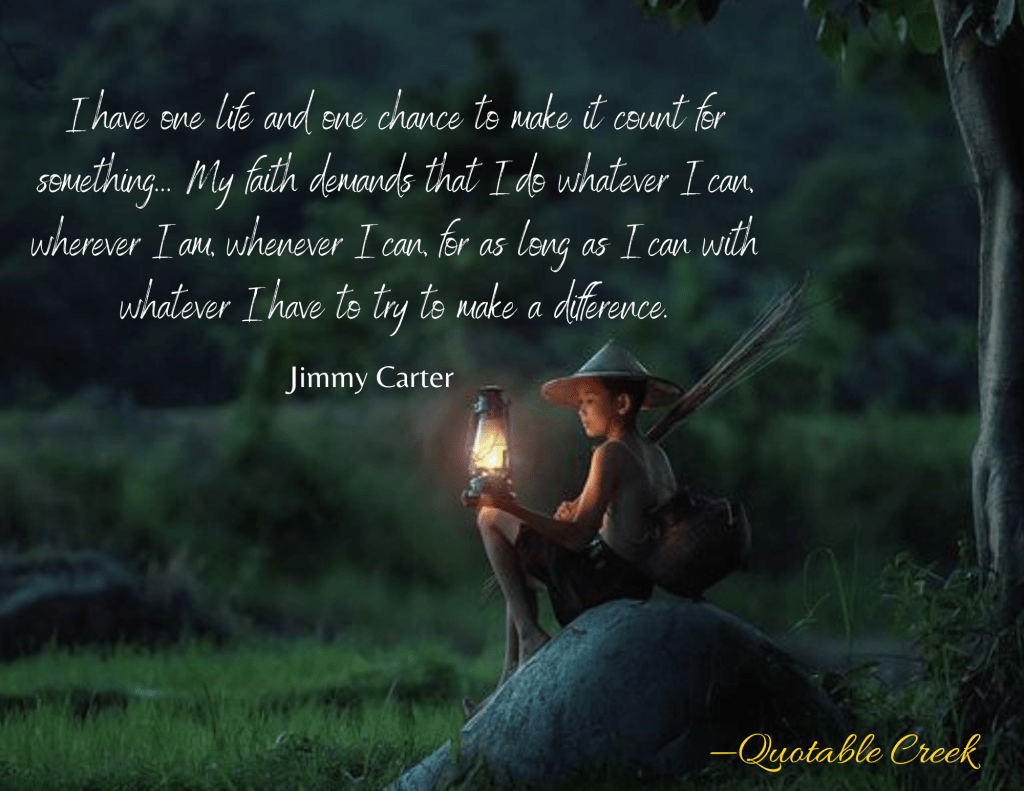
With whatever I have for as long as I can

With the news this week that former President Jimmy Carter has entered home hospice care, many people have been sharing stories about his accomplishments in office—his efforts for peace, his push for environmental stewardship, and his efforts toward energy independence, among others.

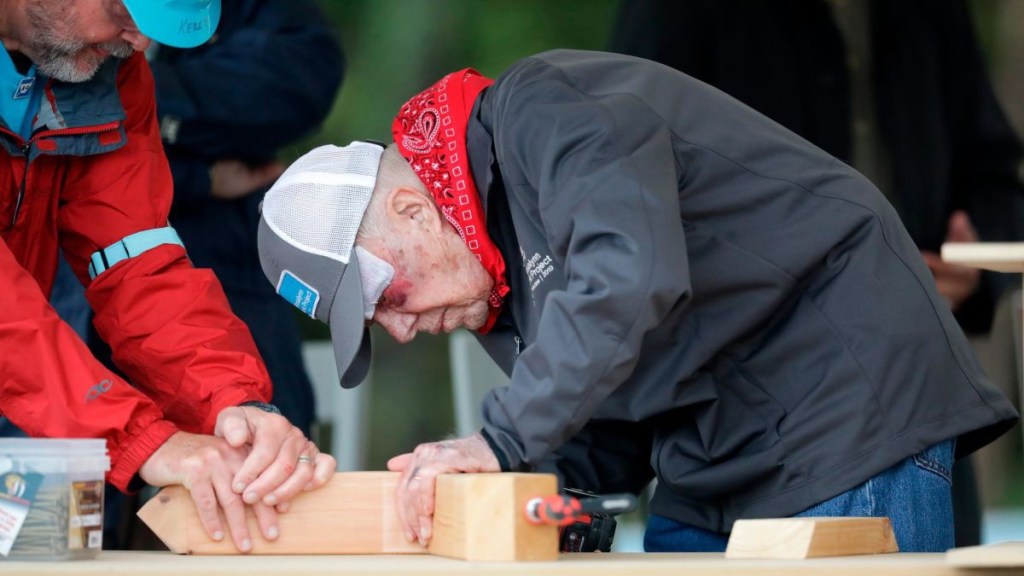
But his most striking accomplishments perhaps are what he has done since he lost his re-election bid. Rather than retreat to Georgia and exit the public arena, he began building houses for the poor, and working for democracy—a principle he firmly believed in—around the world, and standing up for women’s rights, even when that stand conflicted with his religion, and working to eradicate disease and so on. He has never stopped showing up to make a difference.

In a world that has grown more cynical and jaded since his entry into the public spotlight, he continues to show us what it means to walk the walk, quietly, humbly, and without fanfare. Here, surely, is a good and faithful servant of God.

Melting pot or mosaic?

When I was a girl, text books used the term ‘melting pot’ to describe America as if everyone were thrown into one big pot and all the differences were boiled out, with America becoming just one big homogenous pot of glop. But better metaphors have popped up in the years since. Such as a salad bowl:

We don’t need a melting pot in this country, folks. We need a salad bowl. In a salad bowl, you put in the different things. You want the vegetables – the lettuce, the cucumbers, the onions, the green peppers – to maintain their identity. You appreciate differences.

Jane Elliot

But perhaps my favorite is Jimmy Carter’s:

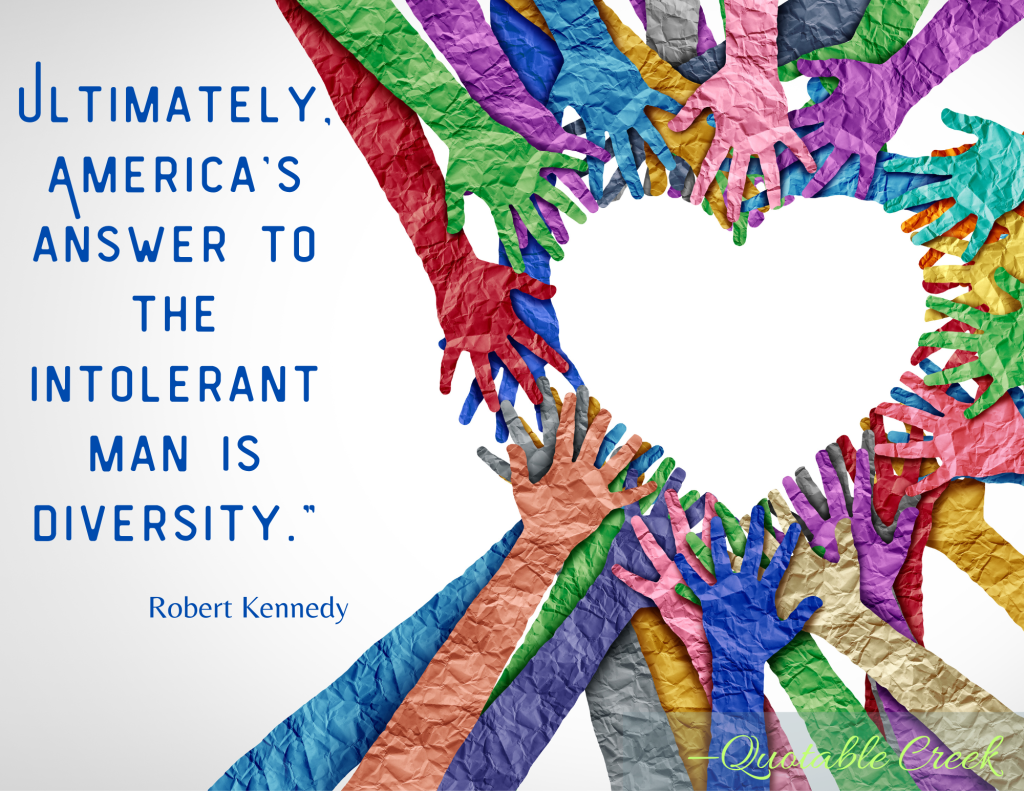
We become not a melting pot but a beautiful mosaic. Different people, different beliefs, different yearnings, different hopes, different dreams.

Jimmy Carter

I love the idea of a mosaic to define America—beauty in all the bits and pieces, each a small distinct individual unit but also a necessary part of a larger picture.

No matter how you describe it, America at its best, living up to its ideals, is stronger because of its diversity, the unique perspectives, the mix of voices, backgrounds, cultures, and traditions.

How to value a life

A case from my early days as a lawyer still bothers me. It wasn’t even my case, just one in our firm, handled, in my opinion, wrong. Not wrong, perhaps, in the legal sense, but wrong in the great moral cosmic picture of things we know to be true sense. I think of it periodically. In the matter, a little girl wearing a bright red sweater crossed in an intersection against the light and was killed by an oncoming car. On appeal from the substantial wrongful death verdict, my colleague argued that the judgment was too high because this little girl wasn’t particularly special. She wasn’t a violin prodigy, for instance, or a young movie star. She didn’t make any money or show any unique promise to do so. She was just a girl, admittedly beloved by her family, but her death might, in fact, save the parents money, what with no need now to support her or send her to college or buy her a stuffed animal for her birthday.

I thought of this case when I read about a man released from prison this week after decades in jail when the judge concluded there was substantial evidence of his innocence of a murder. Not innocence in general, I suppose, because he admits to selling drugs at the time of the killing. But innocence of murder. What is this man’s life worth? How do you value it? What is the value of the students’ lives struck down recently at a college shooting, or at a celebration, or an elementary school? How do we value these lives lost in an ever-increasingly violent society? What of the lives lost in a devastating earthquake? Do we somehow weigh lives against another, concluding some are more valuable than others? Do we consider the monetary value of each life, as my colleague argued? Have we somehow gotten to a place where the tragic loss of life from violence is normal?

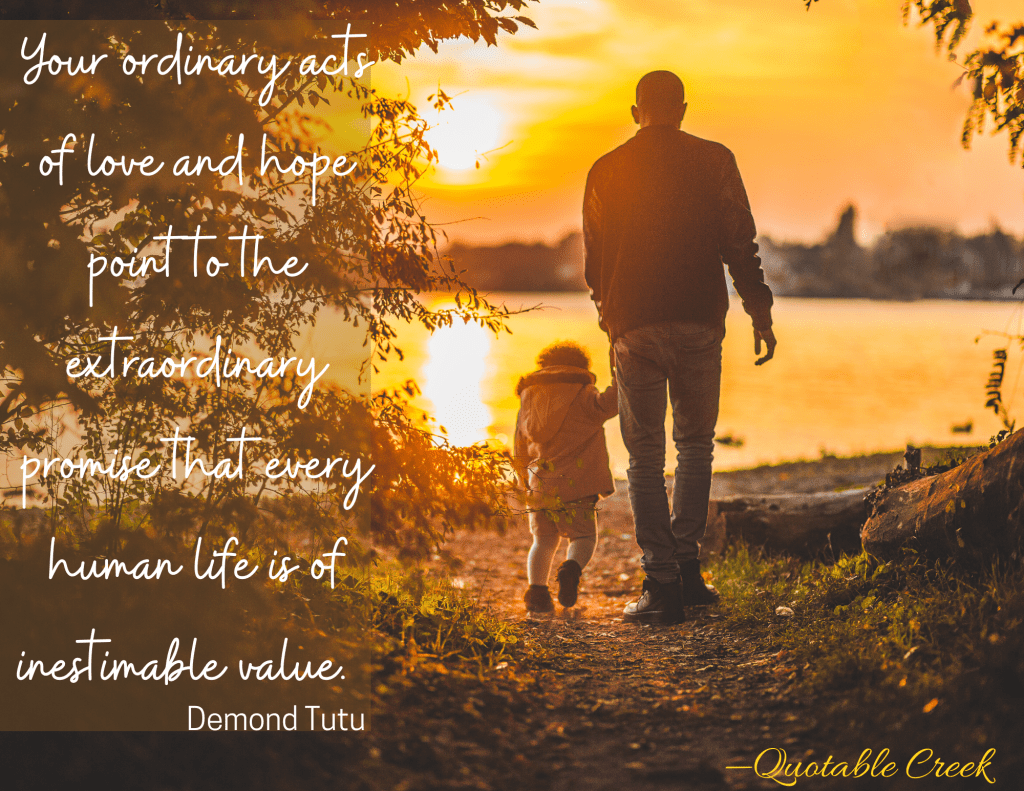
Have we lost something about the ‘inestimable value’ of human life?

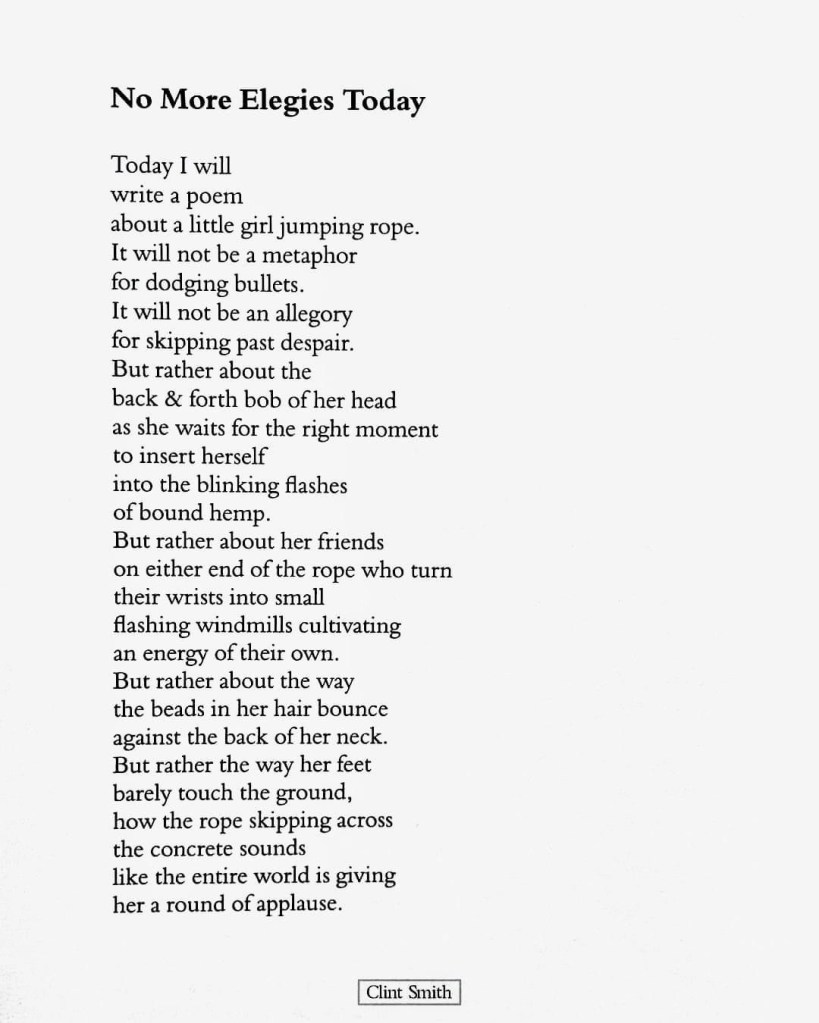
I came across this poem offered up in the face of unceasing violence. It spoke to me in way that got behind my buffers and filters, and approached what is true.

There is love

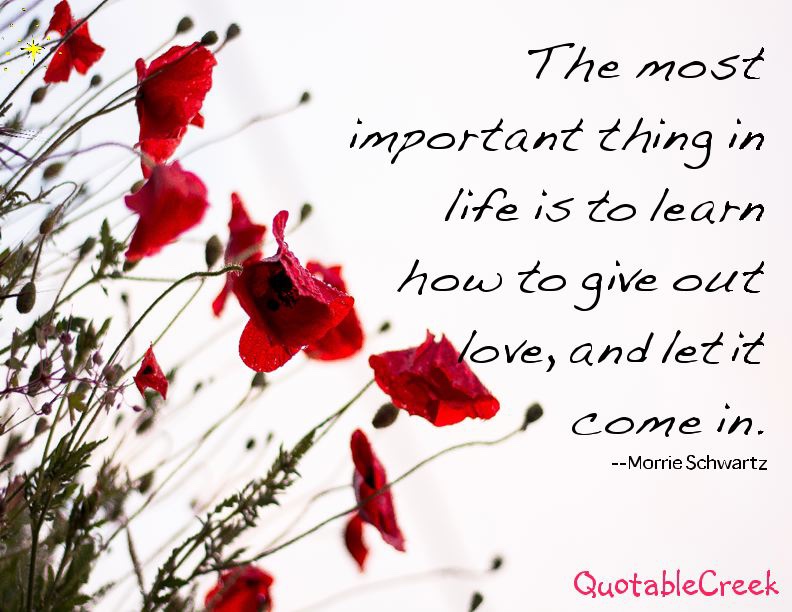
Sometimes we just need to get out of the way. What if we think of ourselves as vessels to collect love and then pour it out–not just on ourselves and those close to us, but on everyone and everything? What would our days look like if every encounter with someone else was an opportunity to be loving and thoughtful? What would our world look like if we used our time and energy to love it? What would our relationships look like if we laid down all our weapons–anger, resentment, hurt, selfishness–and just took the time to love each other, as if our very lives depended on it? They just may.

Erring in the direction of kindness

What do we regret most as we contemplate the end of our time here? Maybe the lesson from that regret can inform our present. In an outstanding commencement speech, George Saunders reflects on his own failures and encourages the graduating students to look for opportunities to be kind. He reflects on a memory haunting him from his childhood:

In seventh grade, this new kid joined our class. In the interest of confidentiality, her Convocation Speech name will be “ELLEN.” ELLEN was small, shy. She wore these blue cat’s-eye glasses that, at the time, only old ladies wore. When nervous, which was pretty much always, she had a habit of taking a strand of hair into her mouth and chewing on it.

So she came to our school and our neighborhood, and was mostly ignored, occasionally teased (“Your hair taste good?” — that sort of thing). I could see this hurt her. I still remember the way she’d look after such an insult: eyes cast down, a little gut-kicked, as if, having just been reminded of her place in things, she was trying, as much as possible, to disappear. After awhile she’d drift away, hair-strand still in her mouth. At home, I imagined, after school, her mother would say, you know: “How was your day, sweetie?” and she’d say, “Oh, fine.” And her mother would say, “Making any friends?” and she’d go, “Sure, lots.”

Sometimes I’d see her hanging around alone in her front yard, as if afraid to leave it.

And then — they moved. That was it. No tragedy, no big final hazing.

One day she was there, next day she wasn’t.

End of story.

Now, why do I regret that? Why, forty-two years later, am I still thinking about it? Relative to most of the other kids, I was actually pretty nice to her. I never said an unkind word to her. In fact, I sometimes even (mildly) defended her.

But still. It bothers me.

So here’s something I know to be true, although it’s a little corny, and I don’t quite know what to do with it:

What I regret most in my life are failures of kindness. 

Those moments when another human being was there, in front of me, suffering, and I responded . . . sensibly. Reservedly. Mildly.

We all have so many opportunities to make a difference, just by simply being kind, offering a smile, reaching out in friendship. And, when we reflect on the kindnesses that have made the difference to each of us in our own lives, we realize those little shows of kindness are what matter.

Saunders continues to remind each of us that our inner selves, our souls, shine as brightly as ever, and, even as we strive for success, to keep checking in with that inner place, and to believe it exists and greet the world from there:

Do all the other things, the ambitious things — travel, get rich, get famous, innovate, lead, fall in love, make and lose fortunes, swim naked in wild jungle rivers (after first having it tested for monkey poop) – but as you do, to the extent that you can, err in the direction of kindness. Do those things that incline you toward the big questions, and avoid the things that would reduce you and make you trivial. That luminous part of you that exists beyond personality — your soul, if you will — is as bright and shining as any that has ever been. Bright as Shakespeare’s, bright as Gandhi’s, bright as Mother Teresa’s. Clear away everything that keeps you separate from this secret luminous place. Believe it exists, come to know it better, nurture it, share its fruits tirelessly.

When you are confronted with a choice, err in the direction of kindness.

To have a friend

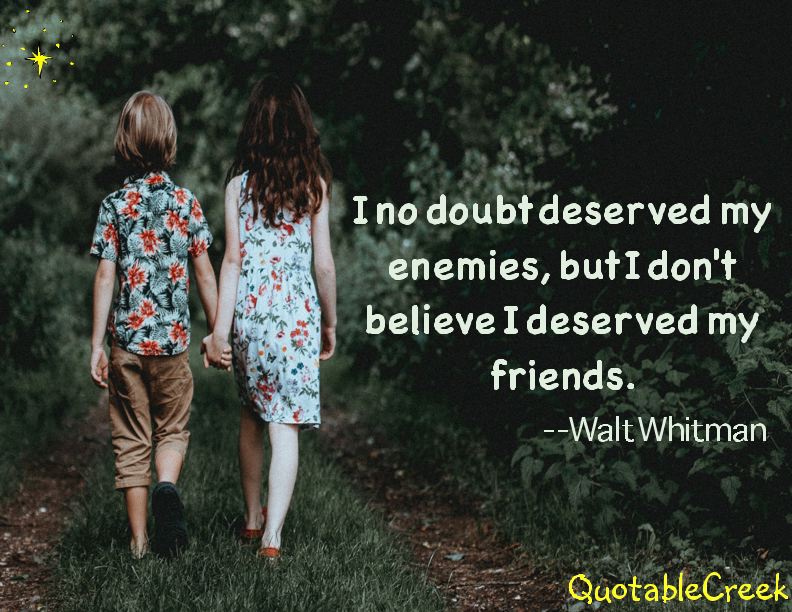
I’ve been blessed with good friends, some friendships going back decades. What a gift it is to travel this life in the company of people who know you, warts and all, and love you. And what a sacred thing it is to be someone’s friend, trusted with their stories, their heartaches, their joys. Friendship is the glue that holds this whole crazy thing called life together.

Writer Anaïs Nin opined that “Each friend represents a world in us, a world possibly not born until they arrive, and it is only by this meeting that a new world is born.” As Nin conveys, friendship can elicit joy, companionship, and growth—enriching our entire experience of the world.

https://www.psychologytoday.com/us/basics/friends

And, as it turns out, friendship is good for what ails us:

Strong friendships are a critical aspect of most people’s emotional well-being. Research indicates that close friendships are associated with greater happiness, self-esteem, and sense of purpose. These bonds are even associated with physical outcomes, such as lower blood pressure and a longer lifespan.

https://www.psychologytoday.com/us/basics/friends

So, today, let’s celebrate friendship!

Counting not months but moments.

Some of my friends and I are noticing our interests shift these days. This tweet sums up the phenomenon perfectly.

And it’s not just birds, but the weather, the garden, the laugh of a child. The little moments bear a new luster. And of course it makes sense. As our lives are rushing by in our younger years, the little things can get lost. We always will have the time to stop and look, to smell the roses, we reason, so we put it off. But as we feel our time here becoming more finite, our attention hones. We pause. We marvel. We are constantly astonished.

As it turns out, this experience isn’t so much a reflection of our age as it is our perception of time. When we feel time vast, spreading out before us, our focal point is on the future, but when we feel a possible end to our time here, our attention draws close and we appreciate the little things. So even someone young facing death will have this urge to stop and soak in the little things.

In his book, Being Mortal; Medicine and What Matters in the End, Atul Gawande summarizes research on this experience:

“…how we seek to spend our time may depend on how much time we perceive ourselves to have. When you are young and healthy, you believe you will live forever. You do not worry about losing any of your capabilities. People tell you “the world is your oyster,” “the sky is the limit,” and so on. And you are willing to delay gratification—to invest years, for example, in gaining skills and resources for a brighter future, you seek to plug into bigger streams of knowledge and information. You widen your networks of friends and connections, instead of hanging out with your mother. When horizons are measured in decades, which might as well be infinity to human beings, you most desire all that stuff at the top of Maslow’s pyramid- achievement, creativity, and other attributes of ‘self-actualization,” but as your horizons contract—when you see the future ahead of you as finite and uncertain—your focus shifts to the here and now, to everyday pleasures and the people closest to you.”

Being Mortal: Medicine and What Matters in the End, by Atul Gawande

But our ‘knowledge’ of the time we have is far from certain. Sometimes our belief we will always have another day keeps us from appreciating the days we have. Practices like mindfulness and meditation, reading poetry, help ground us in the present so we can capture those moments, but it’s difficult to keep our own mortality enough in our consciousness to really grasp the preciousness of each moment.

In the play, Our Town, by Thornton Wilder, the lead character Emily, a young woman who loses her life early in childbirth, is given the opportunity to revisit one day in her life, and she sees it all with new eyes:

Emily: Oh, Mama, look at me one minute as though you really saw me. Mama, fourteen years have gone by. I’m dead. You’re a grandmother, Mama! Wally’s dead, too. His appendix burst on a camping trip to North Conway. We felt just terrible about it – don’t you remember? But, just for a moment now we’re all together. Mama, just for a moment we’re happy. Let’s really look at one another!…I can’t. I can’t go on.It goes so fast. We don’t have time to look at one another. I didn’t realize. So all that was going on and we never noticed. Take me back — up the hill — to my grave. But first: Wait! One more look. Good-bye , Good-bye world. Good-bye, Grover’s Corners….Mama and Papa. Good-bye to clocks ticking….and Mama’s sunflowers. And food and coffee. And new ironed dresses and hot baths….and sleeping and waking up. Oh, earth, you are too wonderful for anybody to realize you. Do any human beings ever realize life while they live it–every, every minute?
Stage Manager: No. (pause) The saints and poets, maybe they do some.
Emily: I’m ready to go back.”

Our Town, by Thornton Wilder

Today is that day, a day for us to realize life while we’re living it, every, every minute as much and as best as we can.

Being a role model

Rob Kenney has a YouTube channel Dad, How Do I? where he teaches his nearly 3 million viewers how to do stuff. He got the idea for his channel wondering about the kids growing up without dads and wanting to help fill that space for them, teaching them how to tie their tie, do their taxes, check their oil, plant a tree, and so on. He tells them he’s proud of them.

https://youtube.com/@DadhowdoI

What a sweet idea. And resource! But, more importantly, how wonderful it is to see someone consciously being a positive role model, using his know-how to help others, and trying to fill a void.

The truth is we all have the potential to be role models. Whether it’s how we behave under pressure, handle a crowded line, or talk with someone who disagrees, our actions matter. People will see us and think about whether they want to follow our example. We have a responsibility to be a good one.