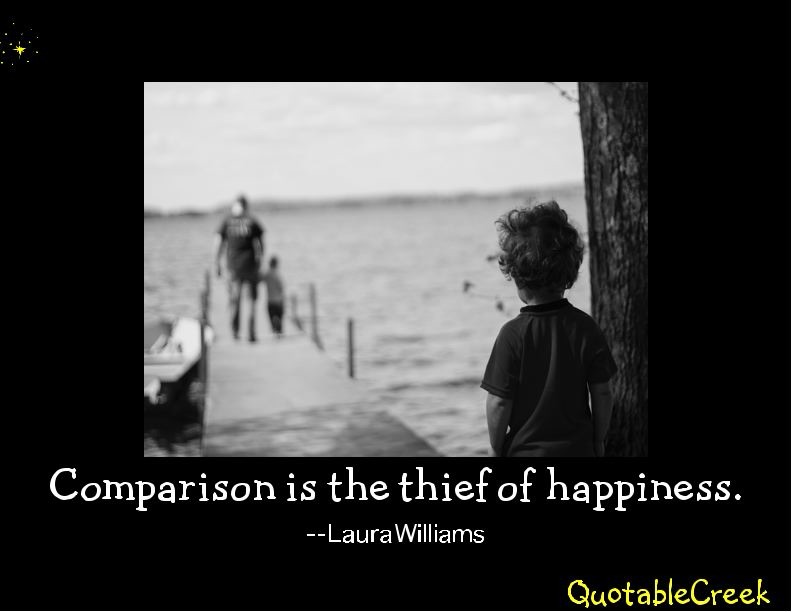
Do you find yourself comparing your life with that of your friends or co-workers? Science says that Facebook and other social media can actually make people feel sad rather than connected because it seems like your friends are having a better time than you are. Often that comparison is misleading.
But always that comparison is beside the point. There will always be someone smarter, richer, more accomplished, happier, etc. than you; just like you will be all those things for someone else.
The challenge is to be happy with what you are and have. At times like these, it is comforting to read Saint Teresa of Calcutta’s words:
People are often unreasonable, irrational, and self-centered. Forgive them anyway.
If you are kind, people may accuse you of selfish, ulterior motives. Be kind anyway.
If you are successful, you will win some unfaithful friends and some genuine enemies. Succeed anyway.
If you are honest and sincere people may deceive you. Be honest and sincere anyway.
What you spend years creating, others could destroy overnight. Create anyway.
If you find serenity and happiness, some may be jealous. Be happy anyway.
The good you do today, will often be forgotten. Do good anyway.
Give the best you have, and it will never be enough. Give your best anyway.
In the final analysis, it is between you and God. It was never between you and them anyway.
Don’t worry about the Joneses. Instead, keep your heart grateful and your actions focussed on making a positive difference in this world.
What can we do to help? The problems seem great, and we seem so small.
Consider these words from Pope Leo XIV:
“Do not be afraid. Be sprouts of peace where the seed of hatred and resentment is growing; be weavers of unity where polarization and enmity prevail; be the voice of those who have no voice to ask for justice and dignity; be light and salt where the flame of faith and the taste for life are fading.” — Pope Leo XIV
Every giant tree starts as a tiny sprout. Be sprouts of peace.
We have more control and are stronger than we think. What we do makes a difference. Let’s make it a good difference!
There is a Museum of Medieval Torture in Hollywood. Imagine that. All the creative and horrendous ways people came up with to hurt other people. And even in this ‘modern’ era, some people spend time thinking of creative ways to hurt others, including in our penal system where solitary confinement is perhaps one of the harshest. Or in our churches, where shunning, cutting someone off from the community with no further interaction, is still practiced in many faiths.
This cruelty can extend into our most intimate relationships and friendships when one person practices the silent treatment, shutting down communication completely over some perceived transgression. Or even when they ‘ghost’ someone, disappearing completely from another’s life and leaving no trace, with no warning or explanation. And these acts like the bed of nails or drawing and quartering or yore are torture, too, because they are intended to inflict pain and misery.
The silent treatment goes by many names: shunning, social isolation, stonewalling, ghosting. Although psychologists have nuanced definitions for each term, they are all essentially forms of ostracism. And the tactic is nothing new. Ancient Greeks expelled for 10 years citizens who were thought to be a threat to democracy, and early American settlers banished people accused of practicing witchcraft. Religions have frozen out individuals for centuries: Catholics call it excommunication, herem is the highest form of punishment in Judaism, and the Amish practice Meidung. The Church of Scientology recommends total “disconnection” from anyone deemed antagonistic toward the religion.
“My research suggests that two in three individuals have used the silent treatment against someone else; even more have had it done to them,” Williams said. Experts told me that although they need more data to know for certain, instances of the silent treatment have likely increased over the years as new forms of communication have been invented. “Every new method of connection can be used as a form of disconnection,” Williams said.
Ostracism can also manifest in lesser ways: someone walking out of the room in the middle of a conversation, a friend at school looking the other way when you wave at them, or a person addressing comments from everyone in a message thread except you. “Partial ostracism,” Williams told me, might mean monosyllabic replies—a terse period at the end of a one-word text message. But in serious cases, ostracism can take a heavy toll whereby victims become anxious, withdrawn, depressed, or even suicidal.
“Because we humans require social contact for our mental health, the ramifications of isolation can be severe,” Joel Cooper, a psychology professor at Princeton, told me. “In the short term, the silent treatment causes stress. In the long term, the stress can be considered abuse.”
And silent treatment hurts, not just the victim, but the perpetrator as well.
But the silent treatment ultimately harms the person causing it, too. Humans are predisposed to reciprocate social cues, so ignoring someone goes against our nature, Williams said. The perpetrator is therefore forced to justify the behavior in order to keep doing it; they keep in mind all the reasons they’re choosing to ignore someone. “You end up living in a constant state of anger and negativity,” Williams said.
One study found that social rejection provoked a response in its victims similar to that of victims of physical abuse; the anterior cingulate cortex area of the brain—the area thought to interpret emotion and pain—was active in both instances. “Exclusion and rejection literally hurt,” John Bargh, a psychology professor at Yale, told me.
So, in this modern era, what should we do when tempted to give someone the silent treatment? What can we do when we’re on the receiving end?
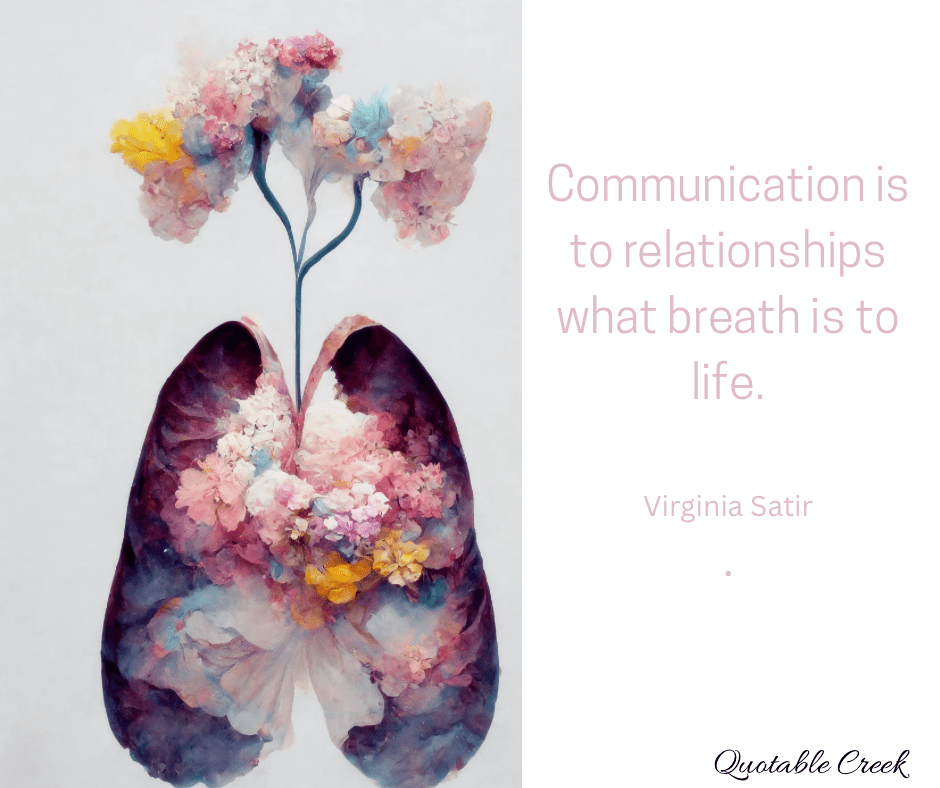
Perhaps the beginning of an answer is realizing just how damaging that type of behavior can be to ourselves, each other, and the relationship. Realizing that communication, no matter how fraught, is the way back into community. Appreciating that we were put here on this earth to do good, not harm.
“In one of John Muir Laws’s books, I read something profound that changed the way my brain thinks. “As you draw the bird,” he writes, “try to feel the life within it.” So now I look at the bird before me and imagine how it senses the world, how it feels breathing cold air, how it feels to have its feathers ruffling in the wind, how it feels to always have an eye out for possible food and possible predators. The bird sees me and is a nanosecond from flying off, but it stays. Why? By imagining the life within, the bird I am drawing is alive, no longer a shape and its parts, but a thinking, sentient being, always on the brink of doing something. By feeling the life within, I am always conscious that all creatures have personalities, and so do trees and clouds and streams. To feel the life within, I now imagine myself as the bird that is looking at me. I imagine its wariness, the many ways it has almost died in its short life. I worry over its comfort and safety, and whether I will see my little companion the next day, the next year. To feel the life within is to also feel grief in the goneness of a single creature or an entire species. Imagination is where compassion grows. Let us join with children to imagine and wonder, to use curiosity as the guide to miracles in plain sight. Let us enter with them into wild wonder so that we become guardians together of all that is living and all that must be saved.”From Orion Magazine, “The Life Within”.
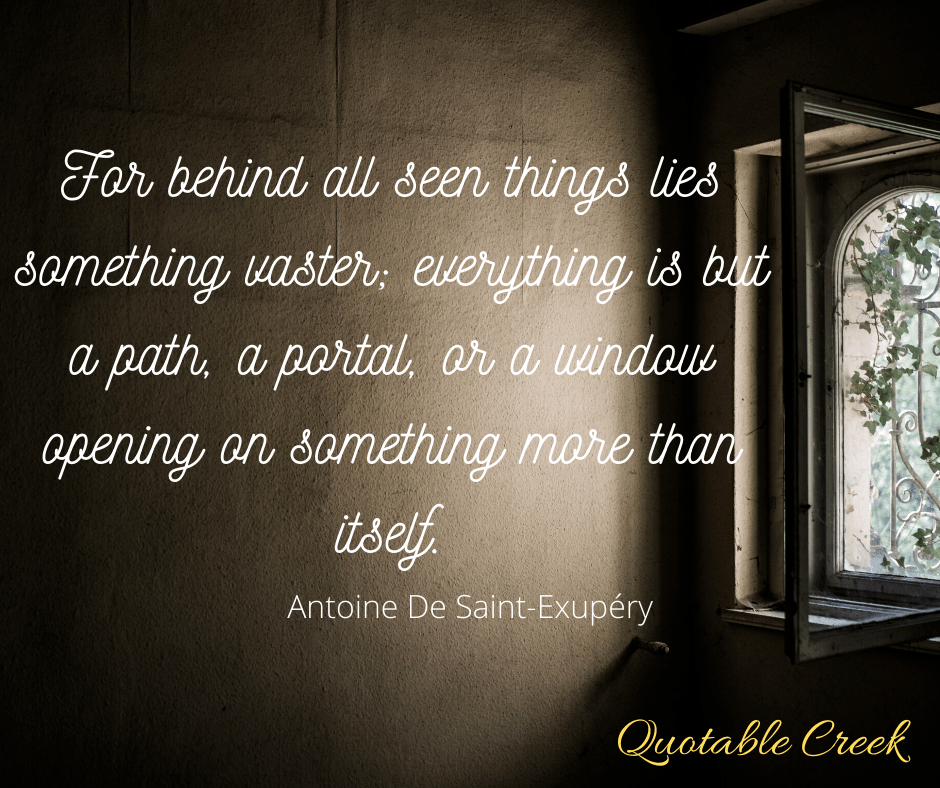
I wonder if we can look at each other that way, as something vaster, as thinking sentient beings with worlds of experience, some harsh. Would that help us to treat each other better? In her book, Dead Man Walking, Sister Helen Prejean describes just this sort of thing as she works with a death row inmate, a man who admittedly committed a heinous act, seeing not just the man but also, though covered with tattoos and bathed in bravado, the little wounded child within. That empathy allowed her to see past the crimes to the human and to feel compassion for him.
Perhaps today we can look with new eyes to see each other as a composite of good and bad, but each fully human and fully deserving of respect and compassion. To paraphrase Amy Tan above, when we consider the person, can we try to picture the life within, the challenges and struggles, hopes and triumphs? Can we become, together, ‘guardians of all that is living and must be saved’ in a place where ‘compassion grows’?
I discovered a new word the other day that has me soul-searching. Gramnesia, a portmanteau combining ‘grandparent’ and ‘amnesia’. A grandparent experiencing gramnesia trots out recollections of the good, easy times they had raising their children, and brings those up in a way which can be a tacit criticism of the way those children are now raising their grandkids. In other words, someone experiencing gramnesia has forgotten the complete picture of parenthood.
While it’s natural to look fondly back on the years when your children were little, it may be problematic if you make those now grown children feel it is unnatural to struggle.
As Allie McQuaid says:
In a follow-up Instagram Reel, McQuaid explained that the main reason these comments are unhelpful is that they don’t change the things parents of young kids are struggling with and they minimize the very real stress they’re facing.
“Our boomer parents telling us that we didn’t cry ever (whether that’s true or not is up for debate apparently..) doesn’t change the fact that OUR baby now is crying and needs our care,” McQuaid wrote.
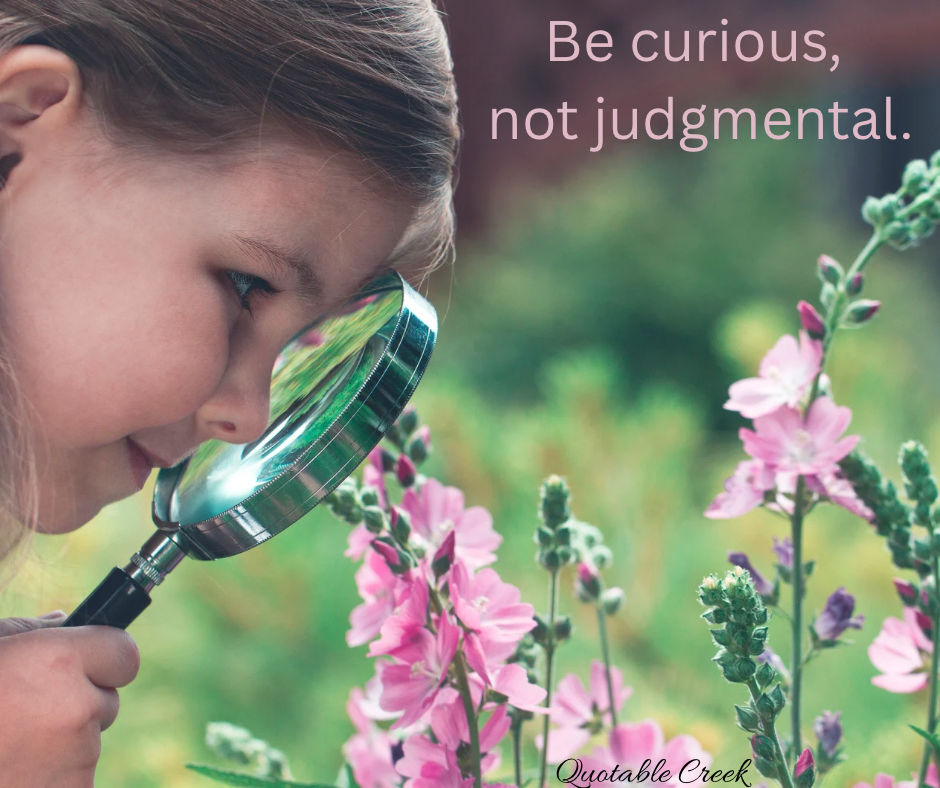
Instead of judging or comparing, perhaps it would be more helpful for grandparents to be curious. What might they learn and discover from how their children are showing up now as parents?
Parenting techniques change. Smacking someone with a paddle may have been acceptable once, but now it’s illegal, for instance. Priorities change. Keeping up with the Joneses or maintaining appearances may not be as important to your kids as quality time with their kids. Perhaps the gramnesiac will have something to learn. and perhaps, too, they’ll discover a way to help, something they may have greatly appreciated when they were going through the challenges of raising children.
And also, as hard as it is to be vulnerable and discuss the hard times, those stories, call them ‘momeries’, (portmanteau of mom and memories) may make your child feel hopeful and encouraged as they shoulder parenting duties, that times will be both tough and rewarding beyond their wildest expectation.
We don’t let just anyone see us vulnerable, hear our secret stories, watch us struggle. To most of the world, we carry a bit of a shield between them and our tender parts. But there are some few we trust to see the real person behind the mask. We must love those people very much to be so naked and exposed.
Because we need to lay those masks down sometimes, don’t we? We can’t live a life of posture. And so we seek out places where and people with whom we can relax and let down our hair, unafraid of judgment, unconcerned with being deemed eccentric. Perhaps to be part of nature, to rest among creation until we lose sight of where we stop and others begin.
In this poem, Mary Oliver takes us into her sacred space–the woods.
She must love us very much.
How I Go To the Woods
by Mary Oliver
Ordinarily, I go to the woods alone, with not a single friend, for they are all smilers and talkers and therefore unsuitable.
I don’t really want to be witnessed talking to the catbirds or hugging the old black oak tree. I have my way or praying, as you no doubt have yours.
Besides, when I am alone I can become invisible. I can sit on the top of a dune as motionless as an uprise of weeds, until the foxes run by unconcerned. I can hear the almost unhearable sound of the roses singing.
If you have ever gone to the woods with me, I must love you very much.
If one of your friends were struggling with the problems you are facing right now, what words would you offer in support? Would you call them names, berate them, remind them of all the other times they messed up just like this and how, honestly, can they ever expect to get anything right, ever?
Probably not. Right? But often this is the way we talk to ourselves. We replay all our other mistakes in our minds, call ourselves stupid, sink into our shells scared to face the world.
But why do we do this? If the words we would offer our friend are what we think would help, why are we so reticent to speak kind encouraging words to ourselves? Maybe today is a good day to try a different approach.
Be a kind friend to yourself. Offer yourself words of support and encouragement. Focus on all the many times you got things right. Tell yourself the truth: you are precious and beloved.
In a difficult and challenging place and time, we are called to continue the fight for what is right and good, true and just, honorable and compassionate. We push forward– listening more, caring more, giving more. We can drown out the din and listen to our hearts which strive for peace and harmony, communion, reconciliation. We must hold fast to our principles and to hope as our anchor, especially now.
A guy cuts you off in traffic. How do you see him? Is he an inconsiderate lout caring little for the aggravation he causes you or a distracted hapless soul, perhaps late for an emergency? How we see this situation, or any situation, can have a profound effect on our lives.
In this thoughtful essay, Elizabeth Gilbert considers the power of perception. She recounts a time when her father and his siblings were reminiscing about their late mother and how she used to take a sip from any glass of milk she poured for them. They agreed on the fact, that she took a sip, but wildly disagreed on their perception of that fact:
At one point, they found themselves sitting around the old kitchen table, eating sandwiches and talking about the past. My uncle, the baby of the family, looked at the refrigerator and said, “I can still see Mom standing there, pouring me a glass of milk. Do you remember that sweet thing she always used to do whenever she got us a glass of milk? Remember how she’d take a tiny sip first, to make sure it wasn’t spoiled? Always looking out for us.”
My father, the analytical engineer of the family, raised his eyebrows. “No,” he said. “You are so wrong. Mom wasn’t sipping our milk to test it for freshness. She was sipping our milk because she always overfilled the glass. She had no sense of spatial relations. It used to drive me crazy.”
My brilliantly sardonic aunt looked at her two brothers like they were the biggest idiots she’d ever seen.
“You’re both wrong,” she said. “Mom was stealing our damn milk.”
So, what have we learned about my grandmother from this story? Was she a devoted caregiver, an incompetent dunderhead or someone who would steal the milk out of the mouths of her children? (Or maybe just an exceptionally thirsty woman.) The world will never know the truth.
But does the truth really matter?
I don’t think so.
Wow! What a remarkable difference in what each brings to the encounter. Now imagine yourself in each of those mindsets: hostile, critical, or grateful. Which would lead to the happier life?
We don’t have control over facts, but we sure have a tremendous amount of control over how we perceive those facts. We owe it to ourselves to try to see the facts in the most favorable light even if that means consciously going over all the possible interpretations of something and actively selecting the best one to pick.
These days it feels a bit like we are bombarded by news, so overwhelming in scope as to cloud out the sun. Overwhelm is on the menu. And joy can feel like an exotic indulgence. And yet, choosing joy can be an act of resistance.
As Maria Popova notes, drawing on her experience in writing The Marginalian:
14. Choose joy. Choose it like a child chooses the shoe to put on the right foot, the crayon to paint a sky. Choose it at first consciously, effortfully, pressing against the weight of a world heavy with reasons for sorrow, restless with need for action. Feel the sorrow, take the action, but keep pressing the weight of joy against it all, until it becomes mindless, automated, like gravity pulling the stream down its course; until it becomes an inner law of nature. If Viktor Frankl can exclaim “yes to life, in spite of everything!” — and what an everything he lived through — then so can any one of us amid the rubble of our plans, so trifling by comparison. Joy is not a function of a life free of friction and frustration, but a function of focus — an inner elevation by the fulcrum of choice. So often, it is a matter of attending to what Hermann Hesse called, as the world was about to come unworlded by its first global war, “the little joys”; so often, those are the slender threads of which we weave the lifeline that saves us.
Delight in the age-salted man on the street corner waiting for the light to change, his age-salted dog beside him, each inclined toward the other with the angular subtlety of absolute devotion.
Delight in the little girl zooming past you on her little bicycle, this fierce emissary of the future, rainbow tassels waving from her handlebars and a hundred beaded braids spilling from her golden helmet.
Delight in the snail taking an afternoon to traverse the abyssal crack in the sidewalk for the sake of pasturing on a single blade of grass.
Delight in the tiny new leaf, so shy and so shamelessly lush, unfurling from the crooked stem of the parched geranium.
I think often of this verse from Jane Hirshfield’s splendid poem “The Weighing”:
So few grains of happiness
measured against all the dark
and still the scales balance.
Yes, except we furnish both the grains and the scales. I alone can weigh the blue of my sky, you of yours.
Pausing to notice and delight in these little moments can counterbalance the great and pressing weight of darkness. It is from each of these moments, we draw value and solace, hope and strength.
And we persevere, weaving the ‘slender threads’ of the lifelines that save us.


 QuotableCreek.com