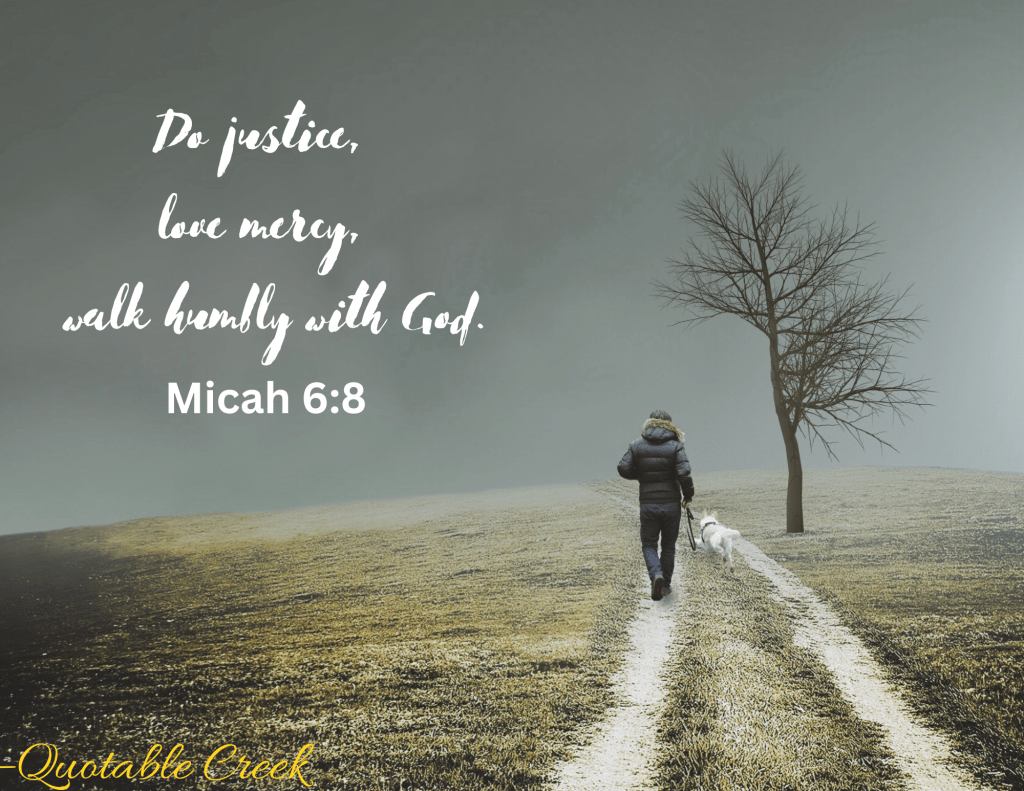
When we find ourselves in challenging times and are unsure which way to turn, let these words help guide you.
Do justice. Peace, justice, love are things we do and bring about, not things we wait for. With our best discernment, we offer ourselves to the world, hoping to make a difference. Kind words, loving hearts, calm demeanors, patience, forbearance, and forgiveness. The way of the One we follow. A servant’s heart but a leader’s strength.
Love mercy. Oh, how the world loves vengeance, cancelling, grudges, getting even, punishment. To love mercy is a kinder, gentler path, one that believes in the redeem-ability of every last one of us. One that doesn’t insist on being avenged or having the last word. One that delights in forgiveness and healing.
Walk humbly. No matter how hard we try to do or be right, we may be wrong. The other guy might be right. And, get this, God loves the other guy as much as God love you.
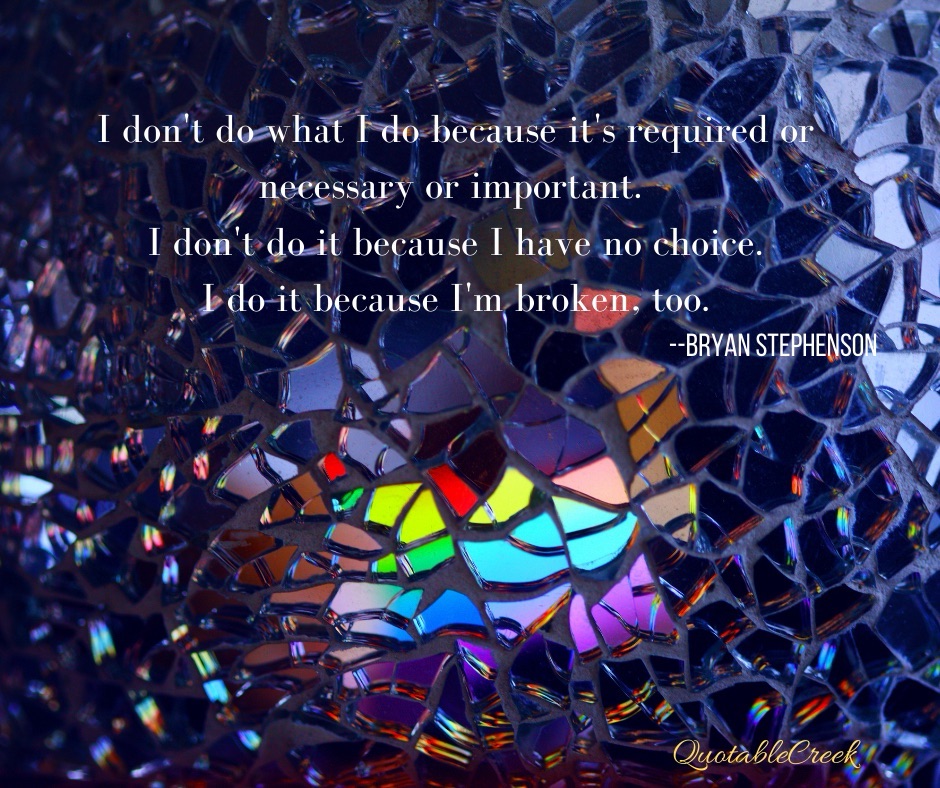
What makes some people able to empathize more than others, able to help in dire circumstances, able to put the greater good above the personal good? Bryan Stephenson, founder of the Equal Justice Institute, fierce advocate against systemic racism, and criminal defense attorney for those on death row explains: “I do it because I’m broken, too.” That recognition of a common humanity and brokenness by a system that needs changing propels him to fight.
Who among us isn’t broken? Because we all are bound together, we all suffer in an unjust world. Because we all have known pain, we all have the capacity to put ourselves into the shoes of those hurting.
In his book, Just Mercy, Stephenson explains:
My years of struggling against inequality, abusive power, poverty, oppression, and injustice had finally revealed something to me about myself. Being close to suffering, death, executions and cruel punishments didn’t just illuminate the brokenness of others; in a moment of anguish and heartbreak, it also exposed my own brokenness. You can’t effectively fight abusive power, poverty, inequality, illness, oppression, or injustice and not be broken by it.
We are all broken by something. We have all hurt someone and have been hurt. We all share the condition of brokenness even if our brokenness is not equivalent. I desperately wanted mercy for Jimmy Dill and would have done anything to create justice for him, but I couldn’t pretend that his struggle was disconnected from my own. The ways in which I have been hurt–and have hurt others–are different from the ways Jimmy Dill suffered and caused suffering. But our shared brokenness connected us.
Paul Farmer, the renowned physician who has spent his life trying to cure the world’s sickest and poorest people, once quoted me something that the writer Thomas Merton said: ‘We are bodies of broken bones.’ I guess I’d always known but never fully considered that being broken is what makes us human. We all have our reasons. Sometimes we’re fractured by the choices we make; sometimes we’re shattered by things we would never have chosen. But our brokenness is also the source of our common humanity, the basis for our shared search for comfort, meaning, and healing. Our shared vulnerability and imperfection nurtures and sustains our capacity for compassion.
We all have a choice. We can embrace our humanness, which means embracing our broken natures and the compassion that remains our best hope for healing. Or we can deny our brokenness, forswear compassion, and, as a result, deny our humanity
…So many of us have become afraid and angry. We’ve become so fearful and vengeful that we’ve thrown away children, discarded the disabled, and sanctioned the imprisonment of the sick and the weak–not because they are a threat to public safety or beyond rehabilitation but because we think it makes us seem tough, less broken. …We’ve submitted to the harsh instinct to crush those among us whose brokenness is most visible. But simply punishing the broken–walking away from them or hiding them from sight–only ensures that they remain broken and we do, too. There is no wholeness outside of our reciprocal humanity.Just Mercy, by Bryan Stephenson
How many of the problems we face today can be mitigated by recognizing our common humanity, by following the Golden Rule of treating others how we would have them treat us, a tenet found in many of the world’s religions? How would we have others treat us if we were the elderly, the sick, the refugee, the hurt, the accused, the other? Each of us would benefit from considering things from this perspective. Bryan Stephenson continues:
Whenever things got really bad, and they were questioning the value of their lives, I would remind them that each of us is more than the worst thing we’ve ever done. I told them that if someone tells a lie, that person is not just a liar. If you take something that doesn’t belong to you, you are not just a thief. Even if you kill someone, you’re not just a killer. I told myself that evening what I had been telling my clients for years. I am more than broken. In fact, there is a strength, a power even, in understanding brokenness, because embracing our brokenness creates a need and desire for mercy, and perhaps a corresponding need to show mercy. When you experience mercy, you learn things that are hard to learn otherwise. You see things you can’t otherwise see; you hear things you can’t otherwise hear. You begin to recognize the humanity that resides in each of us.
…I began thinking about what would happen if we all just acknowledged our brokenness, If we owned up to our weaknesses, our deficits, our biases, our fears. Maybe if we did, we wouldn’t want to kill the broken among us who have killed others. Maybe we would look harder for solutions to caring for the disabled, the abused, the neglected, and the traumatized.Just Mercy, by Bryan Stephenson
We are all broken. Some of us don’t acknowledge that. We have all hurt and been hurt. It is that humbling insight that can help us recognize our common humanity across all divides. If we just have the eyes to see and the ears to hear. Stephenson refers to an unnamed pastor who would preface singing: “The minister would stand, spread his arms wide, and say, “Make me to hear joy and gladness, that the bones which thou hast broken may rejoice.”
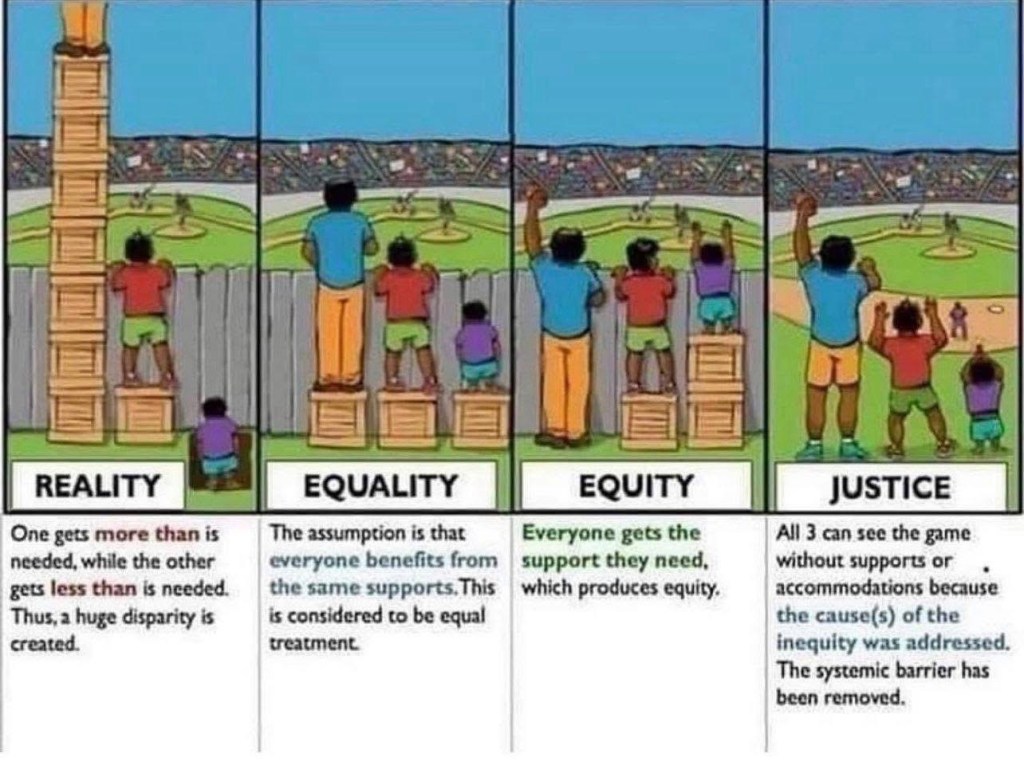
What does justice look like in a world of extreme wealth and extreme poverty? Where the systems in place work to keep furthering that disparity? Is justice possible in such a system?
Abraham Lincoln once said:
As I would not be a slave, so I would not be a master. This expresses my idea of democracy. Whatever differs from this, to the extent of the difference, is not democracy.
Consider this picture:
Removing systemic barriers to equity must be the work of those who seek justice, and, thereby, peace. There are those among us who would prefer to see themselves advantaged and others reduced in order for them to stay on top. These individuals may currently have the levers of wealth and power to their advantage. But they are outnumbered. As more people come to understand the graphic above, we can work together toward a more level playing field, and a more just and peaceful world.
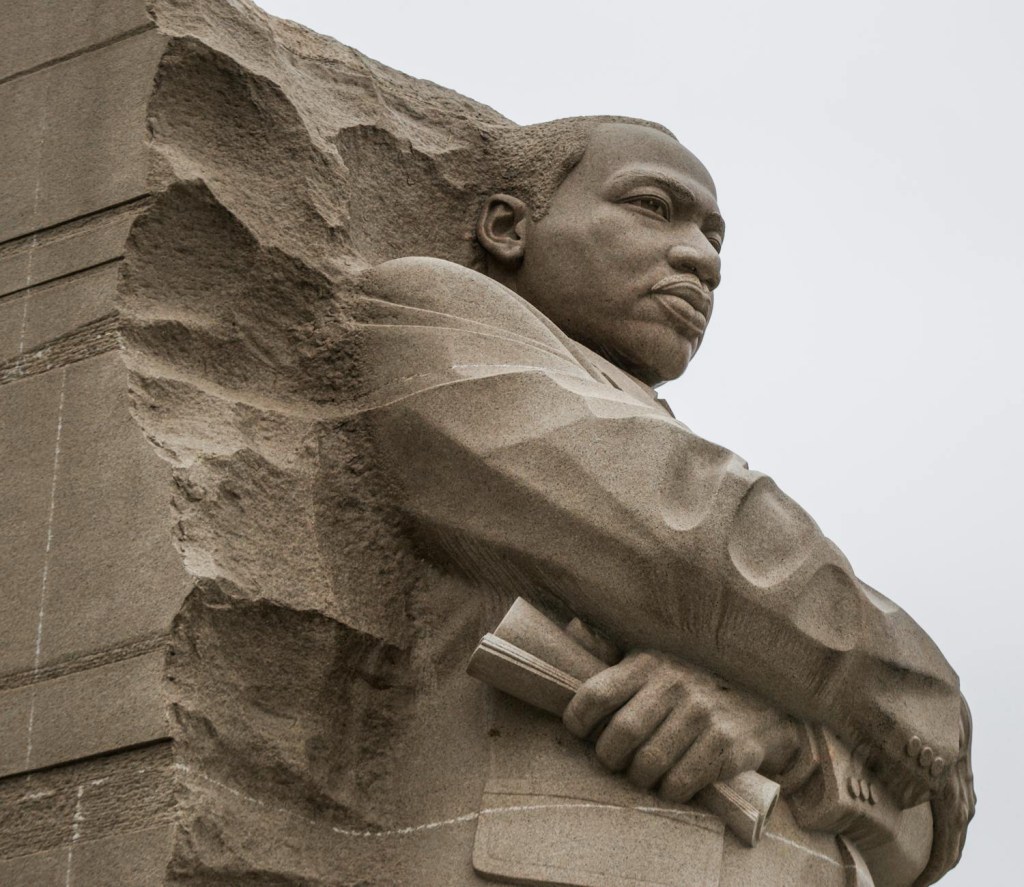
Today is Martin Luther King, Jr. Day. Also Inauguration Day. When we picture King, we picture him as heroic, confident, strong. And these are likely the pictures you may see today.
And, of course, he was these things. Championing civil rights and railing against injustice, able to see inequity in the systems around him and dream of a better way. He was an advocate of love over hate and peaceful protest.
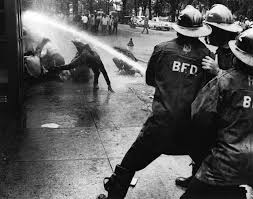
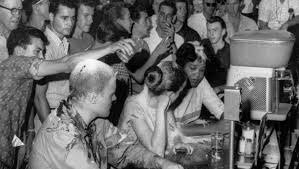
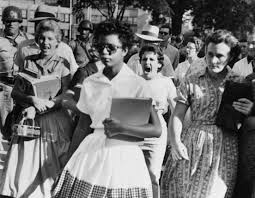
And yet, his life was not a peaceful one. He was killed for the beliefs he professed. And much of the progress he made was met with violence and hate.
Progress is not a straight line, and hate is ever-present. And hate can be powerful and beguiling and intimidating. And hate can creep into the consciousness of a group, or even a nation.
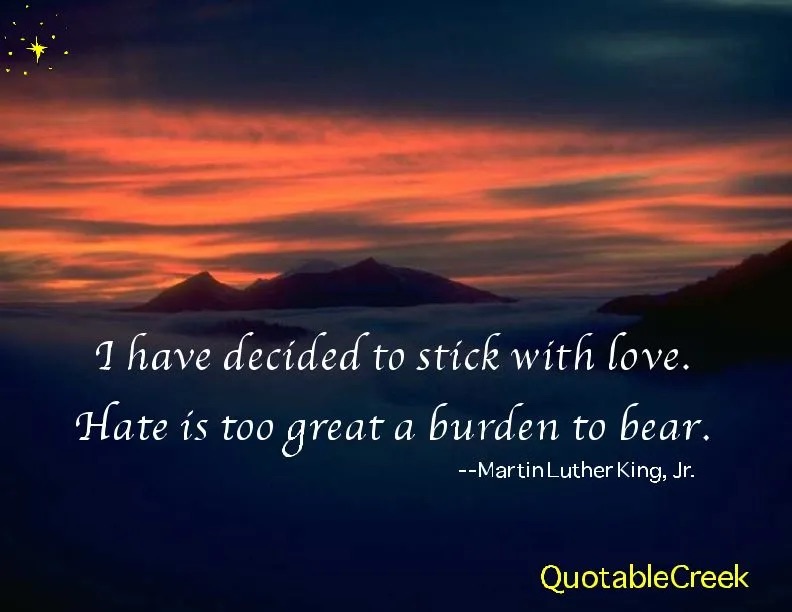
And yet, I will stand with King for love over hate, all these years later, and do what I can to continue his fight for justice and peace.
Because, even in the midst of hateful people and those who seek to divide, justice and truth are on the right side of history.
When we find ourselves in challenging times and are unsure which way to turn, let these words help guide you.
Do justice. Peace, justice, love are things we do and bring about, not things we wait for. With our best discernment, we offer ourselves to the world, hoping to make a difference. Kind words, loving hearts, calm demeanors, patience, forbearance, and forgiveness. The way of the One we follow. A servant’s heart but a leader’s strength.
Love mercy. Oh, how the world loves vengeance, cancelling, grudges, getting even, punishment. To love mercy is a kinder, gentler path, one that believes in the redeem-ability of every last one of us. One that doesn’t insist on being avenged or having the last word. One that delights in forgiveness and healing.
Walk humbly. No matter how hard we try to do or be right, we may be wrong. The other guy might be right. And, get this, God loves the other guy as much as God love you.
It has been 54 years since Martin Luther King, Jr. was killed. As long as between the date of his death and 1914. A long, long time. Yet here we are still fighting for the world he envisioned, a world where people would be judged by the content of their character rather than the color of their skin.
We must press on.
“We’ve got some difficult days ahead,” Martin Luther King, Jr., told an overflowing crowd in Memphis, Tennessee, on 3 April 1968, where the city’s sanitation workers were striking. “But it really doesn’t matter with me now, because I’ve been to the mountaintop … I’ve seen the Promised Land. I may not get there with you. But I want you to know tonight, that we, as a people, will get to the Promised Land.” Less than 24 hours after these prophetic words, King was assassinated by James Earl Ray.
Today, take a moment with his favorite hymn, the hymn he requested shortly before his death, “Take Me Home, Precious Lord’ and gather strength to continue his fight, all of our fight, toward the promised land:
Today, in the United States, we honor our veterans and thank them for their service defending this country and its principles of equality, freedom, and justice for all. Our understanding of those concepts has evolved over time, and taken some steps back, but today let us be grateful for how far we’ve come and consider the steps that we each might take today and every day to make this country move closer to the ideals for which it stands.
Today, in the United States, we honor our veterans and thank them for their service defending this country and its principles of equality, freedom, and justice for all. Our understanding of those concepts has evolved over time, and taken some steps back, but today let us be grateful for how far we’ve come and consider the steps that we each might take today and every day to make this country move closer to the ideals for which it stands.



 QuotableCreek.com