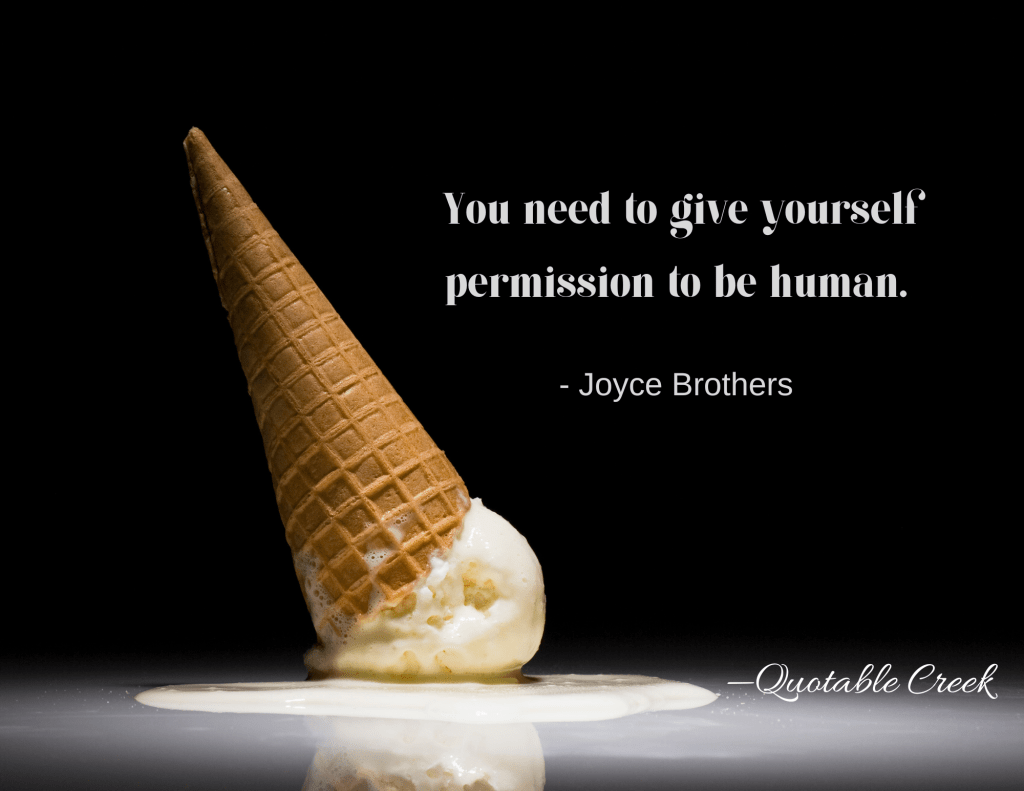
In this world of constant scrutiny and omnipresent recordings, mistakes seem to have moved from a necessary part of learning to an instant cause for condemnation.
We can all think back to learning to walk and talk or play a sport where the mistakes were a part of learning. Fear of falling down would keep everyone from walking. In order to learn how to make a basket, lots of shots will bounce off the rim and backboard.
When we moved on to raising children, focusing on the mistakes could cripple a child emotionally. Instead, we celebrated the steps forward, the successes. Noted the progress. We don’t expect a toddler to write a dissertation. We celebrate the milestones as they come.
I wonder if that approach would help move our troubled world forward. Celebrating the progress. Looking for the successes. Embracing the common ground. Letting everyone feel that they can continue to learn from their mistakes, that that is part of being human. A world with a little bit of breathing room. We all will mess up. We can show each other grace when we do.
There are many seasons in life. Fall, winter, spring, summer. Childhood, middle age, old age. Caterpillar, pupa, butterfly. And so on. One of my favorite ‘seasons’ is graduation season. I love liminal, threshold spaces, moving from one stage to another. But most of all, I love graduation speeches. What do you say to this group of young adults ready to embark on that magical mystery tour of life? What will resonate as both inspiring and yet true? What will help them in the time travel way an older version of ourselves might come back with a warning or suggestion?
So I thought it might help if I just went ahead and told you what I think is the truth of your spiritual identity …
Actually, I don’t have a clue.
I do know you are not what you look like, or how much you weigh, or how you did in school, and whether you get to start a job next Monday or not. Spirit isn’t what you do, it’s … well, again, I don’t actually know.
And thus she begins from this deep place of not knowing and urges the graduates to not confuse their spiritual lives with their lived lives, to find a way to plug into that which awakens them, and to keep the faith:
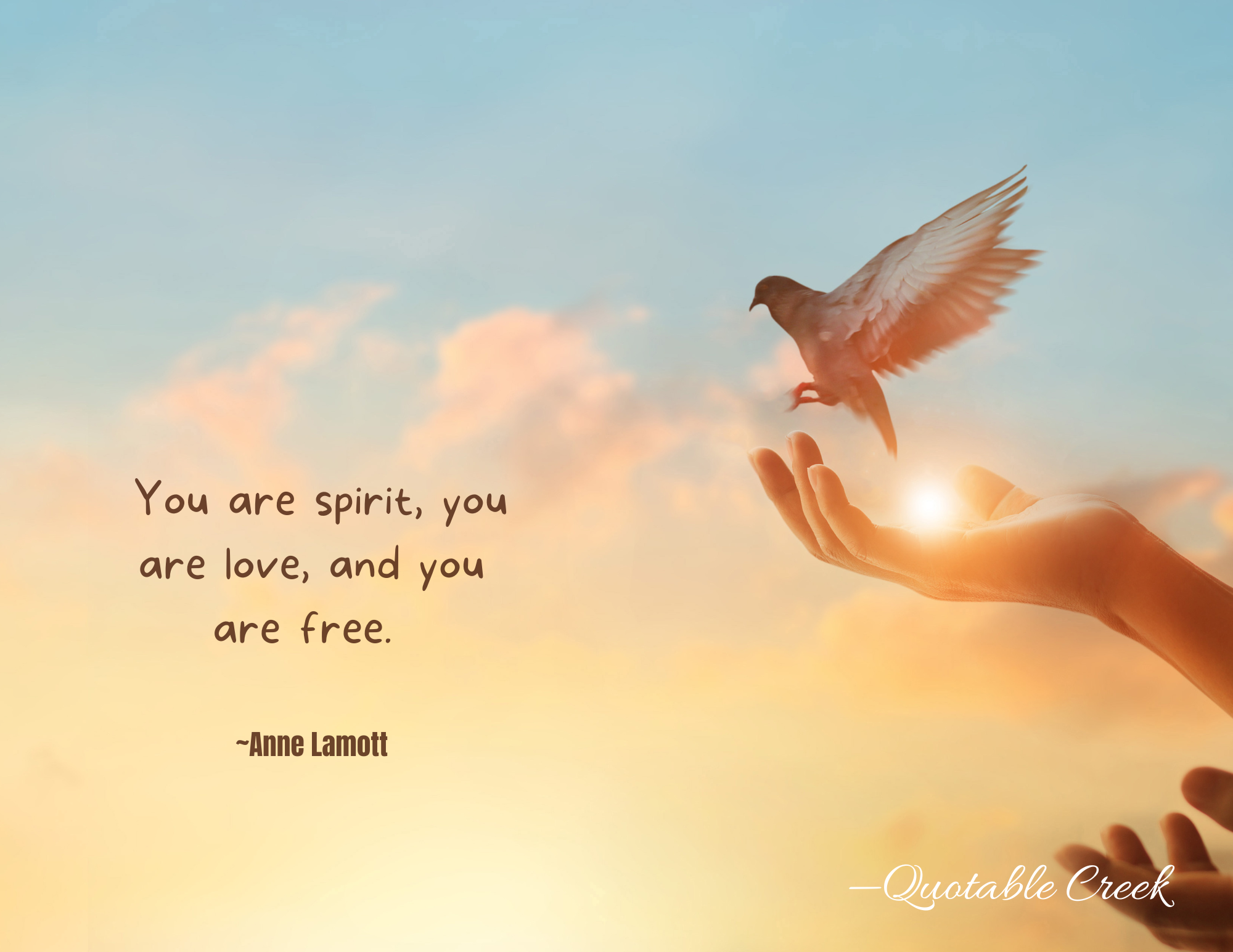
It’s magic to see spirit largely because it’s so rare. Mostly you see the masks and the holograms that the culture presents as real. You see how you’re doing in the world’s eyes, or your family’s, or — worst of all — yours, or in the eyes of people who are doing better than you — much better than you — or worse. But you are not your bank account, or your ambitiousness. You’re not the cold clay lump with a big belly you leave behind when you die. You’re not your collection of walking personality disorders. You are spirit, you are love, and you are free. You’re here to love, and be loved, freely. If you find out next week that you are terminally ill — and we’re all terminally ill on this bus — all that will matter is memories of beauty, that people loved you, and you loved them, and that you tried to help the poor and innocent.
So how do we feed and nourish our spirit, and the spirit of others?
First, find a path, and a little light to see by. Every single spiritual tradition says the same three things: 1) Live in the now, as often as you can, a breath here, a moment there. 2) You reap exactly what you sow. 3) You must take care of the poor, or you are so doomed that we can’t help you.
Her whole speech is well-worth a read, but if you want one thing to hold onto right now, remember this: “You are spirit, you are love, and you are free.”
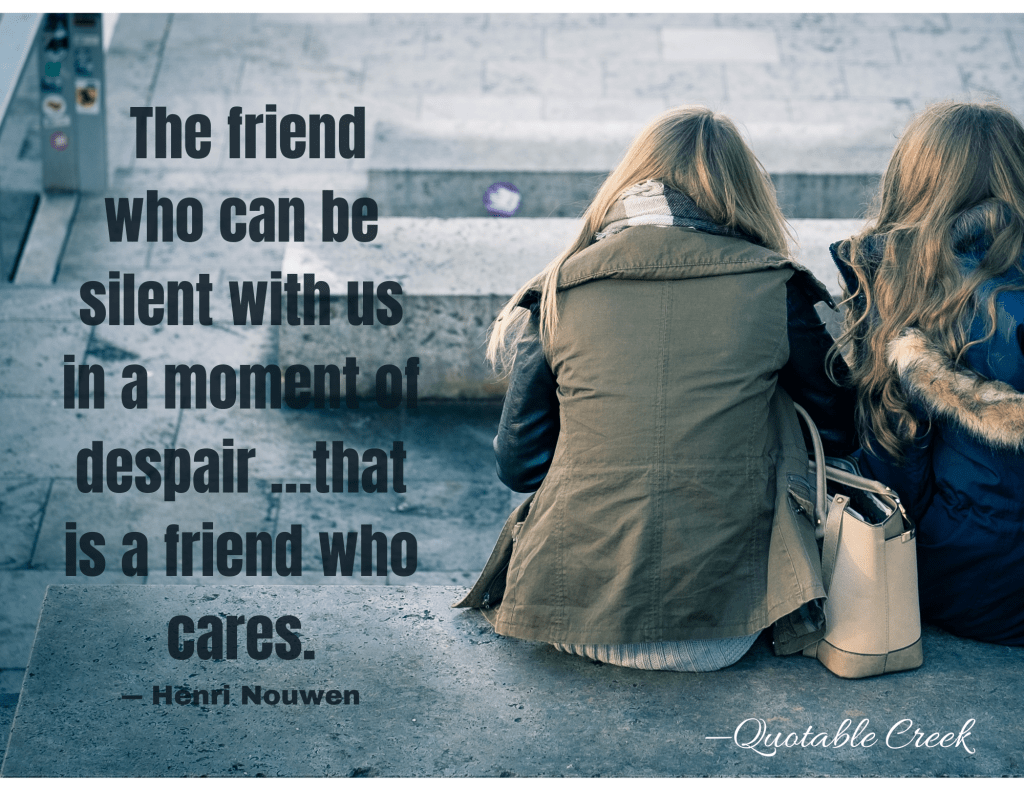
Not every problem can be solved. Not every complaint wants a ‘solution’. Sometimes the heart just craves company, someone to walk beside in trying times.
As Henri Nouwen says,
When we honestly ask ourselves which person in our lives means the most to us, we often find that it is those who, instead of giving advice, solutions, or cures, have chosen rather to share our pain and touch our wounds with a warm and tender hand. The friend who can be silent with us in a moment of despair or confusion, who can stay with us in an hour of grief and bereavement, who can tolerate not knowing, not curing, not healing and face with us the reality of our powerlessness, that is a friend who cares.”
― Henri Nouwen, Out of Solitude: Three Meditations on the Christian Life
Consider jobs. Today’s jobs may not be tomorrow’s jobs, just like yesterday’s jobs aren’t today’s.
Lamplighters
and knocker uppers
went the way of electric street lamps and alarm clocks. (Go here for a fascinating list of 51 jobs that don’t exist anymore.)
And yet the people who had these now obsolete jobs led as full and vibrant of lives as we do. We are not our jobs. Our worth has little to do with the job we have. Our jobs are external to our essence.
For proof, consider this paragraph written by AI:
Sure, I’d be happy to help with that! While our jobs can be an important part of our identity and sense of purpose, it’s important to remember that we are not defined solely by our careers. Our individual identities are made up of a wide range of experiences, values, and beliefs, many of which extend far beyond the workplace. It’s important to recognize and honor the many facets of our identities, including our personal passions, relationships, and hobbies, as well as our professional aspirations. While our jobs may provide structure and direction in our lives, they are just one piece of a larger puzzle that makes up who we are. By embracing the totality of our identities, we can find greater meaning, fulfillment, and happiness in all aspects of our lives.
We are at an inflection point when a bot can write copy like this in seconds. We’ve seen self check out lines in grocery stores and libraries. Automation in every aspect of manufacturing. We’ve seen artificial intelligence pass the bar exam and win photography contests. What are the arenas for only human hands and heart? What are the jobs of our future? What does artificial intelligence lack that only humans can provide?
First among these must be soul. And then heart. Compassion. Human to human contact. Empathy. If and when AI enters into these realms, the world will be a very complicated place.
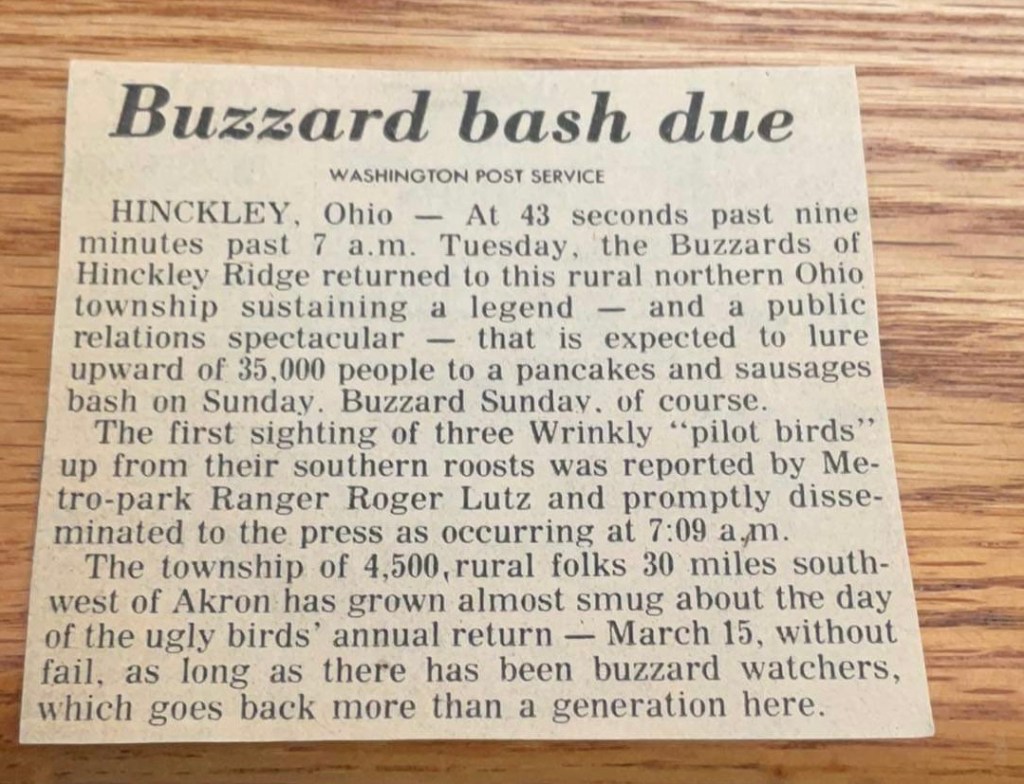
Recently, I pulled down an old scrapbook from my junior high days to show my granddaughter Lily who is just that same age now as I was then. It contained many ‘treasures’. Among the many letters and cards from my late grandmother was one talking about the buzzards coming back home to Hinckley, Ohio, a phenomenon which I remember amused me. Imagine celebrating buzzards!
She wrote:
It should cheer you somewhat to know that the buzzards returned to Hinckley, Ohio, on schedule on March 15th. It is always a comfort to know those gorgeous creatures ‘do their thing’ each year, as anticipated. It would be a bit discouraging to prepare pancakes and sausages for 35,000 eager folks, and have no buzzards to join in the celebration!
Oh, how I loved her, her humor and wit, her warmth and love, her writing style. I have always felt such a kinship with her and reading over her letters makes her feel so close.
Her letter got me thinking. First, about buzzards. Sure enough, a quick bit of googling shows that buzzards are still returning to Hinckley on schedule and have been celebrated since 1818!
And then about the cyclical quality of nature. The monarchs go south and then back. The swallows return to San Juan Capistrano. The elephant seals come back to Cambria. We humans who love animals mark their going and celebrate their homecoming, yes, even the buzzards, and note the steady passage of time.
And finally about how those we’ve lost stay with us even after they’ve gone. Lily has a freckle on her right hand which I’ve told her is her Nana freckle. I load it up with kisses often when I see her. When I’m gone, I hope that freckle will remind her of how very much I loved her. My grandmother and I were separated by thousands of miles, but our letters exchanged helped us stay close. Those letters remind me now to pause and share bits of life, simple moments, with the people I love. Those moments become the memories and precious treasure later.
Even the ones about buzzards.
(I couldn’t quite bring myself to make the lead picture with buzzards. Lol)
Apparently, today is World Penguin Day which reminded me of this delightful story about penguin JinJing and the man who saved his life. Each year, this little penguin swims 5000 miles to be with his friend.
So much is beyond our understanding including heart-warming stories like this about the bonds between a wild animal and a human who showed them kindness.
Now is our time to be alive. It will not come again. This is our last chance to savor nature and all of its wonder, to spend time with loved ones, to do good, to spread joy. This is it. This is our opportunity.
In the movie, Michael, an angel comes to Earth to influence the course of events. He, apparently, smells of cookies. But there is a scene, after ‘battle’ (he’s that kind of angel), when he is savoring the day. He is soaking it in, just enjoying being corporeal, waltzing with the breeze.
If only we could hold on to that wonder, awe, and appreciation, live in the moment, truly appreciate all we’ve been given here. What a fine world that would be.
People have always told stories. Plopped down on this earth with so much beyond our understanding, we struggle to make sense of things, to find cohesion and purpose, and to fit. We long for meaning outside of our circumstance and kinship beyond our borders.
Stories help. They comfort and guide us, inspire and warn, and make us feel less alone. Others feel the way you feel. And, at the root of story, is a turning away from ourselves toward something greater.
My book GERTIE, THE DARLING DUCK OF WWII, was just released. It tells the non-fiction story of a time during WWII when things were bleak, hopes worn raw, when a little duck built her nest on a high pole above a foul river. A hopeless place, really, for keeping the ducklings alive. Yet, the city of Milwaukee rallied around this little duck and saved her brood. Stories about Gertie’s struggles captured the attention of the entire world, comforted soldiers overseas, and gave everyone a glimpse of a better day. Stories about Gertie shared the front page with stories about Hitler, kamikaze pilots, and concentration camps.
For me, Gertie’s story will always be an embodiment of Psalm 91:4, “He will cover you with his feathers, and under his wings you will find refuge; his faithfulness will be your shield and rampart.” To me, her story feels like a message of hope in the darkest of times, a prayer and response.
At heart, most stories are a prayer—a way of reaching for something more, a hope, a yearning, a plea. Stories help connect us and give us peeks behind the curtain.
Have you been somewhere new recently? Maybe somewhere where everyone knows each other but you? Was there someone there who made you feel welcome?
When we remember what it feels like to be an outsider, we realize how powerful a warm welcome is. How generous the welcomer was to look outside of their usual orbit to notice a stranger and invite them in. A smile is the first step.
For today, consider this lovely poem on smiles and consider who you might welcome. How lucky you are to be in the position to welcome another!
In The Adventure of Tom Sawyer, Tom and Huck attend their own funeral, overhearing all the nice things the town members had to say about them, the kinds of things they rarely heard in life.
As the service proceeded, the clergyman drew such pictures of the graces, the winning ways, and the rare promise of the lost lads that every soul there, thinking he recognized these pictures, felt a pang in remembering that he had persistently blinded himself to them always before, and had as persistently seen only faults and flaws in the poor boys. The minister related many a touching incident in the lives of the departed, too, which illustrated their sweet, generous natures, and the people could easily see, now, how noble and beautiful those episodes were, and remembered with grief that at the time they occurred they had seemed rank rascalities, well deserving of the cowhide. The congregation became more and more moved, as the pathetic tale went on, till at last the whole company broke down and joined the weeping mourners in a chorus of anguished sobs, the preacher himself giving way to his feelings, and crying in the pulpit.
There was a rustle in the gallery, which nobody noticed; a moment later the church door creaked; the minister raised his streaming eyes above his handkerchief, and stood transfixed! First one and then another pair of eyes followed the minister’s, and then almost with one impulse the congregation rose and stared while the three dead boys came marching up the aisle, Tom in the lead, Joe next, and Huck, a ruin of drooping rags, sneaking sheepishly in the rear! They had been hid in the unused gallery listening to their own funeral sermon!
Aunt Polly, Mary, and the Harpers threw themselves upon their restored ones, smothered them with kisses and poured out thanksgivings, while poor Huck stood abashed and uncomfortable, not knowing exactly what to do or where to hide from so many unwelcoming eyes. He wavered, and started to slink away, but Tom seized him and said:
“Aunt Polly, it ain’t fair. Somebody’s got to be glad to see Huck.”
“And so they shall. I’m glad to see him, poor motherless thing!” And the loving attentions Aunt Polly lavished upon him were the one thing capable of making him more uncomfortable than he was before.
Suddenly the minister shouted at the top of his voice: “Praise God from whom all blessings flow — Sing! — and put your hearts in it!”
And they did. Old Hundred swelled up with a triumphant burst, and while it shook the rafters Tom Sawyer the Pirate looked around upon the envying juveniles about him and confessed in his heart that this was the proudest moment of his life.
The Adventures of Tom Sawyer, by Mark Twain
I wonder why we save the kind words for funerals. Eulogies, literally translated ‘good words’, are maybe needed even more before our loved ones pass, at a time when relationships can be mended and people thanked. Before opportunities are lost. When the ripple effects from the kindness can travel far and wide.
What kinds of things get in the way of saying the kind words now? Fear, stubbornness, pride, anger? What if we could lay these all down now, before our opportunity to be heard is gone?






 QuotableCreek.com