When we find ourselves in challenging times and are unsure which way to turn, let these words help guide you.
Do justice. Peace, justice, love are things we do and bring about, not things we wait for. With our best discernment, we offer ourselves to the world, hoping to make a difference. Kind words, loving hearts, calm demeanors, patience, forbearance, and forgiveness. The way of the One we follow. A servant’s heart but a leader’s strength.
Love mercy. Oh, how the world loves vengeance, cancelling, grudges, getting even, punishment. To love mercy is a kinder, gentler path, one that believes in the redeem-ability of every last one of us. One that doesn’t insist on being avenged or having the last word. One that delights in forgiveness and healing.
Walk humbly. No matter how hard we try to do or be right, we may be wrong. The other guy might be right. And, get this, God loves the other guy as much as God love you.
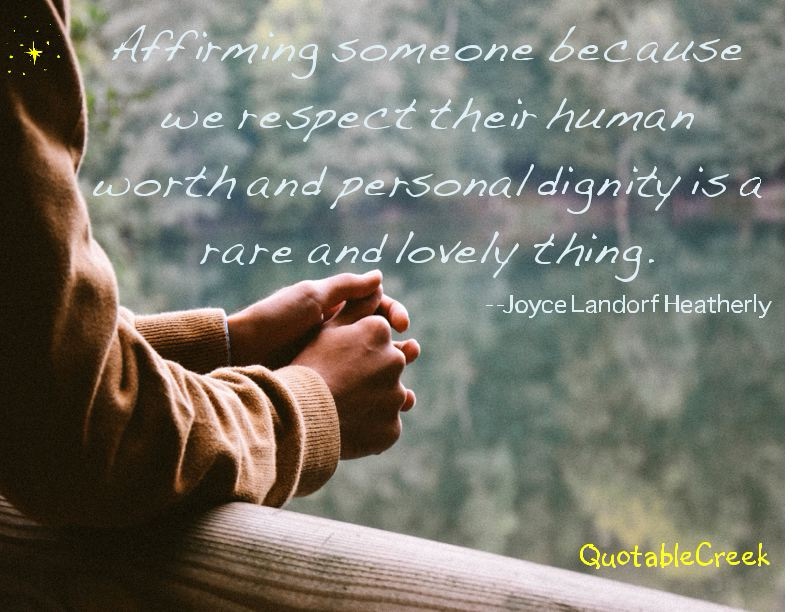
Are there people in your life who encourage you and make you feel stronger and lifted up? Are there some who drag you down or take the wind out of your sails? In her book, Balcony People, Joyce Landor Heatherley argues there are two types of people: the evaluators and the affirmers. She suggests:
I am sure, if there were a way to view a movie and see instant replays of all the strategic change points in our lives, that we’d instantly spot the people who either broke our spirits by their critical or judgmental evaluations, or who healed us by their loving, perceptive affirmations.
To be honest, I seem to be able to remember the negative comments of evaluators faster and more clearly than the positive remarks of the affirmers. I’m not alone in this ability to recall the negative….I suspect that not far from anyone’s conscious level of thinking lies the memory of an evaluator who pulled on his or her spiked boots and stomped deliberately over our bare soul and personhood.
Do you have any of these evaluators in your life? Maybe you can recognize the voice in your head that tells you that you can’t do something. In her book The Artist’s Way: A Spiritual Path to Higher Creativity, Julia Cameron calls these the censors. Maybe you have many censors, a rogue’s gallery of them.
So what do we do with these evaluators and censors to keep them from stifling our blossoming with their negative talk or opinions? Heatherley suggests leaving them in the past, even if that past was five minutes ago:
We all have the choice to replay the harmful remarks from evaluators, or we can choose to let them pass on. We can even choose to make allowances for their discouraging, destructive words. But best of all is the choice to willingly focus our minds and hearts on today’s person who is affirming us.
So who are these affirmers in our lives? Think back…
Who by one small sentence or more, has changed and lifted your opinion of yourself? Who was the person early in your life who recognized the first sparks of originality in the labyrinths of your mind and soul and saw what no one else saw? And who is the special affirmer who catches quick glimpses of the flames from the fires of your potential and tells you so? Who, by his or her words, helps you to respect and believe in your own value as a person? And who is the affirmer who encourages you to stretch and dream beyond your self-imposed limits and capabilities?
These affirmers are your Balcony People, cheering you on to blossom and stretch. These are the people whose words you must cling to when working toward your goal. These affirmers see you “by a clearer, truer light. They [are] able to peel back the layers of pretense [you] wear like like costumes for a bad play. Most of the time they [see] through and past the masks [you] hide behind. Then, once having broken through to [you] they’d get on with the business of motivating [you] to be all [you] can be.”
Affirmation is vital to our health and progress:
When others discern the good, the noble, the honorable, and the just tenets of our character (no matter how minuscule they may be) and proceed to tell us how they admire those traits, we feel visible. We begin to ‘see’ ourselves and our worth. We feel nurtured and nourished, but mostly we feel loved.
The Basement People do just the opposite. With their words they cause you to doubt and shrink. They focus on your flaws or failings. They encourage you to not try, to stay where you are, to wallow in the “murky waters of failure and discouragement.” We don’t need to linger on their words.
Who is in your Balcony? Who cheers you on and sees your unique worth? Who do you admire in history for their accomplishments or moral victories?
When you struggle, picture these people, your Balcony People. Remember their words. Let their affirmations encourage and comfort you in defeat and to keep pressing onward in your goals.
You are meant to blossom not wither. You are meant to shine not lurk in the shadows.
It’s getting harder to find the right presents for my granddaughters. I’m keenly feeling their growing up and the fact we are of different generations. Their world now contains so many things that I have so little clue about.
And Christmas for us, with kittens in the house, requires a whole new game plan. Making things festive without creating feline hazard zones is challenging.
And, with a family filled with different eating preferences and diets, food is a puzzle.
But, as with the Whos in Whoville, Christmas will come and find us regardless of how decorated we are or how many presents are under the tree, and we will learn the underlying truth again that Christmas isn’t about the stuff. It’s about the love. And that, we have in abundance.
How hard it is to lose someone you love. There is so much that seems unseen or unfelt without being shared together. So many visceral, tangible reminders of your loss are everywhere. Sounds, smells, songs, times of day, stories, jokes, and so on. Everywhere you look. There’s no escaping the weight of the loss really.
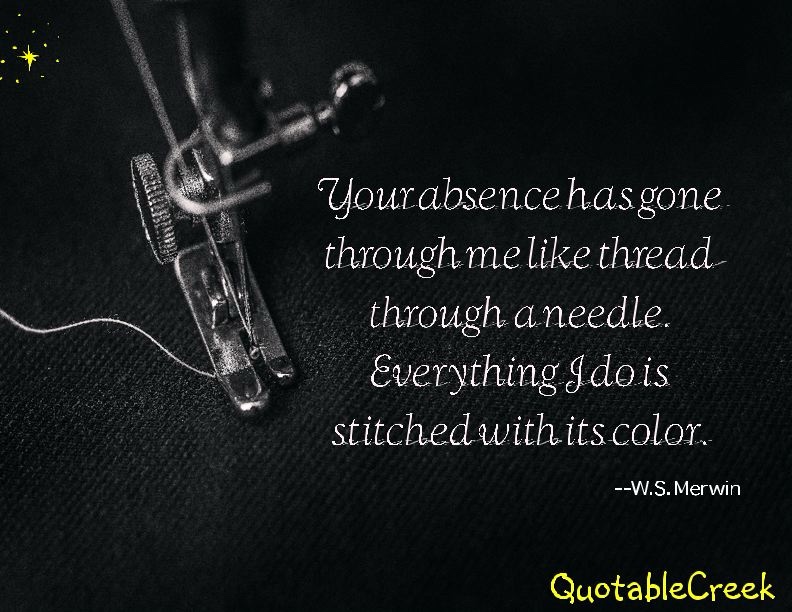
The only thing that makes it bearable is to consider it not loss, but a gift. Moments shared colored your life and made it brighter and more nuanced. The threads of memories you shared become woven together with threads from all the people you’ve loved and become the tapestry that is your life. And that ever-presence becomes not a stab, but a comfort.
e.e. cummings captured it well:
i carry your heart with me(i carry it in
my heart)i am never without it(anywhere
i go you go,my dear;and whatever is done
by only me is your doing,my darling)
i fear
no fate(for you are my fate,my sweet)i want
no world(for beautiful you are my world,my true)
and it’s you are whatever a moon has always meant
and whatever a sun will always sing is you
here is the deepest secret nobody knows
(here is the root of the root and the bud of the bud
and the sky of the sky of a tree called life;which grows
higher than soul can hope or mind can hide)
and this is the wonder that’s keeping the stars apart
i carry your heart(i carry it in my heart)
To all those we have loved and miss dearly, let us look back fondly, grateful for all the colors they brought into the tapestry of our lives, and repeat together:
Isn’t that the bottom line of Christmas? Strip away all the decorations and gifts and songs and celebrations, and what remains is: love wins. It’s about love. God loves us, and we are to love each other. And even in a world divided by hate, blind to oneness, driven by greed, love will win. Because that’s the point of Christmas.
The days before Christmas can be frantic. We sometimes find our tempers short, our tongues loose, and our wits frayed. We think of Christmas as something in the future, speeding toward us, that we need to hurry around and prepare for so that we can enjoy His coming. But a birthday, like Christmas, is a celebration of something that has already happened. And, in the case of Christmas, it is a celebration of a whole new world order that is here. We are His now, not just at Christmas. We need to shine with His love now and everyday. Particularly when the world is harried. We need to reflect the joy and peace that comes with knowing that love conquers all.
In his letter to the early church at Corinth, Paul sets out how love shows up in the world in his effort to help them get along. It is a frequent text for weddings:
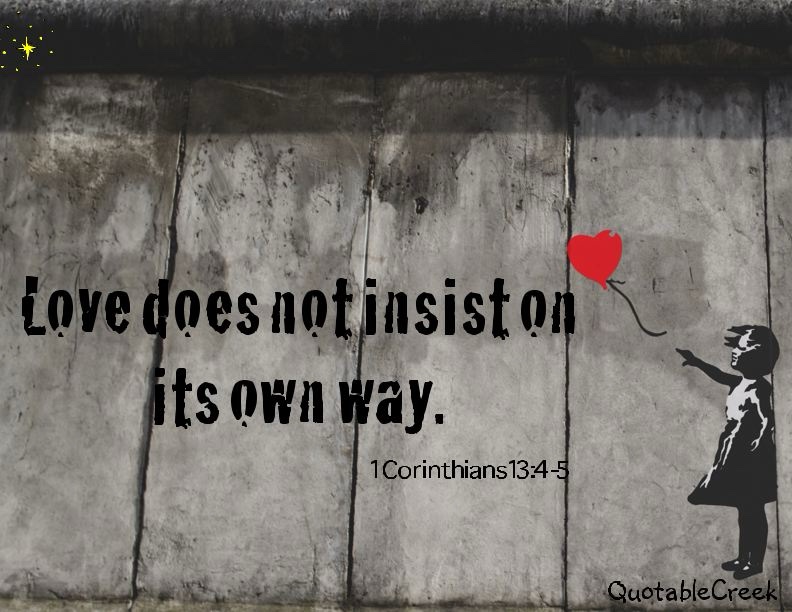
“Love is patient and kind; love does not envy or boast; it is not arrogantor rude. It does not insist on its own way; it is not irritable or resentful…” 1 Corinthians 13:4-5.
To those about to marry, an interesting exercise is to substitute the name of your beloved each time the word ‘Love’ appears. And an even more interesting exercise, for all of us, is to substitute our own names instead of the word ‘love’:
I am patient and kind; I do not envy or boast; I am not arrogant or rude. I do not insist on my own way; I am not irritable or resentful….
How did you do? For many of us, this simple recitation shows us the exact ways and times we are being less than loving and calls us to consider those actions. Must we insist on our own way? How do we know what is right? Isn’t it possible that someone else may be right, too? Are we becoming impatient with others? Can we take a minute to rein ourselves in, breathe deeply, and begin again? Are we holding grudges? Can we let the past go and try to make our present the best possible? And so on.
These checks we can do to measure our progress and monitor our moods against the ideal of love can be very helpful to keep us on track showing up in this world as close to lovingly as we can get.
It’s okay to be heartbroken for more than one group of people at the same time. When it comes to showing compassion, we don’t have to pick sides. Sometimes, often really, maybe even always, there is hurt and anguish everywhere, and we can mourn the lot of it.
Beware people who tell you not to be concerned for this group or that group and the hurt they feel.
Beware those who try to dehumanize others.
Beware those who lump you in as the ‘enemy’ for working to assure people are treated humanely.
Beware people who draw lines between us and them.
Beware those who try to limit you to a label or single identity.
Our hearts are big enough to embrace it all. What we must save is love.
Are you good at receiving? Giving often comes naturally, but receiving can be challenging. The mom who wears the pasta necklace and hangs the cotton puff ornament on the tree is sending a powerful message that her child matters, that she loves their thoughtfulness, and that she is honored and grateful to receive their gifts.
The host who immediately opens a guest’s gift of wine and serves it is saying that they value their guests’ choices and are welcoming their contributions to the synergistic experience that is a social gathering.
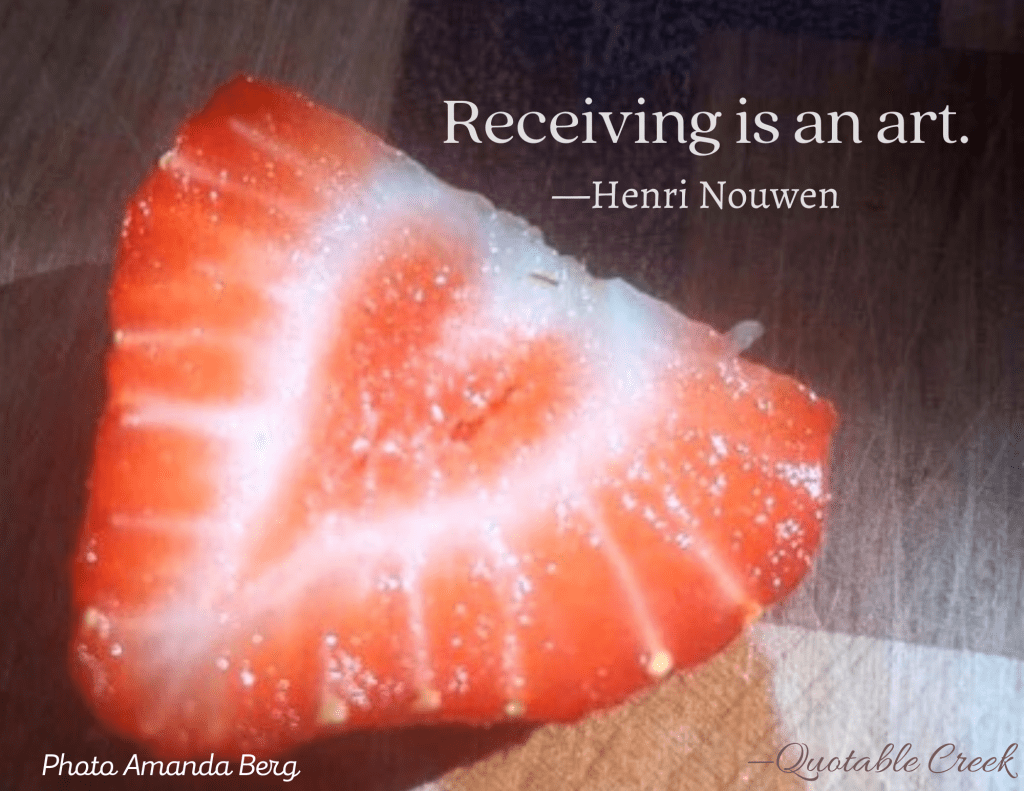
Henri Nouwen offers this powerful insight:
When someone gives us a watch but we never wear it, that watch is not really received. When someone offers us an idea but we do not respond to it, that idea is not truly received. When someone introduces us to a friend but we ignore him or her, that friend does not feel well received.
Receiving is an art. It means allowing the other to become part of our lives. It means daring to become dependent on the other. It asks for the inner freedom to say, “Without you I wouldn’t be who I am.” Receiving with the heart is, therefore, a gesture of humility and love. So many people have been deeply hurt because their gifts were not well received. Let us be good receivers.
Henri Nouwen, Bread for the Journey
These words cause us to pause and consider. Are we good receivers? Do we value those gifts and those givers in a way that causes us to open up and expand our walls, and even, perhaps, our sense of self? Can we give up our need to be in control and let our defenses down enough that others around us can share in the very creation of our lives?
When we are being welcoming, the focus is outward not inward. We look to what would make the other person comfortable, not what would make us comfortable. We don’t invite vegetarians, and then serve meat. Or teetotalers and serve alcohol. We get out of our own perspective and walk in the guest’s shoes to consider what would make them comfortable.
Aesop illustrated this premise with the Tale of the Fox and the Stork:
A fox invites a stork to eat with him and provides soup in a bowl, which the fox can lap up easily; however, the stork cannot drink it with its beak. The stork then invites the fox to a meal, which is served in a narrow-necked vessel. It is easy for the stork to access but impossible for the fox. The moral drawn is that the trickster must expect trickery in return and that the golden rule of conduct is for one to do to others what one would wish for oneself.
The same is true, presumably, when welcoming people to the Lord’s table. What would make others comfortable? How can you reach more people? What about the way you do things might be off putting? How can you step out of your own perspective to consider what would make others in the community feel welcomed and comfortable? Our job isn’t to be a bar to spreading the word but a conduit.
Desmond Tutu talks about the importance of a broad welcome:
We are made for goodness. We are made for love. We are made for friendliness. We are made for togetherness. We are made for all of the beautiful things that you and I know. We are made to tell the world that there are no outsiders. All are welcome: black, white, red, yellow, rich, poor, educated, not educated, male, female, gay, straight, all, all, all. We all belong to this family, this human family, God’s family.






 QuotableCreek.com