Patron Saint of Darkness
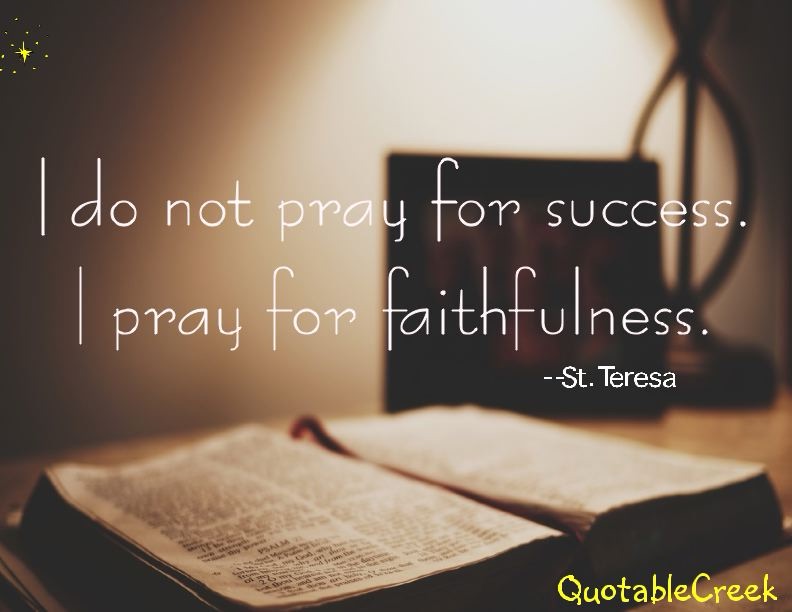
In 2016, Pope Francis sainted Mother Teresa. She was a beloved paragon of a selfless life, ministering to the poor and dying, shining a light on the importance of the little things and the love of family. After her death, her diaries showed her struggles with doubt. Once feeling clearly called to her mission, in the last several decades of her life she felt God’s absence. She said,

Lord, my God, who am I that You should forsake me? The Child of your Love–and now become as the most hated one–the one–You have thrown away as unwanted–unloved. I call, I cling, I want–and there is no One to answer–no One on Whom I can cling–no, No One.–Alone … Where is my Faith–even deep down right in there is nothing, but emptiness & darkness–My God–how painful is this unknown pain–I have no Faith–I dare not utter the words & thoughts that crowd in my heart–& make me suffer untold agony.

So many unanswered questions live within me afraid to uncover them–because of the blasphemy–If there be God –please forgive me–When I try to raise my thoughts to Heaven–there is such convicting emptiness that those very thoughts return like sharp knives & hurt my very soul.–I am told God loves me–and yet the reality of darkness & coldness & emptiness is so great that nothing touches my soul. Did I make a mistake in surrendering blindly to the Call of the Sacred Heart?

And on until her death, she felt God’s absence, rather than his presence. And yet she persisted doing the work to which she had been called, living a life of faith.

Some may call her a hypocrite to have an outward smile of peace and an inner crisis of faith, but isn’t her struggle every one’s struggle? Who among us doesn’t struggle with doubt? Don’t we all rely on faith when our paths grow dark and twisting?

St. Teresa of Calcutta inspires us to hang on during the dark nights of the soul, to continue to walk the walk, to be faithful and steadfast, and to shine light in the dark places. She can aptly be considered the Patron Saint of Doubters.
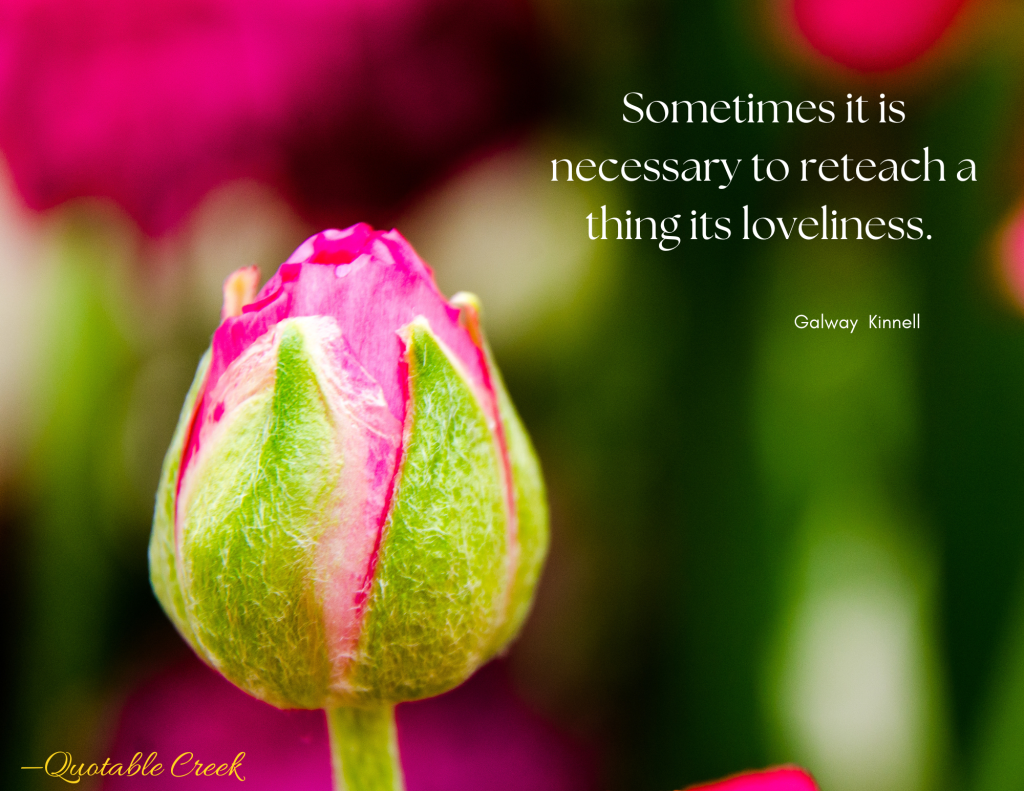
Reteaching loveliness.

You and everyone around you are buds, waiting to fully bloom. Sometimes we need reminders of that fact.

Consider this poem from Galway Kinnell:

Relearning Loveliness

The bud

Stands for all things,

Even for those things that don’t flower,

For everything flowers, from within, of self-blessing:

Though sometimes it is necessary to reteach a thing its loveliness,

To put a hand on the brow

Of the flower,

And retell it in words and in touch,

It is lovely

Until it flowers again from within, of self-blessing.

Bless the comforters.

Bless the comforters, those who reach out and see others hurting and grief stricken, and offer them solace. Who sit with those going through difficult times, and give of their presence. Who offer kind, comforting words.

We sometimes think those who are good at comforting don’t know loss of their own, but the opposite is probably true.

As said by Rainer Maria Rilke:

Do not assume that he who seeks to comfort you now lives untroubled among the simple and quiet words that sometimes do you good. His life may also have much sadness and difficulty, that remains far beyond yours. Were it otherwise, he would never have been able to find such words.

Perhaps the only good to come of great loss is the ability to recognize it in others and offer them comfort and companionship.

Bless the comforters.

Practicing courage.

Life is full of hard choices. Particularly when you aren’t the one in danger. Making those tough choices, entering the fray, speaking truth to power, defending the defenseless are vital actions for our collective survival.

As Brené Brown says, 

Integrity is choosing courage over comfort; it’s choosing what’s right over what’s fun, fast, or easy; and it’s practicing your values, not just professing them

Practicing our values, not just professing them. What are your values? How can you bring that to bear in the choices confronting you today?

Many of us have opinions and desire to help in difficult situations but are afraid to raise our voices. We worry about alienating others or of seeming strident. But if not now, when?

Maybe we can start in small ways and exercise our courage muscles.

Consider these words from Maya Angelou:

“I would encourage us to try our best to develop courage. It’s the most important of all the virtues, because without courage, you can’t practice any other virtue consistently. You can be anything erratically — kind, fair, true, generous, all that. But to be that thing time after time, you need courage.

We need to develop courage, and we need to develop it in small ways first. Because we wouldn’t go and say, ‘I’ll pick up this 100-pound weight’ without knowing our capacity. So we need to say, ‘Oh, I’ll start by picking up a five-pound weight, then a 10-pound weight, then a 25-pound, and sooner or later I’ll be able to pick up a 100-pound weight.’ And I think that’s true with courage.

You develop a little courage, so that if you decide, ‘I will not stay in rooms where women are belittled; I will not stay in company where races, no matter who they are, are belittled; I will not take it; I will not sit around and accept dehumanizing other human beings’ — if you decide to do that in small ways, and you continue to do it — finally you realize you’ve got so much courage. Imagine it — you’ve got so much courage that people want to be around you. They get a feeling that they will be protected in your company.” — Maya Angelou

Look for ways to test your voice and develop your courage muscles today. Perhaps it’s in saying you disagree, perhaps it’s posting something to show solidarity with those going through difficulty, perhaps it’s speaking truth to power. Today, a five pound weight of courage flexing. Soon, you will develop the courage you need for the big battles ahead.

Persevere

Sometimes things hum along nicely, and you can feel a deep sense of progress in yourself, your relationships, and the world.

Sometimes the opposite is true.

You feel yourself retreating and losing hope. Your relationships fray. Progress in the world is wiped away.

At times like these, we need to hunker down and draw on a well of hope inside in each of us that springs up with the knowledge that we can do better, we deserve better, and we will fight for ourselves and each other to make the world better.

We may not know yet the battleground we will be called to or the terms of engagement.

We do, though, know the weaponry we will fight with.

Love, honesty, integrity, justice, compassion. These tools of the light will vanquish darkness. We can’t forget what is good and right.

Finally, brethren, whatsoever things are true, whatsoever things are honest, whatsoever things are just, whatsoever things are pure, whatsoever things are lovely, whatsoever things are of good report; if there be any virtue, and if there be any praise, think on these things. Philippians 4:8

We must persevere.

Love like water.

We hear we should fight fire with fire or get down in the gutter and fight dirty with the rest of them, but is this the best way? Won’t everyone just be hurt? Won’t our young lose role models for the importance of virtue?

What of other, softer, ways to resist?

Consider these words from Richard Rudd:

The Softening

Softness is one of the great secrets of all spiritual practice. 

When we become soft, we become like water. 

We let life come to us. 

We trust in its flow, and we allow ourselves to be taken in whichever direction it chooses. 

This is true power because it comes from love, and love is the softest thing in the universe, and yet it is the most powerful. 

When you soften your attitude to yourself, to others, and to life, you release the natural wisdom that lies within you. 

Your body softens, your thoughts soften, and your heart softens. 

Through softness, you find clarity and purpose without needing to force anything. 

Your life becomes a gentle unfolding rather than a constant battle.

We are needed, that is all we can know.

Do not lose heart. The challenges you see today are the ones you must face. You are strong enough to do your part, and you will find allies everywhere you look.

Do not be afraid.

You may feel you are riding on stormy seas, but look around you. In the words of Dr. Clarissa Pinkola Estes:

Look out over the prow; there are millions of boats of righteous souls on the waters with you. Even though your veneers may shiver from every wave in this stormy roil, I assure you that the long timbers composing your prow and rudder come from a greater forest. That long-grained lumber is known to withstand storms, to hold together, to hold its own, and to advance, regardless.

In any dark time, there is a tendency to veer toward fainting over how much is wrong or unmended in the world. Do not focus on that. There is a tendency, too, to fall into being weakened by dwelling on what is outside your reach, by what cannot yet be. Do not focus there. That is spending the wind without raising the sails.

We are needed, that is all we can know. And though we meet resistance, we more so will meet great souls who will hail us, love us and guide us, and we will know them when they appear. Didn’t you say you were a believer? Didn’t you say you pledged to listen to a voice greater? Didn’t you ask for grace? Don’t you remember that to be in grace means to submit to the voice greater?

Ours is not the task of fixing the entire world all at once, but of stretching out to mend the part of the world that is within our reach. Any small, calm thing that one soul can do to help another soul, to assist some portion of this poor suffering world, will help immensely. It is not given to us to know which acts or by whom, will cause the critical mass to tip toward an enduring good.

You do not need to do everything. Do what you can, where you can, with what you can. Your actions combined with actions from millions of like-minded individuals will make a difference for good.

Do not lose heart.

Be still my soul and steadfast.

No one knows what tomorrow will bring, and that can be frightening. We are in a volatile time. It helps to keep our attention on the present and what we can do here and now.

The great poets help calm our souls. Take comfort today from these tender words from Mary Oliver:

Be still, my soul, and steadfast.
Earth and heaven both are still watching
though time is draining from the clock
and your walk, that was confident and quick,
has become slow.

So, be slow if you must, but let
the heart still play its true part.
Love still as once you loved, deeply
and without patience. Let God and the world
know you are grateful. That the gift has been given.


+ Mary Oliver

We do not know what tomorrow brings, but we will approach it with full souls, grateful and loving, ready to meet the day with a steadfast heart.

Hope for the new year.

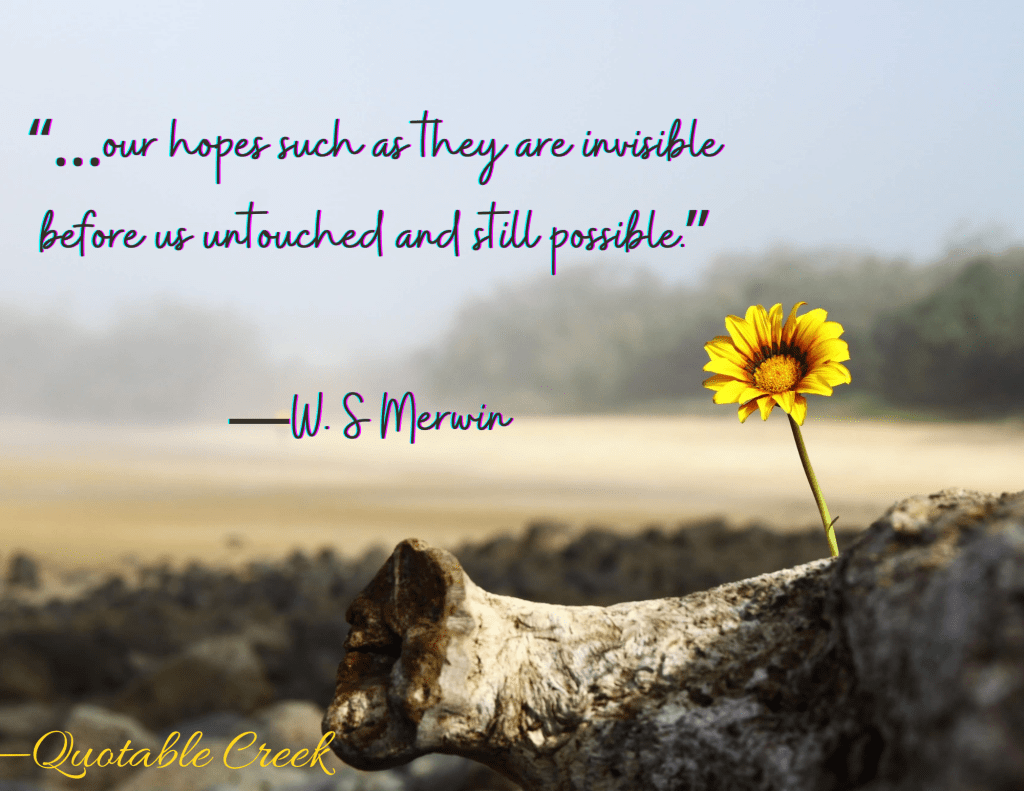
As you continue to adjust to the realities and promises of the new year, enjoy this poem by W. S. Merwin:

To the New Year

BY W. S. MERWIN

With what stillness at last 

you appear in the valley 

your first sunlight reaching down 

to touch the tips of a few 

high leaves that do not stir 

as though they had not noticed 

and did not know you at all 

then the voice of a dove calls 

from far away in itself 

to the hush of the morning

so this is the sound of you 

here and now whether or not 

anyone hears it this is

where we have come with our age 

our knowledge such as it is 

and our hopes such as they are 

invisible before us 

untouched and still possible

Here we are in 2025, with our age and knowledge, such as they are, and our hopes, such as they are, with everything again before us untouched and still possible. 

May this new year bring you peace.

Bearing one another’s burdens.

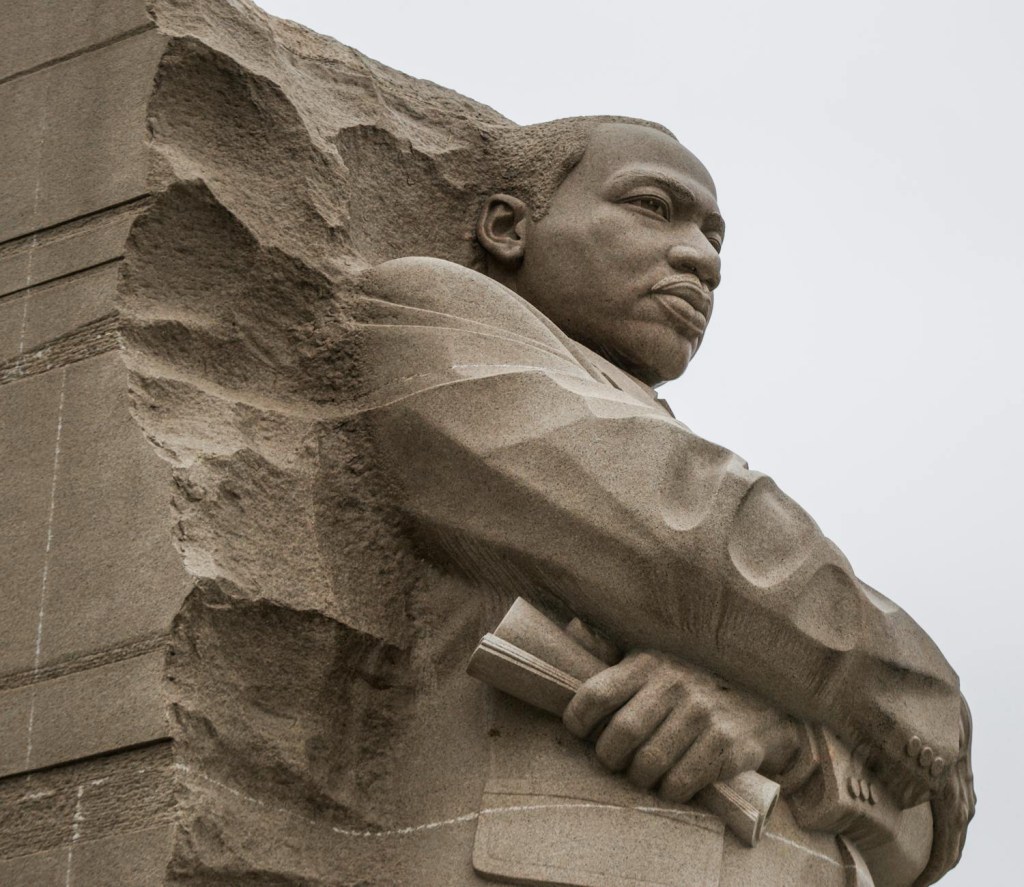
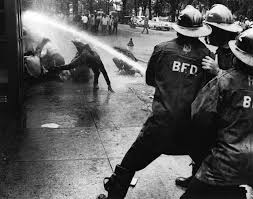
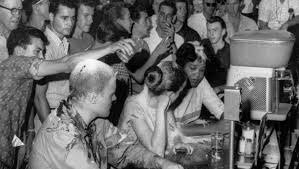
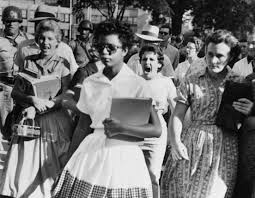
Today is Martin Luther King, Jr. Day. Also Inauguration Day. When we picture King, we picture him as heroic, confident, strong. And these are likely the pictures you may see today.

And, of course, he was these things. Championing civil rights and railing against injustice, able to see inequity in the systems around him and dream of a better way. He was an advocate of love over hate and peaceful protest.

And yet, his life was not a peaceful one. He was killed for the beliefs he professed. And much of the progress he made was met with violence and hate.

Progress is not a straight line, and hate is ever-present. And hate can be powerful and beguiling and intimidating. And hate can creep into the consciousness of a group, or even a nation.

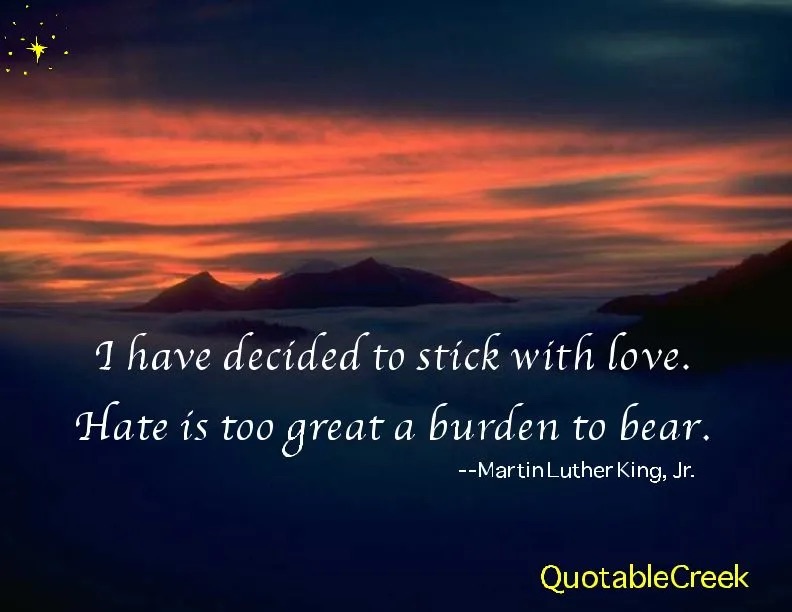
And yet, I will stand with King for love over hate, all these years later, and do what I can to continue his fight for justice and peace.

Because, even in the midst of hateful people and those who seek to divide, justice and truth are on the right side of history.