Toni Morrison had a gift for complexity and nuance in her writing. Multi-dimensional characters and lots of gray area rule the day in her work.
I found it interesting to hear this perspective from her:
I just think goodness is more interesting. Evil is constant. You can think of different ways to murder people, but you can do that at age five. But you have to be an adult to consciously, deliberately be good — and that’s complicated.
It’s an age-old question whether people are inherently good, whether altruism is learned or instinctive, whether selflessness develops naturally.
But there definitely is an intentionality to doing good, choosing kindness, forgiving, welcoming, holding your tongue. And as we grow older and cast off our childish ways, we learn the wisdom of restraint and forbearance.
And we learn the power of good because often we are on the receiving end of it and know how much it matters.
And then when it’s our turn, we want to pass it on.
It’s remarkable how powerful words, just words, are. Most of us can remember a criticism that hurt, maybe more than we can remember a compliment.
In the hands of a parent, words can be deflating or encouraging, critical or comforting. A parent who is never satisfied no matter the child’s achievement can inflict lifelong damage. And the effect of those words will last with that child well into adulthood and inform how they, in turn, will talk with their own children. A sad cycle.
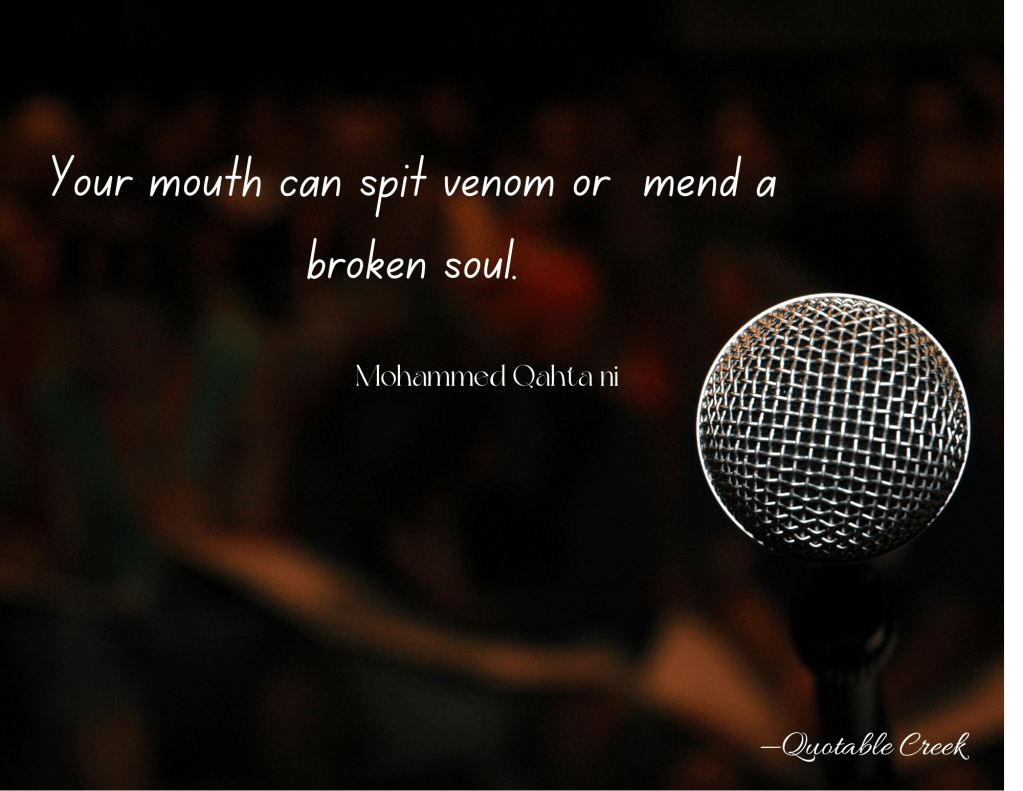
These days, lies have a horrible power to cause almost irreversible damage. Social media can amplify those lies, and, before you can think twice, your words can become venom.
No doubt words have power. The question becomes how do we want to use that power. In this award-winning speech, Mohammed Qahtani makes a case for choosing wisely.
How broad is your focus? On your own needs and wants, or broader? It seems that a broad focus, on others as much or more than ourselves increases empathy and happiness.
As Daniel Goleman said:
Self-absorption in all its forms kills empathy, let alone compassion. When we focus on ourselves, our world contracts as our problems and preoccupations loom large. But when we focus on others, our world expands. Our own problems drift to the periphery of the mind and so seem smaller, and we increase our capacity for connection – or compassionate action.
Does this seem true as you think about the people in your life?
The other thing that happens when you turn your concern to others is the whole world opens up. There is so much to learn, to do, to care about. So many places to put your time and efforts. So many people to love and help.
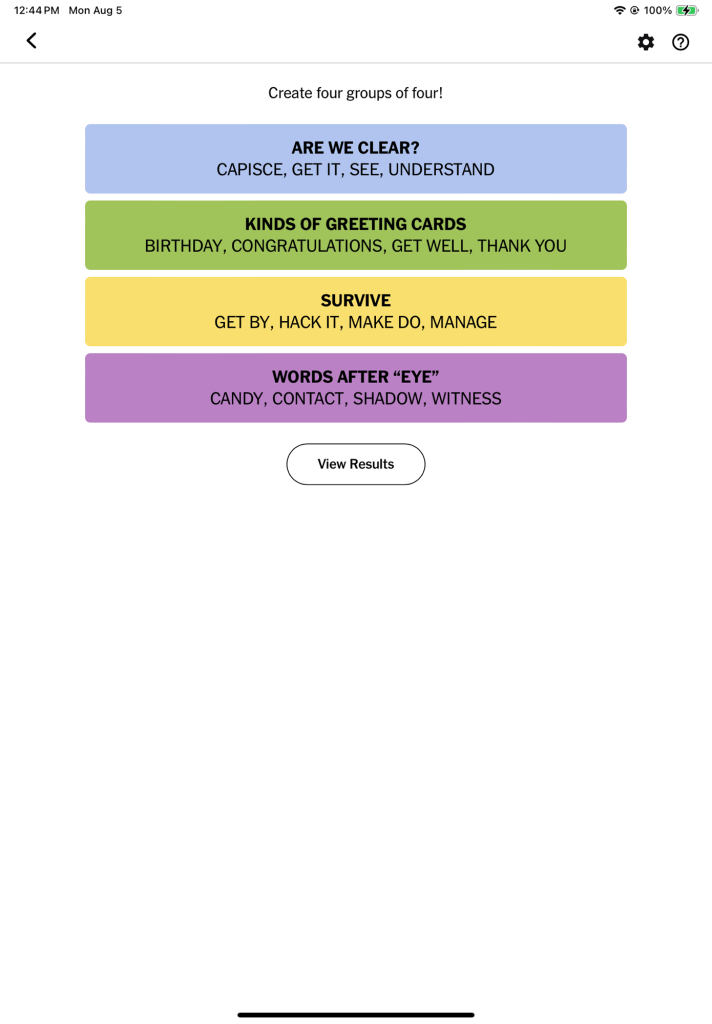
Every morning, I wake up and play games. My favorite these days is Connections, a collection of 16 words that you need to group in four groups of four based on a shared connection. Here’s the solution from one last week:
Now, looking at the solution, it’s easy to see the connections. Not so, though, when the words are all scrambled and the connections are unclear. Words may have more than one meaning or be multiple parts of speech. Often the answers are homonyms or are missing a letter. It can be challenging to find the connections among the words.
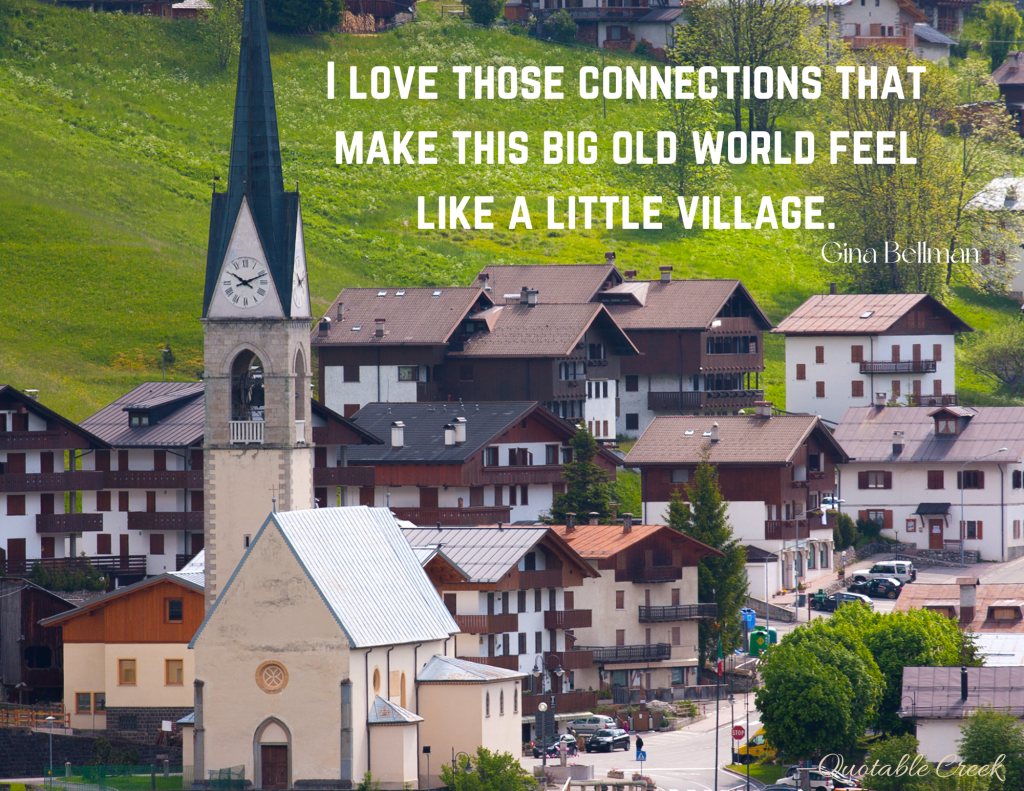
So, too, with the connections among people. There are some obvious superficial connections perhaps— gender, political affiliation, nationality, religion, age. But what of those deeper, hidden ones? How do we find those to help us feel more like a community?
I thought about this when reading an article about how an introvert, Jay Krasnow, made friends. He had struggled to find true connections at work functions or forced social gatherings, but when he dug deeper, to consider the things he was passionate about and find others who shared those passions, he found the connection he was looking for. He explains:
My failure at connecting wasn’t due to a lack of trying. I spent my 20′s and 30′s collecting and studying books on how to network, forge friendships and build character.
Yet, my principal achievement from reading these books was that I became adept at identifying when other people had read these same books. Meanwhile, my networking skills didn’t significantly improve. Even worse, I felt that by reading books with titles like “How to Talk to Anyone,” I was turning myself into a robot that spewed out inauthentic lines to people who I genuinely wanted to know.
There had to be a better way to build relationships.
For Jay, he decided to start a book club, not one reading the same book, but one where you came and told people about the book you were currently reading. It took off, people came. And those relationships centered on a shared passion spilled over into other friendships:
Connecting with other people through books seemed natural, but I didn’t know if anyone would come. I was prepared to read my book quietly if no one else showed up. Fortunately, both my friends came, and we were joined by one other person we didn’t know.
After the first event, more people started coming, and I started making new friends almost immediately.
The group’s membership grew exponentially. It wasn’t long before I was inviting my new friends to dinners and other events. Because we had established we shared a similar passion, it was easy to branch out from there and find other things to do and talk about.
I wonder if this is what the world needs right now— connections based on a shared love or passion. So much of identity seems tied into a shared hatred or shared anger over something. It seems like that just leads to more loneliness and separation.
It’s so interesting to think about all the different ways we can show up in this world. On stage, as in this quote. Or behind the scenes.
What motivates you to get out there and shine your light?
What do you think of the phrase ‘The world is your oyster’? Full of possibilities, and maybe a pearl. Treasure! But also something born inside the oyster as a result of grit or sand, an irritant, inside the oyster, around which the oyster builds the pearl.
Life is full of irritants, and pearls, runways and behind the scenes. It’s a big complicated world.
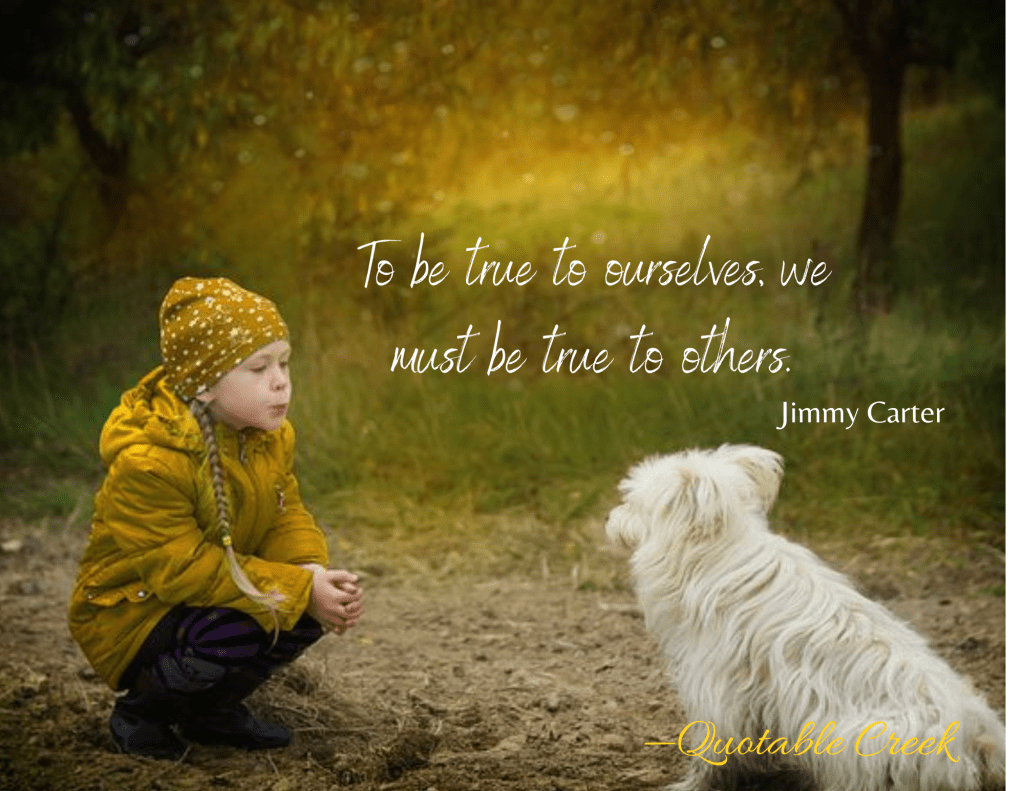
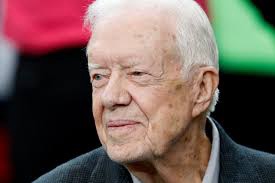
One of my personal heroes, Jimmy Carter, almost 100 years old, is trying to hang on to vote in this election. He has been such a wonderful example of walking the walk. He says:
“My faith demands – this is not optional – my faith demands that I do whatever I can, wherever I can, whenever I can, for as long as I can with whatever I have to try to make a difference.”
What a wonderful way to look at our possible impact. Using what we have, not waiting until we have more or better resources or to be older and wiser, or wishing we were younger and stronger. Right now with what’s available.
And wherever we find ourselves, adopting a bloom where you’re planted attitude. Even if we are in our own harsh spot. Considering what can we do here.
And always looking for opportunities to do good. Not necessarily solving the world’s problems, but doing your own little bit of good. Right here, right now.
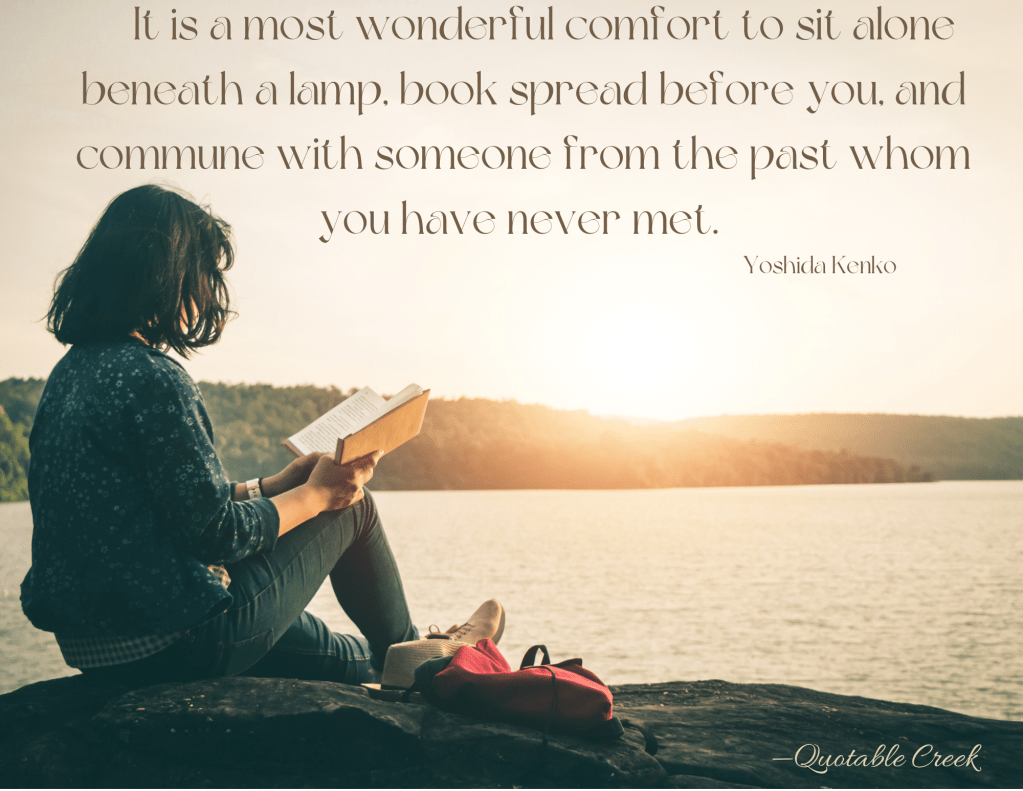
There is a sort of magic in reading a book. Someone, maybe long dead, has perhaps expressed deep feelings or new thoughts or complex theories, writing out of their aloneness, and connecting with someone they have never met and may never meet.
And yet the impact of that shared space over a book can be life-changing. It can help you feel less alone in this big world. It can help you feel empathy for others in a way you may never have experienced without the book. It can open your heart and mind in new and wonderful ways.
How much do our expectations get in the way of our gratefulness? If we were expecting nothing, would our eyes open more to all the gifts we receive each day. Brother David Steindhal-Rast explores just this link between surprise and gratitude:
Have you ever noticed how your eyes open a bit wider when you are surprised? It is as if you had been asleep, merely day-dreaming or sleepwalking through some routine activity, and you hear your favorite tune on the radio, or look up from the puddles on the parking lot and see a rainbow, or the telephone rings and it’s the voice of an old friend, and all of a sudden you’re awake. Even an unwelcome surprise shakes us out of complacency and makes us come alive. We may not like it at first, but looking back, we can always recognize it as a gift. Humdrum equals deadness; surprise equals life. In fact, my favorite name for the One I worship in wonder – the only name that does not limit God – is Surprise.
Right this moment, as I remember spiritual giants I have been privileged to meet – Mother Teresa, Thomas Merton, Dorothy Day, His Holiness the Dalai Lama – I can still feel the life energy they radiated. But how did they come by this vitality? There is no lack of surprises in this world, but such radiant aliveness is rare. What I observed was that these people were all profoundly grateful, and then I understood the secret.
Surprise is a seed. Gratefulness sprouts when we rise to the challenge of surprise
A surprise does not make us automatically alive. Aliveness is a matter of give-and-take, of response. If we allow surprise to merely baffle us, it will stun us and stunt our growth. Instead, every surprise is a challenge to trust in life and so to grow. Surprise is a seed. Gratefulness sprouts when we rise to the challenge of surprise. The great ones in the realm of Spirit are so intensely alive because they are so deeply grateful.
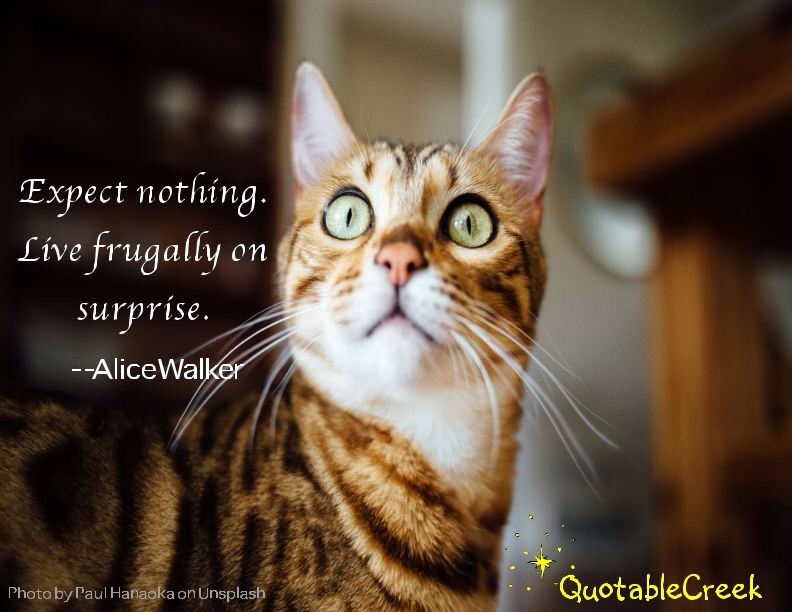
Gratefulness can be improved by practice. But where shall beginners begin? The obvious starting point is surprise. You will find that you can grow the seeds of gratefulness just by making room. If surprise happens when something unexpected shows up, let’s not expect anything at all. Let’s follow Alice Walker’s advice. “Expect nothing. Live frugally on surprise.”
To expect nothing may mean not taking for granted that your car will start when you turn the key. Try this and you will be surprised by a marvel of technology worthy of sincere gratitude. Or you may not be thrilled by your job, but if for a moment you can stop taking it for granted, you will taste the surprise of having a job at all, while millions are unemployed. If this makes you feel a flicker of gratefulness, you’ll be a little more joyful all day, a little more alive.
Once we stop taking things for granted our own bodies become some of the most surprising things of all.
Once we stop taking things for granted our own bodies become some of the most surprising things of all. It never ceases to amaze me that my body both produces and destroys 15 million red blood cells every second. Fifteen million! That’s nearly twice the census figure for New York City. I am told that the blood vessels in my body, if lined up end to end, would reach around the world. Yet my heart needs only one minute to pump my blood through this filigree network and back again. It has been doing so minute by minute, day by day, for the past 75 years and still keeps pumping away at 100,000 heartbeats every 24 hours. Obviously this is a matter of life and death for me, yet I have no idea how it works and it seems to work amazingly well in spite of my ignorance.
I do not know how my eyes adapt, yet when I chant by candlelight they are 100,000 times more sensitive to light than when I read outdoors on the porch at noon. I wouldn’t know how to give instructions to the 35 million digestive glands in my stomach for digesting one single strawberry; fortunately, they know how to do their job without my advice. When I think of this as I sit down to eat, my heart brims with gratefulness.
From the humble starting point of daily surprises, the practice of gratefulness leads to these transcendent heights.
In those moments, I can identify with the Psalmist who cried out in amazement, “I am fearfully and wonderfully made.” (Ps.139:14) From there it is only a small step to seeing the whole universe and every smallest part of it as surprising. From the humble starting point of daily surprises, the practice of gratefulness leads to these transcendent heights. Thomas Carlyle pointed to these peaks of spiritual awareness when he wrote, “Worship is transcendent wonder” – transcendent surprise.
Surprise is a seed; let it sprout and blossom today to color your life with gratitude.
It certainly changes things depending on your perspective. Someone who thinks of life as a contest is always striving, comparing what he has to others. The one who views life as a burden might sigh a lot. And so on.
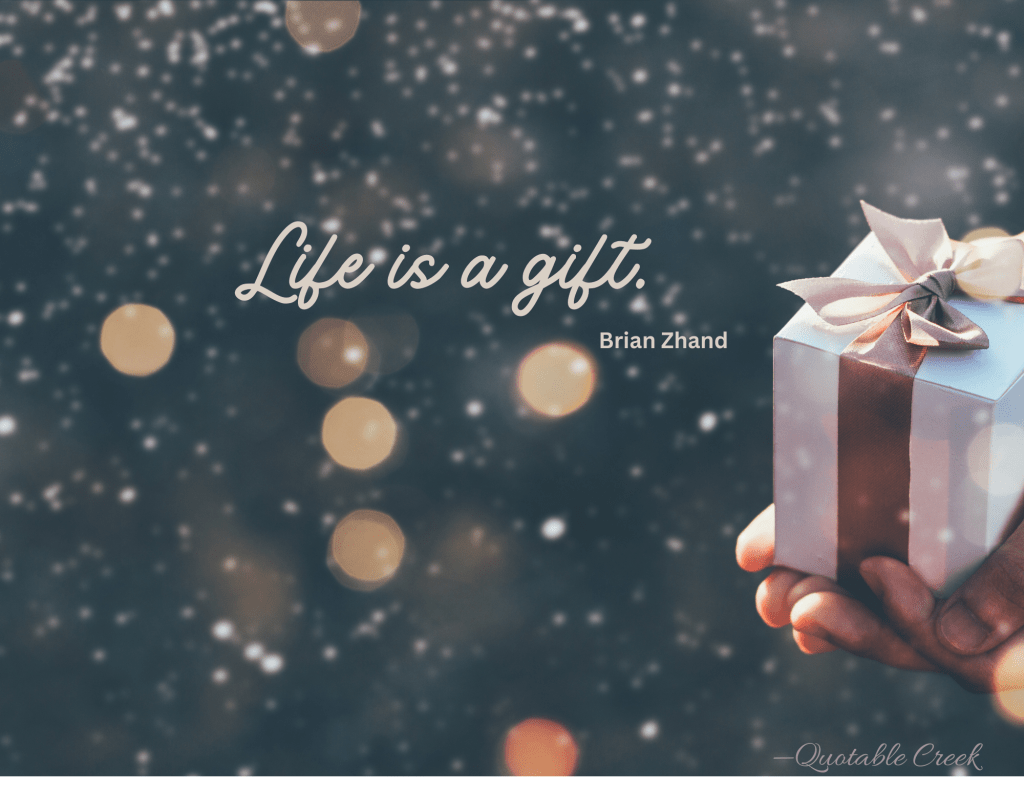
But what if we thought of life as a gift? Unearned, given out of love, no strings attached. Something to be grateful for. Something to savor and enjoy but also something to treasure. Would that affect what we see when we open our eyes in the morning? Face challenges? Greet people? Pick a career?
Brian Zhand says:
Most of us are scripted to think that life is a game and the purpose of life is to win. But the divine truth is that life is a gift and the purpose of life is to learn to love well.
The truth is being here is a gift, an opportunity, a chance to do some good. Open your gift.
Life is full of hard choices. Particularly when you aren’t the one in danger. Making those tough choices, entering the fray, speaking truth to power, defending the defenseless are vital actions for our collective survival.
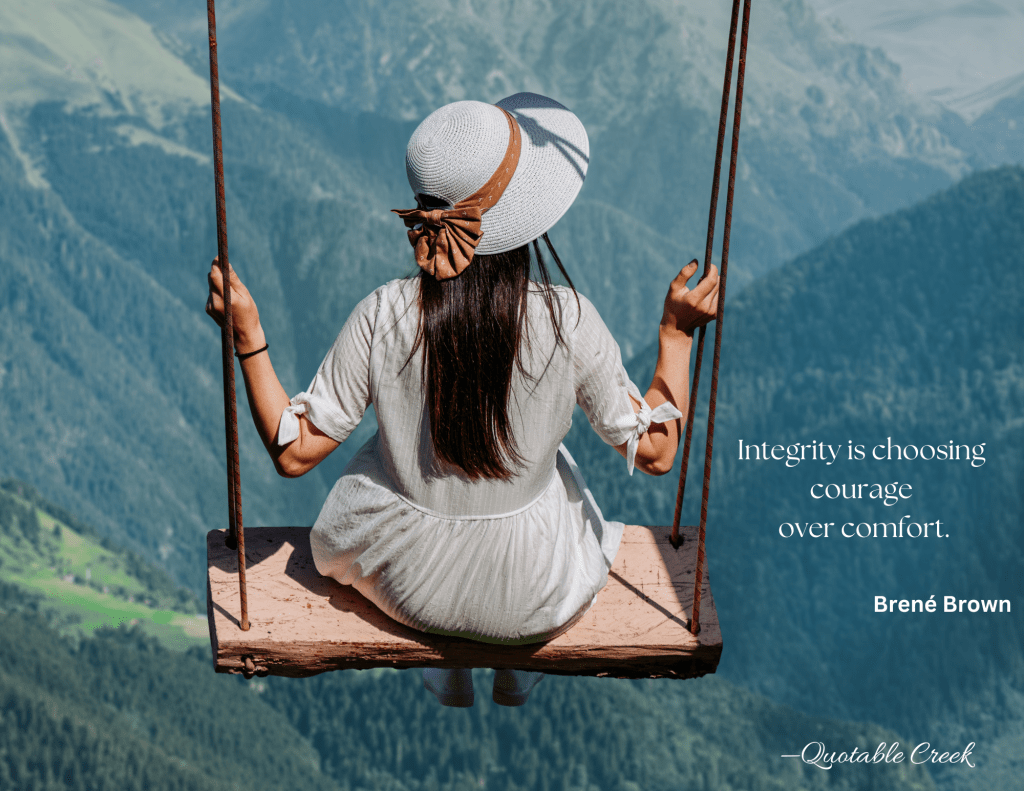
As Brené Brown says,
Integrity is choosing courage over comfort; it’s choosing what’s right over what’s fun, fast, or easy; and it’s practicing your values, not just professing them.
Practicing our values, not just professing them. What are your values? How can you bring that to bear in the choices confronting you today?



 QuotableCreek.com