We tend to think of peace as the absence of violence as quiet is the absence of noise, but is it more? Perhaps peace is active. It exists in the kind word offered, the refusal to meet hate with hate, the comfort of following higher principles, the strength of the outstretched hand. It is so easy to lose, to slip into mirroring the hate and violence we see around us, to sit silent in front of a bully, to trade barbs, to slide down. Peace is active. We maintain it in our hearts and mind. We breathe deeply to draw us back to that peaceful place. We remember truth, honor, decency, compassion. We breathe in all that is good, we exhale the bad.
Author Shauna Niequist talks about the anxiety we are all experiencing now and suggests breath prayer:
“Christians have been practicing breath prayer since at least the sixth century & there are lots of ways to do it. One way that’s been helping me lately: choose one word to pray as you inhale–what you’re asking God to bring into your life/body/spirit/world, and one word to exhale–what you’re asking God to carry for you, so that you can release it as you breathe out.
Inhale healing/exhale fear.
Inhale peace/exhale anxiety.
Inhale hope/exhale despair.
Inhale hope/exhale chaos.”
As you move forward into your day, remember to take deep breaths, center yourself, and carry on.
How do we read the news and not get overwhelmed or angry, disconnected or depressed? How do we keep showing up with compassion and grace in a world where there is so much hate? How do we keep ourselves on the right path through the midst of it all? How do we continue to show up from a place of compassion, forgiveness, and grace? how do we keep our hearts from growing hard?
In this thoughtful letter, Rabbi Yael Levy shares his insights on how to pray with the news:
The 17th of the Hebrew month Tammuz initiates a three-week period of mourning that leads to Tisha b’Av, which is the day that marks the destruction of the Temples in Jerusalem in 586 BCE and 70 CE.
Tradition teaches that the Temple was destroyed because hatred became the operating principle in the community. The scorn, contempt and disdain that characterized daily interactions caused the Divine Presence to flee and leave the Temple vulnerable to attack.
These next three weeks ask us to reflect on the hatred that we allow to take root in our hearts. The wisdom of the tradition acknowledges that hatred can sometimes feel energizing and “so right,” but allowing it to fill our bodies and guide our actions leads to destruction.
Many years ago I was taught the practice of praying with the news. I have shared it over the years and always find myself returning to it during this season.
In this practice, each time we read or listen to a news report that enrages us, we turn our attention to those harmed by what is happening and pray for their healing and well-being. Doing so encourages us to acknowledge feelings of anger, grief and despair, and at the same time it turns our attention toward connection and compassion. Praying with the news can help us learn to bear witness to devastation and mayhem, while keeping our hearts soft, our minds calm, and our actions clear.
I am struggling mightily with this practice these days in the wake of continued violence and oppression in this country and throughout the world. Hatred can sometimes feel like such a welcome harbor. Not only does it feel so right, it can also act as a shield, creating the illusion that I don’t have to acknowledge the grief and heartbreak I am experiencing.
I need practices to help quiet the rage and fear, to loosen the constriction of hatred and to help me be with overwhelming grief. I need practices to help me return to compassion, love, joy and possibility. I find praying with the news both painful and helpful. It keeps me connected, allows sorrow, and grounds me in care and love.
In this world of constant scrutiny and omnipresent recordings, mistakes seem to have moved from a necessary part of learning to an instant cause for condemnation.
We can all think back to learning to walk and talk or play a sport where the mistakes were a part of learning. Fear of falling down would keep everyone from walking. In order to learn how to make a basket, lots of shots will bounce off the rim and backboard.
When we moved on to raising children, focusing on the mistakes could cripple a child emotionally. Instead, we celebrated the steps forward, the successes. Noted the progress. We don’t expect a toddler to write a dissertation. We celebrate the milestones as they come.
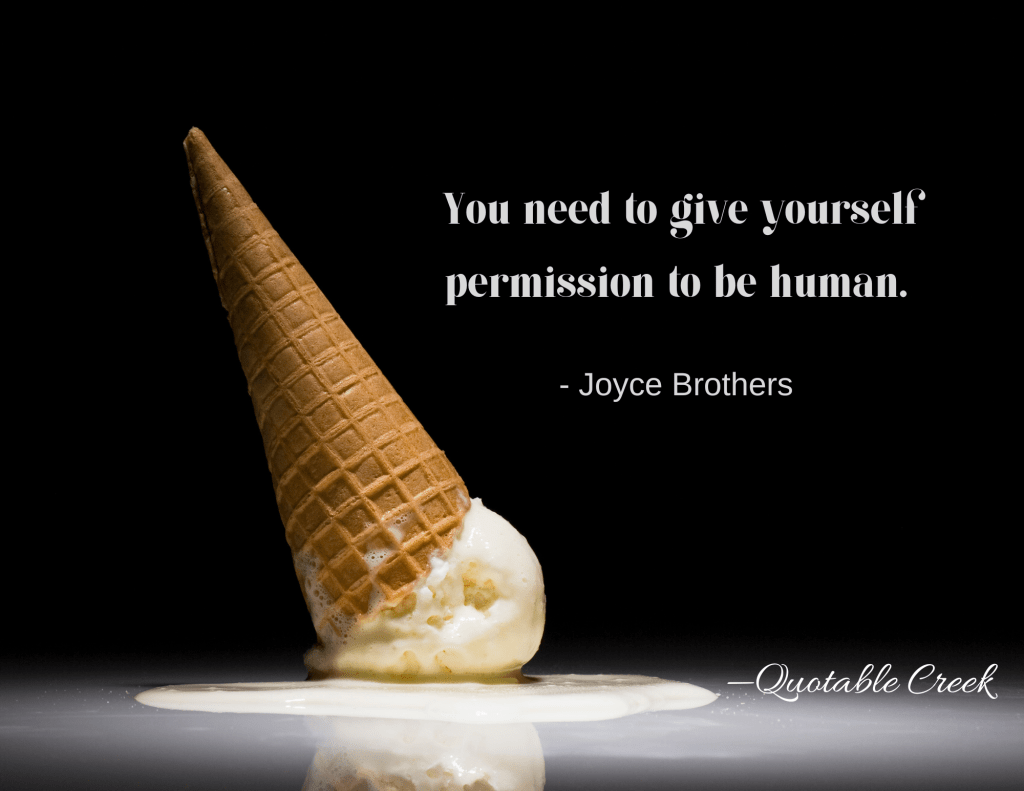
I wonder if that approach would help move our troubled world forward. Celebrating the progress. Looking for the successes. Embracing the common ground. Letting everyone feel that they can continue to learn from their mistakes, that that is part of being human. A world with a little bit of breathing room. We all will mess up. We can show each other grace when we do.
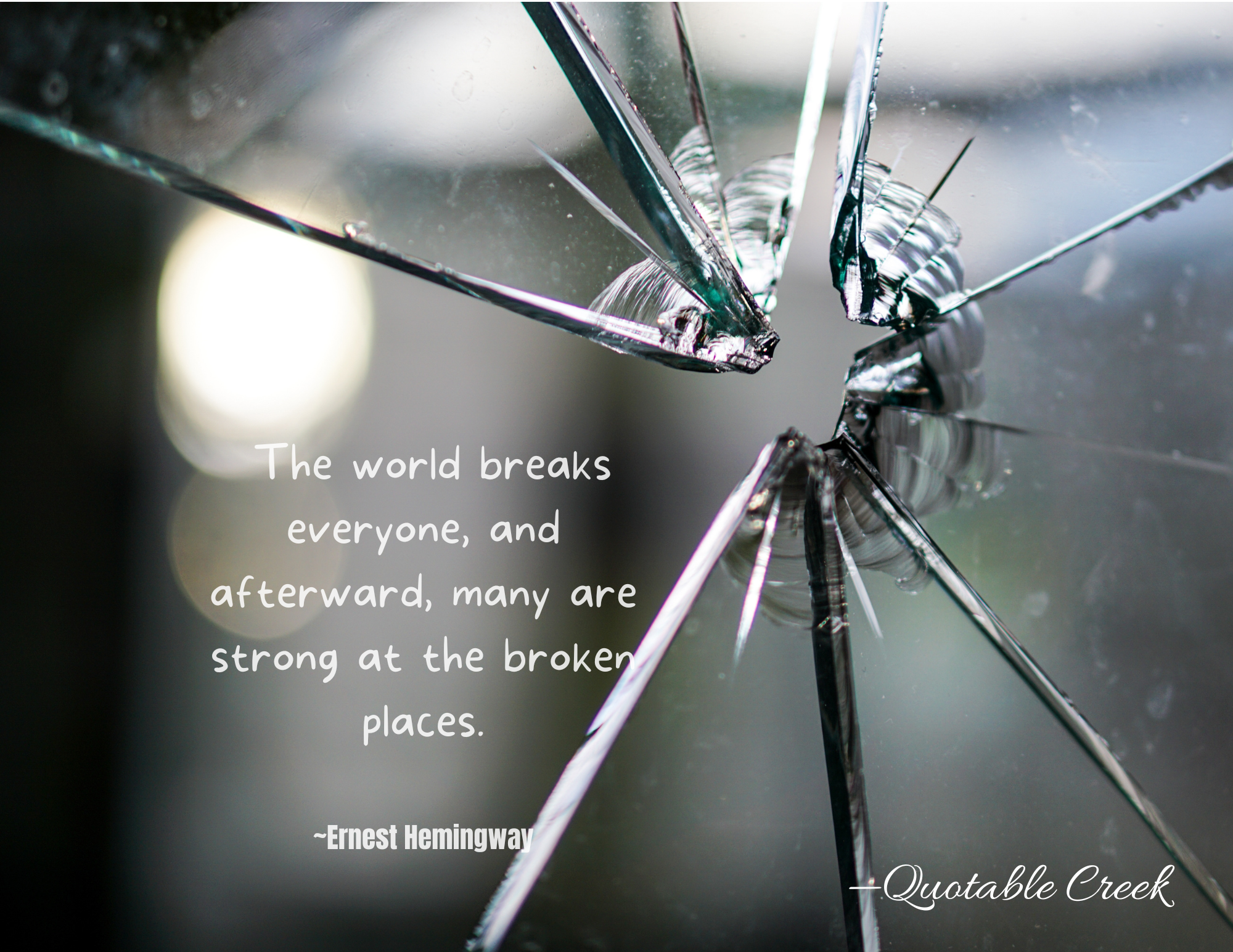
Life can be tough. Even the most charmed of lives has loss and heartbreak, disillusionment and despair. Everyone hurts. But buried deep under the hurt and pain is the little waif you used to be, full of hope and promise, enthusiasm and excitement.
Your identity is not equivalent to your biography. There is a place in you where you have never been wounded, where there is still a sureness in you, where there’s a seamlessness in you, and where there is confidence and tranquility in you.
The intention of prayer and spirituality and love is now again to visit that inner kind of sanctuary.
Deep in there, behind the daily worries, aches and pains, hurts and disgruntlements, is your soul. Prayer, staying still and letting your mind clear in meditation, will take you there, again and again, a way to connect with both your own individuality and your place in the awesome collective of it all.
As we age, there is loss. That loss is like a presence that follows us relentlessly like a shadow. No avoiding it. No pretending. We are mortal. The people we love are mortal, perhaps imminently so. This is part of the rules of engagement. And while most of us avoid thinking too much about it, poets like Mary Oliver offer life instructions:
To live in this world, you must be able to do three things:
To love what is mortal
To hold it against your bones knowing your own life depends on it;
And, when the time comes, to let it go, to let it go.
I honestly don’t know which of these three rules is the hardest. Right now, they each seem nearly impossible. But having the courage to follow these instructions feels like the answer.
Her full poem is below.
Look, the trees are turning their own bodies into pillars
of light, are giving off the rich fragrance of cinnamon and fulfillment,
the long tapers of cattails are bursting and floating away over the blue shoulders
of the ponds, and every pond, no matter what its name is, is
nameless now. Every year everything I have ever learned
in my lifetime leads back to this: the fires and the black river of loss whose other side
is salvation, whose meaning none of us will ever know. To live in this world
you must be able to do three things: to love what is mortal; to hold it
against your bones knowing your own life depends on it; and, when the time comes to let it go, to let it go.
People have always told stories. Plopped down on this earth with so much beyond our understanding, we struggle to make sense of things, to find cohesion and purpose, and to fit. We long for meaning outside of our circumstance and kinship beyond our borders.
Stories help. They comfort and guide us, inspire and warn, and make us feel less alone. Others feel the way you feel. And, at the root of story, is a turning away from ourselves toward something greater.
My book GERTIE, THE DARLING DUCK OF WWII, was just released. It tells the non-fiction story of a time during WWII when things were bleak, hopes worn raw, when a little duck built her nest on a high pole above a foul river. A hopeless place, really, for keeping the ducklings alive. Yet, the city of Milwaukee rallied around this little duck and saved her brood. Stories about Gertie’s struggles captured the attention of the entire world, comforted soldiers overseas, and gave everyone a glimpse of a better day. Stories about Gertie shared the front page with stories about Hitler, kamikaze pilots, and concentration camps.
For me, Gertie’s story will always be an embodiment of Psalm 91:4, “He will cover you with his feathers, and under his wings you will find refuge; his faithfulness will be your shield and rampart.” To me, her story feels like a message of hope in the darkest of times, a prayer and response.
At heart, most stories are a prayer—a way of reaching for something more, a hope, a yearning, a plea. Stories help connect us and give us peeks behind the curtain.
The potential for a loving relationship is in one embrace. The potential for peace is in forgiveness. The potential for harmony is in stillness. The potential for quality conversation is in listening.
Consider the opportunities you have to make your world and the world a better kinder place with the actions you sow today.
Do you have any difficult people in your life? Chances are you can’t force them to be less toxic, but there are steps you can take to be less bothered by the encounter. In this article by Christine Carter, she suggests, among other things, that showing mercy to this difficult person will rebound to you:
Anne Lamott defines mercy as radical kindness bolstered by forgiveness, and it allows us to alter a communication dynamic, even when we are interacting with someone mired in anger or fear or jealousy. We do this by offering them a gift from our heart. You probably won’t be able to get rid of your negative thoughts about them, and you won’t be able to change them, but you can make an effort to be a loving person. Can you buy them a cup of coffee? Can you hold space for their suffering? Can you send a loving-kindness meditation their way?
Forgiveness takes this kindness to a whole new level. I used to think I couldn’t really forgive someone who’d hurt me until they’d asked for forgiveness, preferably in the form of a moving and remorseful apology letter.
But I’ve learned that to heal ourselves we must forgive whether or not we’re asked for forgiveness, and whether or not the person is still hurting us. When we do, we feel happier and more peaceful. This means that you might need to forgive the other person at the end of every day—or, on bad days, every hour. Forgiveness is an ongoing practice, not a one-time deal.
When we find ways to show mercy to even the person who has cost us sleep and love and even our well-being, something miraculous happens. “When we manage a flash of mercy for someone we don’t like, especially a truly awful person, including ourselves,” Anne Lamott writes, “we experience a great spiritual moment, a new point of view that can make us gasp.”
Here’s the real miracle: Our mercy boomerangs back to us. When we show radical kindness, forgiveness, and acceptance—and when we tell the truth in even the most difficult relationship—we start to show ourselves those things. We realize that we can love and forgive and accept even the most terrible aspects of our own being, even if it is only for a moment. We start to show ourselvesthe truth, and this makes us feel free.
Perhaps you can show that difficult person mercy today.
Are you ever sleepless? Sometimes it’s hard to stop ruminating over things long enough to fall asleep. We replay events of the day, preview possible scenarios for tomorrow, stew over grievances from yesterday. It’s hard to just sink off and get the sleep we need.
In her short story, “The Cure for Sleeplessness“, Maeve Binchy creates a magic cure for sleeplessness:
Molly read the advice slowly. It was a detailed instruction about how the cure would take three weeks and you had to follow every step of it. First you had to buy a big notebook with at least twenty pages in it, and stick a picture on the cover, something connected with flowers. It could be a field of bluebells or a bunch of roses. Then on the night you couldn’t sleep you must get up quietly and dress properly as if you were going out visiting. You had to fix your hair and look your best. Then you made a cup of tea and got out the notebook with the flower on the cover. In your best handwriting you wrote “My Book of Blessings” on it. That first night you chose just one thing that made you happy. No more than one, and choose it carefully. It could be a love, a baby, a house, a sunset, a friend. And you wrote one page, no more, no less, about the happiness that this particular blessing brought you.
Then you spent a whole hour doing something you had meant to do, like polishing silver, or mending torn curtains, or arranging photographs in an album. No matter how tired you felt, you must finish it, then undress carefully and go back to bed….
Every night she wrote about a different blessing.
Things like the night Gerry finally told her he loved her, when his face was white and red alternately, in case she might not love him too.
Like the moment after Billy was born when she held him in her arms.
Like her parents’ silver wedding anniversary, when they had said that they knew their daughters would be as happy as they were and everyone had cried.
Like that time in the advertising agency when the boss said that Molly had saved all their jobs by her quick thinking and they had all raised a glass of Champagne to her for winning the account.
Now most of this advice and all of the examples are pure Binchy, but the gratitude part is backed by science.
A gratitude journal is good for what ails you. As you call to mind your blessings, think about why you are grateful for that particular blessing, the details surrounding it, the sensations associated with it. Write it down somewhere so you can remember. If so inclined, write a thank you note to someone who made a difference in your life. Remember to say thank yous at work, home, and school. If you encounter a problem, try to see if there is an unexpected blessing hidden there somewhere.
And then, tonight, if you should have trouble falling asleep, count your blessings instead of sheep.