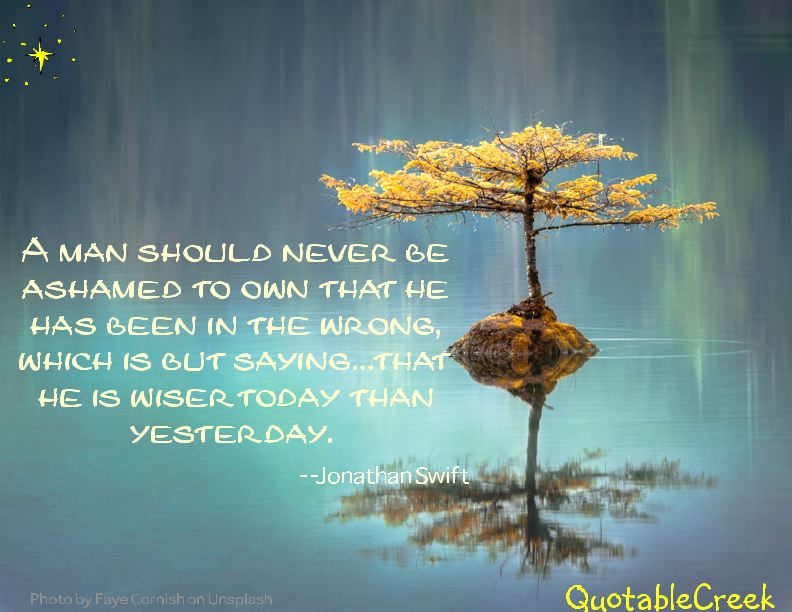
Who among us can make it from birth to grave without a mistake? Mistakes are such an inevitable part of trying something new, of learning, of growing that it would be impossible. And yet we don’t like to admit that we make mistakes. Constantly. But perhaps the real harm is in not learning from our mistakes, not stretching our view of the world to admit a new insight, not bending our routine to reflect a better way of doing something, not opening up to a perspective we hadn’t considered. As we take stock of ourselves today, let’s consider all the ways we’ve grown in our beliefs, our behaviors, and insights. We used to believe the world was flat, but now we see it is round, and that makes a world of difference.
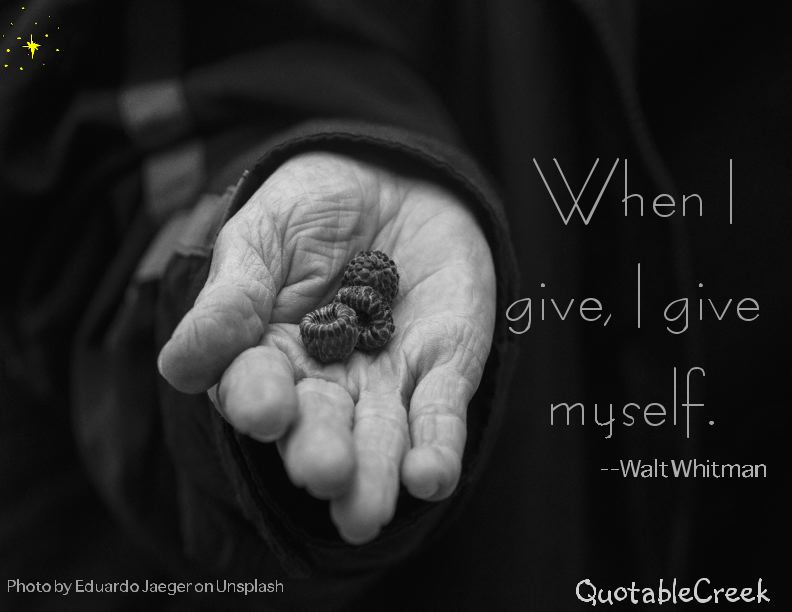
How deeply can we say Yes to life, to each other, to our common good? It’s easy to hold back, to give our money but not our hearts, to temper our enthusiasm, to stay aloof, to protect ourselves from being hurt. But is that why we’re here? To stay safe? When we give of ourselves, we listen with our whole hearts, we reach out to others, we spread joy. And our ability to do those things does not run out. Love expands when it is shared.
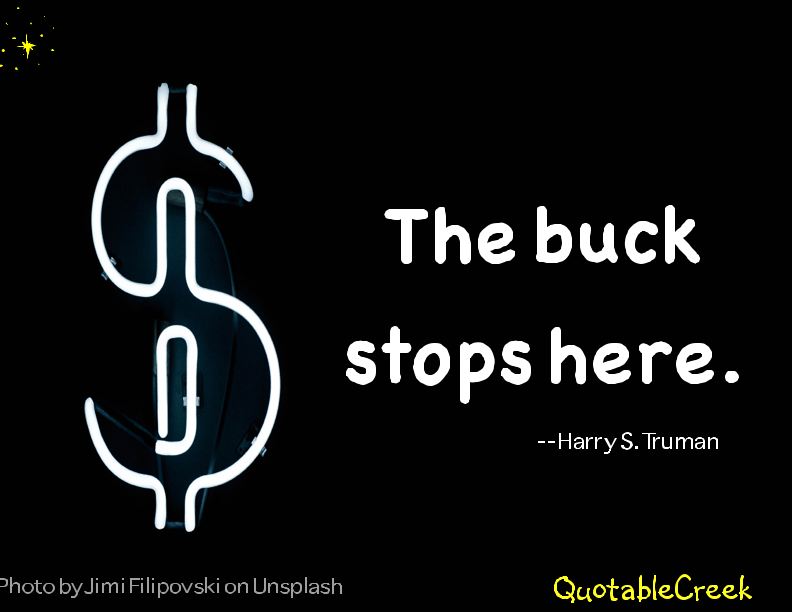
President Truman kept a plaque on his desk with the phrase ‘The buck stops here,” meaning it was his job to make decisions and to accept responsibility for those decisions. President Jimmy Carter pulled that plaque out of storage to keep the reminder in front of him as well.
But what does it mean? A quick Wikipedia search comes up with two possible etymologies:
The expression is said to have originated from poker, in which a marker or counter (such as a knife with a buckhorn handle during the American Frontier era) was used to indicate the person whose turn it was to deal. If the player did not wish to deal he could pass the responsibility by passing the “buck”, as the counter came to be called, to the next player.
Another less common but arguably less fanciful attribution is to the French expression bouc émissaire, meaning “scapegoat”, whereby passing the bouc is equivalent to passing the blame or onus.[3] The terms bouc émissaire and scapegoat both originate from an Old Testament (Lev. 16:6–10) reference to an animal that was ritually made to carry the burden of sins, after which the “buck” was sent or “passed”into the wilderness to expiate them.
So, either a refusal to take responsibility and kick the can down the road, or an intentional decision to blame someone else for your own actions. In either event, passing the buck is a refusal to take responsibility and act on it.
It can be difficult to discern what is our responsibility. One could argue we have a responsibility to fix harm we’ve caused, to prevent harm within our power to prevent, and to accept blame and credit when due. But these aren’t bright lines, and often decisions are complex and complicated by the actions and responsibilities of other players. That’s where the Serenity Prayer comes in:
God grant me the serenity
to accept the things I cannot change;
courage to change the things I can;
and wisdom to know the difference.
Living one day at a time;
enjoying one moment at a time;
accepting hardships as the pathway to peace;
taking, as He did, this sinful world
as it is, not as I would have it;
trusting that He will make all things right
if I surrender to His Will;
that I may be reasonably happy in this life
and supremely happy with Him
forever in the next.
Amen.
For those things within your control, have the courage to change what you can and to do your part.
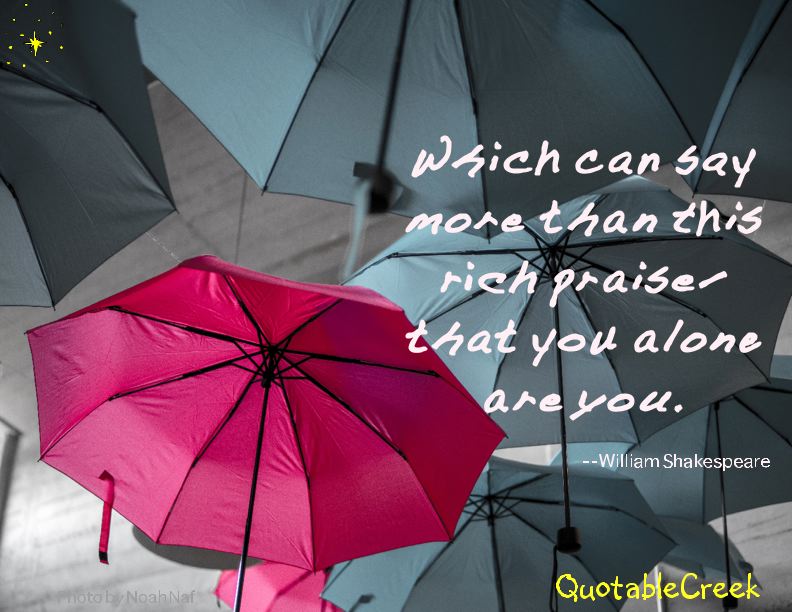
You alone are you. Of all the humans now and from the beginning of time and out into the future, billions upon billions of people, there is only one you. That’s quite staggering. And then when you factor in the other unique things about you–your family, your home and work, your life experience, your thoughts and feelings, even if scientists were to make an exact clone of you, it wouldn’t be you. You are special.
In this delightful video, preschool students take time to greet each other in a unique way.
What a lovely reminder that each of us is special.
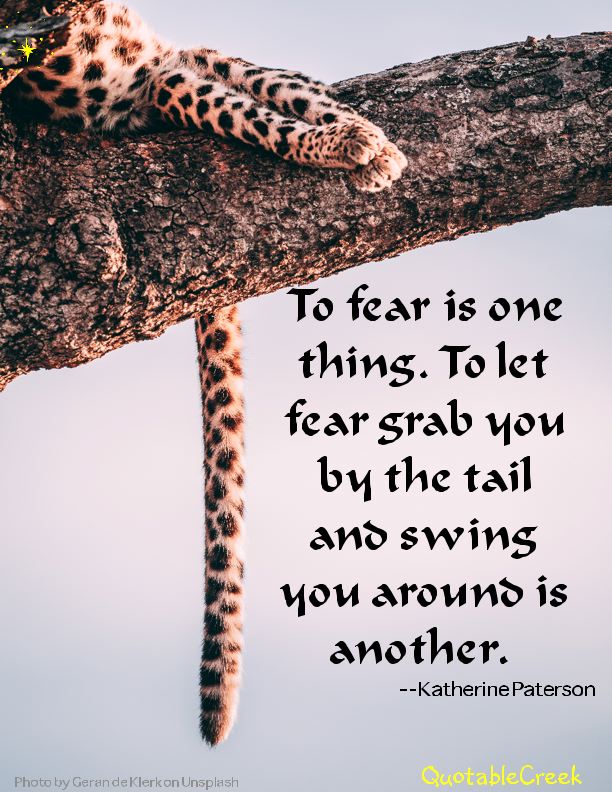
Carrot or stick? Both can be powerful motivators. These days advertisers and politicians prey on our fears–of the future, of each other, of failure. Crowds can be whipped into frenzies when their fears are stoked.
But where do we go with that fear? Our hearts are racing our bodies primed for flight, but where is there to go when the enemy may not really exist?
One of the most powerful antidotes to fear is rationality. Walk yourself through the foundational underpinnings of what you’re afraid of. Is this true? Will this worst case scenario happen? Is the conclusion supported by the facts? Is someone taking advantage of biases and stereotypes?
And breathe. Not quick and short breaths getting you ready to fight, but slow considered breaths preparing you for wisdom.
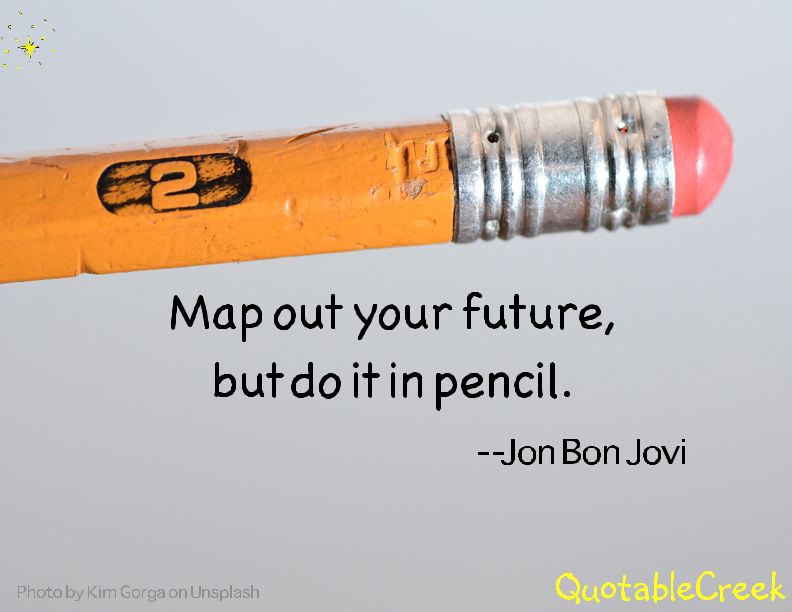
The world is changing and unpredictable. It’s hard to know how to plan for our futures.
What will tomorrow bring?
One thing is sure, ten years from now, things will not be like they are today. Rather than consternate over it, maybe it’s easier to learn how to be adaptable.
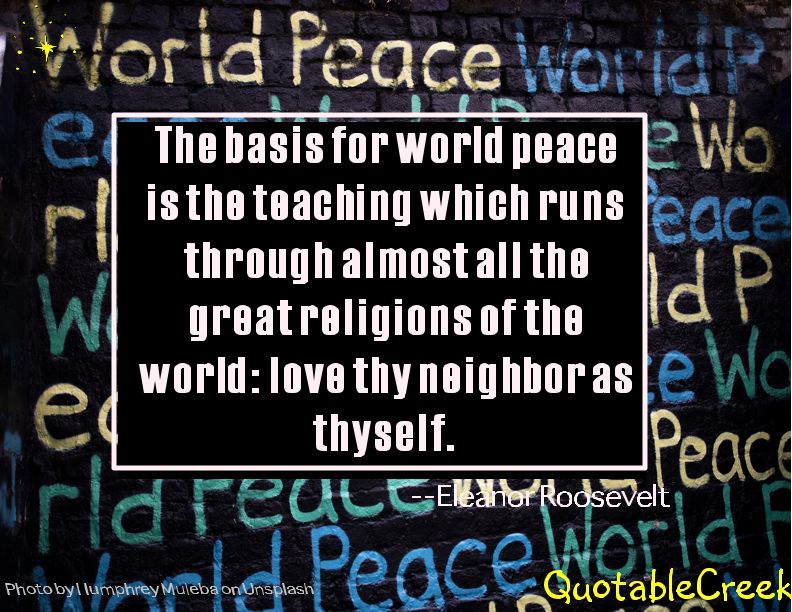
When you have the power, or are on top, or when everything is going your way, it’s only natural to want to strut. You don’t want to think about a time when you might be powerless, on the bottom, or have the world against you.
That’s a downer, isn’t it?
But that’s exactly where religion urges us to go, to think about the world from other perspectives, to consider what life is like for people without your privilege, to have empathy with the unfortunate. Because, after all, if you were in their shoes, wouldn’t you hope they would look out for you?
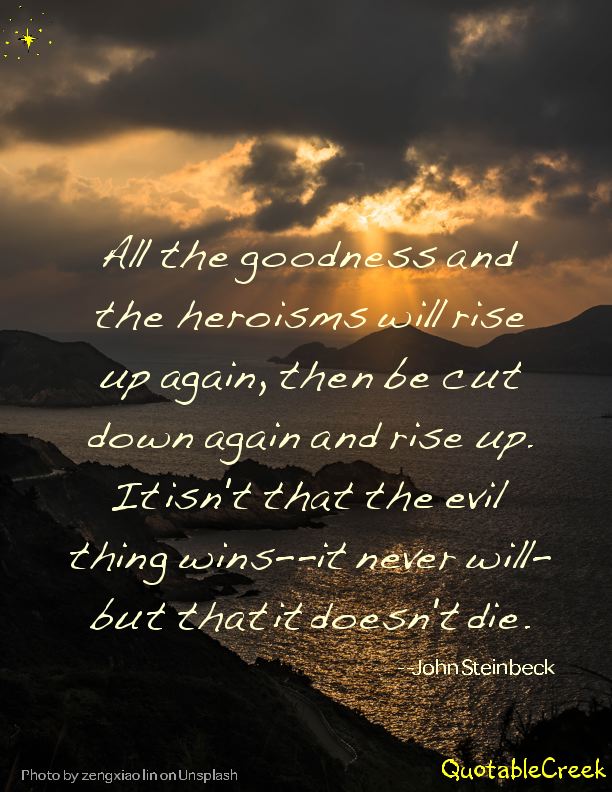
It feels like we have fought this battle before. Why won’t it go away? Why are we here again?
Perhaps it is as simple and complex as that there are epic forces of good and evil alive in the world. Evil, whether in the form or racism, misogyny, selfishness, and so on, keeps coming back, even when we think progress has been made. That is the nature of the world we live in.
The answer: to keep flooding the world with good, keep fighting the good fight.
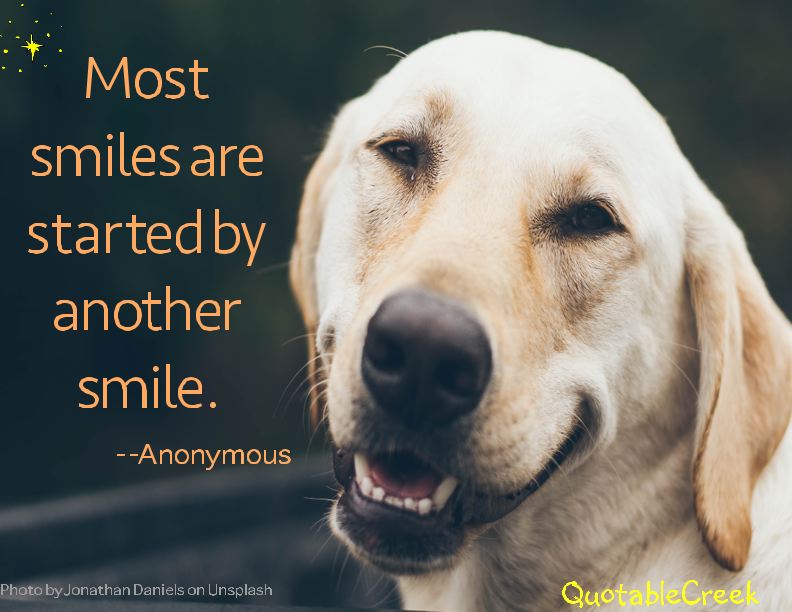
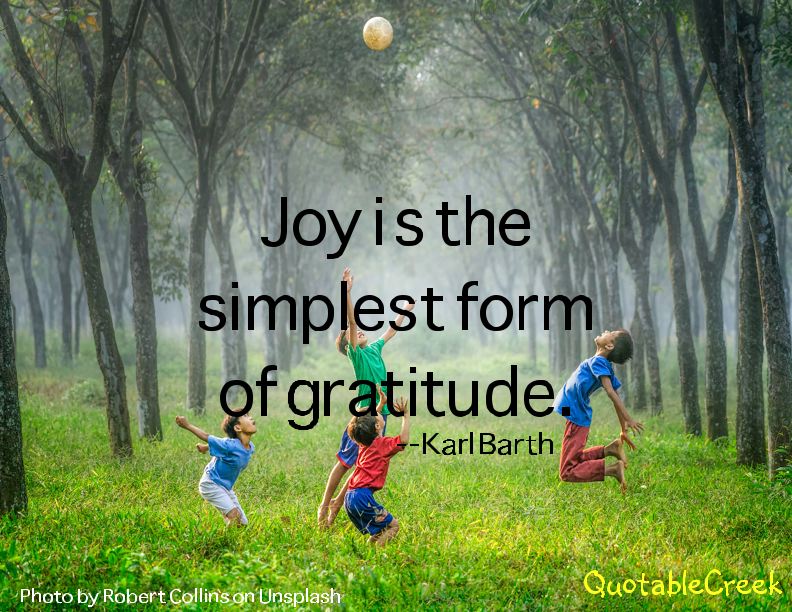
Oh, to be a kid, before we’ve learned to wear masks and tamp down our emotions to keep from looking silly. We’ve mastered the art of staying calm when really we want to grab someone and spin them around in the air because we are so happy to see them, or to guffaw at a joke or funny thought, or to just break out in dance walking down the street.
We are so civilized.
But sometimes, maybe, it’s nice to be like this dog and just let someone know how you feel:
That’s wearing his heart on his sleeve, isn’t it? But life’s short; what’s the point of hiding our joy?
 QuotableCreek.com