I recently read the book, Remarkable Bright Creatures by Shelby Van Pelt with my book club. It is a wonderful book of, among other things, the friendship between a 70-year old widow and a giant Pacific octopus. The main character has her own group of friends who have been together for decades and call themselves the Knit-wits because they started with knitting in common.
One of my book club members, the youngest (as she often reminds us) asked at our meeting, “Are we the knit-wits?” I smiled. I have known this group of friends for decades. We raised our children together and now are delighting in grand parenthood together. We’ve weathered storms together, celebrated each other’s victories, and helped each other through loss. We meet religiously every week to catch up with each other. What a delight it is to have ‘through thick and thin’ friends.
I found this sweet friendship poem I offer here to them.
A Friend
A person who will listen and not condemn Someone on whom you can depend They will not flee when bad times are here Instead they will be there to lend an ear They will think of ways to make you smile So you can be happy for a while When times are good and happy there after They will be there to share the laughter Do not forget your friends at all For they pick you up when you fall Do not expect to just take and hold Give friendship back, it is pure gold.
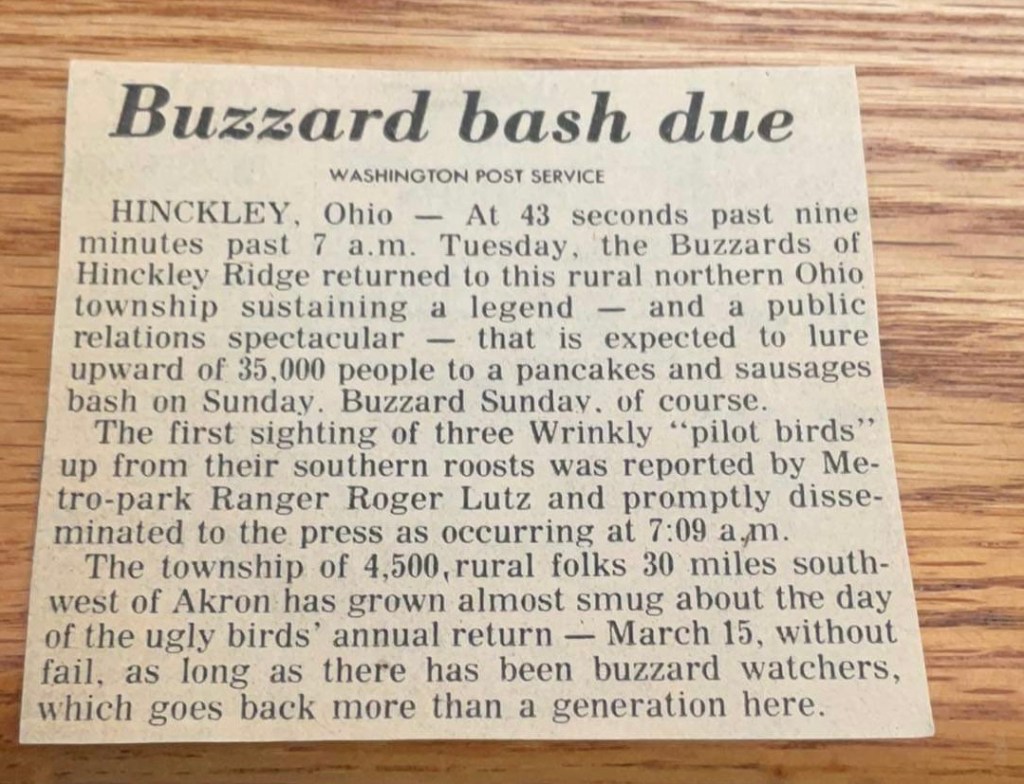
Recently, I pulled down an old scrapbook from my junior high days to show my granddaughter Lily who is just that same age now as I was then. It contained many ‘treasures’. Among the many letters and cards from my late grandmother was one talking about the buzzards coming back home to Hinckley, Ohio, a phenomenon which I remember amused me. Imagine celebrating buzzards!
She wrote:
It should cheer you somewhat to know that the buzzards returned to Hinckley, Ohio, on schedule on March 15th. It is always a comfort to know those gorgeous creatures ‘do their thing’ each year, as anticipated. It would be a bit discouraging to prepare pancakes and sausages for 35,000 eager folks, and have no buzzards to join in the celebration!
Oh, how I loved her, her humor and wit, her warmth and love, her writing style. I have always felt such a kinship with her and reading over her letters makes her feel so close.
Her letter got me thinking. First, about buzzards. Sure enough, a quick bit of googling shows that buzzards are still returning to Hinckley on schedule and have been celebrated since 1818!
And then about the cyclical quality of nature. The monarchs go south and then back. The swallows return to San Juan Capistrano. The elephant seals come back to Cambria. We humans who love animals mark their going and celebrate their homecoming, yes, even the buzzards, and note the steady passage of time.
And finally about how those we’ve lost stay with us even after they’ve gone. Lily has a freckle on her right hand which I’ve told her is her Nana freckle. I load it up with kisses often when I see her. When I’m gone, I hope that freckle will remind her of how very much I loved her. My grandmother and I were separated by thousands of miles, but our letters exchanged helped us stay close. Those letters remind me now to pause and share bits of life, simple moments, with the people I love. Those moments become the memories and precious treasure later.
Even the ones about buzzards.
(I couldn’t quite bring myself to make the lead picture with buzzards. Lol)
As we age, there is loss. That loss is like a presence that follows us relentlessly like a shadow. No avoiding it. No pretending. We are mortal. The people we love are mortal, perhaps imminently so. This is part of the rules of engagement. And while most of us avoid thinking too much about it, poets like Mary Oliver offer life instructions:
To live in this world, you must be able to do three things:
To love what is mortal
To hold it against your bones knowing your own life depends on it;
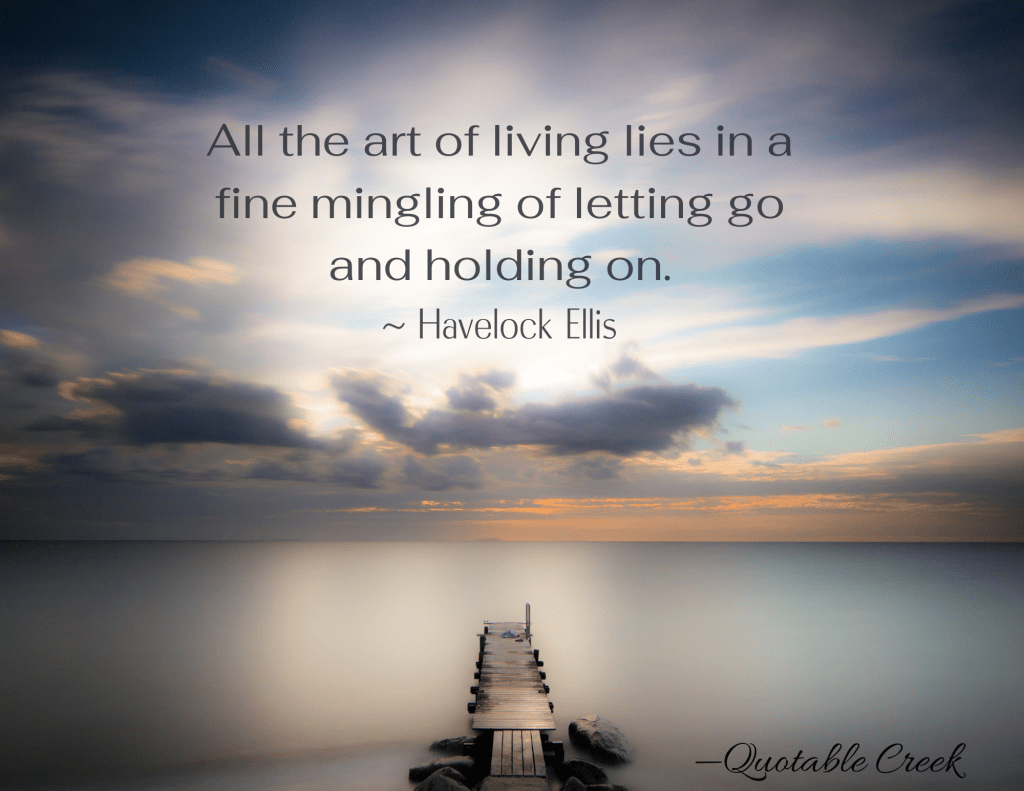
And, when the time comes, to let it go, to let it go.
I honestly don’t know which of these three rules is the hardest. Right now, they each seem nearly impossible. But having the courage to follow these instructions feels like the answer.
Her full poem is below.
Look, the trees are turning their own bodies into pillars
of light, are giving off the rich fragrance of cinnamon and fulfillment,
the long tapers of cattails are bursting and floating away over the blue shoulders
of the ponds, and every pond, no matter what its name is, is
nameless now. Every year everything I have ever learned
in my lifetime leads back to this: the fires and the black river of loss whose other side
is salvation, whose meaning none of us will ever know. To live in this world
you must be able to do three things: to love what is mortal; to hold it
against your bones knowing your own life depends on it; and, when the time comes to let it go, to let it go.
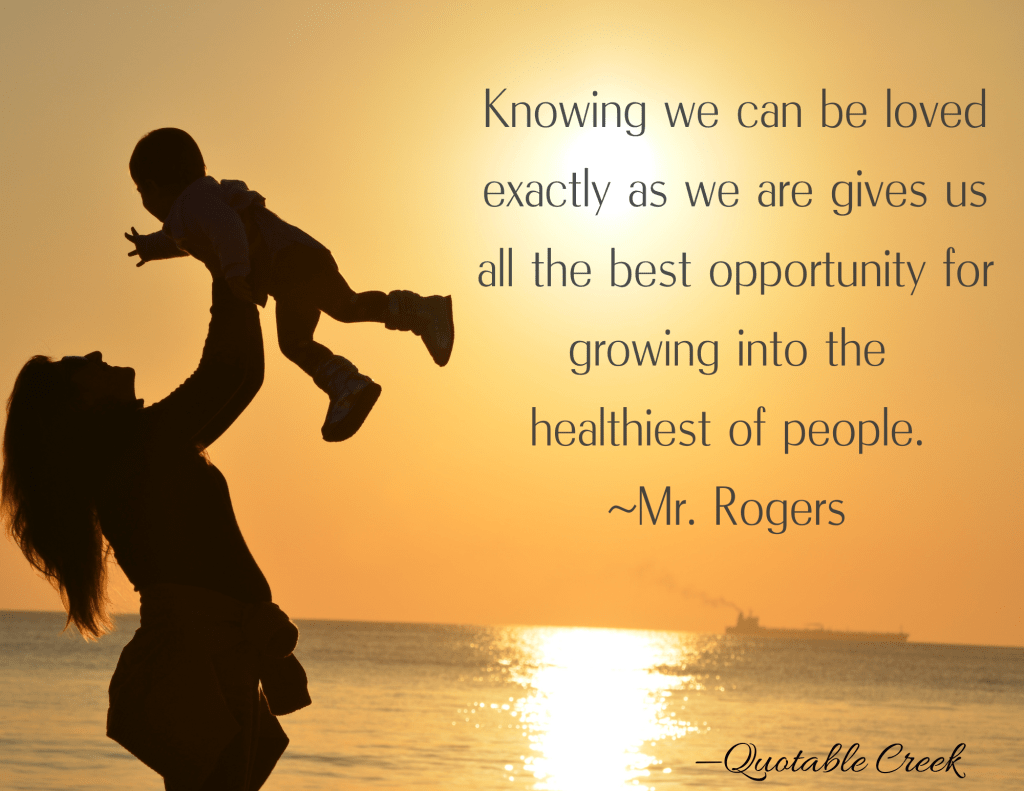
Mr. Rogers had a gift for seeing each child he encountered as an individual, a neighbor, someone worthy of respect just as they are. No need to impress him, or to put on an act, or to pretend. He accepted children. Period. No strings attached.
How wonderful.
Do you feel you are enough, just as you are? Sometimes our families, friends, or societies give us the message that we aren’t. That we need to be thinner, richer, smarter, younger, more attractive. Something different from what we are. That we must think the same as they do and fall in line. It’s exhausting.
What a gift it is to accept people, including ourselves, just as is. No one is perfect, so why pretend we are? We each have strengths and weaknesses, things we’re working on and things we’ve got sorted. Instead of finding flaws, we can look at ourselves and each other as complicated works in progress, with value just as we are, giving ourselves and each other ‘the best opportunity for growing into the healthiest of people.’
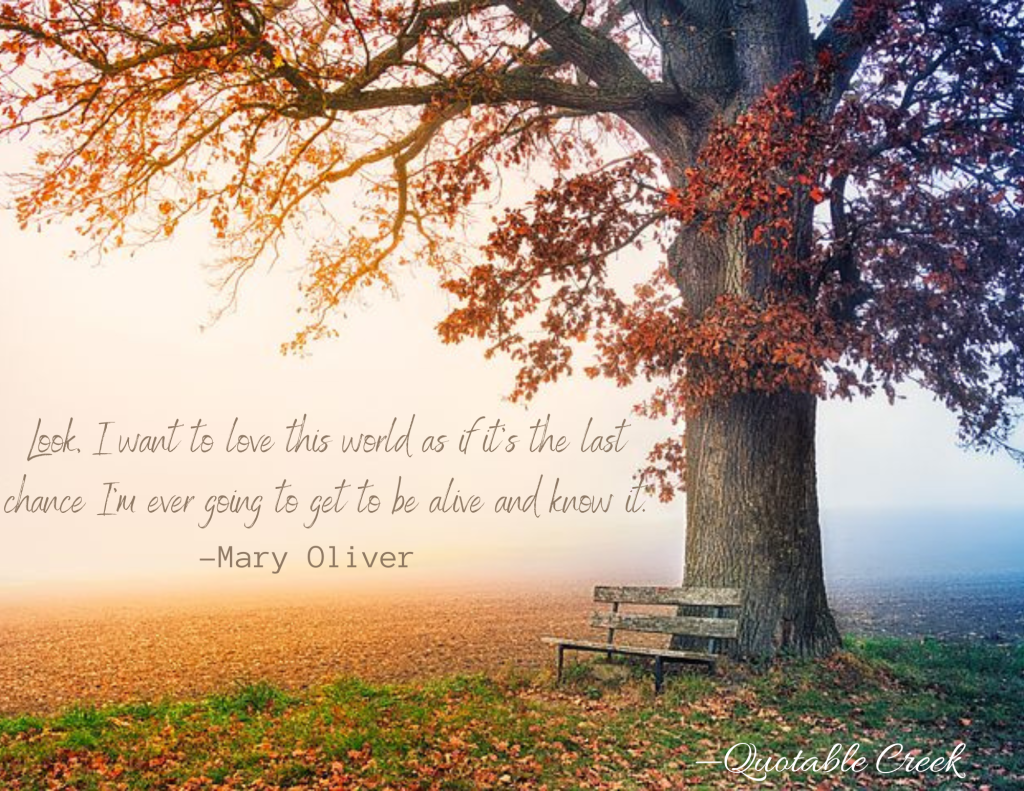
Now is our time to be alive. It will not come again. This is our last chance to savor nature and all of its wonder, to spend time with loved ones, to do good, to spread joy. This is it. This is our opportunity.
In the movie, Michael, an angel comes to Earth to influence the course of events. He, apparently, smells of cookies. But there is a scene, after ‘battle’ (he’s that kind of angel), when he is savoring the day. He is soaking it in, just enjoying being corporeal, waltzing with the breeze.
If only we could hold on to that wonder, awe, and appreciation, live in the moment, truly appreciate all we’ve been given here. What a fine world that would be.
Have you been somewhere new recently? Maybe somewhere where everyone knows each other but you? Was there someone there who made you feel welcome?
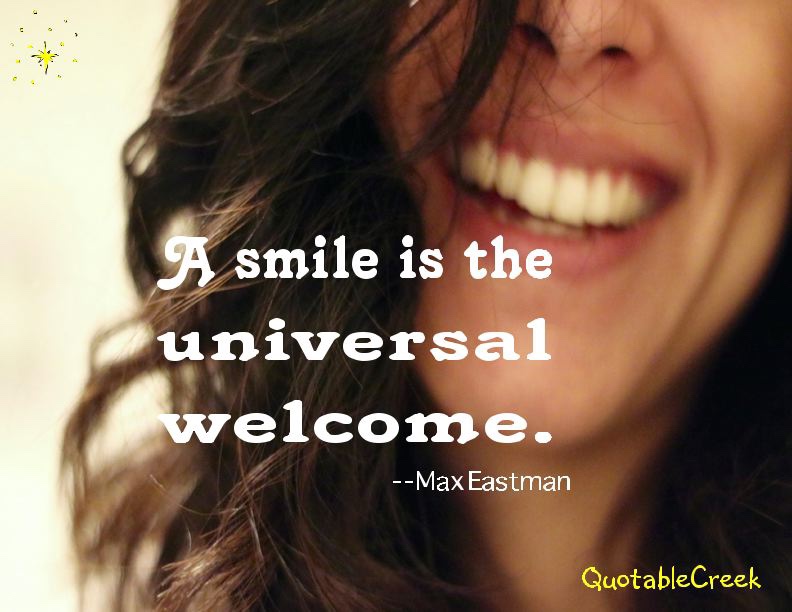
When we remember what it feels like to be an outsider, we realize how powerful a warm welcome is. How generous the welcomer was to look outside of their usual orbit to notice a stranger and invite them in. A smile is the first step.
For today, consider this lovely poem on smiles and consider who you might welcome. How lucky you are to be in the position to welcome another!
In The Adventure of Tom Sawyer, Tom and Huck attend their own funeral, overhearing all the nice things the town members had to say about them, the kinds of things they rarely heard in life.
As the service proceeded, the clergyman drew such pictures of the graces, the winning ways, and the rare promise of the lost lads that every soul there, thinking he recognized these pictures, felt a pang in remembering that he had persistently blinded himself to them always before, and had as persistently seen only faults and flaws in the poor boys. The minister related many a touching incident in the lives of the departed, too, which illustrated their sweet, generous natures, and the people could easily see, now, how noble and beautiful those episodes were, and remembered with grief that at the time they occurred they had seemed rank rascalities, well deserving of the cowhide. The congregation became more and more moved, as the pathetic tale went on, till at last the whole company broke down and joined the weeping mourners in a chorus of anguished sobs, the preacher himself giving way to his feelings, and crying in the pulpit.
There was a rustle in the gallery, which nobody noticed; a moment later the church door creaked; the minister raised his streaming eyes above his handkerchief, and stood transfixed! First one and then another pair of eyes followed the minister’s, and then almost with one impulse the congregation rose and stared while the three dead boys came marching up the aisle, Tom in the lead, Joe next, and Huck, a ruin of drooping rags, sneaking sheepishly in the rear! They had been hid in the unused gallery listening to their own funeral sermon!
Aunt Polly, Mary, and the Harpers threw themselves upon their restored ones, smothered them with kisses and poured out thanksgivings, while poor Huck stood abashed and uncomfortable, not knowing exactly what to do or where to hide from so many unwelcoming eyes. He wavered, and started to slink away, but Tom seized him and said:
“Aunt Polly, it ain’t fair. Somebody’s got to be glad to see Huck.”
“And so they shall. I’m glad to see him, poor motherless thing!” And the loving attentions Aunt Polly lavished upon him were the one thing capable of making him more uncomfortable than he was before.
Suddenly the minister shouted at the top of his voice: “Praise God from whom all blessings flow — Sing! — and put your hearts in it!”
And they did. Old Hundred swelled up with a triumphant burst, and while it shook the rafters Tom Sawyer the Pirate looked around upon the envying juveniles about him and confessed in his heart that this was the proudest moment of his life.
The Adventures of Tom Sawyer, by Mark Twain
I wonder why we save the kind words for funerals. Eulogies, literally translated ‘good words’, are maybe needed even more before our loved ones pass, at a time when relationships can be mended and people thanked. Before opportunities are lost. When the ripple effects from the kindness can travel far and wide.
What kinds of things get in the way of saying the kind words now? Fear, stubbornness, pride, anger? What if we could lay these all down now, before our opportunity to be heard is gone?
Sometimes our eyes and hearts are focussed so far in the distance, that we fail to see what is right in front of us. The people we spend our days with, the beauty surrounding us, the opportunities we have to make a difference. When we zoom in to the detail, the richness of the particular moment can be astounding and surprising. What a beautiful, remarkable world we live in. So full of complexity. Each person we see is as full of contradictions and surprises as we are ourselves. Each living or created thing we see is so full of detail.
Long-term goals are great, but what a shame if we don’t appreciate each step along the way. We may work side by side with someone but barely know their name let alone what their hopes and dreams are. We may be so busy moving forward that we are blind to the heartache of even the people we live with. It is easy to speed through life with eyes averted like people descending in an elevator focussed only on the floor numbers.
Today take time today to enjoy the journey, the mysteries unfolding all around you, the people who share your path, and all the beautiful and startling things right here, right now.
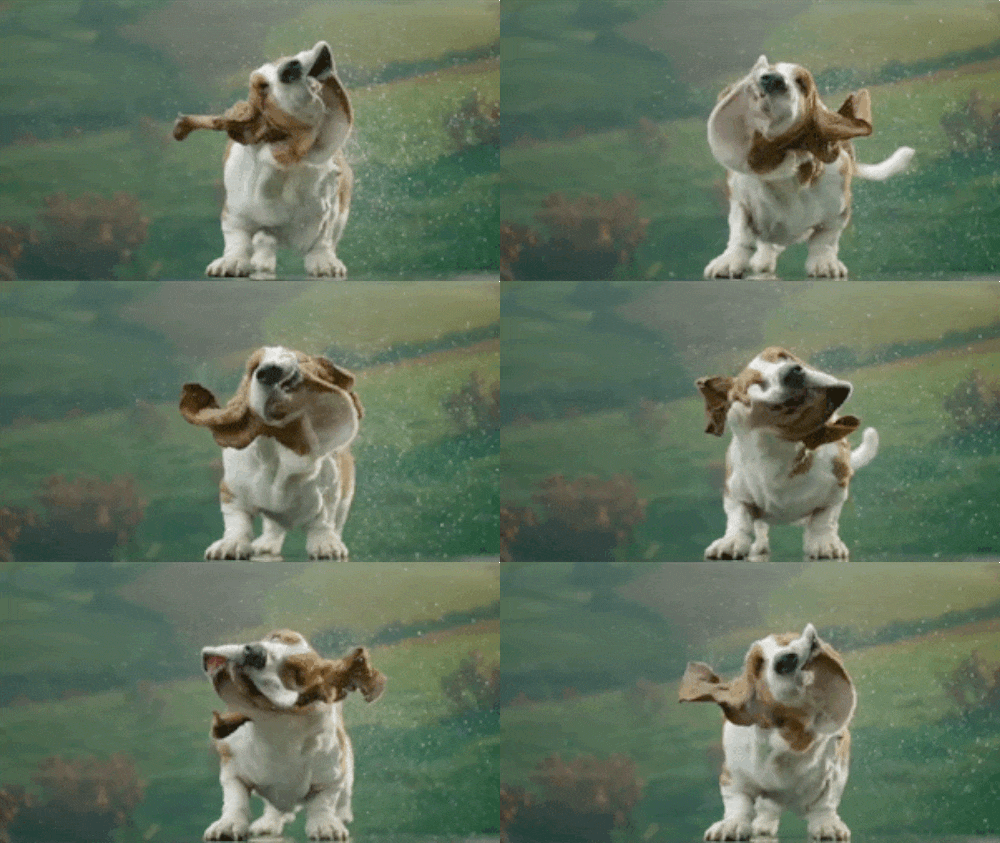
Like, for example, who can not stop and be amazed at this little beagle shaking its jowls, its great ears flopping to the beat, its sturdy paws holding on in front but shifting with its wagging tail in back, the gorgeous landscape behind it? What a fascinating little miracle, right here. Just this.
My three-year old said she wished we had a pet. I reminded her we have a dog and wow the genuine look of surprise on her face as it dawned on her that our dog is a pet and not just some guy who lives here.
@missmulrooney
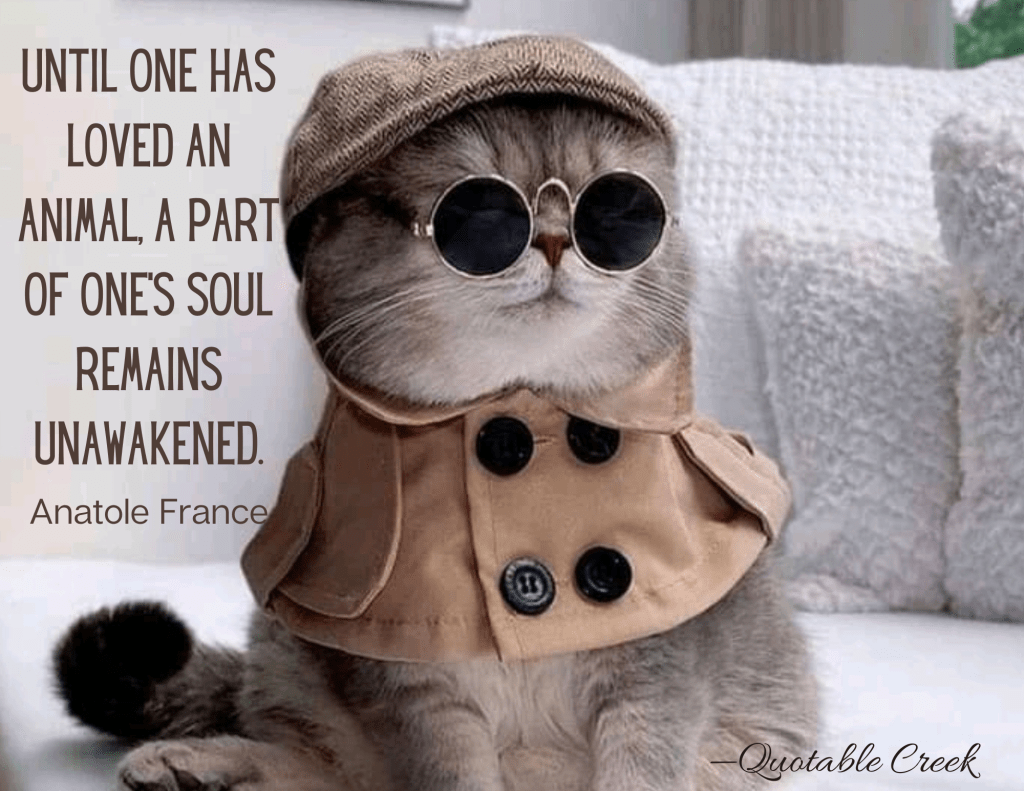
At first it startled and amused me. But as I kept thinking about it, I realized this kid was getting at something deep and true. Our love for our pets can be a deep soul connection. That love crosses into the mysterious, into thoughts about our souls, and can be so strong that our grief in losing them can be devastating.
It’s a reminder of how interconnected and complicated our world is. Of how each creature is precious to that mix. And these thoughts upset the apple cart that has humans always putting ourselves at the center of the universe. But more important, our pets are a gift of love, abundant love, vital to the soul.
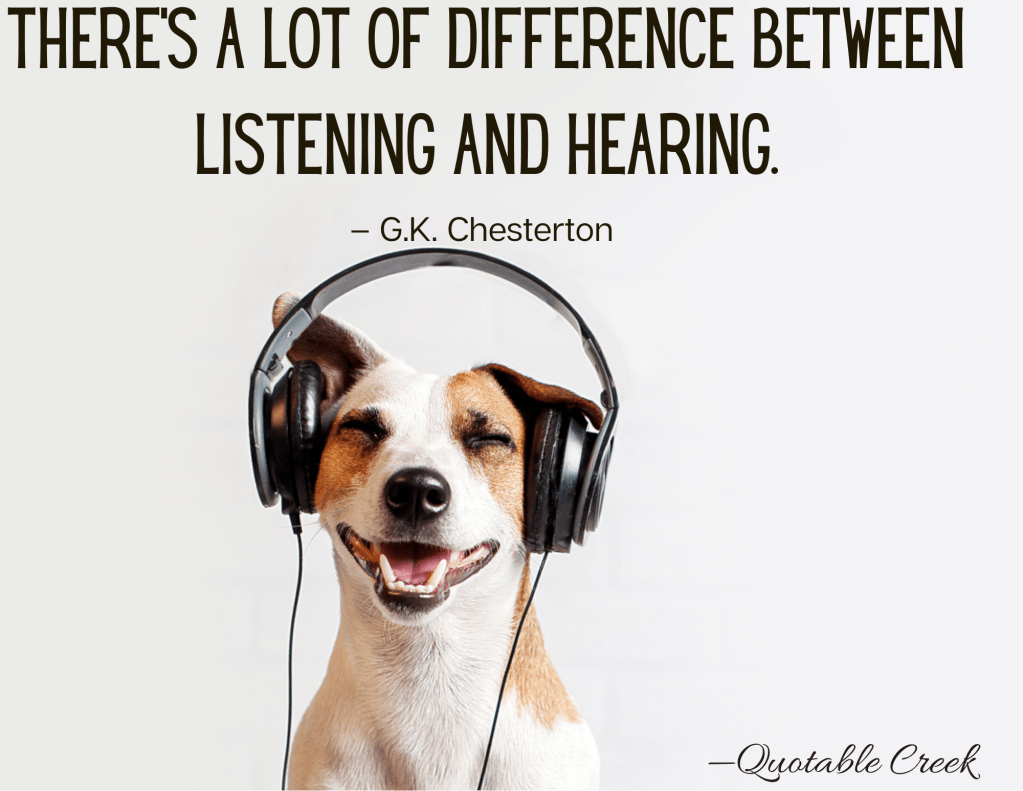
These days there is a lot of noise—everyone has a soapbox—but I wonder how much is really heard. This article explores the problem of autobiographical listening, listening with the hope of injecting a story about yourself into the mix. There are levels to this. The matcher, who always has a similar vacation or achievement to switch the conversation to. The topper who has an even better vacation or achievement to turn the conversation to. And the outright conversation narcissist where really all parts of the conversation somehow turn on him.
But if our goal is connection, we really need to learn how to better listen:
“Listen with curiosity. Speak with honesty. Act with integrity. The greatest problem with communication is we don’t listen to understand. We listen to reply. When we listen with curiosity, we don’t listen with the intent to reply. We listen for what’s behind the words.”
Roy T. Bennett, The Light in the Heart
Practice listening to understand. Avoid autobiographical listening:
“When we fail to listen from the other person’s perspective, we are listening through our own lens and tend to pass more judgments compared to simply listening,” Reigstad added. “There are four types of autobiographical listening ― evaluate, probe, advise and interpret. These responses tend to have us asking questions based on our experiences, offering advice to fix the problem and so on. It’s important to resist the urge and allow the other person to speak.”







 QuotableCreek.com