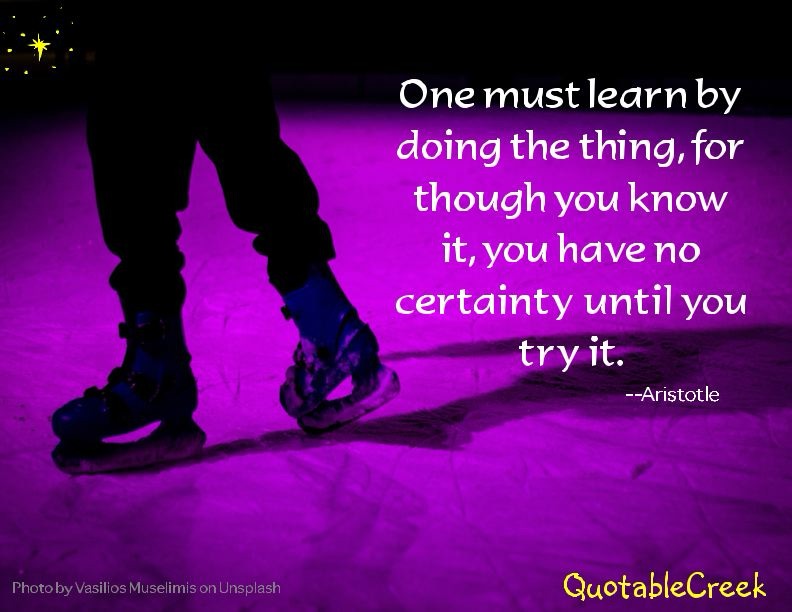
How lovely things would be if the way we picture ourselves doing something in our heads is the way it plays out in real life. The beautiful prose, perfect plotting, and subtle characterization all laying themselves down on the page when pen is lifted rather than being cruelly translated into the awkward phrasing, cliched plots, and stilted characters plaguing a first draft. If perfect leaps, spins, and arabesques just happen rather than the more likely falls on the bum. If we were already perfect rather than striving. If there were no gap between where we are and where we would like to be.
With all the armchair quarterbacks and critics out there on virtually every issue, you’d almost think effort and expertise don’t count for anything. And yet, mastery is always the result of effort. Full stop. Every master painter, skater, dancer, author, was once a novice. In fact, that journey from novice to master is the important thing, and those hacks on the sidelines are missing the point. As Theodore Roosevelt said:
It is not the critic who counts; not the man who points out how the strong man stumbles, or where the doer of deeds could have done them better. The credit belongs to the man who is actually in the arena, whose face is marred by dust and sweat and blood; who strives valiantly; who errs, who comes short again and again, because there is no effort without error and shortcoming; but who does actually strive to do the deeds; who knows great enthusiasms, the great devotions; who spends himself in a worthy cause; who at the best knows in the end the triumph of high achievement, and who at the worst, if he fails, at least fails while daring greatly, so that his place shall never be with those cold and timid souls who neither know victory nor defeat.
So this gap, between where we want to be and where we are, is where we focus our efforts and attention. Not on the critic, because everyone stumbles. But we press on. For to be great at anything takes practice and effort, and our attempt is awkward and halting, ungainly and bumbling at first. But it gets better. And those sitting on the sidelines, afraid or busy criticizing others, aren’t moving forward unless they, too, mind the gap and try.
Do you have a dream? Maybe to meet someone special, learn a language, write a book, learn an instrument, play a sport, travel? What is that dream?
Now, more importantly, what work are you doing to realize that dream? There are a plenty of people who dream of being musicians who never practice their instrument, or people who dream of being published who never write, or people who dream of traveling but never save up. Why is that?
One reason is it is fun to dream that you have God-given natural talent that will be discovered by the world someday like Lana Turner sitting at the counter sipping a Coke at the Top Hat Cafe. And, while those kinds of stories may happen occasionally, the much more common story is that someone who achieved their dream worked for it, and worked hard. Michael Jordan didn’t make his high school basketball team. Frank Sinatra spent hours holding his breath to improve his phrasing. Vincent van Gogh’s early work was, well, not that great.
And plenty of people who have become successful want to perpetuate the notion that they were just born that way. It was natural talent not hard work. It was their own efforts, not a result of having many people in their corner, helping them move forward. And sometimes it seems this way, doesn’t it? We see the Olympic performance, but not the struggle that led there. We read the best-selling novel from the overnight success, but don’t see all the drafts in the desk drawer. And something in us wants to believe that those people, those success stories, are different from us. They were just born different. But that’s not the truth.
Success isn’t like winning a lottery; it’s like running a marathon. Hard, grueling, and long-term. Some people achieve their dreams because they pursue them. They don’t just dream, although the dream–something that ignites your passions–is the first step. The dream isn’t all they needed though.
But the dream gave them curiosity to explore it from every angle. And that curiosity gave them energy to practice. And that practice brought improvement. That improvement was encouraging. And that encouragement helped them stay the course. Now sometimes following the dream will result in financial or other success, but that shouldn’t be the yardstick. The yardstick should be if you are doing what you dreamed of doing.
So, yes, dream of all you can be. But then figure out some concrete steps you can take to help you get there.
It’s okay to be heartbroken for more than one group of people at the same time. When it comes to showing compassion, we don’t have to pick sides. Sometimes, often really, maybe even always, there is hurt and anguish everywhere, and we can mourn the lot of it.
Beware people who tell you not to be concerned for this group or that group and the hurt they feel.
Beware those who try to dehumanize others.
Beware those who lump you in as the ‘enemy’ for working to assure people are treated humanely.
Beware people who draw lines between us and them.
Beware those who try to limit you to a label or single identity.
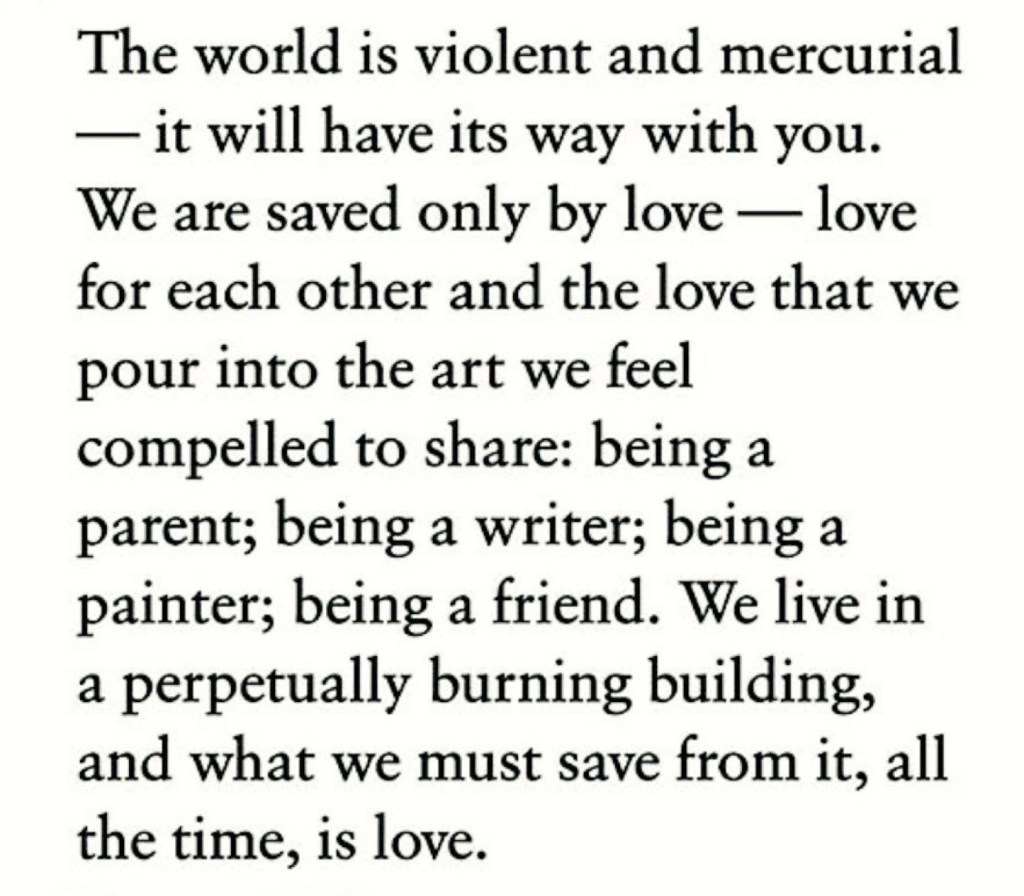
Our hearts are big enough to embrace it all. What we must save is love.
If one of your friends were struggling with the problems you are facing right now, what words would you offer in support? Would you call them names, berate them, remind them of all the other times they messed up just like this and how, honestly, can they ever expect to get anything right, ever?
Probably not. Right? But often this is the way we talk to ourselves. We replay all our other mistakes in our minds, call ourselves stupid, sink into our shells scared to face the world.
But why do we do this? If the words we would offer our friend are what we think would help, why are we so reticent to speak kind encouraging words to ourselves? Maybe today is a good day to try a different approach.
Be a kind friend to yourself. Offer yourself words of support and encouragement. Focus on all the many times you got things right. Tell yourself the truth: you are precious and beloved.
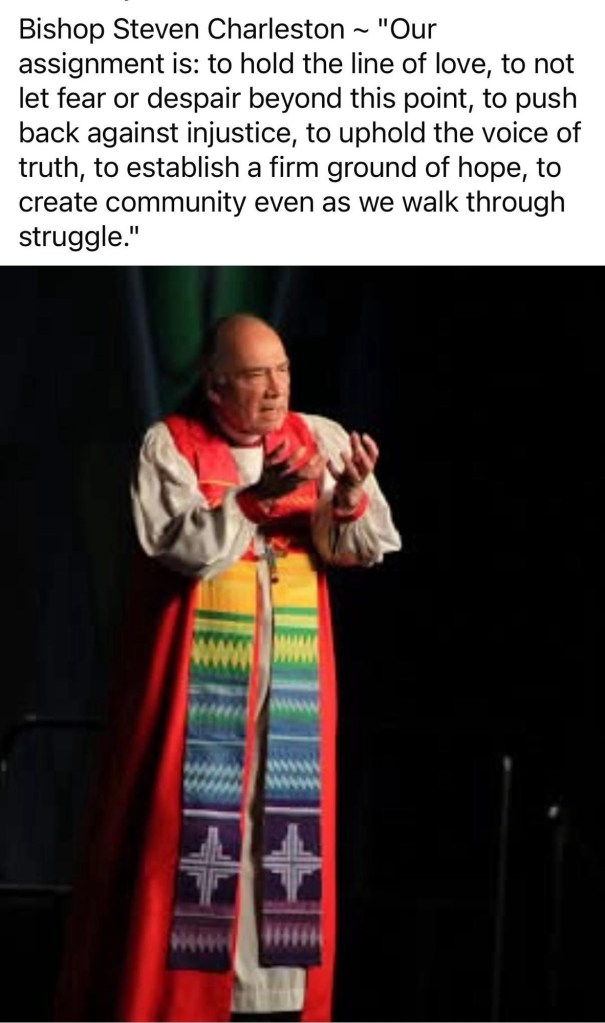
What is our job in these troubled times? During any times, but particularly during times where we are seeing peoples’ rights eroded and trampled, when legal safeguards are flouted, and when authoritarianism is on the rise, our job is to hold the line. Continue to be a place of comfort and succor to the hurting, feed the hungry, grieve with the mourning.
I was recently reminded about a story from 2017 where two little boys were caught in a rip tide and swept out to sea. Their entire family and four woud-be rescuers tried to swim out to save them but ended up similarly stranded. Officials on shore stood, helpless, waiting for a rescue boat while the family and would-be rescuers floundered.
But then the people on the beach did a remarkable thing. People from all walks of life, across every possible difference or division, linked arms together and formed a human chain stretching out into the ocean until they reached those stuck and and then passed them person to person, beginning with the little boys, Noah (11) and Stephen (8), and ending with their grandmother who had tried to save them, back to safety.
Stories like this don’t get a lot of press. But it’s why we’re here.
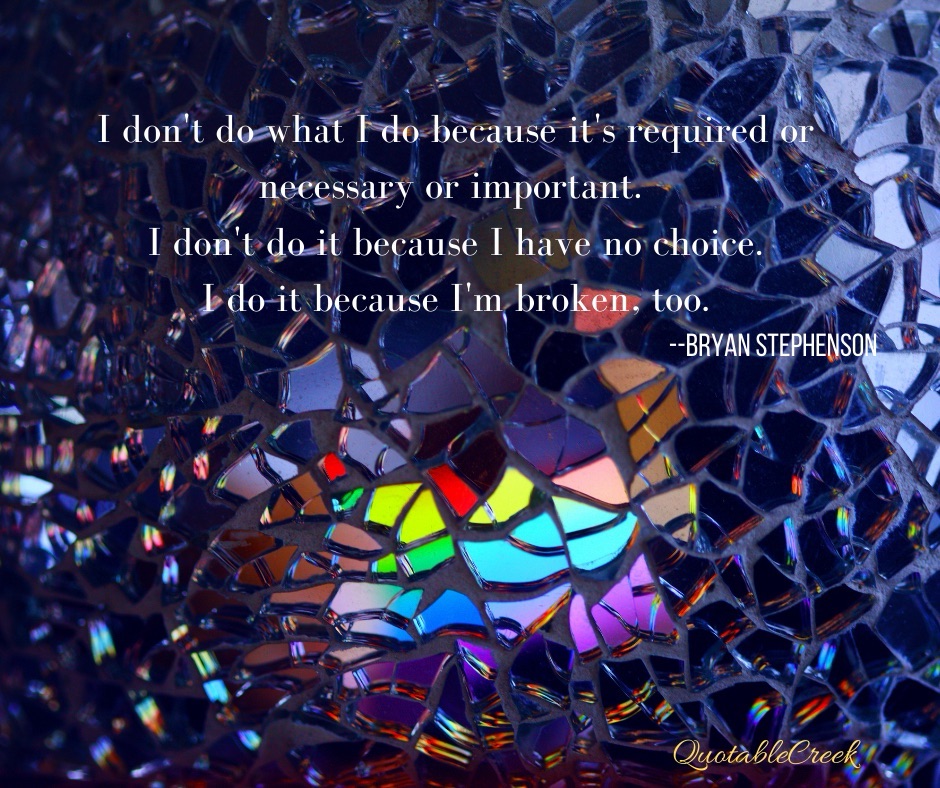
What makes some people able to empathize more than others, able to help in dire circumstances, able to put the greater good above the personal good? Bryan Stephenson, founder of the Equal Justice Institute, fierce advocate against systemic racism, and criminal defense attorney for those on death row explains: “I do it because I’m broken, too.” That recognition of a common humanity and brokenness by a system that needs changing propels him to fight.
Who among us isn’t broken? Because we all are bound together, we all suffer in an unjust world. Because we all have known pain, we all have the capacity to put ourselves into the shoes of those hurting.
In his book, Just Mercy, Stephenson explains:
My years of struggling against inequality, abusive power, poverty, oppression, and injustice had finally revealed something to me about myself. Being close to suffering, death, executions and cruel punishments didn’t just illuminate the brokenness of others; in a moment of anguish and heartbreak, it also exposed my own brokenness. You can’t effectively fight abusive power, poverty, inequality, illness, oppression, or injustice and not be broken by it.
We are all broken by something. We have all hurt someone and have been hurt. We all share the condition of brokenness even if our brokenness is not equivalent. I desperately wanted mercy for Jimmy Dill and would have done anything to create justice for him, but I couldn’t pretend that his struggle was disconnected from my own. The ways in which I have been hurt–and have hurt others–are different from the ways Jimmy Dill suffered and caused suffering. But our shared brokenness connected us.
Paul Farmer, the renowned physician who has spent his life trying to cure the world’s sickest and poorest people, once quoted me something that the writer Thomas Merton said: ‘We are bodies of broken bones.’ I guess I’d always known but never fully considered that being broken is what makes us human. We all have our reasons. Sometimes we’re fractured by the choices we make; sometimes we’re shattered by things we would never have chosen. But our brokenness is also the source of our common humanity, the basis for our shared search for comfort, meaning, and healing. Our shared vulnerability and imperfection nurtures and sustains our capacity for compassion.
We all have a choice. We can embrace our humanness, which means embracing our broken natures and the compassion that remains our best hope for healing. Or we can deny our brokenness, forswear compassion, and, as a result, deny our humanity
…So many of us have become afraid and angry. We’ve become so fearful and vengeful that we’ve thrown away children, discarded the disabled, and sanctioned the imprisonment of the sick and the weak–not because they are a threat to public safety or beyond rehabilitation but because we think it makes us seem tough, less broken. …We’ve submitted to the harsh instinct to crush those among us whose brokenness is most visible. But simply punishing the broken–walking away from them or hiding them from sight–only ensures that they remain broken and we do, too. There is no wholeness outside of our reciprocal humanity.Just Mercy, by Bryan Stephenson
How many of the problems we face today can be mitigated by recognizing our common humanity, by following the Golden Rule of treating others how we would have them treat us, a tenet found in many of the world’s religions? How would we have others treat us if we were the elderly, the sick, the refugee, the hurt, the accused, the other? Each of us would benefit from considering things from this perspective. Bryan Stephenson continues:
Whenever things got really bad, and they were questioning the value of their lives, I would remind them that each of us is more than the worst thing we’ve ever done. I told them that if someone tells a lie, that person is not just a liar. If you take something that doesn’t belong to you, you are not just a thief. Even if you kill someone, you’re not just a killer. I told myself that evening what I had been telling my clients for years. I am more than broken. In fact, there is a strength, a power even, in understanding brokenness, because embracing our brokenness creates a need and desire for mercy, and perhaps a corresponding need to show mercy. When you experience mercy, you learn things that are hard to learn otherwise. You see things you can’t otherwise see; you hear things you can’t otherwise hear. You begin to recognize the humanity that resides in each of us.
…I began thinking about what would happen if we all just acknowledged our brokenness, If we owned up to our weaknesses, our deficits, our biases, our fears. Maybe if we did, we wouldn’t want to kill the broken among us who have killed others. Maybe we would look harder for solutions to caring for the disabled, the abused, the neglected, and the traumatized.Just Mercy, by Bryan Stephenson
We are all broken. Some of us don’t acknowledge that. We have all hurt and been hurt. It is that humbling insight that can help us recognize our common humanity across all divides. If we just have the eyes to see and the ears to hear. Stephenson refers to an unnamed pastor who would preface singing: “The minister would stand, spread his arms wide, and say, “Make me to hear joy and gladness, that the bones which thou hast broken may rejoice.”
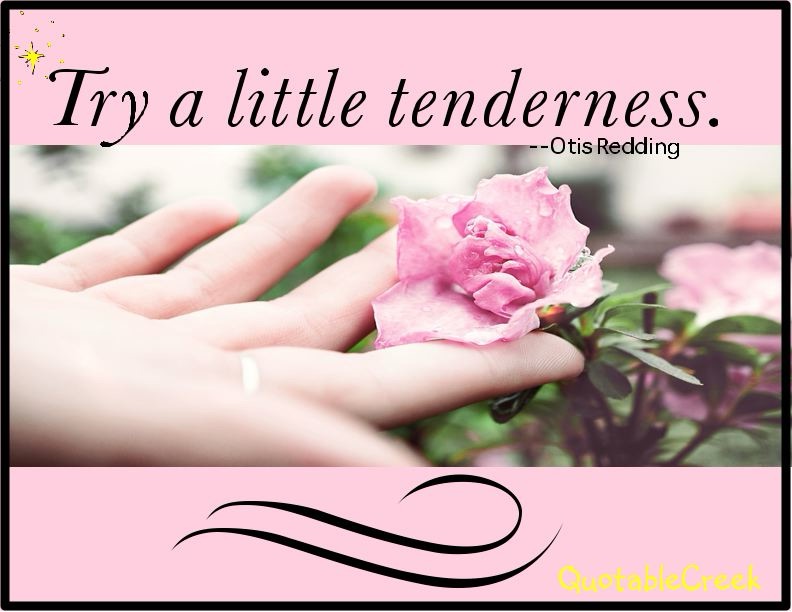
This week, Pope Francis passed away, and stories are circulating about some of the changes he made in the church and some of his more compelling speeches. Back in 2017, in a surprise TED talk, Pope Francis put in a request for more tenderness in our lives. He stressed that we are all connected:
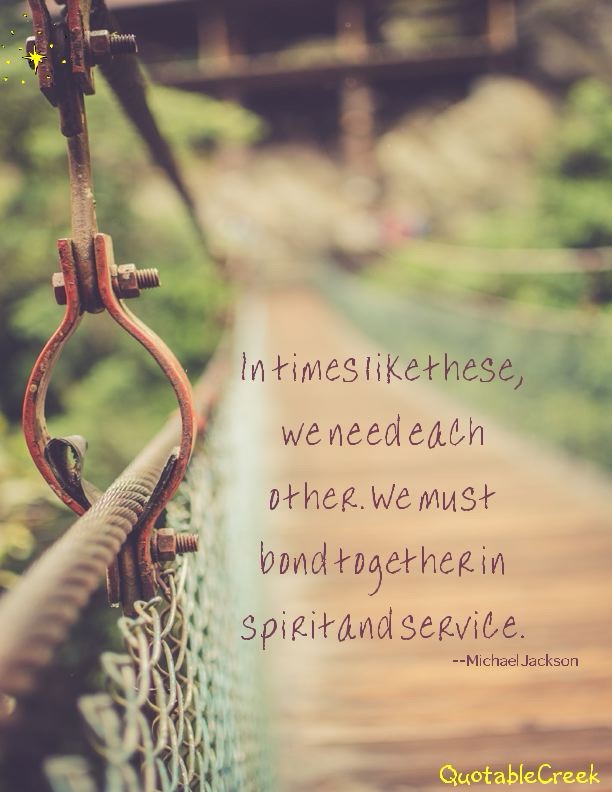
First and foremost, I would love it if this meeting could help to remind us that we all need each other, none of us is an island, an autonomous and independent “I,” separated from the other, and we can only build the future by standing together, including everyone. We don’t think about it often, but everything is connected, and we need to restore our connections to a healthy state. Even the harsh judgment I hold in my heart against my brother or my sister, the open wound that was never cured, the offense that was never forgiven, the rancor that is only going to hurt me, are all instances of a fight that I carry within me, a flare deep in my heart that needs to be extinguished before it goes up in flames, leaving only ashes behind.
Many of us, nowadays, seem to believe that a happy future is something impossible to achieve. While such concerns must be taken very seriously, they are not invincible. They can be overcome when we don’t lock our door to the outside world. Happiness can only be discovered as a gift of harmony between the whole and each single component. Even science – and you know it better than I do – points to an understanding of reality as a place where every element connects and interacts with everything else.
The Pope suggested tenderness for bridging the divides that separate us:
And what is tenderness? It is the love that comes close and becomes real. It is a movement that starts from our heart and reaches the eyes, the ears and the hands. Tenderness means to use our eyes to see the other, our ears to hear the other, to listen to the children, the poor, those who are afraid of the future.To listen also to the silent cry of our common home, of our sick and polluted earth. Tenderness means to use our hands and our heart to comfort the other, to take care of those in need….
Yes, tenderness is the path of choice for the strongest, most courageous men and women. Tenderness is not weakness; it is fortitude. It is the path of solidarity, the path of humility. Please, allow me to say it loud and clear: the more powerful you are, the more your actions will have an impact on people, the more responsible you are to act humbly. If you don’t, your power will ruin you, and you will ruin the other. …
The future of humankind isn’t exclusively in the hands of politicians, of great leaders, of big companies.Yes, they do hold an enormous responsibility. But the future is, most of all, in the hands of those peoplewho recognize the other as a “you” and themselves as part of an “us.” We all need each other. And so, please, think of me as well with tenderness, so that I can fulfill the task I have been given for the good of the other, of each and every one, of all of you, of all of us. Thank you.
As we grieve, Pope Francis, let us heed his words. The future is in our hands. Can we think of and treat each other with tenderness? Do we recognize that we are all part of an “us”?
We are all masterpieces, really. Works of art of exquisite complexity and beauty. Marvels. But we forget and get sidetracked by external things—success, age, worldliness. But it’s worth remembering.


 QuotableCreek.com