In challenging times, there are always bright moments of light to lift us up. People singing from balconies out onto deserted streets in Italy, others joining together to amplify the voices of the unheard, and, in one of the most delightful examples, an out of work sports color commentator putting his talents to use to give people a glimmer of cheer during dark times. Sidelined by the coronavirus and the consequent shut down of sports, Andrew Cotter has been making videos providing the color commentary for his two dogs’ adventures. Meet Olive and Mabel as you make way for a bit of delight:
All we face now can feel overwhelming. It’s as if everywhere you turn, there is another challenge and another threat. And yet, even if the midst of all that is wrong, there are opportunities to shine the light, to be a voice for good, and to support others. Yes, it looks bleak now, but we are still here to do some good:
“Yes, it looks bleak. But you are still alive now. You are alive with all the others, in this present moment. And because the truth is speaking in the work, it unlocks the heart. And there’s such a feeling and experience of adventure. It’s like a trumpet call to a great adventure. In all great adventures there comes a time when the little band of heroes feels totally outnumbered and bleak, like Frodo in Lord of the Rings or Pilgrim in Pilgrim’s Progress. You learn to say ‘It looks bleak. Big deal, it looks bleak.’” — Joanna Macy
Sometimes everything comes down to how we see a situation. Will we get irritated by something or consider it an opportunity to build community? Often children with their winsome ways and guilelessness cause us to adapt. Take a moment to watch this life-affirming story about a man who took an unusual approach to a child riding a bike in his driveway. What a beautiful neighborhood they are creating together!
John Lewis was an American hero. His whole life was a testament to fighting the good fight and trying to make the world a better, more egalitarian place even in the most dire of circumstances. Today, he is laid to rest, but he left us words, every one ringing with truth, to give us light and help us find our way without him:
“While my time here has now come to an end, I want you to know that in the last days and hours of my life you inspired me. You filled me with hope about the next chapter of the great American story when you used your power to make a difference in our society. Millions of people motivated simply by human compassion laid down the burdens of division. Around the country and the world you set aside race, class, age, language and nationality to demand respect for human dignity.
“That is why I had to visit Black Lives Matter Plaza in Washington, though I was admitted to the hospital the following day. I just had to see and feel it for myself that, after many years of silent witness, the truth is still marching on.
“Emmett Till was my George Floyd. He was my Rayshard Brooks, Sandra Bland and Breonna Taylor. He was 14 when he was killed, and I was only 15 years old at the time. I will never ever forget the moment when it became so clear that he could easily have been me. In those days, fear constrained us like an imaginary prison, and troubling thoughts of potential brutality committed for no understandable reason were the bars.
“Though I was surrounded by two loving parents, plenty of brothers, sisters and cousins, their love could not protect me from the unholy oppression waiting just outside that family circle. Unchecked, unrestrained violence and government-sanctioned terror had the power to turn a simple stroll to the store for some Skittles or an innocent morning jog down a lonesome country road into a nightmare. If we are to survive as one unified nation, we must discover what so readily takes root in our hearts that could rob Mother Emanuel Church in South Carolina of her brightest and best, shoot unwitting concertgoers in Las Vegas and choke to death the hopes and dreams of a gifted violinist like Elijah McClain.
“Like so many young people today, I was searching for a way out, or some might say a way in, and then I heard the voice of Dr. Martin Luther King Jr. on an old radio. He was talking about the philosophy and discipline of nonviolence. He said we are all complicit when we tolerate injustice. He said it is not enough to say it will get better by and by. He said each of us has a moral obligation to stand up, speak up and speak out. When you see something that is not right, you must say something. You must do something. Democracy is not a state. It is an act, and each generation must do its part to help build what we called the Beloved Community, a nation and world society at peace with itself.
“Ordinary people with extraordinary vision can redeem the soul of America by getting in what I call good trouble, necessary trouble. Voting and participating in the democratic process are key. The vote is the most powerful nonviolent change agent you have in a democratic society. You must use it because it is not guaranteed. You can lose it.
“You must also study and learn the lessons of history because humanity has been involved in this soul-wrenching, existential struggle for a very long time. People on every continent have stood in your shoes, though decades and centuries before you. The truth does not change, and that is why the answers worked out long ago can help you find solutions to the challenges of our time. Continue to build union between movements stretching across the globe because we must put away our willingness to profit from the exploitation of others.
“Though I may not be here with you, I urge you to answer the highest calling of your heart and stand up for what you truly believe. In my life I have done all I can to demonstrate that the way of peace, the way of love and nonviolence is the more excellent way. Now it is your turn to let freedom ring.
“When historians pick up their pens to write the story of the 21st century, let them say that it was your generation who laid down the heavy burdens of hate at last and that peace finally triumphed over violence, aggression and war. So I say to you, walk with the wind, brothers and sisters, and let the spirit of peace and the power of everlasting love be your guide.”
May his words hold true in our hearts, and let us live up to the example he set. Let us go forward in the spirit of peace with everlasting love as our guide. Let this be our solemn vow. Now is the time.
Is your life all ups, no downs? Do you ever feel a need to make it look like it is? Maybe to pretend the rough stuff doesn’t exist or put on a big smile to cover a broken heart? Do you ever feel like there must be something wrong with your faith if your life is going badly?
Truth is, shit happens. To the best, most faithful of people. Life’s struggles can feel overwhelming. You can get to the point where you simply cannot see how someone could think and feel the way they do. You can lose hope.
At times like these you need to breathe deep and get yourself to a quiet place. And it sure would do no harm, and maybe a whole lot of good, to read a poem like this:
The Peace of Wild Things
by Wendell Barry
When despair for the world grows in me
and I wake in the night at the least sound
in fear of what my life and my children’s lives may be,
I go and lie down where the wood drake
rests in his beauty on the water, and the great heron feeds.
I come into the peace of wild things who do not tax their lives with forethought of grief.
I come into the presence of still water.
And I feel above me the day-blind stars waiting with their light.
For a time I rest in the grace of the world, and am free.
And the good news is, you can read this poem, and your soul will calm without even being in that place where the wood drake rests in his beauty on the water. The words of a good poem are like magic. They can heal you and still the churning waters of your soul. And they can help you remember the ‘day-blind stars waiting with their light’, because, yes, we cannot see the stars in the daytime, but they are there. Shining.
May you rest in the grace of the world and find peace.
The daffodils are coming. Planted last fall–before the snow, before the holidays, before the pandemic– they are starting to poke up. Soon they will be blooming everywhere adding cheer to the lives of whomever might see them.
A garden is a microcosm of life. Seasons of vibrance and beauty fall away into a frozen landscape seemingly devoid of color. But then, maybe when you’ve almost forgotten, there is blossoming and rebirth.
Gardeners and children know something that many of us have forgotten: there is joy in the dirt.
Literally.
It turns out, “Prozac may not be the only way to get rid of your serious blues. Soil microbes have been found to have similar effects on the brain and are without side effects and chemical dependency potential.”
Studies show the benefits gardeners and children will swear by of playing in the dirt are actually based on science.
It’s true. Mycobacterium vaccae is the substance under study and has indeed been found to mirror the effect on neurons that drugs like Prozac provide. The bacterium is found in soil and may stimulate serotonin production, which makes you relaxed and happier. Studies were conducted on cancer patients and they reported a better quality of life and less stress. Lack of serotonin has been linked to depression, anxiety, obsessive compulsive disorder and bipolar problems. The bacterium appears to be a natural antidepressant in soil and has no adverse health effects. These antidepressant microbes in soil may be as easy to use as just playing in the dirt.
In this interview, Brené Brown discusses the complexity of emotions we are experiencing as a result of the pandemic and social isolation. Her words bring comfort and solace to all of us, but particularly those of us raised to believe that only positive emotions should be felt or expressed.
These are tough times. And it’s particularly difficult because this is not an emergency you have to gear up for and get through; it’s a slow burn. As she says:
“Normally, in order to get through a crisis, you know, our bodies are built to respond with a lot of adrenaline, a lot of energy, a lot of super coping surge. And then the waters recede or the fires are out or, you know, the crisis ends and we slog our way through kind of cleanup and trying to find our new normal. But we are not going to be able to depend on the adrenaline surge for this, because it’s going to out- it’s going to outpace us. And I think we are hitting that moment where we are weary in our bones. We are physically tired. We, you know, anxiety, uncertainty take a lot out of us physically. I think, you know, we’re on Zoom calls. I don’t know what happened. Like, I work a lot to begin with, but I feel like I’m on Zoom calls from 6:00 in the morning until midnight. You know, and then we’ve got toddlers crawling up our backs and partners trying to, you know, tell us to be quiet. They’re also are being called. And we’re tired. And I’ll tell you, the other thing that’s exhausting; that we are not acknowledging – again as a collective – is grief.”
And the grief is perhaps more extensive than any we’ve felt before. It’s grieving a loss of everything that was normal to us. Brown explains, “Well, I think it’s a very difficult position we’re in right now because I think we are both grieving the loss of normal and grieving the ordinary moments that make the touchstones for our lives. We’re grieving the loss of those at the very same time we’re having to find and settle into a new normal. And those two things are very difficult to do. At the same time, not mutually exclusive, but as close as it gets without being mutually exclusive. So there’s grief, I think. Grief is the loss of normal.”
And it is ok to experience that grief and mourn those losses. We are vulnerable, and there is no shame in acknowledging that:
“To be alive is to be vulnerable, to be in this pandemic, is to be vulnerable every second of every minute of every day. And the thing about vulnerability is it is difficult, but it’s not weakness. It’s the foundation and the birthplace of courage. There is no courage without risk, uncertainty and exposure. And so, you know, I’ve asked 10000 people that this question, starting with special forces military: give me an example of courage in your life that did not require uncertainty, risk and emotional exposure. And in probably 15 thousand people at this point, not one person has been able to give me an example of courage that did not require vulnerability. So we need to dispel that mess and we need to acknowledge we are in a lot of vulnerability right now. That means we can be our best, bravest selves or we can be our worst selves, and I think the thing about choosing to be our most courageous selves is having to understand this is another method to style that most of us know we’re taught growing up that we’re either brave or afraid, that the truth is we can be brave and afraid at the exact same time. Most of us are in these moments today.”
We can be brave and afraid at the exact same time. We can be strong in our vulnerability. And, even though we are living a new normal, we can choose how we show up there.
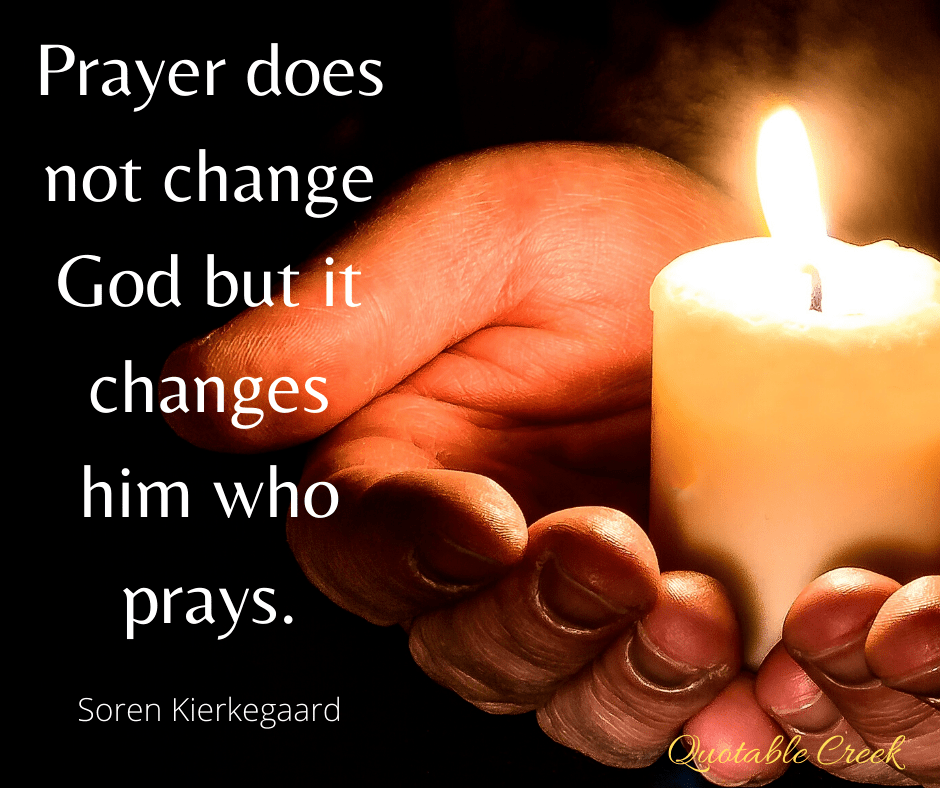
In a grieving, struggling world, we pray. Full of humility, we fall to our knees. Gobsmacked by the fragility of life and the interconnectedness of all creation, we lift our eyes to the Lord and join voices around the world to offer thanks, plead for mercy, and reach for hope.
Never before has it been more obvious that we belong to each other and are all in this together.
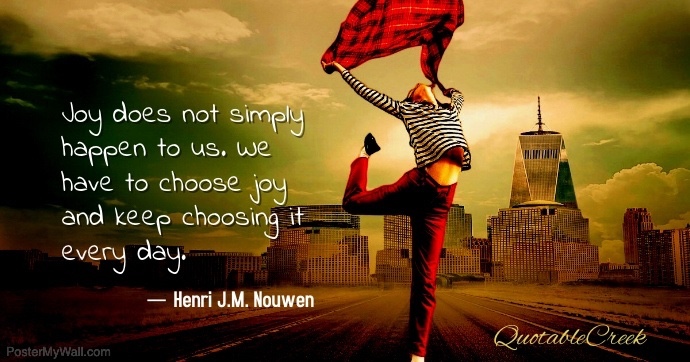
Sometimes joy is a matter of perspective. It’s reaching down and being grateful for it all, the mess, the euphoria, the triumphs, and the tragedies. Grateful to be here, to have a voice, to have people to care about, to have a chance to make a difference. Joy in it all is a choice.
In Bread for the Journey, Henri Nouwen unpacks this further:
Joy is what makes life worth living, but for many joy seems hard to find. They complain that their lives are sorrowful and depressing. What then brings the joy we so much desire? Are some people just lucky, while others have run out of luck? Strange as it may sound, we can choose joy. Two people can be part of the same event, but one may choose to live it quite differently from the other. One may choose to trust that what happened, painful as it may be, holds a promise. The other may choose despair and be destroyed by it. What makes us human is precisely this freedom of choice.
What is the promise behind the circumstances that threaten to steal your joy? Is there something hopeful there? Seeing that promise may just be the key you are looking for.
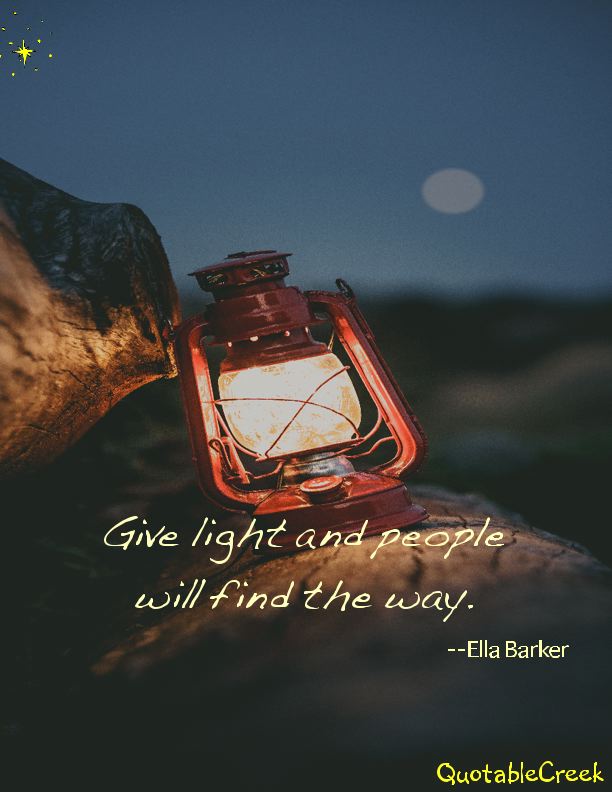
In the darkest of times, people depend on light to find their way. How can we be the light for others? What can we do to inspire hope? How can we help?



 QuotableCreek.com