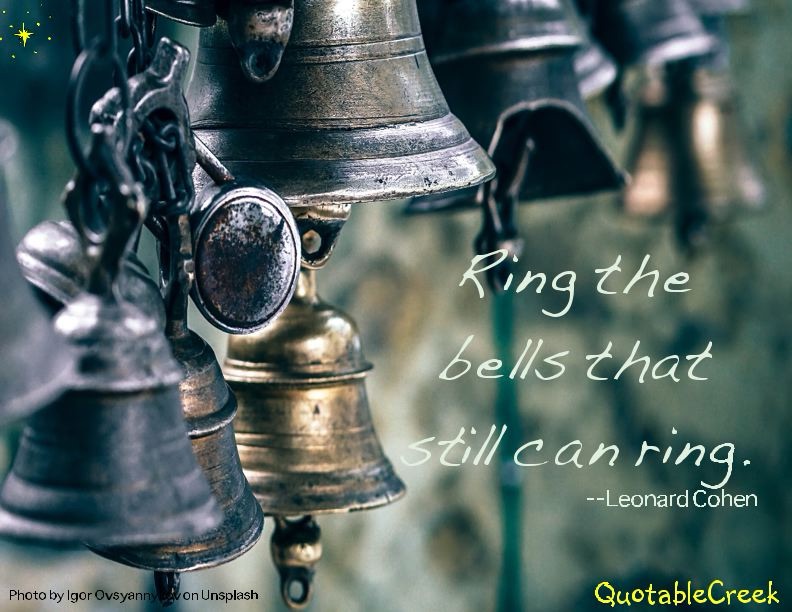
Maybe you’re older, or weaker, or not quite as sharp as you used to be. Maybe your energy is fading, or you’ve gotten depressed and overwhelmed. Maybe all your ducks aren’t in a row, and all your bells don’t ring. Maybe you don’t think you can make a difference.
It is in just such times that you must press on. Your gifts are needed. The world doesn’t need you to be perfect; it needs you to show up.
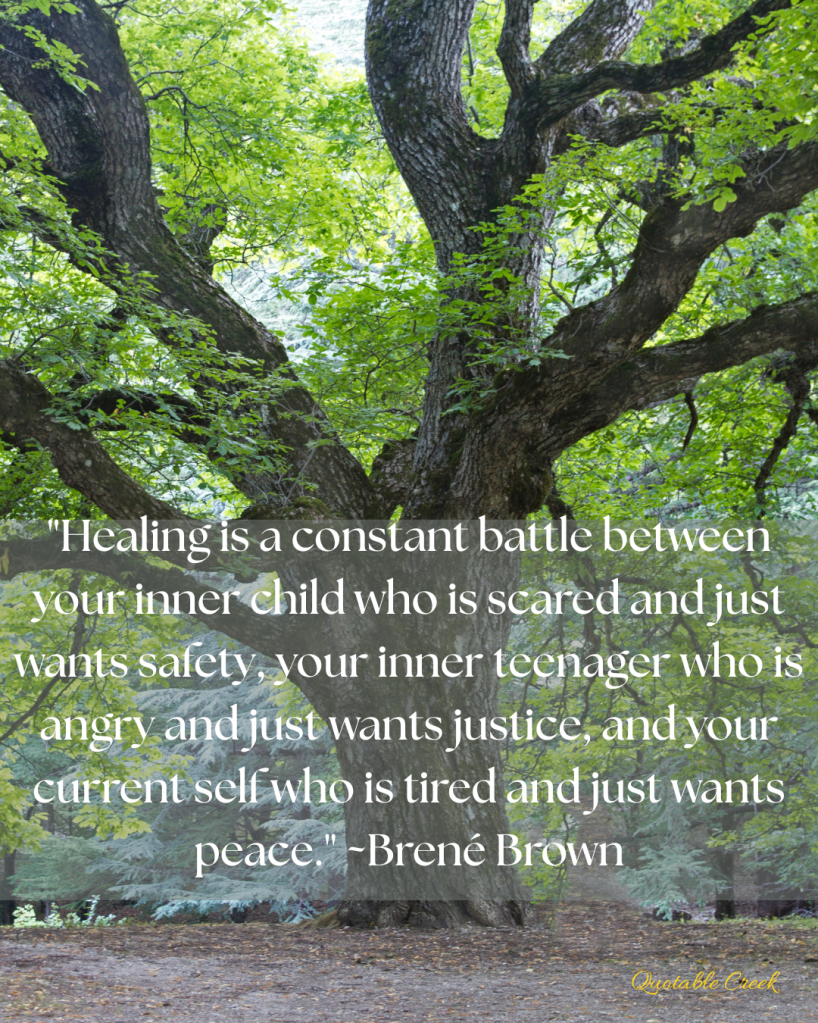
We are complicated and carry with us all the ages we have been and life experiences we have had. As Sandra Cisneros put it:
What they don’t understand about birthdays and what they never tell you is that when you’re eleven, you’re also ten, and nine, and eight, and seven, and six, and five, and four, and three, and two, and one. And when you wake up on your eleventh birthday you expect to feel eleven, but you don’t.
So at 63, we can still long for a parent’s unconditional love rather than constant harsh judgment or expectation, or quiver in excitement over an upcoming holiday, or find ourselves sleepless over a stupid thing we said yet again. There is no ta-da moment where we wake up and suddenly make only good decisions and wise pronouncements.
It is all a becoming.
And hopefully those experiences we have had at all those prior ages help increase our empathy and understanding of others bumbling along, also becoming. Because what it really is, this thing called life, is putting one foot in front of the other and keeping on, striving.
Do not lose heart. The challenges you see today are the ones you must face. You are strong enough to do your part, and you will find allies everywhere you look.
Look out over the prow; there are millions of boats of righteous souls on the waters with you. Even though your veneers may shiver from every wave in this stormy roil, I assure you that the long timbers composing your prow and rudder come from a greater forest. That long-grained lumber is known to withstand storms, to hold together, to hold its own, and to advance, regardless.
In any dark time, there is a tendency to veer toward fainting over how much is wrong or unmended in the world. Do not focus on that. There is a tendency, too, to fall into being weakened by dwelling on what is outside your reach, by what cannot yet be. Do not focus there. That is spending the wind without raising the sails.
We are needed, that is all we can know. And though we meet resistance, we more so will meet great souls who will hail us, love us and guide us, and we will know them when they appear. Didn’t you say you were a believer? Didn’t you say you pledged to listen to a voice greater? Didn’t you ask for grace? Don’t you remember that to be in grace means to submit to the voice greater?
Ours is not the task of fixing the entire world all at once, but of stretching out to mend the part of the world that is within our reach. Any small, calm thing that one soul can do to help another soul, to assist some portion of this poor suffering world, will help immensely. It is not given to us to know which acts or by whom, will cause the critical mass to tip toward an enduring good.
You do not need to do everything. Do what you can, where you can, with what you can. Your actions combined with actions from millions of like-minded individuals will make a difference for good.
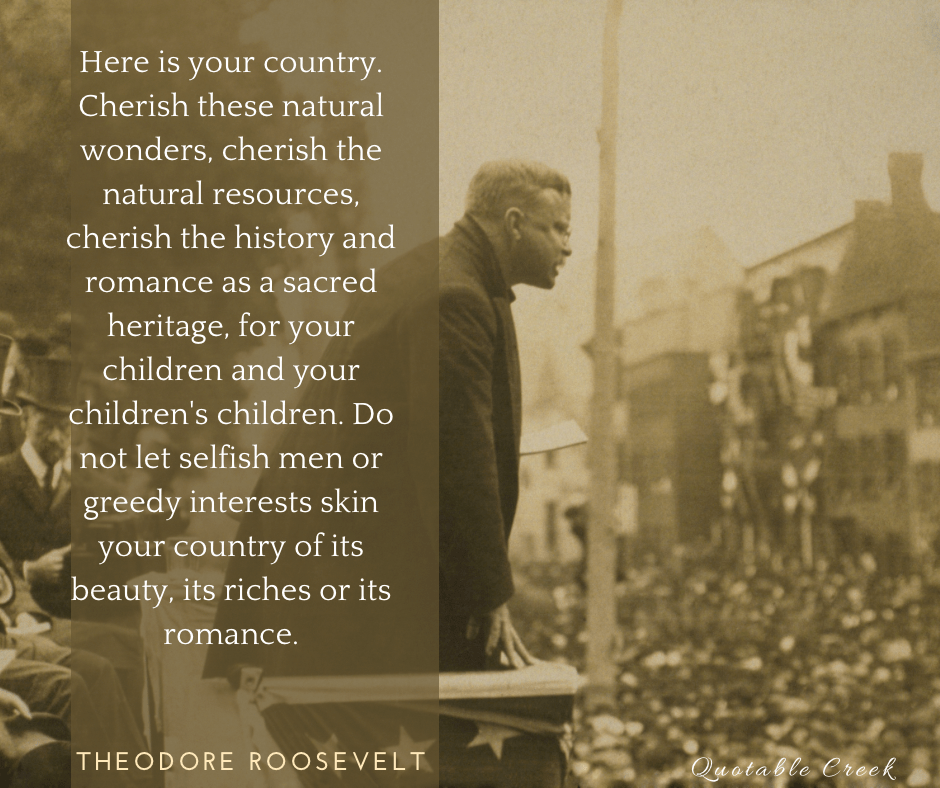
When we think of America, what do we picture? Surely the abundance of natural beauty, much of it, 230 million acres worth, protected by President Roosevelt. National Parks, wildlife refuges, forests, oceans, Great Lakes.
Perhaps we also think of American ideals like freedom in religion and speech, the right to petition the government for redress of grievances, the concept of equal justice under the law, the notion of the American dream that no matter where you come from, you can rise above your circumstances with integrity and hard work. American values.
Perhaps we picture our strength in diversity, of backgrounds, countries of origin, viewpoints, and culture. A heterogeneous mix of people coming together e plutibus unum, out of many, one.
President Roosevelt urged us to cherish our country, its natural wonders and resources, its history and romance, its sacred heritage for our children and children’s children. Let us heed his words. America is a special place and must be protected, valued, and nurtured.
I wonder about Christians responding to the challenges confronting our world right now. How does worshipping a humble carpenter, a servant, a loving non-violent man, inform our choices now?
He shunned power. He empathized with the suffering of others. He humbled himself even unto death.
I wonder about the choices he made while tempted in the desert before embarking on his ministry:
Then Jesus was led by the Spirit into the wilderness to be tempted by the devil. 2 After fasting forty days and forty nights, he was hungry. 3 The tempter came to him and said, “If you are the Son of God, tell these stones to become bread.”
4 Jesus answered, “It is written: ‘Man shall not live on bread alone, but on every word that comes from the mouth of God.’”
5 Then the devil took him to the holy city and had him stand on the highest point of the temple.6 “If you are the Son of God,” he said, “throw yourself down. For it is written:
“‘He will command his angels concerning you, and they will lift you up in their hands, so that you will not strike your foot against a stone.’”
7 Jesus answered him, “It is also written: ‘Do not put the Lord your God to the test.’”
8 Again, the devil took him to a very high mountain and showed him all the kingdoms of the world and their splendor. 9 “All this I will give you,” he said, “if you will bow down and worship me.”
10 Jesus said to him, “Away from me, Satan! For it is written: ‘Worship the Lord your God, and serve him only.’”
11 Then the devil left him, and angels came and attended him.
Matthew 4:1-11
Would Christians today think he made the right decision to eschew power? A while back, WWJD (What would Jesus do?) was a common question. It’s still worth thinking about now.
We see Jesus saving the lost, healing the sick, speaking truth to power, standing up for the marginalized, refusing to grab power. Isn’t that what he would expect those of us who follow him to do now?
And he would, of course, tell us, as he told so many when he walked this Earth,
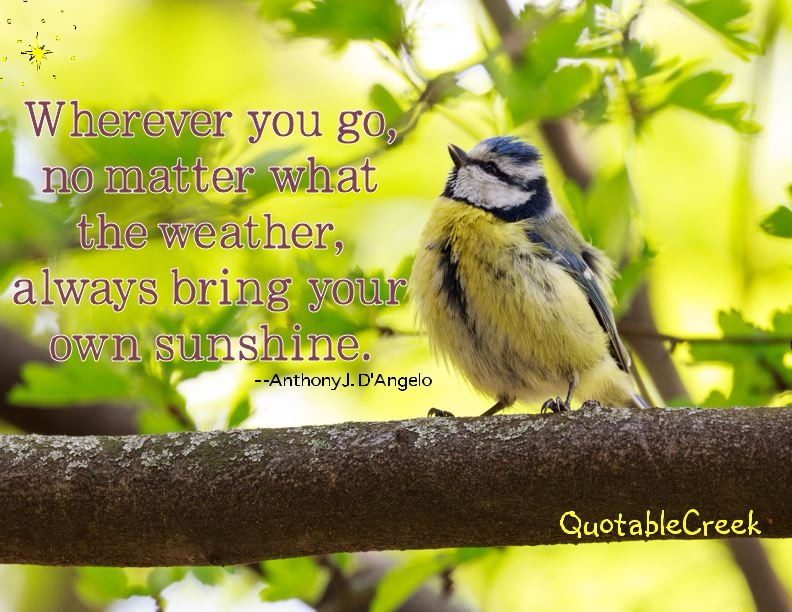
If you look carefully, can you tell who is suffering a storm in their lives? Maybe the fog of depression, the tumult of marital strife, the buffeting of indecision, the downpour of failure? Often a calm demeanor masks these inner storms. Maybe you’ve experienced some rough weather of your own. In all of these situations, your personal sunshine–a warm smile and cheerful disposition–can quiet the storms, or at least make people feel not quite so lonely until the sun shines again. Today, bring your sunshine with you; you never know who is in a stormy place.
Patience is tough. But even in the most aggravating times of waiting, nature keeps going and sends us messages of hope. Dead looking trees budding, flowers blossoming, birds singing and looking for places to build their nests. Warmth seeping back into the frigid ground.
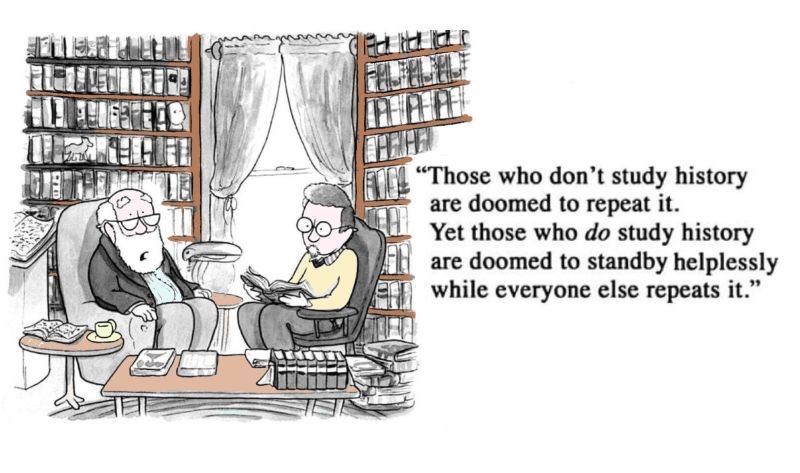
One of the greatest frustrations of life is not being able to change the past, whether it is to remedy that stupid thing you just said or the larger elements of fractures in society leading to war. The only things we can really do with the past are to live with it, learn from it, and figure out how to move forward. For those who study history, seeing ugly patterns reemerge and take shape can be horrifying.
And yet, it is not all gloom and doom. Indeed, we are not helpless:
One of the curses of history is that we cannot go back and change the course leading to disasters, no matter how much we might wish to. The past has its own terrible inevitability. But it is never too late to change the future.”
― Heather Cox Richardson
We can learn from history what it takes to resist. We can remember who the real heroes were in dark times and emulate them. We can draw on community and coalitions to fight for the common good. We can continue to believe that integrity counts, that honesty and fidelity and honor matter, that kindness will always heal, and that love is, not only good, but the answer to any question.
We can fight. With whatever tools we have: words, money, presence, we can take a stand, doing our little bit of good.
As Desmond Tutu said:
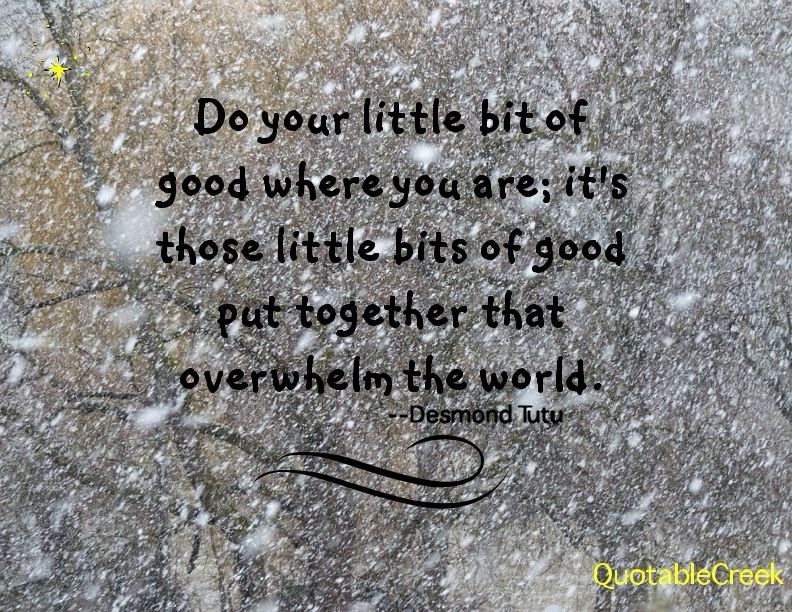
Do your little bit of good where you are; it’s those little bits of good put together that overwhelm the world.


 QuotableCreek.com