Balcony people

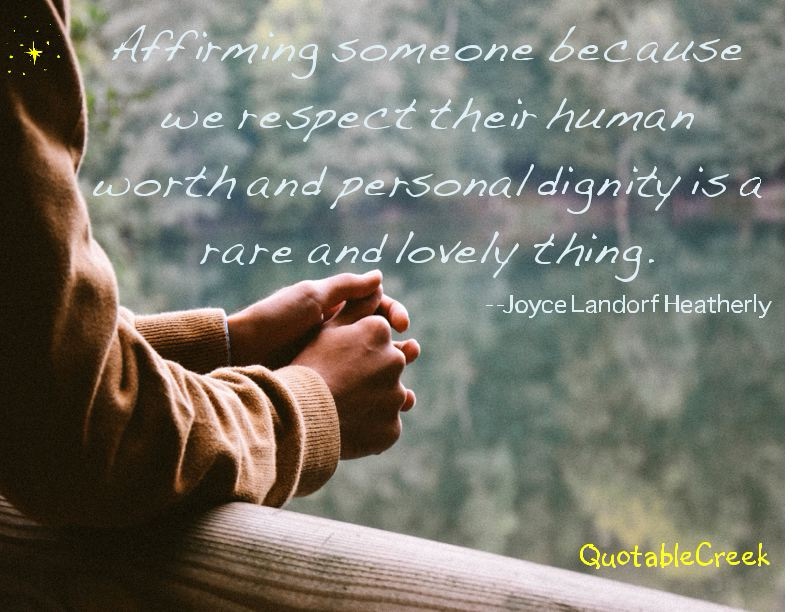
Are there people in your life who encourage you and make you feel stronger and lifted up? Are there some who drag you down or take the wind out of your sails?  In her book, Balcony People, Joyce Landor Heatherley argues there are two types of people: the evaluators and the affirmers. She suggests:

I am sure, if there were a way to view a movie and see instant replays of all the strategic change points in our lives, that we’d instantly spot the people who either broke our spirits by their critical or judgmental evaluations, or who healed us by their loving, perceptive affirmations.

To be honest, I seem to be able to remember the negative comments of evaluators faster and more clearly than the positive remarks of the affirmers. I’m not alone in this ability to recall the negative….I suspect that not far from anyone’s conscious level of thinking lies the memory of an evaluator who pulled on his or her spiked boots and stomped deliberately over our bare soul and personhood.

Do you have any of these evaluators in your life? Maybe you can recognize the voice in your head that tells you that you can’t do something. In her book The Artist’s Way: A Spiritual Path to Higher Creativity, Julia Cameron calls these the censors. Maybe you have many censors, a rogue’s gallery of them.

So what do we do with these evaluators and censors to keep them from stifling our blossoming with their negative talk or opinions? Heatherley suggests leaving them in the past, even if that past was five minutes ago:

We all have the choice to replay the harmful remarks from evaluators, or we can choose to let them pass on. We can even choose to make allowances for their discouraging, destructive words. But best of all is the choice to willingly focus our minds and hearts on today’s person who is affirming us.

So who are these affirmers in our lives? Think back…

Who by one small sentence or more, has changed and lifted your opinion of yourself? Who was the person early in your life who recognized the first sparks of originality in the labyrinths of your mind and soul and saw what no one else saw? And who is the special affirmer who catches quick glimpses of the flames from the fires of your potential and tells you so? Who, by his or her words, helps you to respect and believe in your own value as a person? And who is the affirmer who encourages you to stretch and dream beyond your self-imposed limits and capabilities?

These affirmers are your Balcony People, cheering you on to blossom and stretch. These are the people whose words you must cling to when working toward your goal. These affirmers see you “by a clearer, truer light. They [are] able to peel back the layers of pretense [you] wear like like costumes for a bad play. Most of the time they [see] through and past the masks [you] hide behind. Then, once having broken through to [you] they’d get on with the business of motivating [you] to be all [you] can be.”

Affirmation is vital to our health and progress:

When others discern the good, the noble, the honorable, and the just tenets of our character (no matter how minuscule they may be) and proceed to tell us how they admire those traits, we feel visible. We begin to ‘see’ ourselves and our worth. We feel nurtured and nourished, but mostly we feel loved.

The Basement People do just the opposite. With their words they cause you to doubt and shrink. They focus on your flaws or failings. They encourage you to not try, to stay where you are, to wallow in the “murky waters of failure and discouragement.” We don’t need to linger on their words.

Who is in your Balcony? Who cheers you on and sees your unique worth? Who do you admire in history for their accomplishments or moral victories?

When you struggle, picture these people, your Balcony People. Remember their words. Let their affirmations encourage and comfort you in defeat and to keep pressing onward in your goals.

You are meant to blossom not wither. You are meant to shine not lurk in the shadows.

You are meant to soar.

The invisible essential.

Not long ago, the world shut down, and most people were asked to sequester and stay home while essential workers reported, still, for duty. It was a strange time, involving so many swiftly moving facts to assimilate and assess forward progress.

But that question of ‘essential’ is an interesting one. Some of the jobs labeled ‘essential’ or not were surprising choices.

How does one determine what is ‘essential’? What of the artist? With so many schools cutting art and music programs as non-essential, I wonder what the world would look like filled just with grammarians and mathematicians. Surely, art, though it puts no food on the table and sets no broken bones, is essential to the human spirit.

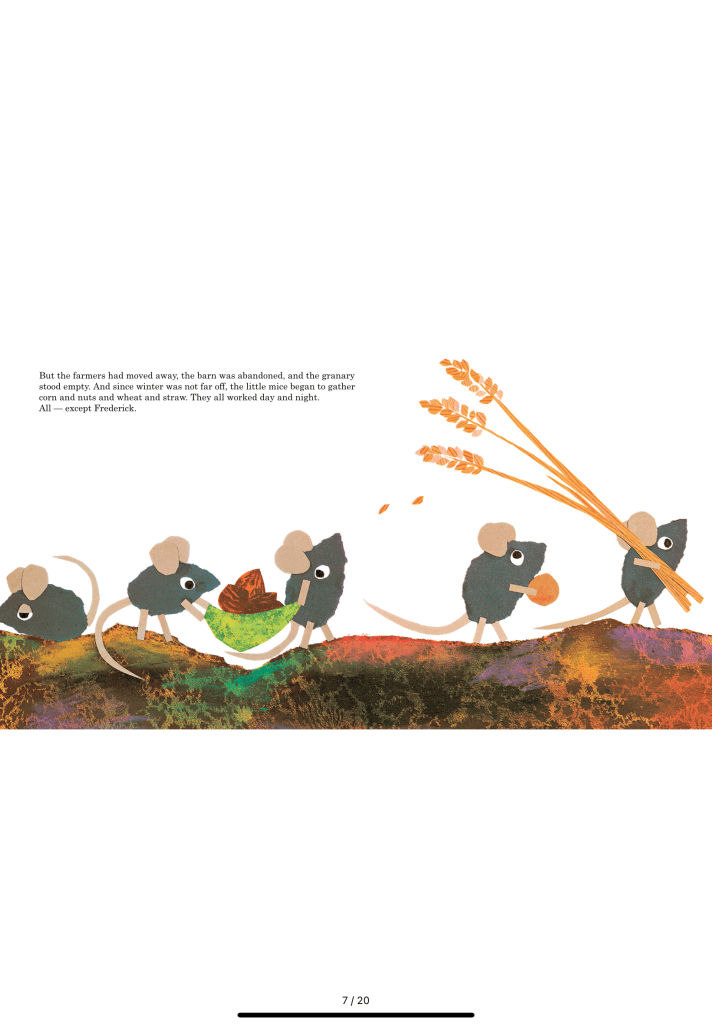
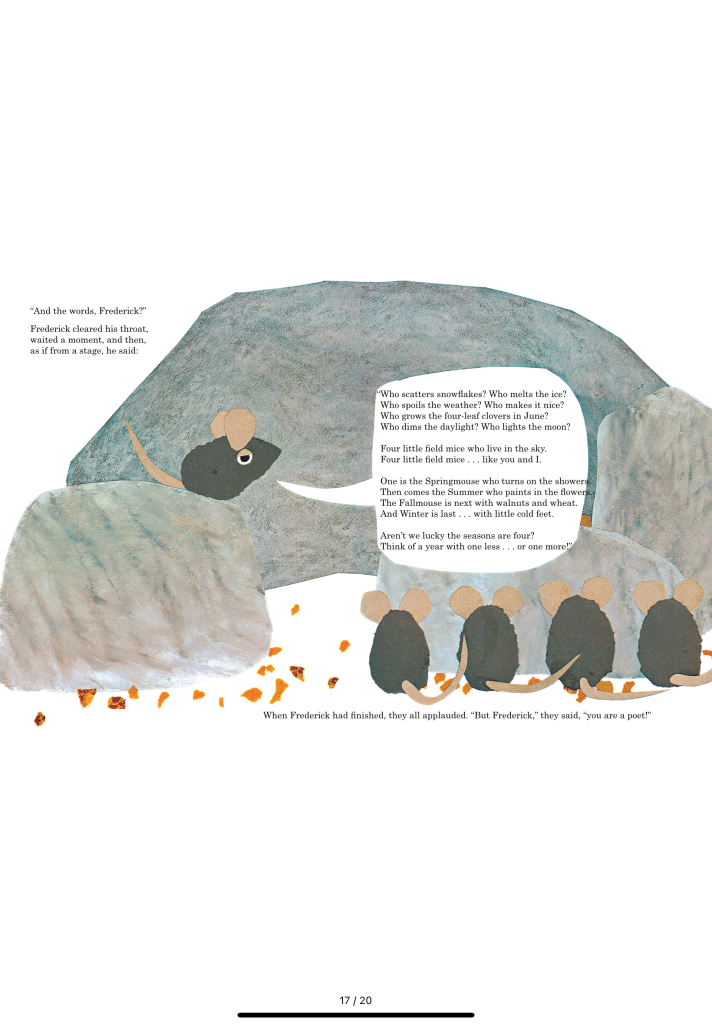
Such is the theme of Frederick by Leo Lionni. While four mice toil to set up stores of grain for winter, one mouse collects color, and sounds, and words.

And when winter came, and the mice were cold and hungry, Frederick’s words sustained them.

So lift a glass in praise to the artists, the writers, the musicians. Those who lift us up and sustain us and offer us beauty for our souls.

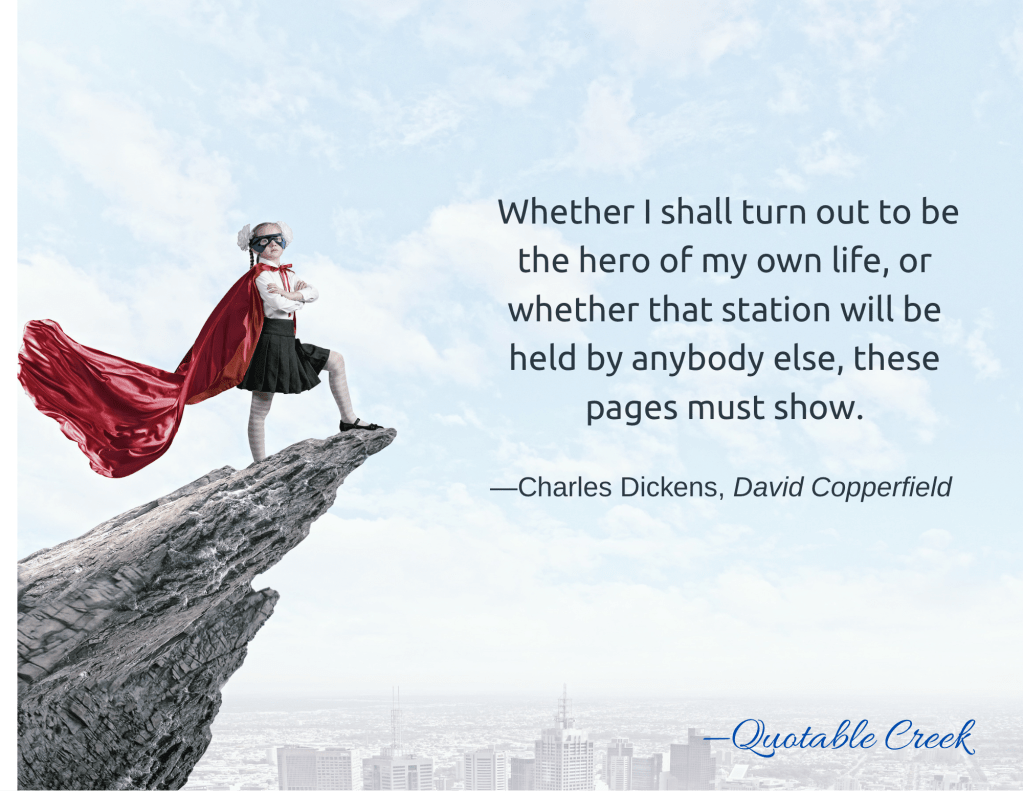
Being the Hero of Your Own Life

When we think about our own personal heroes, can we see a pattern? How did they rise to the challenges presented in their day?

How are we rising to the occasions and the challenges presented in our time? Right now. Are there injustices we can speak up against? Are there places where our voices will make a difference? What are the rights and wrongs happening right now today?

I am about one-fourth of the way through Charles Dickens’s, David Copperfield. It’s astonishingly good, as are most of his books. And, like others, it calls out some of the injustices of his day—child labor, poorhouses, domestic violence, emotional cruelty, sexism, bullying and so on. With his wide audience and engaging stories, he had tremendous power and is credited for being the impetus for many social justice reforms.

However, he had his own blind spots.

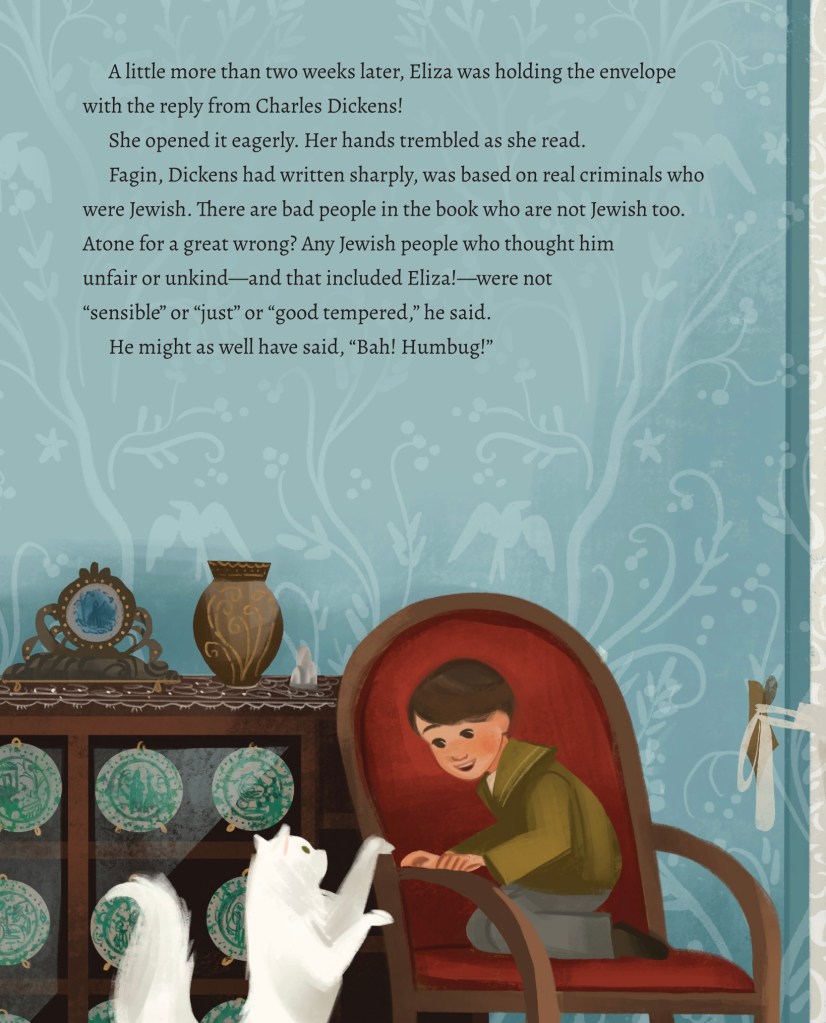
One reader, Eliza Davis, wrote to him, accusing him of portraying her people, those of Jewish ancestry, in stereotypical and negative ways. She cited Fagin, from Oliver Twist, a cruel and selfish man teaching young street urchins to steal. Eliza begged him to show more complexity in his Jewish characters.

Dickens was unimpressed.

Dear Mr. Dickens, By Nancy Churnin

However, taking a page from Dickens’ own, Christmas Carol and the transformation of Ebenezer Scrooge, Eliza wrote him again:

Dear Mr. Dickens, by Nancy Churnin

And this time, Dickens was moved. And changed. From then on, his Jewish characters were complex and kind, and the exchange between Eliza and Dickens is credited for having a part in reducing anti-Semitic views and laws of the day.

Eliza had the same tools at hand as Dickens himself: pen, paper, and a keen sense of justice. While she lacked his fame, she made up for it by essentially teaming with him to bring about change.

What are the injustices of our day? It can be challenging to see them, sometimes, because we’ve been so steeped in things the way they are, that they seem normal. But if we pretend we are explaining our world to an alien, for instance, we might be hard-pressed to answer some of their questions. It is in those places, those places we know to be wrong, that we can strive to be the heroes of our own lives.

Thankful for the whole everything.

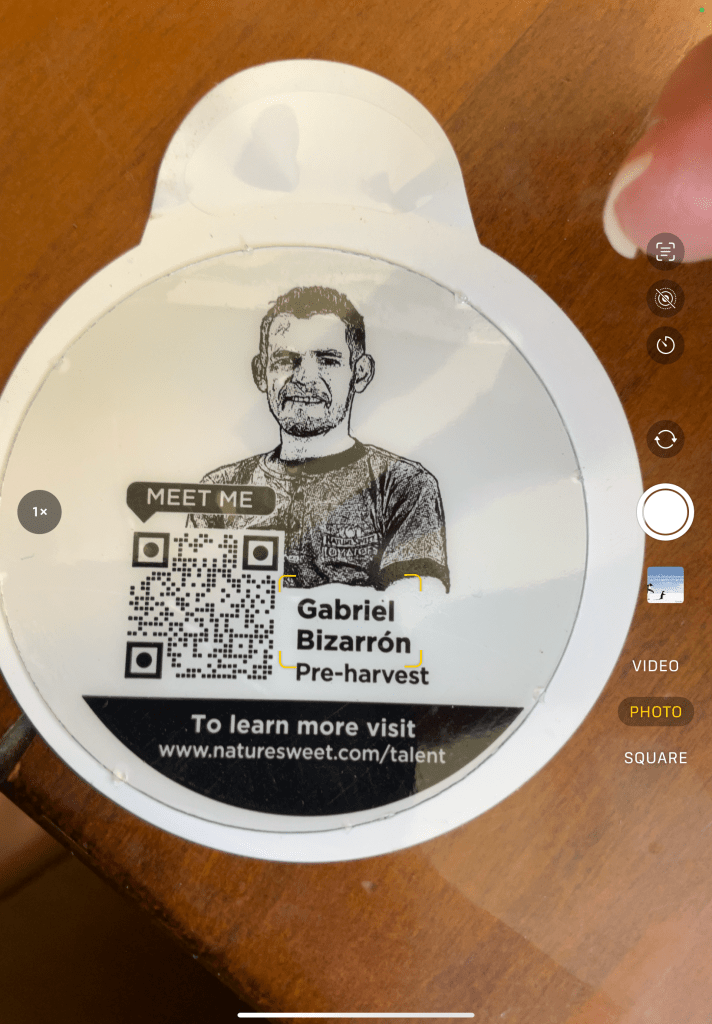
Yesterday, I was minding my business, making a quick salad for lunch. As I peeled the sticker top off the little plastic tub of cherry tomatoes, I was caught by surprise. On the back of the sticker was a picture of a man and a scan code to learn more about him.

It turns out Gabriel Bizarrón helps to make sure my tomatoes are bug free and have the right nutrients, He is working toward a degree in agribusiness. Gabriel is one of the many people responsible for helping me have a delicious healthy lunch, and I’m thankful for him.

Which got me thinking about all the other people in the chain of bringing these tomatoes to my belly, and there are so many. Stopping and imagining all the hands and minds that went into bringing my meals into existence, and being grateful for each of them, was quite a fun exercise. There are so many! What a wonderful invisible web of people there are behind the scenes to bring each of us food, clean water, electricity, and so on. Not to mention being grateful for businesses, like this and like Snapple with their hidden quotes, that take time to make their packaging inspirational. It is staggering once you start thinking about it, and really no end in sight, because each ‘thankful for’ leads to another, infinitely.

What a wonderful world!

Compassion for animals.

Apparently, today is World Penguin Day which reminded me of this delightful story about penguin JinJing and the man who saved his life. Each year, this little penguin swims 5000 miles to be with his friend.

So much is beyond our understanding including heart-warming stories like this about the bonds between a wild animal and a human who showed them kindness.

Enjoy this video.

Difficult people.

Do you  have any difficult people in your life? Chances are you can’t force them to be less toxic, but there are steps you can take to be less bothered by the encounter. In this article by Christine Carter, she suggests, among other things, that showing mercy to this difficult person will rebound to you:

Anne Lamott defines mercy as radical kindness bolstered by forgiveness, and it allows us to alter a communication dynamic, even when we are interacting with someone mired in anger or fear or jealousy. We do this by offering them a gift from our heart. You probably won’t be able to get rid of your negative thoughts about them, and you won’t be able to change them, but you can make an effort to be a loving person. Can you buy them a cup of coffee? Can you hold space for their suffering? Can you send a loving-kindness meditation their way?

Forgiveness takes this kindness to a whole new level. I used to think I couldn’t really forgive someone who’d hurt me until they’d asked for forgiveness, preferably in the form of a moving and remorseful apology letter.

But I’ve learned that to heal ourselves we must forgive whether or not we’re asked for forgiveness, and whether or not the person is still hurting us. When we do, we feel happier and more peaceful. This means that you might need to forgive the other person at the end of every day—or, on bad days, every hour. Forgiveness is an ongoing practice, not a one-time deal.

When we find ways to show mercy to even the person who has cost us sleep and love and even our well-being, something miraculous happens. “When we manage a flash of mercy for someone we don’t like, especially a truly awful person, including ourselves,” Anne Lamott writes, “we experience a great spiritual moment, a new point of view that can make us gasp.”

Here’s the real miracle: Our mercy boomerangs back to us. When we show radical kindness, forgiveness, and acceptance—and when we tell the truth in even the most difficult relationship—we start to show ourselves those things. We realize that we can love and forgive and accept even the most terrible aspects of our own being, even if it is only for a moment. We start to show ourselvesthe truth, and this makes us feel free.

Perhaps you can show that difficult person mercy today.

Singing in the darkness.

Amid a country-wide quarantine in Italy, a beautiful voice sings out into the empty streets, only to be joined by more voices, until their chorus warms the entire world. Enjoy this reminder that, even as we struggle. we belong to each other.

https://www.independent.co.uk/news/world/europe/coronavirus-italy-siena-song-canto-della-verbena-video-lockdown-a9399176.html

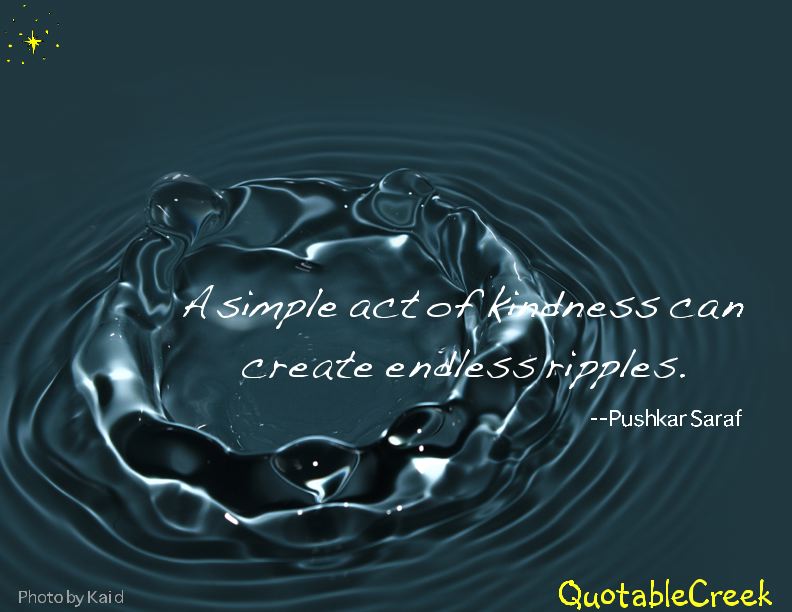
Spread ripples.

ripple

In a world where you can feel small and anonymous, never forget that you can make a difference. The little kindnesses you put out in the world inspire other such acts and so on and so on, rippling ever outward. Those ripples together make for a kinder gentler world.

In the video below, watch how the kindness ripples through a community and consider how you might add your own kindness ripples into your day.


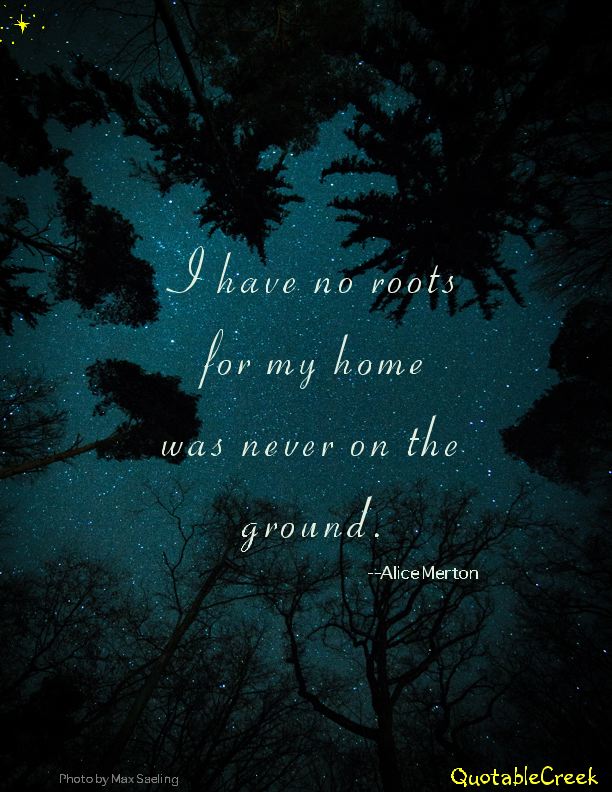
Look at your world from a larger perspective.

roots

Remember Admiral Stockdale’s opening in the 1992 vice-presidential debate? No? Here it is:


Who am I? Why am I here? Important questions we can each ask ourselves everyday. What is our purpose for being?

Sometimes we can be so caught up in the day to day, we forget the big picture: that what we do today affects future generations, that our actions have ripples that spread ever outward and touch people we will never know, that everyone here on this planet has as much purpose and reason for existing as we do.

We are both trapped in time and timeless. Now is our canvas. But the past has brought us to where we are, and the future will see our masterpiece. How will we choose to paint it?


SaveSave

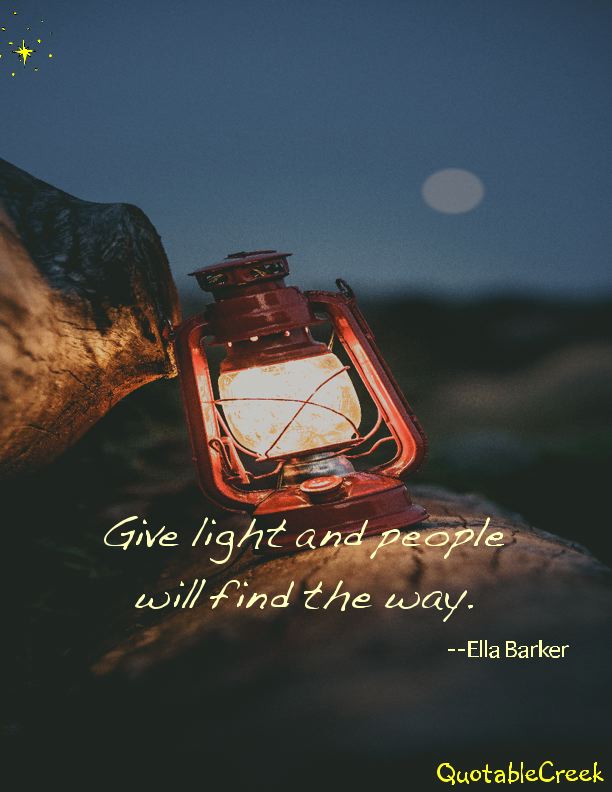
Give light.

givelight

Stumbling around in the dark can be painful, dangerous, and frustrating. We bump into stuff; we get lost; we despair. We lose our bearings and do not know how to get where we are trying to be.

But we each can help by lighting the way–with our words and actions. Consider kindness, for example, and how it can shine light on a very dark situation. In a story now going viral, a woman shared about how she was young in an elevator with her mother, who was berating her. As they left, a stranger whispered to her, “It’s not you; It’s her.” Just those five words of encouragement helped her to see beyond the horrid situation she found herself in and to buttress herself against the abuse rather than assuming, as all children do, that her mother was correct in the condemnation. She found hope:

“When life gets really dark, when she hears her (inner) mother’s voice telling that she’s sh*t, she can’t do it, or to just plain give up,” Solomon writes, “she then sees that stranger’s face as the door closes in front of her.” In fact, sometimes, Solomon says, “it’s the only thing that keeps her going.”

Think of the power you have just with your ability to be kind to someone who desperately needs it! What a gift it is to have eyes that can see suffering and to be able to help. That ripple of kindness never stops.