Be compassionate with yourself.
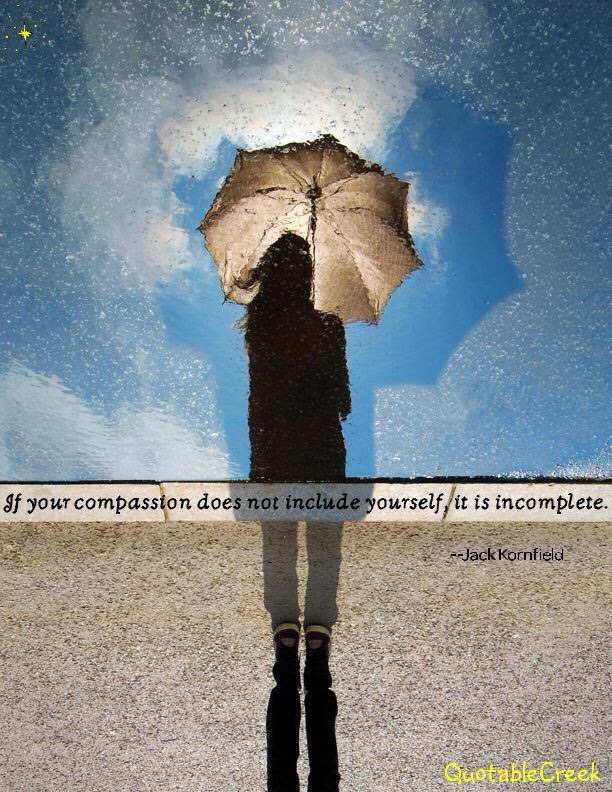
If one of your friends were struggling with the problems you are facing right now, what words would you offer in support? Would you call them names, berate them, remind them of all the other times they messed up just like this and how, honestly, can they ever expect to get anything right, ever?

Probably not. Right? But often this is the way we talk to ourselves. We replay all our other mistakes in our minds, call ourselves stupid, sink into our shells scared to face the world.

But why do we do this? If the words we would offer our friend are what we think would help, why are we so reticent to speak kind encouraging words to ourselves? Maybe today is a good day to try a different approach.

Be a kind friend to yourself. Offer yourself words of support and encouragement. Focus on all the many times you got things right. Tell yourself the truth: you are precious and beloved.

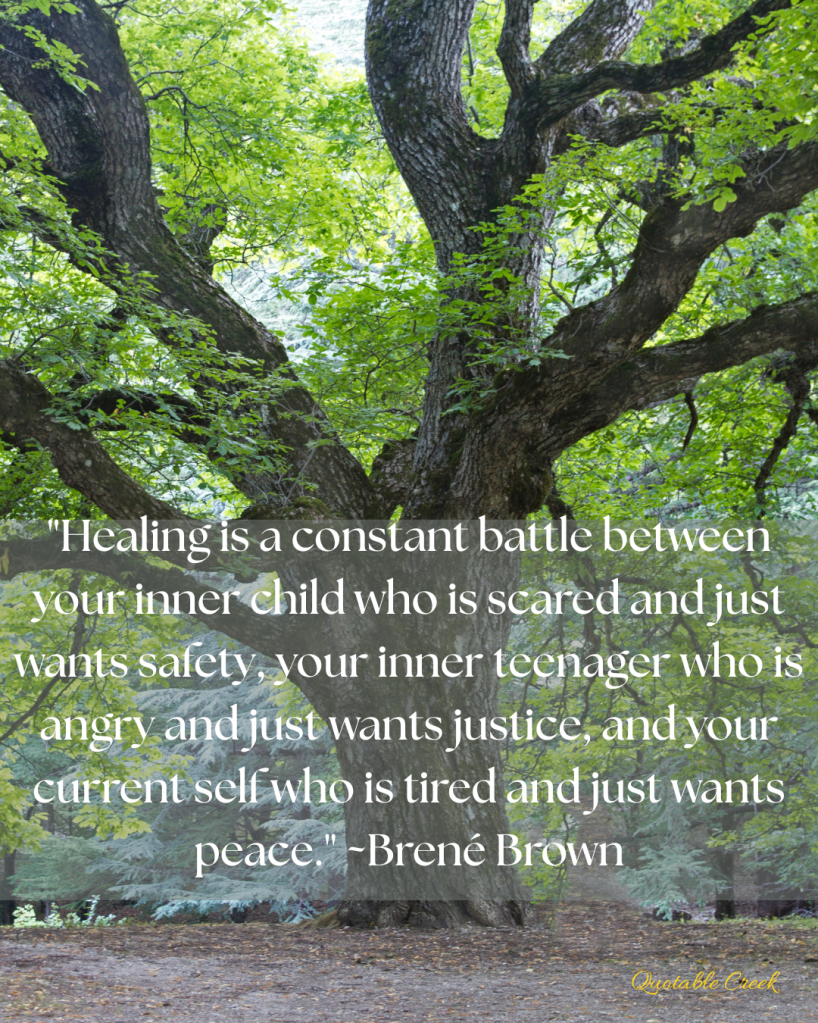
Bless the children.

In a recent Oprah magazine, Elizabeth Gilbert talks about her Inner Crone — a version of herself old, happy, and well past the point of fear  — that she pictures when she needs a shot of courage. She considers her Inner Crone to be “a badass old lady who already dwells somewhere deep within [her] and whom [she] hope[s] to fully become someday.” Picturing her Inner Crone gives Gilbert gumption.

But she also remembers her Inner Child, and pictures that child particularly when she is feeling depressed or hard on herself:

Many years ago when I was going through a dark season of depression and self-loathing, I taped a sweet photograph of myself at the tender age of 2 on my bathroom mirror. Looking at that photo every day reminded me that I once was this blameless little person, deserving of all tenderness–and that part of me would always be this blameless little person deserving of all tenderness. Meditating upon a smaller and more innocent version of my face helped me to learn to be more compassionate to myself. I was finally able to recognize that any harm I inflicted on me, I was also inflicting on her. And that little kid clearly didn’t deserve to be harmed.

We could all benefit from picturing our Inner Child when we are being hard on ourselves. Would you criticize that little child the way you are criticizing yourself now, or would you be more patient and encouraging? Would you demand perfection from that child, or would you celebrate progress? If you were wounded by adults when you were a child, you now are an adult who can support that little child in a healing way.

Think back. Can you remember that Inner Child who is still a part of you? The joy and exuberance, enthusiasm and trust, innocence and promise? No matter how far you’ve come from that start, treat yourself with kindness, patience, and compassion. That Inner Child is alive and well…and trusts you.

We are all buds.

We are all masterpieces, really. Works of art of exquisite complexity and beauty. Marvels. But we forget and get sidetracked by external things—success, age, worldliness. But it’s worth remembering.

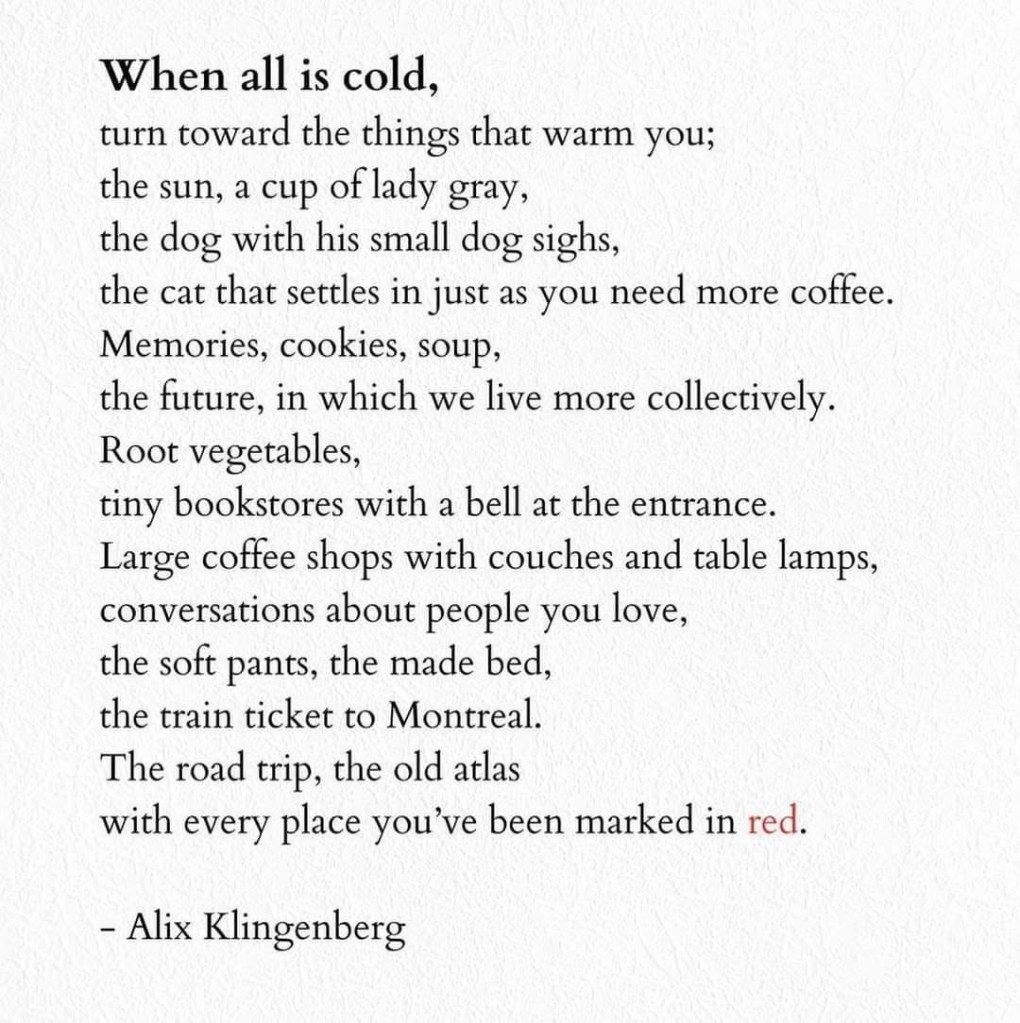
Consider this poem:

All the concentric circles of who we are.

We are complicated and carry with us all the ages we have been and life experiences we have had. As Sandra Cisneros put it:

What they don’t understand about birthdays and what they never tell you is that when you’re eleven, you’re also ten, and nine, and eight, and seven, and six, and five, and four, and three, and two, and one. And when you wake up on your eleventh birthday you expect to feel eleven, but you don’t.

So at 63, we can still long for a parent’s unconditional love rather than constant harsh judgment or expectation, or quiver in excitement over an upcoming holiday, or find ourselves sleepless over a stupid thing we said yet again. There is no ta-da moment where we wake up and suddenly make only good decisions and wise pronouncements.

It is all a becoming.

And hopefully those experiences we have had at all those prior ages help increase our empathy and understanding of others bumbling along, also becoming. Because what it really is, this thing called life, is putting one foot in front of the other and keeping on, striving.

Play.

Answer: Play. Question: What is something children do that adults need desperately?

What did you like to play when you were little? Can you remember losing track of time because you were busy tracking caterpillars or coloring or sculpting sandcastles or building a fort? Is there any way you can take a break today and play?

It can’t be all work, worry, stress, repeat. We need to find time to play, too.

Hold on.

Is your life all ups, no downs? Do you ever feel a need to make it look like it is? Maybe to pretend the rough stuff doesn’t exist or put on a big smile to cover a broken heart? Do you ever feel like there must be something wrong with your faith if your life is going badly?

Truth is, bad things happen. To the best, most faithful of people. Life’s struggles can feel overwhelming. You can get to the point where you simply cannot see how someone could think and feel the way they do. You can lose hope.

At times like these you need to breathe deep and get yourself to a quiet place. And it sure would do no harm, and maybe a whole lot of good, to read a poem like this:

The Peace of Wild Things

by Wendell Barry

When despair for the world grows in me

and I wake in the night at the least sound

in fear of what my life and my children’s lives may be,

I go and lie down where the wood drake

rests in his beauty on the water, and the great heron feeds. 

I come into the peace of wild things who do not tax their lives with forethought of grief. 

I come into the presence of still water.

And I feel above me the day-blind stars waiting with their light. 

For a time I rest in the grace of the world, and am free.

And the good news is, you can read this poem, and your soul will calm without even being in that place where the wood drake rests in his beauty on the water. The words of a good poem are like magic. They can heal you and still the churning waters of your soul. And they can help you remember the ‘day-blind stars waiting with their light’, because, yes, we cannot see the stars in the daytime, but they are there. Shining.

May you rest in the grace of the world and find peace.

Be still my soul and steadfast.

No one knows what tomorrow will bring, and that can be frightening. We are in a volatile time. It helps to keep our attention on the present and what we can do here and now.

The great poets help calm our souls. Take comfort today from these tender words from Mary Oliver:

Be still, my soul, and steadfast.
Earth and heaven both are still watching
though time is draining from the clock
and your walk, that was confident and quick,
has become slow.

So, be slow if you must, but let
the heart still play its true part.
Love still as once you loved, deeply
and without patience. Let God and the world
know you are grateful. That the gift has been given.


+ Mary Oliver

We do not know what tomorrow brings, but we will approach it with full souls, grateful and loving, ready to meet the day with a steadfast heart.

Grief to love.

Christmas is a joyful time, but joyful times often bring complex emotions, particularly of loss for the people and loved ones who aren’t with you at the table. We remember times past when we were all together, when things seemed less complicated, when relationships seemed more solid, and we mourn that loss even as we celebrate.

Love makes us vulnerable as there is the possibility of loss. And loss hurts. That’s the human condition. And to try to avoid the pain of loss by never loving would be a far greater loss really. For to miss loving is to miss the whole joy of living.

Grief happens. When we think of grief as the flip side of love, though, we can offer ourselves some solace.

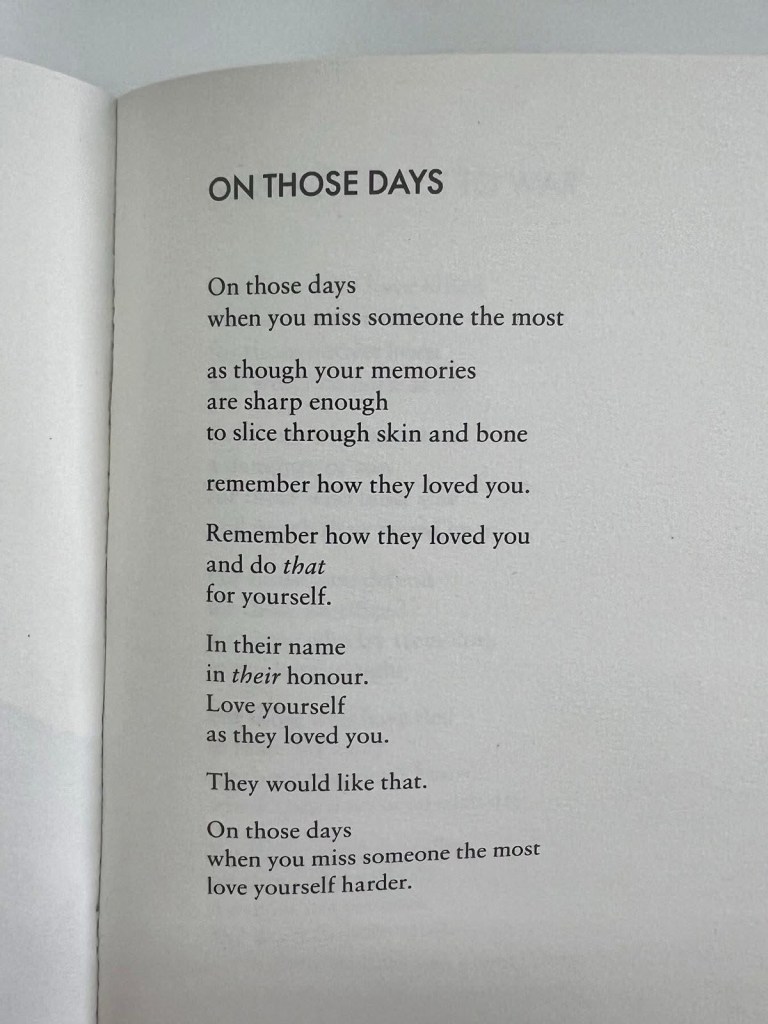
Consider these words by Donna Ashcroft today, and every day. You are loved.

From ‘Loss’ by Donna Ashworth

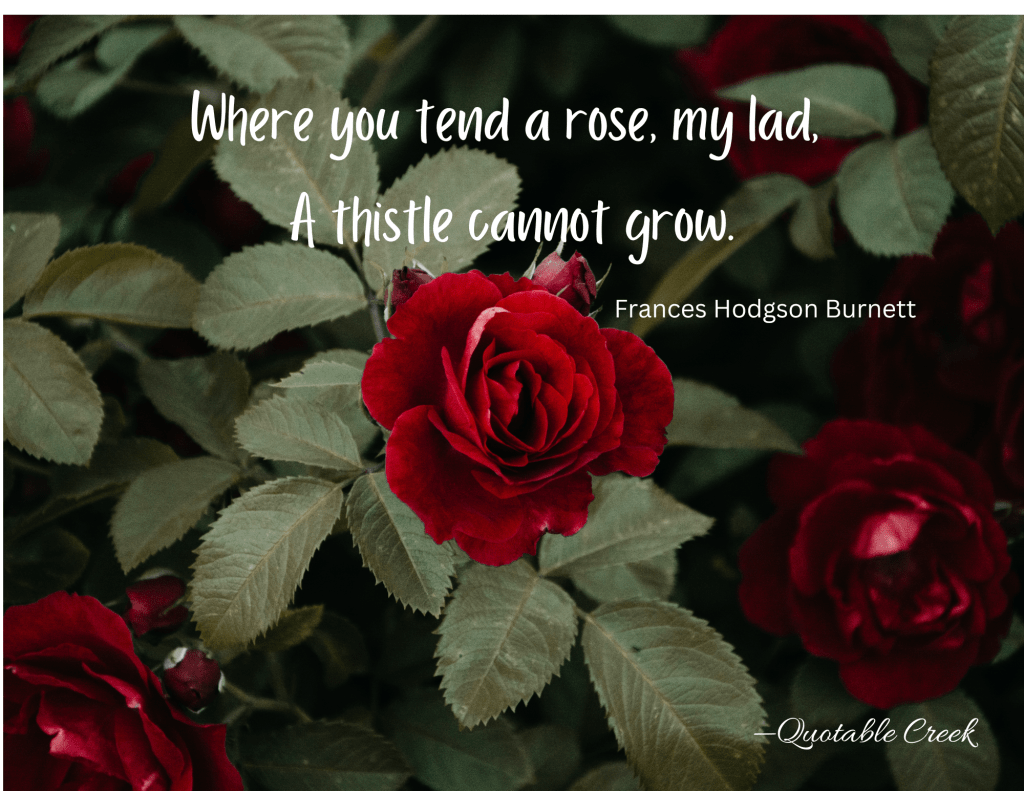
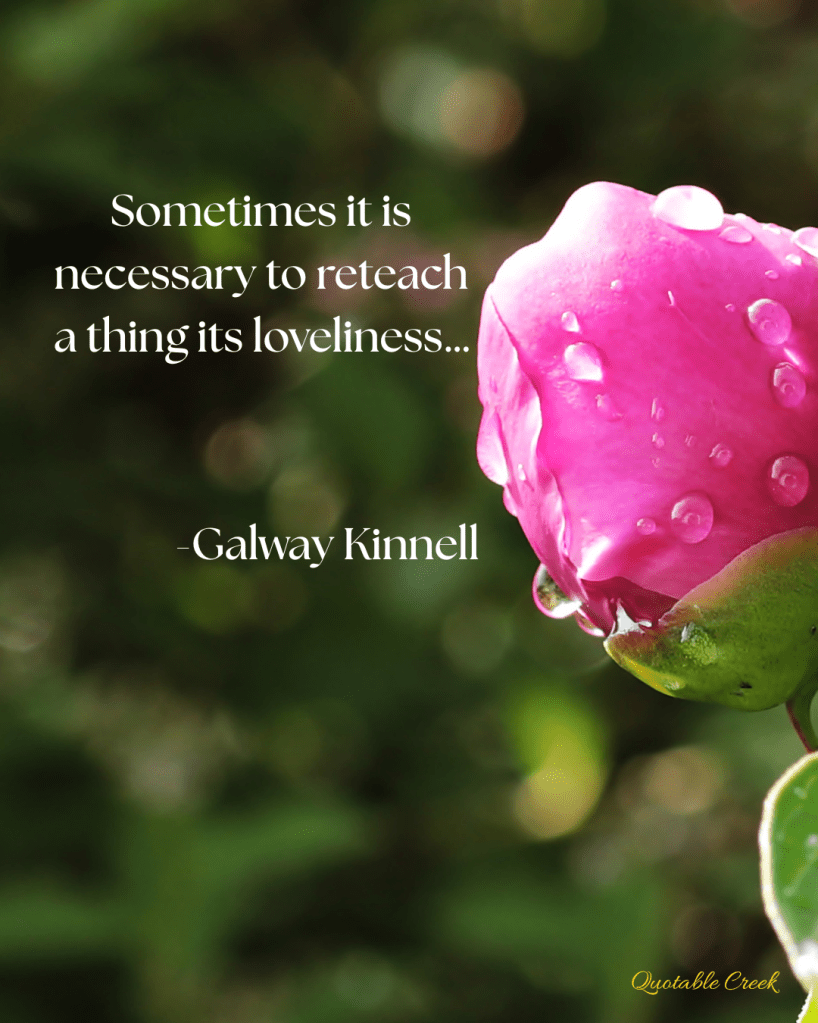
Tending roses.

‘If you look the right way, you can see that the whole world is a garden,’ muse the characters in Frances Hodgson Burnett’s The Secret Garden. And, perhaps, on a more intimate level, so our mind is too a garden.

We cultivate our thoughts, enrich them with information, learn, grow, stretch. But weeds can overrun any garden, and we can find our minds overcome with anxiety, negative thinking, and endless catastrophic thinking.

But Burnett notes:

Much more surprising things can happen to any one who, when a disagreeable or discouraged thought comes into his mind, just has the sense to remember in time and push it out by putting in an agreeable determinedly courageous one. Two things cannot be in one place.

When we find ourselves overcome with negative thoughts, we can imagine our mind a garden. Something we can lovingly tend, plucking weeds, nourishing blooms, replacing gloom with gratitude, planting seeds of possibility and promise.

While there are many things in this world we cannot control, we still can control our thoughts and find a way to focus on ones that keep our mental garden thriving.